




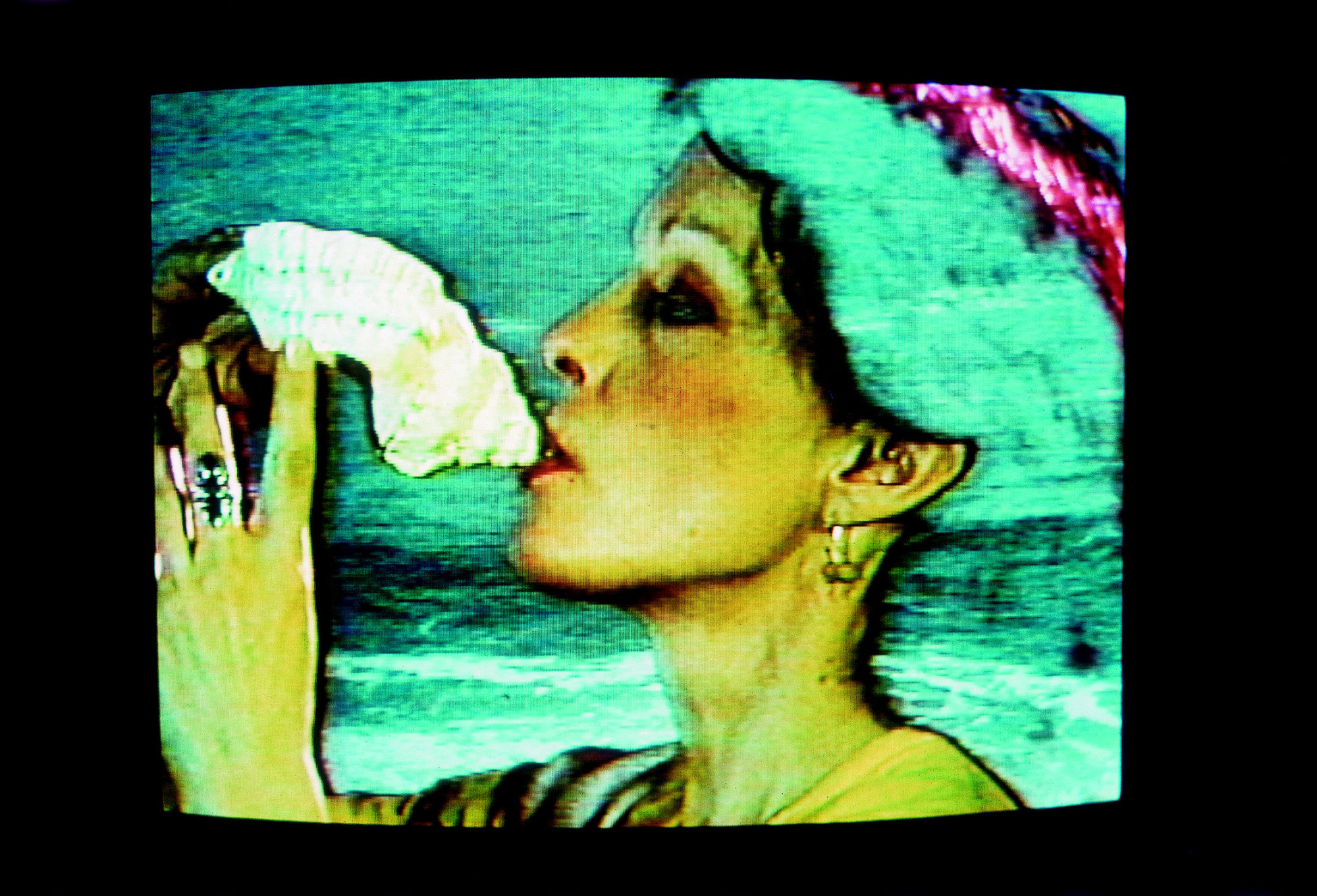
Joan Jonas, still from Double Lunar Dogs (2017). Video (colour, sound). © 2017 Joan Jonas. Image courtesy Electronic Arts Intermix (EAI), New York.
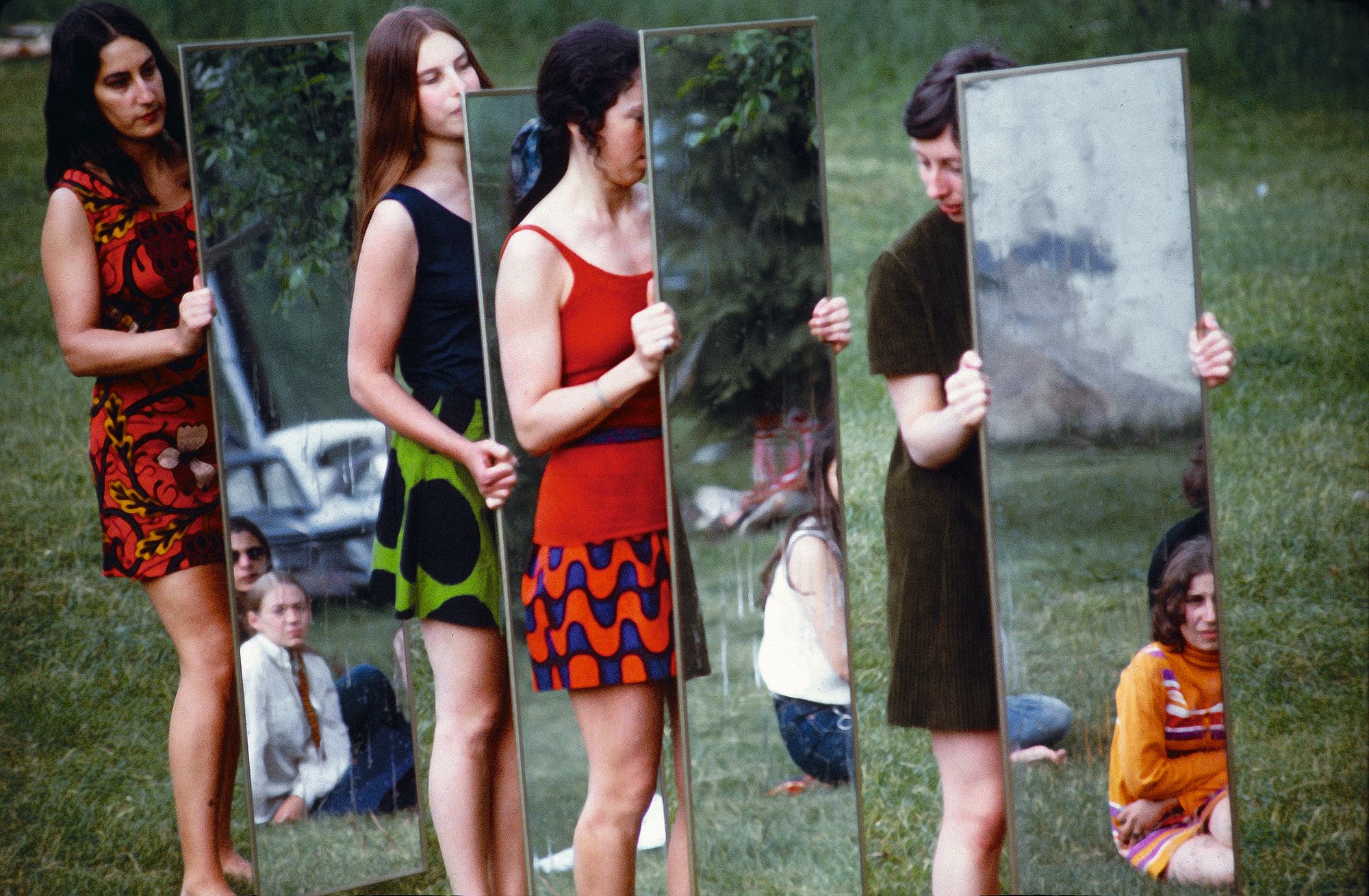
Joan Jonas. Mirror Piece I. (1969). Performance, Bard College, Annandale-on-Hudson, NY. Courtesy the artist.
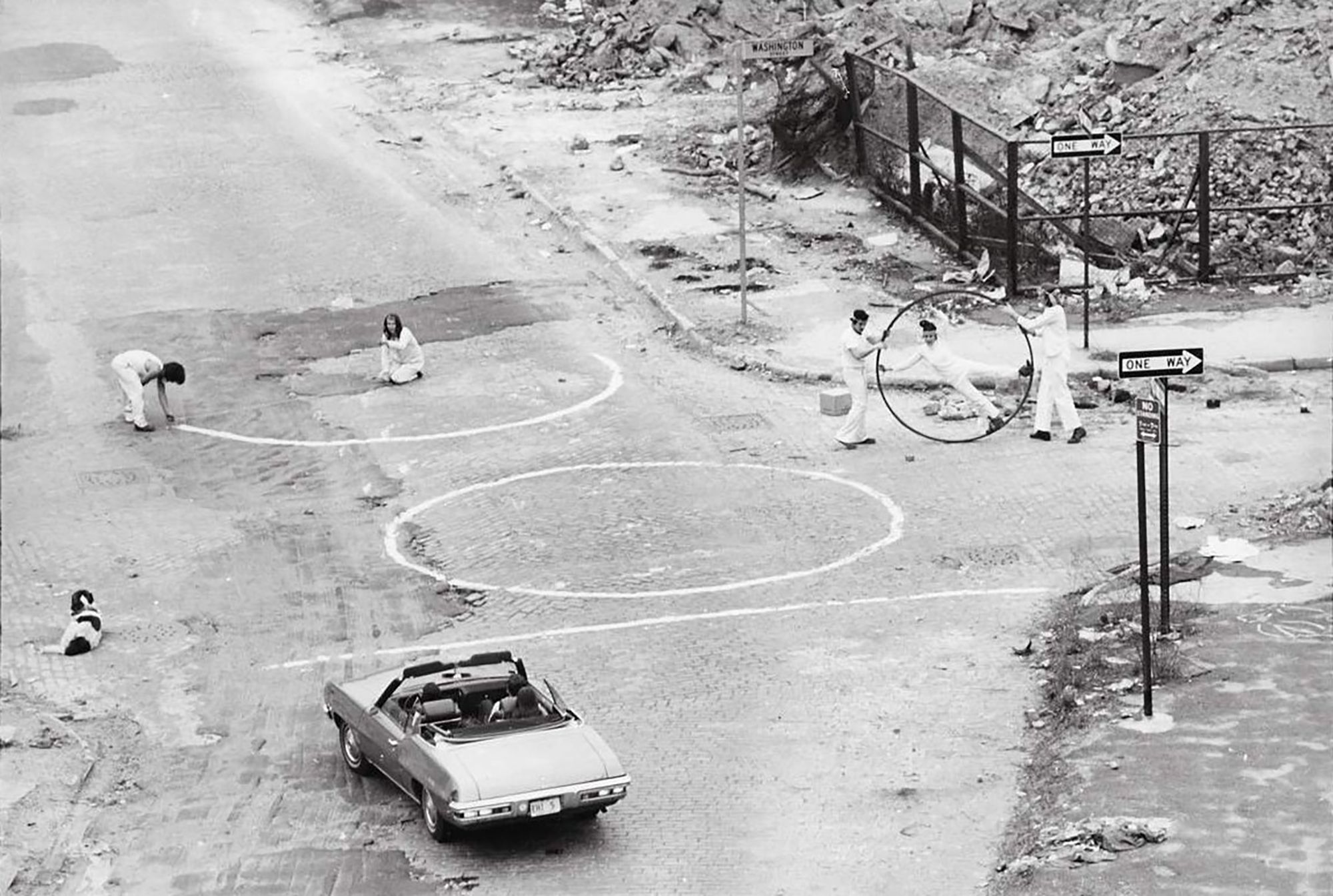
Joan Jonas. Delay Delay (1972). Performance, Lower West Side, New York. Photo: Gianfranco Gorgoni.
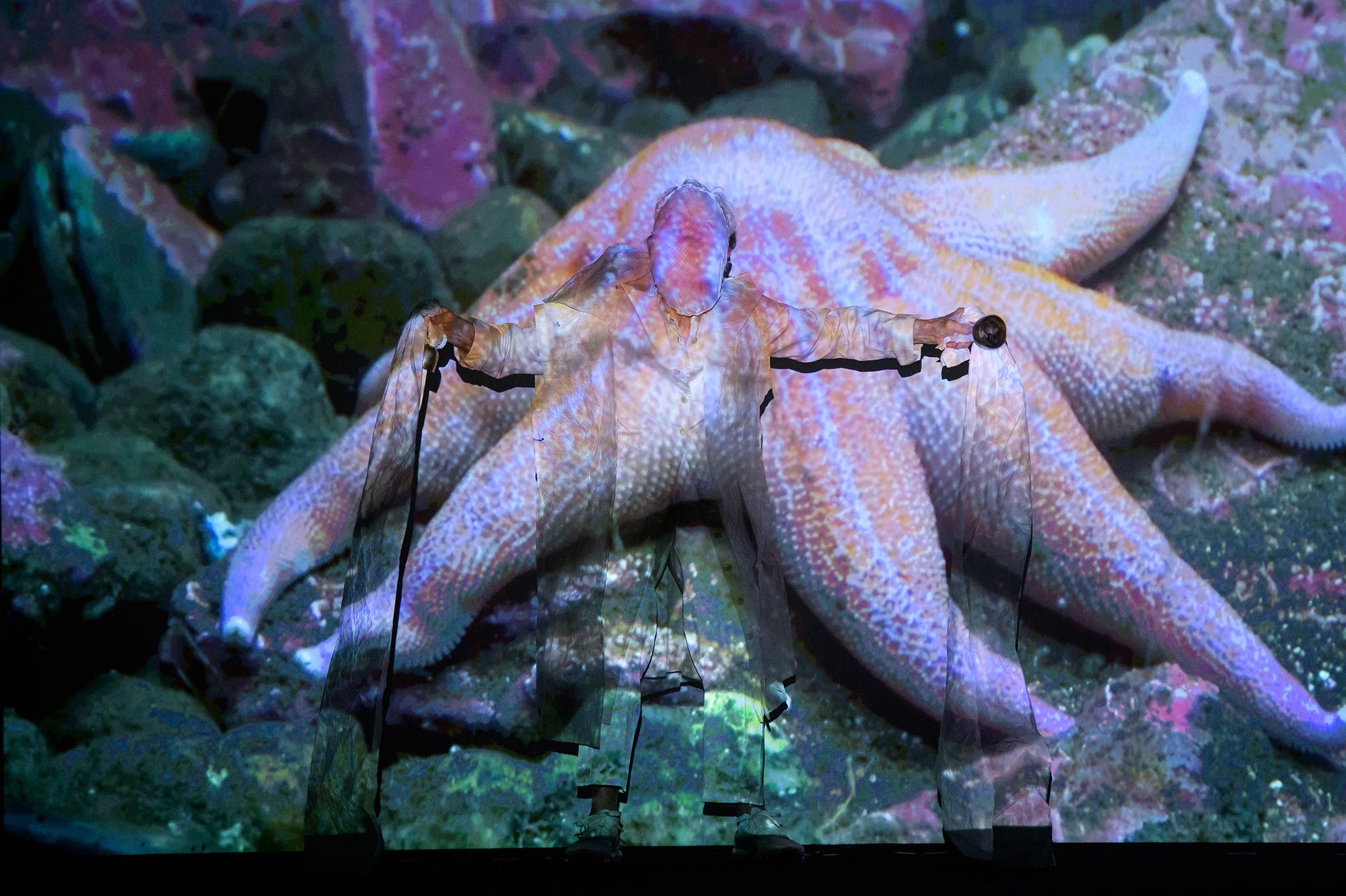
Joan Jonas. Moving Off the Land (2016–2018). Presented by Danspace Project, New York, 2018. Photo by Ian Douglas/courtesy of Danspace Project.
‘Its revelations are almost guaranteed to knock you sockless,’ was the review by Roberta Smith, co-chief art critic of The New York Times (who announced her departure this week) on Joan Jonas’ 2003 exhibition at Queens Museum of Art in New York.
Up until then, the New York artist had been little-shown on home soil; an unjustness that warranted ‘some humility and embarrassment locally,’ as Smith went on to argue.
Surprisingly, the next ten years saw little in the way of a celebrated homecoming until 2015, when Jonas represented the U.S. at the Venice Biennale with the triumphant multimedia installation, They Come to Us Without a Word presenting fragments of ghost stories from the oral tradition of Nova Scotia.
Now, with the arrival of her retrospective, Joan Jonas: Good Night Good Morning, at New York‘s Museum of Modern Art (17 March–6 July 2024), it seems that U.S. museums have finally caught up.
An active figure in the New York art scene of the 1960s and 70s, Jonas was one of the first artists to use video simultaneously alongside live performance.
‘I didn’t see a major difference between a poem, a sculpture, a film, or a dance.’ Jonas has said.
Throughout her 50-year career, she elaborated performance into a multimedia art form. Video, sculpture, drawing, and music are woven into a kaleidoscopic visual practice that explores the peculiarities of human perception technology, and more recently, climate change.
Mirrors were among the first props Jonas incorporated into her performances, as a means to fragment viewers’ perspectives of her actions. One such example—on view at MoMA—is Mirror Piece I (1969), part of a series that established her as one of the pioneering forces in body and performance art. Video documentation of the performance shows people carrying oblong mirrors in slow, choreographed movements, fracturing the appearance of both the performers and the audience themselves.
Masks, costumes, and headdresses are some of a long list of collectibles that, like the mirrors, have made their way into Jonas’ performances and feed into MoMA’s roughly chronological display: from her video performances in downtown New York in the 1960s and 70s, to recent performance-installations about ecology, with videos of sea life captured by marine biologist David Gruber.
The title Good Night Good Morning is taken from a video the artist first made in 1976 (with a new iteration produced in 2006), that captures the artist repeatedly reciting the titular phrases right before sleep and shortly after waking—a pattern charting the passing of time through ritual.
Fifty years have passed since Jonas first moved into her SoHo studio—the stage of her earliest performances. And while her MoMA survey could just be her biggest stage yet, this long-overdue celebration may finally hold up a mirror to a life enriched through her devotion to making art.
Main image: Joan Jonas, Double Lunar Dogs (2017) (still). Video (colour, sound). © 2017 Joan Jonas. Image courtesy Electronic Arts Intermix (EAI), New York.



A respected voice in contemporary art discourse.
Focusing on ambitious storytelling and insightful art-world commentary. Ocula Magazine publishes in-depth interviews, critical essays and timely analysis on the artists, exhibitions and ideas driving the global art world.
Learn more about Ocula Magazine
Showcasing the best of the art world.
Ocula partners with galleries from around the world to highlight their artists, artworks and exhibitions. Gallery membership is by application and invitation, with each member vetted by an independent panel.
Learn more about Ocula Membership
Specialises in the sale of major artworks.
Led by a team with deep ties to the world’s leading auction houses, galleries and collectors. Ocula’s advisory team offers bespoke services to high-net-worth clients from around the world who are looking to acquire the best of contemporary and modern art.
Learn more about our team and services