





Chance Encounter
Rapidly evolving prediction markets are reshaping the art market to make the volatility of an artwork’s price a key part of its value. However, not all artists are willing to play the game. Save to My OculaWhen Substack announced a partnership with once-illegal online prediction market Polymarket earlier this year, I was shocked. But as so often happens with whatever shocking act tumbles out of the churning chaos of the media now, it was not entirely unexpected. Words are more readily liquid than objects; it is no surprise that a blogging platform was faster to integrate into this new tradeable present. But Substack’s tagline “a new economic engine for culture” is perhaps too upfront in its portrayal of the site as an AI metabolic slop generator. This partnership, in which subscribers receive a newsletter called The Oracle (complete with a logo of a crystal ball) that combs through various potential bets, turns Substack from a plaza of coin-operated newsstands into something else.
This is a space where automated agents scan for arbitrage across multiple markets simultaneously. In some cases, such as wagers on the next Eurovision winner or what Elon Musk might post on his X account, their distributed bets even have the power to subtly shape the probabilities of these events. Despite the pretensions to objectivity held by the fictional notion of a future that is already fixed, liquidity is also an issue: those with the most cash have the most influence on what is predicted to be true. Is this really such a groundbreaking change to a general state of affairs?
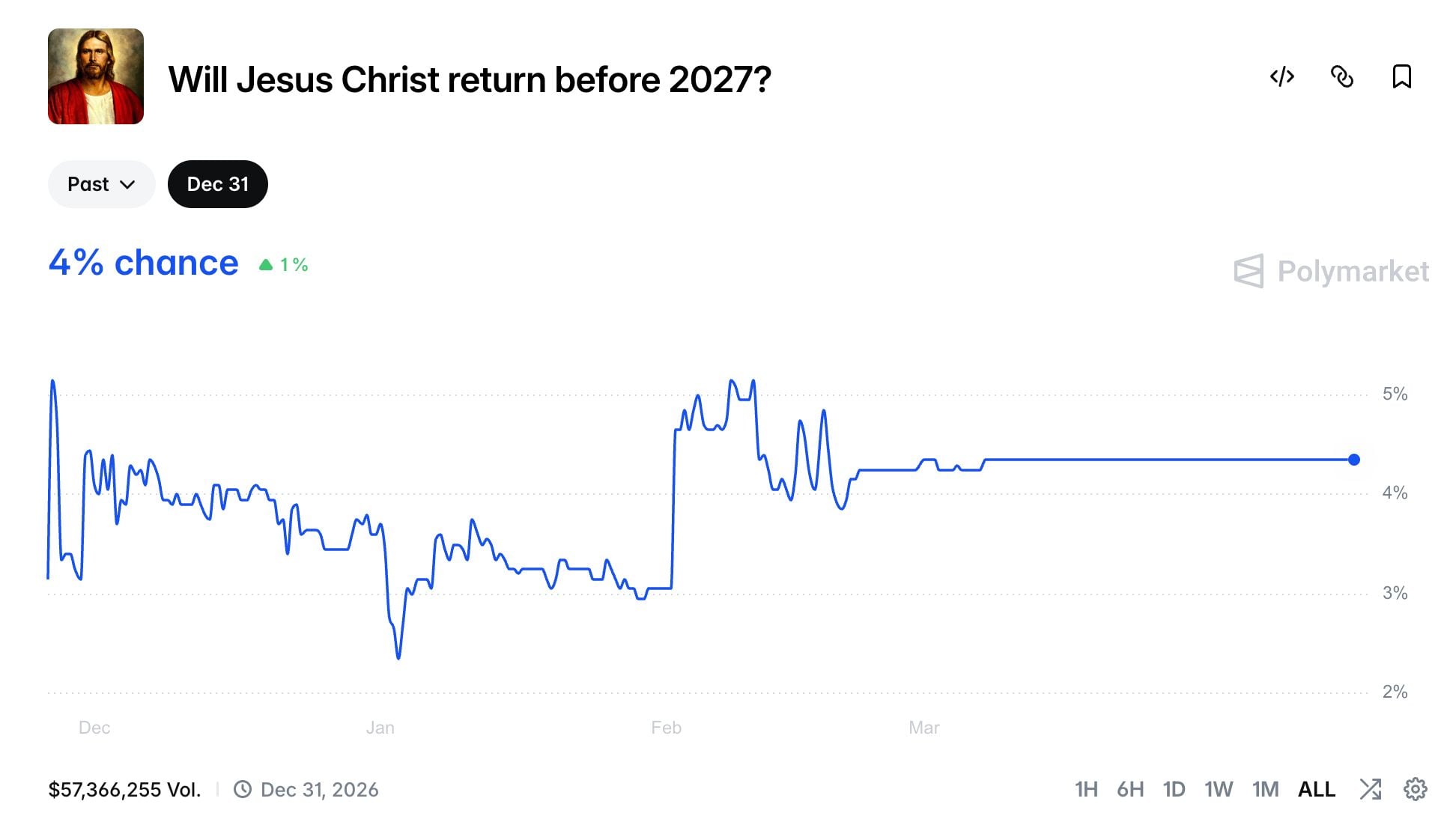
Following the money, we can take some cues from Substack about the future forms of speculation and art. “We are in an era marked by the financial gamification of everything,” Kate Brown wrote in Artnet in February in a reflection on Polymarket’s implications for the art world. According to Brown, the art market is not downsizing. It is migrating. Prediction platforms such as Polymarket, which was founded in 2020, allow users to trade on the outcome of virtually anything, from geopolitical developments and elections to what a celebrity might say or wear. Unlike casinos or traditional sportsbooks, users in effect bet, or “trade”, against one another rather than against an established “house”, with platforms collecting transaction fees. As such, they operate in a largely unregulated space where any outcome is reducible to a yes-or-no proposition.
“What is being traded is no longer the asset itself but speculation about its future value”
Last year, several bets were placed on the upcoming results of Sotheby’s headline auction sale of the art collection of Leonard A Lauder. When betting on the outcome of an auction, what is being traded is no longer the asset itself but speculation about its future value. If the last decade saw dealers and flippers experimenting with price as medium, the present moment suggests a further abstraction, in which volatility itself becomes the site of value.
Art has long been entangled with speculation, not only in the familiar sense—that the value of an artwork can fluctuate wildly over time—but more precisely as a speculative operation in itself. Continuing trends that began during the 1980s, between roughly 2010–2019, art funds and auction guarantees transformed paintings from stores of value into quasi-financial instruments. Canny dealers—and just about anyone with the assistance of Deloitte’s inaugural Art & Finance Report (2011)—could profit off works by relatively unknown young artists that doubled or tripled in price when pushed through the gap found between primary and secondary markets.
“Prediction markets have been taken by many commentators as a sign of our dystopic present”
In part a response to the distribution of post-human speculation in the 2010s (represented in the art-market microcosm by Zombie Formalism, later described as “debt aesthetics”) the emerging genre of “protocol” art consists of works that engage with blockchain-based revenue generation to stage political critique. For those making NFTs, however, initially pitched in 2017 as a new class of investment asset, artists were no longer simply producing objects to be priced. Instead, as Hito Steyerl put it in a November 2025 conversation on an episode of the Disintegrator podcast, they “treated price as the artwork”. Yet the volatility that animated these works remained external to them, with deleterious consequences for pockets (and minds). These artists, Steyerl continued, were “little droplets of plastic bobbing on a huge ocean of volatility. And the whole thing was lifted away.”
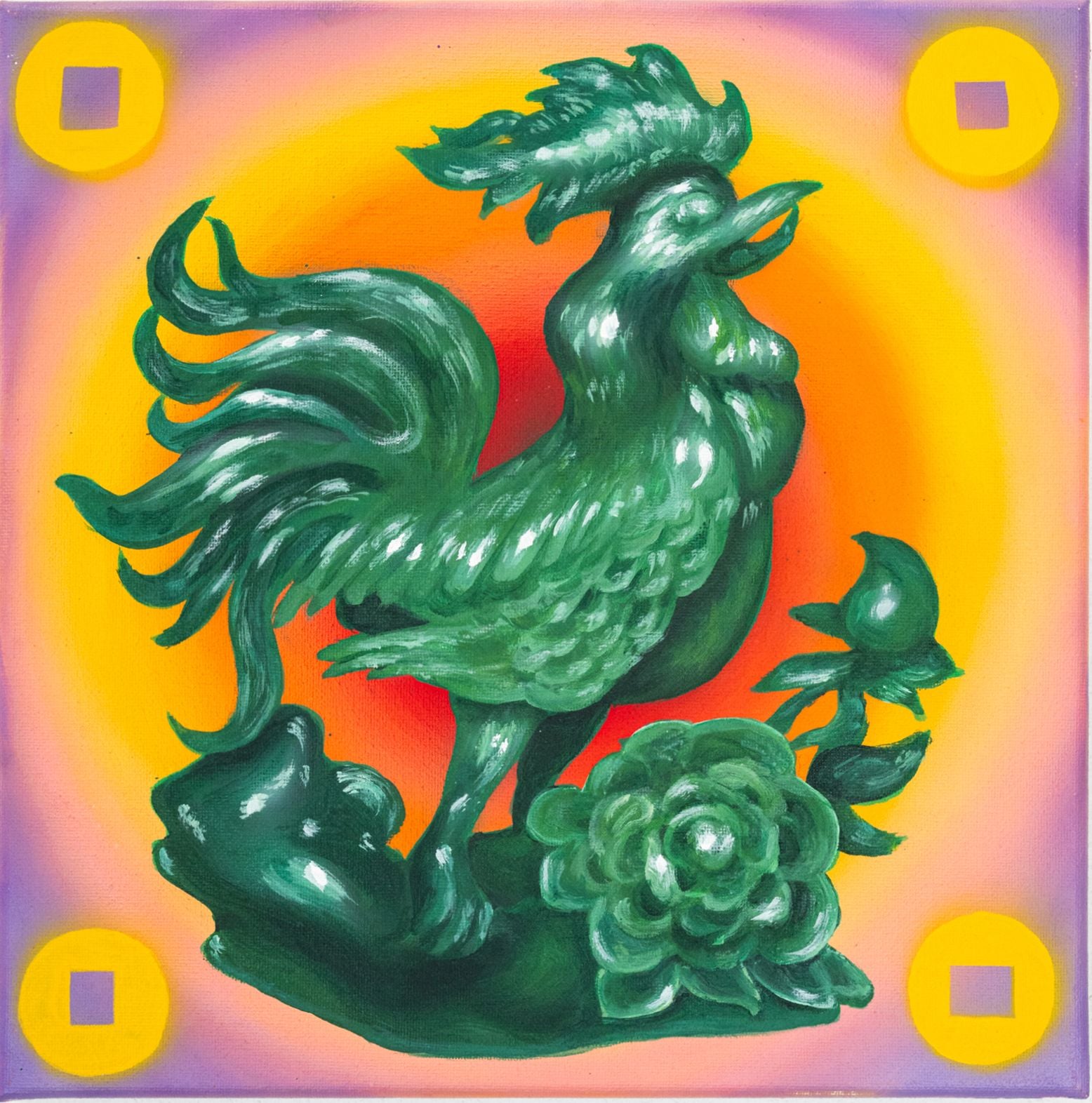
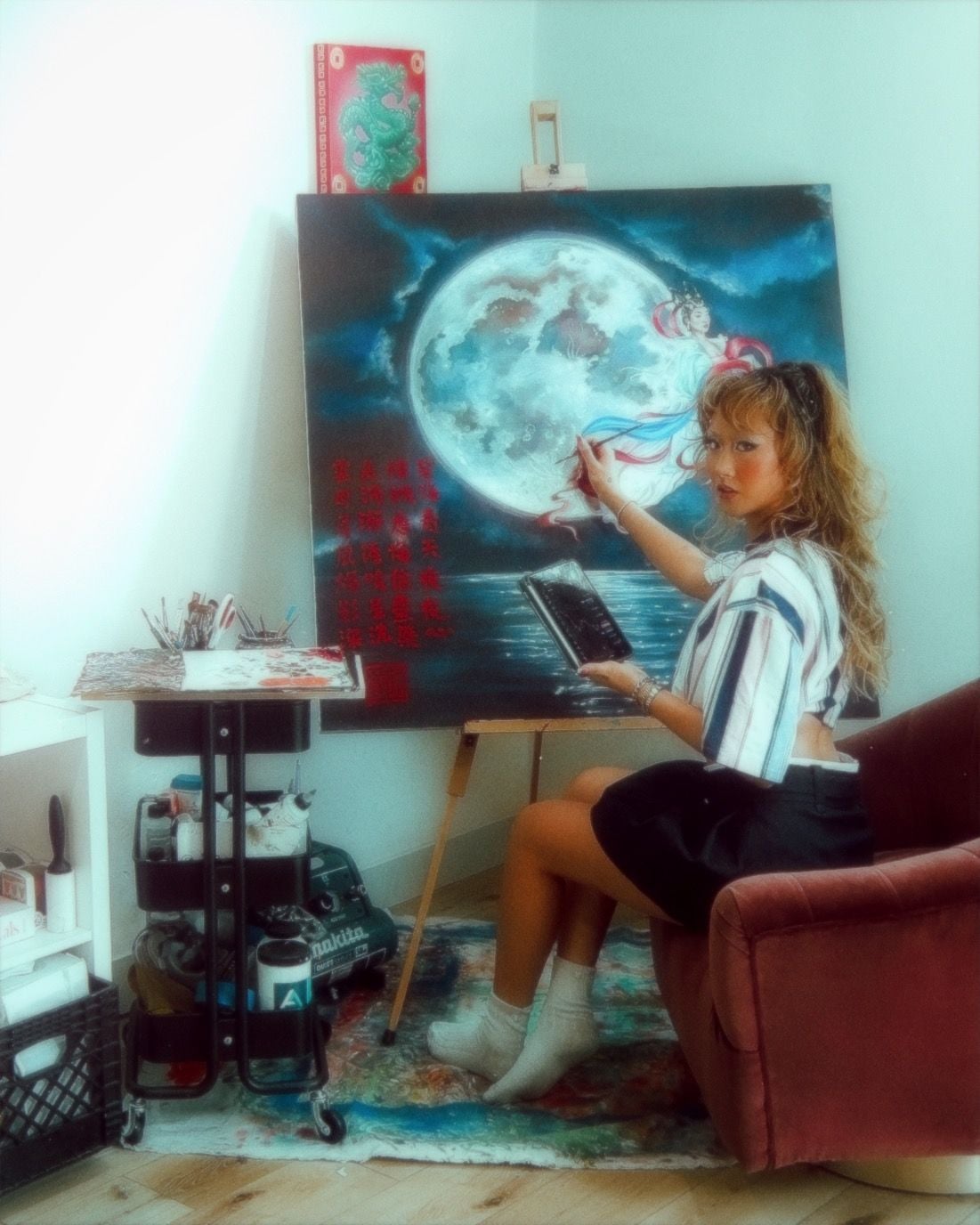
Ann Liu (aka Qwant Kitty, born in 2000) is an emerging Los Angeles-based artist and meme coin trader who knows what this feels like. She cut her trading teeth in the stimulus-cheque powered NFT boom. Liu now trades and makes content so that she can “make art forever” (per her Instagram bio) without relying on either the art market or institutional funding. In the fifth-century Daoist Shanshui tradition she draws on for her work, which includes airbrushed landscape paintings, the human figure is small, or not present at all: the proportions of landscape dwarf the individual who moves within it. While she separates her artwork from her trading, there are commonalities between her descriptions of her painted landscapes and her interaction with the market. “You’re a small fish navigating between states of bullishness and bearishness,” she tells me. “You’re merely a participant in something vast.”
In contrast, in Wuyishan-born, Chicago-based artist Leah Ke Yi Zheng’s recent solo show at the Renaissance Society in Chicago, Change, I Ching (64 Paintings) (on view until 12 April), the experience of speculation forms the work itself. Her multiple paintings of I Ching hexagrams were installed as a single work to facilitate an alternative, interiority-oriented method of speculation. The I Ching is the ancient Chinese practice of casting yarrow stalks (later, coins) to generate hexagrams found in the Book of Changes, whose entries describe situations or patterns of change. When we spoke, Zheng referenced Yuk Hui’s concept of cosmotechnics, the practice of technology to unite the moral and cosmic orders, musing that her work “might be seeking to undo the desire of unification in the case that unification is used as a method of control”. Zheng’s installation can be read in opposition to the overdetermining capabilities of the algorithm: a machinic arrangement of translucent silk screens that filter and rearrange gallery light, foregrounding meditations on chance, indeterminism and bodily perception.
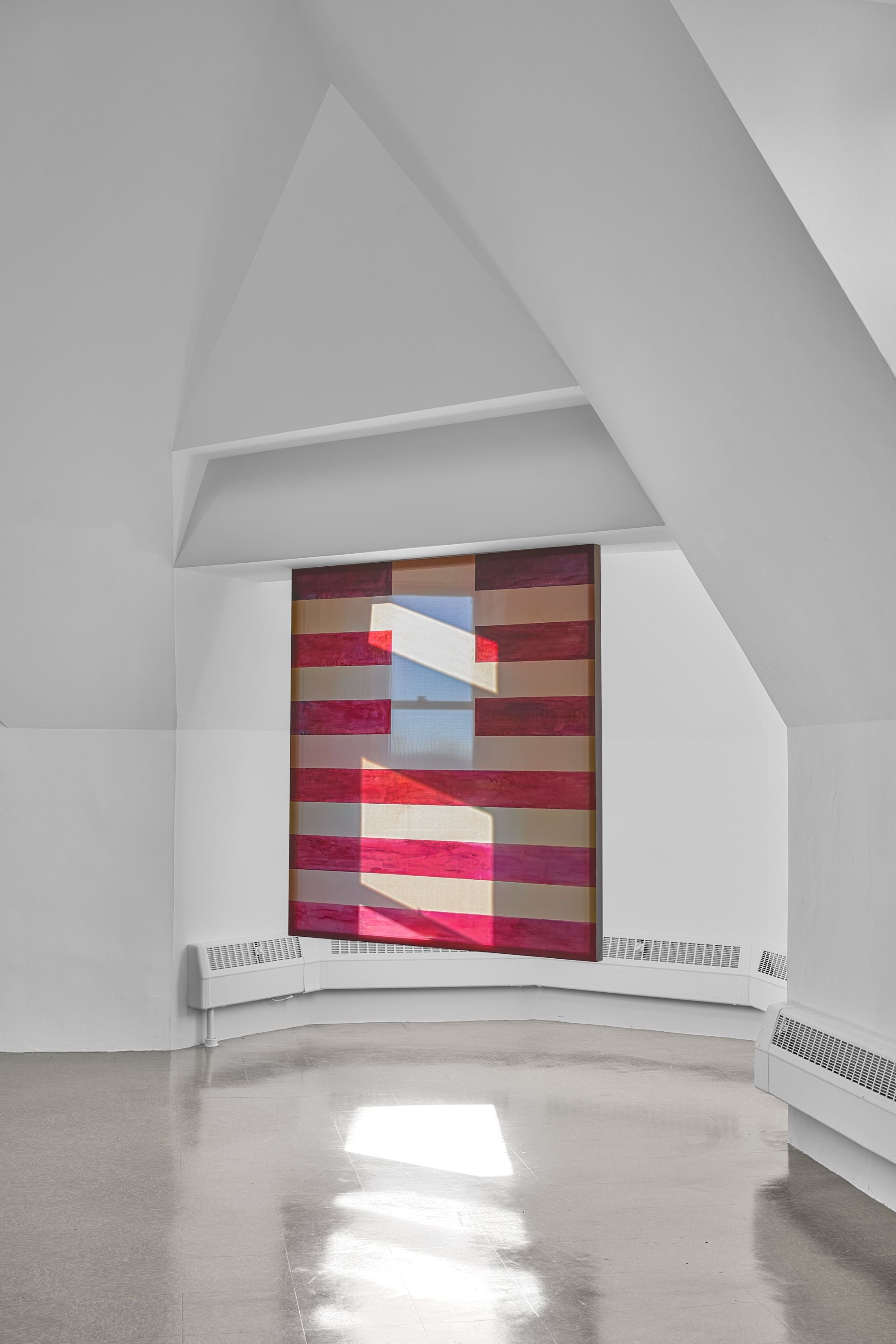
Zheng is in good artistic company, to say the least. The Book of Changes was a key influence on American artist and musician John Cage’s “chance operations”, developed from 1951 until the mid-1960s, which he described as “methods used to remove the composer’s ego, taste and intentions from their music, relying on randomness to determine structure, sound, and duration”. Cage’s Not Wanting to Say Anything about Duchamp (1969), a series of translucent plexiglass panels featuring fragmented words and images generated using chance operations, is echoed in the sheer screens of Zheng’s speculative hexagrams.
The randomness of chance operations finds a macroeconomic expression in recent theories of value creation. In their 2025 treatise Exocapitalism: Economies with Absolutely No Limits, authors Marek Poliks and Roberto Alonso Trillo explore Marxism in the age of Salesforce. In their theory of value rooted in volatility, labour functions not as a productive but a randomising force, the modulation of price between acquisition and sale is what generates value. What Cage called indeterminacy and what the market calls volatility are the same thing, except that one opens space for human agency and the other forecloses it. Zheng’s work is designed to open that space rather than close it.
Prediction markets have been taken by many commentators as a sign of our dystopic present. Yet when applied to the field of visual culture, history shows that that the encroachment of gambling into contemporary art is in continuity with tensions that have existed in the conceptual field of art, chance, speculation and legislation since at least the 20th century. Recent mimetic works by artists, such as those of the post-internet boom that referenced the “look” of the internet cut from under their own feet before fading into ephemerality, have been full of critical response to these tensions. These works, driven by the simultaneous overdetermination and chaos of algorithmic operations, reflect the perceptual condition of the present, as argued by professor of contemporary art and theory Natasha Lushetich. Will works that use materials and rituals of a longer history make a greater impact? In a yes-or-no wager, I bet £20.
![John Cage, Calvin J. Sumsion. Not Wanting to Say Anything About Marcel—Plexigram I, 1969. Screenprint on Plexiglas and walnut (wood). M+, Hong Kong. [2017.276].](https://files.ocula.com/rf/2a/2a8ad5c1-b30c-47d0-b493-838b3505a24e/008501009000008587011.jpg)
Some artists cut through chaos by employing the aesthetics of withdrawal. For their exhibition Depreciation (2018), American conceptual artist Cameron Rowland purchased one acre of land on Edisto Island, South Carolina. Formerly part of the Maxcy Place plantation, one of the sites where 10,000 formerly enslaved people were settled under General Sherman’s Field Order 15 in 1865 and evicted the following year on orders of the US president, who returned the land to its former Confederate owners. The acre is now appraised at $0 USD. Rowland’s covenant restricts its use, rendering it unusable and undevelopable.
At the Dia Art Foundation in New York, the acre was encountered only as legal documents, framed and hung on a wall. You are not invited to visit the original site. Depreciation is in many ways the structural inverse of the logic I have been describing. Rowland has made this acre illegible to a system that deals in prospects: it is a surface-less, anti-consumerist object with no docking point for the algorithm, no movement for the market to speculate and enclose. This withdrawal is observable too in Rowland’s Obstruction (2024): a padlock attached to the cemetery gates of Ramshorn Cemetery in Glasgow, the final resting place of many merchant slave owners of the 18th and 19th centuries.
“Not all citizens share the same relationship with the idea of betting on the future”
If we are to live under the conditions of a financialised so-called truth, governed by the whims of influential tech billionaires, then we have to reckon with the fact that not all citizens share the same relationship with the idea of betting on the future. This assumption of a normative futurity became a political flashpoint in the US last year when The White House disparaged an exhibition at the National Museum of African American History and Culture as “anti-American”. The show included Afrofuturist depictions of the Drexciyans, a fictional underwater civilisation built by the descendants of the unborn children of enslaved Africans thrown overboard during the Middle Passage, dreamt up by pioneers of Detroit techno Drexciya on their 1992 EP Deep Sea Dweller.
Rowland’s and others’ attention to the history of future revocation is something to bear in mind when presented with reports on the apparently “new” sci-fi dystopia of the urban bourgeois imaginary. The instantiation of speculation as a mundane way of making money, and the pushing of prediction markets as a democratic form of truth production, has the anxiety-inducing effect of heralding an era in which people are forced to pay rent to technological services and manage credit lines just to get by. But in a system busy financialising the event around the object, the artists who matter may be those who have already made themselves unreadable by operating in a temporality the market cannot price. —[O]
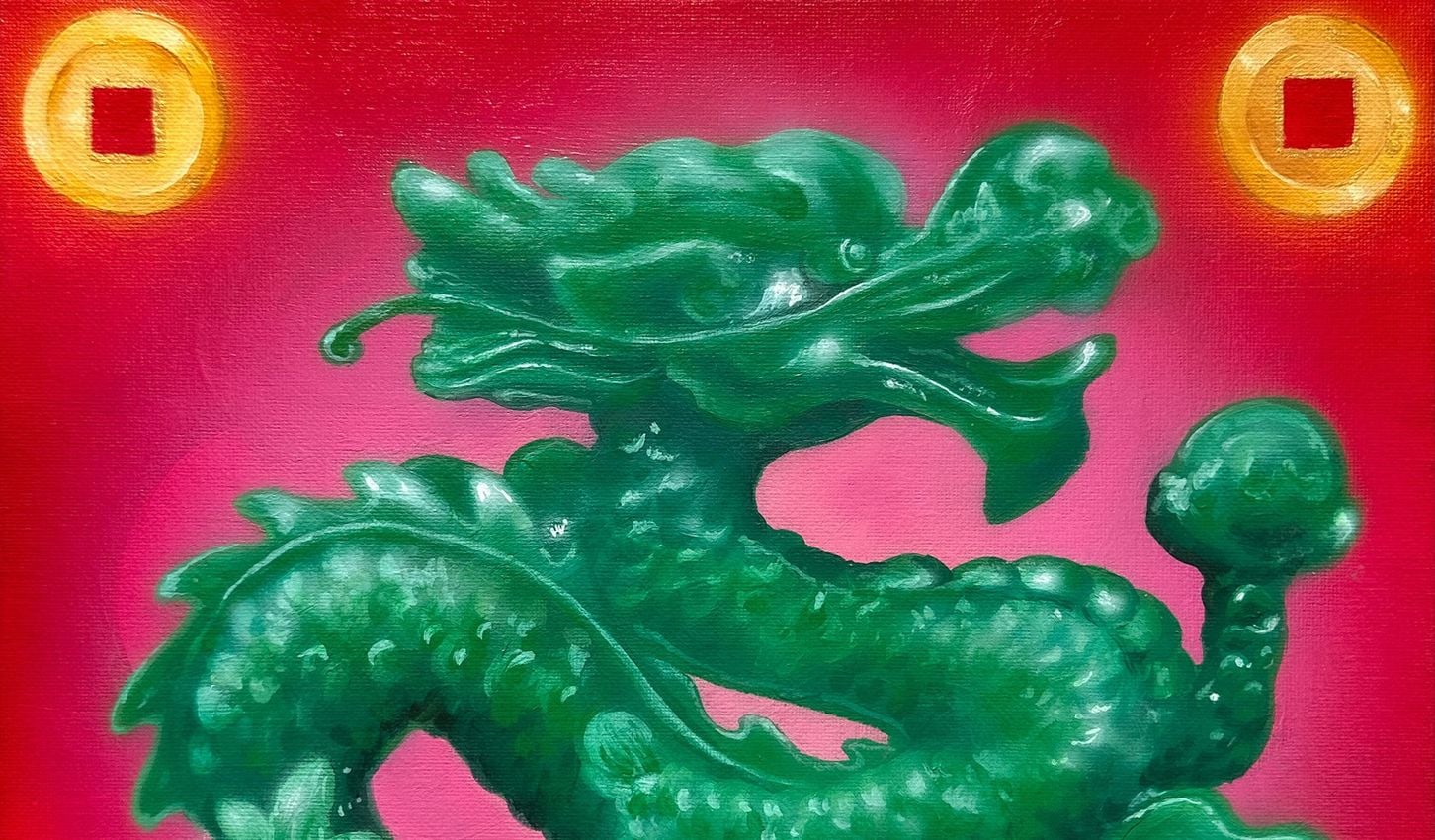
Main image: Ann Liu, Dragon, 2025. Courtesy the artist.






A respected voice in contemporary art discourse.
Focusing on ambitious storytelling and insightful art-world commentary. Ocula Magazine publishes in-depth interviews, critical essays and timely analysis on the artists, exhibitions and ideas driving the global art world.
Learn more about Ocula Magazine
Showcasing the best of the art world.
Ocula partners with galleries from around the world to highlight their artists, artworks and exhibitions. Gallery membership is by application and invitation, with each member vetted by an independent panel.
Learn more about Ocula Membership
Specialises in the sale of major artworks.
Led by a team with deep ties to the world’s leading auction houses, galleries and collectors. Ocula’s advisory team offers bespoke services to high-net-worth clients from around the world who are looking to acquire the best of contemporary and modern art.
Learn more about our team and services