






What Makes a Successful Gallery… And Why They Close
Save to My OculaNot every gallery survived 2025’s occasionally turbulent art market. Here are some of their obituaries.


BLUM
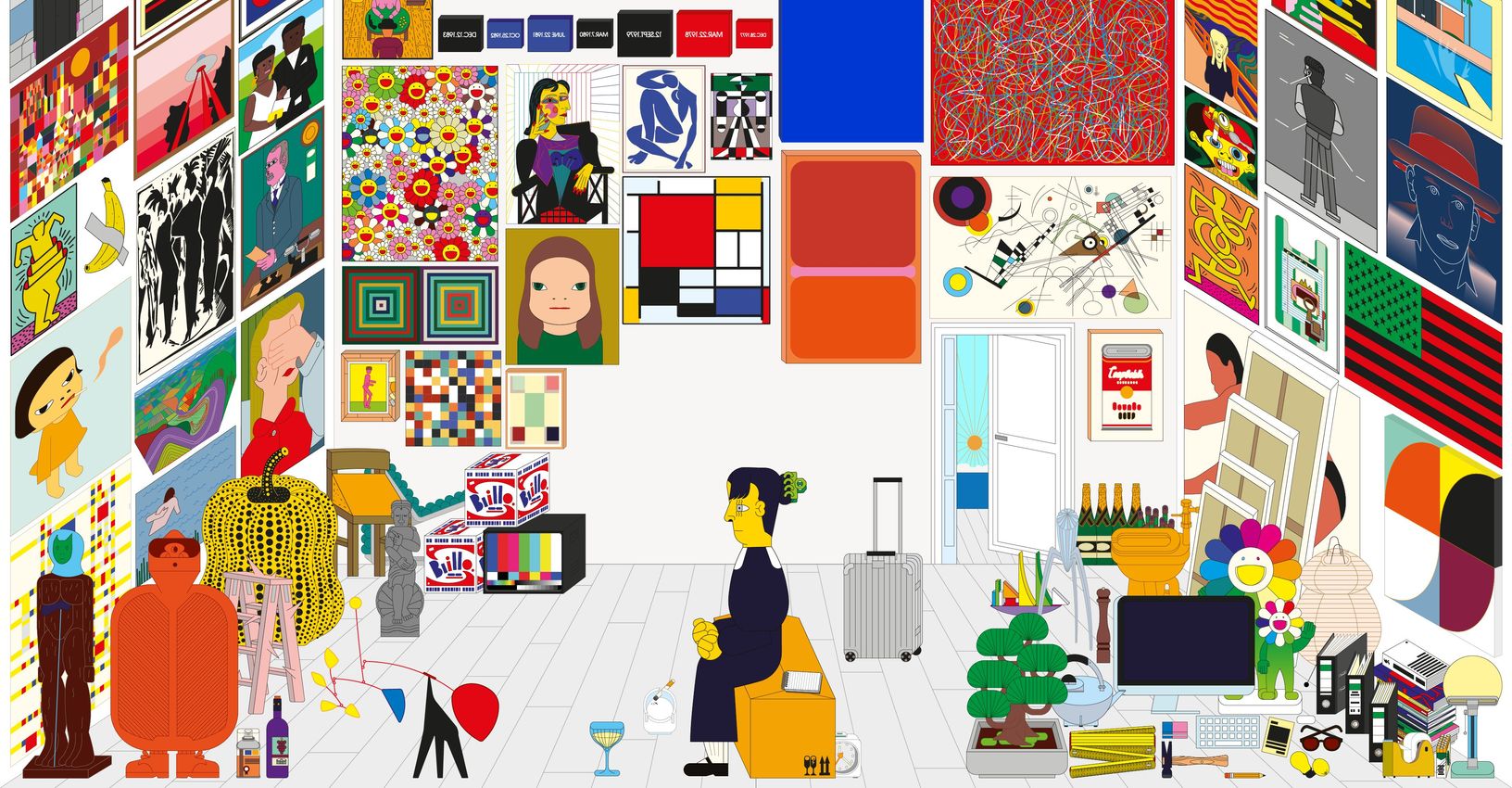
The end of a relationship is never easy and one of the most heart-wrenching moments is the dreaded, inevitable, somewhat undignified exchange of your respective worldly goods. When the Los Angeles-based gallery BLUM, which also had outposts in New York and Tokyo, closed this summer, tens of artists from its roster were invited to perform a similar ritual and collect their work (in some cases, 20 years’ worth of it) from a trove of more than 500 pieces stored in a 20,000-square-foot warehouse.
At the time, the gallery’s proprietor Tim Blum described his decision as an intentional one, driven not by the art market but by burnout and a deep ennui with the state of the art world. The stagnant sales at this year’s Art Basel, where BLUM just about broke even, as he told ARTnews, was ‘confirmation of everything I’ve been feeling for years’.
In late 1994, Blum moved back to Los Angeles from Tokyo, where he had been living for five years, to start a gallery with his friend Jeff Poe. The pair were unlikely art dealers: L.A. dudes with strong links to the city’s DIY punk scene. They didn’t seem long for the sharp-elbowed, fast-talking, East Coast-centric art world; ‘New York didn’t give two shits about L.A.,’ said Blum in a 2020 interview.
But the gallery survived, and in the following decades Blum & Poe became a beacon for the city’s growing art scene, mounting early exhibitions for now-legendary local artists including Mark Grotjahn and Paul McCarthy. In the mid-2010s, the art world warmed to the city, with Hauser & Wirth and Sprüth Magers opening outlets there. Blum & Poe flexed their L.A. muscles in 2016, hosting Famous, an exhibition by Kanye West that featured a lifelike sculpture of the rapper in a bed next to figures including Taylor Swift and Donald Trump. Blum, who was pictured alongside West’s now ex-wife Kim Kardashian at the opening, insisted that it was ‘a serious piece of art’.
“Almost everyone fucked up. The problems most galleries are now facing were created by them.”
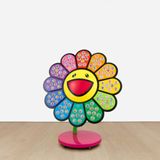
The commercial focus on L.A. sparked by the newcomers was a mixed blessing; Blum & Poe always had a prominent spot at the city’s new edition of Frieze art fair, which arrived in 2019, but began to lose star artists, including Anna Weyant and Henry Taylor (to Gagosian and Hauser & Wirth respectively). Particularly painful was Takashi Murakami’s departure from the gallery in 2019, the year of his first exhibition with Gagosian in Beverly Hills and 22 years after his first show with Blum & Poe. The gallery was instrumental in the growth in American popularity of Japanese artists like Murakami, alongside Yoshitomo Nara and Chiho Aoshima.
Poe, often described as the quieter partner who worked on the back end to keep the gallery ticking, left Blum to go it alone in 2023. In an interview given shortly after the gallery closed this July, Poe was frank about the problems facing galleries in today’s market, citing overexpansion and rampant ambition. ‘Almost everyone fucked up. […] The problems most galleries are now facing were created by them.’
Today, Blum’s future as a dealer is unclear. He issued a statement in July that positioned the gallery’s closure as a transitional moment ‘away from the traditional gallery format toward a more flexible model’. So far, he hasn’t expanded on this claim. In today’s art world, where many gallerists who claim to be somehow subverting the art market’s extractive model end up acting to reinforce it, he’d do well to consider his next move carefully.

Project Native Informant
The announcement of Project Native Informant’s closure this October took the shape of a short statement written with a spare, impersonal clarity that befitted the programme and philosophy of its founder, Stephan Tanbin Sastrawidjaja. There was no press tour, no closing exhibition (in fact, the gallery had quietly closed its final shows back in July) and no self-mythologising.
Ever since its 2013 opening in a windowless garage in Mayfair, a stone’s throw from the glitzy galleries of Bond Street, yet a million miles away in both its conceptual ethos and spartan interior design, Project Native Informant served as a subtle and thoughtful platform for many of the most perceptive and exciting artists making their names during its lifetime.
In a 2019 interview, Sastrawidjaja set out his ethos as a gallerist: ‘I am drawn to artists who in divergent responses and through varied media reflect the ever-changing present.’ What could be a meaningless platitude took shape as a fitting mission statement from Sastrawidjaja, who brought this to life through a programme that gathered artists who were attempting to make sense of the strange, evolving, post-digital world of the 2010s.
There is not one unifying aesthetic sensibility that could be attributed to the gallery’s programme, but all of its exhibitions—from graffiti-inspired abstract paintings by Sean Steadman to Georgie Nettell’s installation of helium balloons emblazoned with the names of large corporations—carried the feeling of trying (and, often, failing) to organise the chaos of modern life.
“It’s a familiar story that underscores the precarious position of small galleries as the custodians of their artists’ early careers.”
After growing up in Los Angeles, Sastrawidjaja earned a PhD in comparative literature from Columbia University before working for Paula Cooper Gallery, which he would go on to cite as a formative influence on his own gallery. In the London scene, he found mentors in gallerists Cornelia Grassi and Finola Jones of greengrassi and Mother’s Tankstation respectively.
From Mayfair, Project Native Informant moved to a vacant office space multiple floors above the Holborn Viaduct in 2016 and then, in 2019, to the more traditionally gallery-like, concrete-floored Bethnal Green premises that it would occupy until the end. Opening a new space the year before a global pandemic would have presented unprecedented challenges, but the gallery turned these conditions to its advantage with an online programme that excelled during this time. PNI Online, launched in April 2020, remains one of the only digital gallery presentations that still stands up today. In March 2021, the gallery mounted one of its most memorable shows: Adam Gordon’s Bald Woman, a strange and haunting installation of a single fence post, lit by office striplights and viewable only from outside the gallery.
Last year, Joseph Yaeger, one of London’s most promising young painters, left the gallery and joined Gladstone Gallery and Modern Art, ending a relationship with Project Native Informant that started when he graduated from the Royal College in 2019. It’s a familiar story that underscores the precarious position of small galleries as the custodians of their artists’ early careers, with many absorbing early risk before larger galleries swoop in only once the upward trajectory of these formerly unknown names is assured. But Project Native Informant wasn’t a gallery that lived and died on star artists. The gallery’s strength was always the unique voice that it developed through its varied and ever-unexpected programming.
Venus Over Manhattan
‘Everyone told me not to, so of course I did,’ the collector-turned-dealer-turned-collector Adam Lindemann wrote in July in an Artnet article announcing the closure of his New York gallery Venus Over Manhattan. The tone of Lindemann’s autoeulogy—somewhere between radically candid and a little boastful—doesn’t seem befitting of an art dealer: discretion is one of the art industry’s most important skills, especially when the going is not good. But Lindemann was never like most dealers. Since the gallery opened in 2012, he’s been a reliable source of public comment, which has tended to undulate between honesty and puffery.
After publishing two books on collecting in his former life (Collecting Contemporary and Collecting Design, published by Taschen in 2006 and 2010), Lindemann continued to publish commentary as a dealer with a directness that often seemed out of step with his new job. In an opinion piece for the New York Observer, ‘The Art World’s Biggest Lie: A Collector Debunks Art as an Investment’, he admits an obvious truth about art collecting that few gallerists would put so plainly: lucrative resale opportunities do exist, but are ‘temporary and rely on the fickle interest of the nouveau riche of any given season’.
“Art fairs ask you to get down on your hands and knees, wag your tail, and beg for forgiveness.”
Whether Lindemann’s candid takes on such matters made him enemies in the industry is unclear, but he certainly managed to keep plenty of friends from his collecting days. His first years in business on upmarket Madison Avenue saw him collaborate with big-name galleries including Perrotin, Harkawik and White Columns. He also managed to retain the affection of his wife, the fellow gallerist Amalia Dayan, despite some rather literal missteps. (A hilarious viral video from Lindemann’s Instagram page shows him accidentally stepping on a Yves Klein pigment work in her nearby gallery, Levy Gorvy Dayan.)
The access and sensibility that Lindemann built as a collector undoubtedly placed him in good stead for dealing: Venus Over Manhattan’s programme was replete with now-canonical names such as Raymond Pettibon, Peter Saul, Katherine Bernhardt and a pre-banana Maurizio Cattelan. The gallery quickly became known for its ambitious and imaginative installations; Cattelan’s sculptures, for example, were placed behind doors and viewable only through their windows and peepholes.
In his announcement about the gallery’s closure in July, Lindemann made it clear that this marked the end of his career as a dealer—and that he won’t miss much of it. Art fairs, he wrote, ‘ask you to get down on your hands and knees, wag your tail, and beg for forgiveness’ before consigning you to the waiting list. But to assume that he’s out of the game completely would surely be a mistake. As a collector, he sold record-breaking works by Jeff Koons and Jean-Michel Basquiat before and during his dealing career; just two years ago, Christie’s hosted a $31.5 million sale of works from his collection. Though he might denounce treating art as an asset class, it would be a surprise for him to stop buying and selling it now.

CLEARING
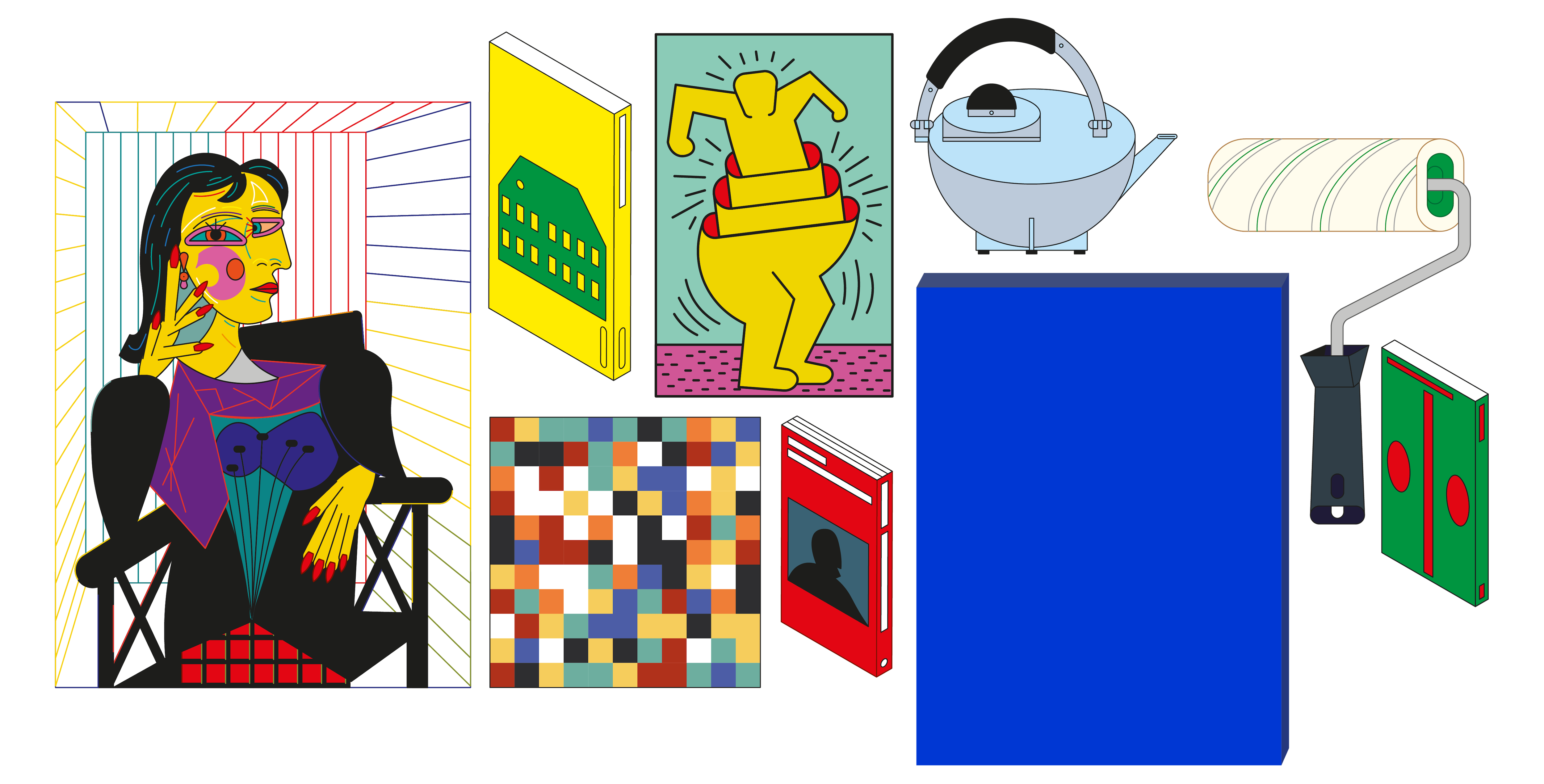
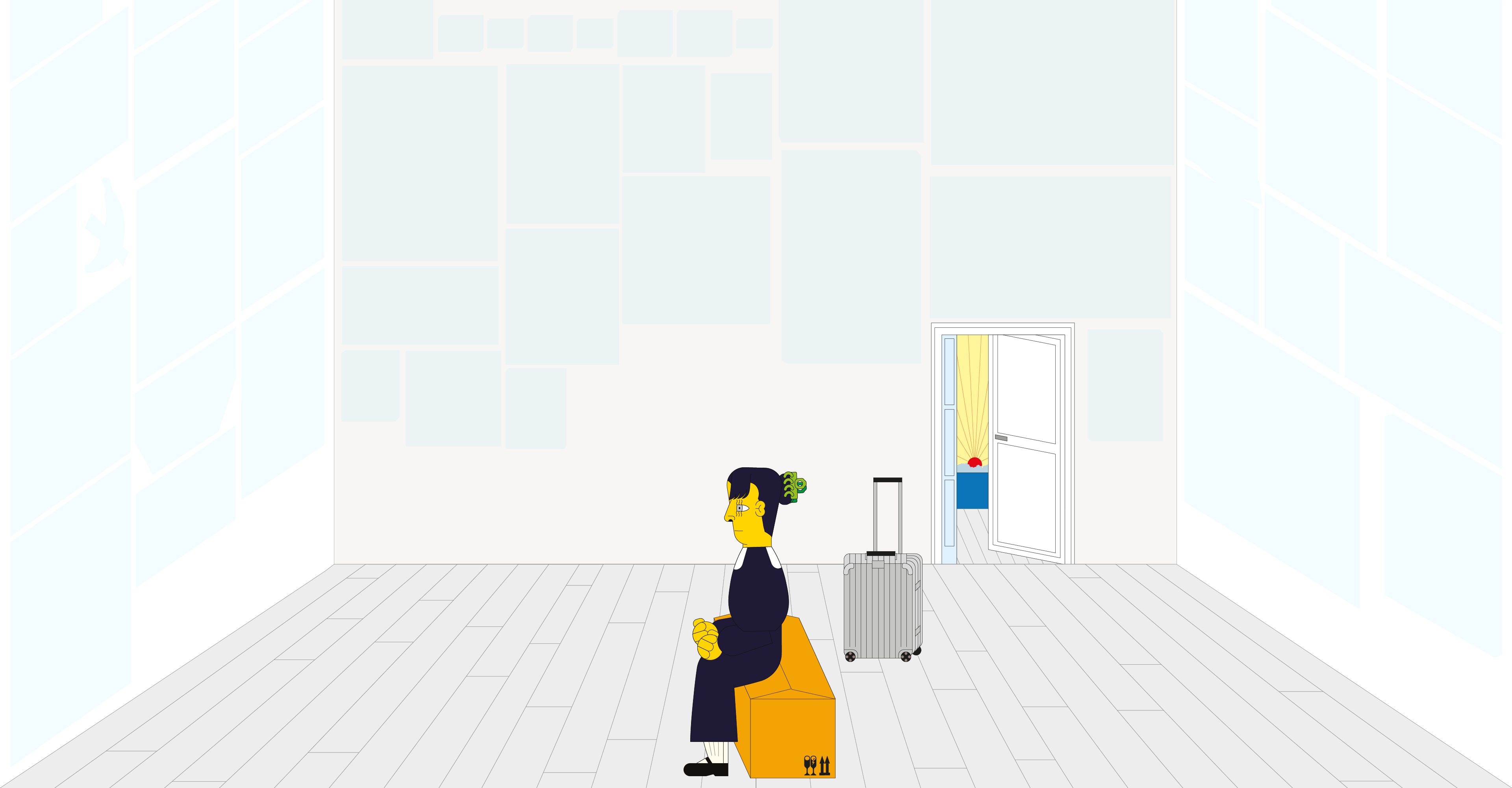
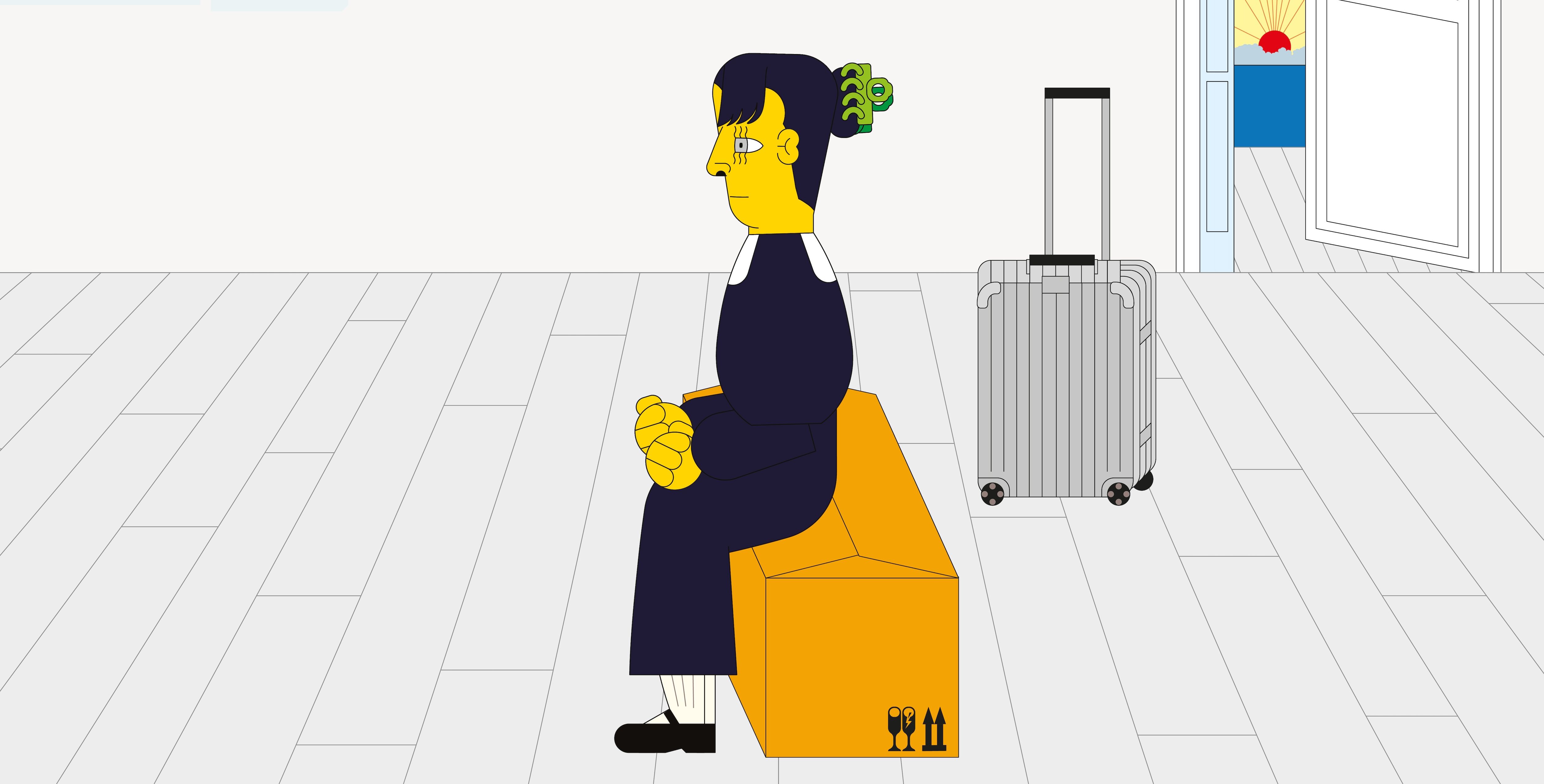
There’s a pleasing symmetry to the story of CLEARING, Olivier Babin’s gallery, which, at the height of its powers in the mid-2010s, maintained spaces in New York, Los Angeles and Brussels.
Originally an artist himself, Babin moved from Paris to New York in 2009 for a six-month residency with ISCP in Brooklyn. Here, he found himself in the middle of a creative scene that he didn’t want to leave. In 2011, he temporarily turned his studio—a cavernous, concrete-floored space on an upper floor of his building in Bushwick—into a gallery. It was a low-stakes, DIY affair. The first exhibition featured a New York friend, the Belgian painter Harold Ancart, who had recently started painting the idyllic landscapes for which he would become known. At the time, Babin and Ancart were both in their thirties.
A year later, Babin opened a new outpost of the gallery in Brussels on a whim. He’d been advised that, to improve his chances of showing at the notoriously selective Liste art fair in Basel (considered a key fair for emerging galleries) he should expand into Europe. The move, he tells me, was ‘purely deceptive’. It wasn’t until three years later that CLEARING showed its first presentation at Liste, but by then the Brussels gallery, a handsome townhouse in the city’s Forest (Vorst) area, was a success. It remained open until the end.
“We waited and waited, hoping to turn a corner.”
As the gallery grew, Babin learned that building a name can require spending above one’s station. During The Armory Show in New York one year, he organised his first gallery dinner at the vaunted downtown bistro Lucien. It cost ten times his monthly rent: ‘My vision went blurry, but I forced myself to smile and hand over my card,’ he recalled in an interview. The transaction went through, CLEARING lived to see another day and Babin was assured of the business importance of hosting a good party.
Ancart last showed with CLEARING in 2023—the same year as his first show with his new gallery, Gagosian in New York. He’s one of a long list of contemporary artists, including Huma Bhabha, Hugh Hayden and Marguerite Humeau, who Babin worked with before their big break. He doesn’t blame lost artists for the gallery’s fate after 14 years. It was ‘just a matter of numbers’, he says of the final months. ‘We waited and waited, hoping to turn a corner.’ This August, the gallery closed all three of its spaces.
Babin’s new project, Maison Olivier, sees him return to his original career as an artist, working without the infrastructure of a gallery to oversee. It is everything that art dealing isn’t: ‘Grounding, humbling, smoothing.’ At home in New York—a city he never left—he takes commissions to meticulously paint names and words on to coloured canvases. He hesitates to call it art: ‘It’s very unpretentious.’

Hot Wheels
If you want to make the gods laugh, tell them your plans. Versions of this proverb appear in multiple cultures, but when Julia Gardener paraphrased it in a 2019 text marking her gallery Hot Wheels Athens’ new premises and transition from a project space to a commercial gallery, she attributed it to Greece. It’s unlikely that her plans then included opening a new space in London within four years and, two years after that, writing another note with her co-founder, the almost-eponymous Hugo Wheeler, explaining their decision to ‘bring the gallery to a close at a moment that reflects the integrity of its work’.
Hot Wheels Projects started in the wake of documenta 14, hosting exhibitions in the neoclassical apartment that Gardener and Wheeler shared with their dog Gigi, a short walk from Athens’ Archaeological Museum. Wheeler had moved to Athens from London for a job at influential gallery The Breeder, but the pair quickly saw potential for a programme of their own in the city’s emerging art scene, which had been emboldened by documenta. At the time, Wheeler described the city to Artnet as a great place for young galleries, ‘firstly thanks to very interesting local practitioners’, adding that ‘being able to grow with them [...] is really the gallery’s main purpose’.
“The gallery always valued novel ideas over big names.”
Exhibitions at Hot Wheels were marked by a sense of curatorial heft and taste for conceptualism that reflected its growth out of documenta and origins as a project space. The gallery always valued novel ideas over big names, and many of its ambitious presentations might have felt more at home at a biennial than a commercial gallery. An early group exhibition took American actress Lindsay Lohan’s then-recently-opened Athens megaclub LOHAN as a prism through which to consider, in the words of its accompanying text, ‘ancient mythology, celebrity and the symbolism of the club experience in the context of modern-day Athens’.
The gallery’s 2023 arrival in London, in a space serendipitously located steps away from the British Museum, presented an opportunity to bring Athens’ art scene to a broader audience. A highlight from this period was a solo exhibition of poignant, closely cropped photographs of strangers on city streets by the Greek artist Yorgos Prinos, who had first exhibited with Hot Wheels in 2019. ‘Hugo and Julia brought artists from the global periphery to an international audience,’ he tells me. ‘In the process they became two of my closest interlocutors as well as dear friends.’
Hot Wheels was never going to resort to selling market-friendly work to bolster its books. Though the gallery’s closing note promises that its end ‘did not arrive by way of overreach, a forced hand, or the current climate’, it’s certainly fitting that the gallery should shutter on its own terms, closing up shop before relenting to the demands of a mercurial art market. —[O]









A respected voice in contemporary art discourse.
Focusing on ambitious storytelling and insightful art-world commentary. Ocula Magazine publishes in-depth interviews, critical essays and timely analysis on the artists, exhibitions and ideas driving the global art world.
Learn more about Ocula Magazine
Showcasing the best of the art world.
Ocula partners with galleries from around the world to highlight their artists, artworks and exhibitions. Gallery membership is by application and invitation, with each member vetted by an independent panel.
Learn more about Ocula Membership
Specialises in the sale of major artworks.
Led by a team with deep ties to the world’s leading auction houses, galleries and collectors. Ocula’s advisory team offers bespoke services to high-net-worth clients from around the world who are looking to acquire the best of contemporary and modern art.
Learn more about our team and services