





Object Lessons
The power of collective experience imbues this section of Koyo Kouoh’s central exhibition at the Venice Biennale. So why is the late curator glorified above everyone else? Save to My Ocula
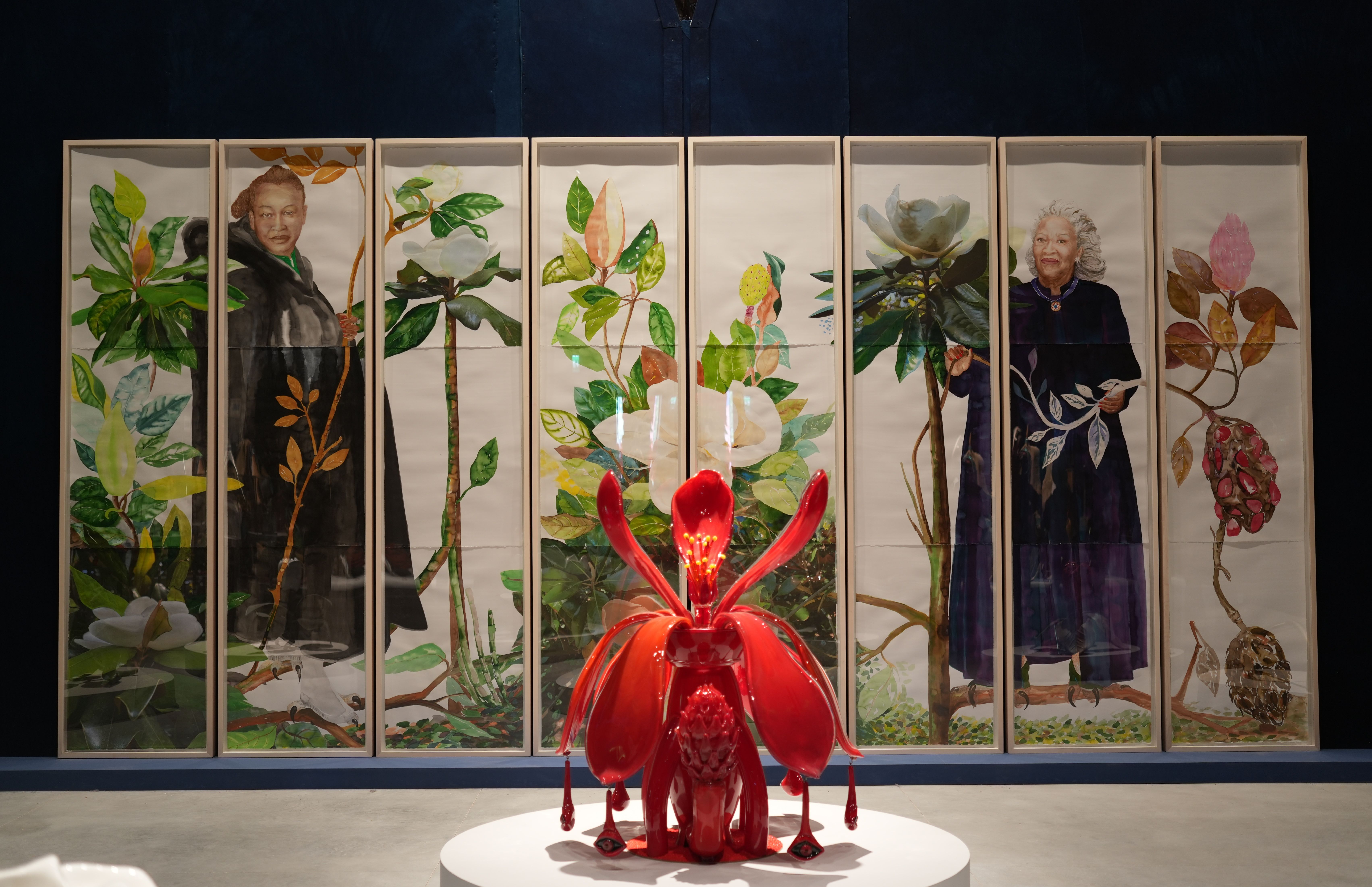
If the late Koyo Kouoh had lived to hang the works in the central exhibition of this year’s Venice Biennale, she surely would not have chosen to place a monumental portrait of herself in the opening room. It is displayed in the Giardini, one of two venues (alongside the Arsenale, a short walk away), that host the two-part group show, featuring 110 artists from around the world. Anatomy of the Magnolia Tree for Koyo Kouoh and Toni Morrison (2026), Maria Magdalena Campos-Pons’s framed eight-panel watercolour, gouache and ink painting on paper, memorialises Kouoh, the first African woman to curate the biennale, and Morrison, the first Black woman to win the Nobel Prize for literature. Yet in placing an enormous, glorifying image of Kouoh at the centre of her own exhibition, the sensation of her absence is only heightened.
Such a bombastic, individualistic gesture is out of keeping with Kouoh’s chosen curatorial theme, In Minor Keys, in which she set out to tune into “the cadences, melodies and silences of resonant worlds that gather and create together a polyphonous assembly of art, convening and communing in convivial collectivity”, as she writes in her introduction to the show. Behind the painting is a raised mezzanine platform with a narrow viewing point right at the centre from which visitors can look down on the circular room below. In practice, this means a constant stream of cameras pointed from just above the centre of Campos-Pons’s painting, like an altar to the spectacle of it all.
That the portrait of Kouoh is one of only a handful of figurative images in the Giardini presentation serves to further isolate it from an emotionally resonant exhibition that consistently turns away from the literal human form in favour of poignant stand-ins and signifiers of humanity.
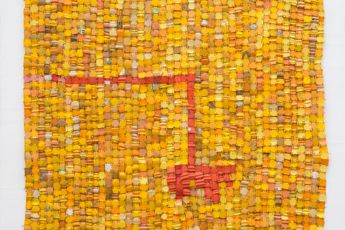
The diversity of the artists on show, many of whom are of African descent, is signalled through the small details and symbolism of the various objects and everyday domestic items assembled in their work. There is the glitter, plastic beads and tassels of Ebony G Patterson’s work. Or the boots, sewing machine and wooden masks of Issa Samb, a mentor to Kouoh, placed directly in dialogue with a miniature “exhibition in a book” by Marcel Duchamp. The boom and bust of the Black portraiture market frenzy of the early 2020s serves as a simmering backdrop to this shift away from the direct representation of the Black figure; it is notable that none of the African artists swept up in that moment, including Serge Attukwei Clottey, Amoako Boafo and Kwesi Botchway, feature in this biennale.
“In placing a glorifying image of Kouoh at the centre of her own exhibition, the sensation of her absence is only heightened”
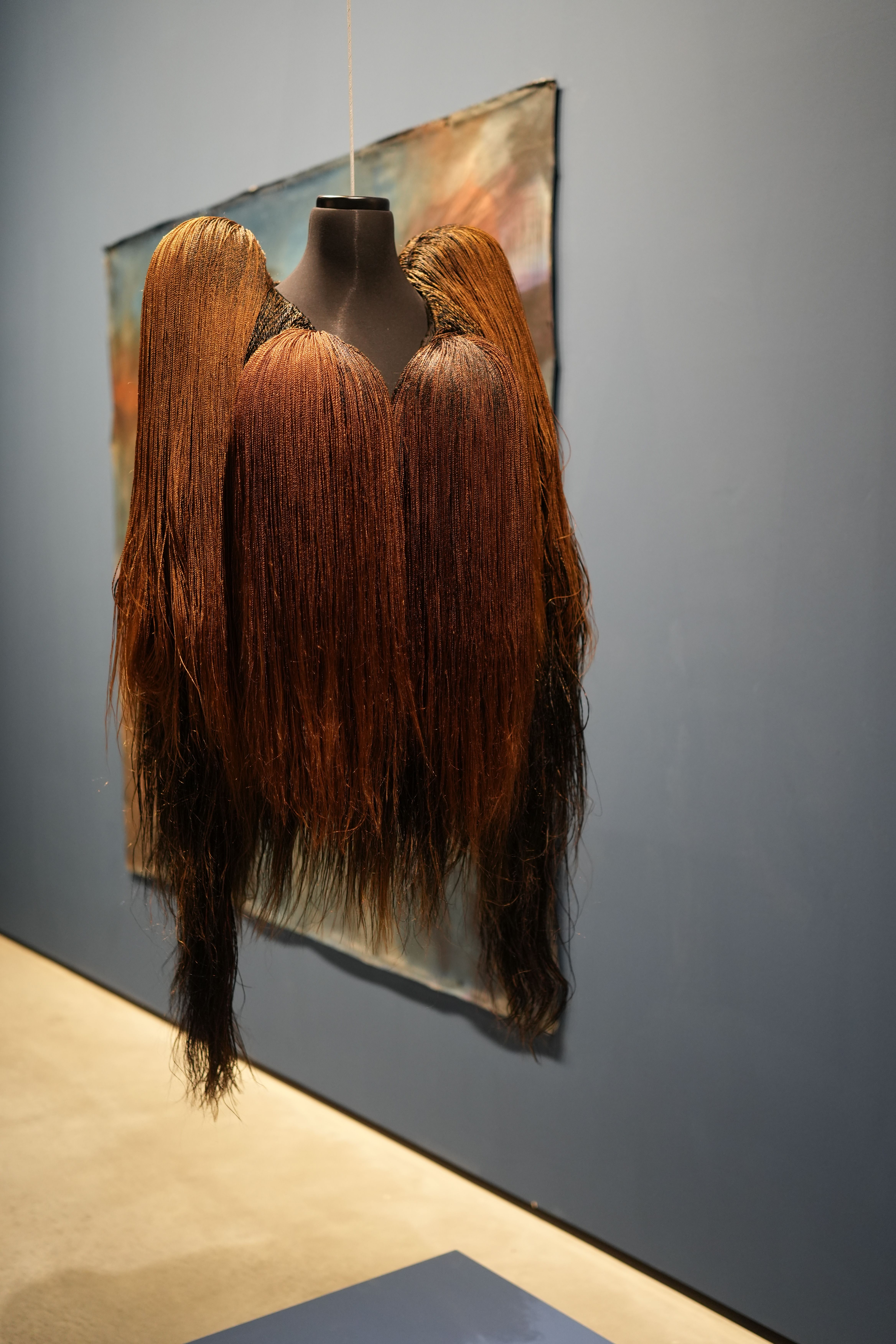
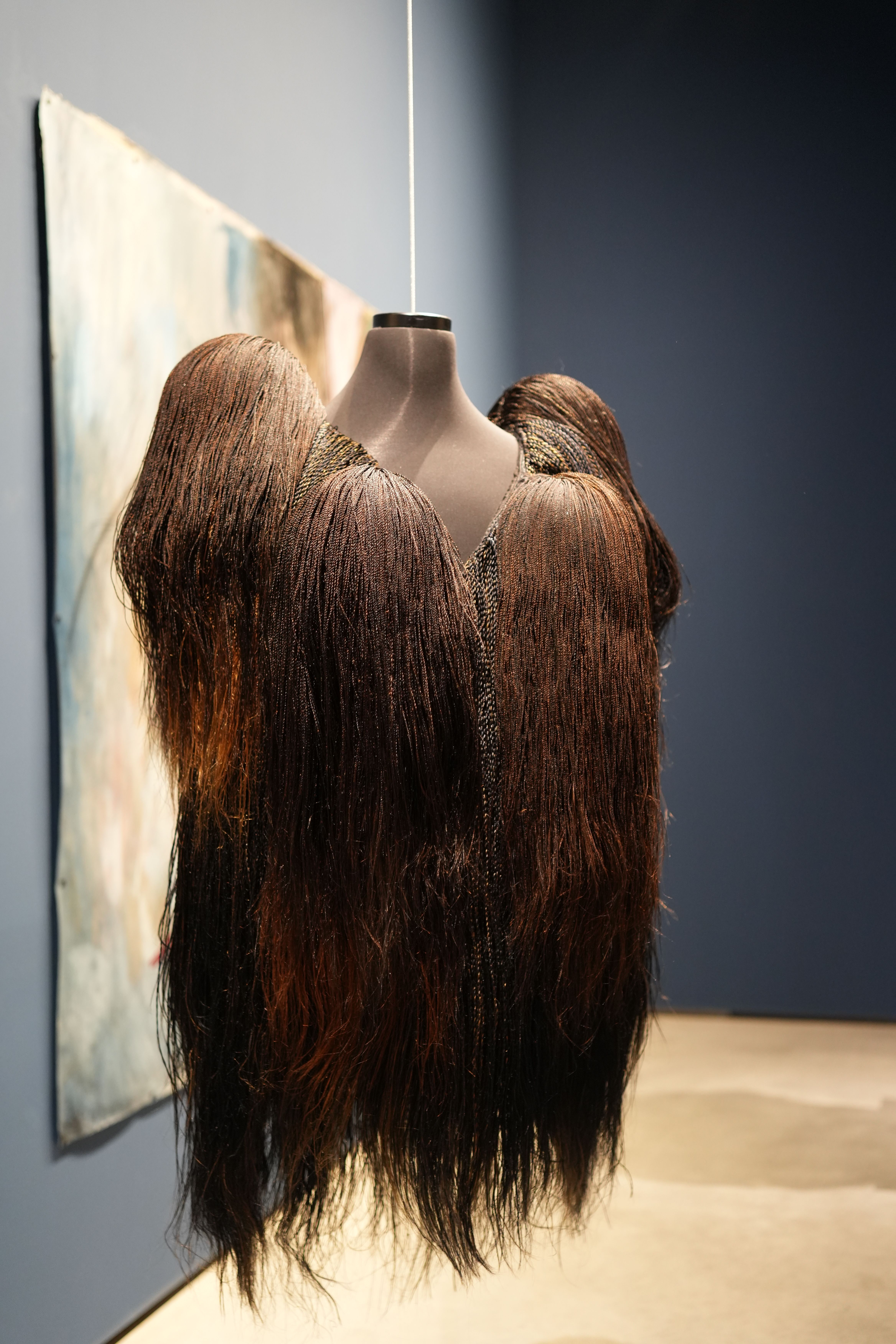
Suspended mannequin torsos are dressed in synthetic braided hair in Nigerian artist Marcia Kure’s Network V: Roadkill I-IV (2025–2026). The rounded shape of each empty wig, with a void where the head of the wearer would otherwise go, form exaggerated shoulder pads in jackets that recall the glossy blonde jackets created by fashion designer Martin Margiela from discarded costume wigs and hair extensions in 2009. Kure inverts the racial politics of the form, reflecting on the infrastructural pressure on Black women to cover their own hair with synthetic substitutes deemed palatable.
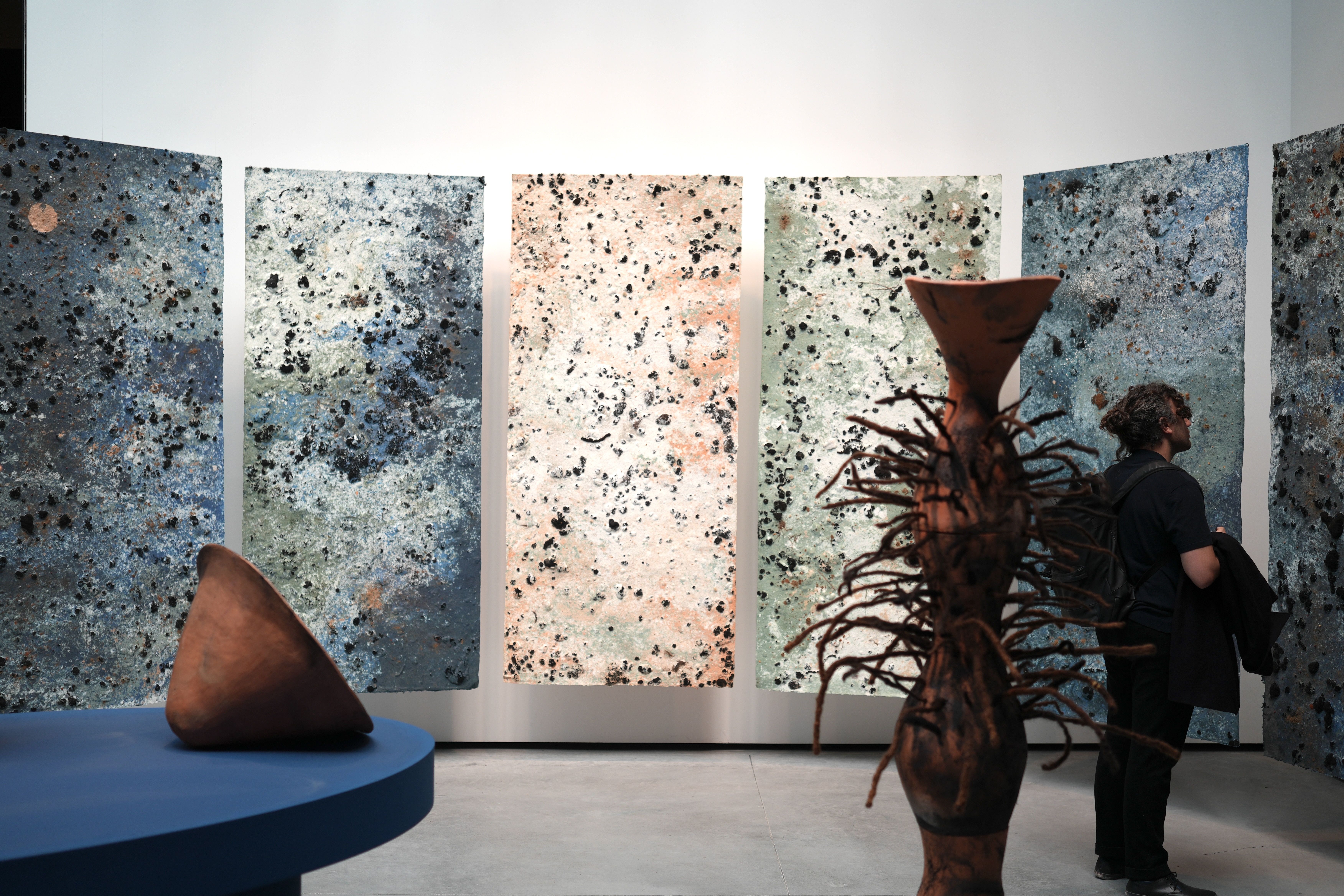
Afro hair and dreadlocks (real, this time) protrude from the large-scale vessels of American artist Adebunmi Gbadebo, made by the artist by hand using red clay dug from the burial plots at the True Blue plantation in South Carolina, where her enslaved ancestors were forced to labour. Gbadebo describes the vessels as funerary objects intended to commemorate her family as she uses the physical pigments and materiality of the land to evoke the simultaneous presence and absence of their lives in a presentation that transcends memorialising and speaks to the impossibility of reparation.
The structures and shelters that we call home come to the fore as another means of conjuring selfhood while leaving the figure unseen. Architectural structures are pervasive throughout In Minor Keys, both as places of safety and a reminder of how easily these can be destroyed. Gaza-born artist Mohammed Joha uses a collaging technique to layer discarded paper, fabric and cardboard on canvas in the series No Shelter (2025–206), abstract compositions that enact the rebuilding and reuse of scrap material familiar to those living in the Gaza Strip whose homes have been damaged or destroyed during the last three years of the Israeli invasion. The UN Office for the Coordination of Humanitarian Affairs reported in February 2026 that more than 92 percent of Gaza’s housing stock has been damaged during the war.
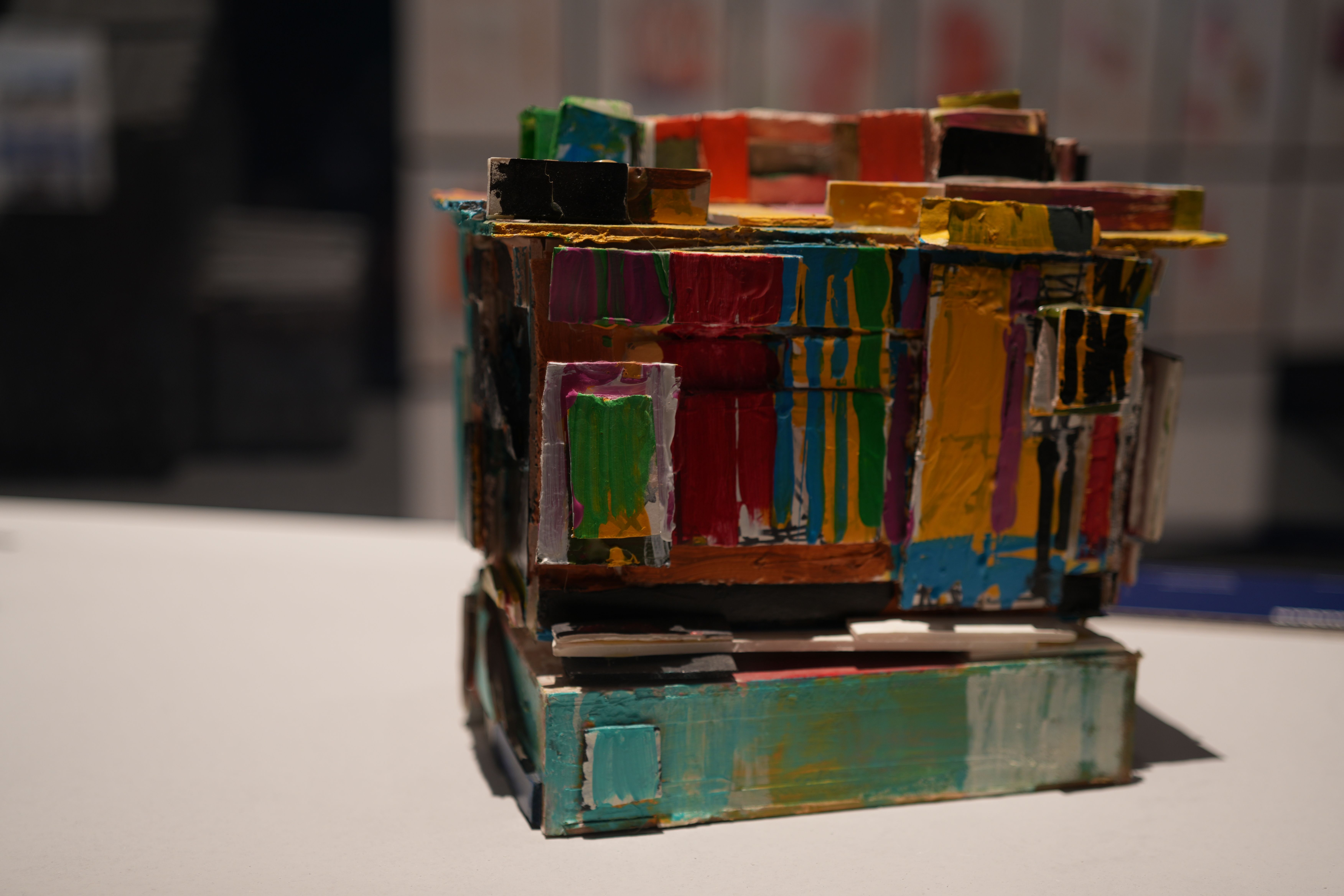
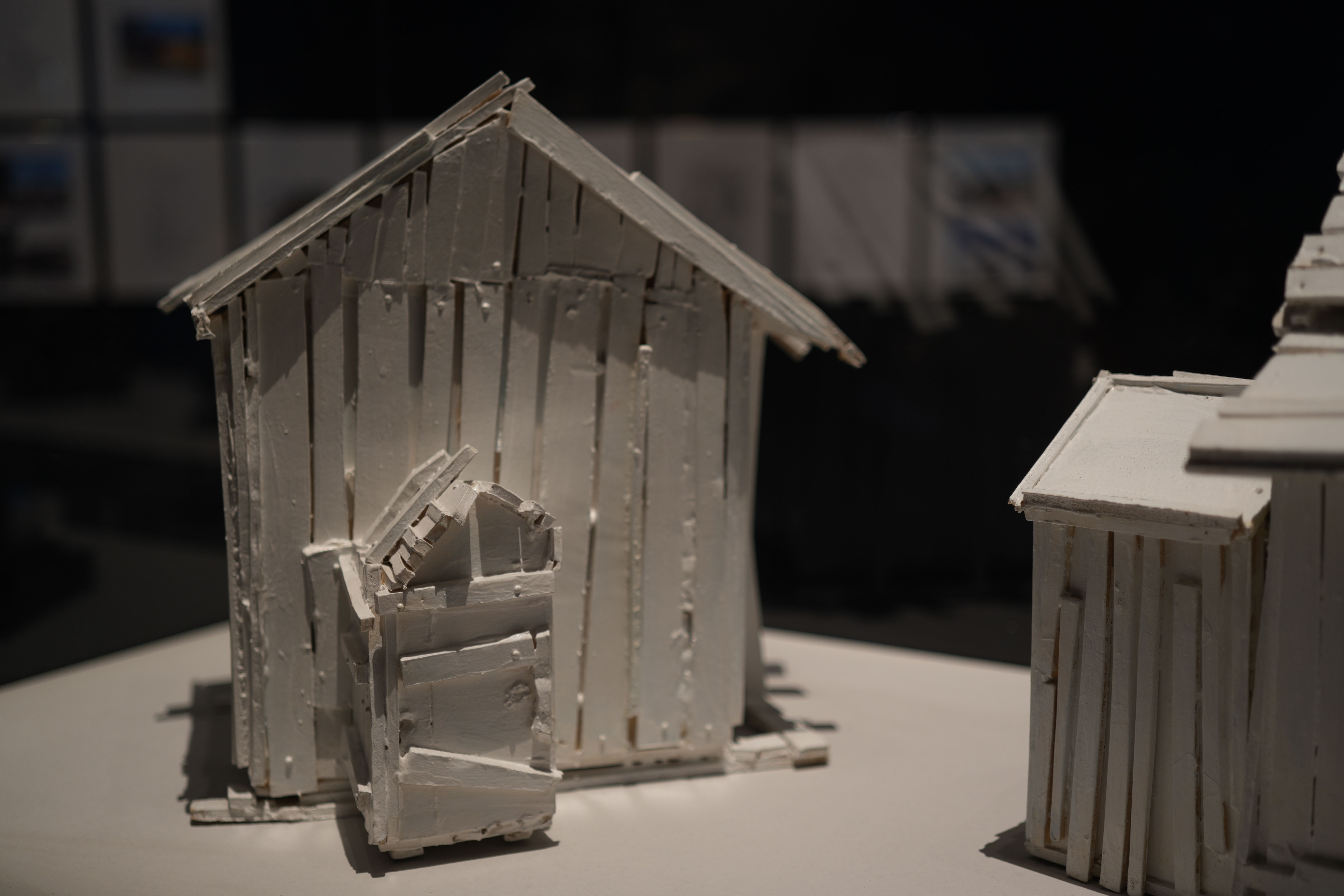
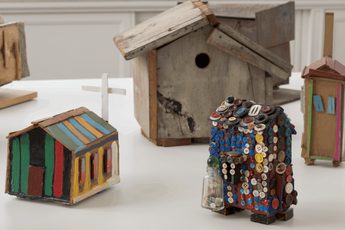
Miniature homes built from wooden spatulas, metal trinkets and bottle caps evoke a hand-built vernacular of the American South, and form part of a presentation of the work of the late Beverly Buchanan that spans playful drawings and paintings alongside sculptural pieces. Buchanan approaches her own African American heritage in an oblique manner that enacts a politics of refusal when it comes to the proliferation of identity-led art that has dominated the art world in recent years, most notably at the previous edition of the Venice Biennale, Foreigners Everywhere, curated by Adriano Pedrosa.
Buchanan is interested in contested land ownership, as well as the informal communities and structures that can form at the margins, like flowered weeds growing from beneath a paving stone. “I believe the entire world is descended from shacks”, she has typewritten beneath a pencil drawing of a simple wooden structure, part of Shack Stories (1991), a gridded wall of colourful drawings centred on this notion of home comforts and belonging, rendered with tenderness and humour. “Like a bridge, we all need one in our lives,” she writes beneath a drawing of a chair. Amid a vast exhibition in which seating for visitors was all but absent, I couldn’t help but smile.
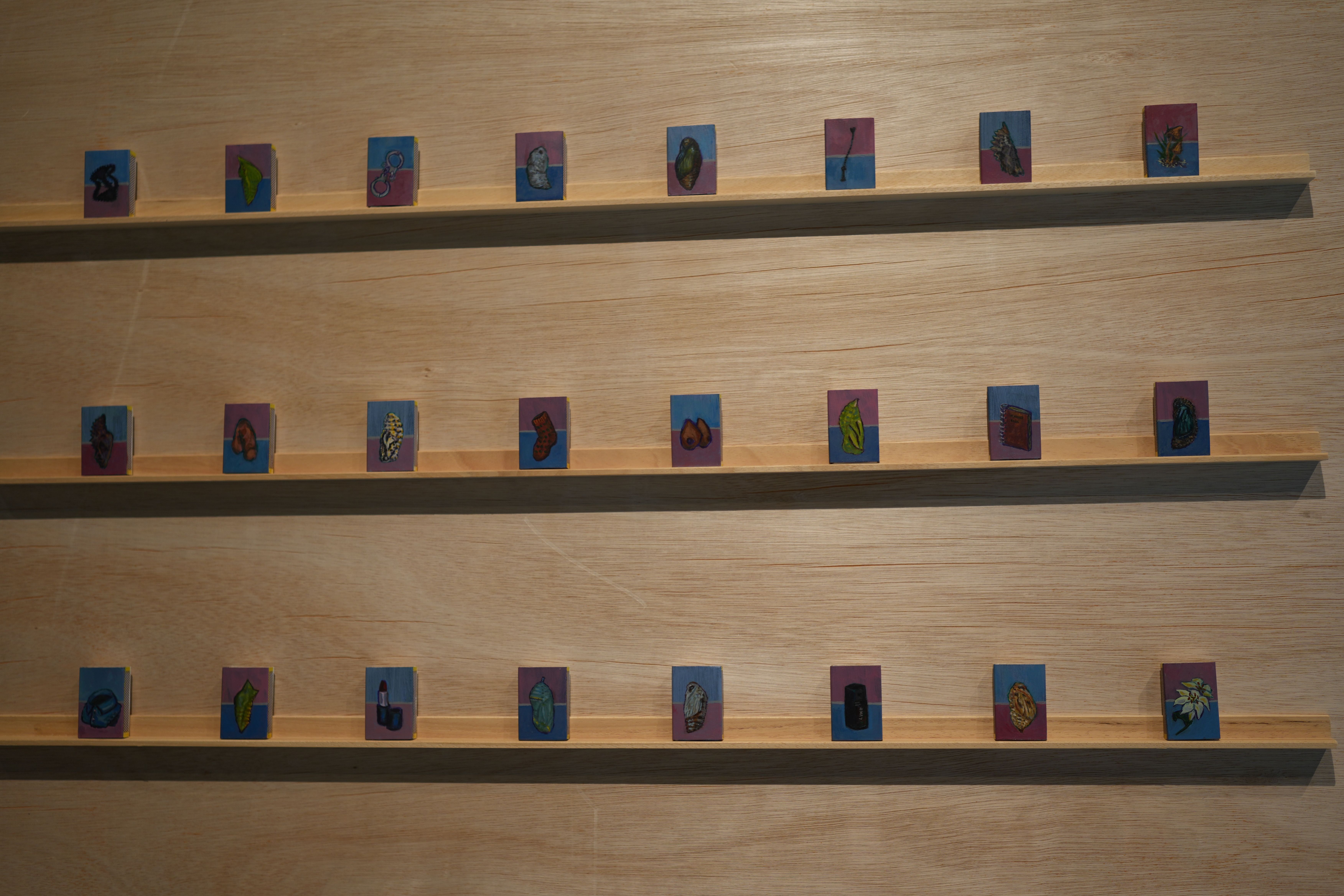
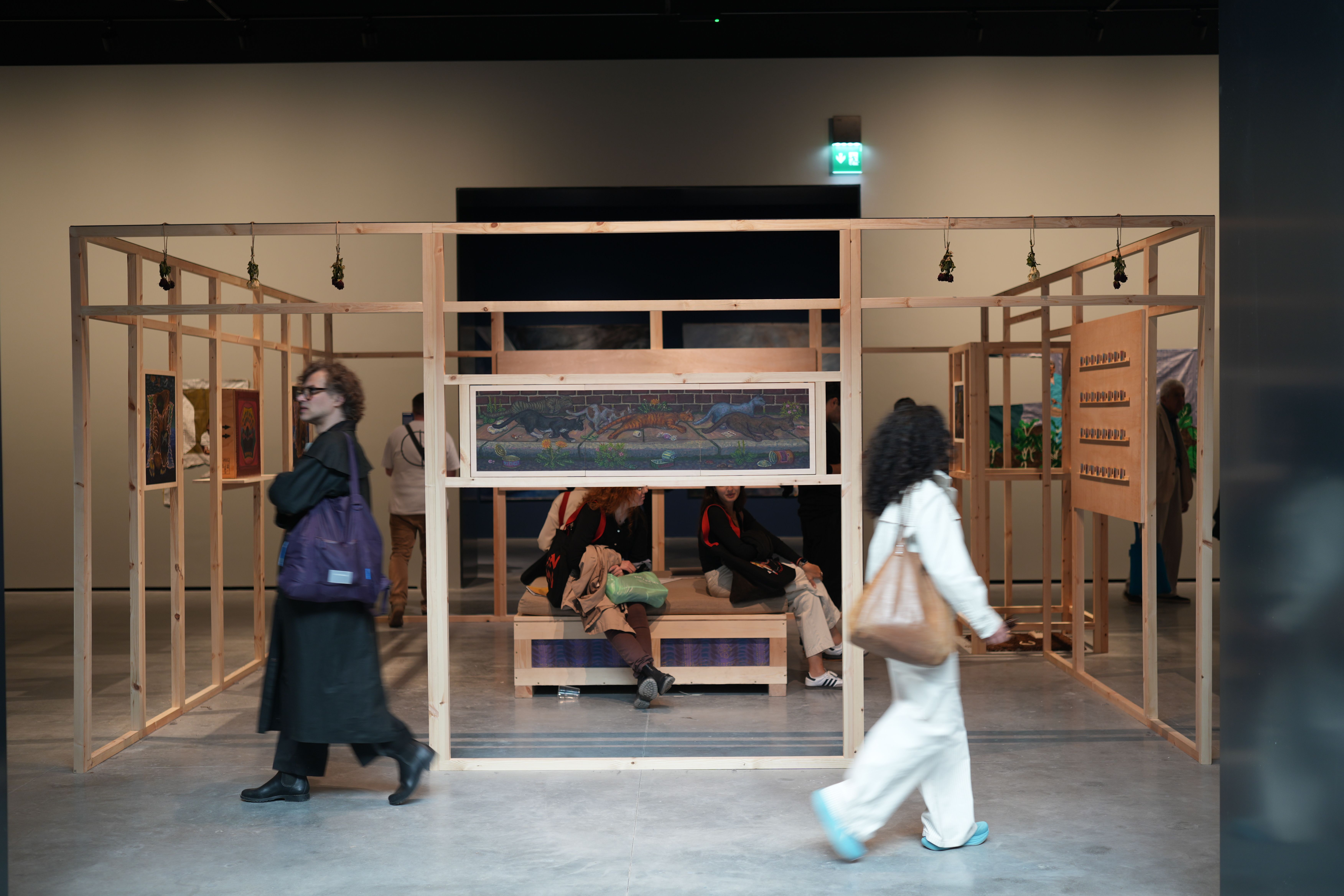
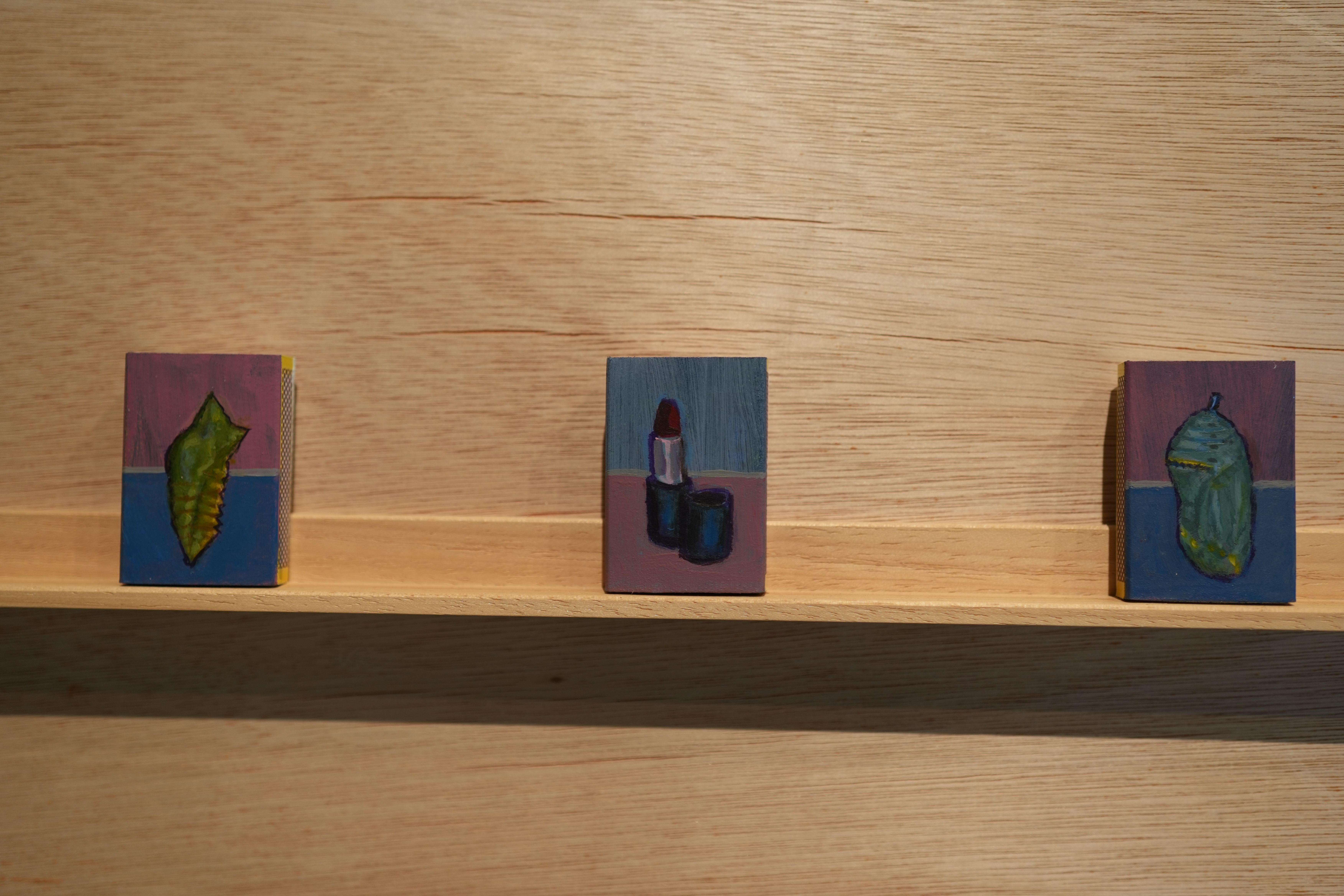
A few seats can be found inside Rolling Heart (2026), the large pine structure built in the centre of the Giardini presentation by British Bangladeshi artist Mohammed Z Rahman, which resembles the sparse outline of a house in the early stages of construction. Paintings on empty shipping crates can be seen from both sides within the empty frame of the structure, while 64 diminutive painted matchboxes are displayed on shelves. Titled Lovers’ Vigil (2024), each box forms a tiny canvas for Rahman to depict chosen objects typically associated with remembrance, such as white flowers and candles, alongside others including pink fluffy handcuffs, a lipstick and a single knitted sock. It is a quiet nod to sexual freedom, while hinting at a darker sense of loss associated with the AIDS epidemic, with the miniature form falling just on the right side of twee. I rolled my eyes when I overheard two women debating their favourite matchboxes, agonising between a picture of a Lynx deodorant and a speckled seashell like they were trinkets in a toy shop, but there is something to be said for a work that leaves space for play, however reductive that might be.
“Is the absence of the figure here a deliberate step towards the post-human, or cities razed by war?”
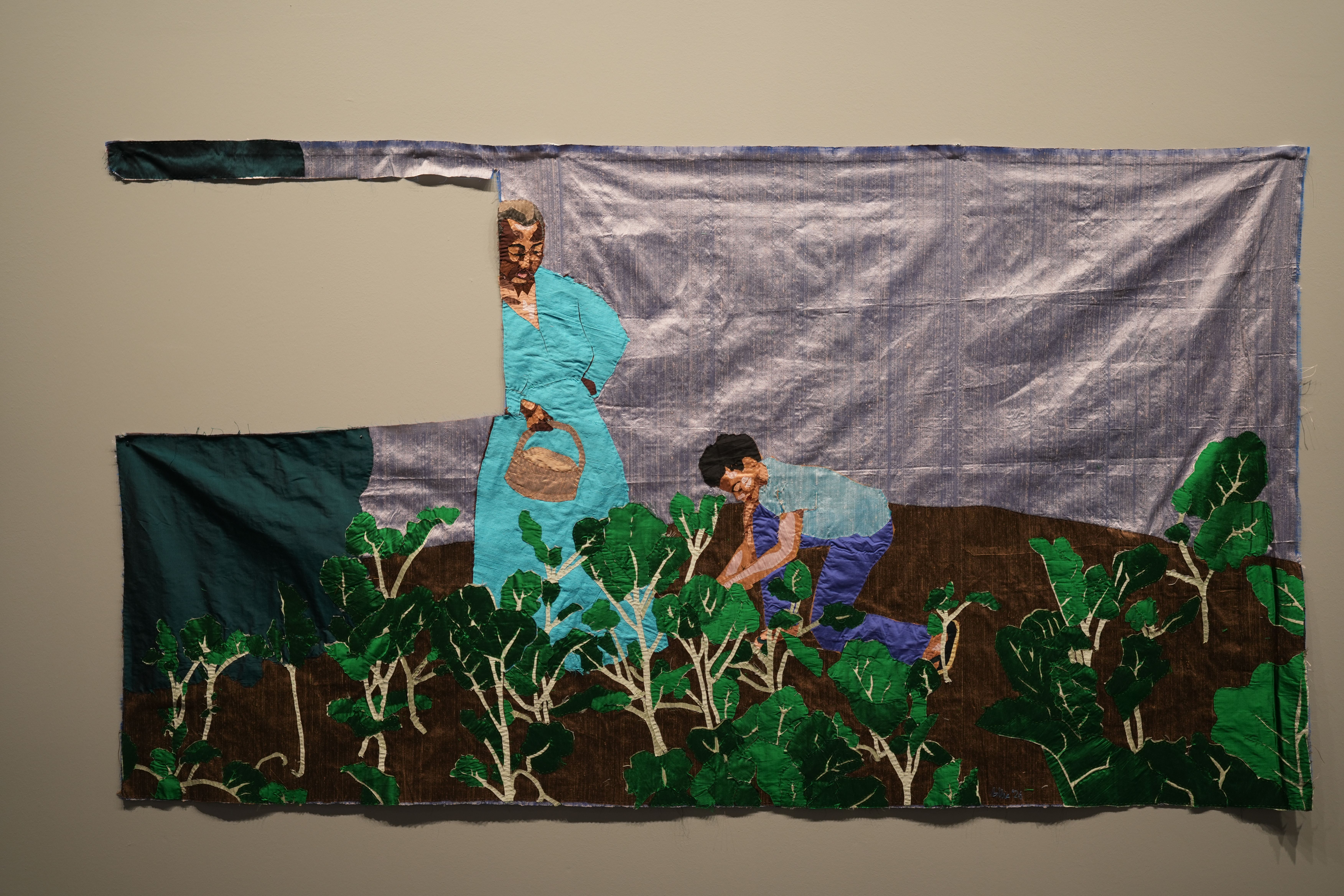
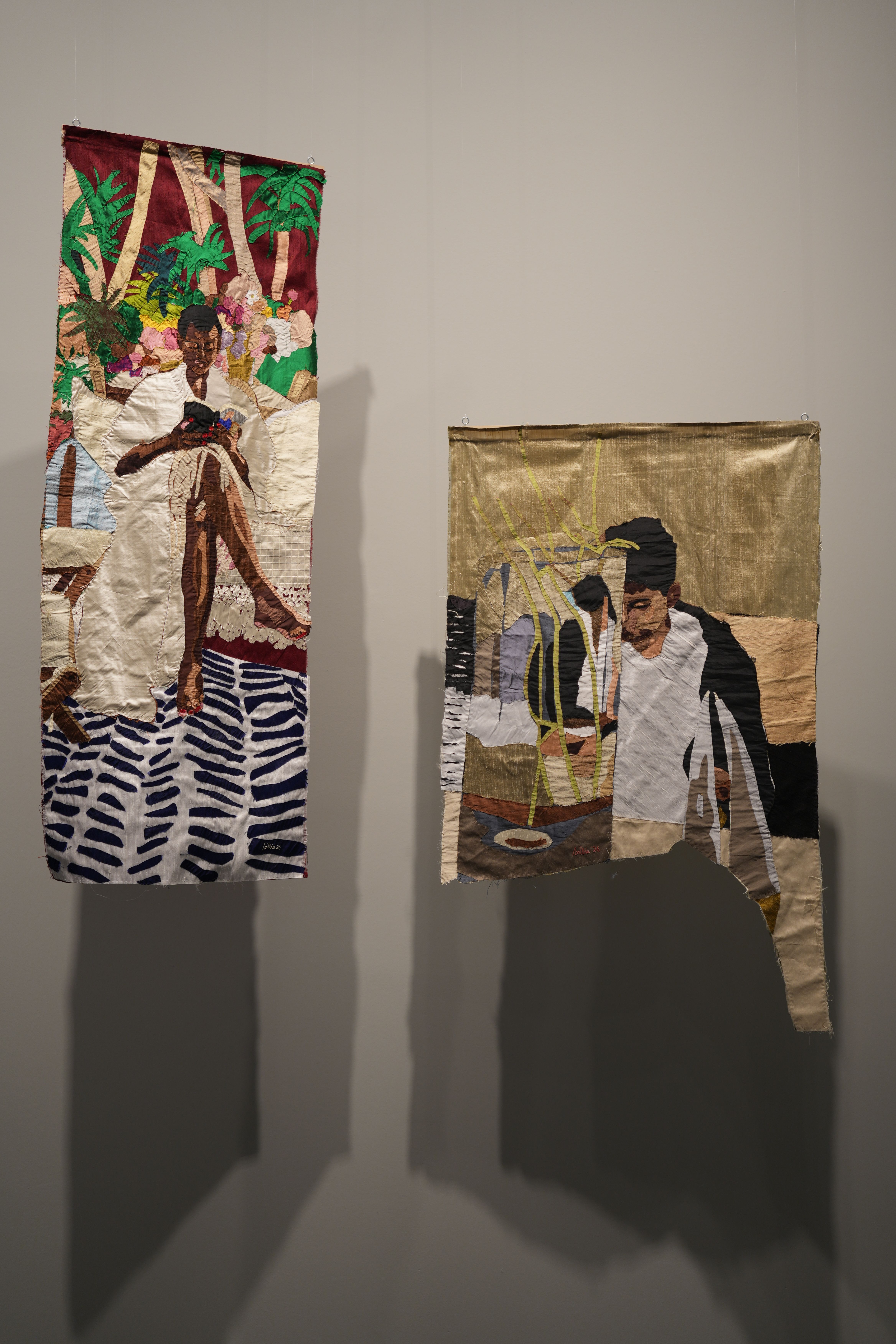
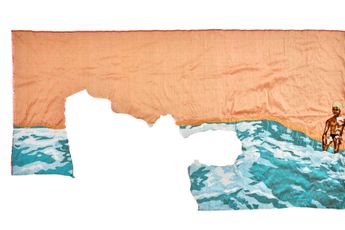
When artists do choose to show the human form, it is often spliced or unravelling. Malawi-born artist Billie Zangewa (now based in South Africa) collages raw silk to create tapestries that depict scenes from her own domestic life with friends, family and her own child. She works in the garden, reads a novel, and reclines on a striped towel beneath a parasol. It is an overworn cliché to describe such images of Black leisure as defiant, but they feel notable in a space laden with the heavy weight of sadness that is perhaps to be expected in an exhibition themed around the mournful notes of the minor keys. Zangewa works with scraps of silk, leaving gaps, empty spaces and raw hems where she runs out of material, with the scenes and figures punctuated by these abrupt endings and holes.
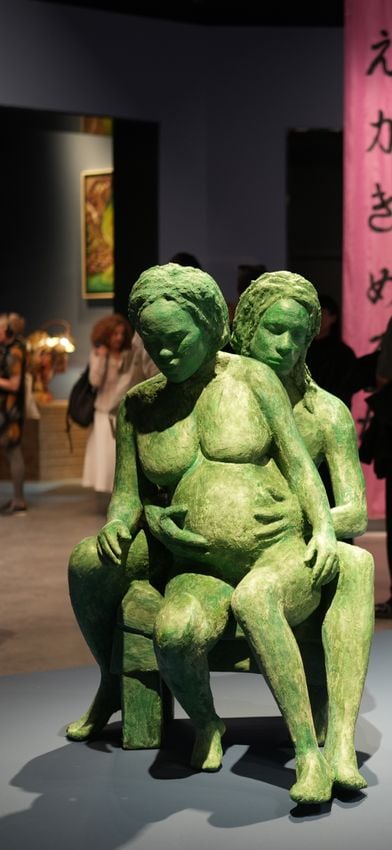
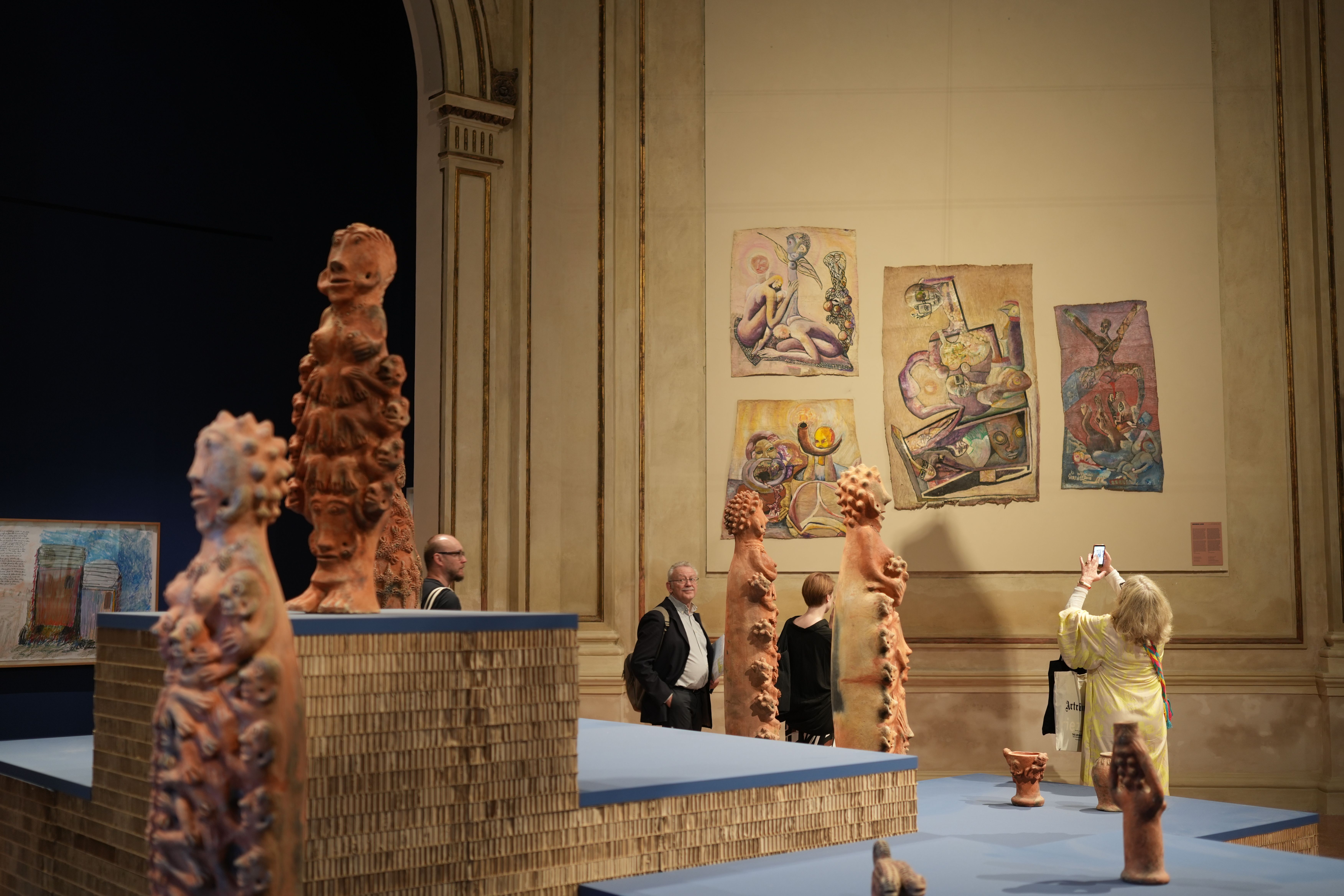
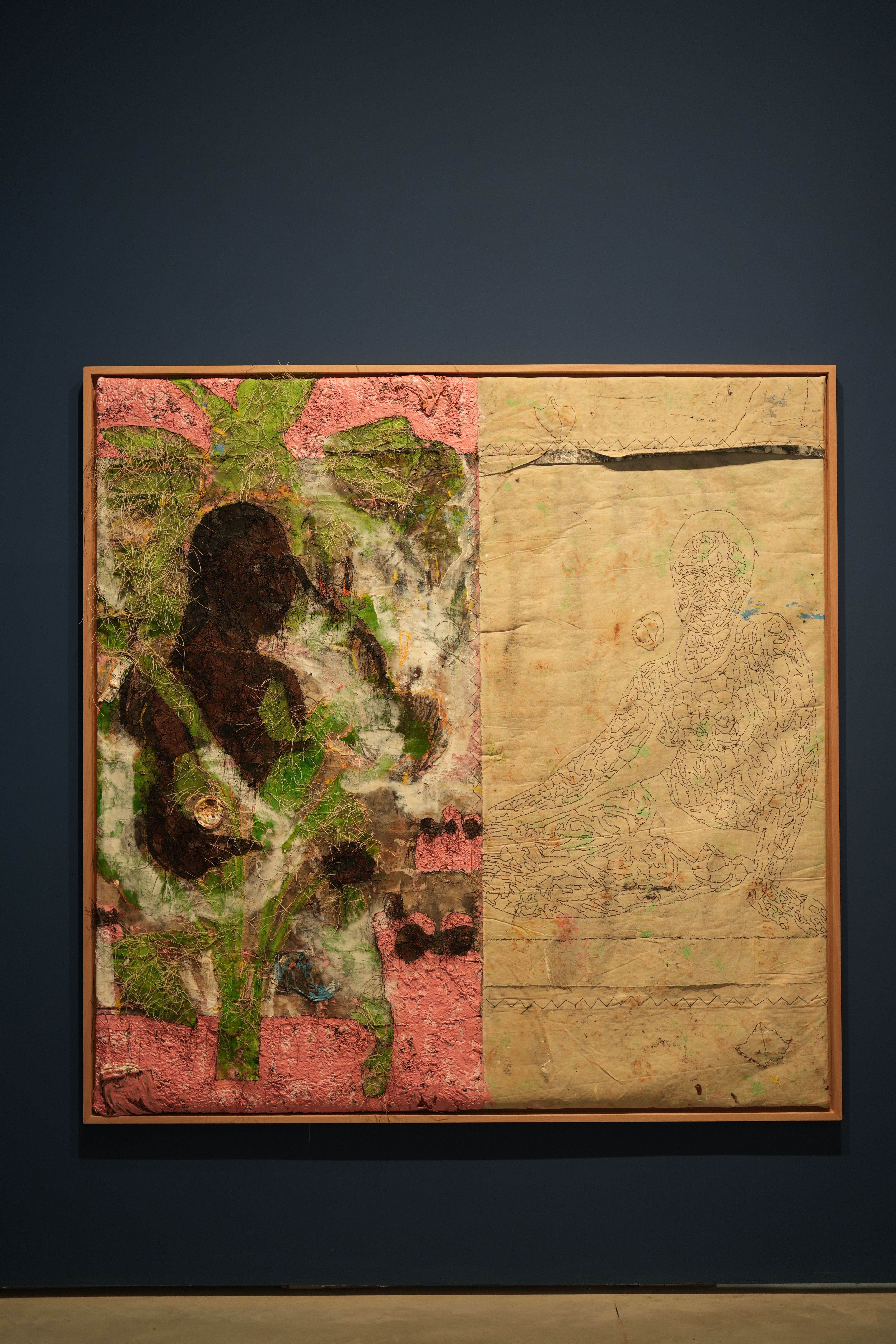
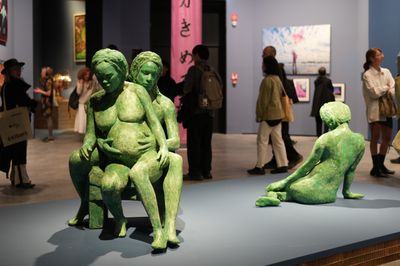
For Kenyan artist Kaloki Nyamai, who uses rope, newspaper, fabric, photographic transfers and yarn in his canvases, the Black female figure remains half formed, almost abstracted, or left as an impression of someone who never arrives. Even in the life-sized sculptures of two nude pregnant women by Buhlebezwe Siwani, Zanenkosi and Ilifa lakhe (2022), their sculpting from soap renders them subject to the slow breakdown of the organic material from which they are made, vulnerable to disintegration by nothing more than water.
“Most impactful are the works in which artists choose to leave an imprint of their own sense of self”
Kouoh described in an accompanying catalogue essay the intended effect of In Minor Keys as one that “scrambles cohesion and dissonance in the manner of a free-jazz ensemble”. She is correct that there is little to grasp on to when it comes to a single cohesive thread binding each of the 110 artists on display throughout the Giardini and Arsenale presentations. Yet a few key themes emerge. There are monuments and anti-monuments; a proliferation of flowers, plants and botanical knowledge as a means of connecting to the soil and the land; and a predominance of the handmade, with an emphasis on tactility.
Is this an apt reflection of our current moment of geopolitical conflict and collapse; of the march of AI; of the rise of new forms of machine learning that threaten to wipe out the human hand in more ways than one? Is the absence of the figure here a deliberate step towards the post-human, or cities razed by war? I’m not convinced by Kouoh’s celebration of the more-than-human: spirit guides, portals to other worlds, and fantastical alternate universes abound in both of the show’s. Most impactful are the works in which artists choose to leave an imprint of their own sense of self, evading direct legibility while remaining rooted in a sense of this earth and of reality.
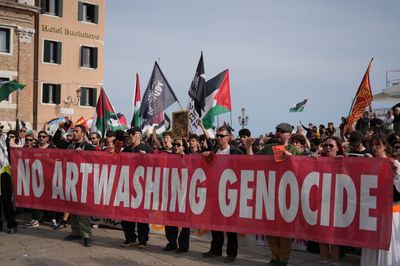
Outside the central exhibition in both the Giardini and Arsenale during opening week, many national pavilions have closed because of a workers’ strike by artists and attendants. They are demonstrating against the presence at the biennale of pavilions from countries whose leaders have been charged with crimes against humanity by the International Criminal Court (ICC), with the focus centring on Israel and Russia. There is an echo to be found here in Kouoh’s emphasis on the power of the collective, as well as the receding of the individual ego in favour of signifiers that are able to speak not only for one person but for many.
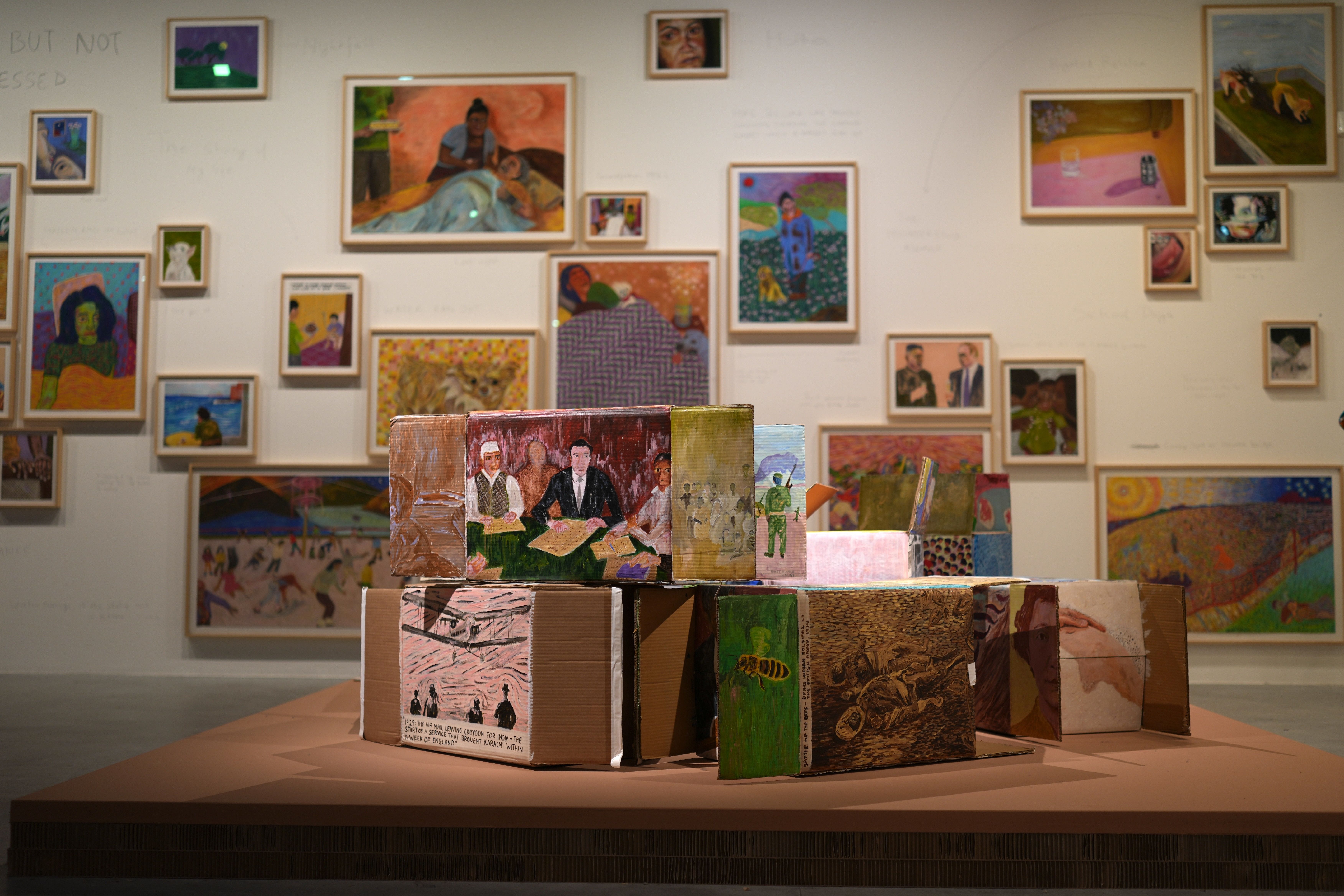
It was a series of work by Indian photographer and painter Sohrab Hura, Things Felt But Not Quite Expressed (2022–), that best conveyed for me the surprising points of common ground that we each carry, which can transcend borders, personal heritage and background. His pastel drawings cover two walls, with accompanying captions scrawled by hand in pencil directly on each wall. “How parents remember things” reads one caption next to a painting of the best dance floor you’ve ever seen in your life: mirror ball, strobe lights, heaving bodies, the works. Another shows a cat staring morosely at itself in a mirror, accompanied by the caption, “It depends on how you look at it”. Others show popular, mass-produced memes, with Hura’s wry commentary, alongside more sombre moments that bring together death and life without fear or reverence. Hura conjures internet culture, family photo albums and the international news cycle to find mutual points of connection with levity.
Throughout In Minor Keys, there is often a lack of clear coherence in deciphering the immediate relation of the various works on display to one another, in what is a more unfortunate invocation of the messier side of collectivity. This is surely not helped by the fact that the exhibition was overseen by five different curators following Kouoh’s death. In the end, despite the curatorial invocation for us to all come together, it is key individual works that shine. —[O]
Main image: Buhlebezwe Siwani, Zanenkosi and Ilifa lakhe (2022) at the 61st Venice Biennale. Photo: Louise










A respected voice in contemporary art discourse.
Focusing on ambitious storytelling and insightful art-world commentary. Ocula Magazine publishes in-depth interviews, critical essays and timely analysis on the artists, exhibitions and ideas driving the global art world.
Learn more about Ocula Magazine
Showcasing the best of the art world.
Ocula partners with galleries from around the world to highlight their artists, artworks and exhibitions. Gallery membership is by application and invitation, with each member vetted by an independent panel.
Learn more about Ocula Membership
Specialises in the sale of major artworks.
Led by a team with deep ties to the world’s leading auction houses, galleries and collectors. Ocula’s advisory team offers bespoke services to high-net-worth clients from around the world who are looking to acquire the best of contemporary and modern art.
Learn more about our team and services