





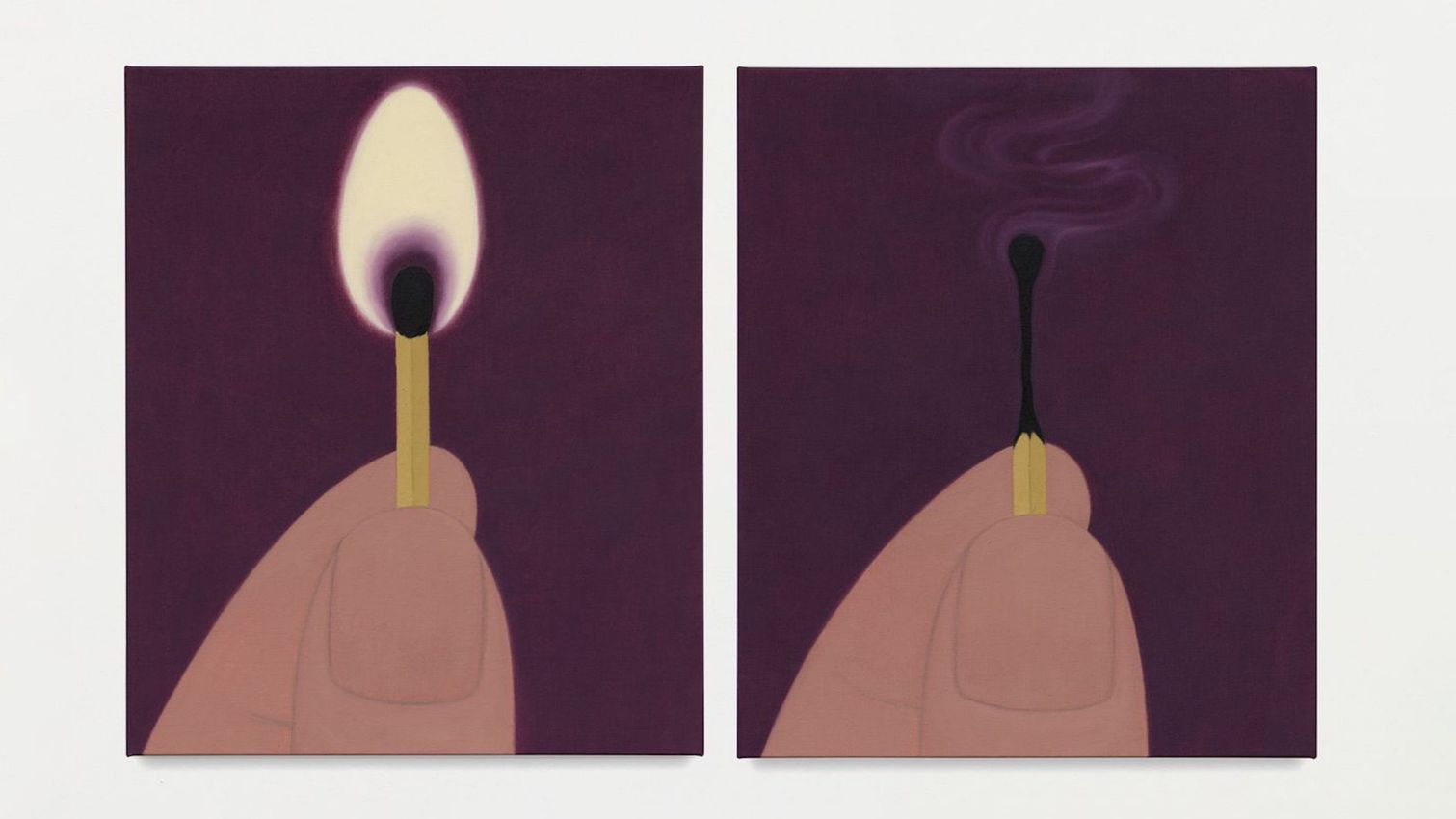
Henni Alftan Spares the Details in Los Angeles Debut
Henni Alftan triumphs in the art of less is more. Ocula Advisory chats technique with the Finnish‑artist ahead of her debut solo exhibition at Karma Los Angeles. Save to My Ocula
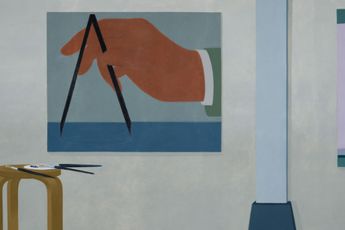
Henni Alftan triumphs in the art of less is more. Having mastered the constituent elements of painting, the Finnish artist’s cerebral works are defined by their refined brushwork and economy of line despite a somewhat complex colour palette.
With Karma representing Alftan in the U.S. and, as of 2021, Sprüth Magers in Europe, Alftan’s works have become a popular and steadfast addition to art fairs and exhibition walls.
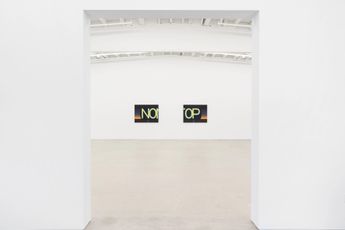
Her debut solo exhibition at Karma Los Angeles, Visitor (11 March–29 April 2023), features recent paintings with all the restraint and tonal subtlety that we have become so fond of.
On the occasion of this show, Alftan explains the how’s and why’s behind her visually economical, yet technically complex tableaus.
Do you normally work on one painting at a time, or multiple?
I always work on one painting at a time. For the smaller paintings, the sketching takes around seven to ten days, which is almost as long as the painting process as I have to finish before the paint dries.
For each painting, I mix all my paint in the studio. The colours are quite complex, so I can’t recreate them if my palette dries. However, they all come from the same route, in the same way that different objects in a room are lit by the same light.
So you usually paint wet on wet?
Yes, even the very thin layers. You have to move quite fast, but I do very specific sketches before I start and then I redraw the sketches.
“I like painting seascapes because the horizon line is the most minimal landscape you can do. It’s just a line.”
Could you talk about this sketching process? With quite a pared-back colour palette, is sketching the main preparatory process for your paintings?
Yes, in many paintings, sketching is an integral part of what the painting will be.
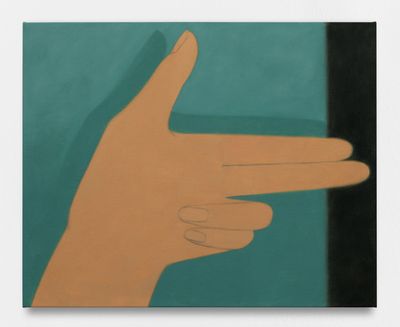
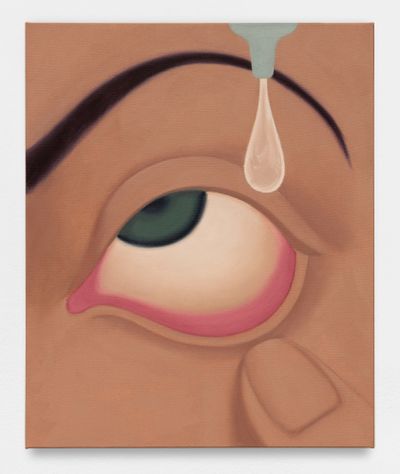
I sketch straight onto the canvas and sometimes you can see the lines. This means I can’t really change the drawing, as often the painting is so thin that you would see the re-drawing.
But for the actual painting, there are no more composition decisions to make as even when I’m doing a sketch, I’m thinking I will paint such a picture in such a manner. They’re also done in black and white, so the variation then comes with the colour.
And where does inspiration for these sketches come from?
I don’t use photographic images, rather my sources are the sketches themselves. They’re a construction of something I have seen or thought, and the painting is my reflection on that moment.
I look at all types of image sources, but when I approach painting, I look at how paint is applied to the canvas. I’m interested in finding different ways of applying paint for different subjects.
I try to combine different painting applications depending on the subject matter, which is not a new invention and something that I noticed more and more in pre-modern painting styles. In that respect, painting hasn’t changed that much over time.
However, what has changed is the object is so over-determined now, there is so much meaning attached to them. You can’t really do abstract painting that refers to nothing because it has a history of vocabulary. It’s more charged now and so the way you apply paint is more charged.
That is what I find interesting about painting—its archetype of an art object is so charged.
Is there a subject or painting style that you regularly come back to?
I like painting seascapes because the horizon line is the most minimal landscape you can do. It’s just a line.
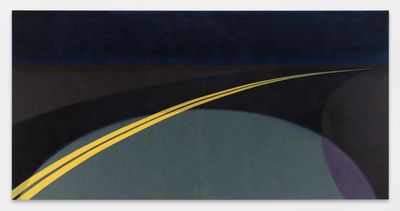
I also like using very evident contrasts between thick and thin applications of paint. However, I don’t want to become systematic. I’ve been painting for 15 years now, so inevitably you start to see references to previous images. Some past paintings even became subjects for my current paintings.
How do these past paintings compare to what you are currently producing?
I used a very reduced palette at first. When I look at my earlier paintings from ten years ago, I realised that the subject matter hasn’t changed that much, but the way that I handle them compositionally, the nuances are much more precise and complex.
I have started to work towards things that are not so easily recognisable. Some of the older works maybe had more detail and more things happening.
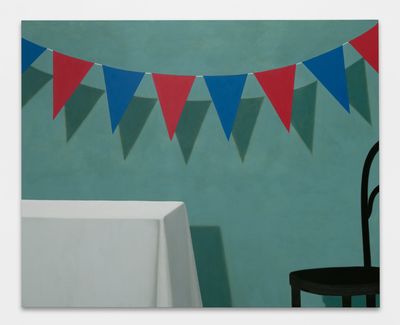
Your paintings imply perspective without showing it. How do you accomplish that?
There are a lot of windows in my paintings. Sometimes you are outside, sometimes inside.
My paintings are often active images. Instead of just seeing, they imply something is going on offscreen that you don’t know about.
Images trigger us just as much as words. They work on us and that’s why it’s important that I sketch them from memory. It brings an ambiguity to the images that makes you feel that you could have already seen them. —[O]
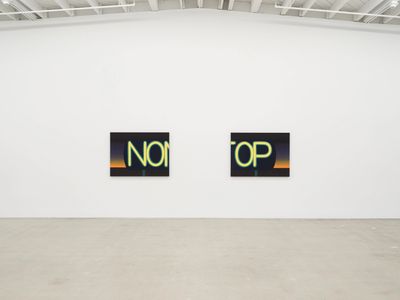
Main image: Henni Alftan, Match (Déjà-vu) (2022). Oil on linen; in two parts. 61 x 100 cm. Courtesy Karma.






A respected voice in contemporary art discourse.
Focusing on ambitious storytelling and insightful art-world commentary. Ocula Magazine publishes in-depth interviews, critical essays and timely analysis on the artists, exhibitions and ideas driving the global art world.
Learn more about Ocula Magazine
Showcasing the best of the art world.
Ocula partners with galleries from around the world to highlight their artists, artworks and exhibitions. Gallery membership is by application and invitation, with each member vetted by an independent panel.
Learn more about Ocula Membership
Specialises in the sale of major artworks.
Led by a team with deep ties to the world’s leading auction houses, galleries and collectors. Ocula’s advisory team offers bespoke services to high-net-worth clients from around the world who are looking to acquire the best of contemporary and modern art.
Learn more about our team and services