





Sound Judgement
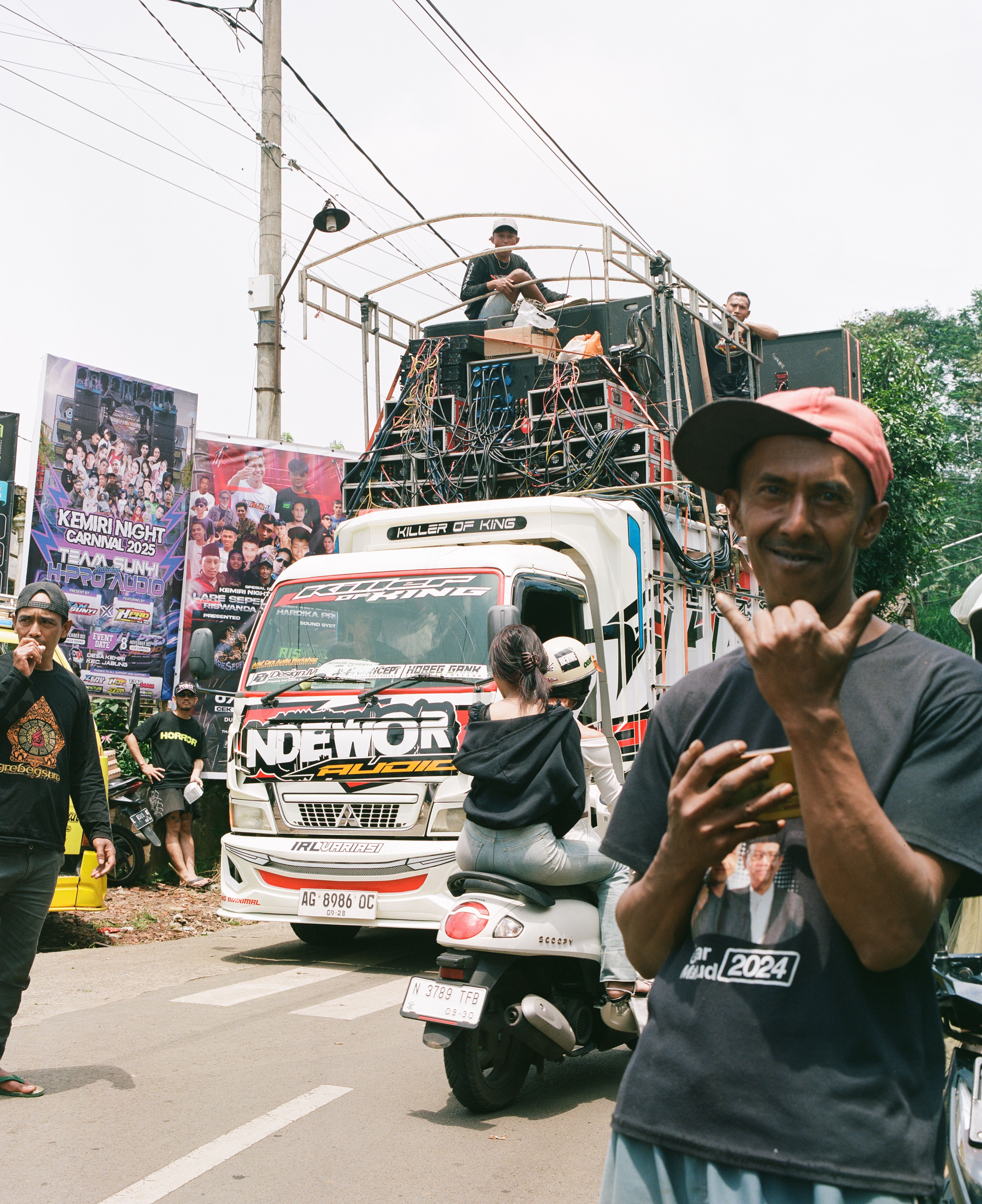
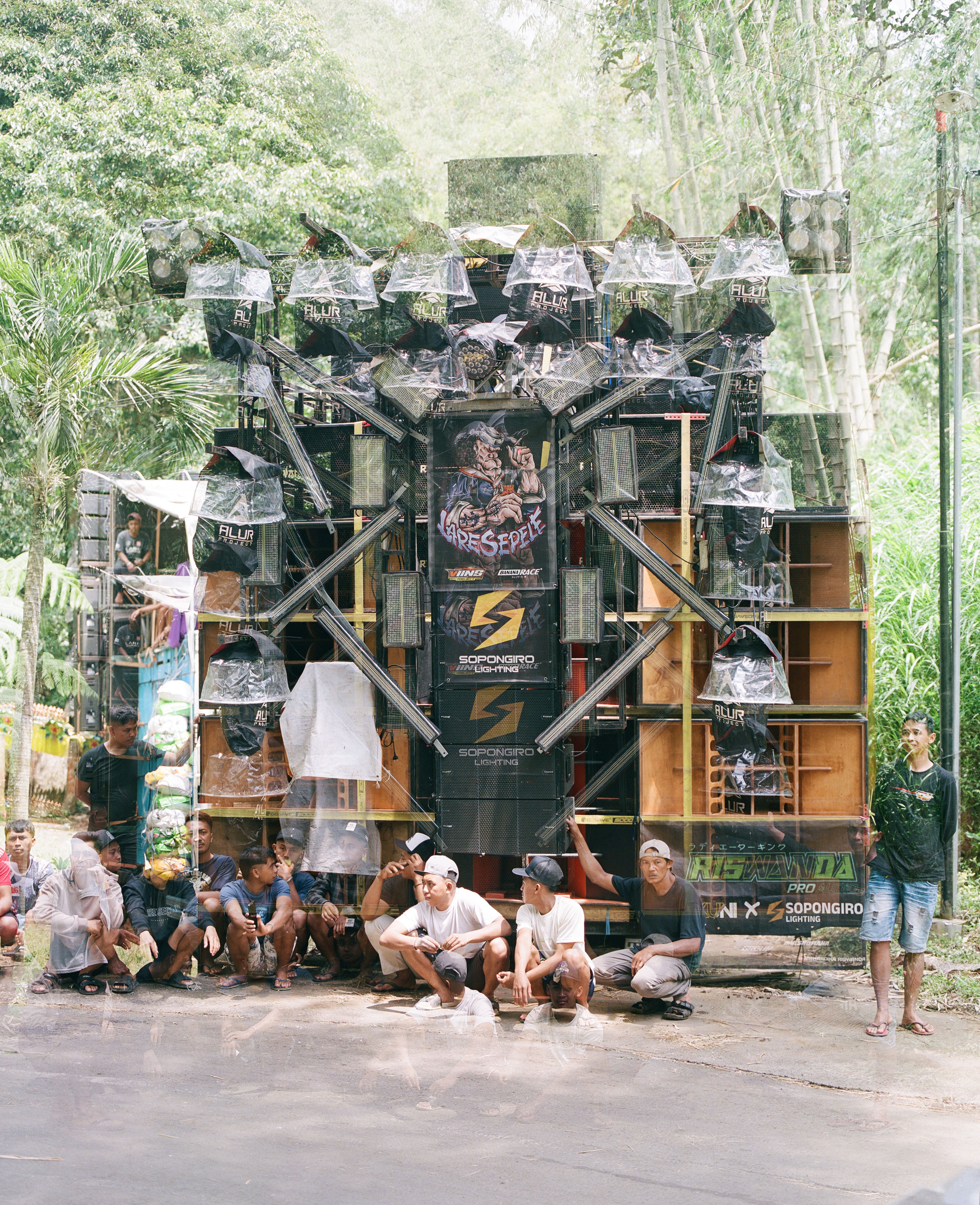
Our environment is overloaded with noise, whether via geopolitics, stress or social media. état bruit, an exhibition at Konstchthal Esch in Luxembourg, brings together 21st‑century artists asking what the world sounds like—and who decides what we hear. Save to My OculaAt the doors to Konschthal Esch, the visitor is met by an olive-green truck bearing two enormous speakers. Hantu Sound System (2026), by Nik Nowak, is a version of a truck typical of the Indonesian sound horeg: huge mobile sound systems that travel from village to village on the backs of trucks or, where waterways outnumber roads, on boats. Designed for community celebrations, they are built, customised and repaired in small workshops across the region, in an informal economy that’s also supported through the monetisation of views on TikTok and YouTube. Nowak has been documenting horeg culture and collaborating with Indonesian musicians and artists since 2024, resulting in the work Tracing a Ghost, on display here as part of the exhibition état bruit. As curator Charles Wennig notes, the horegs are a form of chopped-and-screwed international identity: these are copies of Jamaican sound systems, built in East Java, using Chinese parts. Nowak’s version goes further, housing the system in a VW double cab, perhaps the ultimate symbol of German manufacturing and mass production.
Nowak joins six other contemporary artists at Konschthal Esch, presenting work under the deliberately open title état bruit, which translates to both “state of noise” and “status of noise”, but also can be read as état brut, “raw state”. Wennig writes that the term bruit appears in technical literature as a reference to moments “when interference, static or white noise impairs the quality of a signal”, and similarly, these works are about noise, interruption, interference, scrambled signals and imperfect connections.
“These works are about noise, interruption, interference, scrambled signals and imperfect connections”
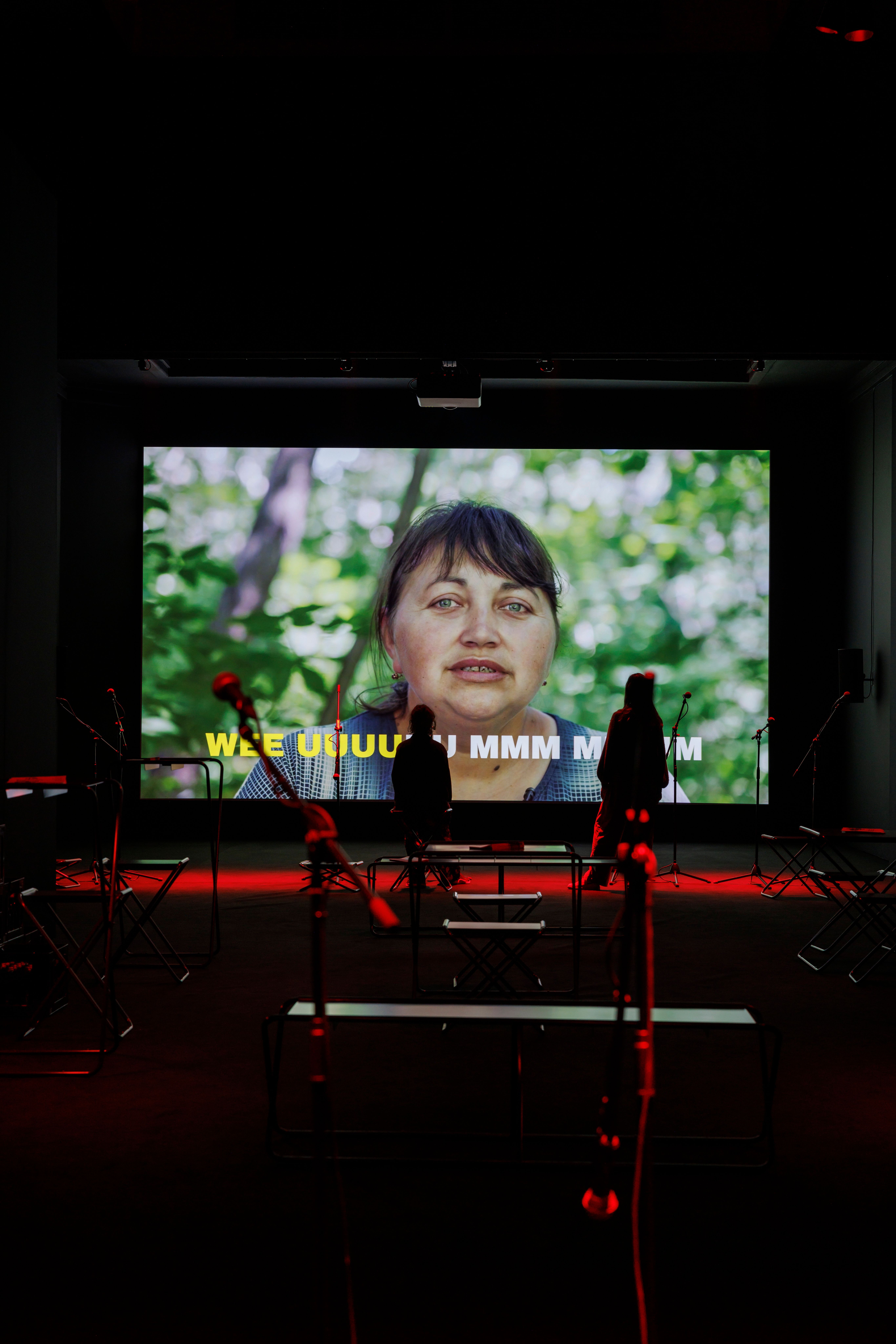
In English, “brut” finds a homophone in “brute”, and the spectre of violence haunts several of the works. Behind a thick industrial plastic curtain, in a dark room illuminated by red LEDs, Open Group’s 2024 work Repeat After Me II takes place over a two-channel video installation. Repeat After Me II was shot in cities including Wrocław, Berlin, Vienna, Vilnius and New York, and depicts Ukrainian refugees imitating the sounds of the bombs, guns and planes they heard while living under bombardment, producing an unsettling meditation on what machine artillery does to organic material.
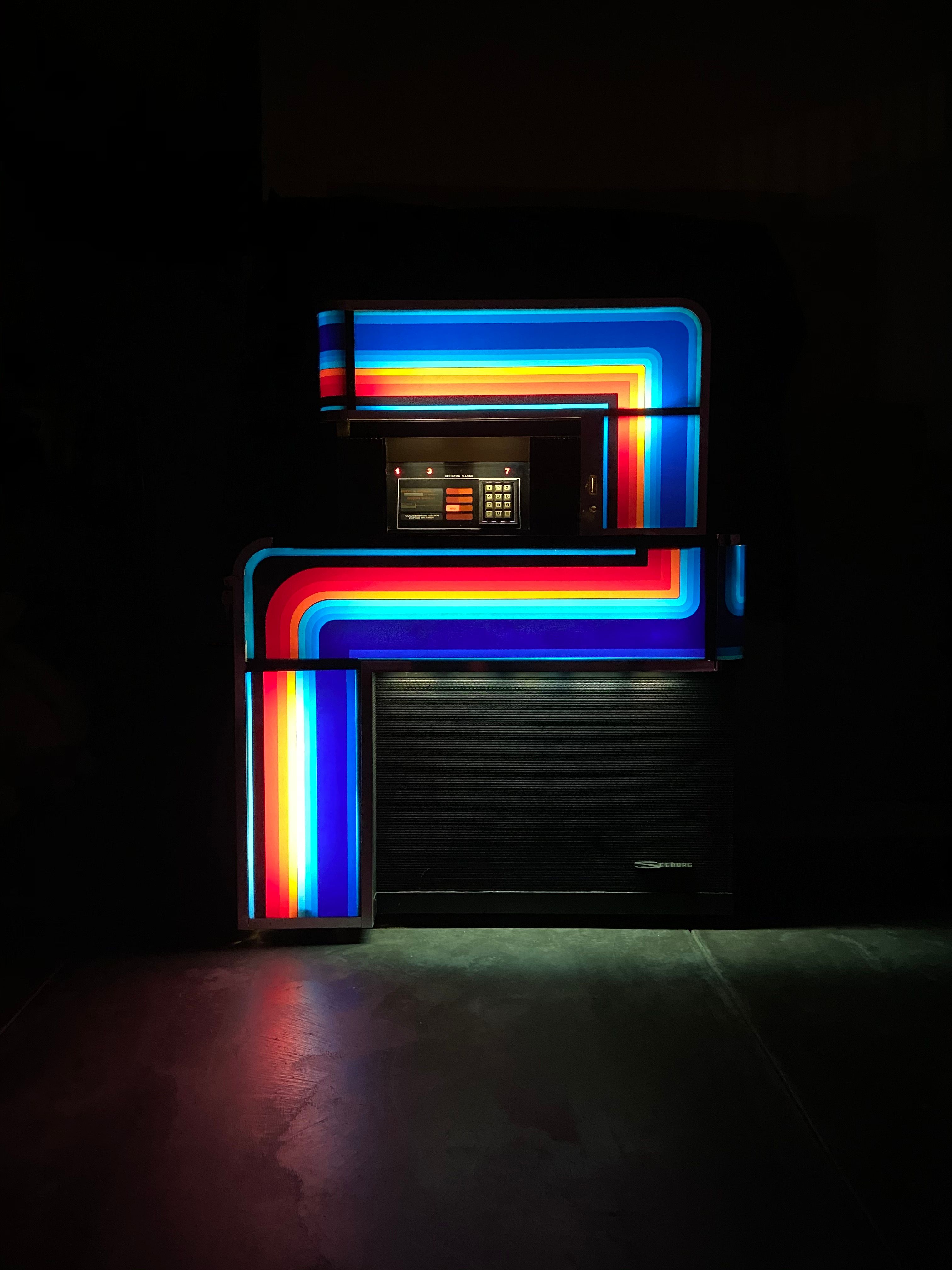
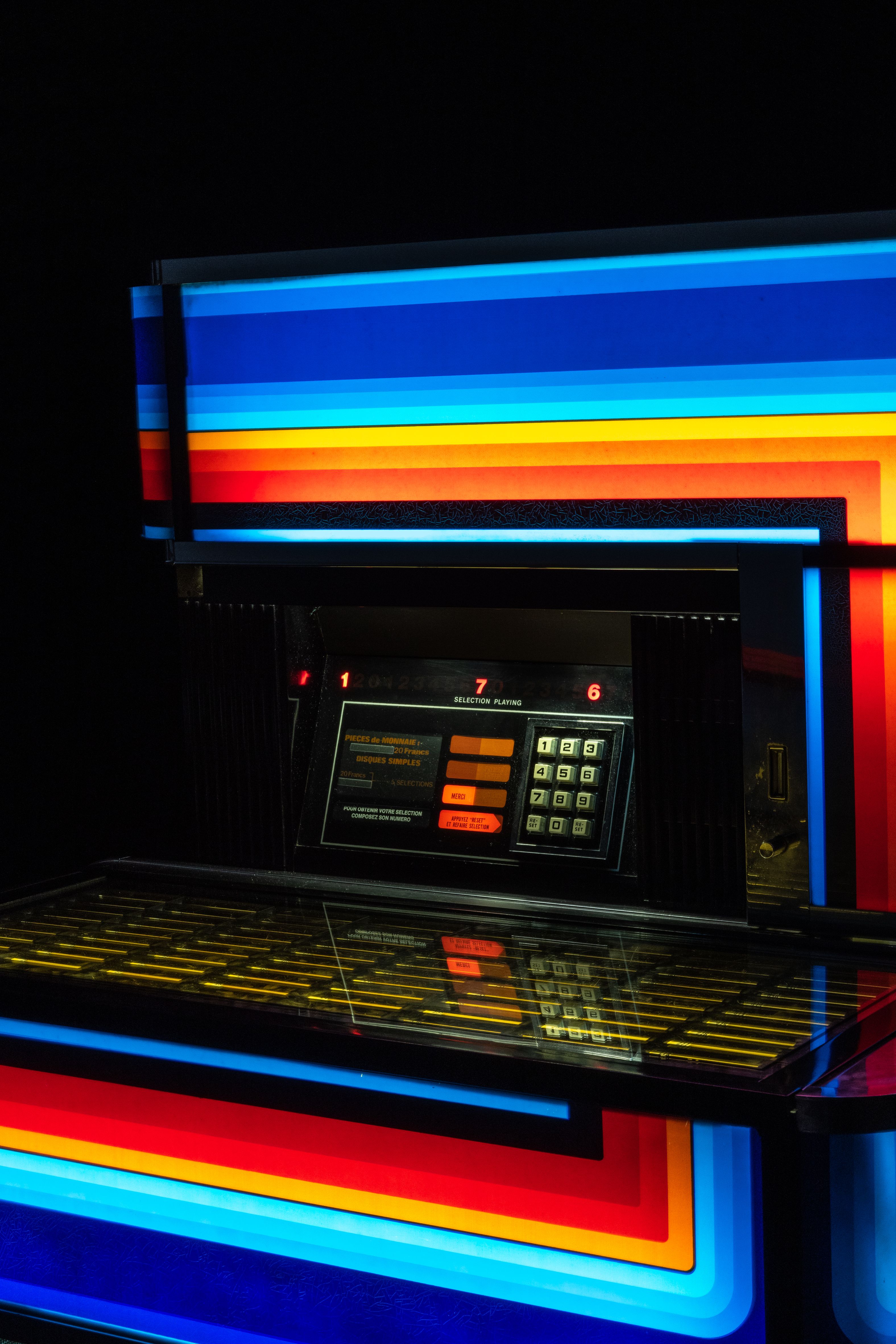
The silence that follows violence is the subject of artist-duo Brognon Rollin’s 24H Silence (2020–present). Assemblies of real “minutes of silence” collected from sports games, mourning ceremonies, and remembrance services are pressed on vinyl and installed on jukeboxes. These form a catalogue of the incidental sounds that happen when a crowd stops speaking—a cough, an ambulance in the distance, a dog barking—except one, in which a minute’s silence dedicated to George Floyd is gradually overwhelmed by the participants breaking into the chant: “I can’t breathe!” These silences, neatly labelled—two of Brognon Rollin’s three jukeboxes are on display here—become catalogues of accidents and atrocities which the viewer scans as if they were old honky tonk, forming an uncomfortable junction between the nostalgia function of the jukebox and our capacity for forgetfulness.
“These silences… form an uncomfortable junction between the nostalgia function of the jukebox and our capacity for forgetfulness”
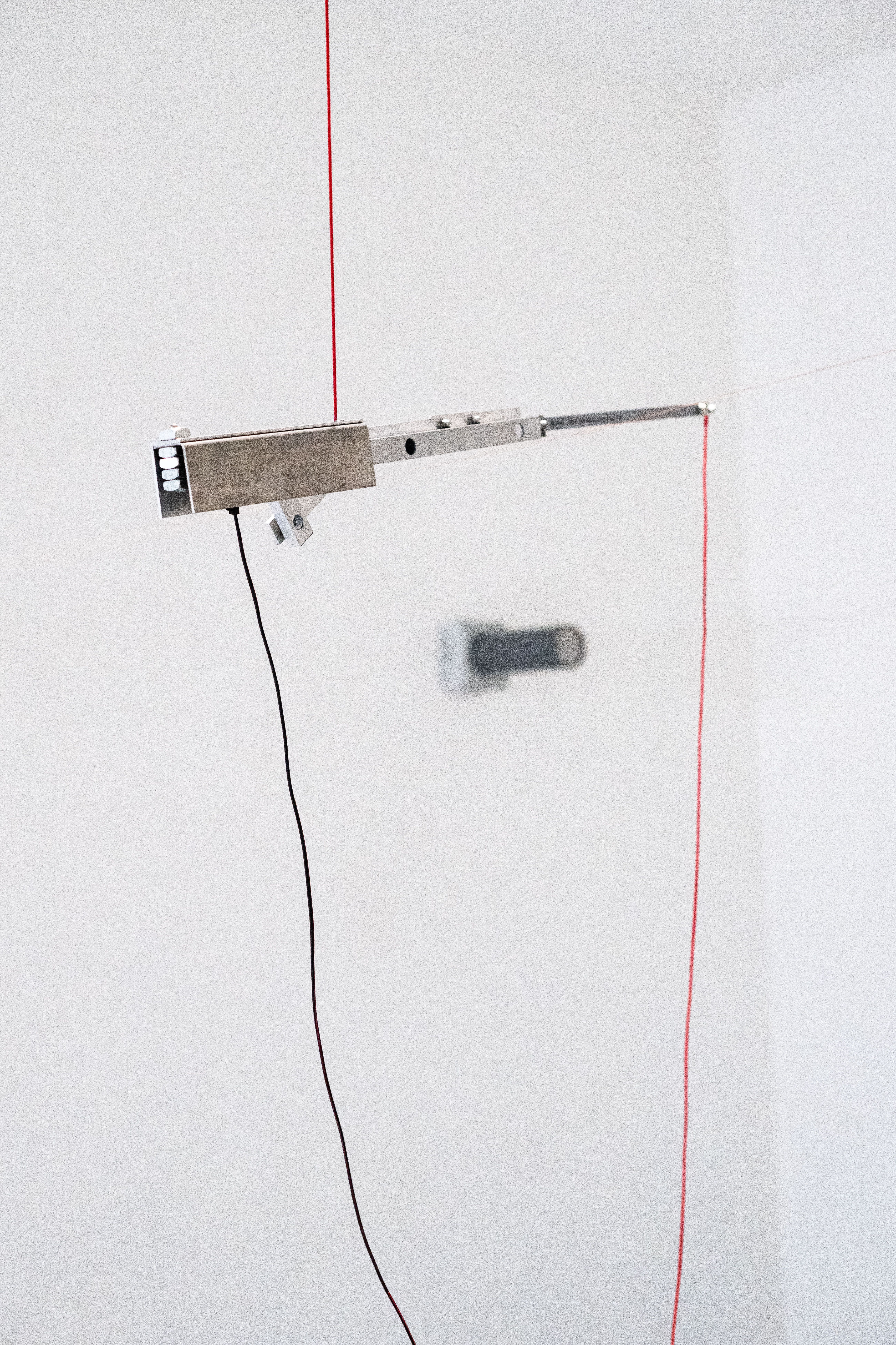
Nika Schmitt’s analogue machines Harm (2023) are closed electrical circuits that operate mechanical arms, gently sawing away at their own power supplies, giving the works their name. The noise they make is quiet and continuous, until the future point at which it will abruptly end. Sweet Zenith (2022), by contrast, is too loud for any other noise to be audible in the room. Two lit-up microphones on pendulums are suspended over solar panels embedded in speakers: the more light is produced, the more motion there is in the speakers, which sends the microphones into movement cycles that Wennig calls a “perpetual chaos pendulum”. The fact that there are two means that a sustained rhythm cannot form. Instead, feedback loops produce nothing but discordant, unsynchronised sound, a monument, according to Wennig, to the “engineer positivism” of technocrats and industry billionaires, and the complexity of contemporary energy systems.

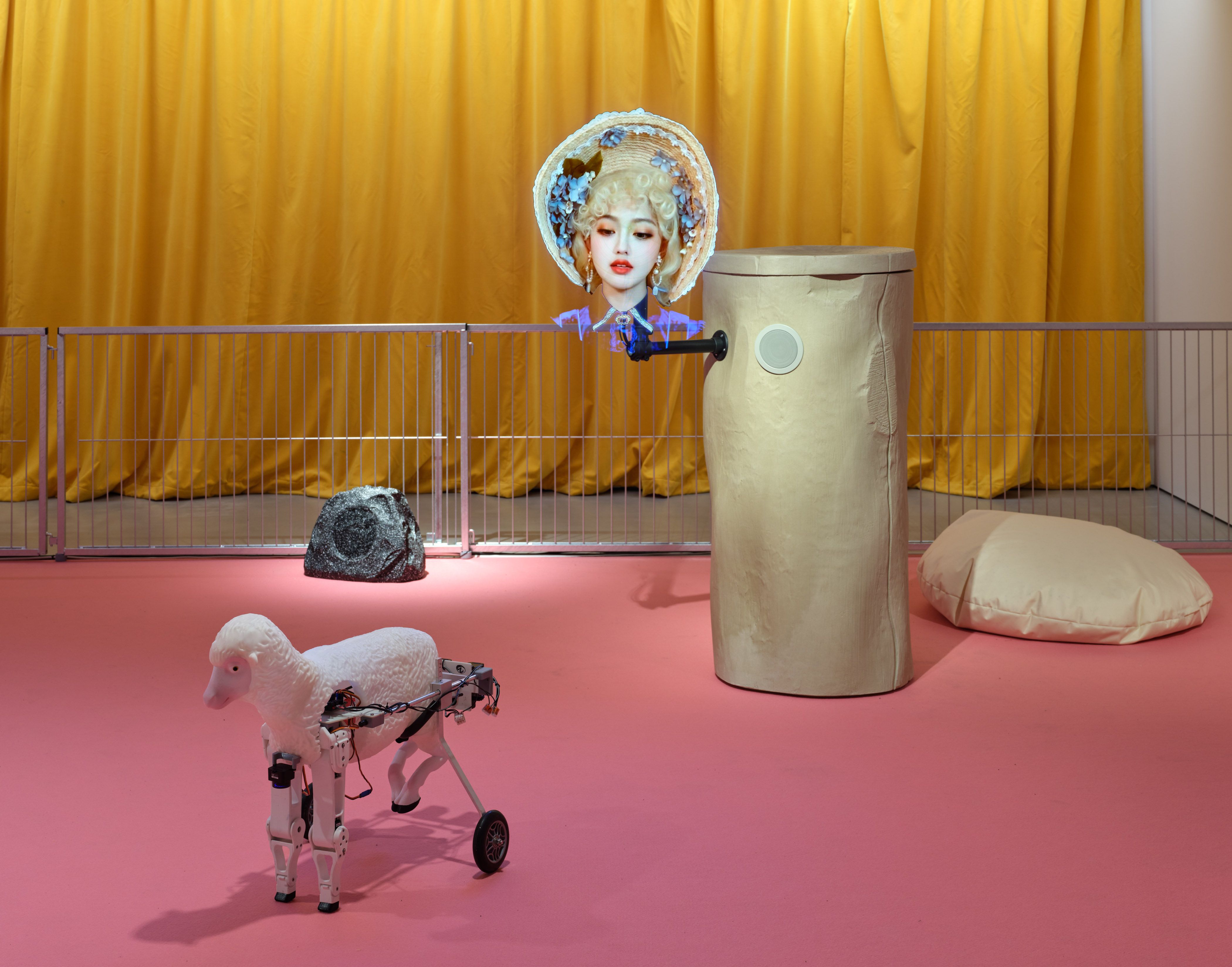
A bucolic scene greets the visitor on the floor above, where Tintin Patrone has constructed a gated field complete with a singing hologram, a robotic sheep and a choir of four stones. Birth of a Nation (2026) is a version of an earlier work, The Oaten Flute (2023), that has undergone a Luxembourg-isation. Patrone has loaded her robot sheep with an AI-generated libretto inspired by the country, and they sing out, “Spaass hunn, loosst eis e bëssen/Spaass hunn/Schampes, Schampes, Schampes.” (“Have fun, let’s have a little fun/Champagne, Champagne, Champagne.”) The sheep itself references Luxembourg’s agrarian histories, as well as multiplicity, as Patrone notes: “A sheep is almost always understood as part of a mass, and in this case its speech is the outcome of a vast flock of data.” Patrone has constructed what she calls “fakelore”—in her words, “something that sounds like inherited, local, ‘authentic’ folk culture but is in fact newly made, curated, polished, or strategically invented”. In Wennig’s catalogue notes, he quotes French social theorist Jacques Attali’s assessment of music as “a mirror of the power structures of an era”, which resonates with Patrone’s approach. As she says: “The smaller the state, the more strongly music can become a compact, recognisable signature. In that sense, music does not merely represent the nation, but makes it audible and politically effective.”
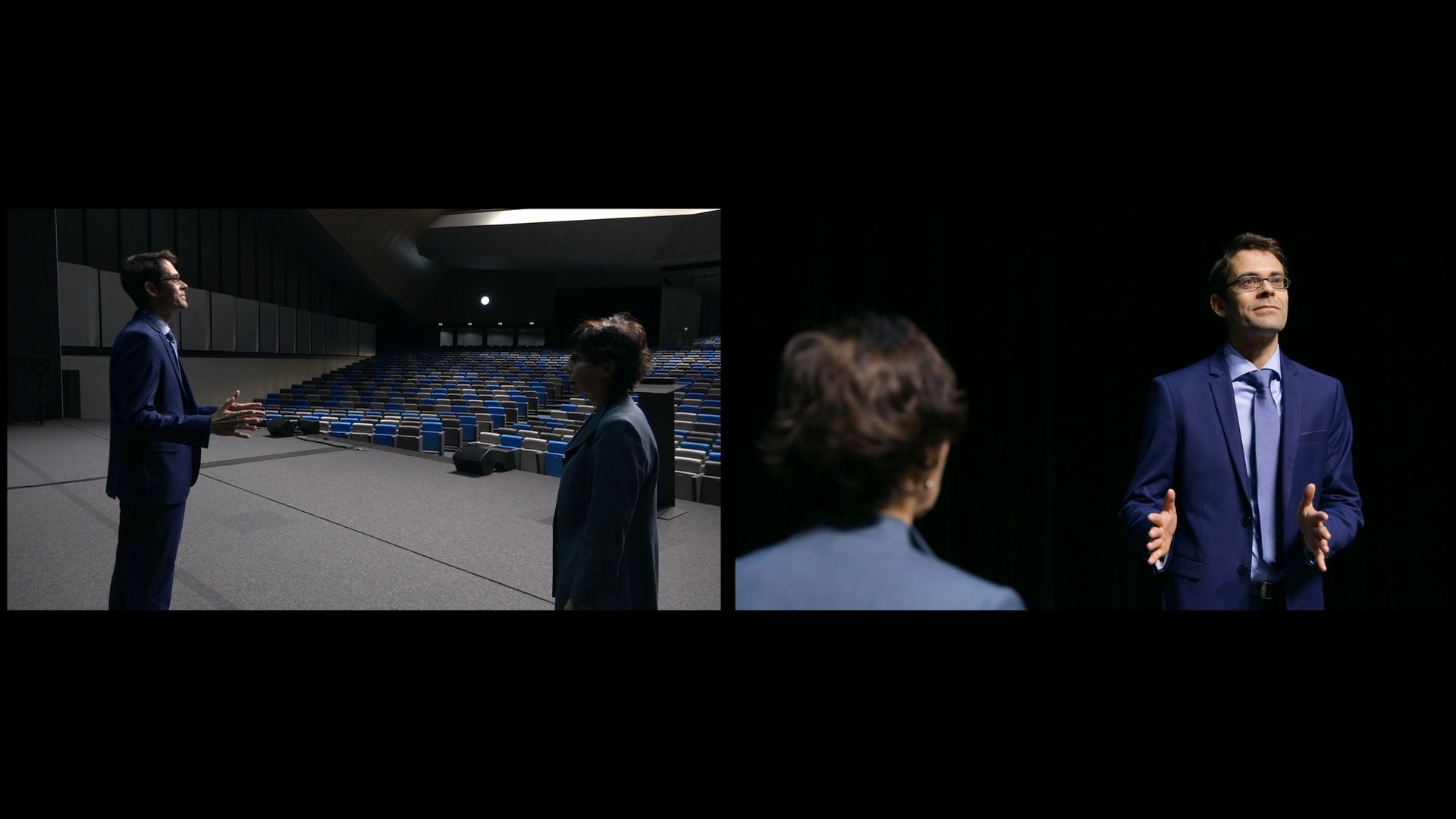
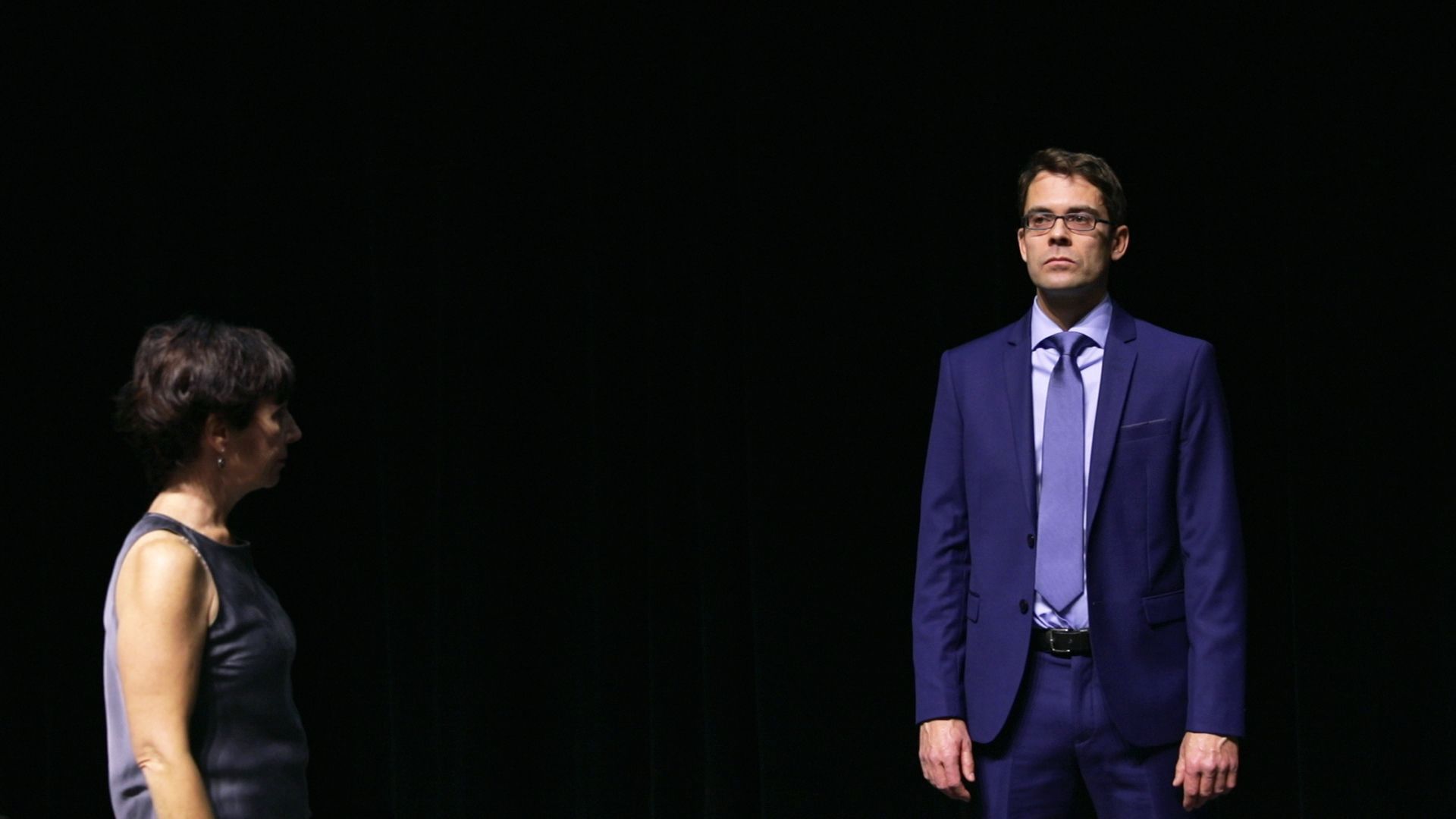
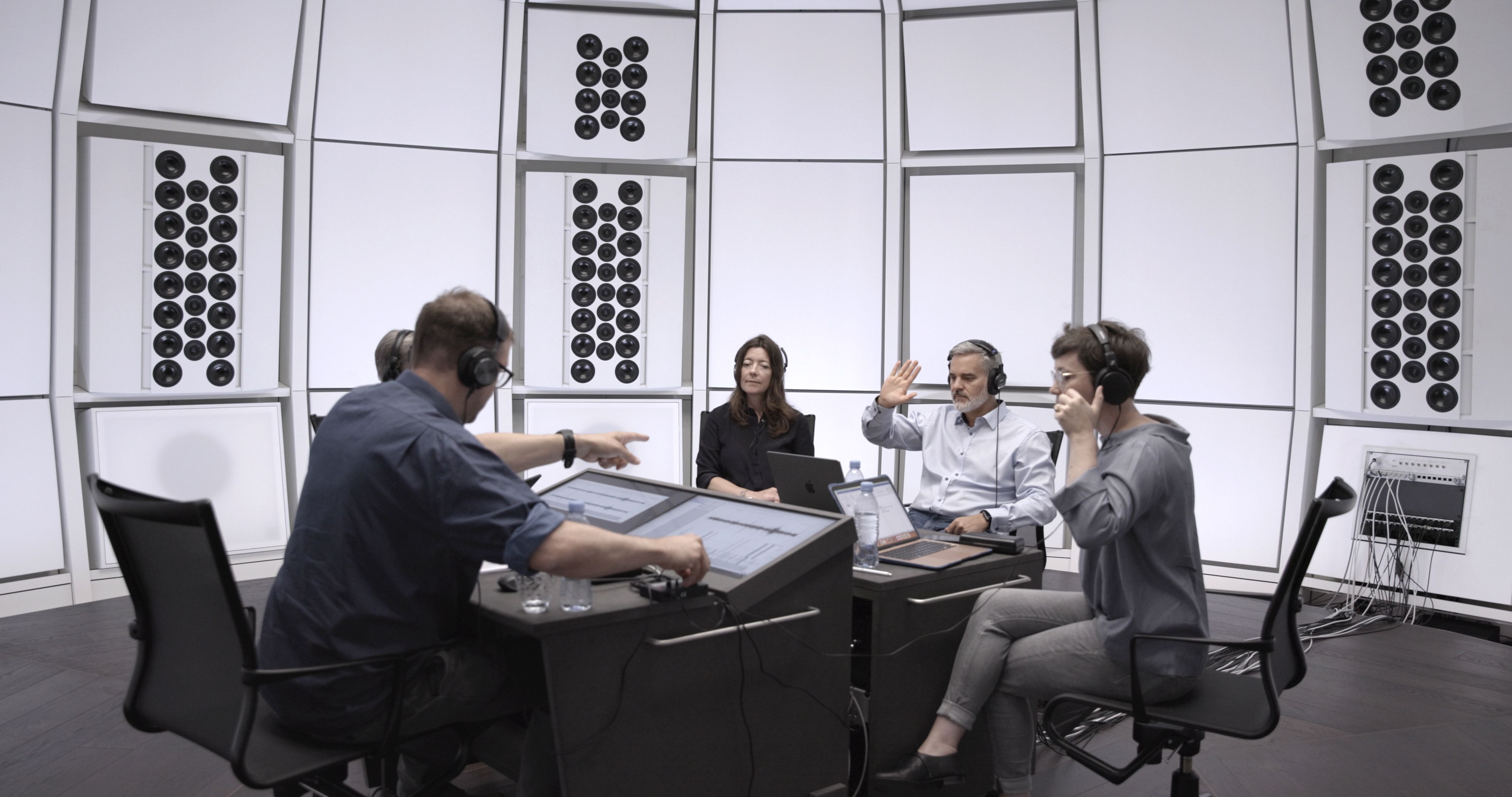
Three works by Gabriela Löffel foreground performance, persuasion and their relationship to power. Near the town of Grafenwöhr, in Bavaria, Germany, is the Grafenwoehr Training Area, a vast permanent training arena for the US Army (it’s about one-tenth of the total area of Luxembourg). Locals—often students—find piecemeal work playing citizens in conflict-simulation scenarios, and in Setting (2011), a series of interviews that Löffel conducted with the “extras” are themselves voiced by an actor on-screen. In Performance (2017-18), Löffel records a training session in which an actor and a coach workshop a real audio recording of a presentation given by the technical director of a private security company, working to improve it. The idea of practice—for warfare or professional gain—becomes an absurdist drama when performed to empty seats. In both works, a deferred sense of the real action, and real risk, is dissolved into the rehearsal of persuasiveness. In Grammar of Calculated Ambiguity (2024), Löffel presents a studio in which specialists in forensic audio analyse a real discussion among insiders in the financial services industry that took place two weeks after the release of the Pandora Papers in 2021. The “calculated ambiguity” refers to the proliferation of jargon in settings where participants have a vested interest in perpetuating obscurity.
“état bruit is not interested in what sound art is, but in how sound works”
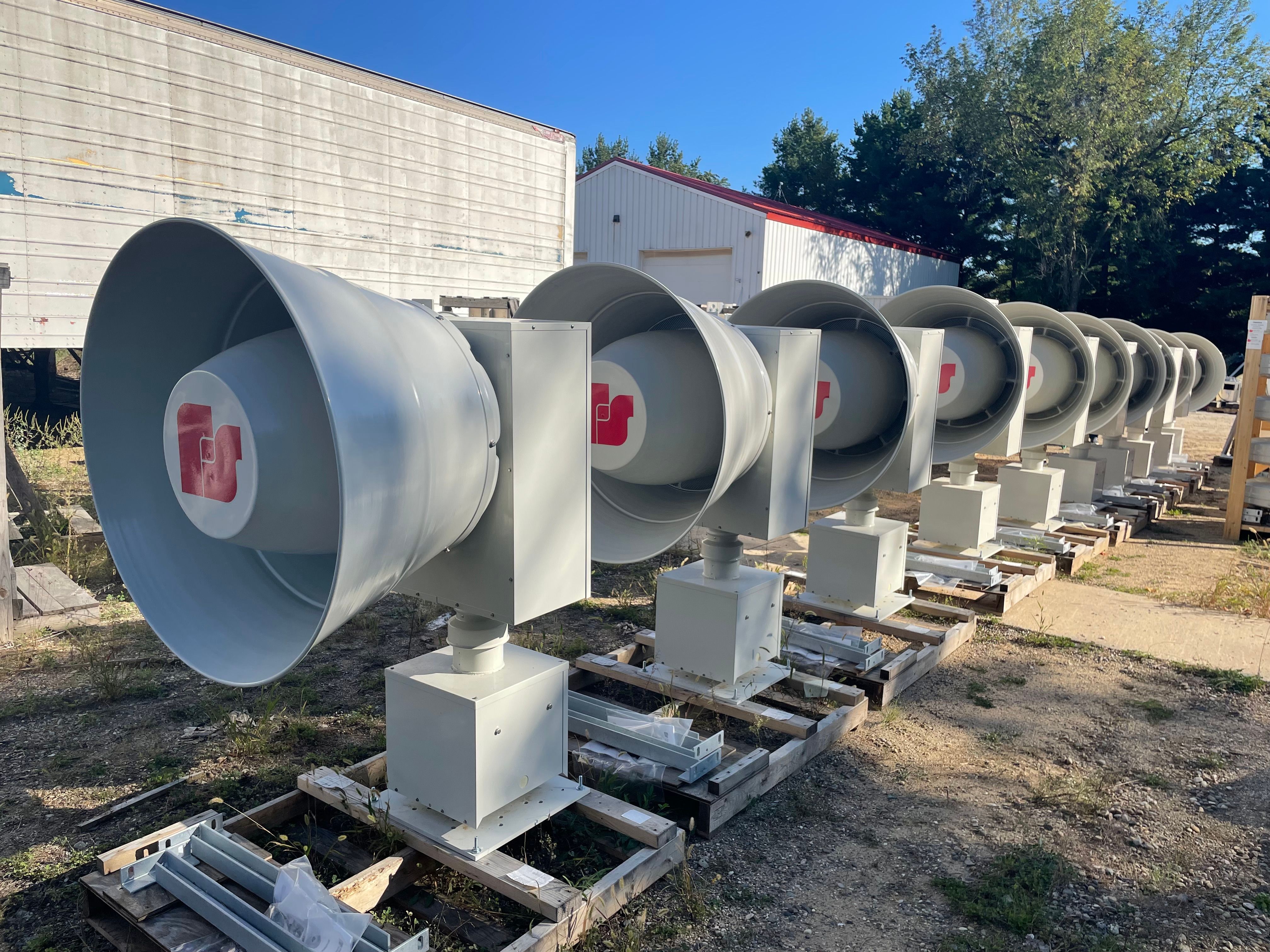
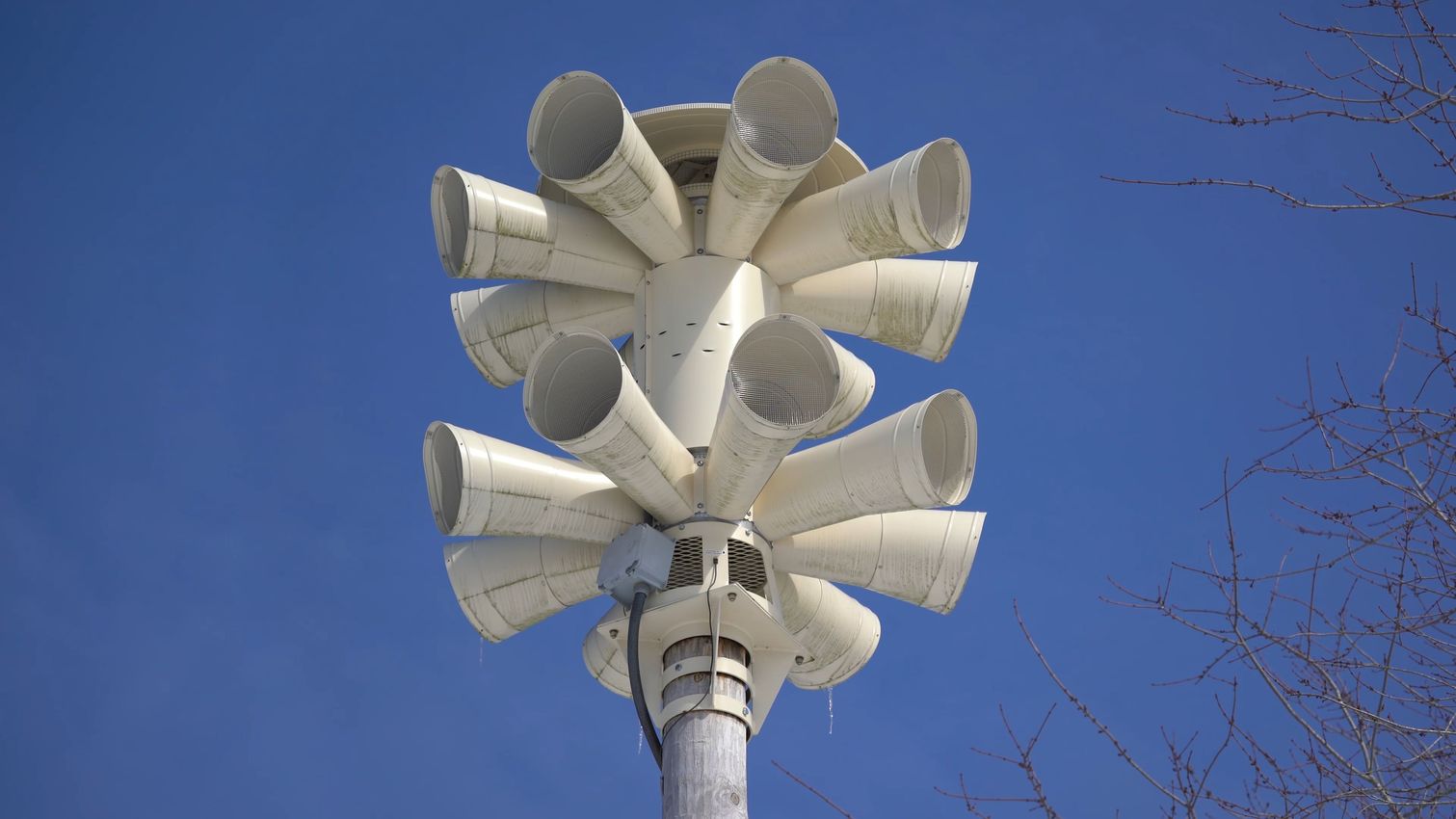
The final work in the exhibition consists of a three-screen video installation by the artist Aura Satz. Warnings in Waiting, a new iteration of her 2024 film Preemptive Listening, depicts the lifecycle of the emergency siren, from creation in the factory to relegation to the scrapheap. The videos are accompanied by eerie, beautiful pieces of contemporary music that have siren-like qualities. Satz approaches the siren as both a mythological entity, drawing on the sirens of Greek legend, and as near-redundant technology. Over the past decade, there has been a move from public alarm systems to more intimate ones, and mass-distributed warnings are now as much vibration as sound, delivered to our phones. As Satz writes, this move is part of a broader move towards the withdrawal of aural participation in the world: “We have so many technologies of noise-cancellation or insulation that we may not hear the siren.”
As a whole, état bruit is not interested in what sound art is, but in how sound works. Where analogue static has receded, it has been replaced by a new mode of digital interference, “stress, disruptive frequencies, excessive demands and complexity”, which are the product of tense working realities, algorithmic bombardment and a geopolitical climate in which, as Wennig writes, “A new imperialism openly accepts war as a means to an end.” If we have engineered ways not to hear the siren, the exhibition asks whether, in the process, we have closed our ears to anything else. —[O]
état bruit is at Konschthal Esch, Luxembourg, until 20 September
Main image: Aura Satz, Warnings in Waiting (2025) (film stills). © Aura Satz, 2024.







A respected voice in contemporary art discourse.
Focusing on ambitious storytelling and insightful art-world commentary. Ocula Magazine publishes in-depth interviews, critical essays and timely analysis on the artists, exhibitions and ideas driving the global art world.
Learn more about Ocula Magazine
Showcasing the best of the art world.
Ocula partners with galleries from around the world to highlight their artists, artworks and exhibitions. Gallery membership is by application and invitation, with each member vetted by an independent panel.
Learn more about Ocula Membership
Specialises in the sale of major artworks.
Led by a team with deep ties to the world’s leading auction houses, galleries and collectors. Ocula’s advisory team offers bespoke services to high-net-worth clients from around the world who are looking to acquire the best of contemporary and modern art.
Learn more about our team and services