





Marcos Siqueira Connects Earth and Environment
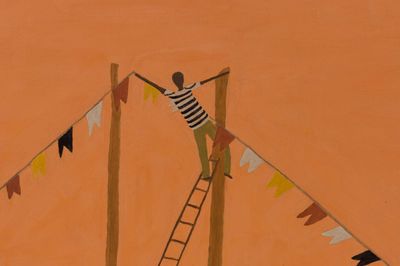
Marcos Siqueira, Untitled (2024) (detail). Pigment on panel. 120 x 120 cm. Courtesy the artist and Mendes Wood DM, São Paulo/Brussels/Paris/New York.


Marcos Siqueira‘s artistic journey began in a laboratory, where his fascination with soil led him to make sculptures and drawings from natural pigments.
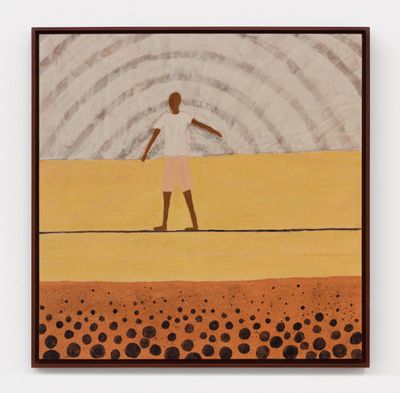
The self-taught artist depicts local landscapes, plants, animals, and people in his earthy-hued paintings, reflecting the natural beauty and culture of Brazil.
The title of Siqueira’s first international solo exhibition at Mendes Wood DM in New York, Matutar (31 July–31 August 2024), refers to the Portuguese term meaning to ponder or reflect. He spoke with Ocula about his beginnings in art, using soil pigments, and his work in environmental advocacy.
Tell me about your early experiences with art.
In 2010, I moved from Serra do Cipó to Belo Horizonte for better job prospects and worked in soil analysis for nearly five years. While preparing samples in the laboratory I studied the soil’s colours and textures.
I was fascinated by the soil’s variety and began creating small sculptures and drawings with its pigments in my spare time. I would dry the sculptures in the oven and give them to my mother.
I began painting when someone I did gardening work for gave me some watercolour paints. I made my first painting on wood; it felt right despite my lack of formal training.
In 2016 I met Gisele Camargo, an artist from Rio de Janeiro who had moved to Serra do Cipó. Our shared interest in environmental projects connected our artistic practices and her work provided valuable references for developing my own. She encouraged me to hold my first exhibition in Belo Horizonte, showcasing paintings I had made while working as a tour guide at the region’s national park.
How do you prepare natural pigments from the soil?
I collect pigments during daily walks in Serra do Cipó, always making sure to be respectful of the environment. The material is then dried, sifted, and separated from larger grains to obtain primary colours.
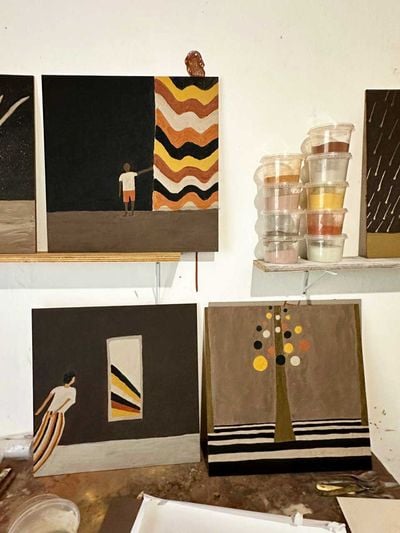
The pigments are mixed with water to achieve the desired consistency and applied to wood as a base layer. The application varies depending on the desired effect: thicker for a flatter background or thinner for a smoky, subtle look.
Your work features earthy tones of ochre, orange, red, and brown. How do these colours connect to the environment? Do they hold a special meaning?
The earthy colours in my paintings directly reflect my home, Minas Gerais. Minas Gerais has a complex environmental and cultural backdrop: it is a mineral-rich state significantly impacted by iron ore mining. The colours I use are tied to the region’s soil and landscape.
Minas Gerais is also rich in cultural heritage, influenced by the legacy of enslaved Africans. There are traditional practices and festivals such as Folia de Reis, Candombe, Batuque, and Festa Junina.
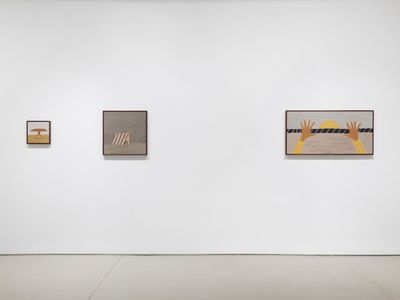
My early experiences with farming and gardening connected me to the land, making these colours and the earth itself profoundly meaningful in my art. Each painting is imbued with the stories and traditions of Brazil, reflecting the environmental and cultural essence of Minas Gerais.
Could you share more about your environmental preservation practices?
I’ve always been passionate about the environment. As a child, I loved swimming and fishing in local rivers and streams. Seeing these beloved places marred by garbage motivated me to give back and protect nature. My inspiration came from Mr Oswaldo Machado, a doctor who ran an inn in Serra do Cipó and organised clean-up activities with my school.
In 2015 I initiated the Caminho Limpo (Clean Path) project to promote the enjoyment of nature without harming it. Camargo joined me in 2017, helping to expand the initiative into a collective that raises awareness through school programmes, educational theatre, and lectures. I also volunteer with the Cipó Brigade who fight forest fires in the region. These activities deeply influence and inspire my work as an artist.
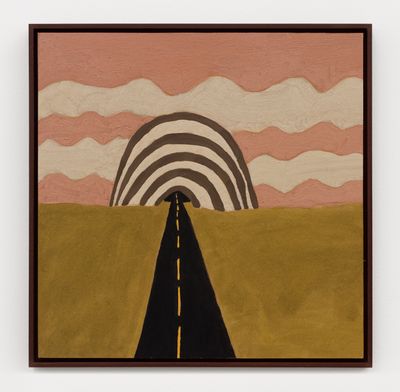
Tell me about your exhibition Matutar.
The show reflects the landscape of my home, explores environmental themes, and delves into elements from my subconscious. These aspects altogether create a blend of playfulness and surrealism in my art.
My work develops through the process of preparing my materials. The title matutar captures my approach of deep reflection and careful observation. I strive to reveal the subtle nuances of my environment, with the belief that true richness is found in these details.
Finally, what’s next for you?
I’m finalising a two-person show with Antonio Obá at Centro Cultural Banco do Brasil, which will open this November. The exhibition will travel to Brasília, Rio de Janeiro, and Belo Horizonte.
I also have a solo show in early 2025 at Mitre Galeria in São Paulo, and another solo at Mendes Wood DM in Brussels later next year. —[O]
Selected Artworks
Main image: Marcos Siqueira, Untitled (2024) (detail). Pigment on panel. 120 x 120 cm. Courtesy the artist and Mendes Wood DM, São Paulo/Brussels/Paris/New York.






A respected voice in contemporary art discourse.
Focusing on ambitious storytelling and insightful art-world commentary. Ocula Magazine publishes in-depth interviews, critical essays and timely analysis on the artists, exhibitions and ideas driving the global art world.
Learn more about Ocula Magazine
Showcasing the best of the art world.
Ocula partners with galleries from around the world to highlight their artists, artworks and exhibitions. Gallery membership is by application and invitation, with each member vetted by an independent panel.
Learn more about Ocula Membership
Specialises in the sale of major artworks.
Led by a team with deep ties to the world’s leading auction houses, galleries and collectors. Ocula’s advisory team offers bespoke services to high-net-worth clients from around the world who are looking to acquire the best of contemporary and modern art.
Learn more about our team and services