The art world in focus
Subscribe to our newsletter for news and insights on artists, galleries and exhibitions.

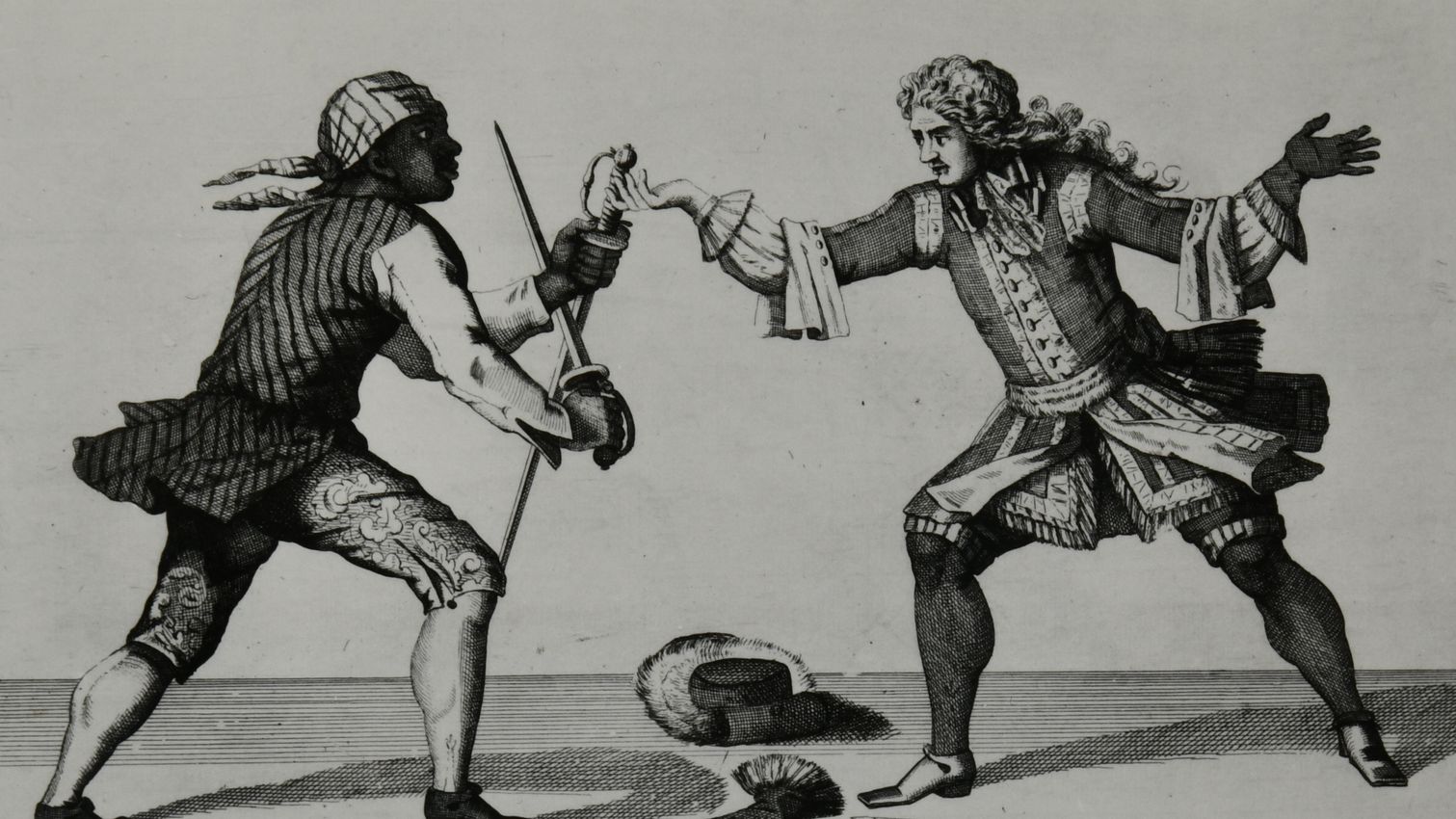
In 1960, Dominique and Jean de Ménil—Franco-American art patrons, civil rights advocates, and founders of the Menil Collection in Houston—began to collect images. Not in the casual, scattershot way we scroll and save today, but with missionary rigour. Their aim was to assemble what would become the Image of the Black archive: more than 30,000 photographs of artworks and artefacts depicting figures of African descent, gathered from across time, geography and medium. Originally compiled as a research tool rather than a public display, the images are mounted on cards with varying levels of attribution—some meticulously titled and credited, others bearing only fragmentary identifications—and organised by iconographic category rather than artist or period.
The project emerged at a fraught historical moment: decolonisation was reshaping Africa, the Civil Rights Movement in the United States was gaining momentum, and longstanding European visual traditions often reduced Black figures to stereotypes or allegorical symbols. Against this backdrop, the de Ménils sought to create a scholarly resource that documented the breadth and complexity of Black representation in Western art—an effort to make visible the ways Blackness had been depicted, appropriated and misunderstood, and to challenge the omissions and distortions of existing art historical narratives.
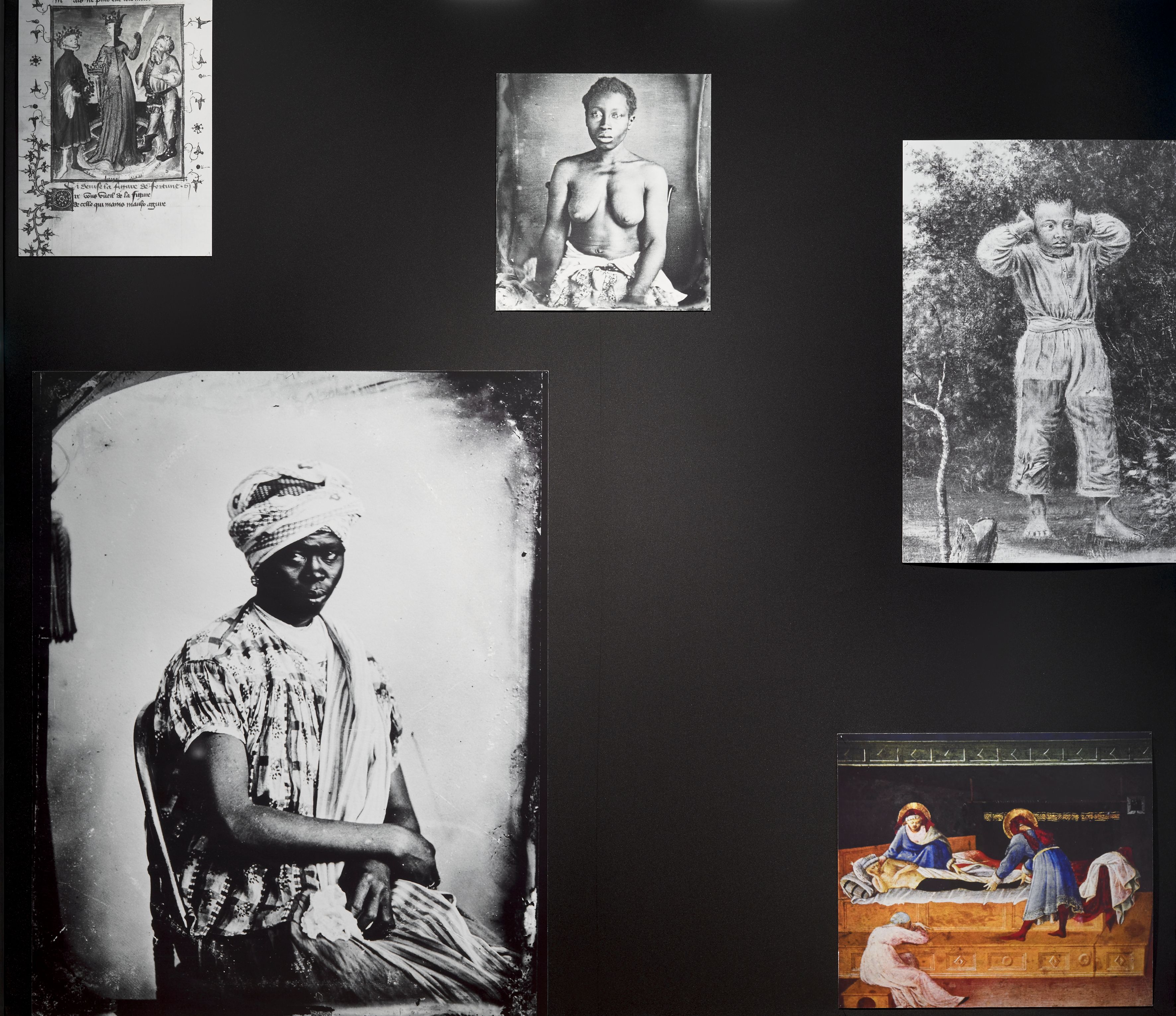
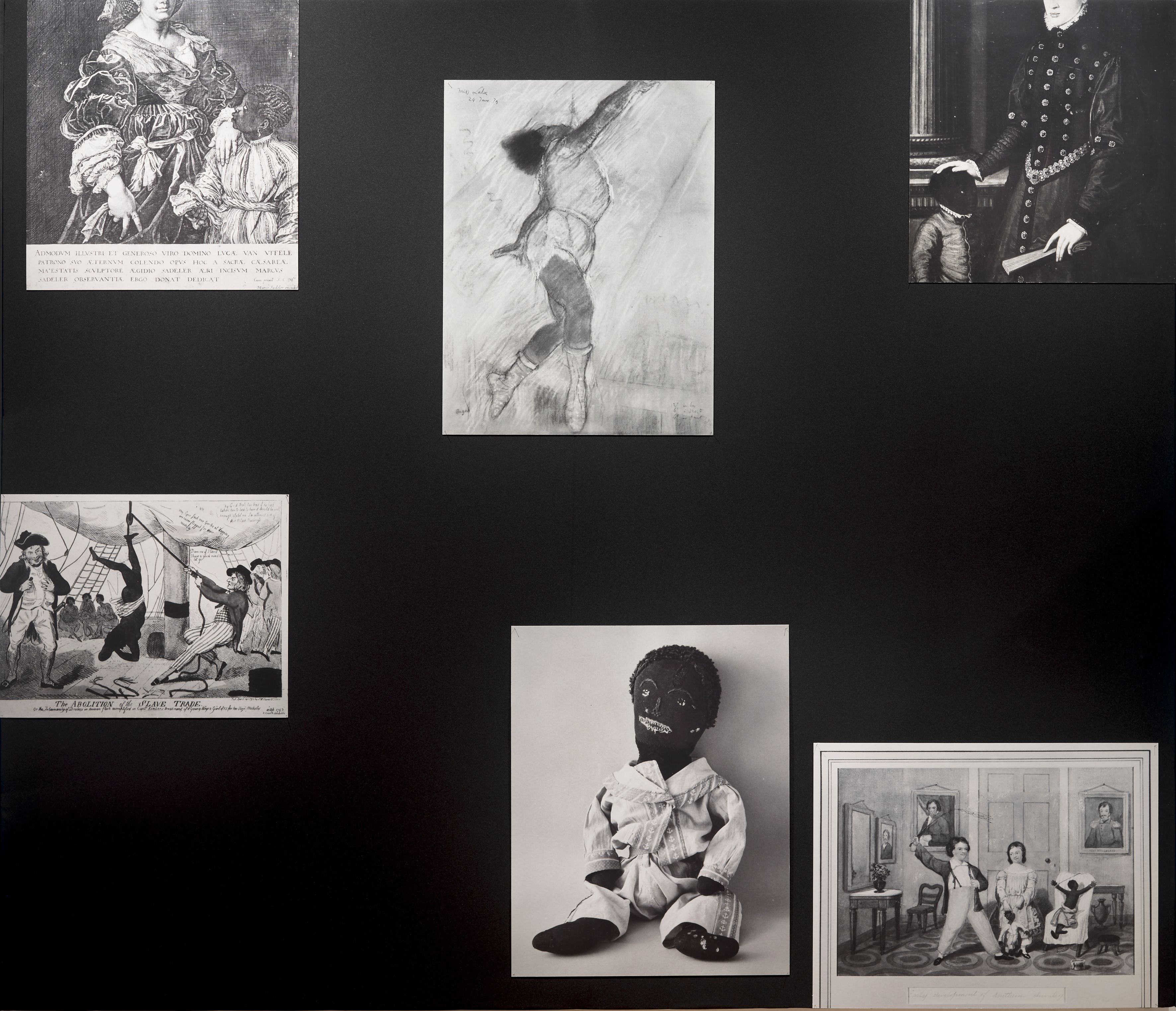
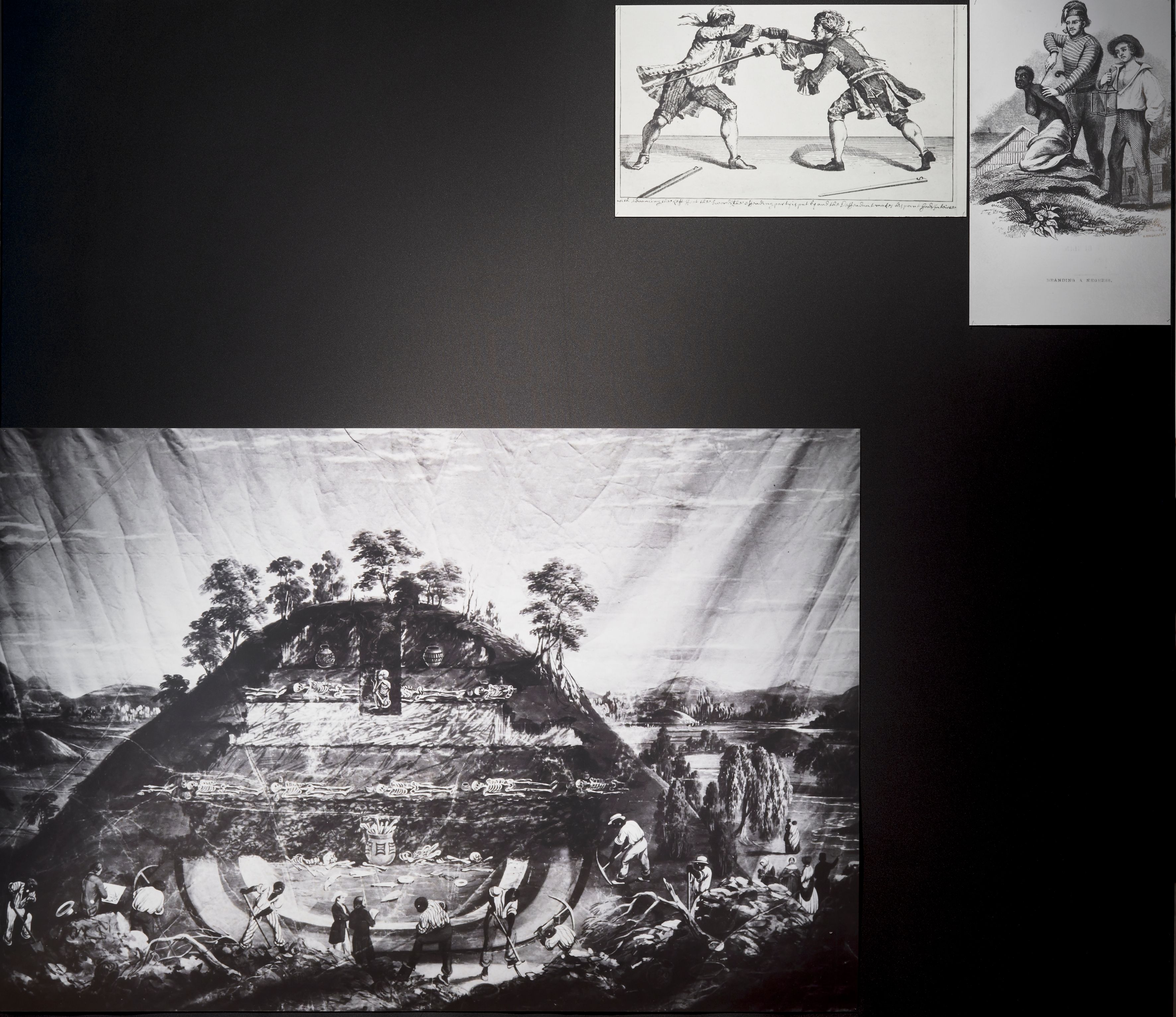
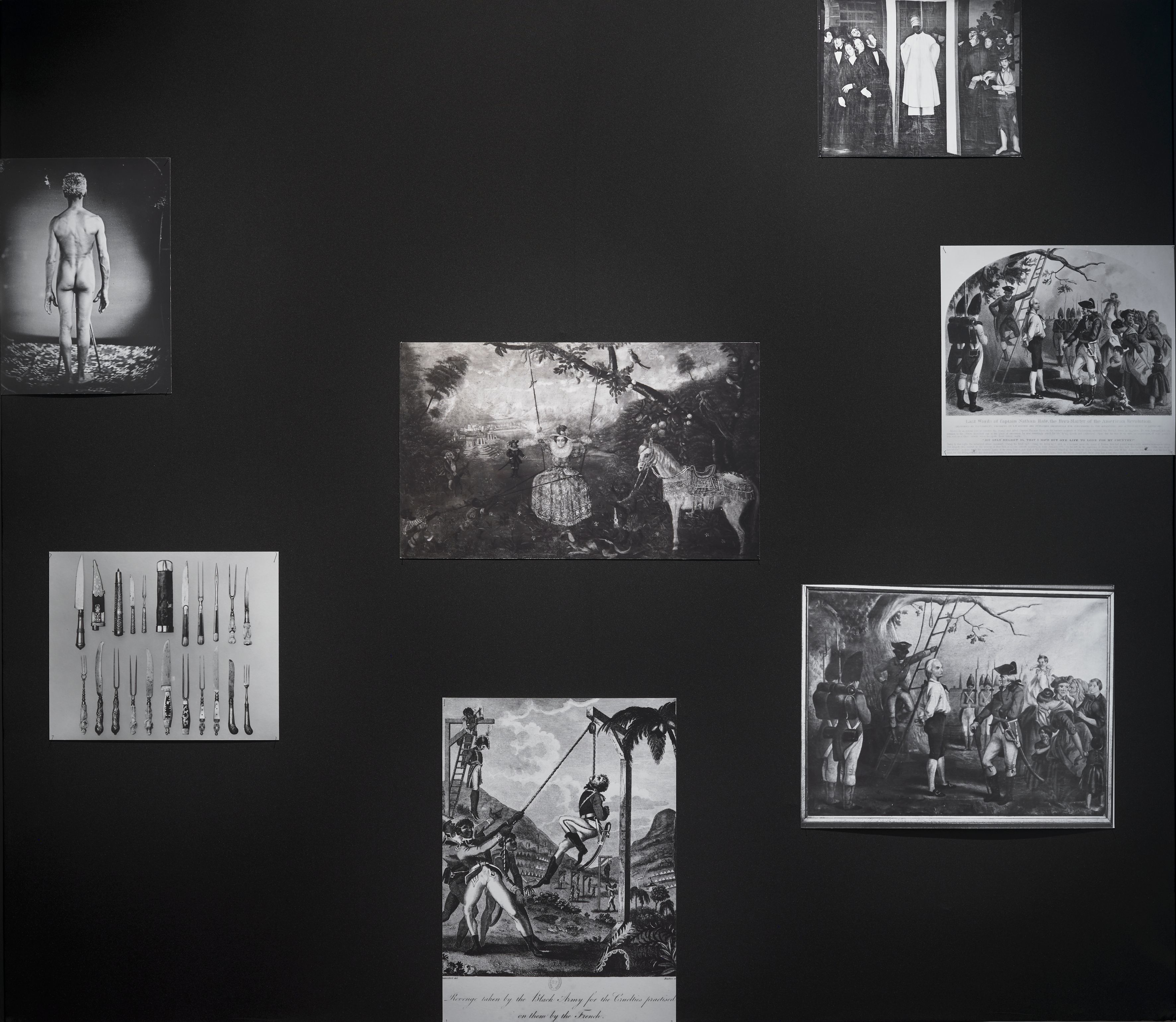
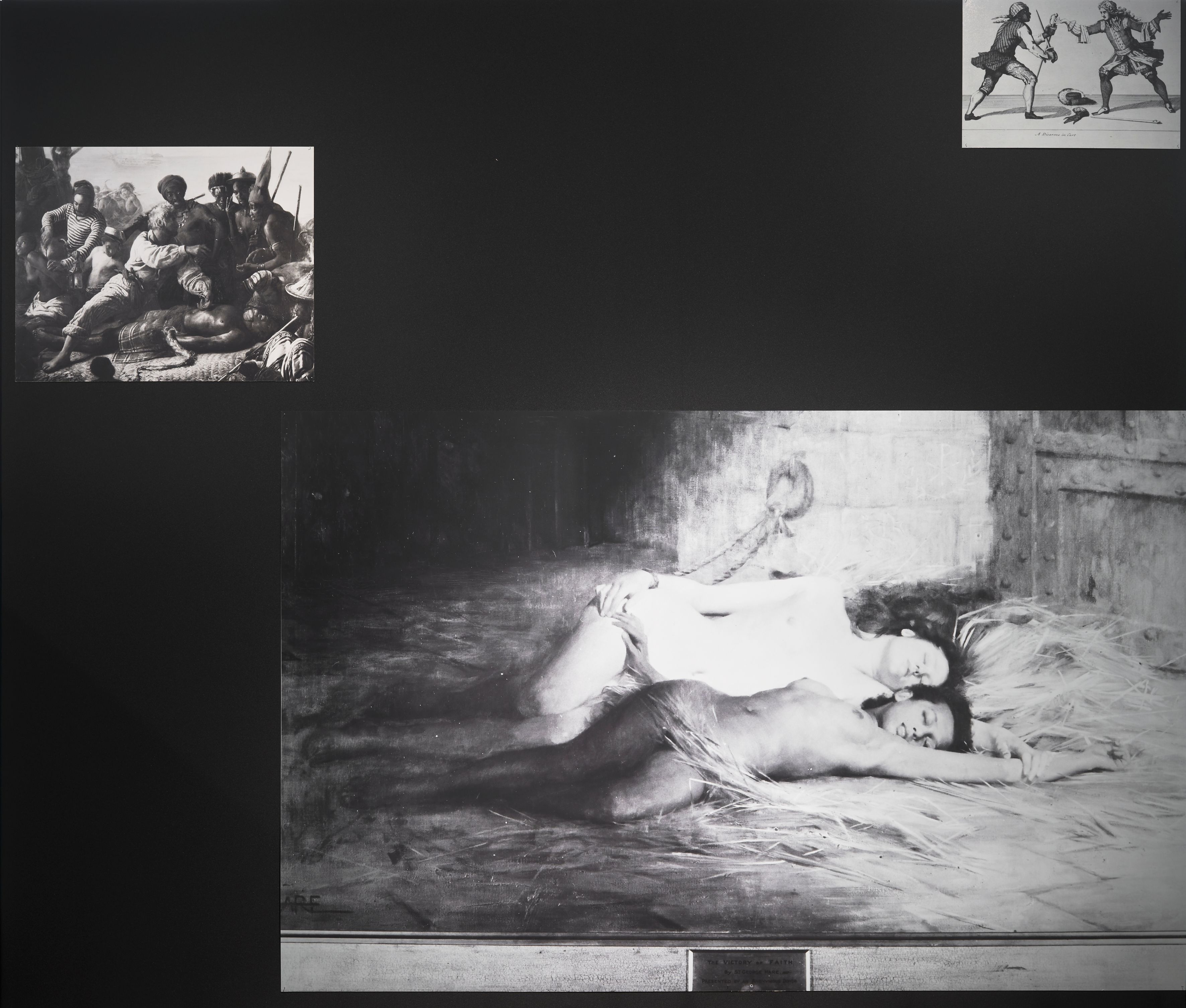
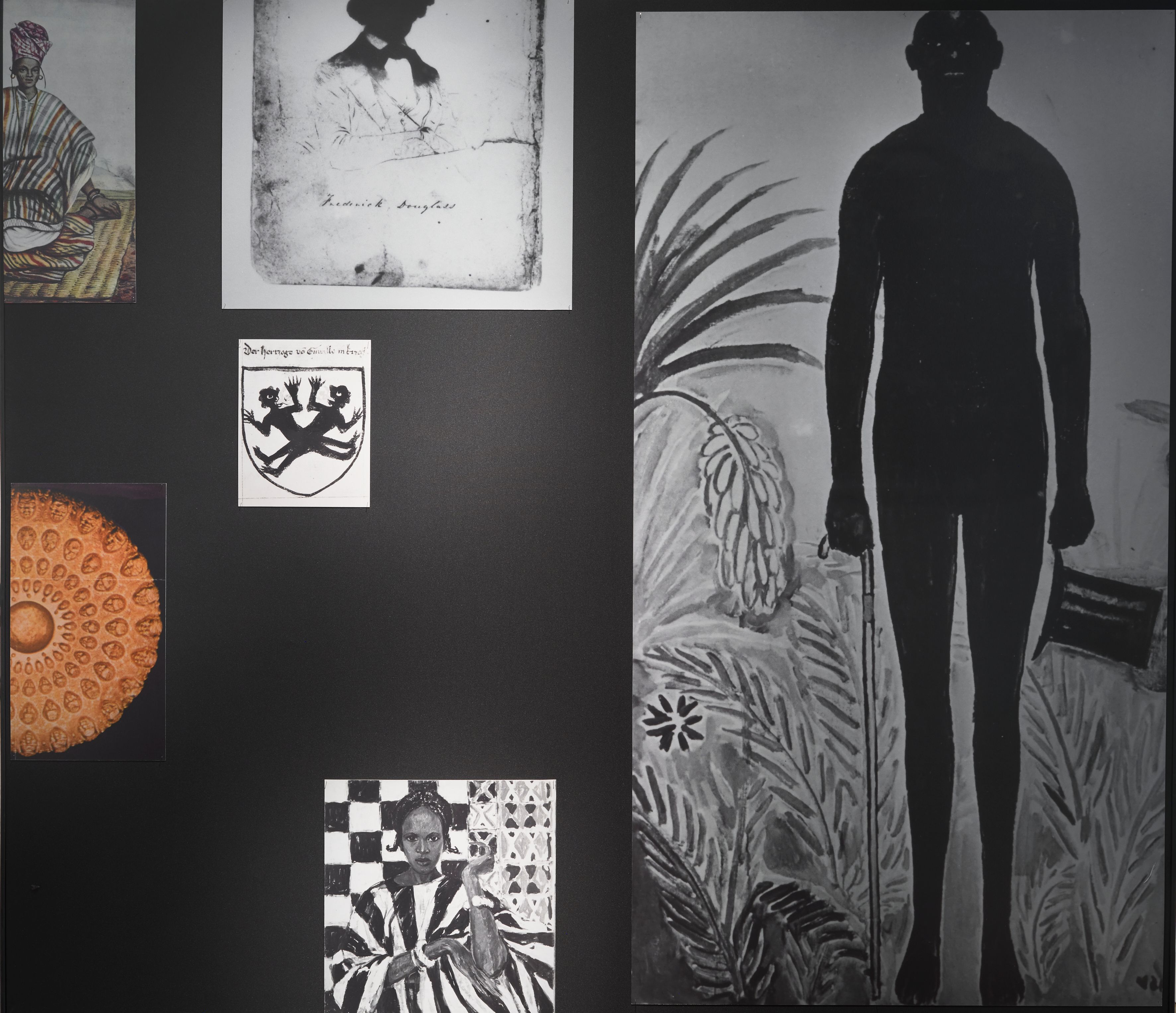
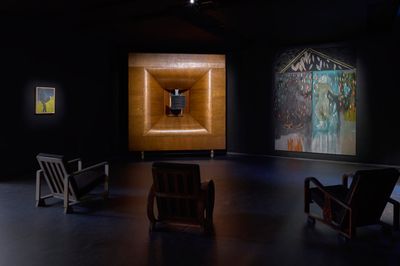
Today, the archive is split between the Warburg Institute in London and the Menil Collection in Houston. The Warburg holds the photographic archive permanently and is open to researchers by appointment; during the run of George’s exhibition, a portion is viewable in a dedicated reading room. The Warburg itself, founded in the early 20th century by the German cultural historian Aby Warburg, is a unique research library and archive devoted to tracing the “afterlives” of images: how visual motifs survive, mutate and migrate across epochs.
It is against this backdrop that Edward George—writer, filmmaker, founding member of the Black Audio Film Collective, and a practitioner long concerned with the archival image—has created Black Atlas (2025). George has a history of working with assemblages of still images and narration; his landmark essay film The Last Angel of History (1995) wove archival footage and speculative storytelling to explore Afrofuturism, while The Wake (2001) used voice and montage to examine histories of slavery and memory.
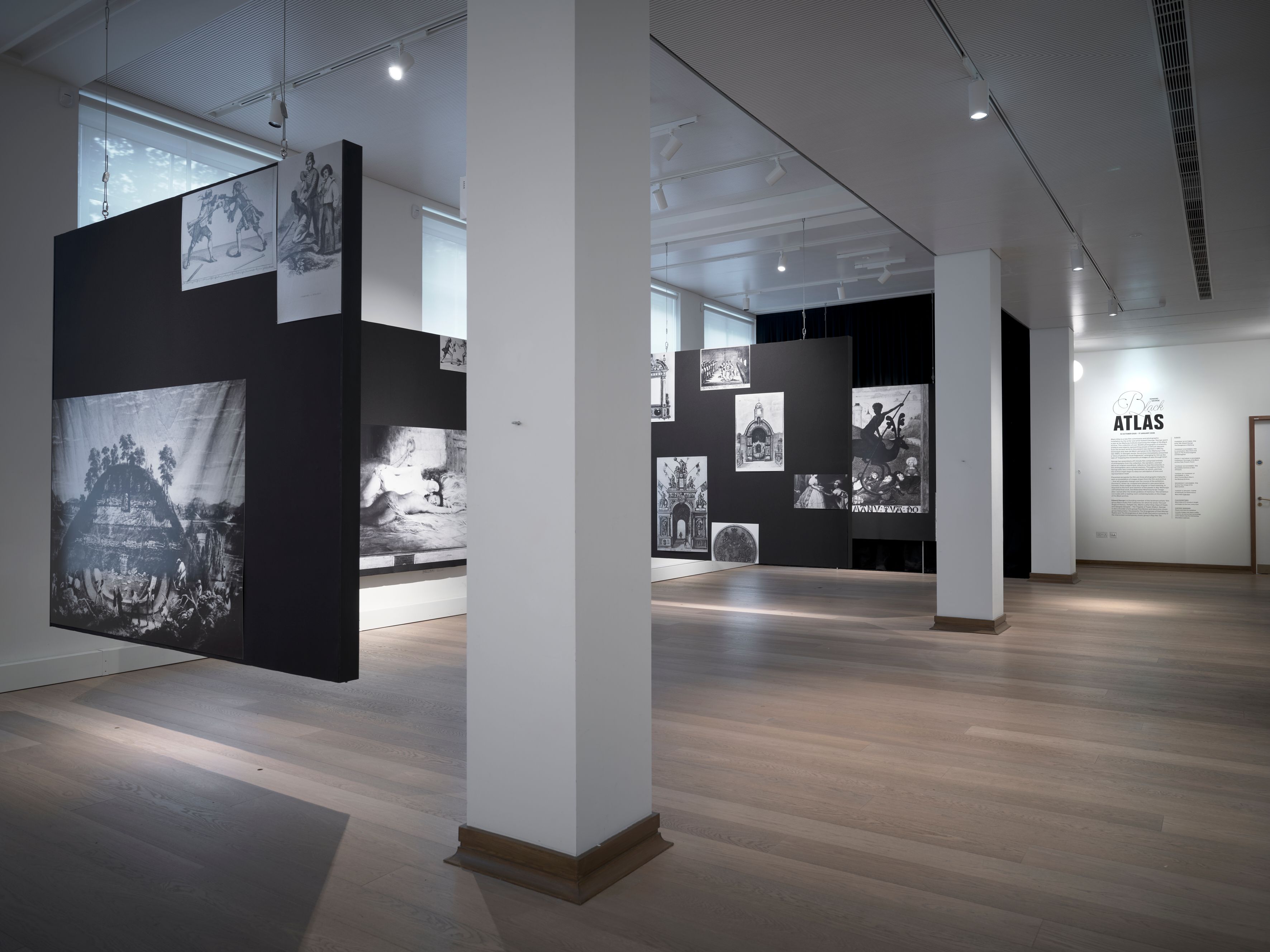
Commissioned during his year-long residency at the Institute (the first in a new programme that will invite contemporary artists to respond to the Warburg’s collections on an ongoing basis), the work does not seek to ‘explain’ the archive, nor to provide definitive readings of its contents. Instead, George reactivates it: disassembling its contents into nine thematic constellations—dogs, blood, sex, monkeys, mirrors, collars, faces, space, things—and reassembling them into a cinematic cartography of the Black figure in Western art. It is both an act of looking and a proposition about how we look.
But to understand Black Atlas is to understand the Image of the Black archive itself—and how the logic of its assembly prefigures our contemporary, digitised image culture. The de Ménils’ archive was born in an era of photographic reproduction, at a time when the black-and-white print still functioned as a scholarly tool. Their stated aim was to trace the shifting iconographies of Blackness across European art: to make visible how Black subjects were seen, staged, or subsumed within the dominant pictorial orders of their times.


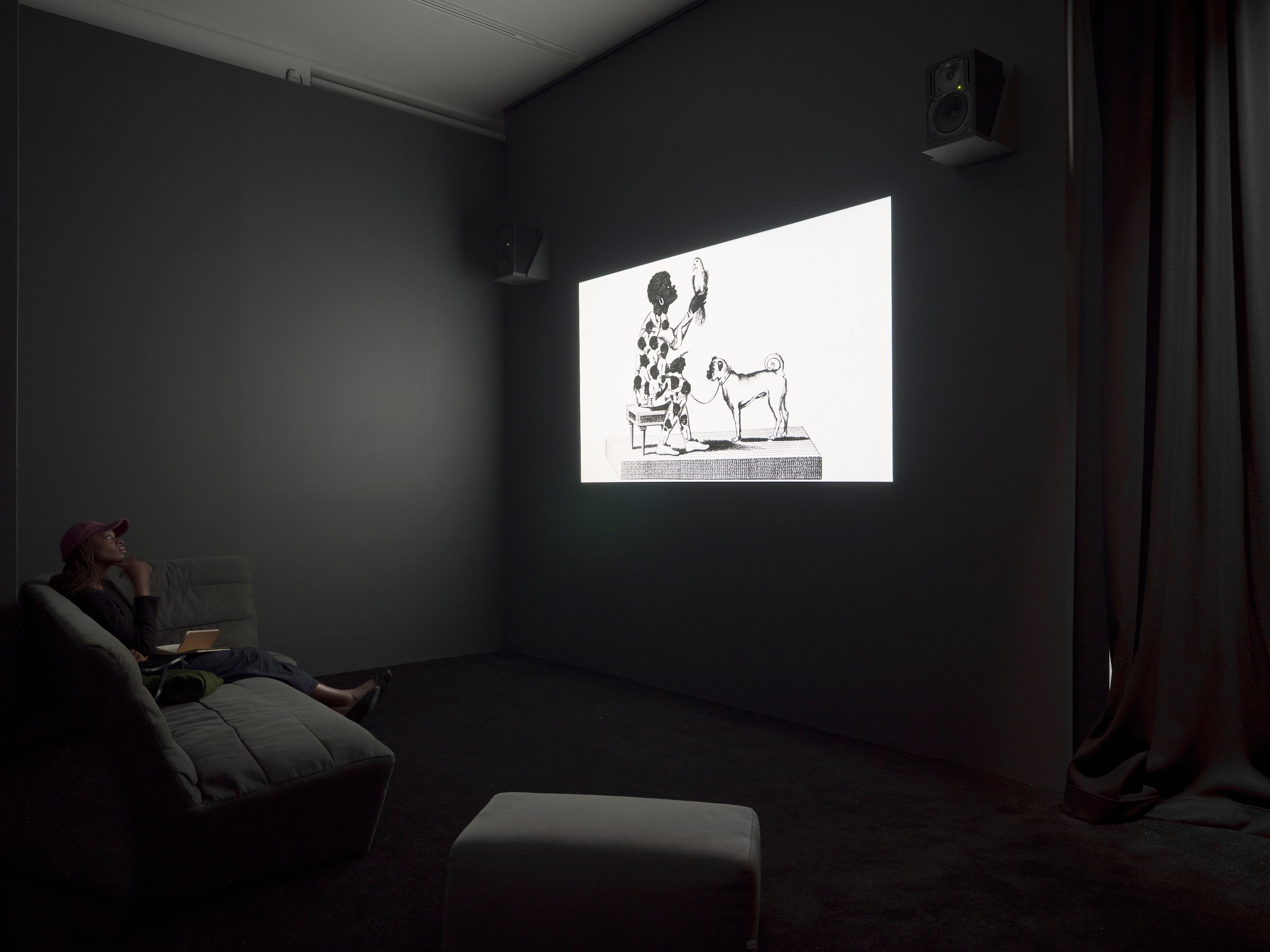
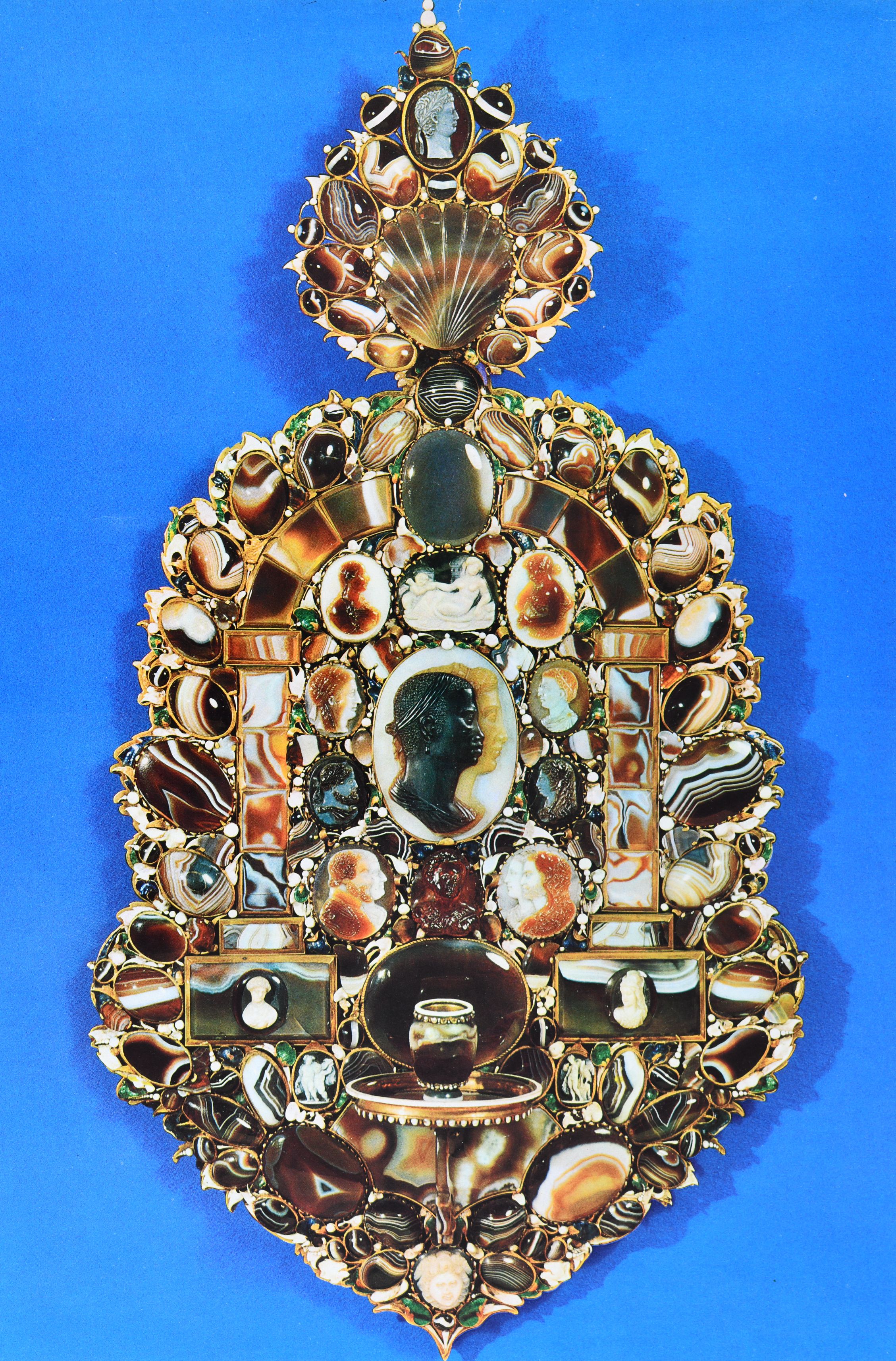
What emerges is not a linear story but a vast, unruly atlas. A seventeenth-century devotional painting of the Adoration of the Magi places a richly robed Black king at the centre of the composition; a 19th-century French caricature grotesquely exaggerates Black features for comic effect; a Roman sarcophagus relief depicts a Black soldier alongside mythic figures. Temporalities collapse. Geographies blur. The Black figure is everywhere, and yet nowhere central.
This is where George’s intervention is so astute. Rather than imposing a linear narrative or historical chronology, he leans into the archive’s inherent instability. The film’s still images are presented in rapid succession, fading or cutting sharply from one to the next rather than being collaged, creating a rhythm closer to montage than static display. Over this, an original improvised soundtrack builds a sonic landscape, underscored by George’s narration.
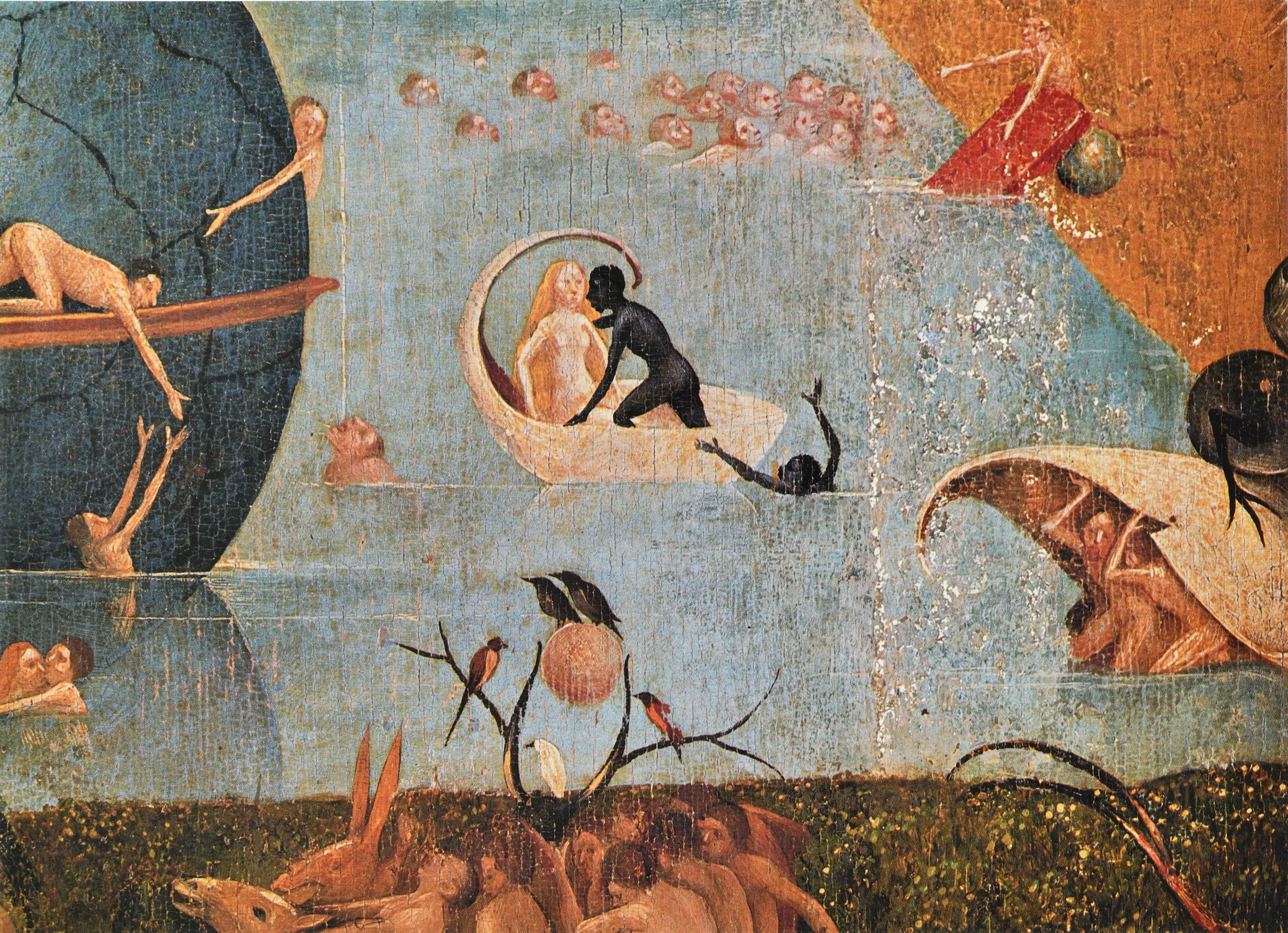
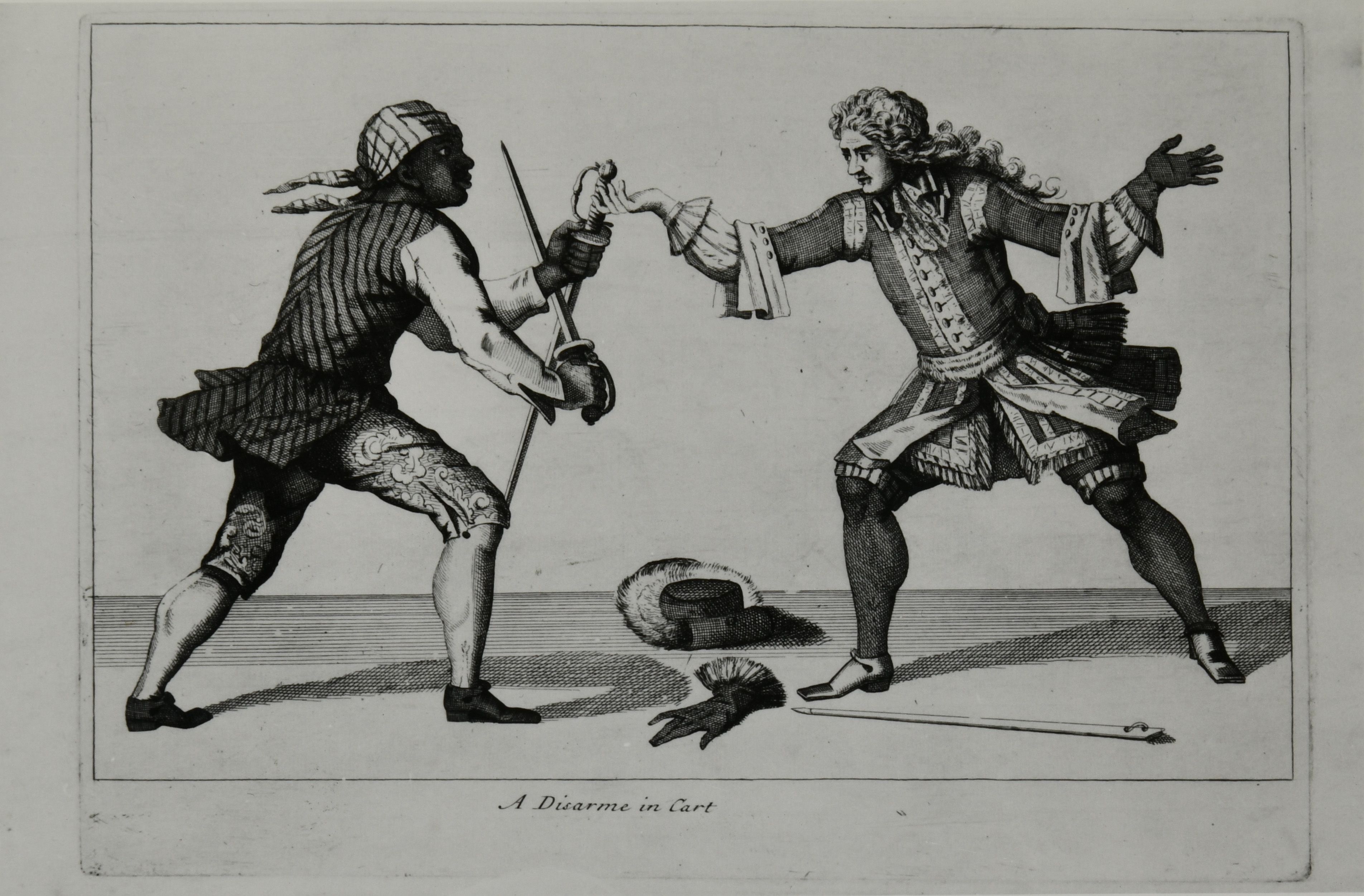
Black Atlas groups images according to affective or symbolic resonances, allowing meanings to ripple and refract. A mirrored surface might reflect a Black figure in a Renaissance portrait; elsewhere, a literal mirror reframes a colonial gaze. Collars appear across centuries, shifting from decorative to punitive. The Black Atlas, notes George in his narration, is not a physical map but a psychological terrain—one in which images migrate like weather systems, gathering new charge as they cross contexts. George voices the film in a measured, essayistic tone. His narration slips between cultural criticism and ventriloquism; at moments, it is as if the subjects of these images speak back across time, refusing their status as mute artefacts. “Who are you looking at?” the archive seems to ask.
In the digital age, this question lands with renewed urgency. Today, we swim in images divorced from their original contexts—an endless feed of fragments, memes, thumbnails and reproductions. Hito Steyerl’s notion of the ‘poor image’ is instructive here: low-resolution, endlessly copied, and detached from its origin, the poor image circulates through networks in ways that both democratise and distort.
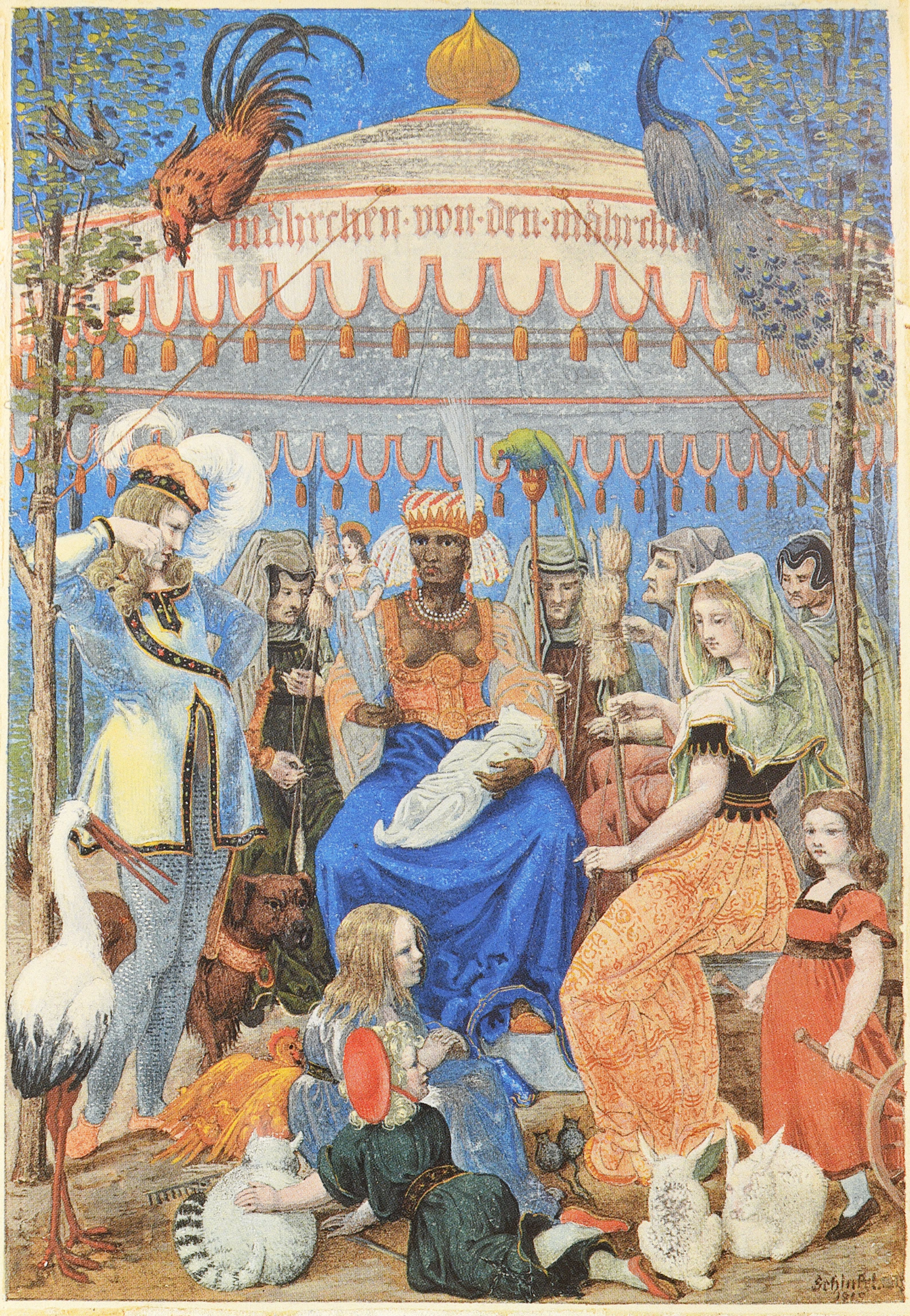
The thematic breadth of the Image of the Black archive—spanning millennia, genres, and functions—mirrors the flattened temporality of our visual culture. Just as the de Ménils’ filing system brought together disparate depictions under the unifying rubric of ‘Blackness’, the algorithmic scroll delivers a ceaseless montage of images tethered only by the tags we give them. The difference is that the de Ménils’ taxonomy was explicit. Today’s taxonomies are invisible, automated, and often shaped by algorithmic systems trained on biased data.
In this light, Black Atlas can be read not simply as an archival project but as a lens on how images circulate today. George’s nine iconographic categories echo the hashtags and trending clusters that organise our digital viewing habits. But his approach is consciously critical: he exposes the ways in which repeated tropes—collars, mirrors, animals, faces—shape our perception of Blackness across centuries. It is an archive not only of images, but of ways of seeing.
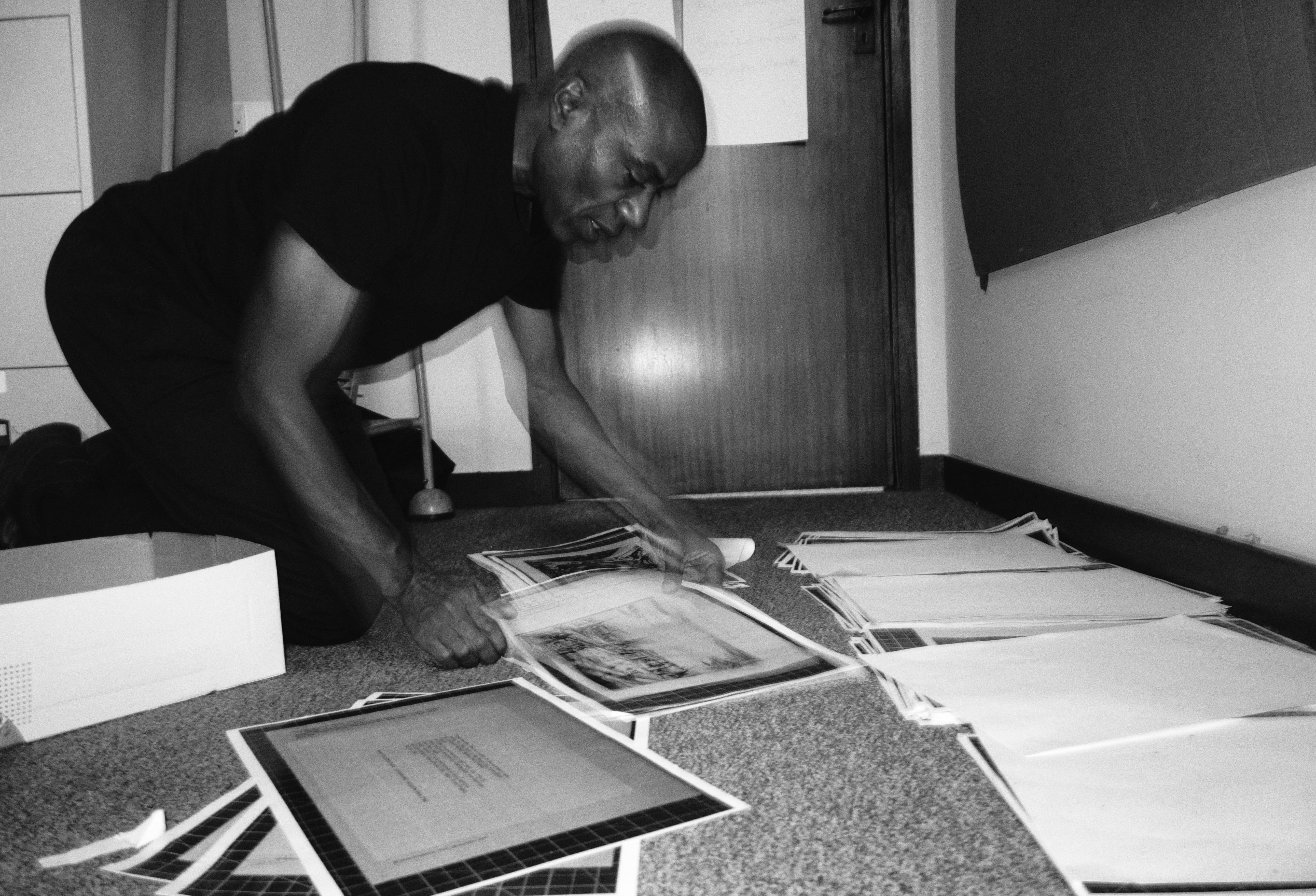
There is a quiet provocation here. The Image of the Black archive was compiled with the belief that collecting and classifying images could generate knowledge, perhaps even correct historical omissions. Yet the act of collecting is never neutral. What is included or excluded? Who does the cataloguing? George’s film does not attempt to resolve these questions. Instead, it amplifies their complexities, asking what happens when the archive itself becomes an object of aesthetic and critical scrutiny.
Watching Black Atlas, one is struck by the oscillation between intimacy and distance. Faces stare out from centuries-old canvases; hands grip, gesture, reach. And yet the mediating lens—whether the original painter’s or the de Ménils’ photographer’s—remains palpable. In our own time, we encounter most images of Blackness through similar layers of mediation: screens, feeds, platforms. George’s film reminds us that the ways images are assembled, grouped and circulated shape not only what we see but how we understand the past—and, by extension, the present. In navigating this vast archive without a map, George does not chart a definitive route. Instead, he invites us to dwell on the strangeness of looking itself. —[O]
A respected voice in contemporary art discourse.
Focusing on ambitious storytelling and insightful art-world commentary. Ocula Magazine publishes in-depth interviews, critical essays and timely analysis on the artists, exhibitions and ideas driving the global art world.
Learn more about Ocula Magazine
Showcasing the best of the art world.
Ocula partners with galleries from around the world to highlight their artists, artworks and exhibitions. Gallery membership is by application and invitation, with each member vetted by an independent panel.
Learn more about Ocula Membership
Specialises in the sale of major artworks.
Led by a team with deep ties to the world’s leading auction houses, galleries and collectors. Ocula’s advisory team offers bespoke services to high-net-worth clients from around the world who are looking to acquire the best of contemporary and modern art.
Learn more about our team and services