The art world in focus
Subscribe to our newsletter for news and insights on artists, galleries and exhibitions.
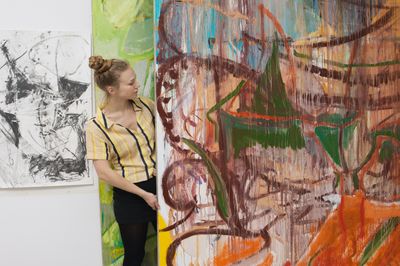
Pam Evelyn, 2021. Courtesy the artist and The Approach. Photo: Michael Brzezinski.
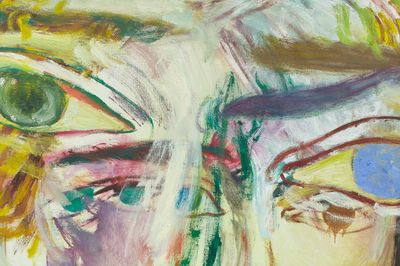
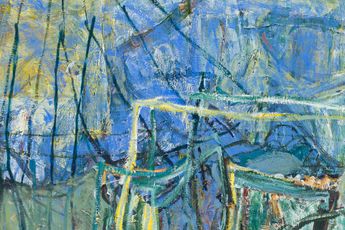
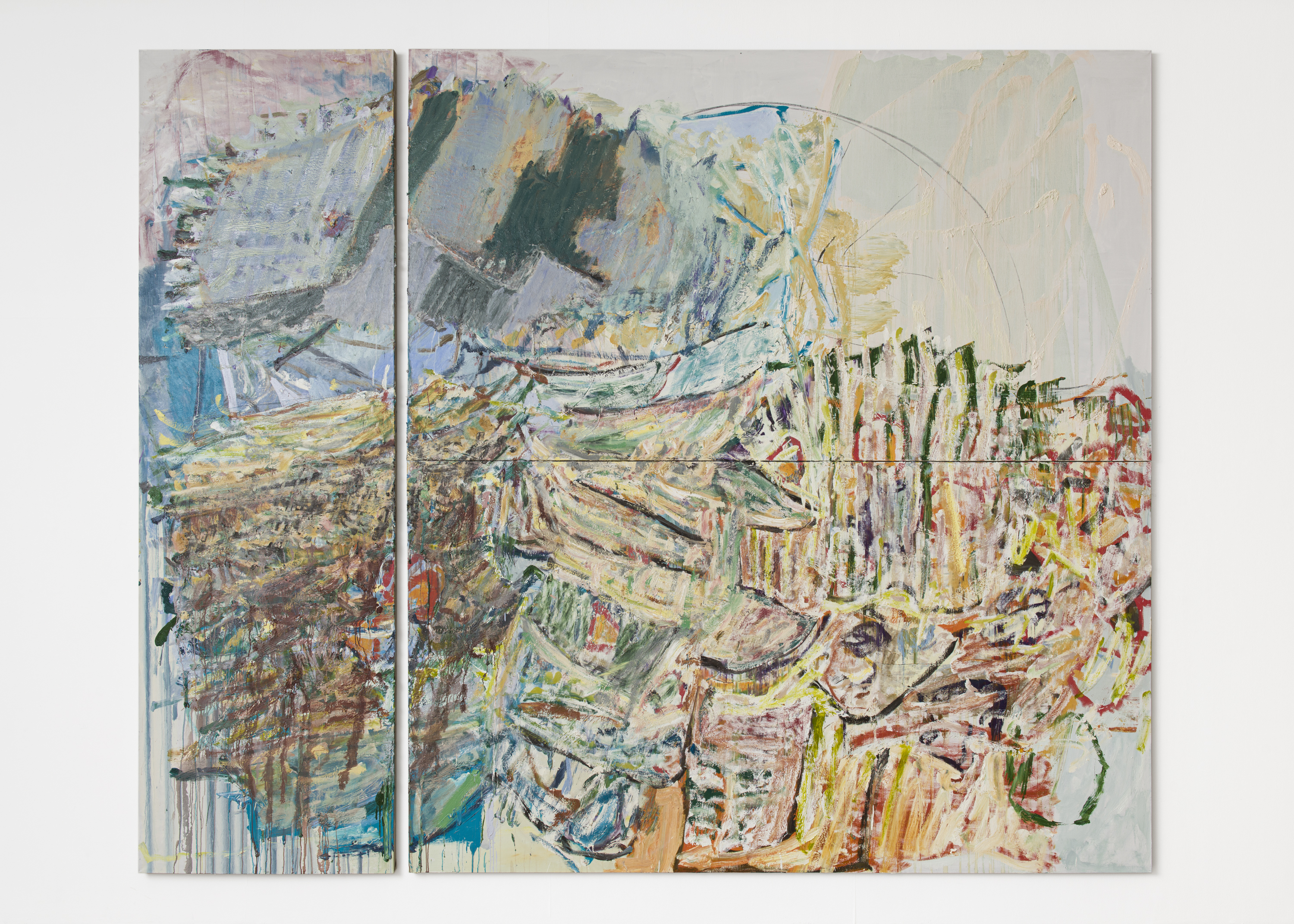
Pam Evelyn is carving out a unique path in abstraction. Still enrolled in an MA in Painting at London’s Royal College of Art, her canvases conjure expressive layers, reflecting the process of information being churned up—a quality that was explored in her solo exhibition Spectacle of a Wreck at Peres Projects in 2021.
Showcasing the textures of Evelyn’s animated paintings, the exhibition reflected the artist’s processes of ‘excavation’, involving pigments, forms, and strokes being built up and transformed during the course of painting. Ahead of her solo exhibition at The Approach in London, Evelyn spoke about the latest developments in her practice.
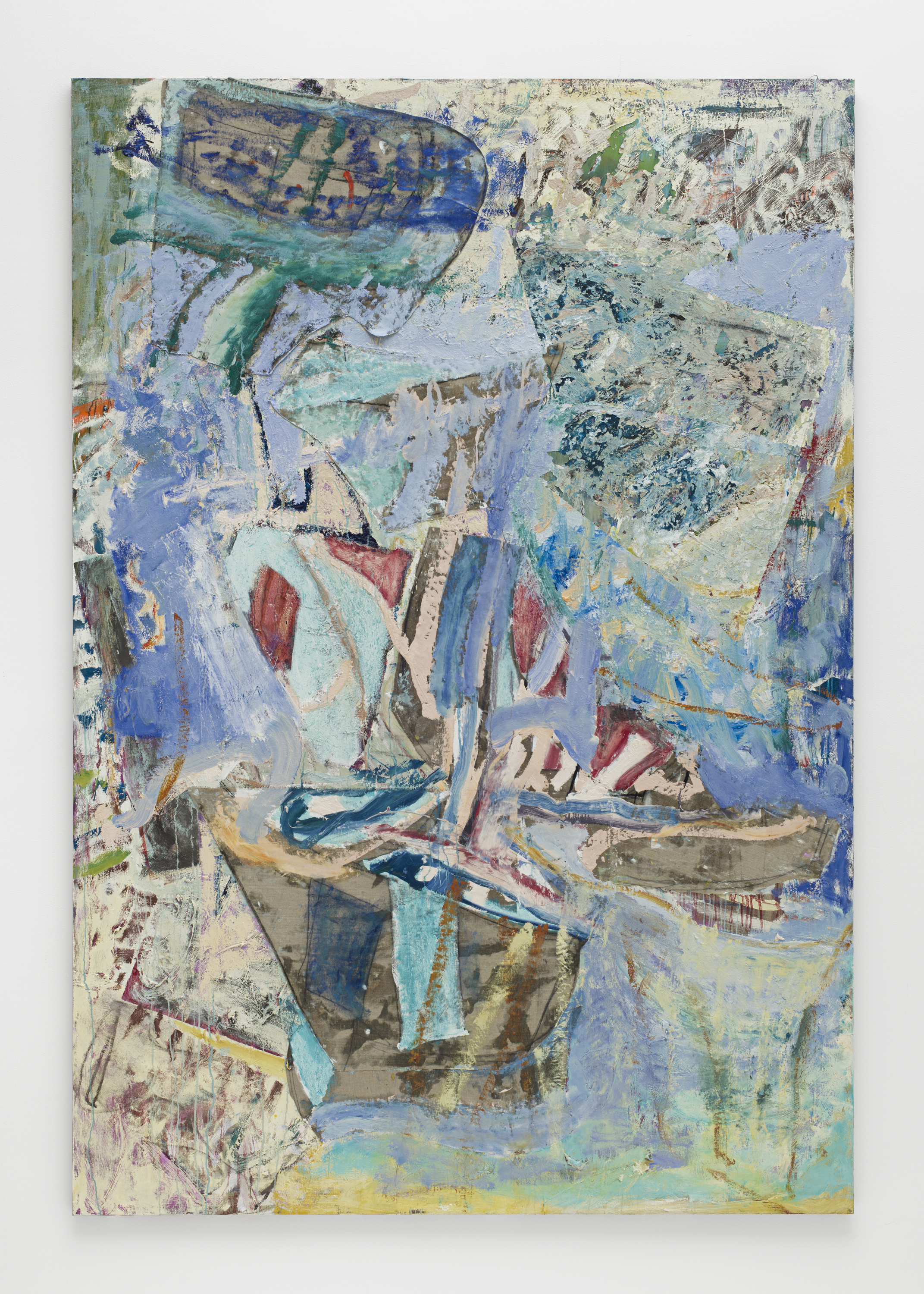
I see my paintings as landscapes or figurative, but in a very loose sense. I’ve been working in this manner for about five years, but in the last two years I feel like I’ve really tapped into something exciting.
I was making tonnes of small works for Artist Support Pledge, which took me out of waitressing and doing other part-time jobs, enabling me to work in the studio full time, so it was really quite significant.
I was able to get a lot out of my system through making all these smaller works. Then as soon as I was able to buy materials for larger-scale paintings, I found I had this real urgency.
There was something about being forced into working in a more economical manner on a smaller scale over and over again that seemed to set me off on this new path when I moved to larger canvases.
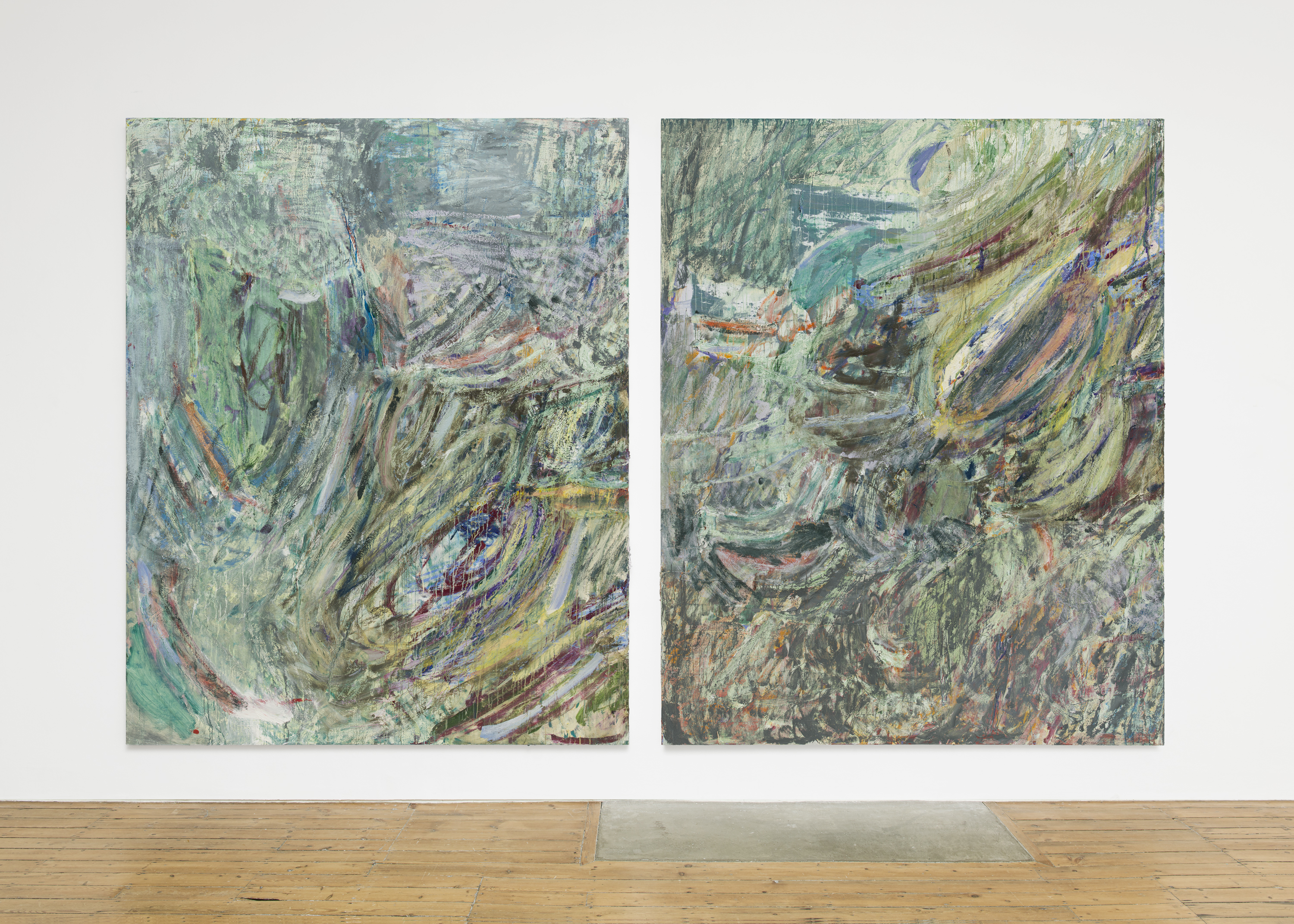
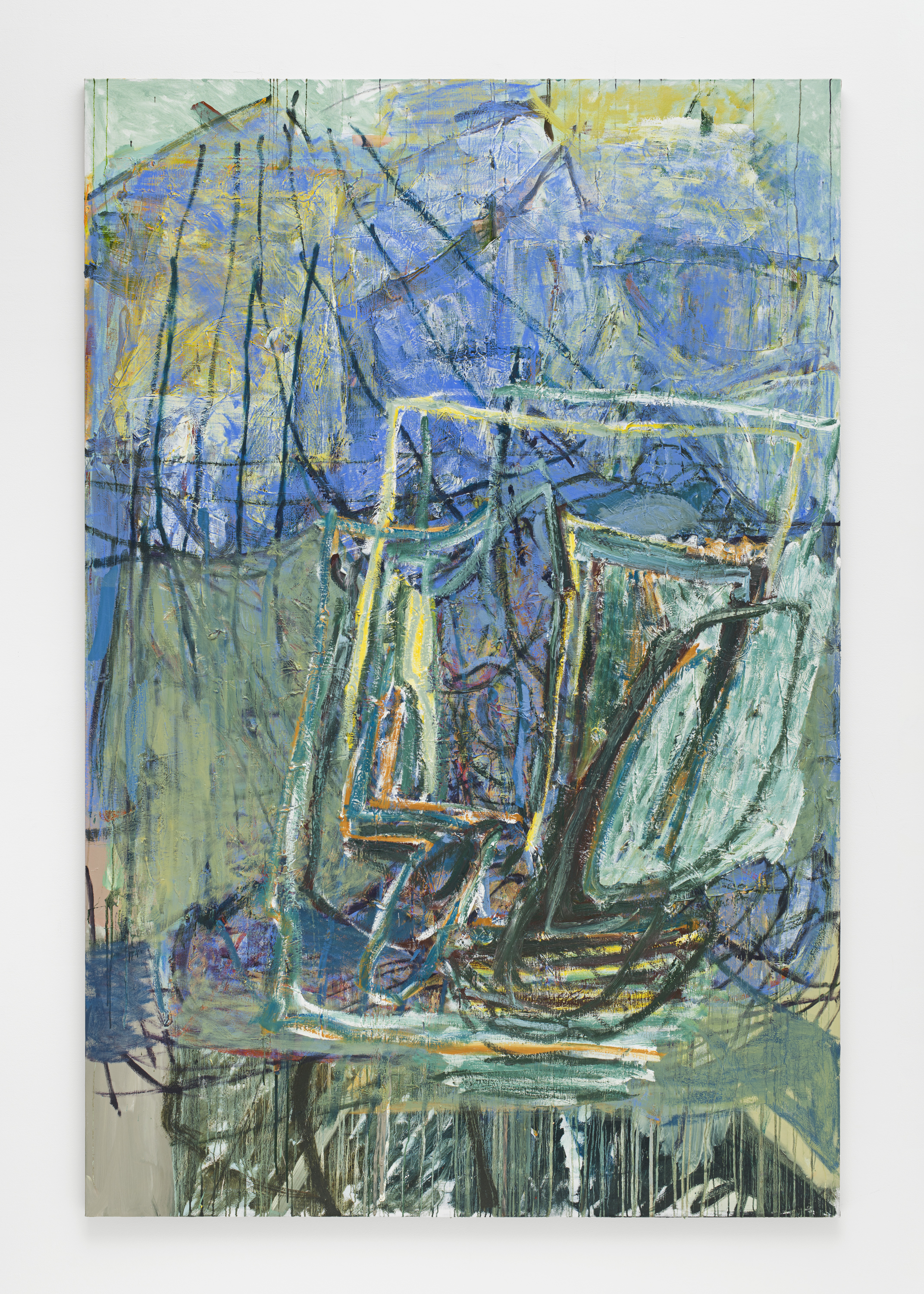
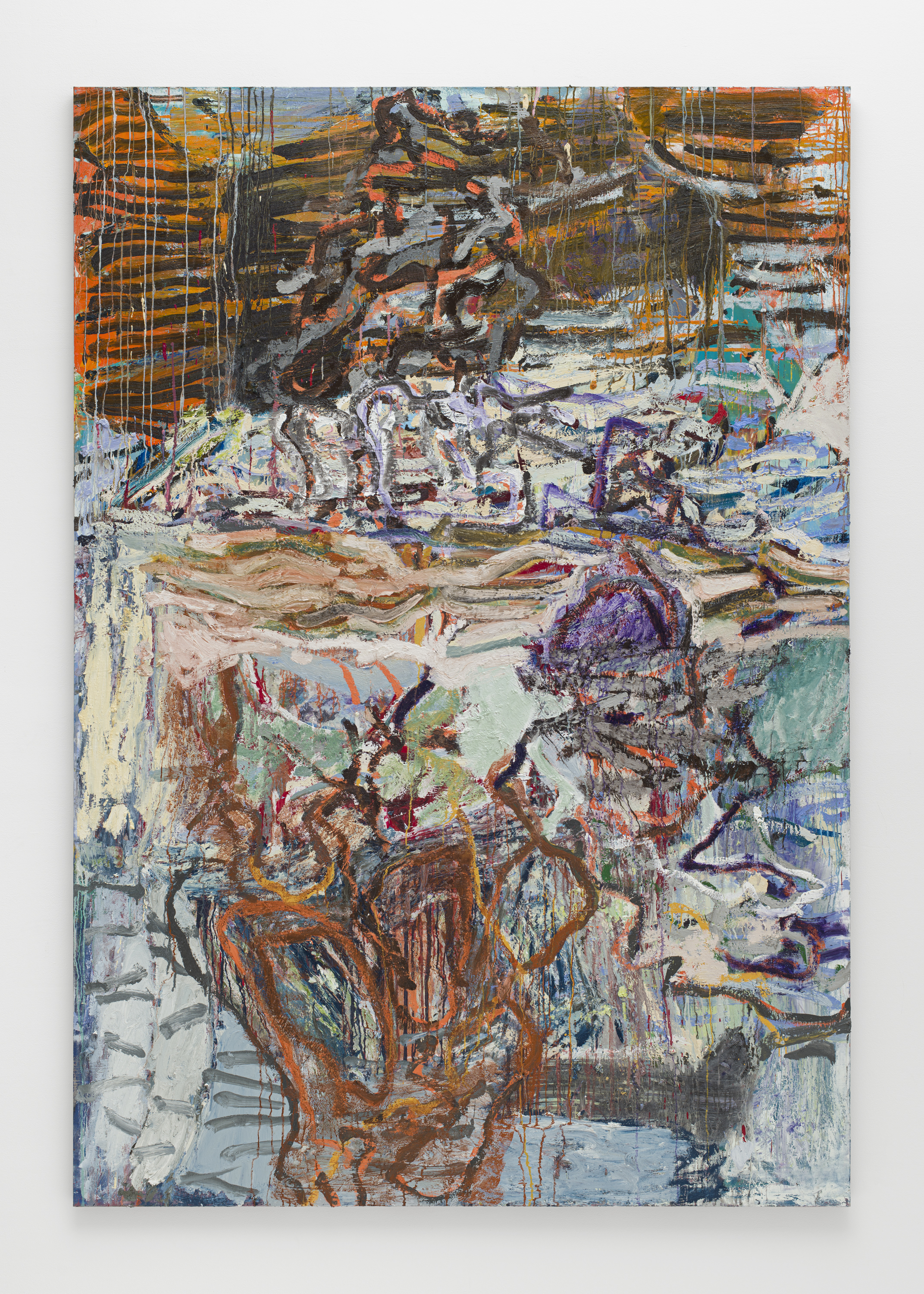

The way in is usually something completely random or alien to what I choose to do, so it’s almost like asking someone else to just do something.
I like to self-sabotage at the beginning and then I revisit that and then just take it somewhere instinctively without any plans.
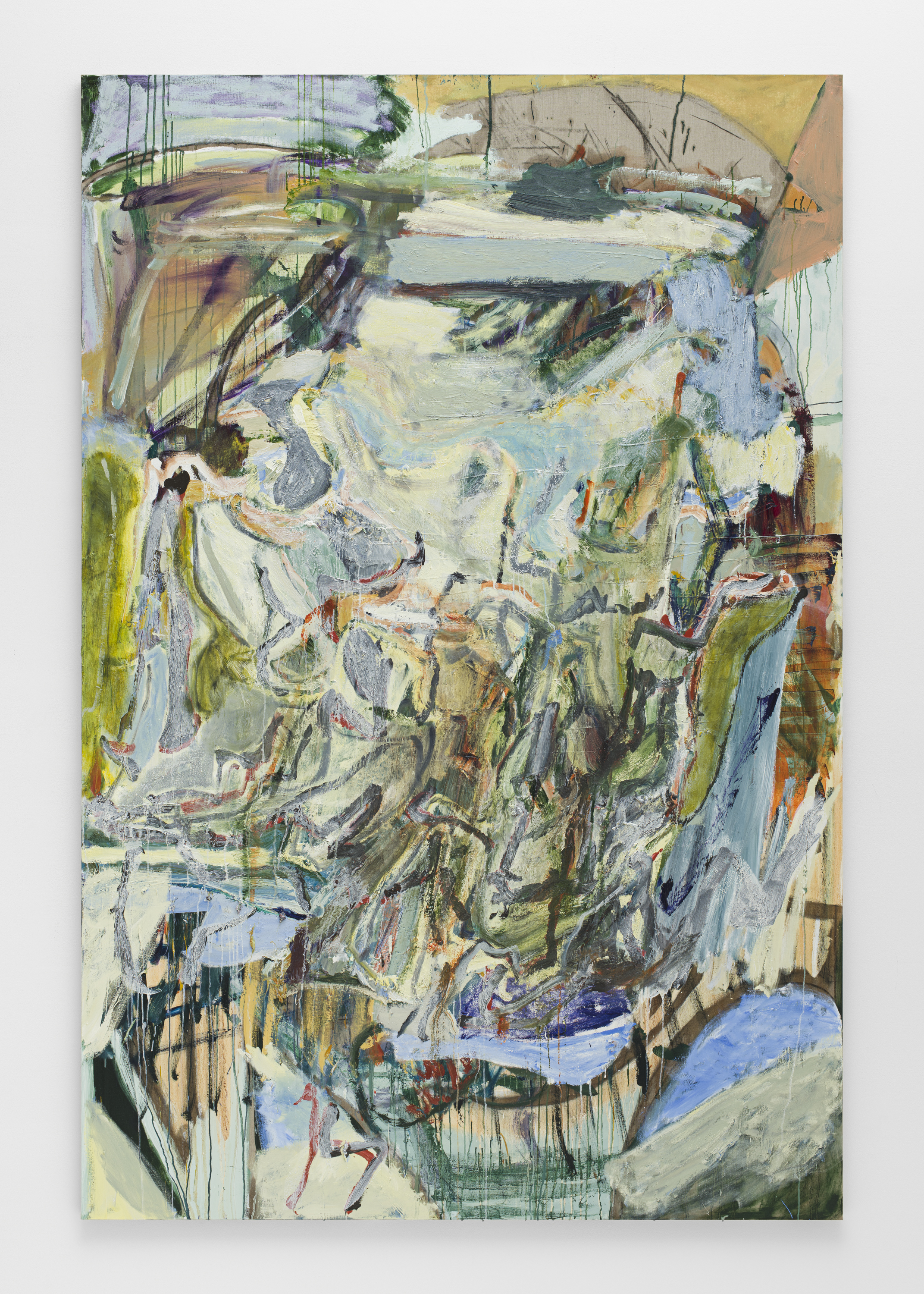
I have always used oil paint. While I’m working on paintings, the pigments slowly gather up and develop into more interesting colours. I try to store it all and keep it. I like it when the paintings then become a bit more muted and interesting.
There is often a crucial point I get to where I question whether or not to continue, and if I do, will I lose it all? Half of what painting is is resisting the act of painting and living with it. Then sometimes you summon up the courage to dive back into it.
Yeah, I really admire painters who can have that immediacy of touch, like Helen Frankenthaler. Gagosian‘s exhibition of paintings and a sculpture by her in London last year was significant for me.
I admire the way that she could make paint sit on the canvas in a way that’s not restrained by the square. That ability to be that direct and fluid is just really extraordinary, and I am constantly trying to tap into that, but when I try it’s almost as if I get further away.
I am trying to implement things that allow me to not try too hard but get there somehow.
I have periods of delving into certain painters. At the moment, Titian’s late paintings have fascinated me because the paint becomes this quite desperate, relentless surface, it’s almost as if he used his hands. So yes, I guess I try to keep the scope of who I look at quite vast. —[O]
A respected voice in contemporary art discourse.
Focusing on ambitious storytelling and insightful art-world commentary. Ocula Magazine publishes in-depth interviews, critical essays and timely analysis on the artists, exhibitions and ideas driving the global art world.
Learn more about Ocula Magazine
Showcasing the best of the art world.
Ocula partners with galleries from around the world to highlight their artists, artworks and exhibitions. Gallery membership is by application and invitation, with each member vetted by an independent panel.
Learn more about Ocula Membership
Specialises in the sale of major artworks.
Led by a team with deep ties to the world’s leading auction houses, galleries and collectors. Ocula’s advisory team offers bespoke services to high-net-worth clients from around the world who are looking to acquire the best of contemporary and modern art.
Learn more about our team and services