





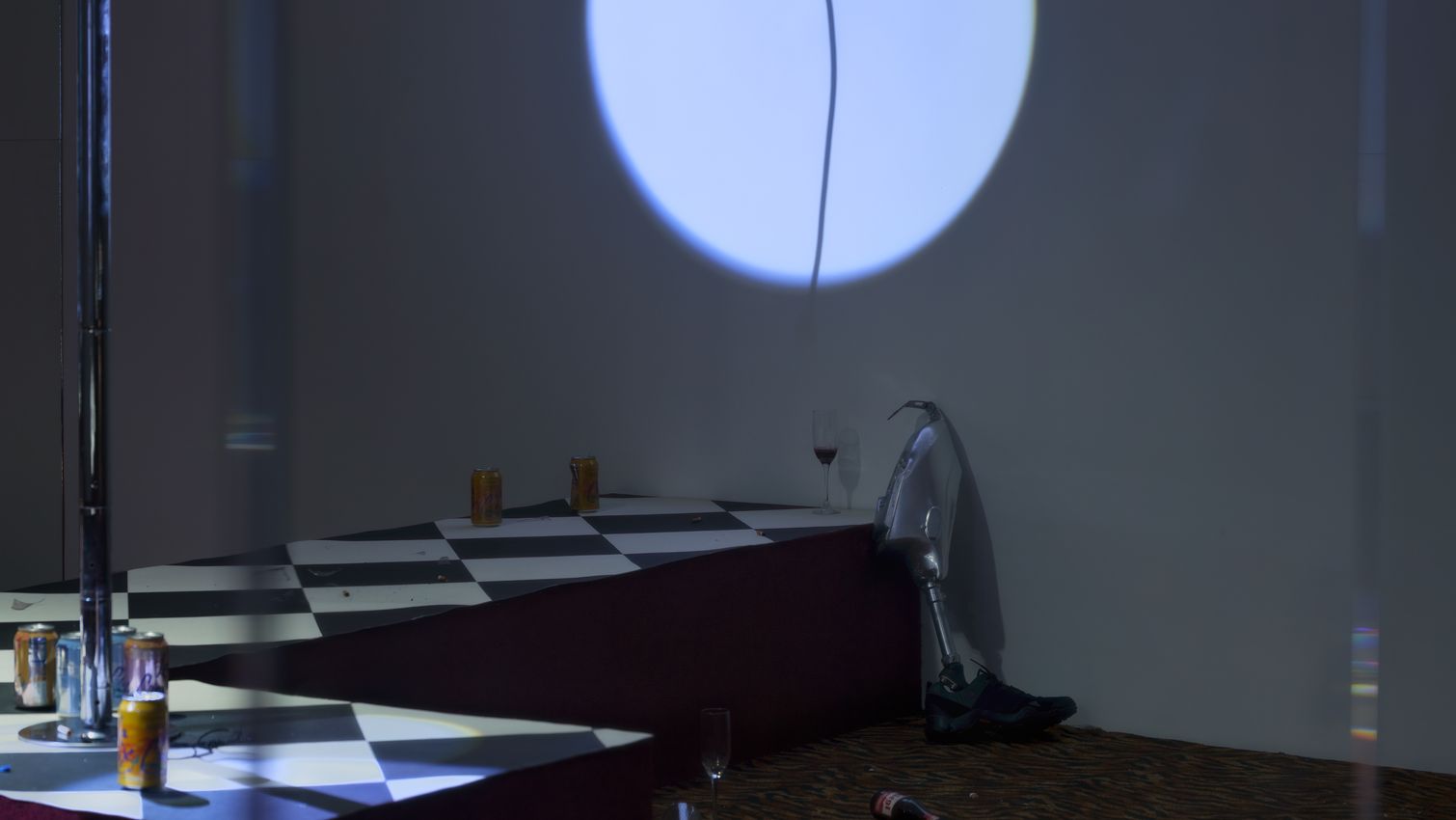
Vladislav Markov Automates the Strip Club
The Russian artist’s latest spectacle marries technological anxiety with post‑sex ennui. Save to My OculaTucked away in a nondescript office building in New York’s Chinatown is a strip club caught in limbo. The true-to-life installation is dressed with every accoutrement—save the girls. And only during a few weekend hours do a pair of actors, playing listless bouncers, appear to stand guard over the club’s abandoned poles (they are in fact guarding nothing at all).
New York-based Russian artist Vladislav Markov divides visitors from the club and its actors with a one-way mirror. Attendees shuffle into a dark viewing corridor that faces the set. One by one, they sheepishly approach the glass, anxious that they might disturb the performance. The oblivious bouncers, specially selected as amputees, are glued to their phones. They pace back and forth on an animal-print floor, kicking the trash around.
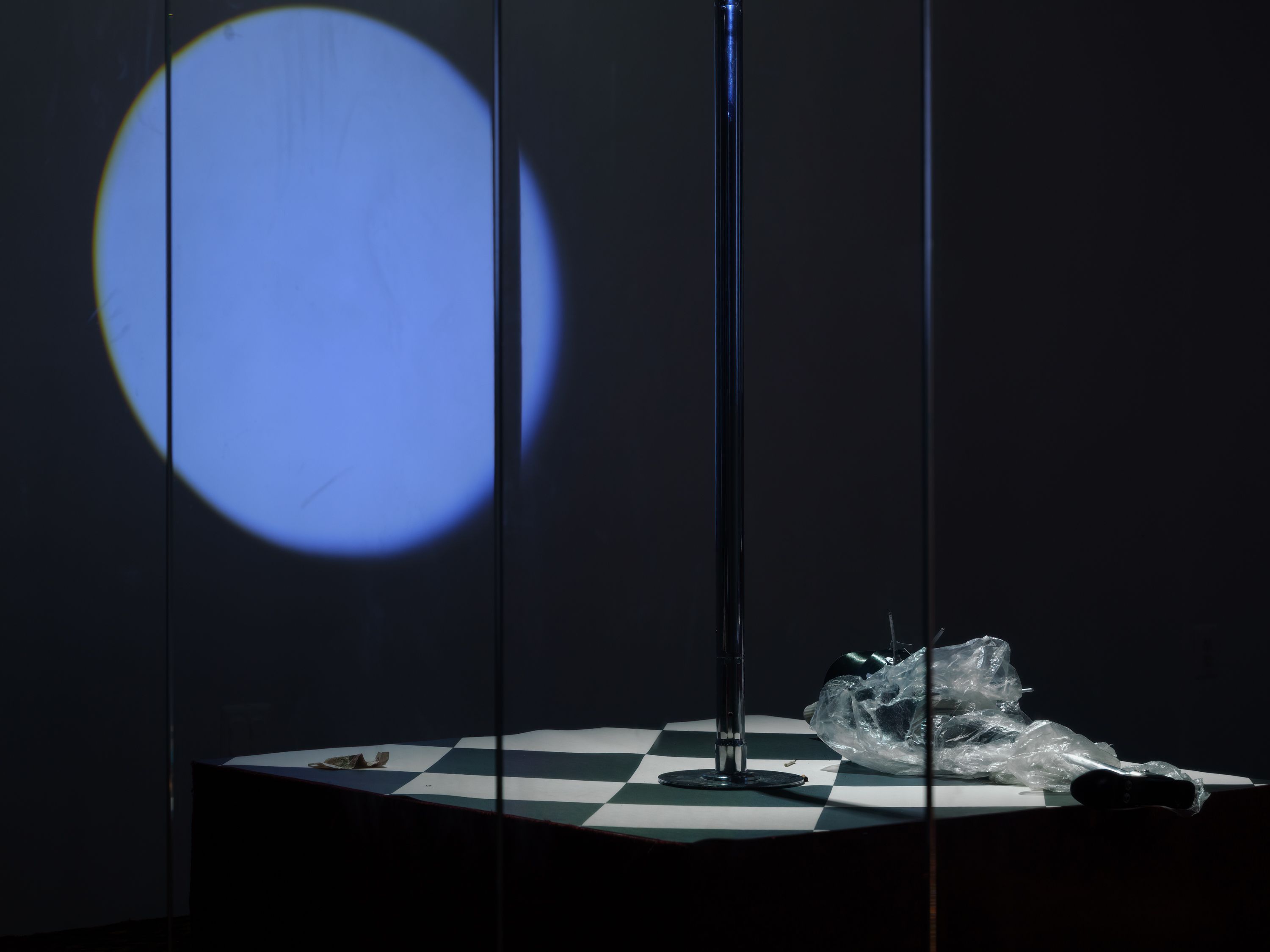
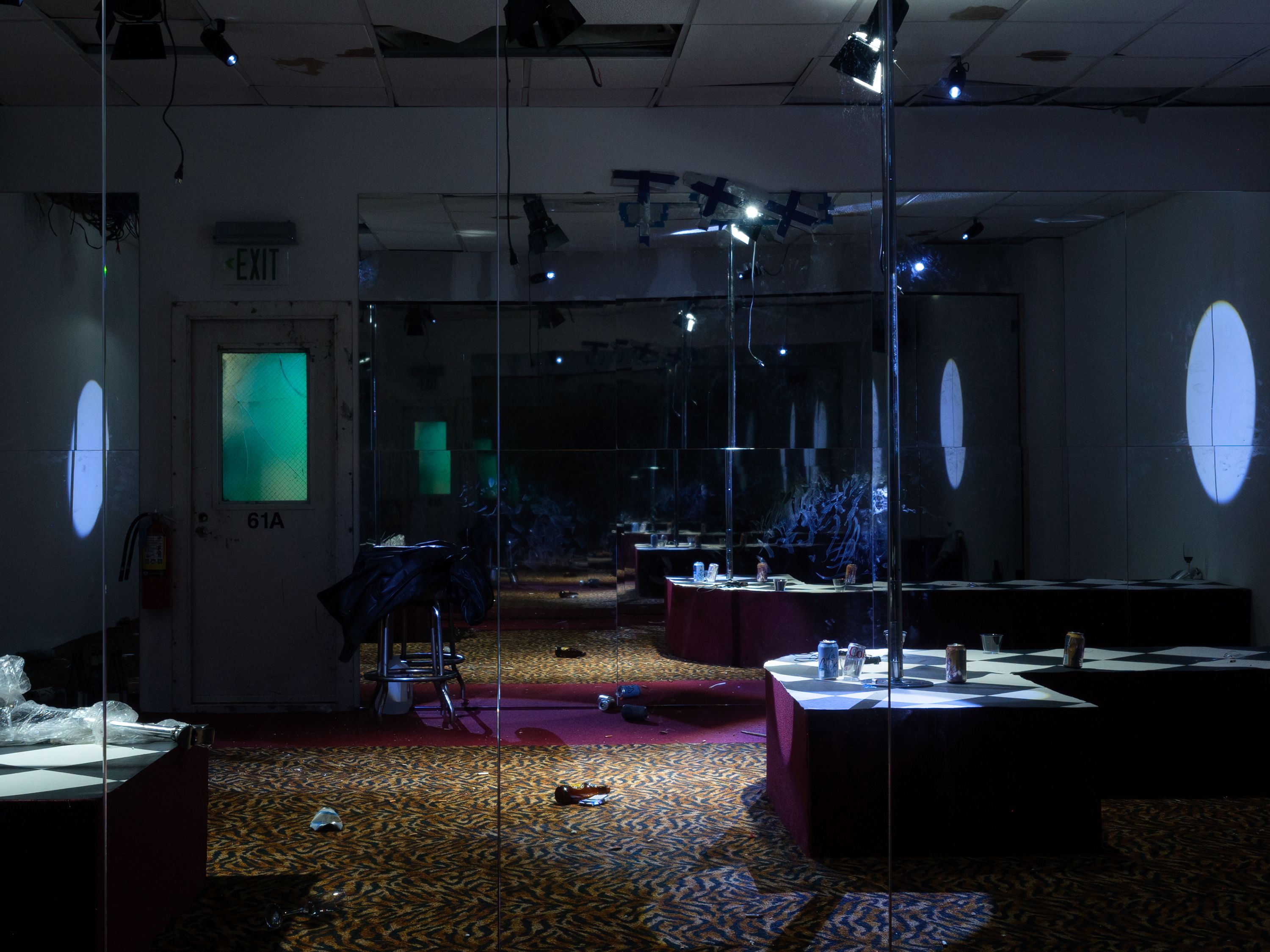
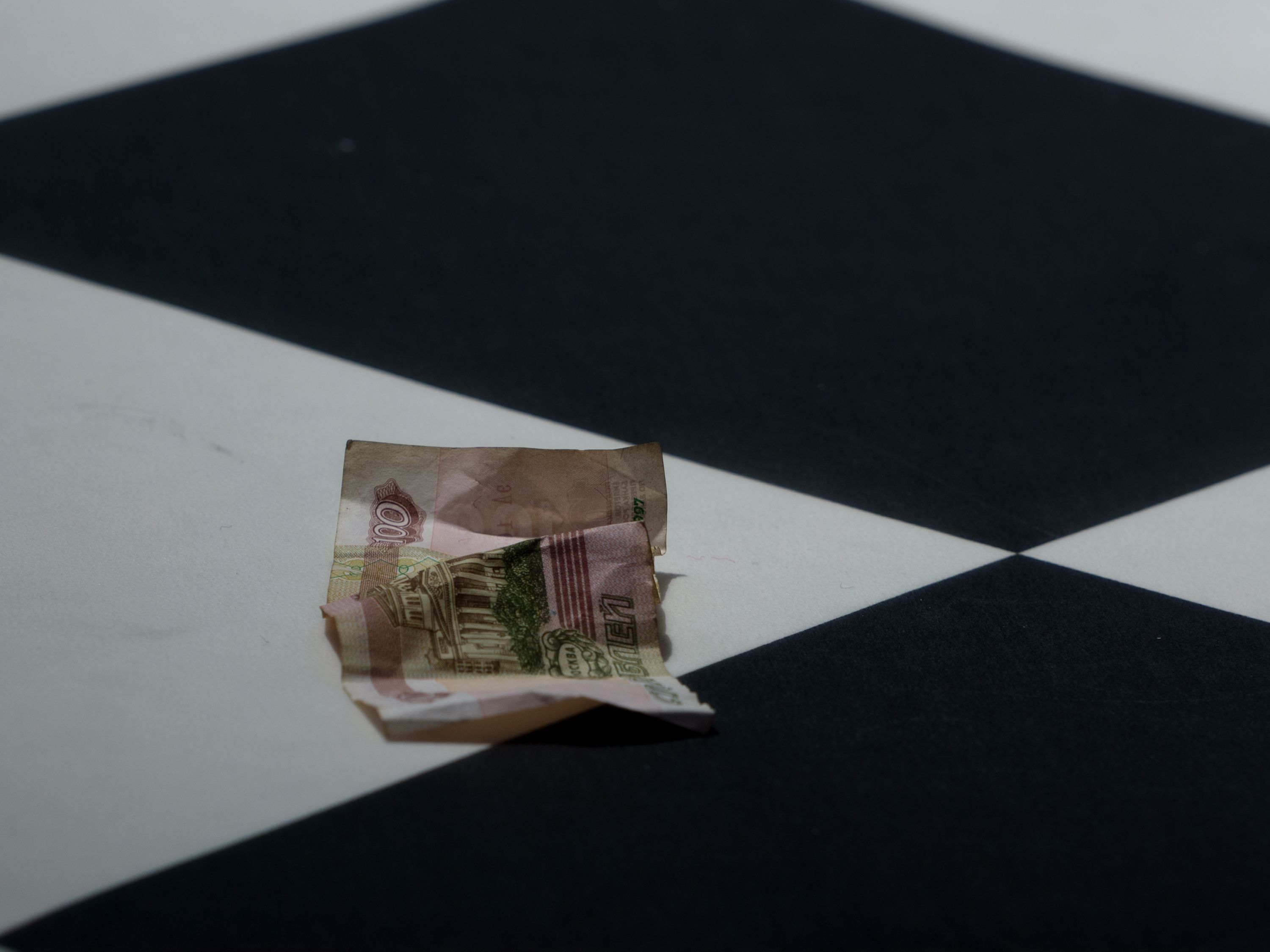
A noisy audio track blares eclectic beats and sardonic fictional advertisements. ‘Don’t wait ’til the robots call the shots—be the upgrade they never saw coming!’ rattles off a duo of hucksters in a comic Southern drawl. Another teases a recently shuttered art gallery: ‘Welcome to CLEARING, the gallery devoted entirely to pet portraits. No landscapes, no people, just pets, immortalised, framed, unblinking.’ The show’s take on machine anxiety comes through in these sporadic bursts of canned copy. The bouncers check their watches.
Thanks to the one-way mirror, everyone has been freed from proper etiquette. On the audience’s side of the glass, a cute twink bends over and twerks. Opposite, one of the bouncers spins his prosthetic right leg around 180 degrees and mounts his iPhone on the bottom of his left foot. Gaggles of gallery-goers flood in and out, all hugs and kisses, awash in the gleeful shock, doom, and absurdity of the whole contrivance.
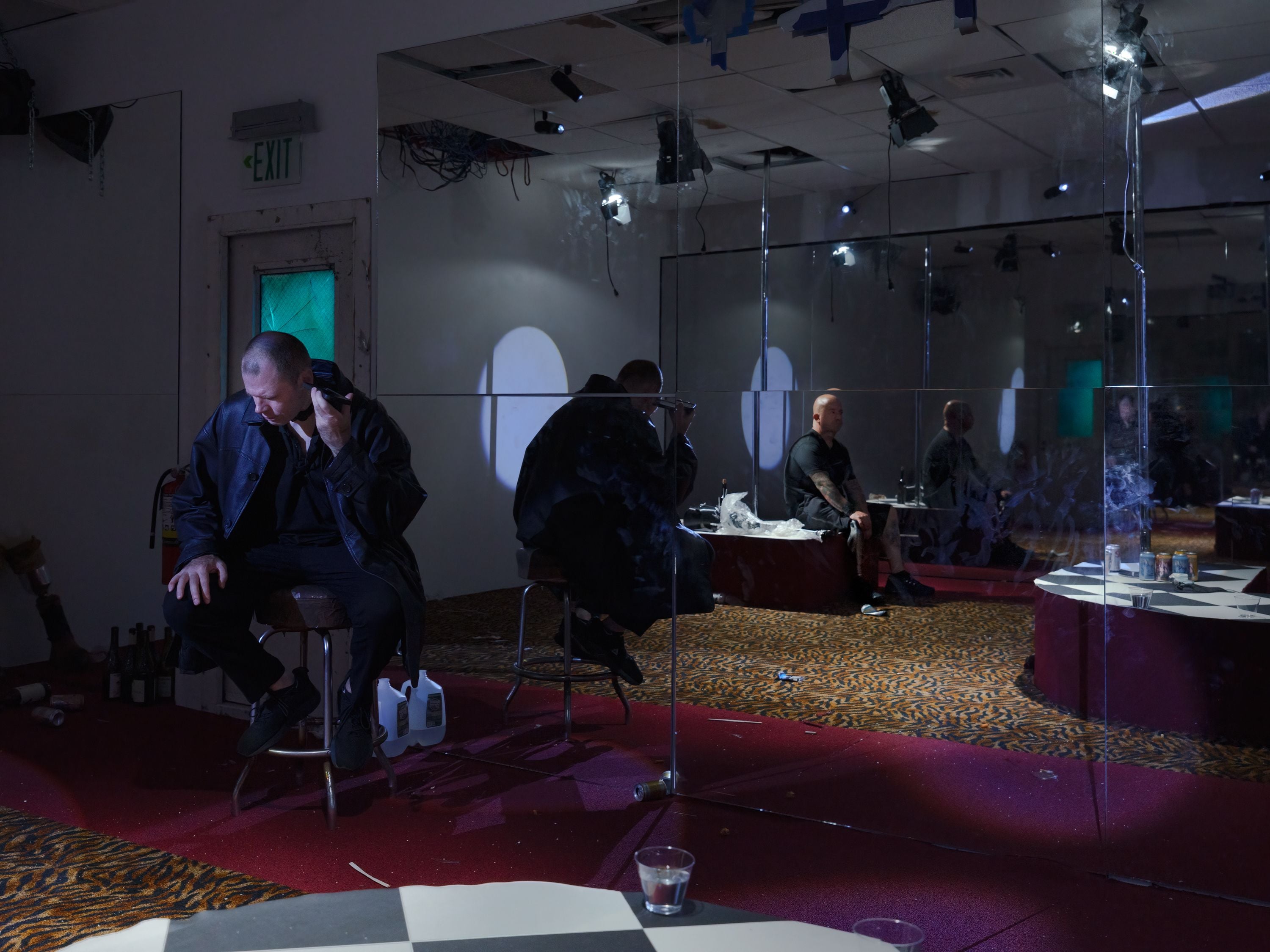
Not all attendees are so feckless: curator and theorist Nicolas Bourriaud, who in the 1990s heralded the rise of ‘relational aesthetics’—finding its agents in artists like Philippe Parreno and Liam Gillick—has written a new essay for Markov’s show. Here, he hails Markov’s mise en abyme as ‘emblematic of our era’.
Dark, but possibly true. Contra the Minimalist purity of participatory installations like Dan Graham’s Public Space/Two Audiences (1976), in which two soundproofed spaces were separated by glass, OBJECTS IN MIRROR MAY BE CLOSER THAN THEY APPEAR more closely resembles the real world. Markov reformats his actors as non-player characters, the robotic supporting casts of video games, who serve the scripted narrative more as props than as people. They never break character, a feature shared by chatbots and politicians alike. Permission to abuse these non-humans is part of the formula that makes open-world role-playing games like Grand Theft Auto (cited by the artist as an influence) so enthralling. In the fictional San Andreas of the game, you can kill a hooker, steal a car, and drive it off a cliff. In the gallery, gone is the hoity-toity bilateral emergence of meaning, now replaced by the opportunity to purge one’s antisocial impulses.
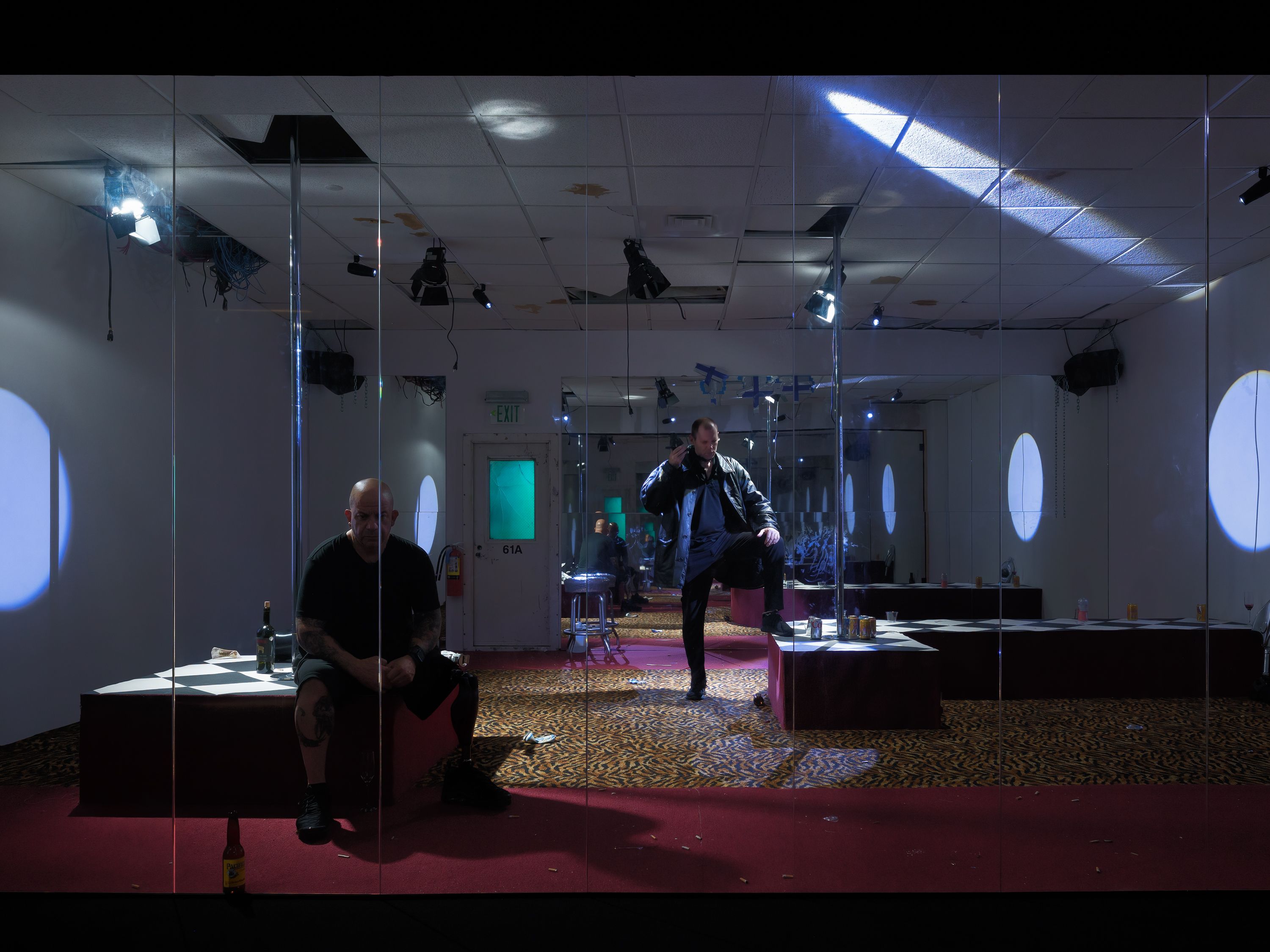
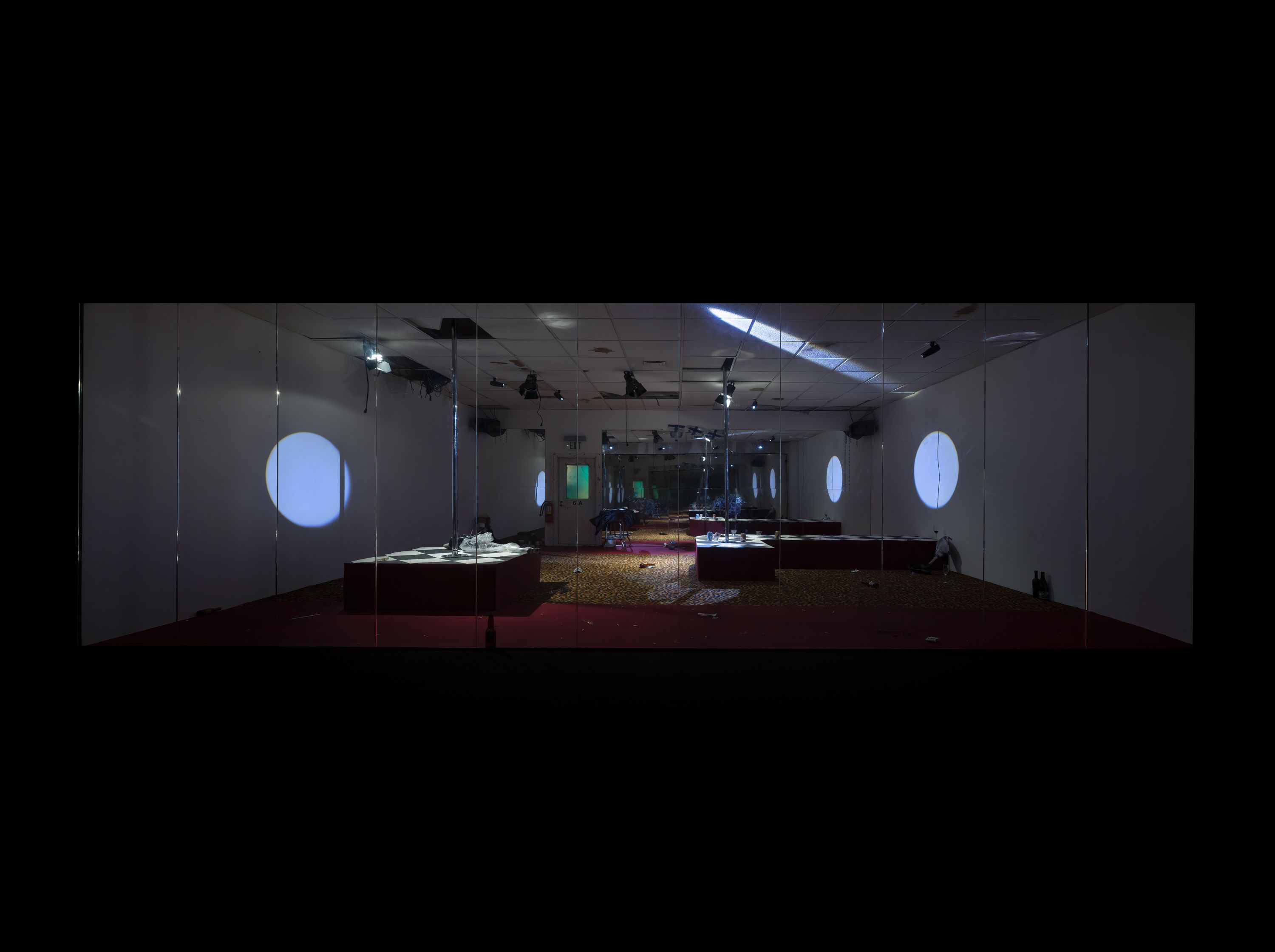
Markov’s fatalism is our own. The show offers us an outlet to rail against the collective impotence of watching life flash by while the interests of automation supersede the needs of the living. Electricity costs twice as much, but the games don’t get any better, only more repetitive. What really appeals is a smidgen of uncontrolled violence. Light a cigarette, talk over the performance, or disrespect the actors-turned-animatrons—and do it all consequence-free. The performance, as with progress, is designed to go on with or without your condemnation.
There’s a memeish aphorism: ‘Nothing ever happens’. But closer inspection reveals this to be a false truth. In life, as in OBJECTS IN MIRROR MAY BE CLOSER THAN THEY APPEAR, lack of motion is merely a surface disguise for a twisted social experiment, driving full speed on a road to nowhere. —[O]
Vladislav Markov’s OBJECTS IN MIRROR MAY BE CLOSER THAN THEY APPEAR is on view at Management, New York, from 6 September to 26 October 2025
Main image: Exhibition view: Vladislav Markov, OBJECTS IN MIRROR MAY BE CLOSER THAN THEY APPEAR, Management, New York (6 September–26 October 2025). Courtesy the artist and Management. Photo: Inna Svyatsky.





A respected voice in contemporary art discourse.
Focusing on ambitious storytelling and insightful art-world commentary. Ocula Magazine publishes in-depth interviews, critical essays and timely analysis on the artists, exhibitions and ideas driving the global art world.
Learn more about Ocula Magazine
Showcasing the best of the art world.
Ocula partners with galleries from around the world to highlight their artists, artworks and exhibitions. Gallery membership is by application and invitation, with each member vetted by an independent panel.
Learn more about Ocula Membership
Specialises in the sale of major artworks.
Led by a team with deep ties to the world’s leading auction houses, galleries and collectors. Ocula’s advisory team offers bespoke services to high-net-worth clients from around the world who are looking to acquire the best of contemporary and modern art.
Learn more about our team and services