





Lisa Yuskavage’s Lessons in Life Drawing
Enigmatic, balloon‑bosomed models have long played the protagonists in Lisa Yuskavage’s works. Kat Kitay reviews the American artist’s latest survey of drawings, on view at New York’s Morgan Library, and argues why there’s more to these fantasy girls than meets the eye. Save to My Ocula

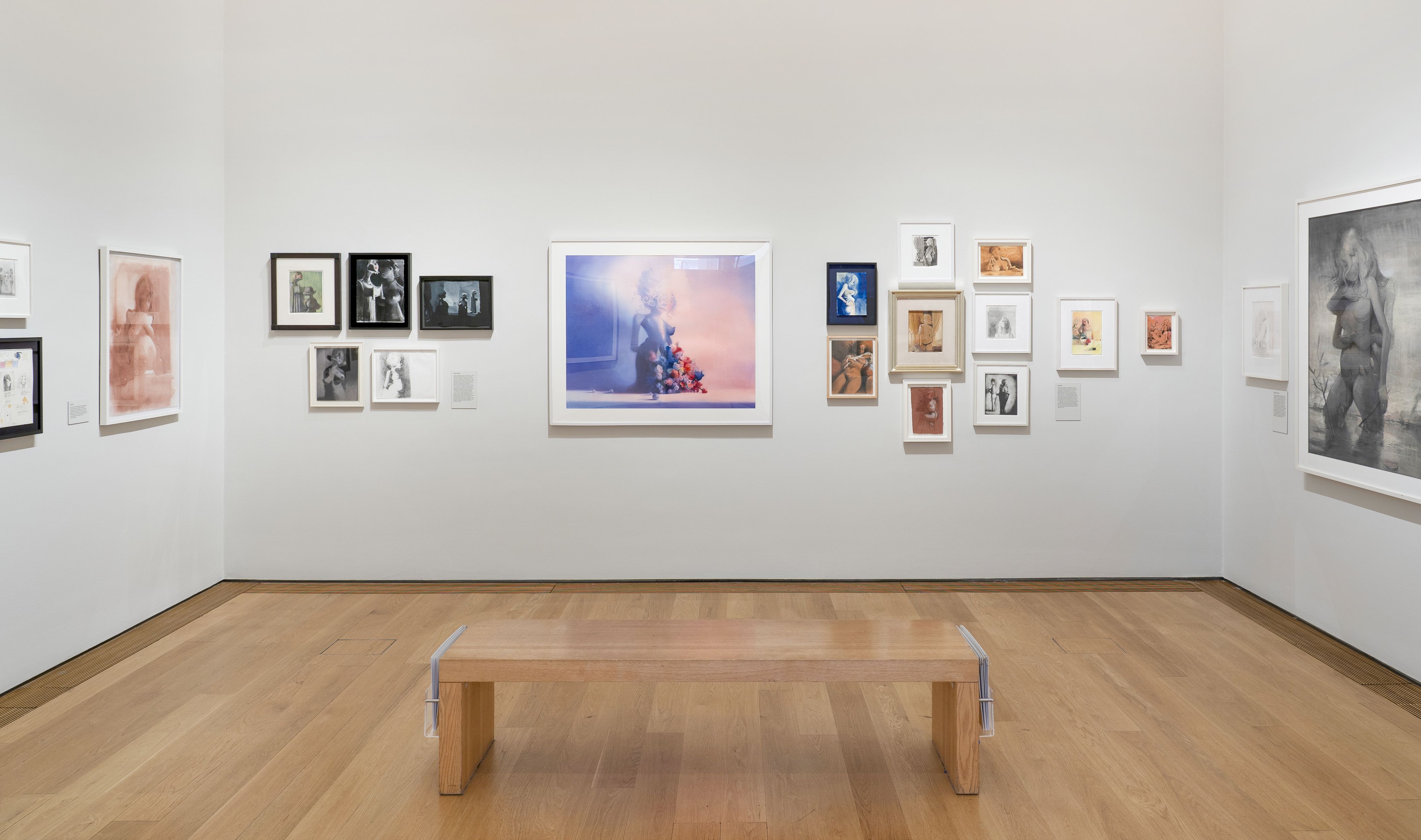
Lisa Yuskavage has spent decades painting busty babes and revelling in the moans of her detractors. Drawings, her first career-spanning presentation of drawings, at the Morgan Library in New York, offers something different. Thirty works, dating from 1990 to 2025, reveal the careful prototyping behind her incessant provocation. At its core, the show is an introspective exhibition-as-therapy, in which Yuskavage reckons with what it means to depict life versus imagination.
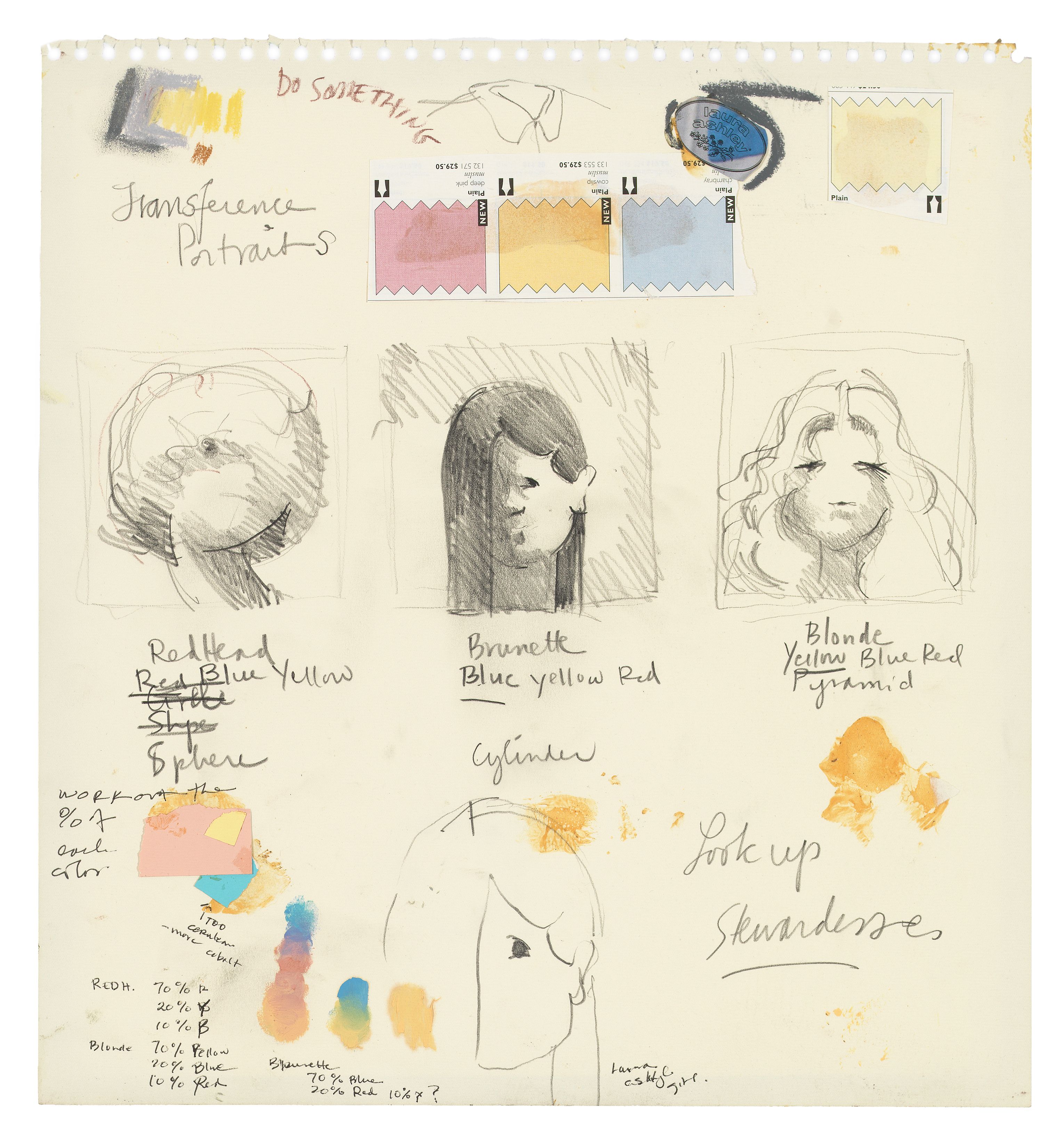
A drawing titled Sketchbook page for Blonde Brunette and Redhead (1995) appears as preliminary material for what would become her famous figuration. In this piece, Yuskavage roughs out a lineup of three pouting ladies expectantly awaiting their full materialisation, not unlike a brothel or a video game character selection screen. The work bears an alternative title, Transference Portraits, perhaps referencing the psychoanalytic process wherein unconscious desires jump from an original to a substitute object. It lays out the template Yuskavage has followed throughout her career, filtering the contemporary world into an alternative realm of her own. Within that space, she bends the laws of physics and flesh, drafting characters whose bodies stretch, inflate, and shrink at her whim.
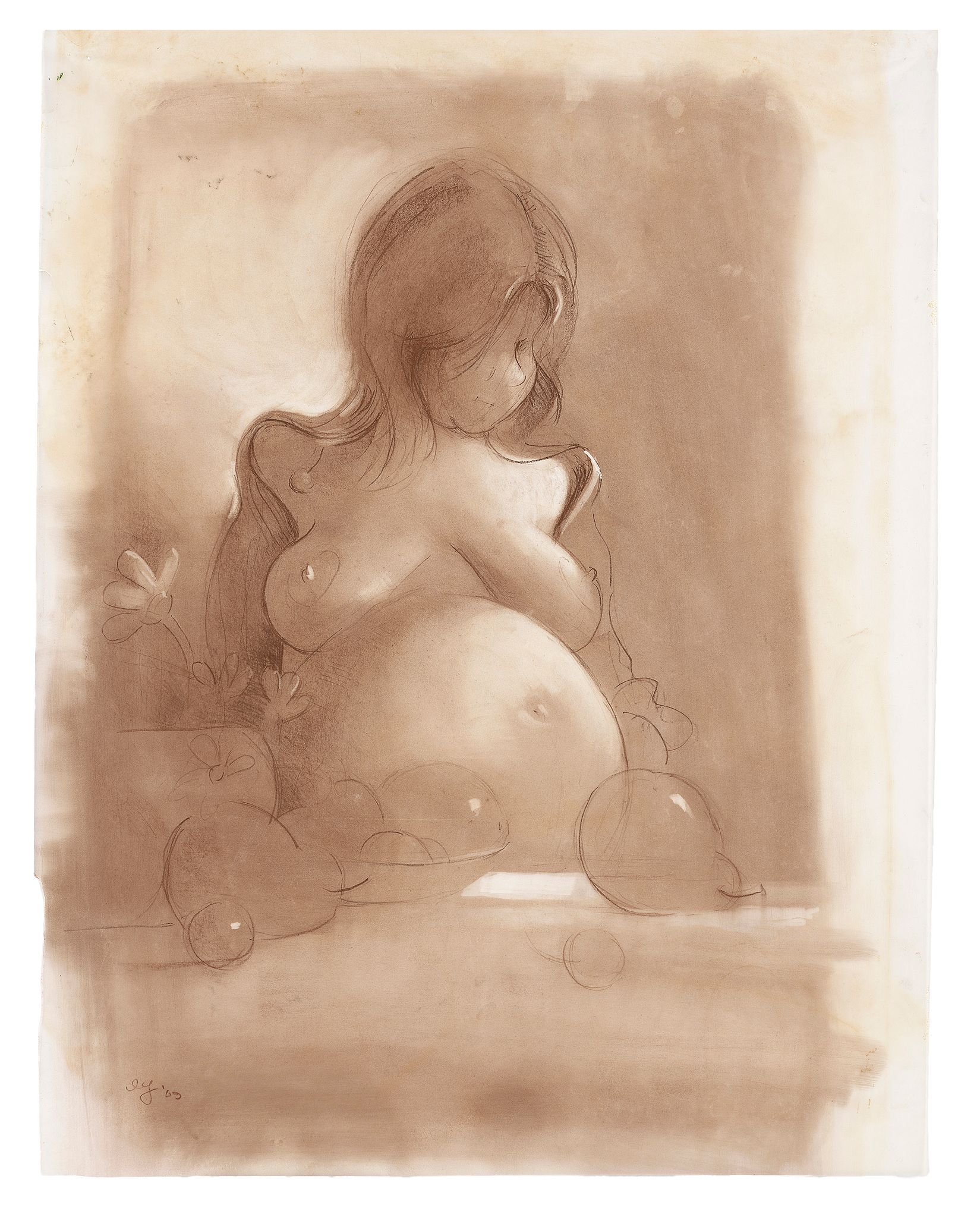
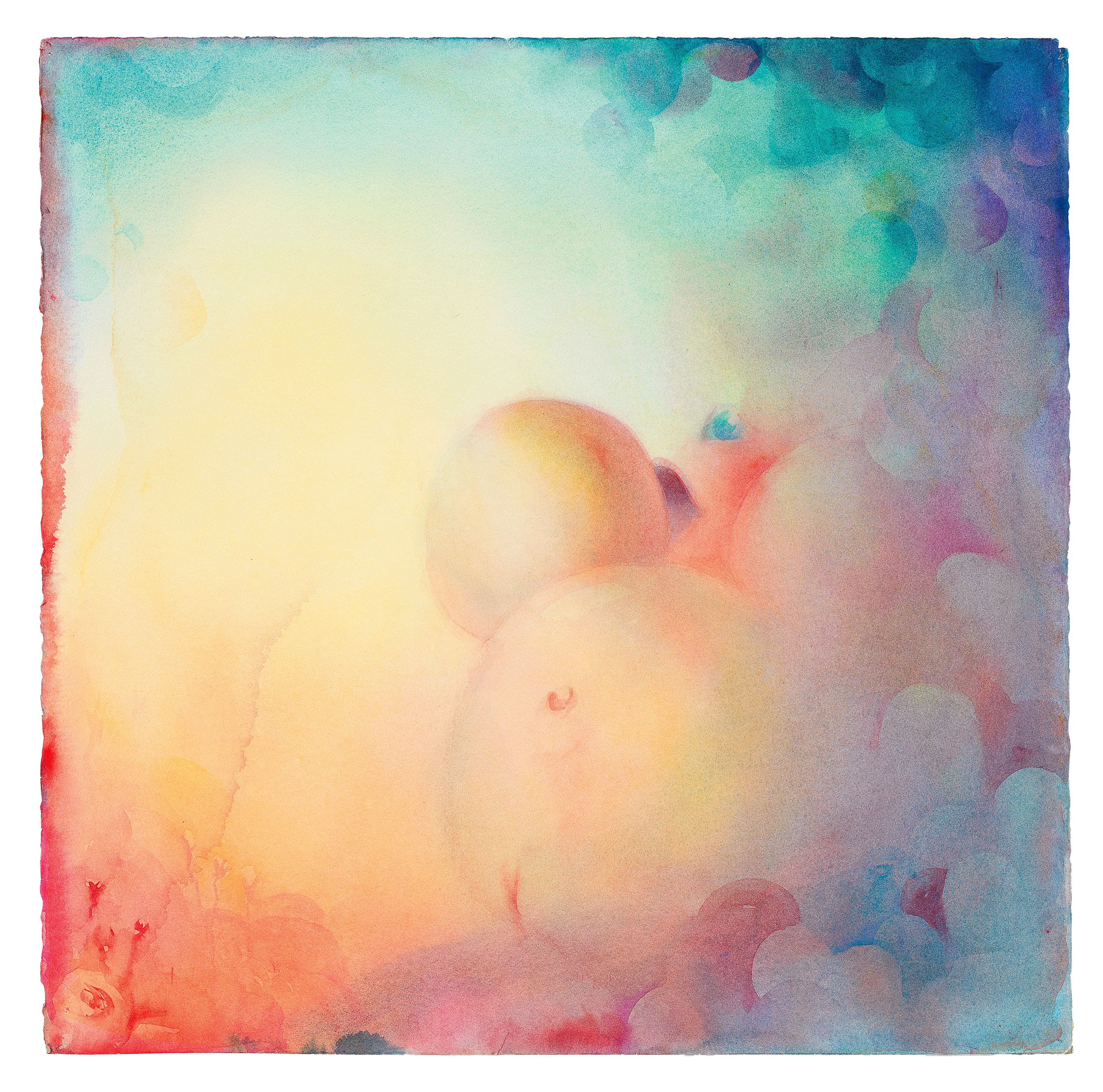
Cuatro (2003), a crayon study of an expecting friend, wipes away the unpleasant realities of pregnancy with a nostalgic wash of creamy browns. Yuskavage takes her liberties even in life painting, fixating on the woman’s curvature, mirrored in the outlined still life depicted on the table before her. And where Yuskavage will draw a cartoonish flower pot, she leaves her subject’s facial features, even her limbs, unfinished in the shadows. Transfer complete, Yuskavage’s otherworld gains a language for swollen fecundity. She gives birth to the ‘Lisa Yuskavage Model’, a slippery character (also the alternative title proposed for this exhibition) that’s both psychically resonant and utterly alien. These figures will inhabit her painted worlds for decades to come.
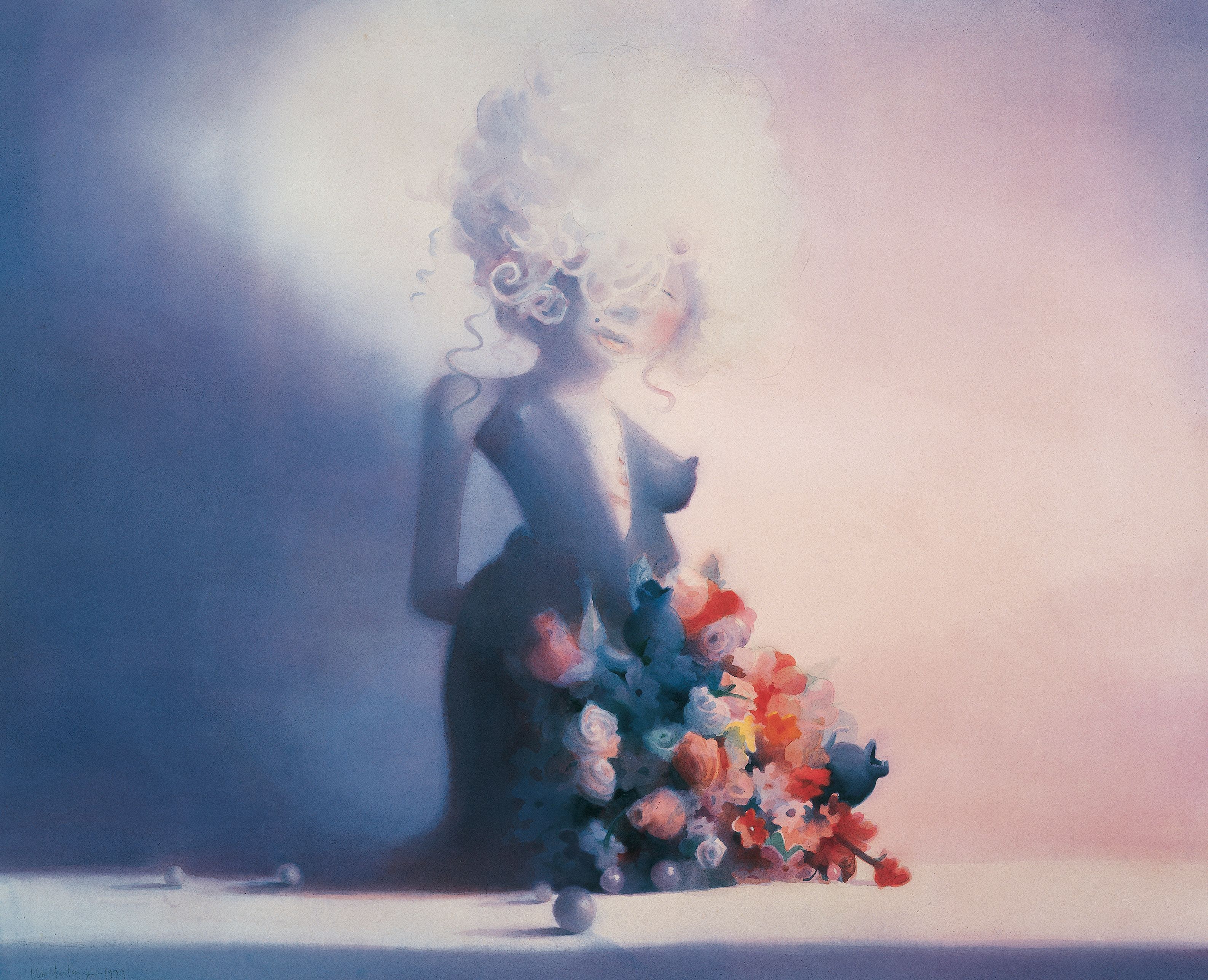
Reflecting on her work with models, Yuskavage references Plato’s Theory of Forms, which describes an eternal realm of perfect, idealised originals that reign supreme over all manmade imitations. While contemplating the premise of the exhibition at the show’s opening in late June, Yuskavage recalled a professor once asking, ‘Why paint a bed when the idea of the bed is better than the bed itself?’ ‘That stuck with me,’ she noted. Perhaps driven by an imitation anxiety, or a desire to ascend the hierarchy of Platonic truth, Yuskavage has worked backwards through her own psyche to reconstruct her signature pantheon of eternal Forms. Round faces, indeterminate youthfulness, and iridescent skies altogether make for an overgrown planet that any of us would be lucky to visit.
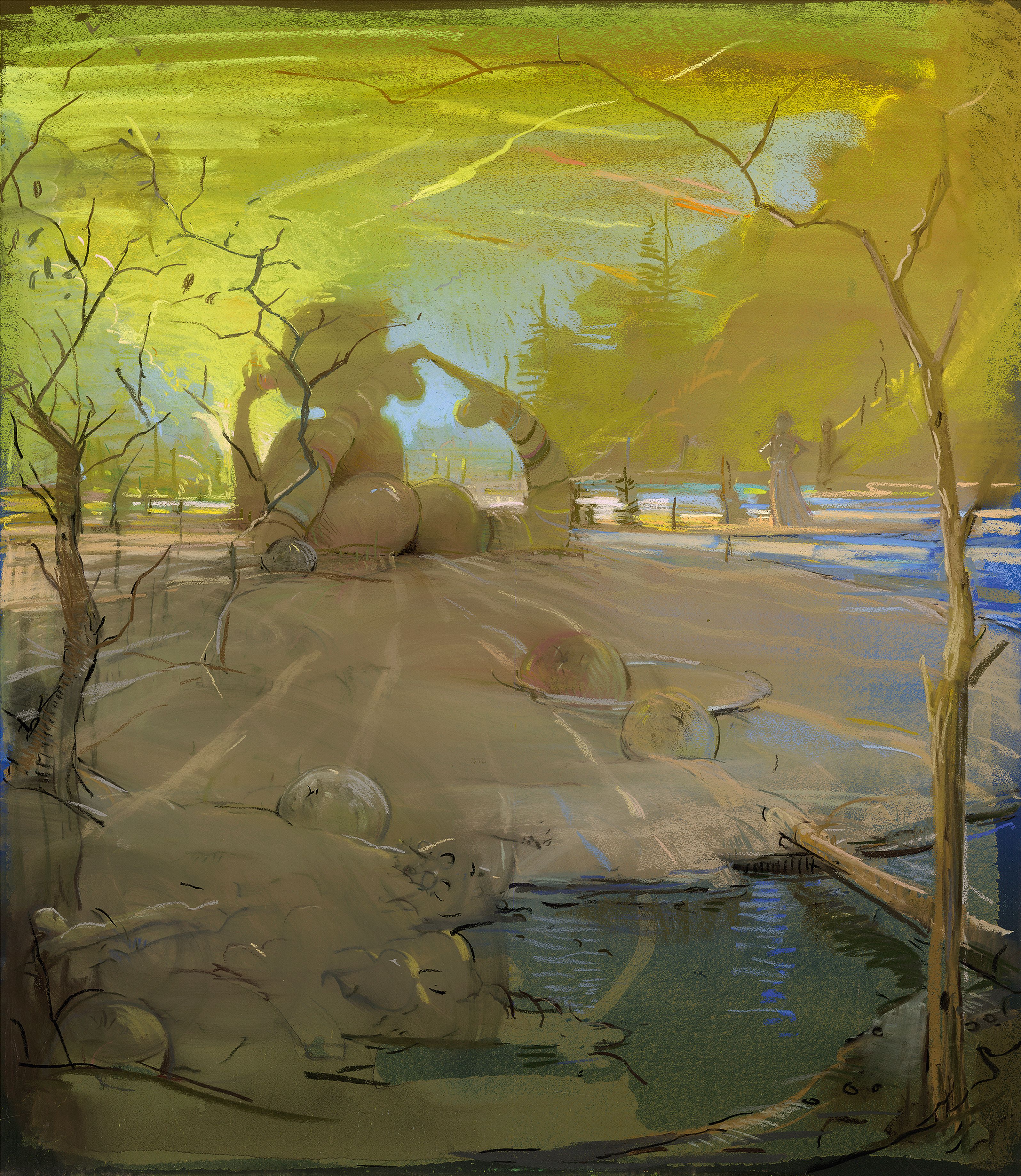
Compared to her life drawing, I find Yuskavage’s ‘synthetic’ work more fully situated and reflective of the real world. Her fantasy characters play out wild narratives of sexual exploits, natural devastation, and human struggle. The radioactive Neon Sunset (2013) takes us to a burnt-out backcountry under golden-green skies. Beside a muted river lined with a few sad trees, a young woman lies on her stomach and raises her perky derrière towards the viewer. The absurd choice to have a casual spread out in the wilderness isn’t her own; she was plopped down in the scenery by Yuskavage like a painterly garden gnome. She had no choice in being there, and pose she must. That’s the duty of a copy, perfected in other works from the sketchy Lolipop (2009) to her impressive painting Triptych (2010–2011), where the grass is, in fact, greener.
“After years of working from imagination, I got tired of my own perseveration.”
The ‘performers’ in these early works anticipate social media culture and, in many ways, live out its foundational economy. Figures like the Neon Sunset girl follow the well-worn grammar of Instagram and other platforms, which sees many young people contort themselves into positions for delectation, fishing for sexual attention in a struggle to stake out their individuality. What felt like an outrageous sexual fantasy in 2013 now closely resembles the real conditions of putting bodies in virtual spaces. In this way, Yuskavage’s girls are in kinship with a more contemporary philosophy of the ‘Young-Girl’, posed by the French collective Tiqqun in their book Preliminary Materials for a Theory of the Young-Girl, first published in France in 1999. Much like Yuskavage’s characters, the Young-Girl is forced to perform a constant spectacle of seduction and to revel in their own exploitative consumption to comply with the economic demands and social standards of capitalist society.
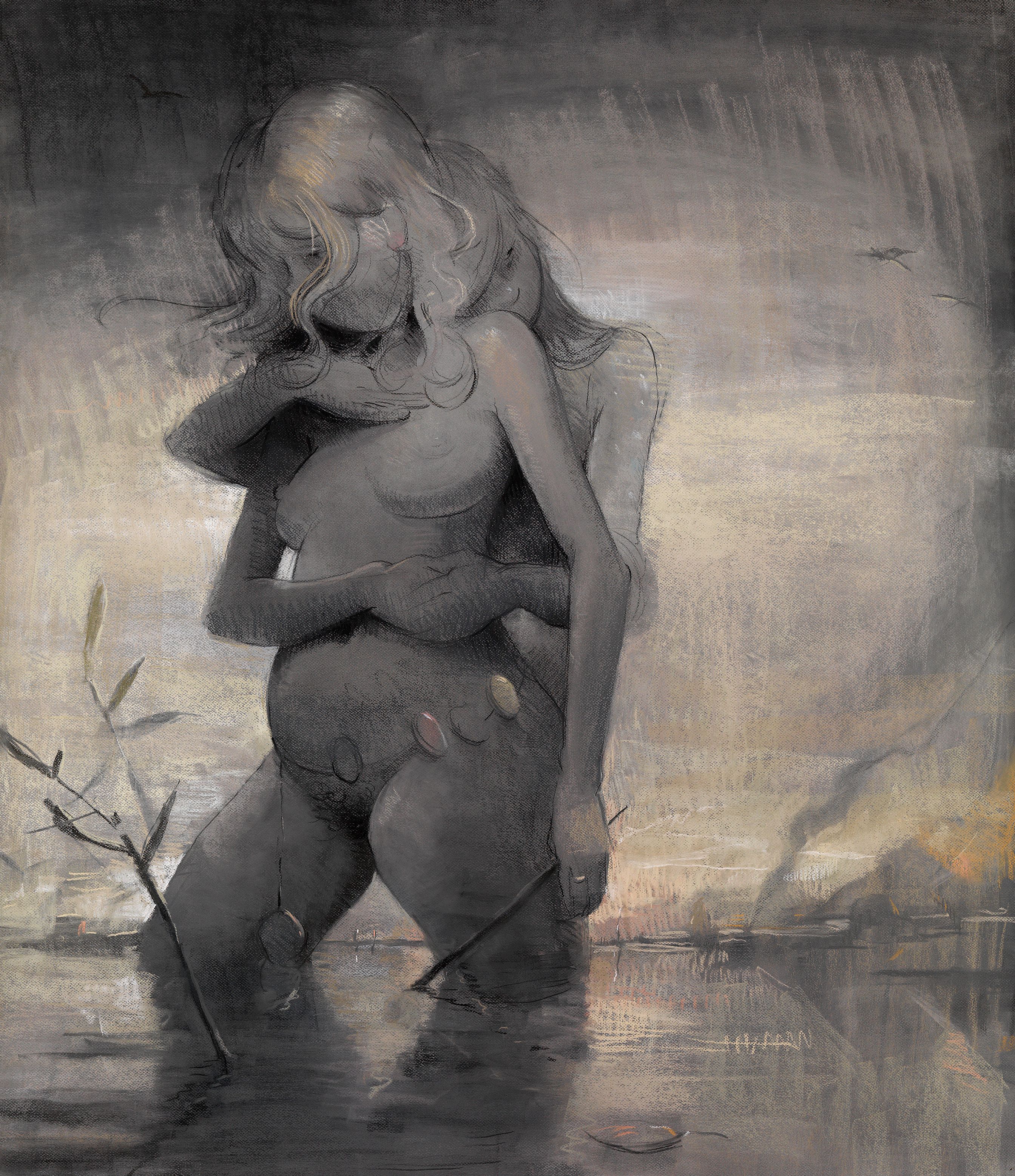
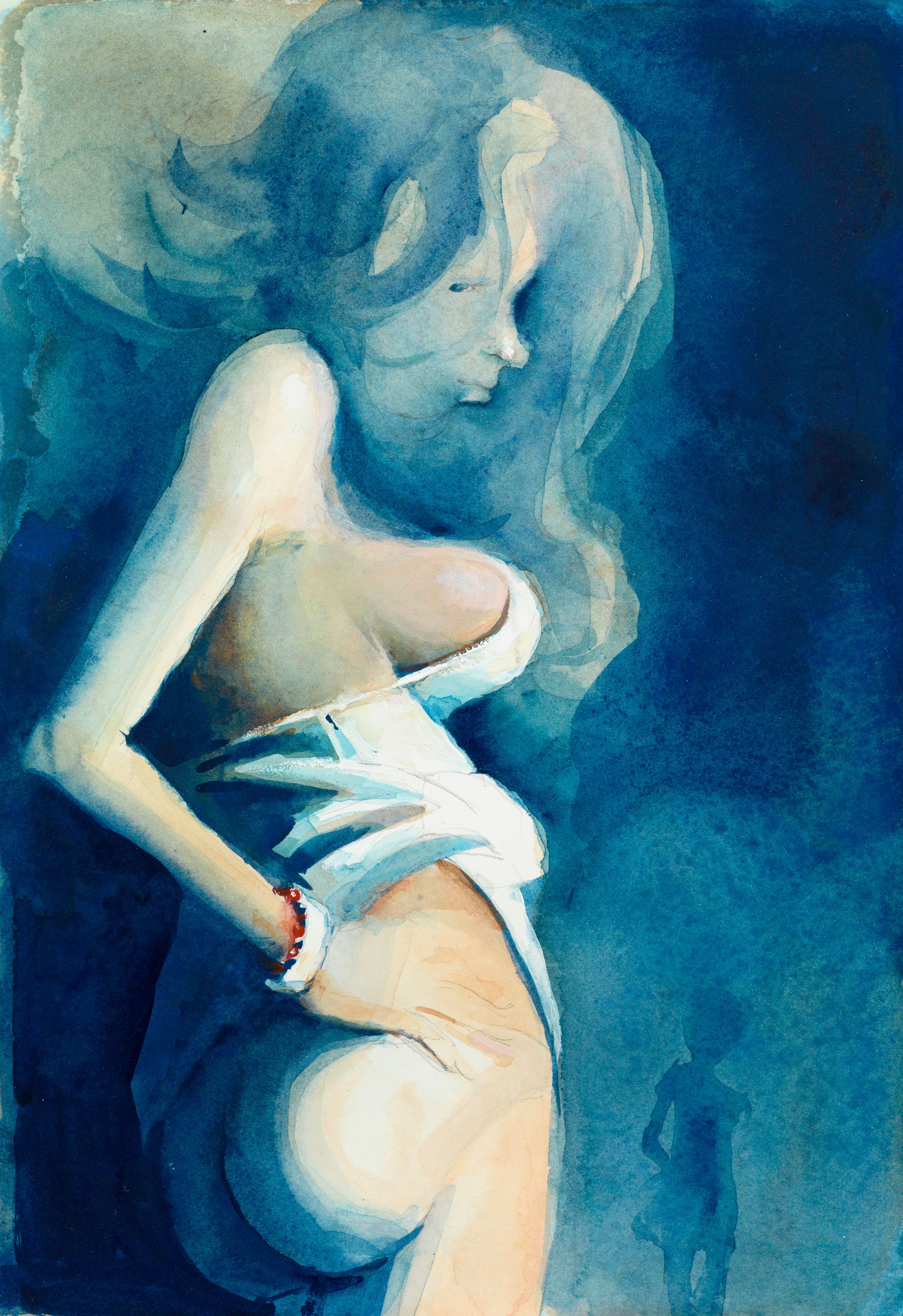
The result is mass precarity and impoverishment facing the young generations coming of age. It’s them I see in Yuskavage’s Piggyback Ride (2009), an image drawn in the aftermath of the 2008 financial crisis, in which endangered figures cling to each other, knee-deep in a forlorn swamp. Their ejection from a harsh society, whose flames burn in the background, is a particularly painful image. These consequences keep the Young-Girl and the Yuskavage girl locked, as it were, in a cycle of toxic compulsion.
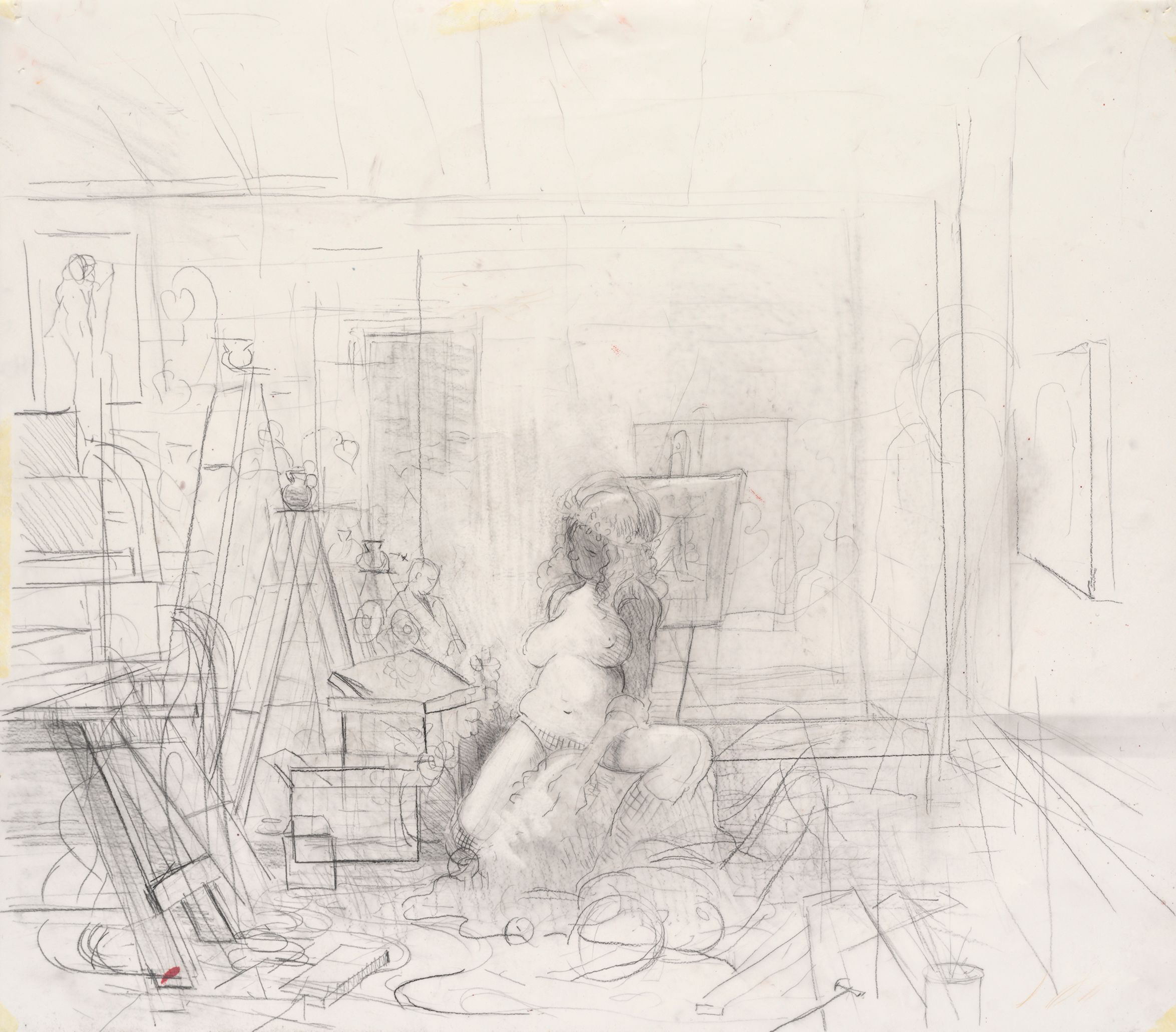
‘After years of working from imagination, I got tired of my own perseveration,’ Yuskavage explained during a private walkthrough at the Morgan. In 2019, the artist returned to working with live models, as she had done earlier in her career. Like the show itself, her new subject matter centres on the artist’s studio as a concept, turning ever more inward. Studio Study (2020) is more modest than many of her works, but the strength of the artist’s style holds the scene in a state of suspended disbelief. Its slumping model, topless as ever, rests against an easel next to a life-sized, balloon-bosomed, full-bellied manikin. There’s the Model. Meanwhile, she solemnly contemplates a bust of Georges Braque, the iconic Cubist who also sought to deconstruct and recompose the observed world as he saw fit.
Despite the models, method, and means to realise just about any kind of story, Yuskavage has chosen to turn away from her imagination-driven practice, at least for now. That decision, made in 2019, coincides with a disturbing era where fantasy and performance have eclipsed real events. While the West loses its marbles, war crime livestreams are sandwiched between Yuskavage-shaped talking heads on one side and AI slop on the other. It’s no surprise that the character in Studio Study is exhausted.
For Yuskavage, and the rest of us, there may not be much ‘reality’ left to turn to, only more fantasy. For now, at least, we still have our studios, and of course, we can always run for the hills, naked as jaybirds, titties flapping in the wind. —[O]
Lisa Yuskavage: Drawings is on view at the Morgan Library and Museum in New York from 27 June 2025 to 4 January 2026.
Editor’s note: An earlier version of this article misquoted Yuskavage. Her actual quote was: ‘After years of working from imagination, I got tired of my own perseveration’, which is now reflected in the text and title.




A respected voice in contemporary art discourse.
Focusing on ambitious storytelling and insightful art-world commentary. Ocula Magazine publishes in-depth interviews, critical essays and timely analysis on the artists, exhibitions and ideas driving the global art world.
Learn more about Ocula Magazine
Showcasing the best of the art world.
Ocula partners with galleries from around the world to highlight their artists, artworks and exhibitions. Gallery membership is by application and invitation, with each member vetted by an independent panel.
Learn more about Ocula Membership
Specialises in the sale of major artworks.
Led by a team with deep ties to the world’s leading auction houses, galleries and collectors. Ocula’s advisory team offers bespoke services to high-net-worth clients from around the world who are looking to acquire the best of contemporary and modern art.
Learn more about our team and services