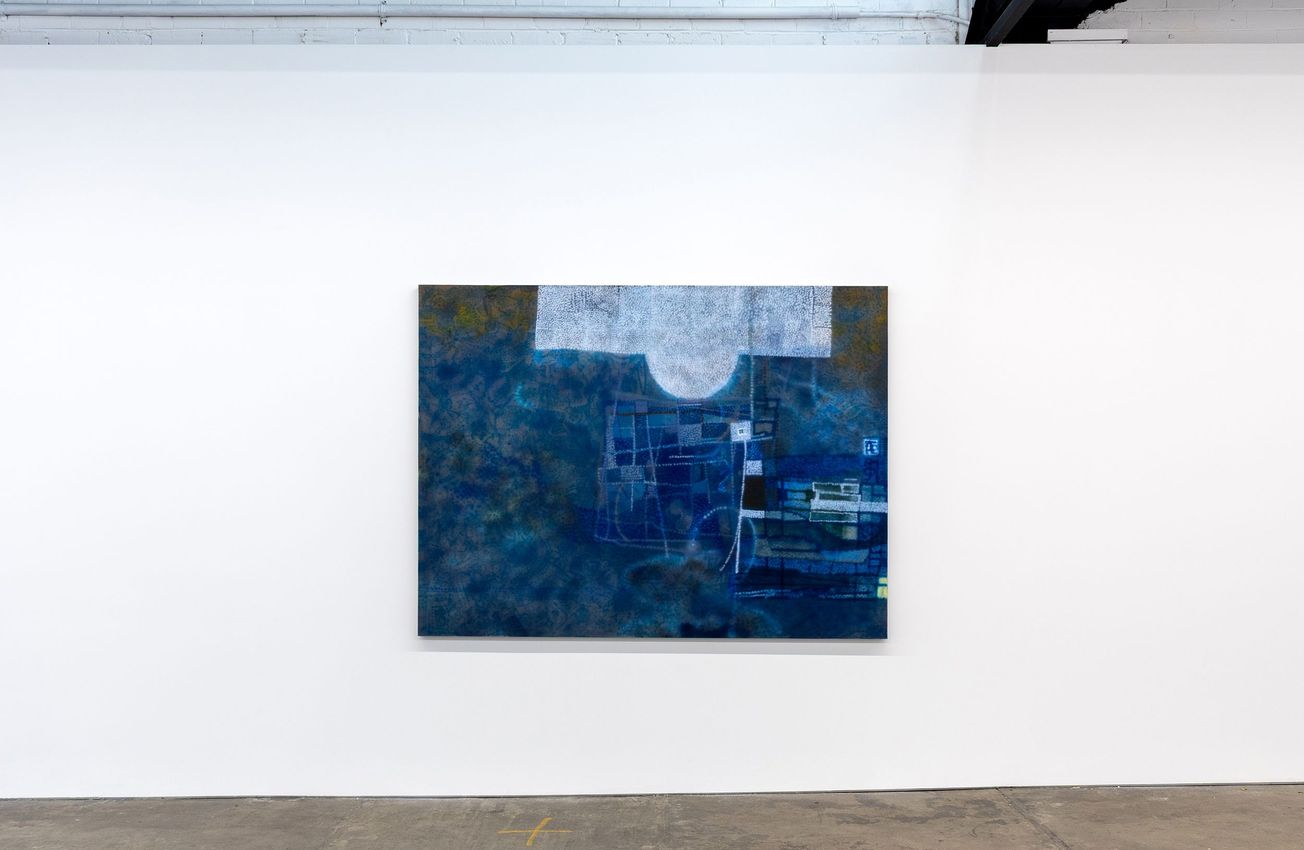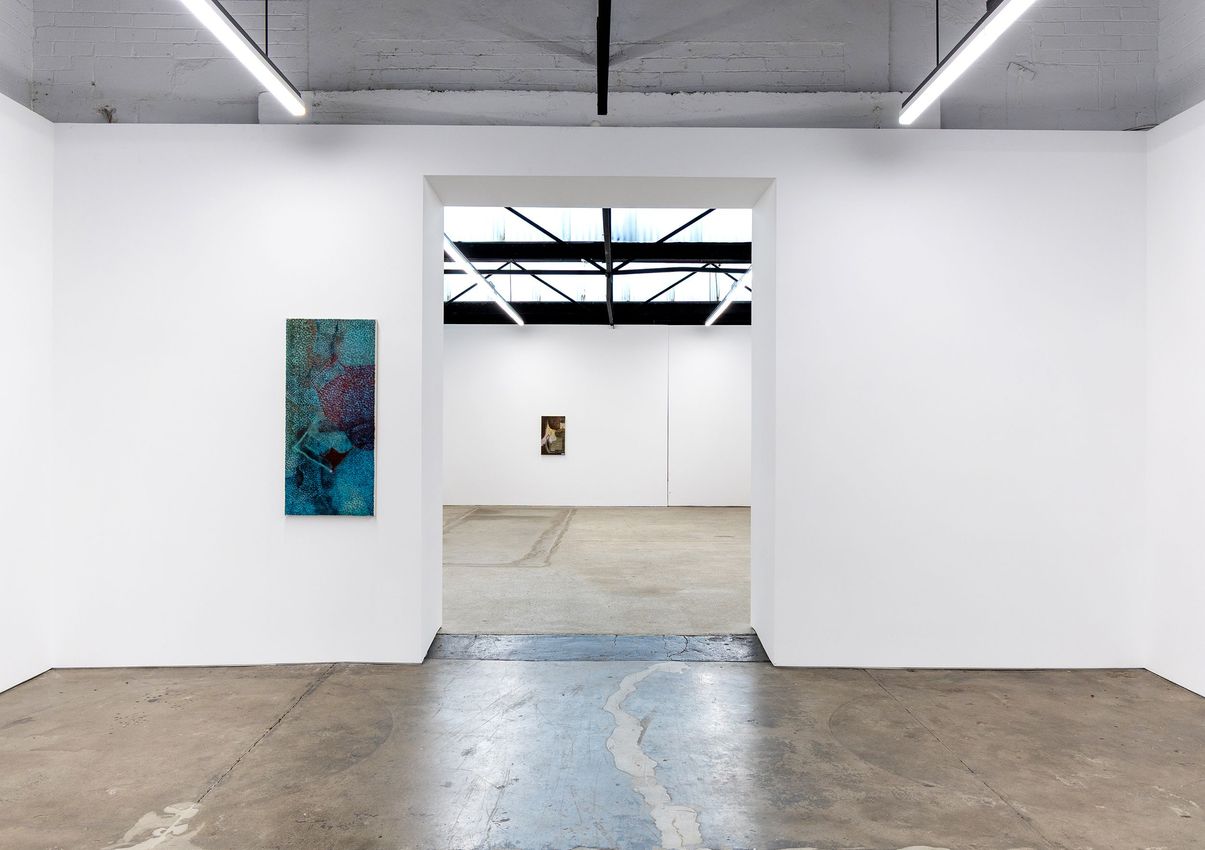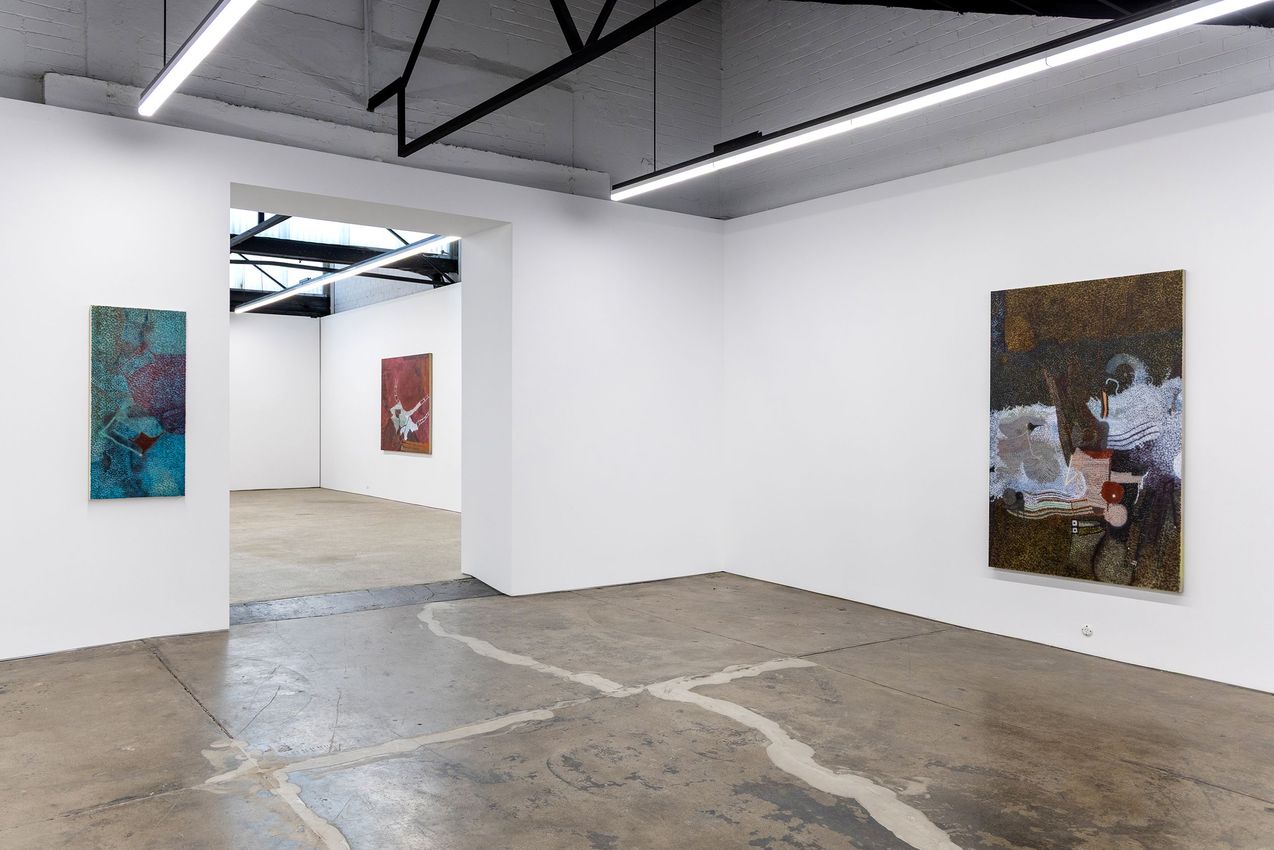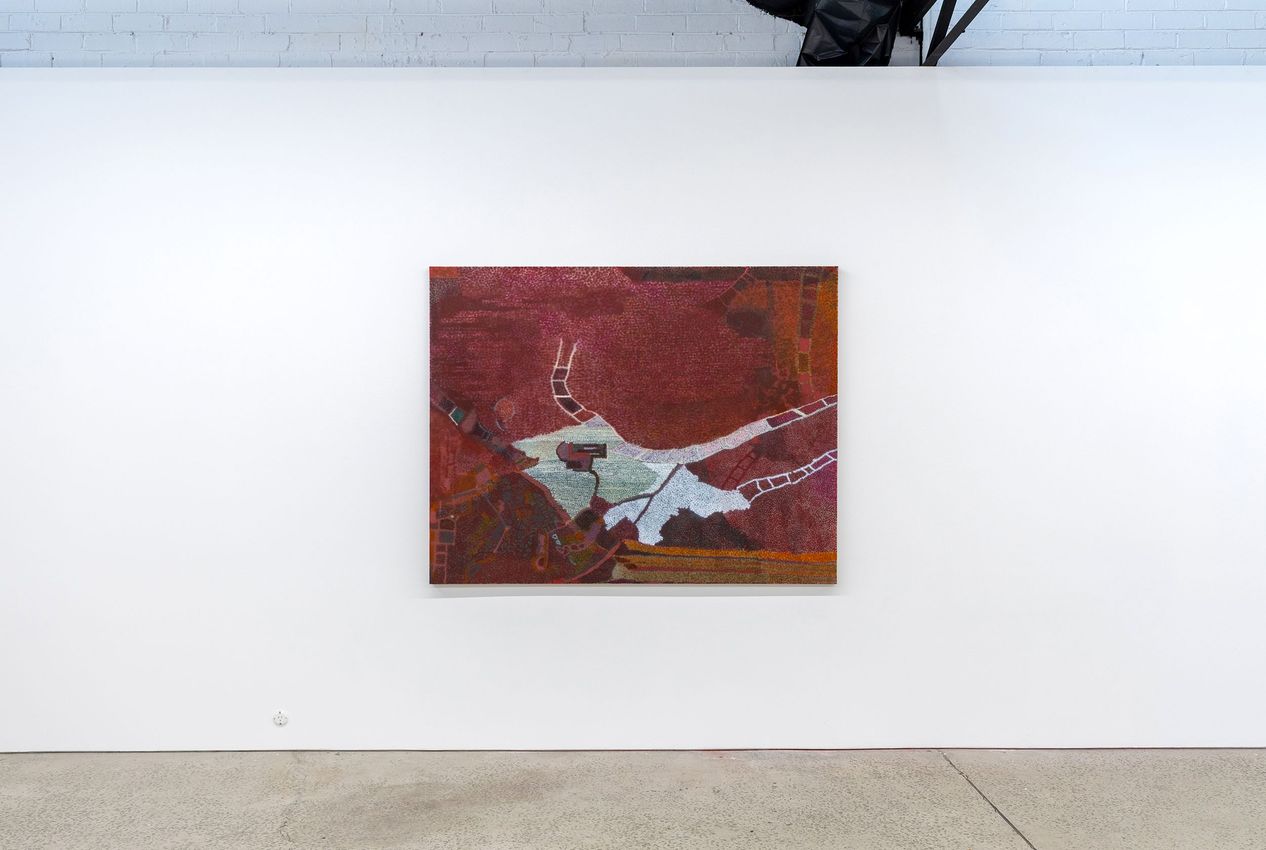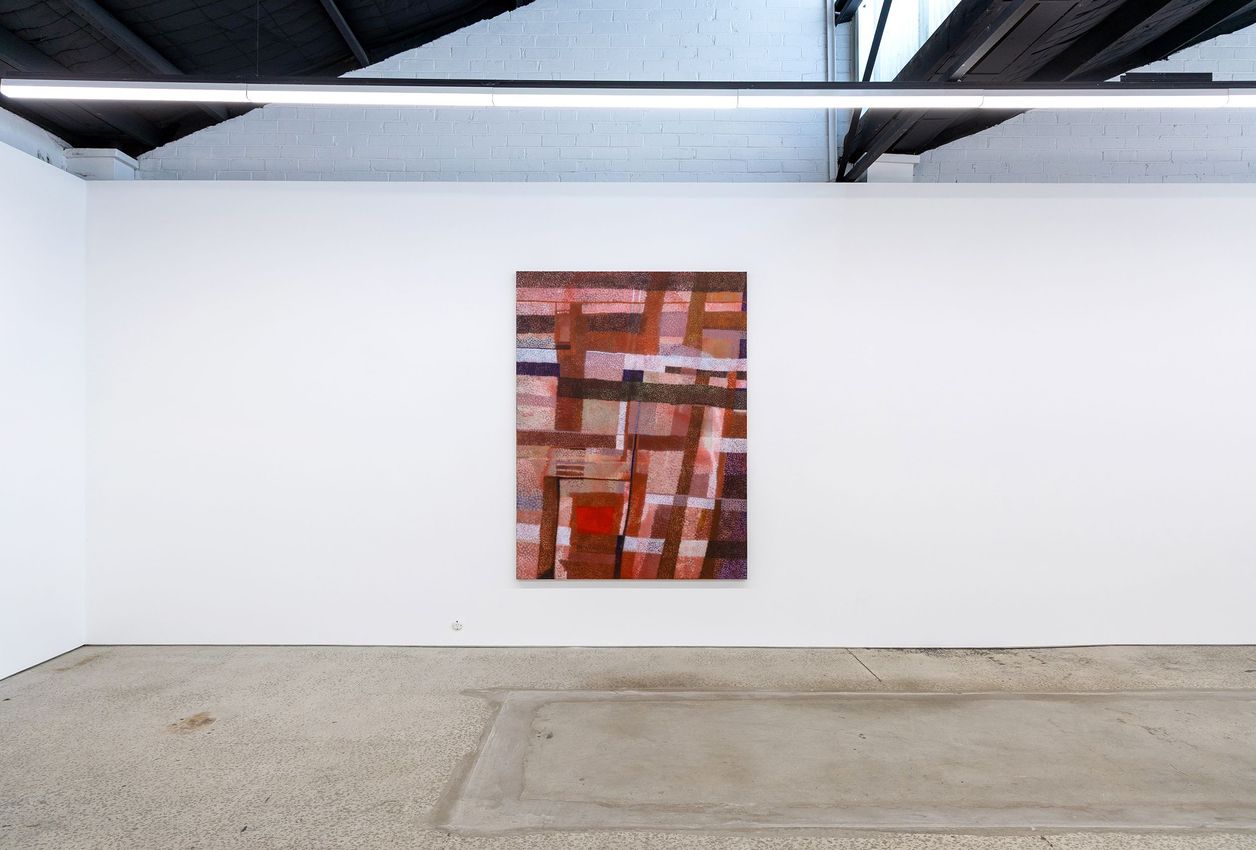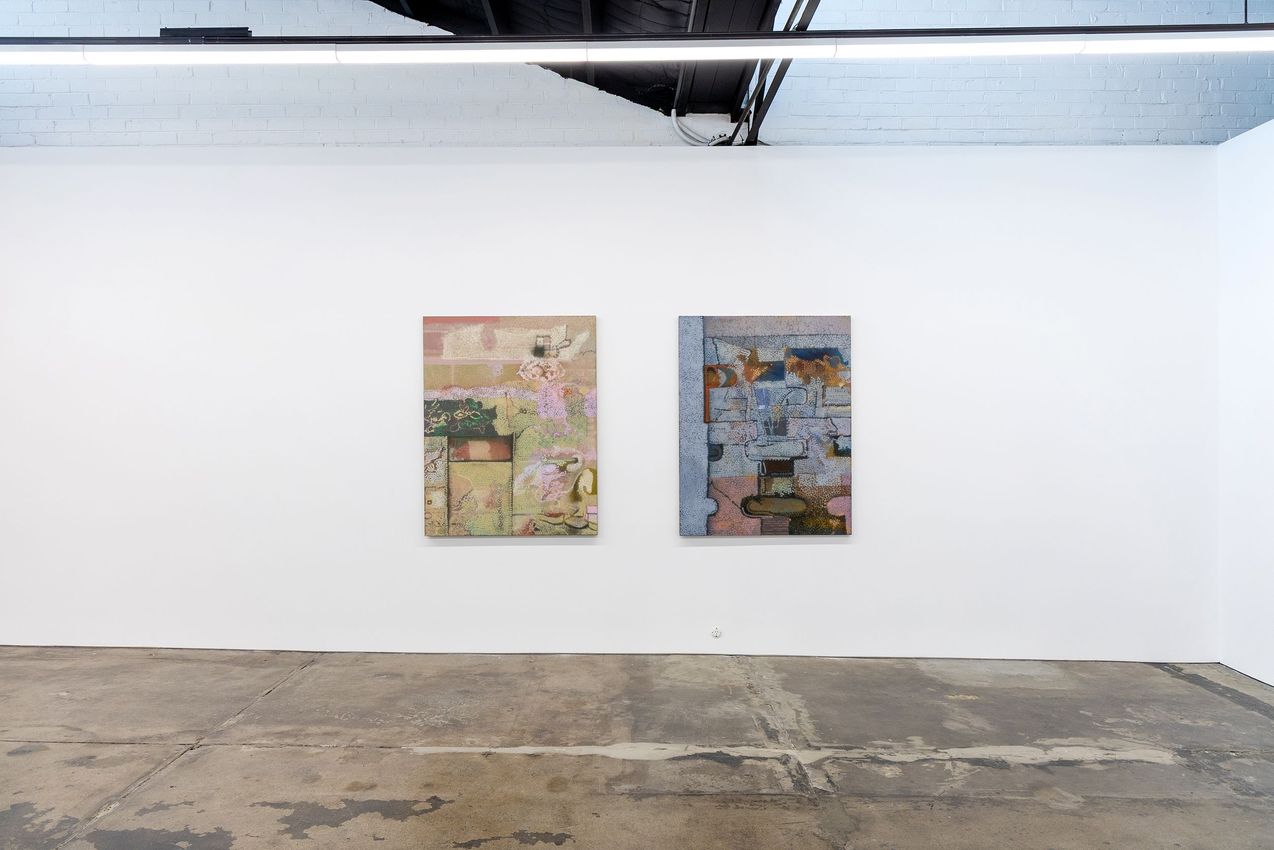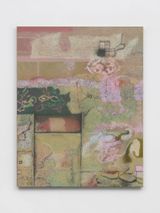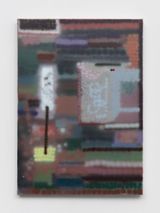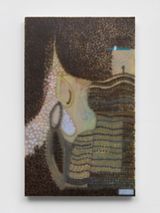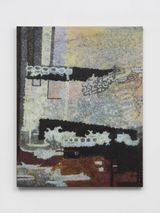




To hoist, to lift, to spring, verbs of ascension and in-betweenness, pointing to the action of rising, but yet to reach — a form of progress and equilibrium — to force focus upon that moment of connection. A horizon line, where sky (ascended) and earth (descended) meet. For Simone Griffin, this conjunction offers a meeting place of collectivity, curiosity, and conceptual richness, where ladders and the strata of the earth serve as a conduit between land and sky.
It is through these themes that Griffin’s work shows her concerns with development, experience, and understanding, emerging from a theoretical underpinning that – quite fittingly – synthesises the ideas of three seemingly distant thinkers. The first major influence lies with 20th century philosopher Hans-Georg Gadamer, and his conception of interpretation as a “fusion of horizons”. In this view, the process of understanding is a collaboration between text and interpreter, each shaped by their own historical and cultural contexts — their “horizons” — as they meet through language. This shared ground allows understanding to emerge — not as an objective truth, but as a new perspective that deepens insight, a mutual expansion rather than a subsumption.
This combination is something the “strata paintings” of Paul Klee visually articulate, works he developed on his journey to Egypt in 1928, where he reflected on the layered cliffs of the Nile Valley and the elongated bands of cultivated fields. The striated compositions he created were simultaneously cross sections and aerial views — similar to Gadamer’s fusion of horizons, it is in the integration of these perspectives within a singular frame that allows for a certain kind of holism.
Griffin’s third influence, dates back to the 16th century with physician, astrologer and mystic, Robert Fludd and his illustrative diagram of ascension. Within his model, a celestial ladder serves as a metaphor for the stages of spiritual ascent and the interconnectedness of the cosmos and humanity, and their ultimate desire to be at one. On his ladder, each rung represents a level of understanding or being, moving stepwise from the material to the divine — shedding attachment to the physical and approaching unity at the divine source. Griffin seeks to draw on both Gadamer and Fludd’s ideas to express her theory of “conjunction”, a zone which speaks of progress, learning, and collective understanding or, in other words, common ground.
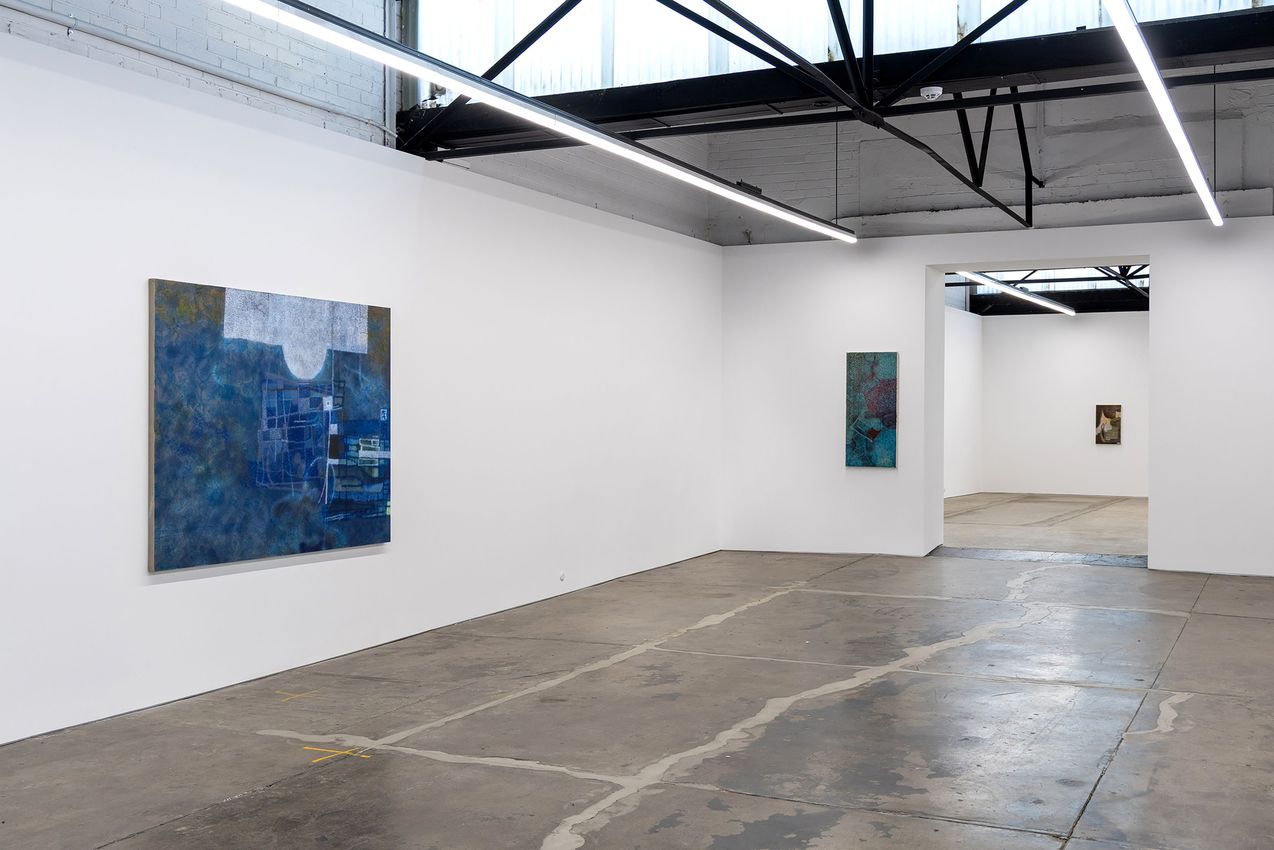
The visual articulation of Griffin’s “conjunction” is achieved through an analytical use of perspective, the top of the ladder (sky, cosmos) looking down on the earth (humanity, the natural world). Or, to again evoke Fludd’s ascension, “bridging” from the top of a form to its bottom and likewise from the bottom to its top, in a reflection of human experience. For it is the journey that allows for the plurality we see in views such as Klee’s, and it is in this plurality where Griffin’s own work builds from Klee into the 21st century. Through the locus of her paintings, and the journey they entail, we embody a kind of hierarchical overlay – looking through the blurred cosmos to the topography of the earth below, where landscapes merge with figures and symbols — each painting conjoining Griffin’s own horizons to that of the world, and the viewer.


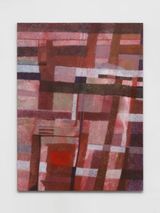
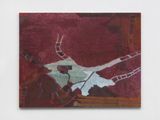
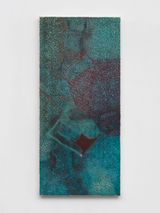
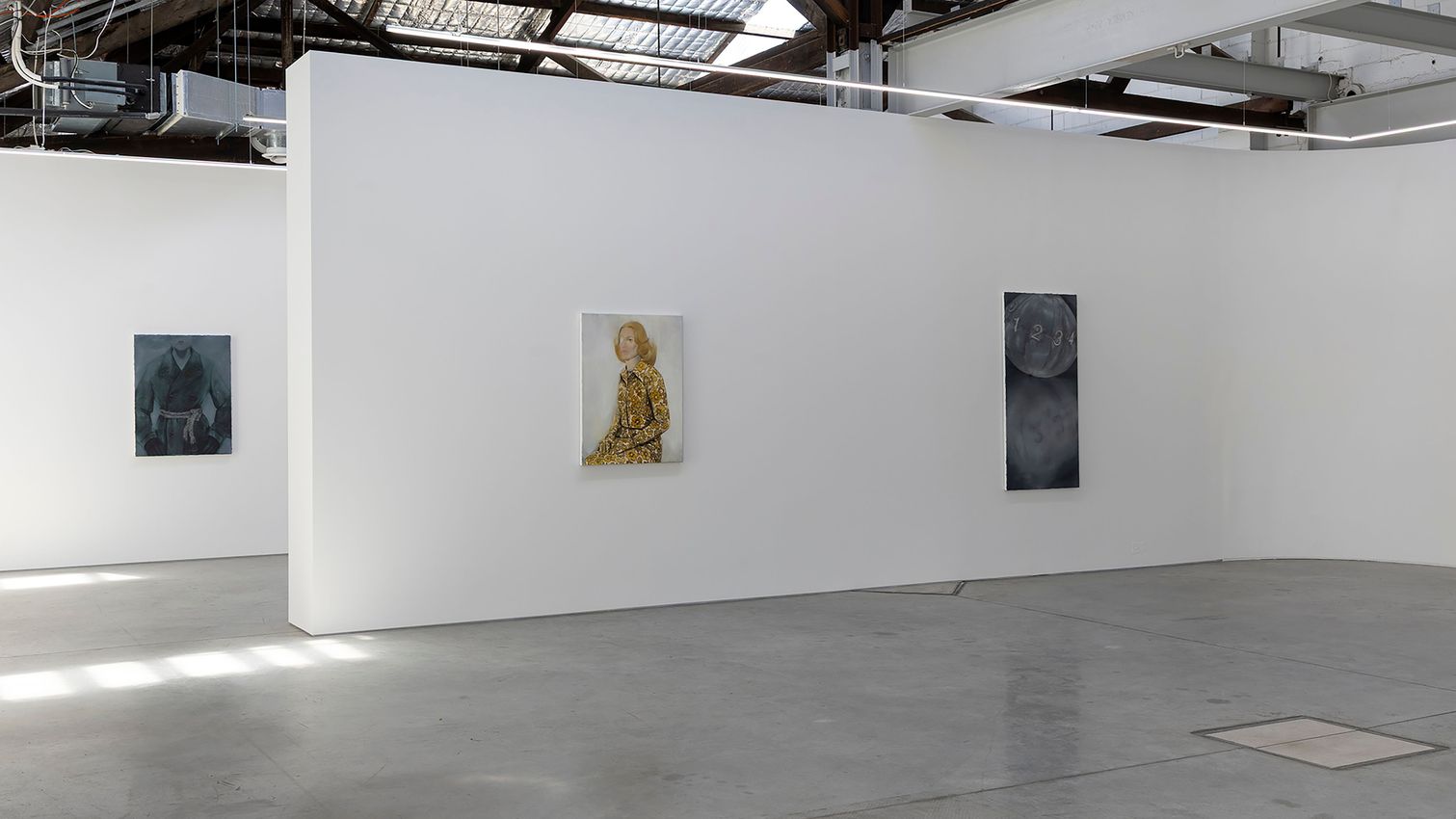
Simone Griffin’s practice presents an interweaving of references, from stories and memories, to Indigenous and Western science and philosophies. Of European Australian descent, Griffin’s paternal side connects to the Koa, Wangan, Jagalingou and Wakka Wakka peoples, the traditional custodians of South East Queensland. Her paintings utilise a distinctive dot technique to articulate both abstraction and figuration, applied with a mechanic impulse by way of airbrush, Griffin’s marks are both soft and bold, combining control and chance, grasping this industrial tool for its autonomous properties. With a topographical or cosmic overlay present within each work, figures and symbols emerge and carry their stories from one work to the next. Overarchingly, these paintings are an investigation of the relationship between elemental processes and the human psyche, engaging with the artistic history of her Peoples and that of the Western cannon — she blends worlds, both practically and conceptually.

A respected voice in contemporary art discourse.
Focusing on ambitious storytelling and insightful art-world commentary. Ocula Magazine publishes in-depth interviews, critical essays and timely analysis on the artists, exhibitions and ideas driving the global art world.
Learn more about Ocula Magazine
Showcasing the best of the art world.
Ocula partners with galleries from around the world to highlight their artists, artworks and exhibitions. Gallery membership is by application and invitation, with each member vetted by an independent panel.
Learn more about Ocula Membership

Specialises in the sale of major artworks.
Led by a team with deep ties to the world’s leading auction houses, galleries and collectors. Ocula’s advisory team offers bespoke services to high-net-worth clients from around the world who are looking to acquire the best of contemporary and modern art.
Learn more about our team and services