




CEAL FLOYER
1968-2025, United KingdomCeal Floyer (1968–2025) was a British conceptual artist best known for her minimalist, witty installations and videos that transform everyday objects into precise experiments in perception and language. Best known for works such as Light Switch (1992–99) and Nail Biting Performance (2001), Floyer’s practice uses readymades, slide projection, sound and understated sculptural interventions to test the limits of what viewers think they see. By staging slight shifts in context, scale or function, and drawing on humour, she exposes how easily interpretation can be tilted by a change in framing, translation or display.
Early Life and Career
Ceal Floyer was born in Karachi in 1968 and moved to Britain, where she grew up before studying Fine Art at Goldsmiths College, University of London, graduating with a BFA in 1994. Immersed in the climate of 1990s British conceptualism, she gravitated towards film, sound and installation rather than traditional painting or sculpture.
One of Floyer’s first solo exhibitions took place in 1996 at Gavin Brown’s Enterprise in New York, a now-closed gallery whose offbeat programme made it a touchstone of the city’s art scene. The following year she presented her first solo show at Lisson Gallery in London, the beginning of a long association that would see her stage seven exhibitions with the gallery over the course of her career.
In 1997 Floyer relocated to Berlin to work at Künstlerhaus Bethanien, a move that embedded her in the city’s expanding contemporary art scene and marked the start of a sustained international career. That year she received a Philip Morris—sponsored prize, followed by the Preis der Nationalgalerie für Junge Kunst (National Gallery Prize for Young Art) in 2007 and the Nam June Paik Art Center Prize in 2009—accolades that consolidated her reputation as a leading conceptual artist whose work could be both austere and quietly humorous. She was later represented by the Berlin-based gallery Esther Schipper alongside Lisson and 303 Gallery, remaining based in Berlin until her death following a long illness in December 2025.
Works, Series and Methods
Floyer’s practice is often described as a form of minimal, language-aware conceptualism grounded in ordinary objects and situations. She used items such as light switches, receipts, curtains, megaphones, drains and tools, arranging them so that function and implication come apart and familiar things begin to feel strange. The visual set-up is usually simple—often a single, almost empty gesture—but the conceptual impact depends on timing, context and the viewer’s expectations.
One of her best-known works, Light Switch (1992–99), consists of a projector casting the image of a wall switch where one might expect the real device to be, collapsing the difference between representation and utility. Another widely cited piece, Nail Biting Performance (2001), is an audio work that amplifies the sound of the artist biting her nails into a microphone, turning a private, anxious act into a wry performance of duration and discomfort. Across such works, Floyer’s methods hinge on minimal intervention—often a substitution, repetition or re-labelling—that prompts viewers to reconsider how meaning is constructed.
Floyer is perhaps most famous for Monochrome Till Receipt (White) (1999), a printed supermarket receipt listing only white items. The work conflates everyday consumer experience with the idea of modernist monochrome painting, pushing the logic of abstraction into the realm of grocery shopping. A related play on perception occurs in Blind (1997), where a seemingly blank white projection recalls structural-materialist film before disclosing itself as footage of a roller blind moving across a window.
Wordplay and idiomatic language recur throughout her practice. In Half Empty and Half Full (both 1999), two identical photographs of a glass half filled with water invoke the cliché that divides optimists from pessimists, leaving the interpretive burden squarely with the viewer. Her installation Double Act (2006) presents a projection of a red theatre curtain that never opens; the static image turns the curtain itself into the “show”, neatly deflating expectations of spectacle. One of her late works, 644 (2025), is a colour photograph of sheep grazing on a hillside, each animal overlaid with a number from 1 to 644, echoing the childhood strategy of counting sheep to fall asleep while gently indexing ideas of standardisation and control.
Performance and duration are intermittent but important strands in Floyer’s work. Ink on Paper (Video) (1999) is a 52-minute video in which she holds a marker to a sheet of paper until the surface turns black, stretching a simple action to the point of absurdity. In Nail Biting Performance (2001), first staged before a concert of Beethoven and Stravinsky at Birmingham’s Symphony Hall, she stood alone on stage and audibly bit her nails before exiting, teasing audiences with the possibility of a conventional performance only to undermine it. Critics have noted how her works often “require a double, even triple take” to decode, yet reveal that very little is actually concealed once the conceptual switch becomes apparent.
Floyer’s art consistently probes the slippage between language and image, function and representation, expectation and event. By isolating mundane objects and gestures, she asks how much of perception is habit and how easily those habits can be unsettled through small shifts in framing. Humour—often very dry—plays a central role, coaxing viewers into moments of recognition that are as disarming as they are analytical.
Exhibitions, Collections and Recognition
Floyer’s art has been widely exhibited internationally. Her work appeared in the 53rd Venice Biennale in 2009 and in documenta 13 in Kassel in 2012, as well as Manifesta 11 in Zurich in 2016 and other biennials in Shanghai, Liverpool and Istanbul. She was the subject of numerous solo exhibitions, including presentations at Palais de Tokyo in Paris and KW Institute for Contemporary Art in Berlin, as well as a survey at the Museum of Contemporary Art North Miami in 2010. Earlier, she was included in the influential group show General Release at the 1995 Venice Biennale, organised by the British Council, where she presented Unfinished (1995), a looped close-up video of a person “twiddling” their thumbs that later lent its title to a major exhibition of her work.
Her works are held in major museum collections, among them Tate Modern, London; the Museum of Modern Art, New York; Museum für Moderne Kunst and Hamburger Bahnhof — Nationalgalerie der Gegenwart, Berlin; Denver Art Museum; San Francisco Museum of Modern Art; Centre Pompidou, Paris; Kunsthalle Bern Collection; Kunstmuseum Basel; Musée d’Art Moderne de Paris; Museo Jumex, Mexico City; National Gallery of Victoria, Melbourne; Toyota Municipal Museum of Art, Toyota; and Towner Eastbourne.
In addition to the Philip Morris—sponsored award in 1997, she received the Preis der Nationalgalerie für junge Kunst in 2007 and the Nam June Paik Art Center Prize in 2009, affirming her standing within contemporary conceptual practice. Her posthumous visibility continues: in 2026 Berggruen Arts & Culture will present Unfinished at Palazzo Diedo in Venice, a comprehensive exhibition that returns the work of Ceal Floyer to the city more than three decades after her first appearance at the Venice Biennale.
Ceal Floyer FAQs
What is Ceal Floyer best known for?
Ceal Floyer is best known for minimalist, witty conceptual works that use everyday objects—such as receipts, light switches and curtains—to test how perception and language shape what we see. Signature pieces include Light Switch (1992–99), Monochrome Till Receipt (White) (1999) and Nail Biting Performance (2001).
What themes does Ceal Floyer explore in her work?
Ceal Floyer’s work explores perception, expectation, wordplay and the gap between function and representation. She often builds artworks from small shifts in framing, translation or display, using humour and double-takes to reveal how interpretation can be quietly manipulated.
Which Ceal Floyer works are considered key?
Ceal Foyer’s Frequently cited key works include Light Switch (1992–99), a projected image of a switch that replaces the real object; Monochrome Till Receipt (White) (1999), a supermarket receipt listing only white items; and Blind (1997), a projection of a roller blind that initially reads as a blank screen. Later works such as Double Act (2006), a static projection of a red theatre curtain, and 644 (2025), a numbered flock of sheep, extend these ideas into questions of anticipation, standardisation and control.
Where can I see Ceal Floyer’s art?
Floyer’s work is held in major museum collections including Tate Modern (London), the Museum of Modern Art and the San Francisco Museum of Modern Art (USA), the Museum für Moderne Kunst and Hamburger Bahnhof — Nationalgalerie der Gegenwart (Berlin), Centre Pompidou (Paris), Museo Jumex (Mexico City) and the National Gallery of Victoria (Melbourne), among others. She has also been represented by Lisson Gallery (London), Esther Schipper (Berlin) and 303 Gallery (New York), where works continue to be exhibited and placed in collections.
What major exhibitions and prizes did Ceal Floyer receive?
Floyer’s art was shown at the 53rd Venice Biennale (2009), documenta 13 in Kassel (2012), Manifesta 11 in Zurich (2016) and biennials in Shanghai, Liverpool and Istanbul, alongside solo shows at Palais de Tokyo, KW Institute for Contemporary Art and MOCA North Miami. Her honours include a Philip Morris—sponsored prize in 1997, the Preis der Nationalgalerie für junge Kunst (National Gallery Prize for Young Art) in 2007 and the Nam June Paik Art Center Prize in 2009.
What is the 2026 Venice exhibition of Ceal Floyer’s work?
In 2026, Berggruen Arts & Culture will present Unfinished (4 May to 22 November 2026), a major exhibition of Ceal Floyer’s work at Palazzo Diedo in Venice. The show brings together key pieces from across her career, highlighting how her minimalist, conceptual approach plays with everyday objects, perception and language.
Why is Ceal Foyer’s Venice exhibition called “Unfinished”?
The title Unfinished refers to Floyer’s 1995 video of the same name, a close-up looped projection of someone twiddling their thumbs that was first shown in the British Council’s General Release exhibition at the 1995 Venice Biennale. Revisiting Unfinished in 2026 returns this quietly absurd work to Venice more than 30 years later, framing the exhibition as a reflection on open-endedness, waiting and the suspended moment before something seems about to happen.





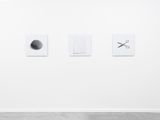


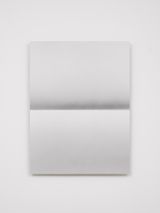


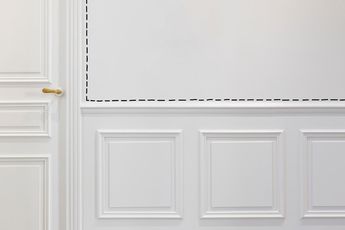
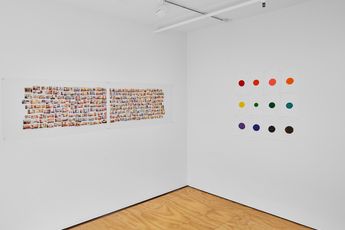
Explore Ceal Floyer's Exhibitions







Explore and Follow Artists Shaping Contemporary Art
A respected voice in contemporary art discourse.
Focusing on ambitious storytelling and insightful art-world commentary. Ocula Magazine publishes in-depth interviews, critical essays and timely analysis on the artists, exhibitions and ideas driving the global art world.
Learn more about Ocula Magazine
Showcasing the best of the art world.
Ocula partners with galleries from around the world to highlight their artists, artworks and exhibitions. Gallery membership is by application and invitation, with each member vetted by an independent panel.
Learn more about Ocula Membership
Specialises in the sale of major artworks.
Led by a team with deep ties to the world’s leading auction houses, galleries and collectors. Ocula’s advisory team offers bespoke services to high-net-worth clients from around the world who are looking to acquire the best of contemporary and modern art.
Learn more about our team and services