



DAN GRAHAM
1942-2022, United StatesDan Graham (1942–2022) was an American artist, writer and curator whose work over six decades examined how people experience themselves and others within architecture, media and public space. Widely exhibited at documenta, the Venice Biennale and major museums worldwide, he is regarded as a key figure in late-20th-century Conceptual and post-Minimal art whose work continues to shape contemporary thinking on spectatorship and public space. Moving between critical writing, performance, video, photography and glass-and-steel pavilions, he showed how perception is structured by the built environment and mass culture, and how viewers become both observers and observed.
In 2018, John Slyce interviewed Graham for an Ocula Conversation, discussing the artist’s first solo museum survey in China, Dan Graham – Greatest Hits (7 November 2017–25 February 2018).
Early Life and Writing
Graham was born in Urbana, Illinois, and grew up in the New Jersey suburbs of Winfield and Westfield; the tract housing and shopping strips of this landscape later fed directly into works such as Homes for America (1966–67). Largely self-taught after high school, he moved to New York in 1963 and, in 1964, founded the John Daniels Gallery, where he exhibited artists including Sol LeWitt, Donald Judd, Dan Flavin, Carl Andre and Robert Smithson before the gallery closed the following year. He then turned to writing, publishing essays on art, architecture, television and rock music, and began using magazines as a primary exhibition space for his own early works—embracing the disposable periodical as an alternative to the white cube.
Conceptual works, photography and media experiments
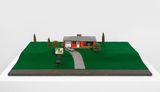
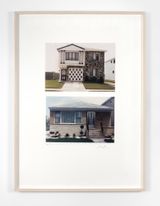
In the 1960s Graham’s first mature works emerged as page projects that treated the magazine as both support and subject. Figurative (1965) reproduces a supermarket cash-register receipt, while Schema (1966) uses the layout of each publication to generate its own changing content. His landmark project Homes for America (1966–67), published in Arts Magazine, juxtaposes photographs and text on repetitive New Jersey tract housing, aligning post-war suburban development with the serial logic of Minimalist sculpture.
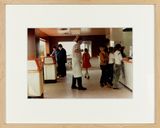
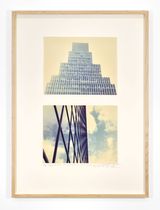
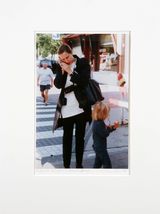
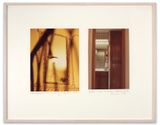
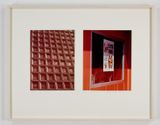
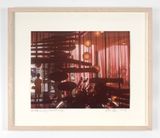
Photography remained central throughout his career. Beginning in the mid-1960s with colour snapshots of suburban streets and single-family houses taken with an Instamatic camera, he used serial images of ordinary architecture to question how public and private spaces condition behaviour and to link Minimalist form to real social situations.
In the 1970s he extended his inquiry through performance and video works that foregrounded audience participation and feedback. Performer/Audience/Mirror (1975) and Public Space/Two Audiences (1976) dissect the dynamics of self-consciousness, surveillance and group behaviour, using mirrors and live description to fold viewers into the work. Video pieces such as Time Delay Room (1974) employed closed-circuit systems and time delay to destabilise linear perception, while the quasi-documentary Rock My Religion (1982–84) connected Shaker religious ritual to the ecstatic collectivism of rock and punk.
Pavilions and Architectural Practice
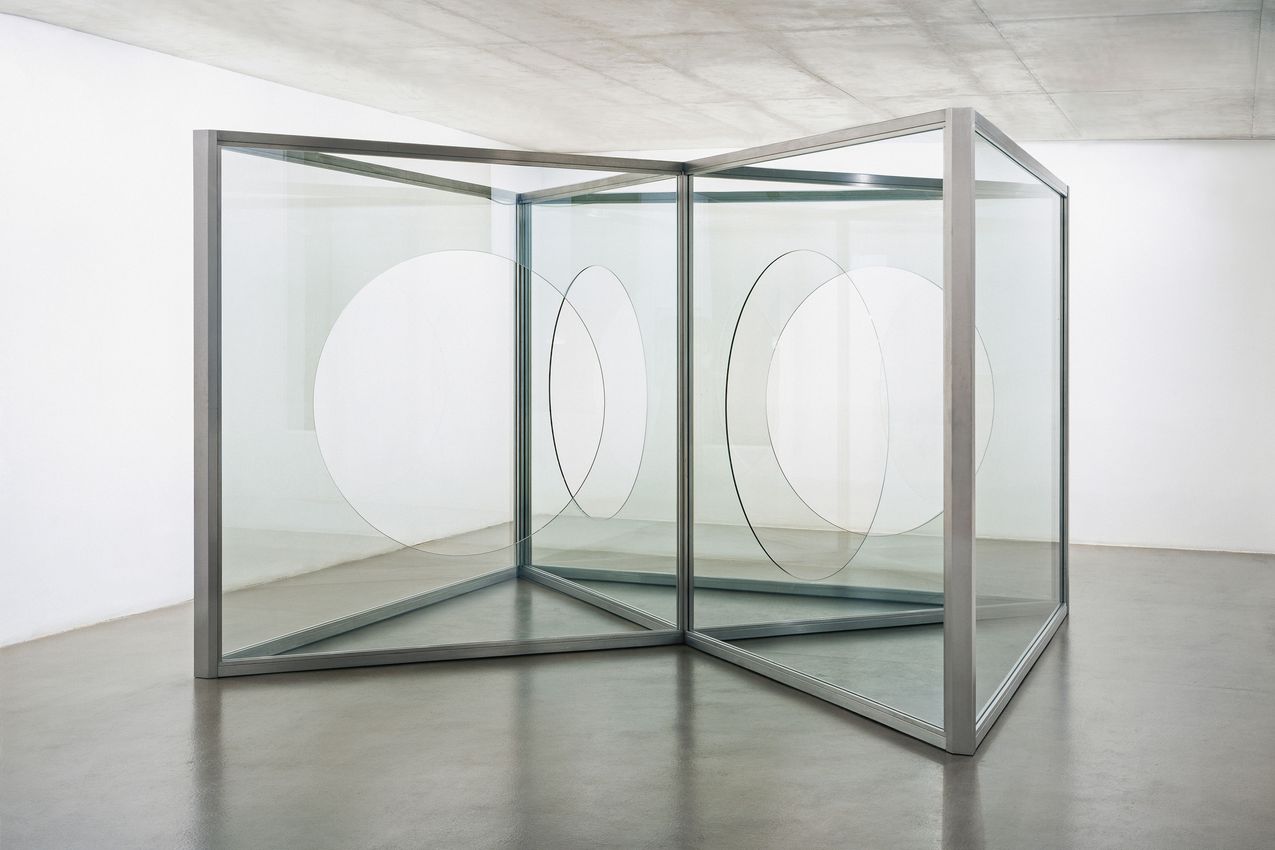
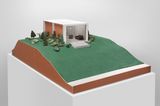
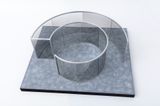
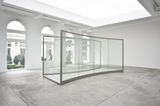
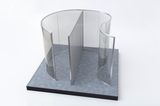
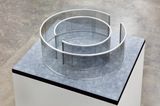
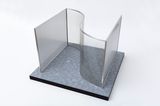
From the late 1970s onwards, Graham became best known for his pavilions—a term he often rejected, preferring “public sculptures”. These glass-and-steel structures draw on garden follies, gazebos and modernist exhibition architecture while using materials from corporate and urban design such as two-way mirror glass, sliding doors and perforated steel. They create partial enclosures that are at once reflective and transparent. As viewers move around and inside pavilions like Two-Way Mirror Cylinder Inside Cube and Video Salon (1981–91), Two-Way Mirror / Hedge – Almost Complete Circle (2001) or Hedge Two-Way Mirror Walkabout (Metropolitan Museum of Art Roof Garden, 2014), they see themselves, others and the surrounding city refracted and delayed, turning each structure into a live experiment in perception and social interaction. Graham described these works as “punctuation marks” in the landscape, designed to pause or alter the experience of physical space and to provide momentary sites for romance, play or quiet observation.
Graham’s pavilions can be seen in important locations around the world, including:
- Bisected Triangle, Interior Curve, Inhotim, Brumadinho, Brazil (installed 2002).
- Two-Way Mirror / Hedge – Almost Complete Circle, K21 Ständehaus, Kunstsammlung Nordrhein-Westfalen, Düsseldorf, Germany (installed 2001).
- Yin/Yang Pavilion, Massachusetts Institute of Technology (MIT), Cambridge, USA (designed 1997, installed 2002).
- S-Curve for St. Gallen, Hauser & Wirth Collection, St. Gallen, Switzerland (installed 2001).
- Star of David Pavilion, Tel Aviv Museum of Art, Tel Aviv, Israel (installed 1999).
Major Exhibitions
Graham’s importance has been marked by extensive institutional exhibitions across Europe, North America and Asia, alongside numerous public commissions. Key solo presentations include:
- Projected Art, Finch College Museum of Art, New York (1967).
- Dan Graham: Works 1965–2000, Museu Serralves, Porto; ARC/Musée d’Art Moderne de la Ville de Paris, Paris; Kröller-Müller Museum, Otterlo; Kiasma Museum of Contemporary Art, Helsinki; Kunsthalle Düsseldorf, Düsseldorf (2001–02).
- Dan Graham: Beyond, Museum of Contemporary Art, Los Angeles; Whitney Museum of American Art, New York; Walker Art Center, Minneapolis (2009–10).
- Dan Graham – Greatest Hits, Red Brick Art Museum, Beijing (2017–18).
- Dan Graham: The Passing Time City, Triennale Milano, Milan (2024).
He also participated in major survey exhibitions including Documenta (Kassel), the Venice Biennale, the Whitney Biennial and Skulptur Projekte Münster from the 1970s onwards. In 2026, his work will be shown alongside that of Ettore Spalletti in Ettore Spalletti & Dan Graham at Marian Goodman Gallery, Paris (17 April–20 June 2026), highlighting shared concerns with architecture, reflection and the viewer’s movement through space.
Legacy
Dan Graham died in New York on 19 February 2022. His hybrid role as artist-critic and his sustained attention to suburbs, media and corporate architecture have made his practice a crucial reference for subsequent generations exploring spectatorship, public space and the politics of vision. His essays and interviews are collected in volumes such as Rock My Religion: Writings and Projects 1965–1990 and Two-Way Mirror Power: Selected Writings by Dan Graham on His Art, which remain key texts on his thinking about architecture, popular culture and media. From early magazine projects to pavilions embedded in parks and plazas around the world, his works continue to model how Conceptual art can operate as an everyday, reflexive encounter between bodies and the built environment.
Dan Graham FAQs
Who was Dan Graham?
Dan Graham (1942–2022) was an American artist, writer and curator known for Conceptual and post-Minimal works that examine how people experience themselves and others in relation to architecture, media and public space.
What is Dan Graham best known for?
He is best known for his glass-and-steel pavilions—public sculptures made from transparent and mirrored panels that create walk-in environments of reflection and refraction—as well as for landmark Conceptual works like Homes for America and performance/video pieces such as Performer/Audience/Mirror.
What are Dan Graham’s pavilions?
Dan Graham’s pavilions are hybrid structures made from materials like two-way mirror glass, stainless steel and perforated metal, often installed in parks, museum courtyards and plazas. They act as “punctuation marks” in the landscape, altering how visitors see themselves, other people and the surrounding architecture.
How did Dan Graham start his career?
He began his career in New York in the mid-1960s, running the short-lived John Daniels Gallery, where he showed early work by artists including Sol LeWitt, Donald Judd, Dan Flavin, Carl Andre and Robert Smithson. After the gallery closed, he turned to writing and magazine-based artworks that helped define early Conceptual art.
What is Homes for America by Dan Graham?
Homes for America (1966–67) is a photo-text work first published in Arts Magazine, combining images of repetitive New Jersey tract housing with analytical text. It links post-war suburban development to the serial structures of Minimalism and is considered a foundational piece of Conceptual art.
How did Dan Graham use photography?
Graham used photography from the mid-1960s onwards, starting with colour snapshots of suburban houses and streets. He deployed serial photographic sequences to analyse how ordinary architecture structures behaviour and to connect Minimalist form with real social environments.
How did Dan Graham use performance and video?
In the 1970s he produced performances and video installations that analysed audience behaviour and self-consciousness, often using mirrors and live or time-delayed video. Works like Performer/Audience/Mirror, Public Space/Two Audiences and Time Delay Room turn spectators into active participants in feedback systems.
What is Dan Graham’s connection to rock music and youth culture?
Graham was deeply engaged with rock, punk and youth culture, writing criticism and making works such as the video Rock My Religion (1982–84), which parallels rock concerts with religious experience, and the puppet-based rock opera Don’t Trust Anyone Over Thirty (2004), created with musicians and fellow artists.
Which major museums and exhibitions have shown Dan Graham’s work?
He has been the subject of major solo exhibitions including Dan Graham: Works 1965–2000 (Museu Serralves, Porto, and other European venues, 2001–02), Dan Graham: Beyond (Museum of Contemporary Art, Los Angeles; Whitney Museum of American Art, New York; Walker Art Center, Minneapolis, 2009–10), Dan Graham – Greatest Hits (Red Brick Art Museum, Beijing, 2017–18) and Dan Graham: The Passing Time City (Triennale Milano, 2024). He also participated in Documenta (Kassel), the Venice Biennale, the Whitney Biennial and Skulptur Projekte Münster.
Where can I see Dan Graham’s pavilions today?
Significant permanent or long-term pavilions include Bisected Triangle, Interior Curve at Inhotim in Brumadinho, Brazil; Two-Way Mirror / Hedge – Almost Complete Circle at K21 Ständehaus in Düsseldorf; Yin/Yang Pavilion at MIT in Cambridge, USA; S-Curve for St. Gallen in the Hauser & Wirth Collection, St. Gallen; and Star of David Pavilion at the Tel Aviv Museum of Art.
What books did Dan Graham write or publish?
Graham’s writings and interviews are collected in books such as Rock My Religion: Writings and Projects 1965–1990 and Two-Way Mirror Power: Selected Writings by Dan Graham on His Art, which gather his essays on architecture, media, rock music and his own projects.
Is Dan Graham still alive?
No. Dan Graham died in New York on 19 February 2022. His legacy continues through his estate, his permanent pavilions and ongoing posthumous exhibitions.
Why is Dan Graham important in contemporary art?
He is important because he expanded Conceptual art into real-world sites, using writing, video, performance and architecture to reveal how design, media and popular culture shape everyday perception. His work remains a key reference for artists and curators concerned with spectatorship, public space and the politics of vision.
Ocula | 2026























Explore and Follow Artists Shaping Contemporary Art
A respected voice in contemporary art discourse.
Focusing on ambitious storytelling and insightful art-world commentary. Ocula Magazine publishes in-depth interviews, critical essays and timely analysis on the artists, exhibitions and ideas driving the global art world.
Learn more about Ocula Magazine
Showcasing the best of the art world.
Ocula partners with galleries from around the world to highlight their artists, artworks and exhibitions. Gallery membership is by application and invitation, with each member vetted by an independent panel.
Learn more about Ocula Membership
Specialises in the sale of major artworks.
Led by a team with deep ties to the world’s leading auction houses, galleries and collectors. Ocula’s advisory team offers bespoke services to high-net-worth clients from around the world who are looking to acquire the best of contemporary and modern art.
Learn more about our team and services