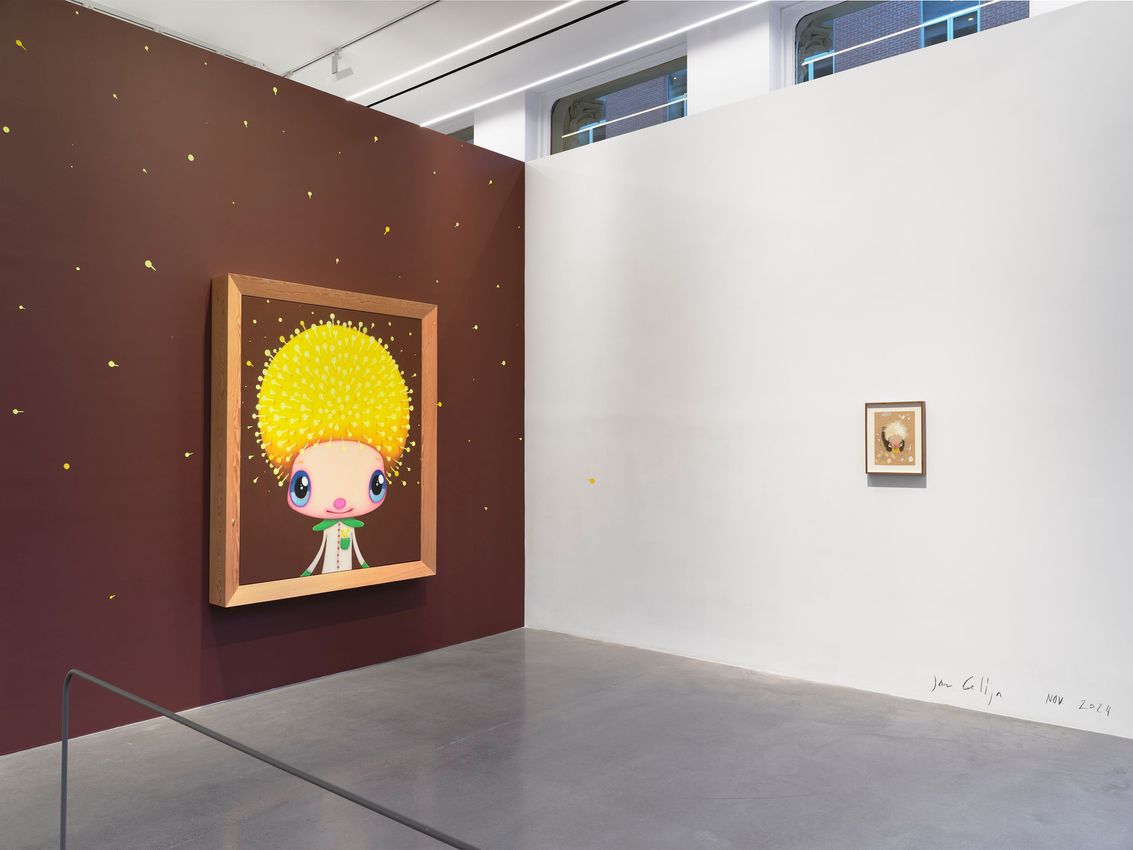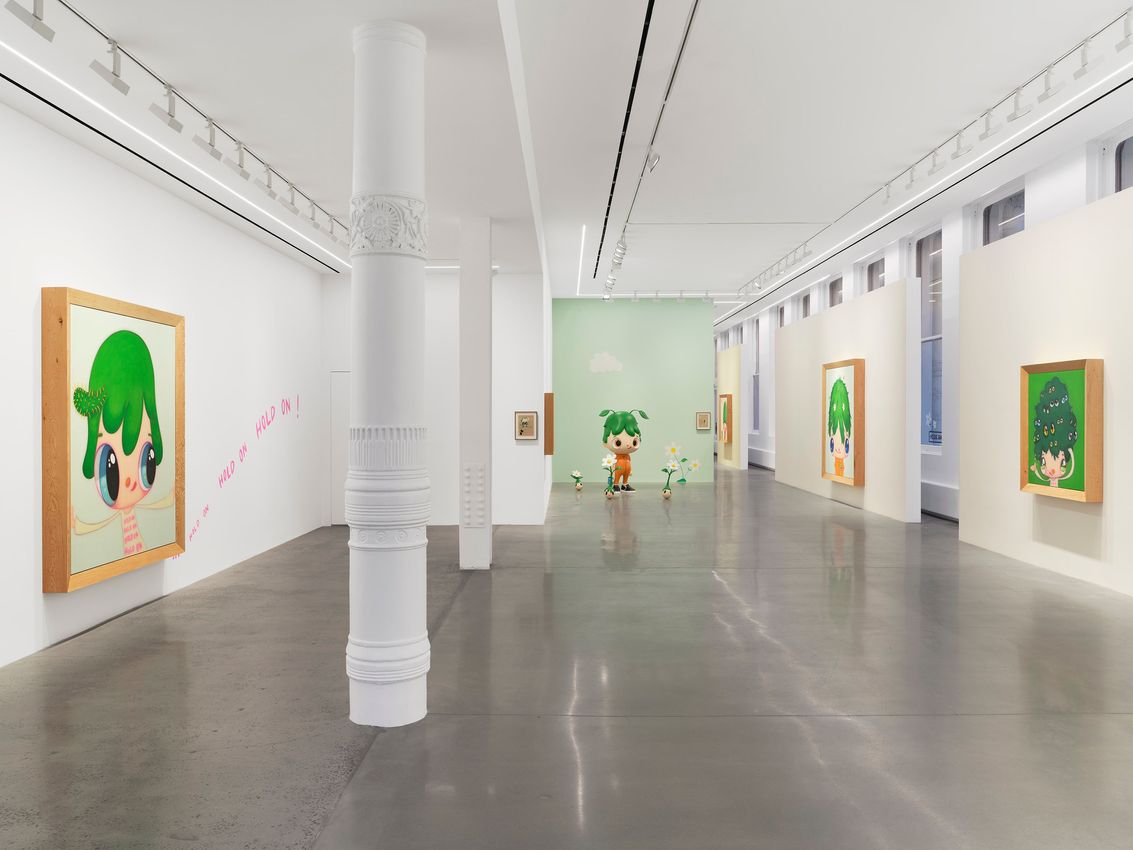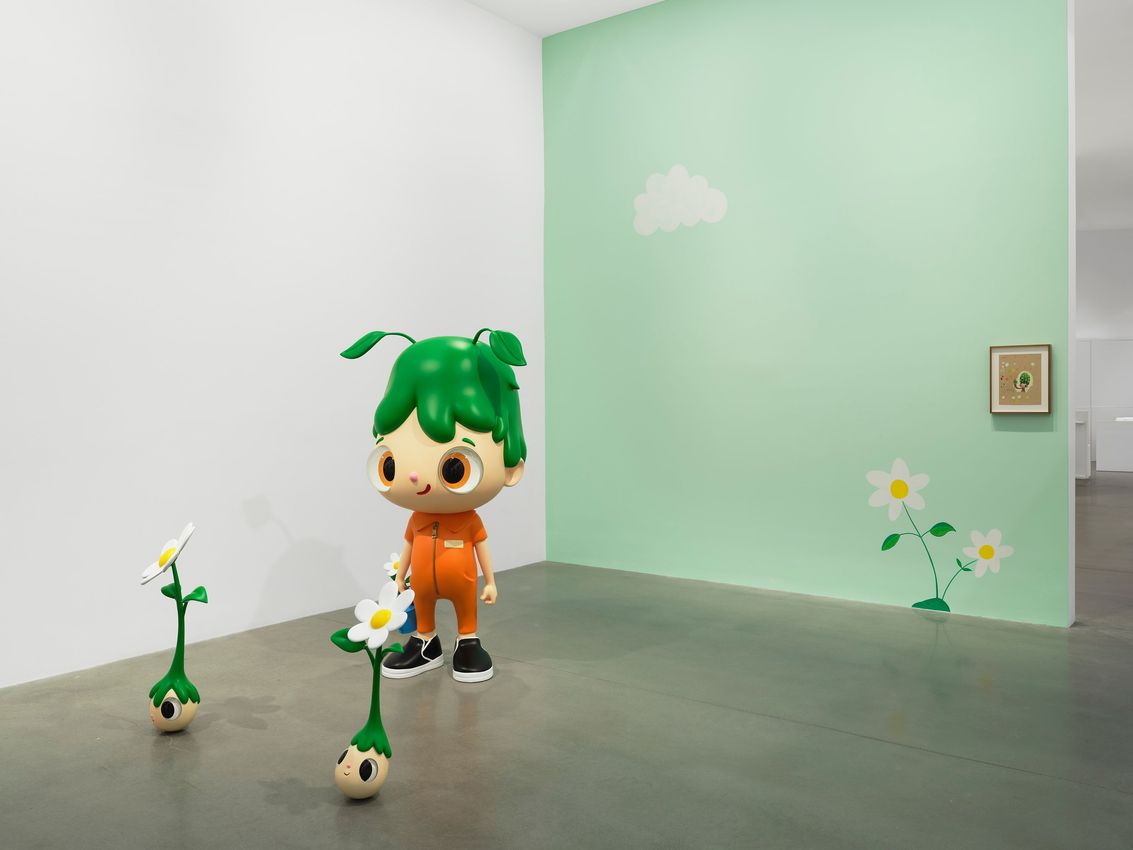
Almine Rech New York is pleased to announce One true tree..., Javier Calleja’s fourth solo exhibition with the gallery, on view from November 8 to December 14,2024.
In the past five years, Javier Calleja (b. 1971) has garnered international acclaimas a creative force. Whether through painting, drawing, or sculpture, Calleja offers a whimsical figuration that provides a captivating escape in an era of global uncertainty and unease. This upcoming exhibition, “One, true, tree, for...,” captures the New York premiere of new work by the contemporary Spanish artist. This exhibition also marks a decade since he last exhibited in New York, which complements a concurrent solo exhibition at the Hangaram Art Museum in the Seoul Art Center, on view through October 27.
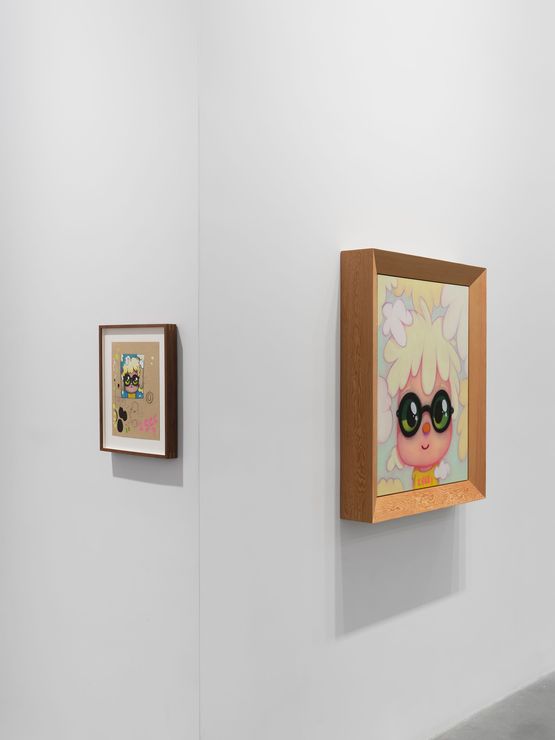
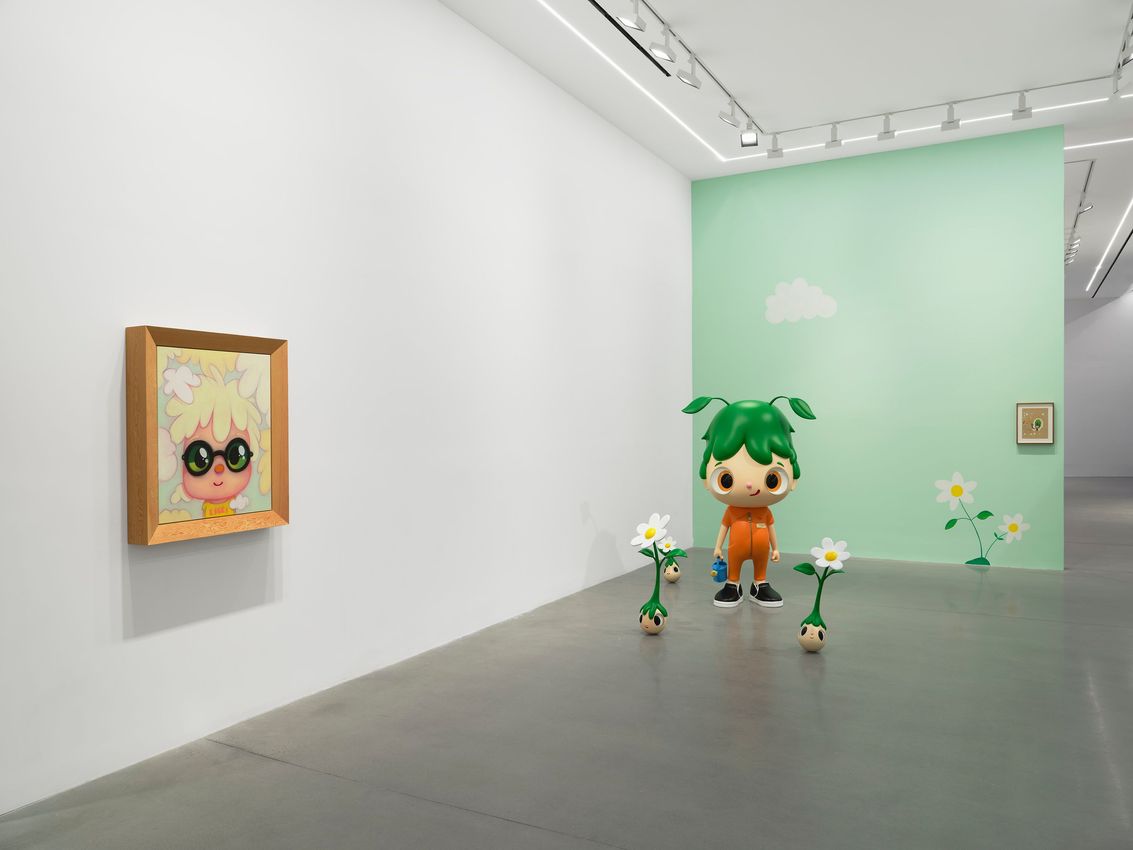
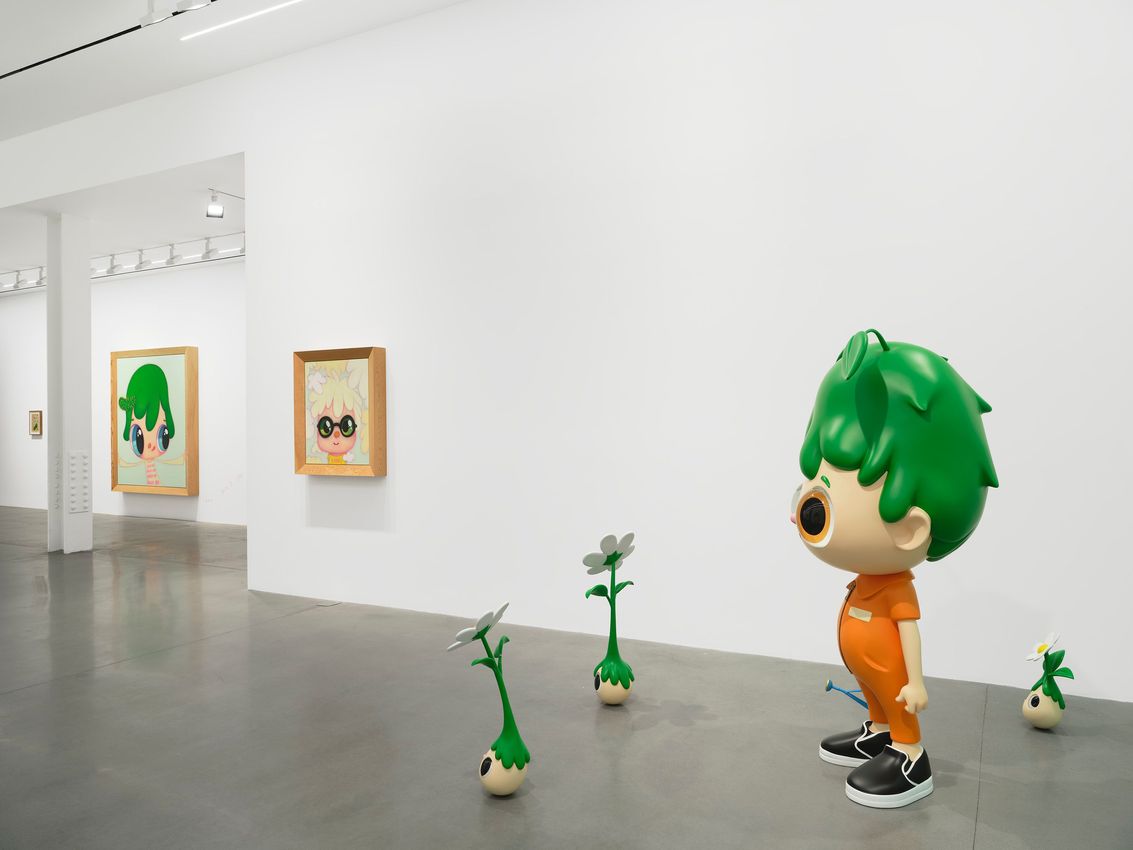
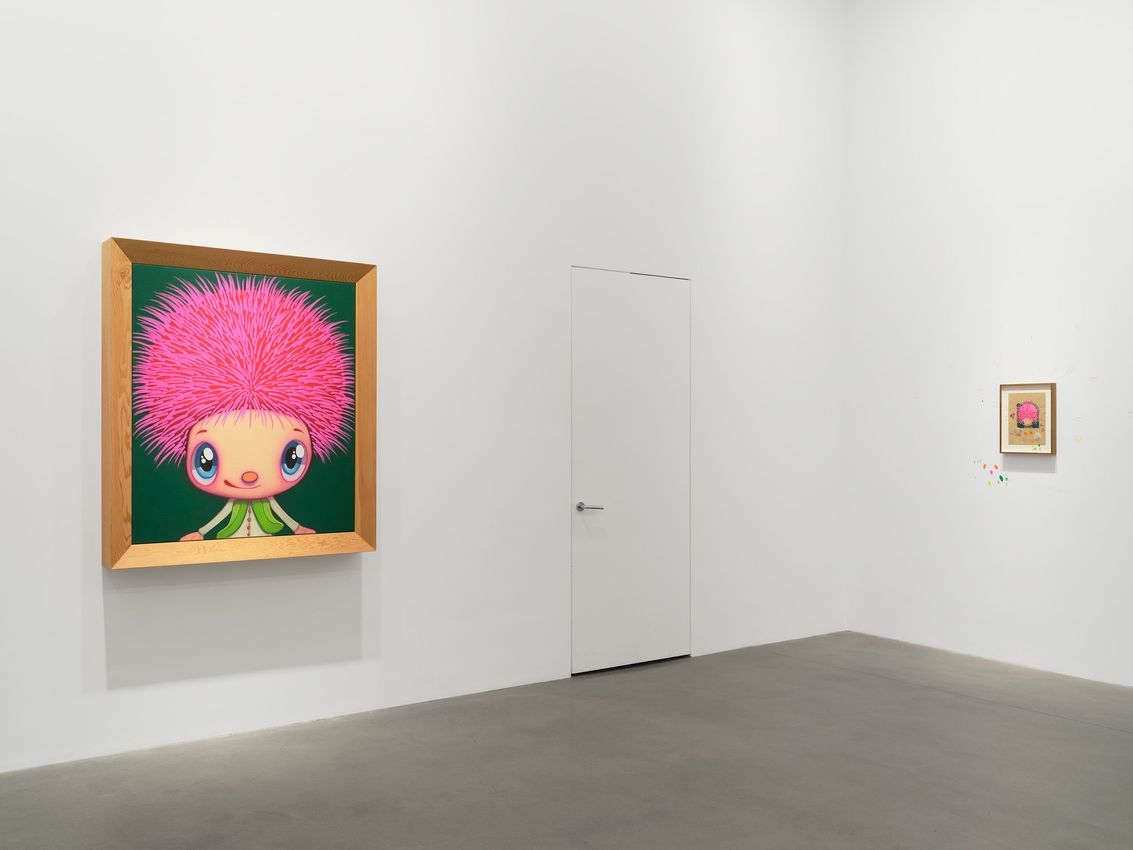
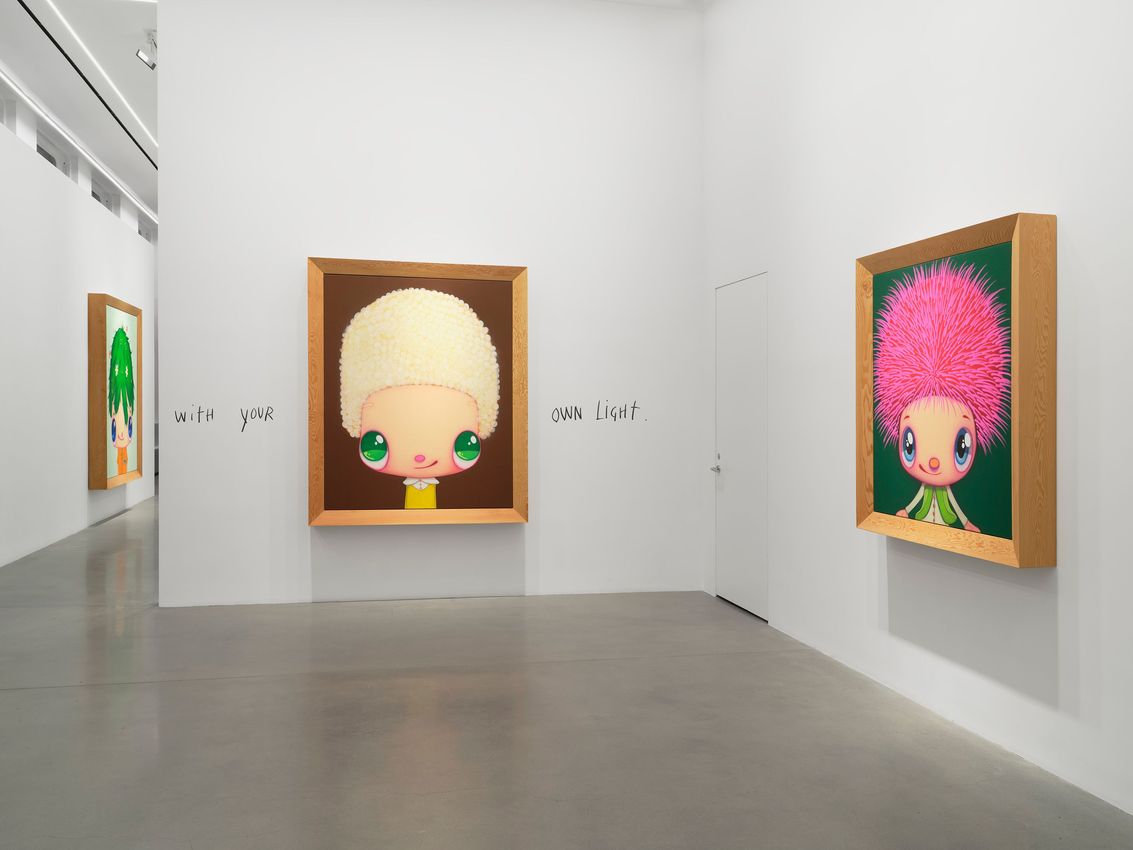
Depicting subjects, the conceptual offspring of the artist himself, Calleja’s figures demand attention. Characters stand before us with an enigmatic air; their narratives seemingly frozen yet filled with colourful clues that spill out across flat surfaces and often materialise as sculptural mayhem throughout the gallery. Adorned with phrases and accessories, the figures maintain bold expressions that are captivating, particularly enhanced in their bulbous eyes and wry smiles.
A majority of Calleja’s subjects deliver a variety of smiles. Displaying an air of gaiety, mystery, or mischief, the smile spans across the art history of paintings.Smiling subjects, once quite rare in art, are epitomised by the Mona Lisa and her ambiguously close-lipped smile. While Leonardo de Vinci’s Mona Lisa may not directly connect to Calleja’s studio practice, this masterpiece and Calleja’s multimedia oeuvre share a common thread: They cause an amusing relationship between the passive, inanimate artwork and the active, engaging viewer.
It is well established that Calleja has many art historical inspirations, but he often insists that there are too many to list. He favours the visual simplicities that carry complexities in practice and content. These inspirations travel across time and geographies, from the Superflat movement to the Surrealism of René Magritte to American icons such as Mark Rothko, Philip Guston, and Andy Warhol. Visual pleasure is found in this art. Consider and compare Warhol’sThirty are Better than One (1963), a large painting repeating the Mona Lisa, with Calleja’s own complex production. The multiplicity, repetition, scale, and use of popular culture act as a visual takeover. Both take on the “more is more” philosophy in life.
Associated with the aesthetics of Pop Art, Calleja’s work is equally informed by the visual language of vintage comic strips. While one might initially reference the illustrations of R. Crumb, Charles M. Schulz’s Peanuts, or Dennis the Menace, a more accurate connection to Calleja’s formative influences lies in the Spanish comic strip Rompetechos by Francisco Ibáñez. The titular character, Rompetechos, navigates a world marked by confusion, chaos, and humour—traits that captivate the audience while also providing a source of entertainment. Calleja masterfully mirrors this sensibility, using concise narratives within a visual framework, transforming the gallery space into a stage for slapstick and suspense. His practice, akin to a tableaux vivant, integrates various media, including wall treatments, sculptural elements, paintings, and works on paper. This multimedia approach not only engages the viewer but also introduces a playful distortion of scale, where the familiar dimensions of objects are subverted, amplifying their impact and altering their perceived significance.
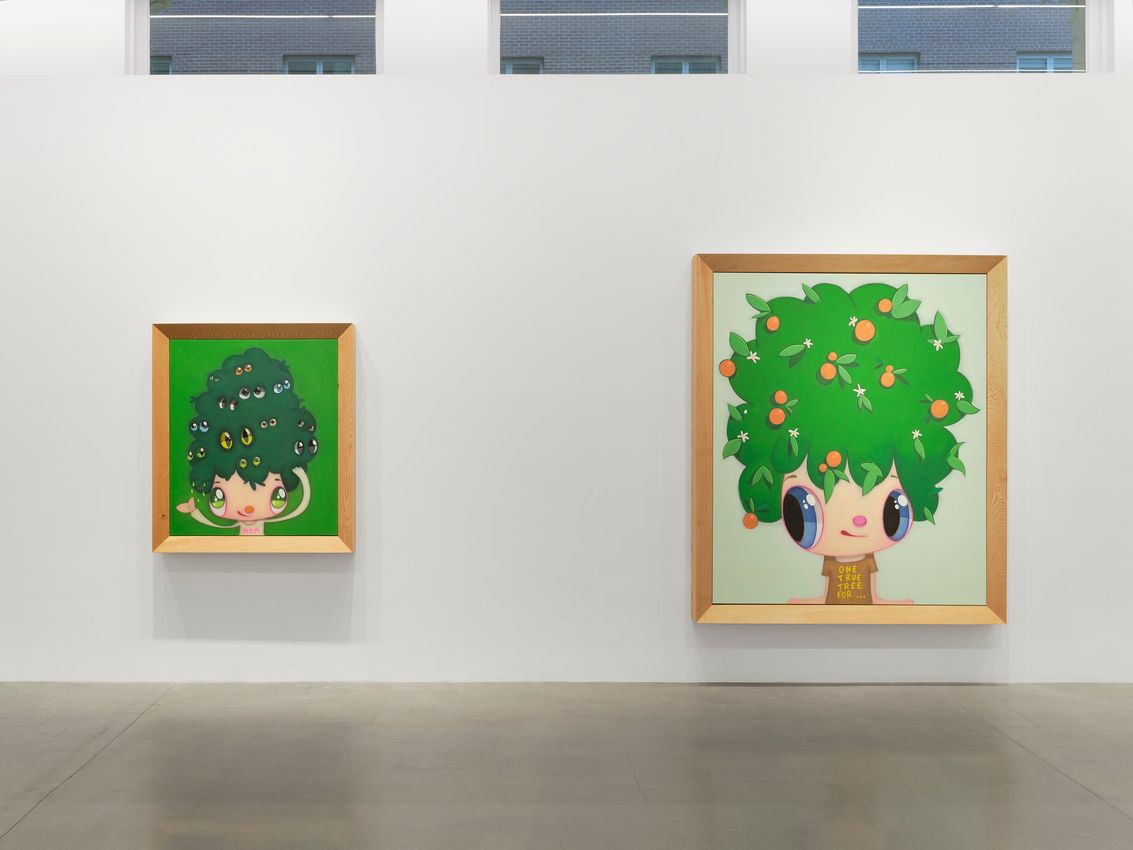
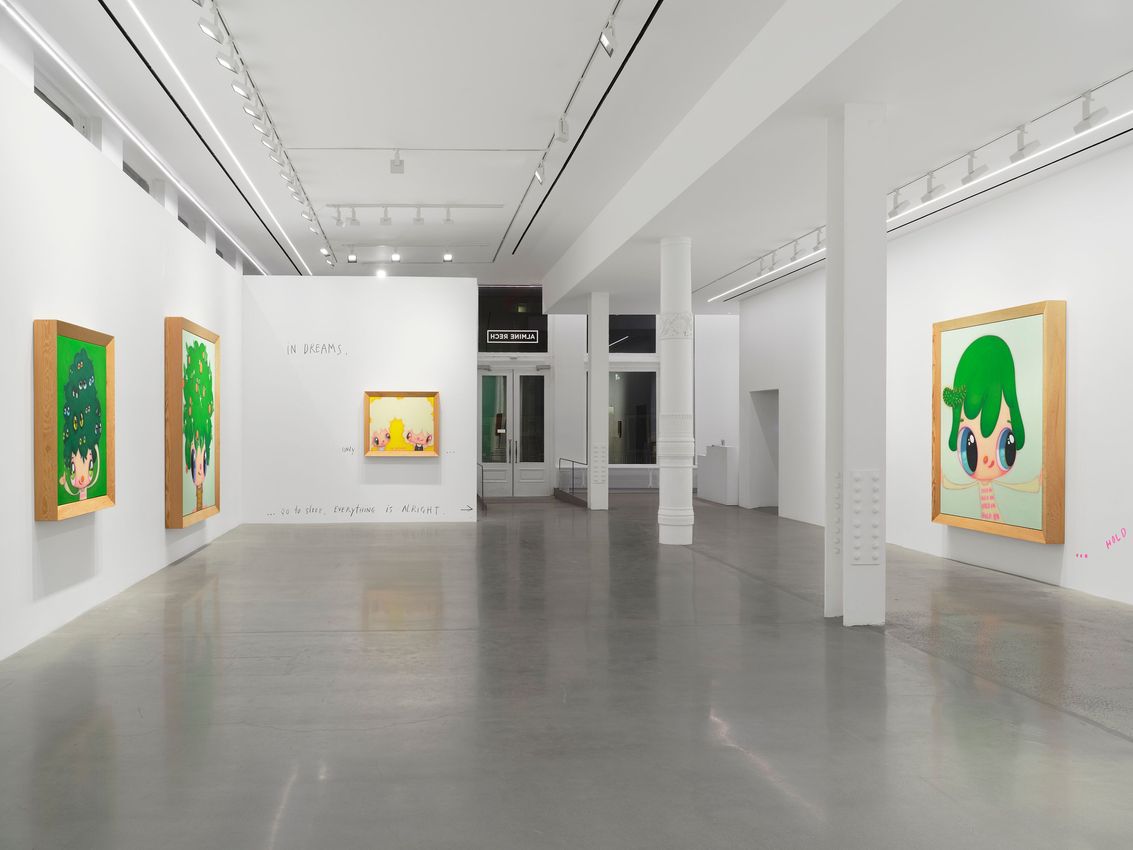
The forthcoming exhibition presents an exploration of Calleja’s characters intricately intertwined with nature. One portrait on canvas depicts a blue-eyed figure with bushy blue hair from which orange blossoms and citrus grow. The subject’s shirt displays an inscription reading, “One, true, tree, for...,” reflecting a linguistic play on numbers and the universality of the English language. This wordplay suggests a structured order, both naturally occurring and imposed by human systems. In a complementary portrait, the subject wears an orange jumpsuit labeled with “1980,” possibly signifying either a year or a classification structure. Daisies emerge from the figure’s green hair, evoking an earthy quality that contrasts with the uniform’s connotations of societal order.
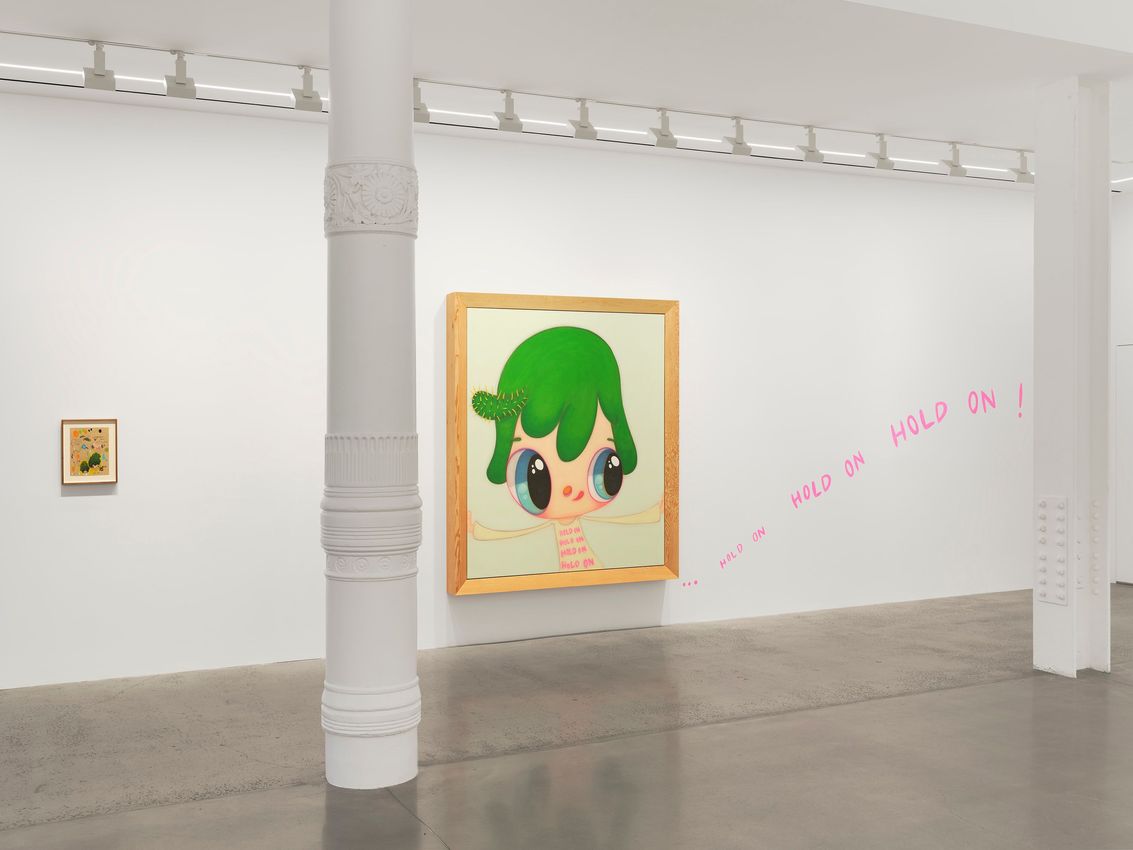
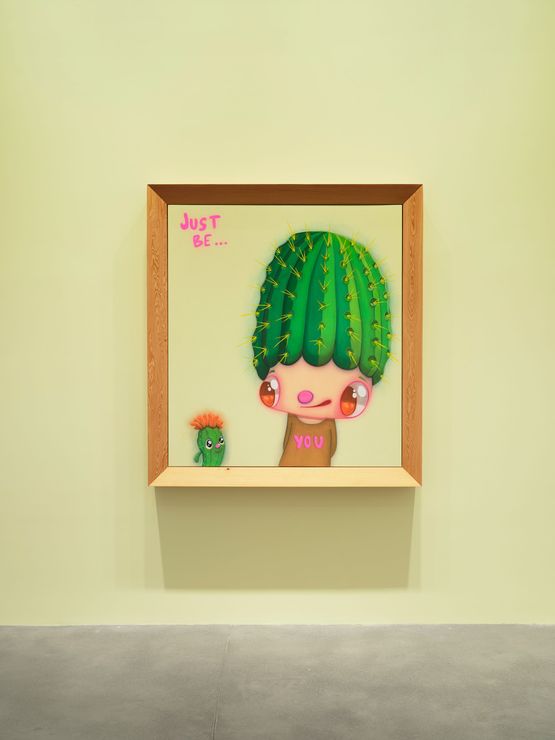
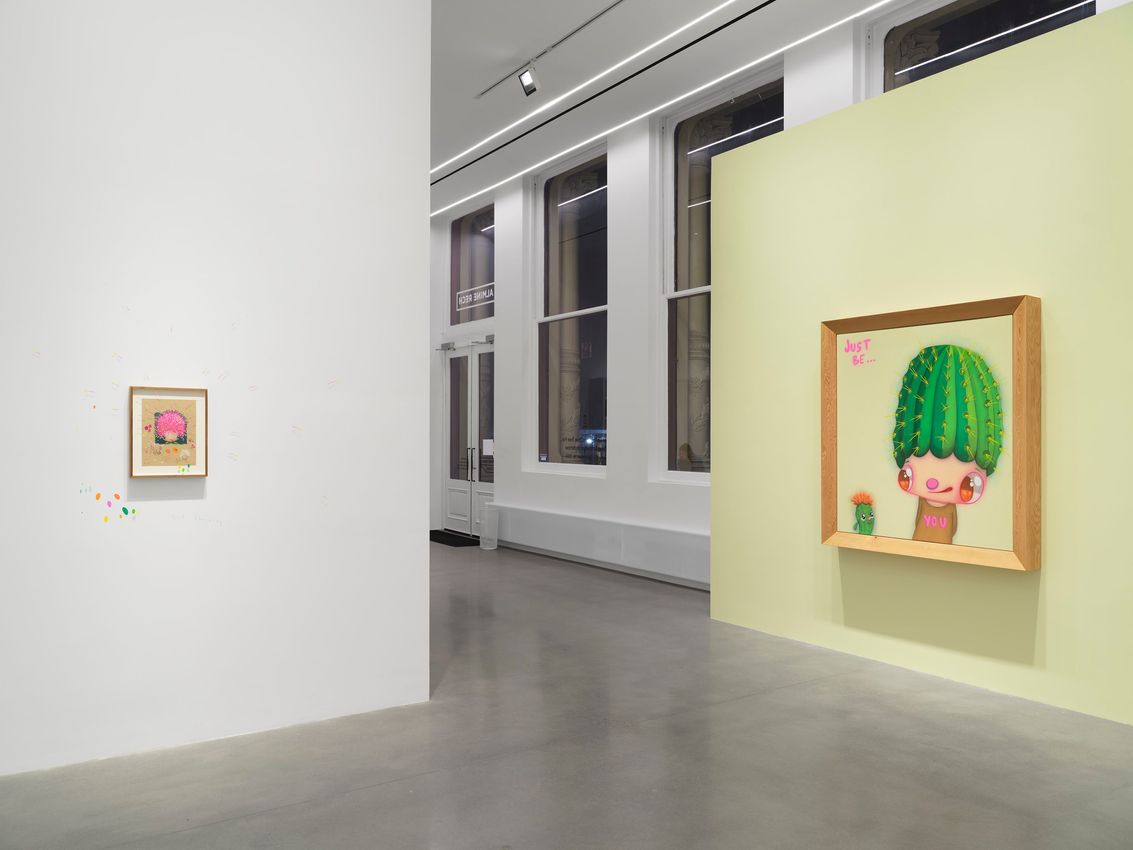
Another of Calleja’s figures has sweeping green hair that extends outward, with a cactus protruding from it, while the character’s blue watery eyes and subtle side smile imply a sense of distraction. Though the arms are extended toward the viewer, the gaze and smile are misaligned, seemingly drawn away from direct engagement. The accompanying text on their garment reads, “Hold on, hold on, hold on, hold on,” with the final words falling off the edge of the canvas as if contradicting the phrase entirely. This portrait, like the others, creates a stark dichotomy between the structured aspects of social identity and the uncontrollable elements of human experience in the natural world.
The grouping of works, over a year in development, signals a thematic return to nature. The personification of natural elements has deep roots in art history, tracing back millennia and spanning multiple cultures, as exemplified by Botticelli’s allegorical Primavera. The sprouting greenery, blossoms, and fruit suggest the arrival of a new season, and metaphorically, a new phase in the artist’s creative evolution.
— José Carlos Diaz, Deputy Director for Art at The Seattle Art Museum
Javier Calleja was born in 1971 in Malaga where he lives and works nowadays.
A respected voice in contemporary art discourse.
Focusing on ambitious storytelling and insightful art-world commentary. Ocula Magazine publishes in-depth interviews, critical essays and timely analysis on the artists, exhibitions and ideas driving the global art world.
Learn more about Ocula Magazine
Showcasing the best of the art world.
Ocula partners with galleries from around the world to highlight their artists, artworks and exhibitions. Gallery membership is by application and invitation, with each member vetted by an independent panel.
Learn more about Ocula Membership

Specialises in the sale of major artworks.
Led by a team with deep ties to the world’s leading auction houses, galleries and collectors. Ocula’s advisory team offers bespoke services to high-net-worth clients from around the world who are looking to acquire the best of contemporary and modern art.
Learn more about our team and services