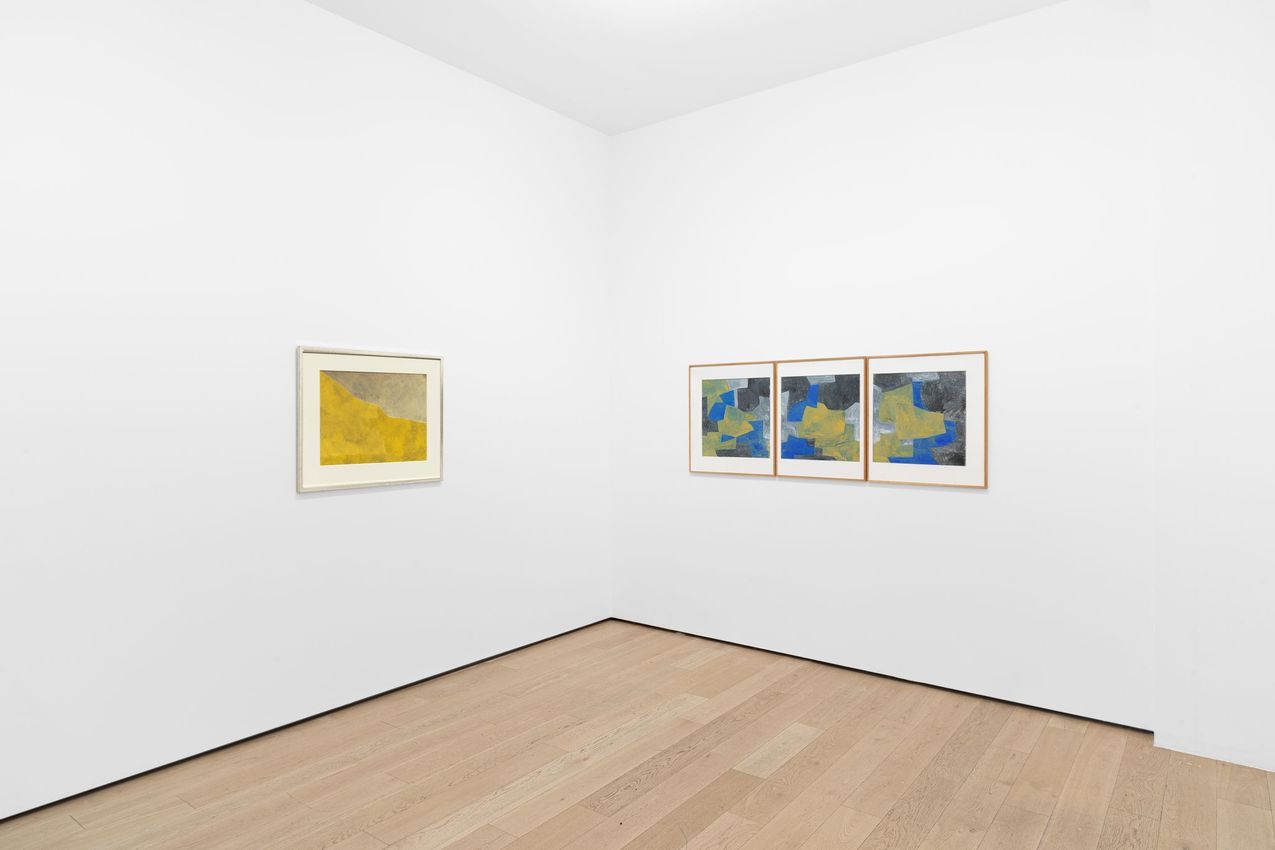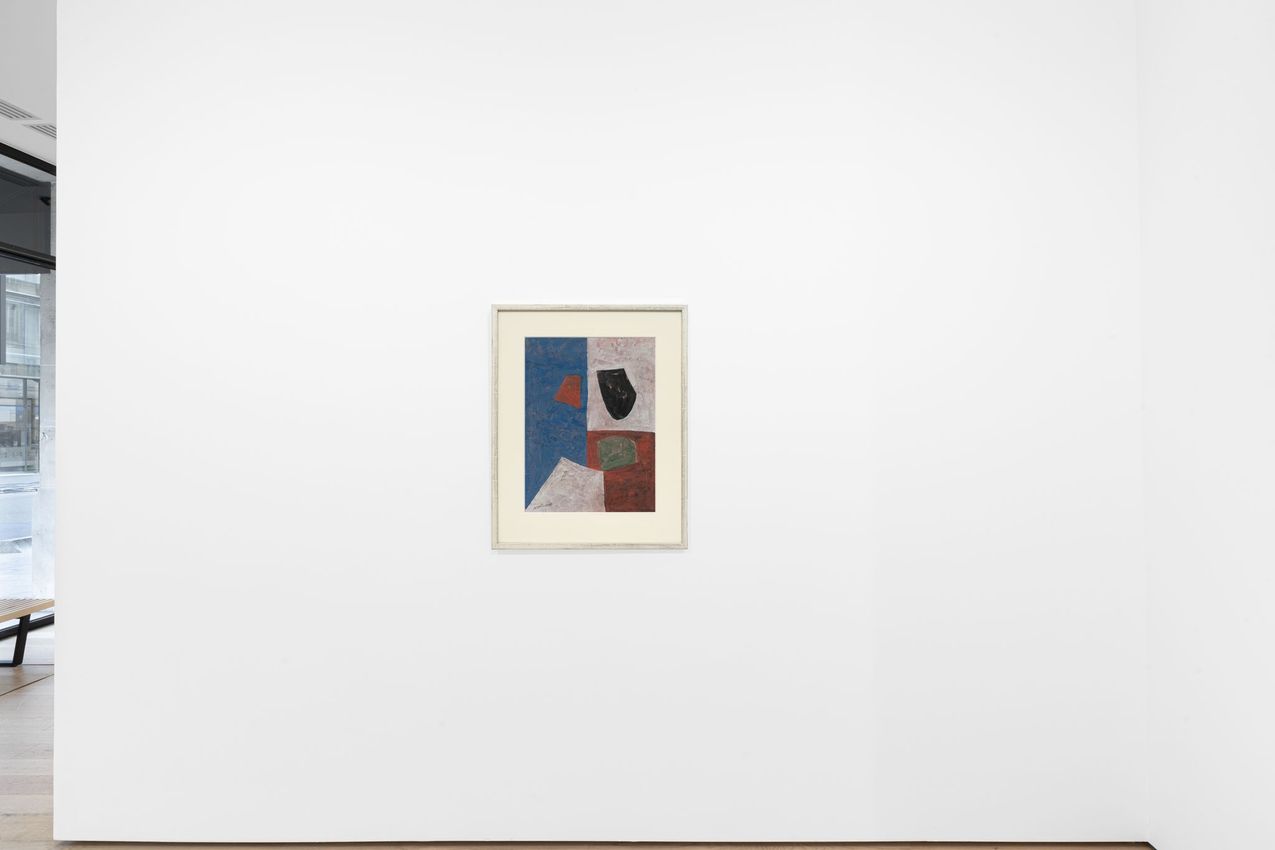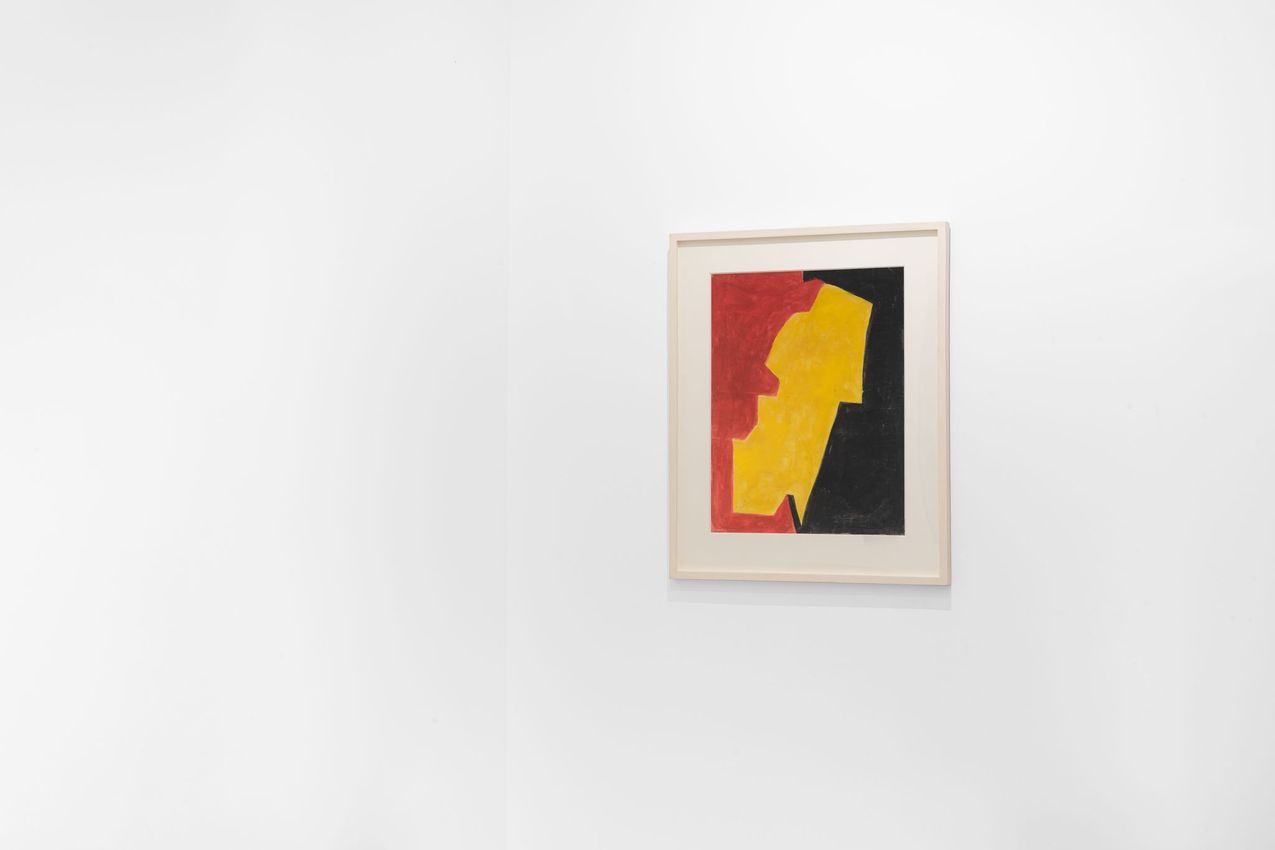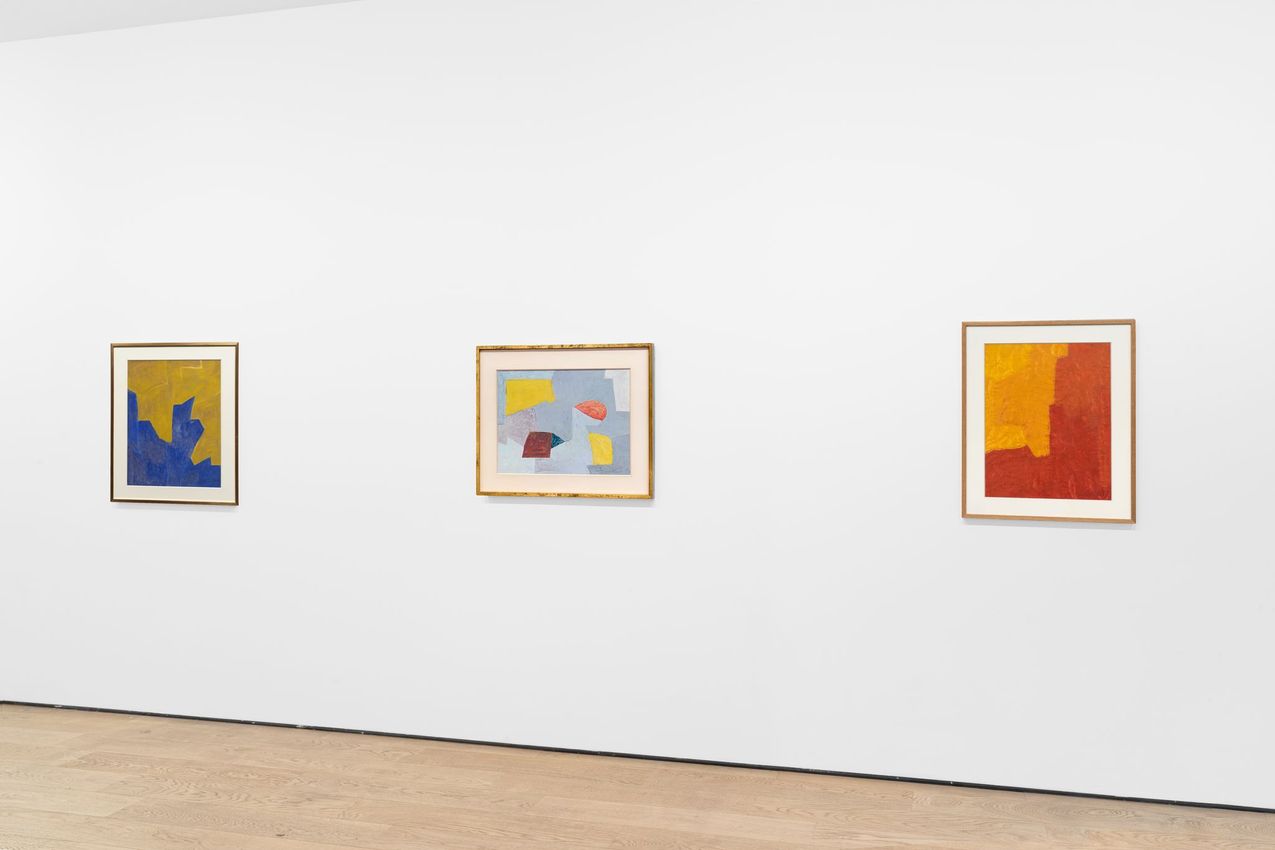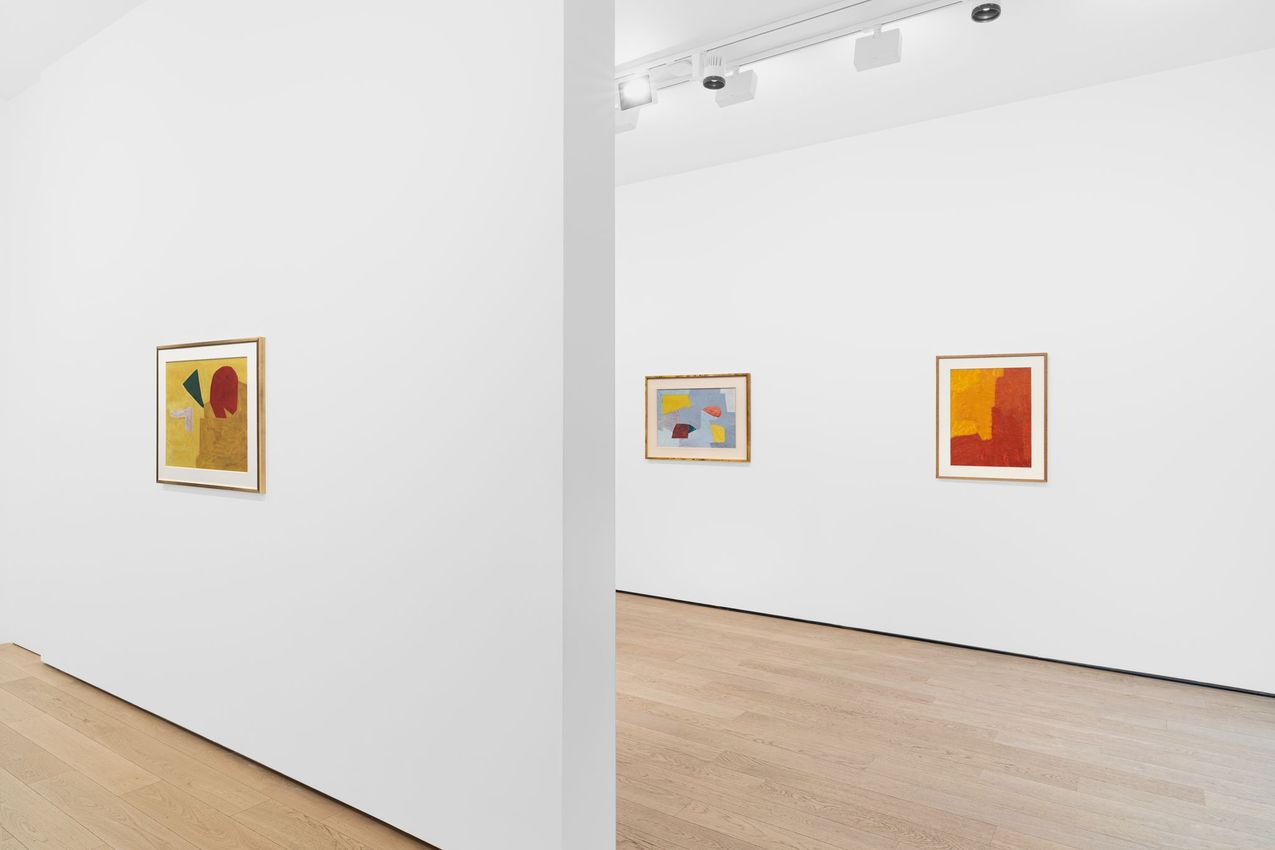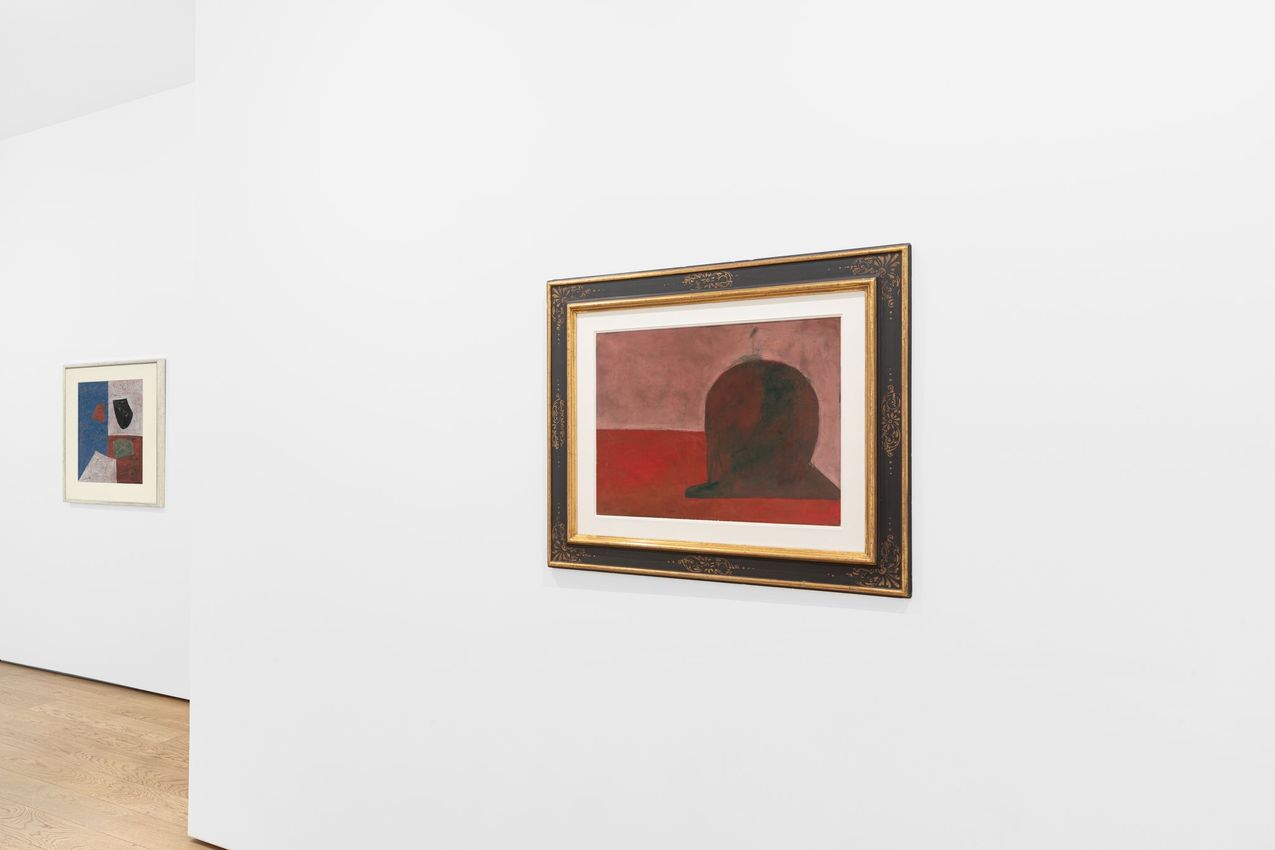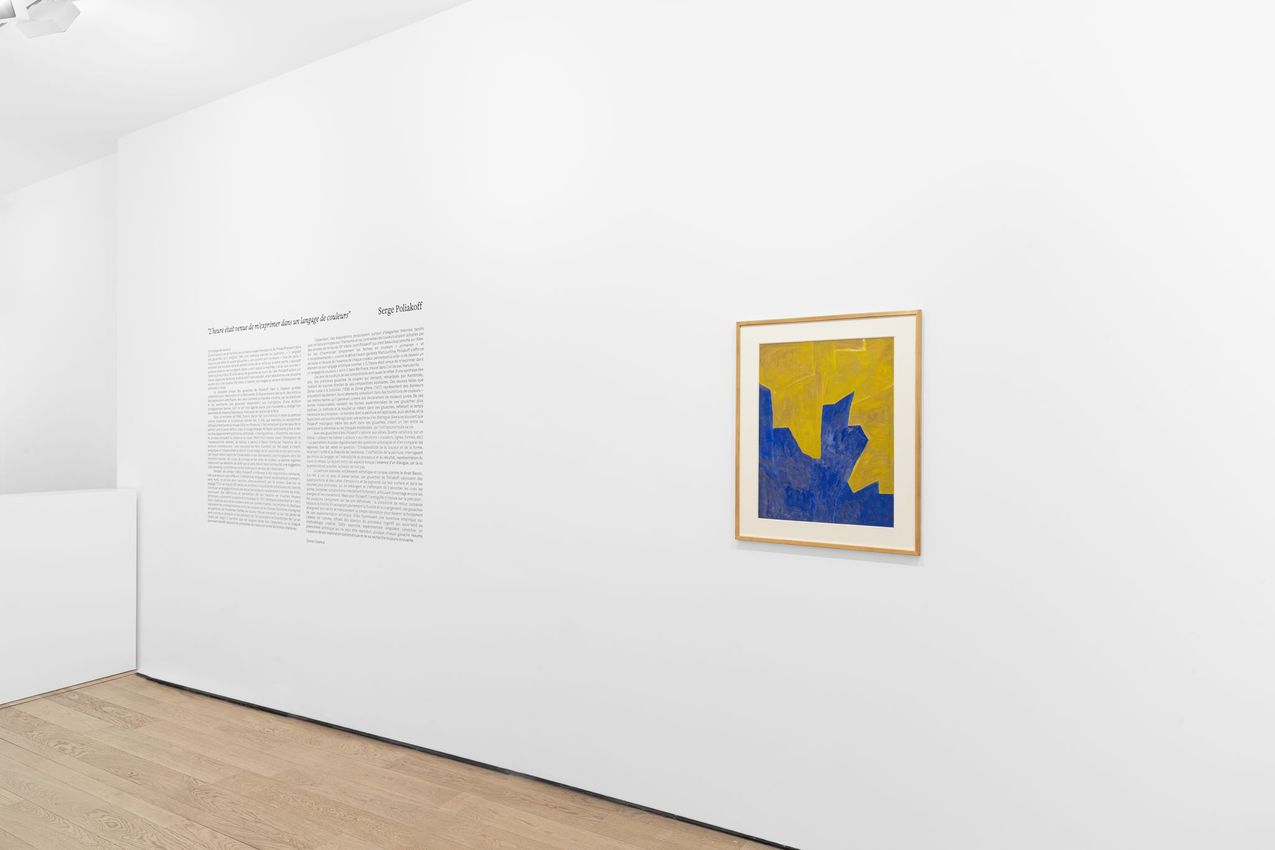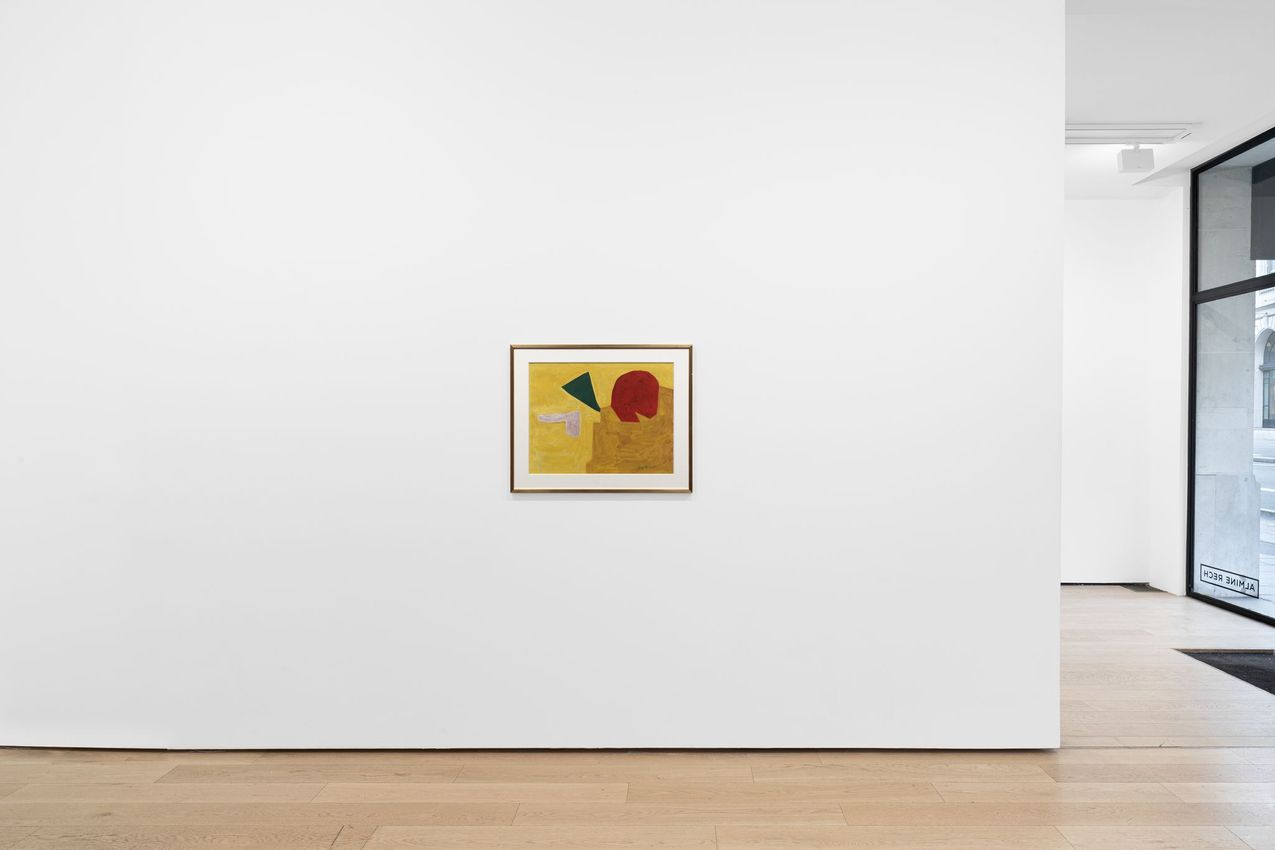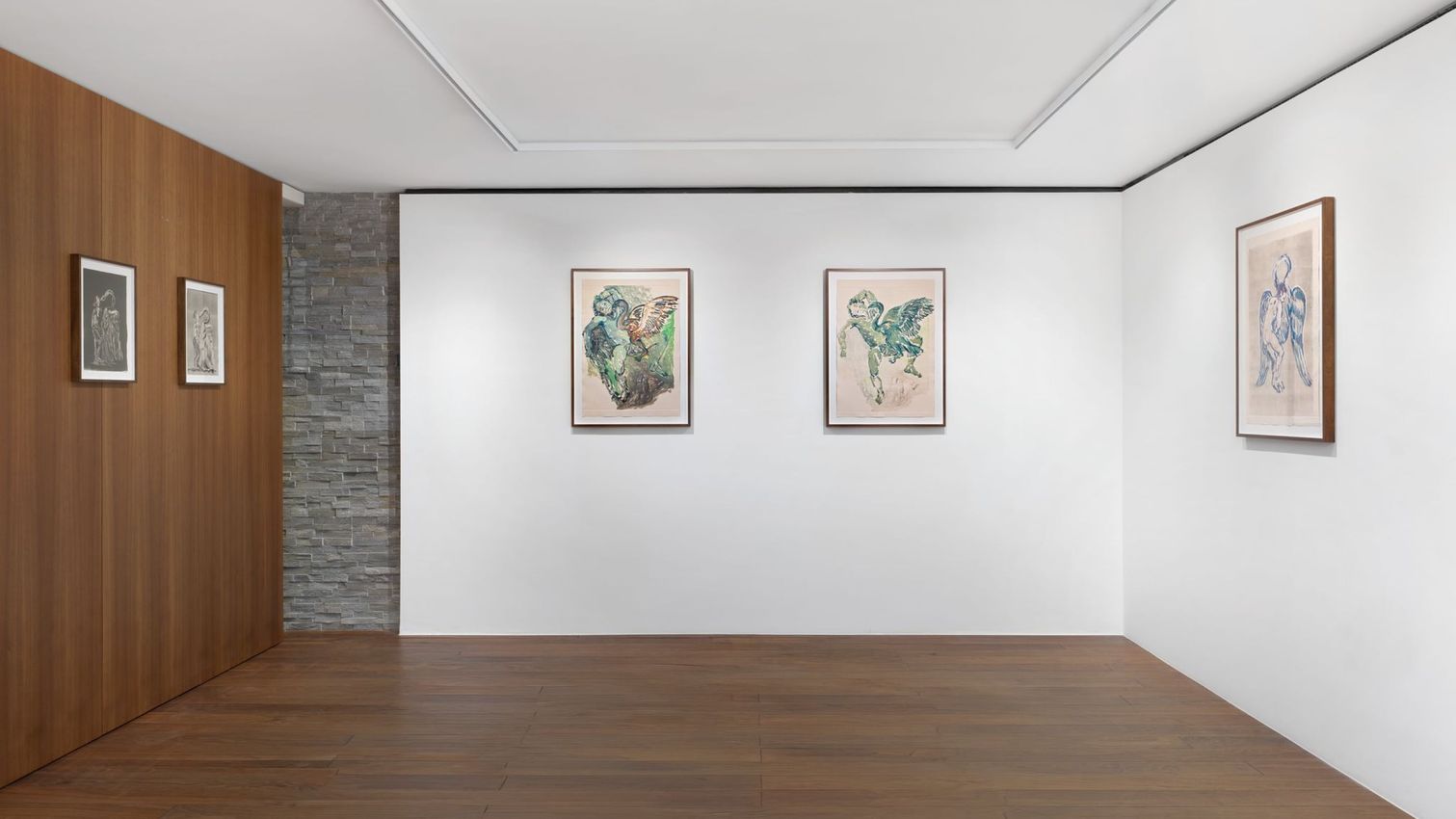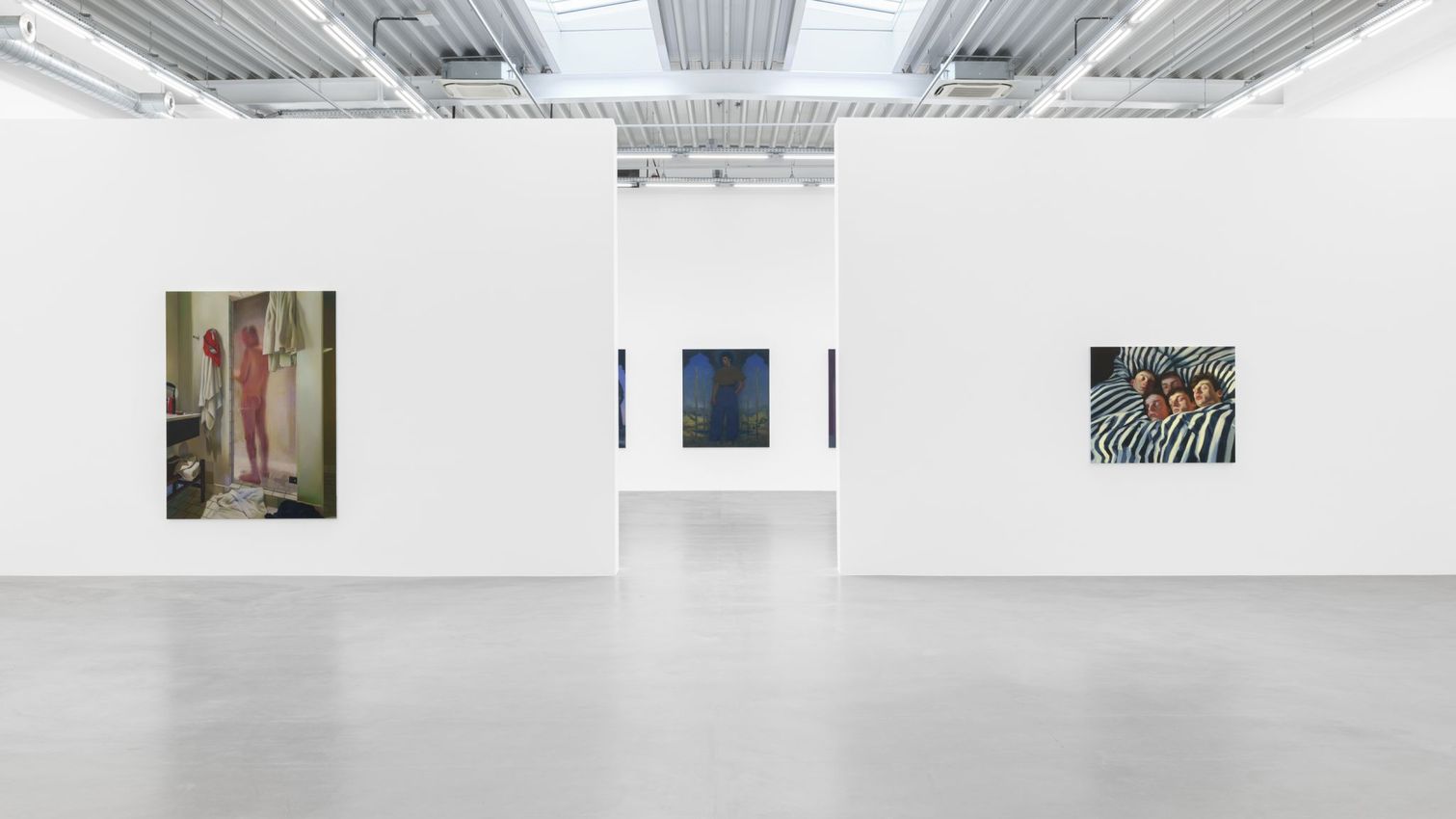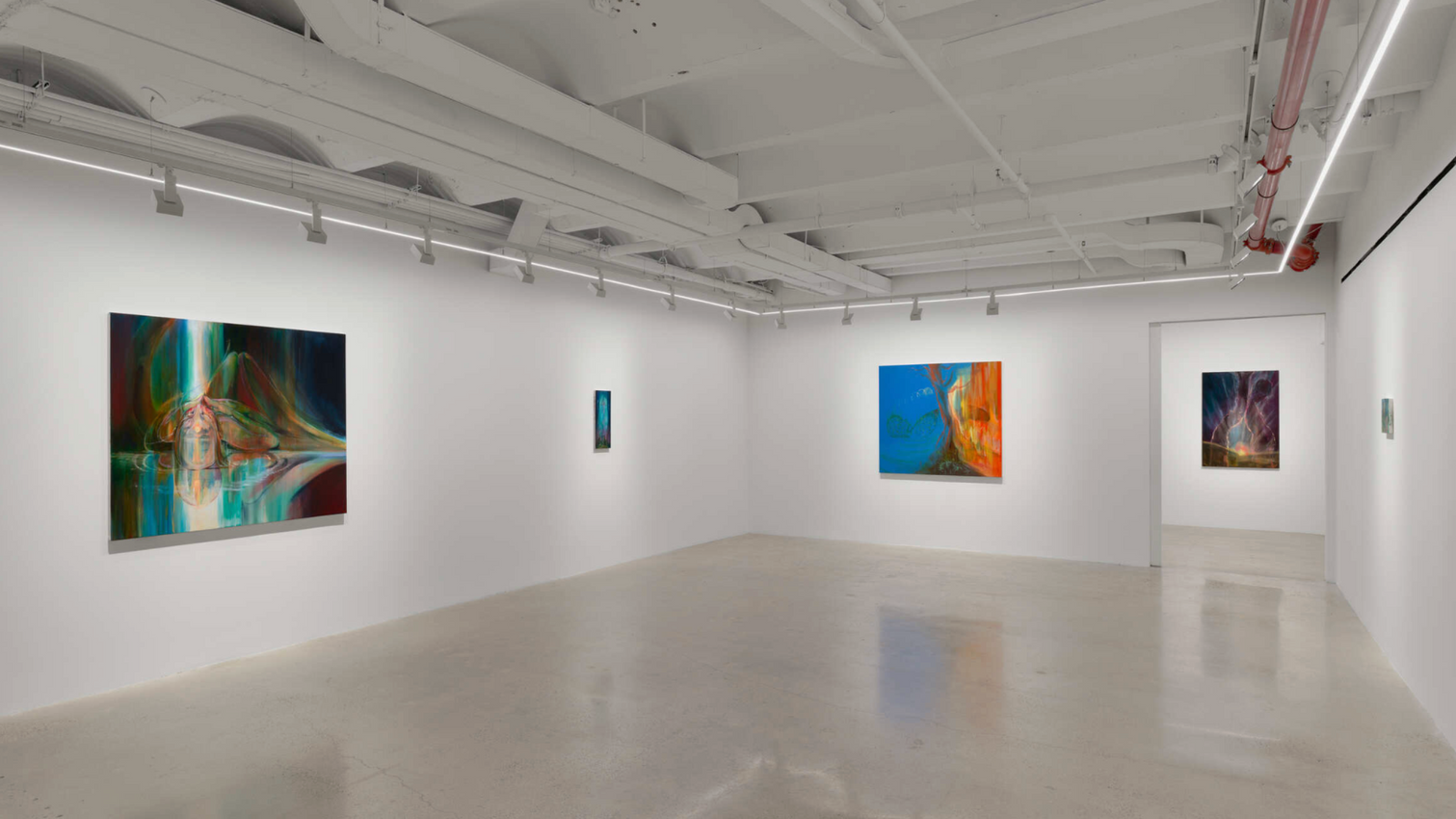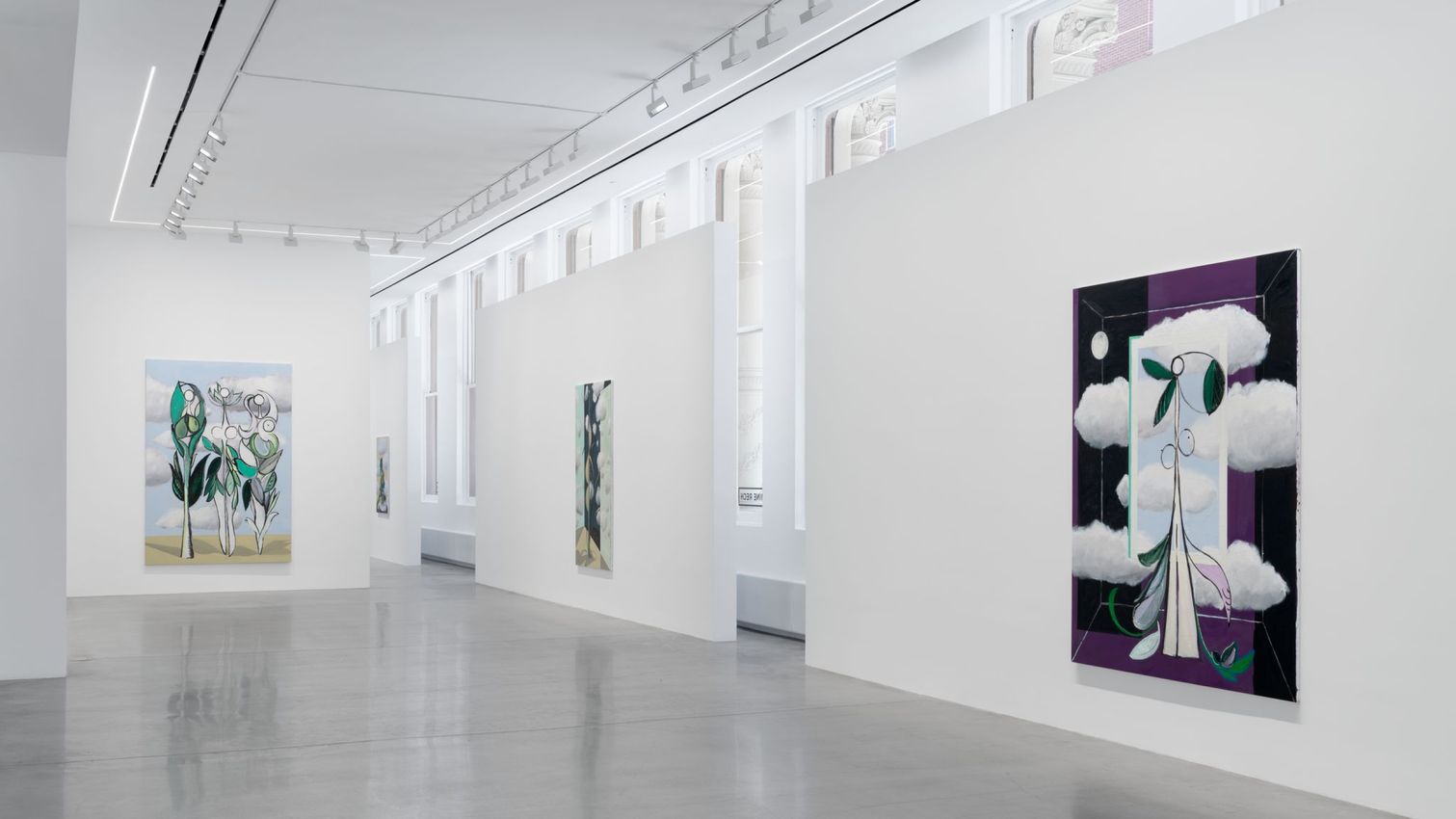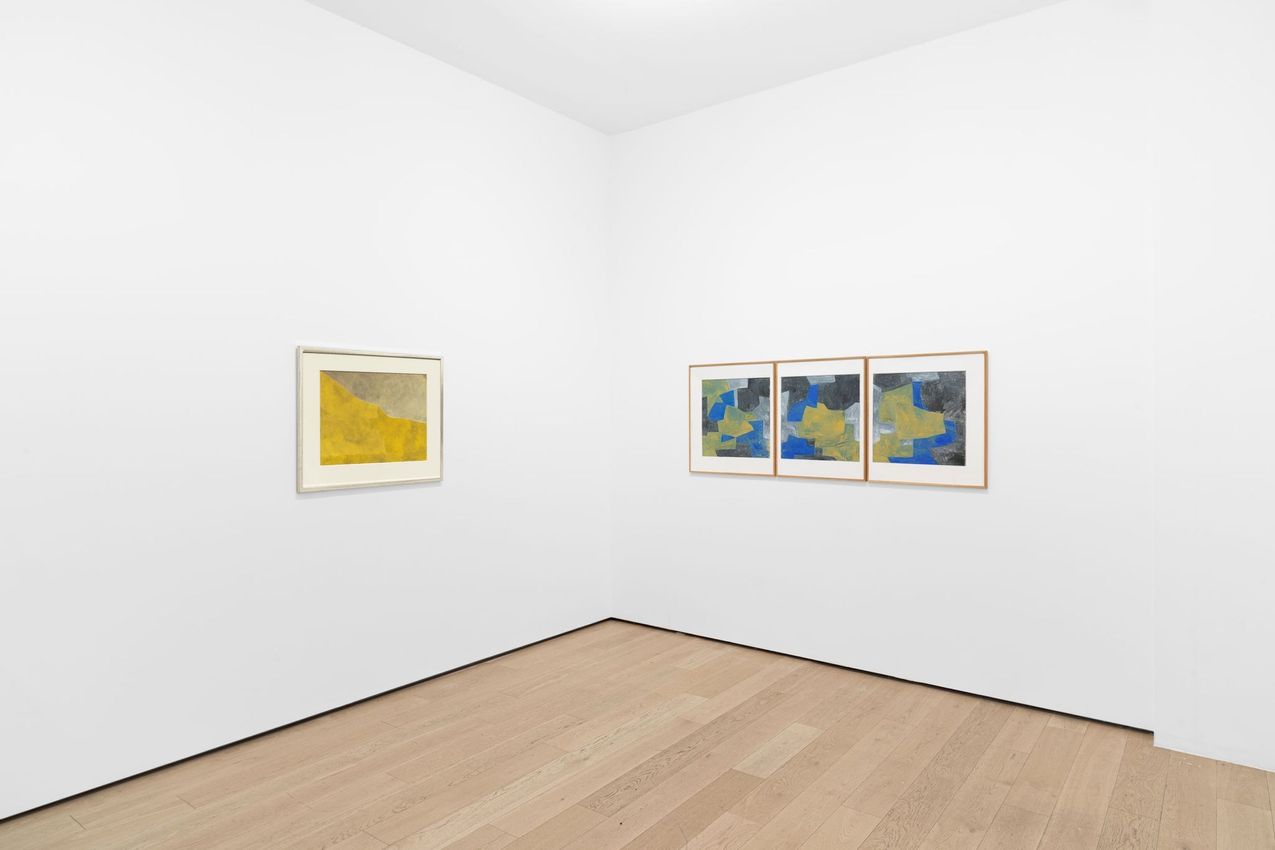
Almine Rech Paris, Matignon is pleased to present ‘Les étés de Poliakoff’, Serge Poliakoff’s second solo exhibition with the gallery, on view from January 11 to March 1, 2025.
‘L’heure était venue de m’exprimer dans un langage de couleurs’— Serge Poliakoff
Throughout his life, Poliakoff’s true experiments were in his gouaches, which he painted in the summer as part of a daily practice. “He always painted a series of four gouaches,” his son Alexis recalls. “Every morning, he began a new series, revisiting those drying from previous days, making additions or corrections. After spending his mornings on this, he would head to the races.” This routine yielded 30–40 series of gouaches over the summer. Poliakoff reviewed his work, signing one sheet from the series he found fulfilling, selecting a dozen or so as inspirational motifs. Back in the studio, these served as the foundation for new oil paintings.
The uniqueness of Poliakoff’s gouaches lies in their space for exploration and discovery. While they suggest distinct sounds, words, or phrases, their meanings are grasped intuitively, through emotions and feelings. The gouaches resemble inscriptions from a lost pictographic script, whose key is misplaced because humanity has changed not only its means of expression but its reasons for doing so.
In a 1966 interview, Francis Bacon distinguished between painting as illustration and painting as fact. As an example, he cited a Self-Portrait attributed to Rembrandt in the museum at Aix-en-Provence. He observed that the eyes in the portrait were scarcely defined, yet the face emerges compellingly through seemingly arbitrary, abstract, ‘non-representational’ marks. These marks, when combined, evoke the presence of the subject. Painted three centuries before the birth of abstract expressionism, this work allowed Bacon to articulate the essence of contemporary painting: a transition from illustrative storytelling that engages the analytical mind to the direct, emotional impact of an inherently abstract and non-rational image. This impact drives the viewer’s brain to see psychologies in mere dots, strokes, and patches of colour. The painter skillfully organises these elements so that the intended meaning surfaces as a subconscious suggestion, fleetingly completed by the viewer’s mind.
During the 1960s, Poliakoff was engaged in similar explorations, though in a somewhat different sense. He mused on the formal language, pondering how, devoid of words, an artist narrates silently through colours. What is this language? Throughout the 20th century, many artistic movements endeavoured to formulate a universal language in which colours “speak” as words do, providing definitions and enabling translation into other art forms, notably poetry and music. In 1871, Rimbaud sought “heavenly meanings” in sounds and colours with his poem Voyelles. Bauhaus artists explored correspondences between colours and shapes. Scriabin infused the score of Prometheus, with colour effects. Hesse conceived The Glass Bead Game as a domain where elements of art could magically transform into one another. It appeared that languages like Esperanto or Volapük might soon resolve the translation issues between literary forms.
Yet, these explorations yielded mostly elegant theories while some principles of colour harmony and counterpoint were adopted by mid-20th-century artists including Poliakoff, who carefully studied Klee. Rather than just harmonise forms in “primary” and “complementary” colours, as defined by the avant-gardist Matyushin, Poliakoff endeavoured to listen to the essence of each colour, allowing it to become an element of his primary artistic language. “The time had come for me to express myself in a language of colours,” he penned in Prayer found in one of his manuscripts.
The interplay of colours in his compositions also reflects a synthesis of the arts. His early gouaches of dancing couples, noted by Kandinsky, reveal direct sources of his abstract compositions. Works like Russian Dance to the Balalaika (1936) and Gypsy Dance (1937) depict dancers whirling rapidly, their garments swirling in vortices of colour—the very patches he perceived as pure statements of colour. From these inseparable patches emerged the experimental forms of his later gouaches. The method and outcome are intertwined in these gouaches, reflecting the time involved—how paint was applied, dried, and how one layer interacted with or stood apart from another. Alexis recalls that Poliakoff even mixed egg into his gouaches, linking their technique to tempera or medieval frescoes, which captivated him throughout life.
In his summer gouaches, Poliakoff embraced seriality. Four variations on a motif—using the same “actors” or “emotions” (colours, lines, shapes etc.)—allowed him to consistently pose artistic questions and compare answers. His art queried: the inseparability of colour and form, embodying unity and diversity of the existence; the ineffability of painting, challenging language’s limits; the indivisibility of process and result, embodying time’s flow. Their interplay evokes a dialogue’s essence—where proximity is possible, fusion is not.
Abstract painting, entirely aesthetic and lyrical, as Bacon might say, bears here no resemblance to leisurely pastimes. Poliakoff’s gouaches capture overlays and struggles of emulsions and pigments on their surfaces and deeper layers, mixed and striving to absorb one another. Some compositions resonate powerfully, articulating energies and interactions more fully. Yet for Poliakoff, ambiguity prevailed over precision; hints outweighed definitive laws; the possibility of return always surpassed the finality. In embracing fluidity and change, these gouaches reach their zenith, transcending mere decoration to become the core of his artistic experiment. They provide an empirical window into the artist’s studio, offering insights into the cognitive processes underpinning his creative methodology. This singular experimental approach constitutes a non-reproducible artistic phenomenon, since each gouache encapsulates the essence of his systematic exploration and always innovative inquiry.
— Dr. Dimitri Ozerkov, art historian and former curator of Hermitage Museum of Saint Petersburg


Serge Poliakoff (Moscow, January 8, 1900–October 12, 1969) was a Russian-born French modernist painter belonging to the ‘New’ École de Paris (Tachisme).


Almine Rech opened its doors on April 1st, 1997 in the 13th arrondissement in Paris. The gallery was founded on an axis of California Minimal, Perceptual art and Conceptual art, representing artists such as James Turrell, John McCracken and Joseph Kosuth.

A respected voice in contemporary art discourse.
Focusing on ambitious storytelling and insightful art-world commentary. Ocula Magazine publishes in-depth interviews, critical essays and timely analysis on the artists, exhibitions and ideas driving the global art world.
Learn more about Ocula Magazine
Showcasing the best of the art world.
Ocula partners with galleries from around the world to highlight their artists, artworks and exhibitions. Gallery membership is by application and invitation, with each member vetted by an independent panel.
Learn more about Ocula Membership

Specialises in the sale of major artworks.
Led by a team with deep ties to the world’s leading auction houses, galleries and collectors. Ocula’s advisory team offers bespoke services to high-net-worth clients from around the world who are looking to acquire the best of contemporary and modern art.
Learn more about our team and services