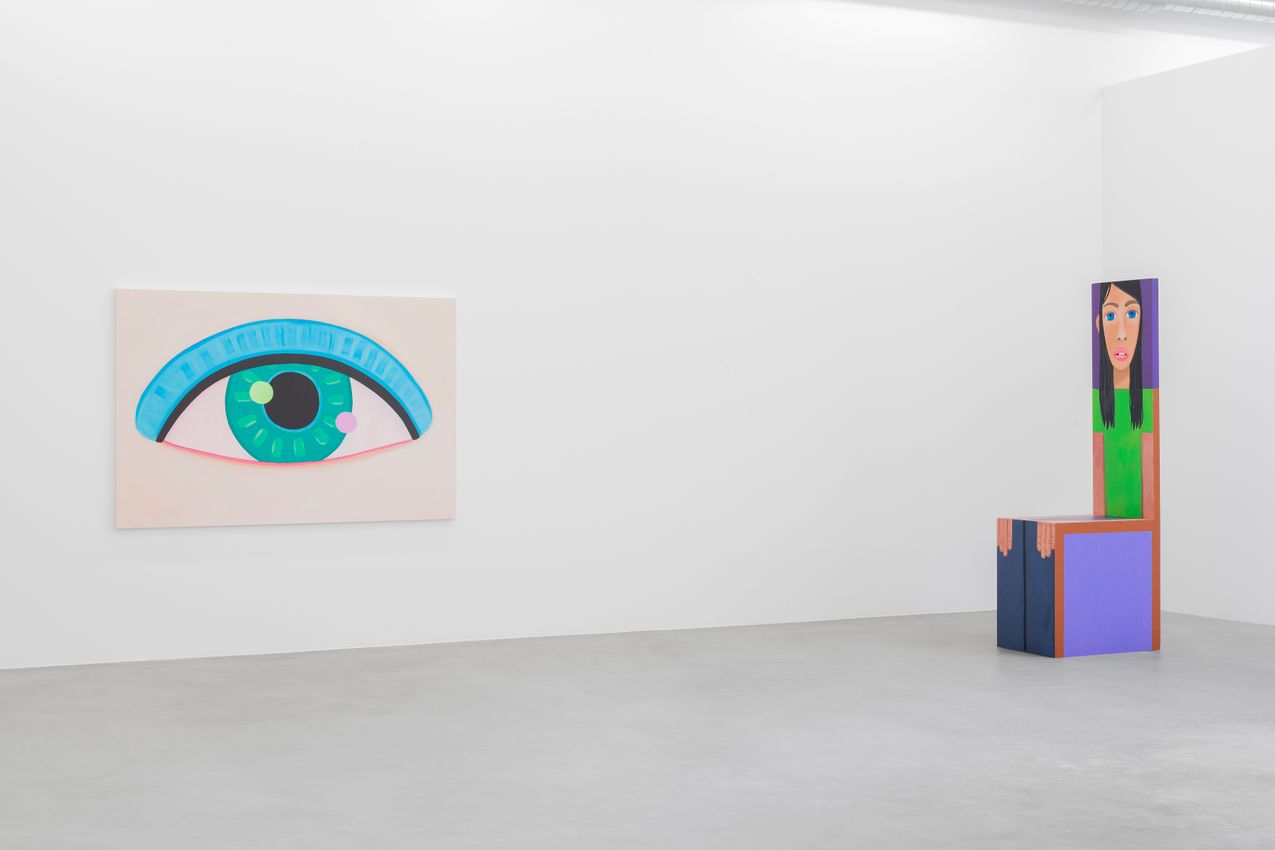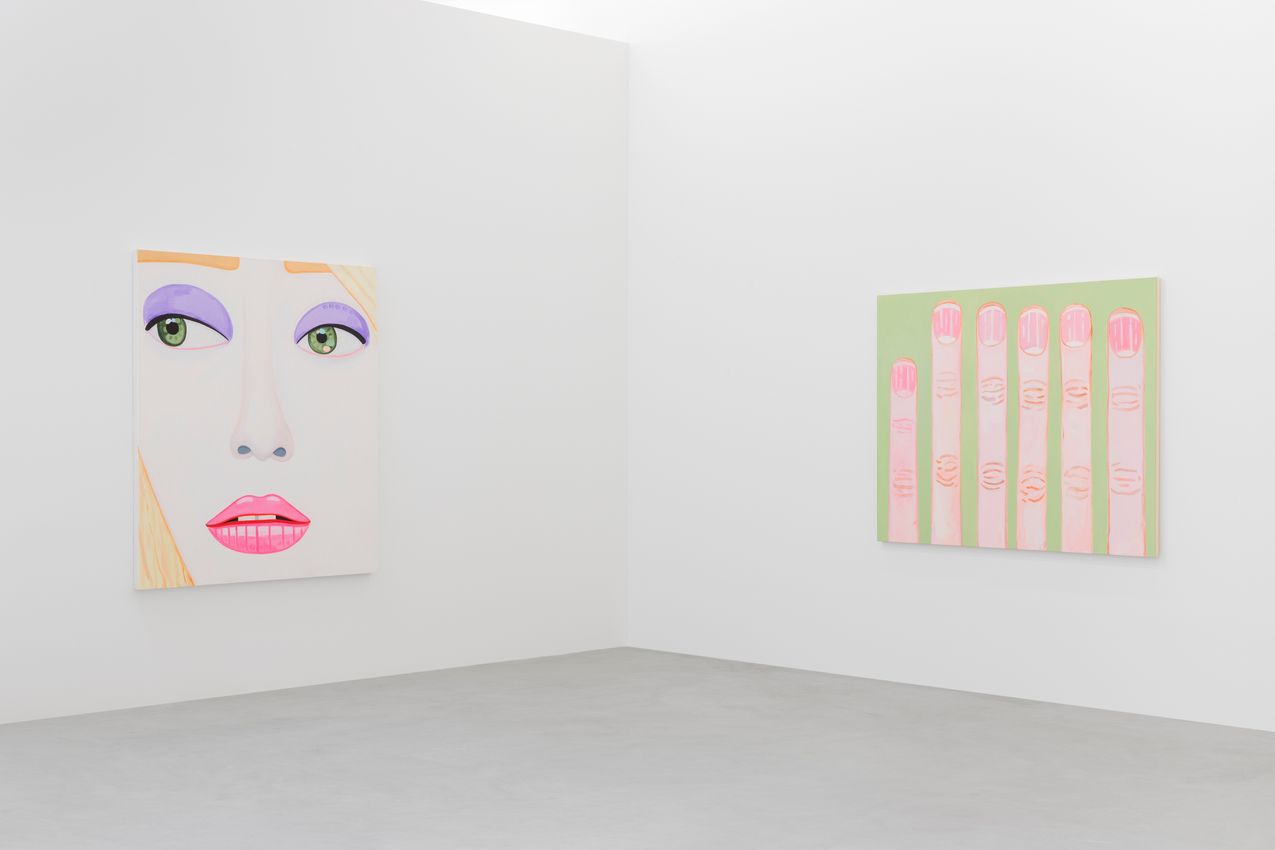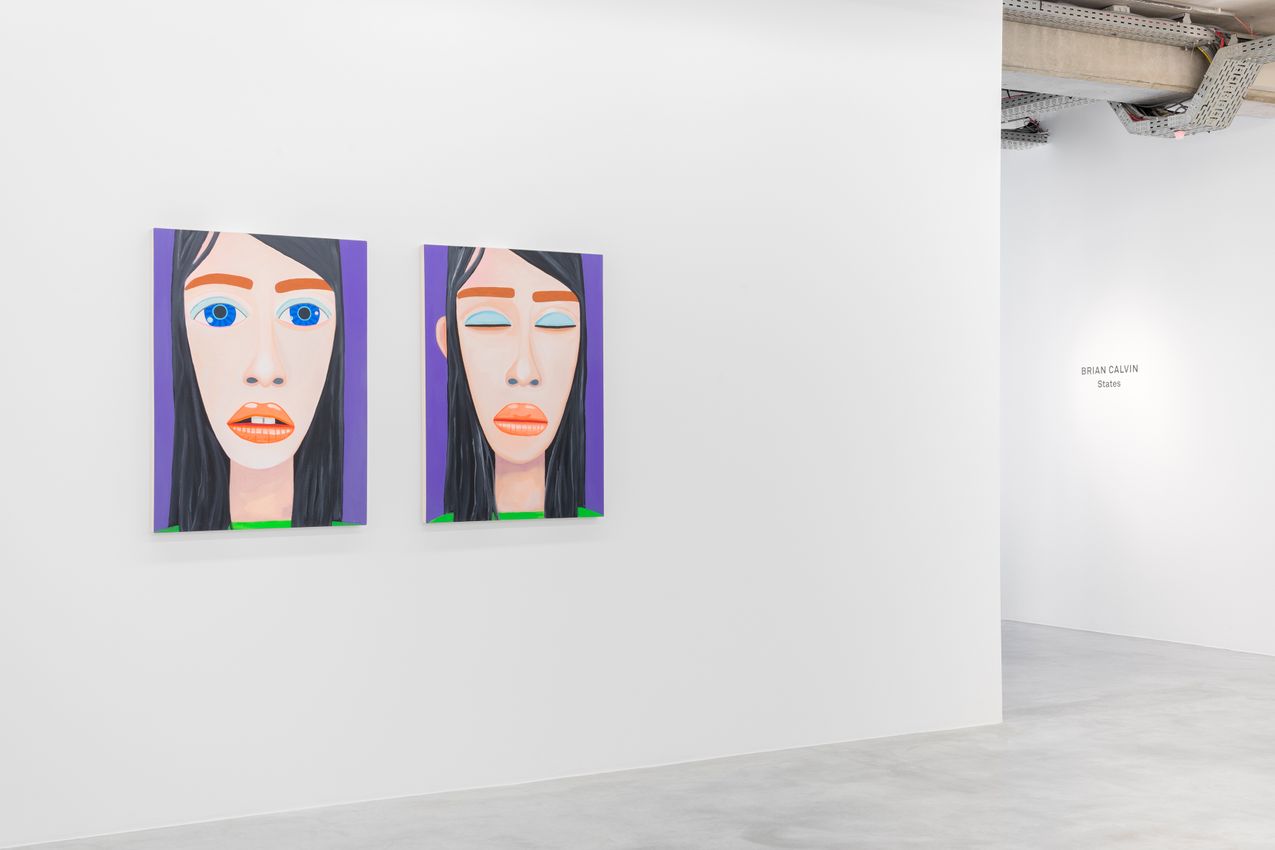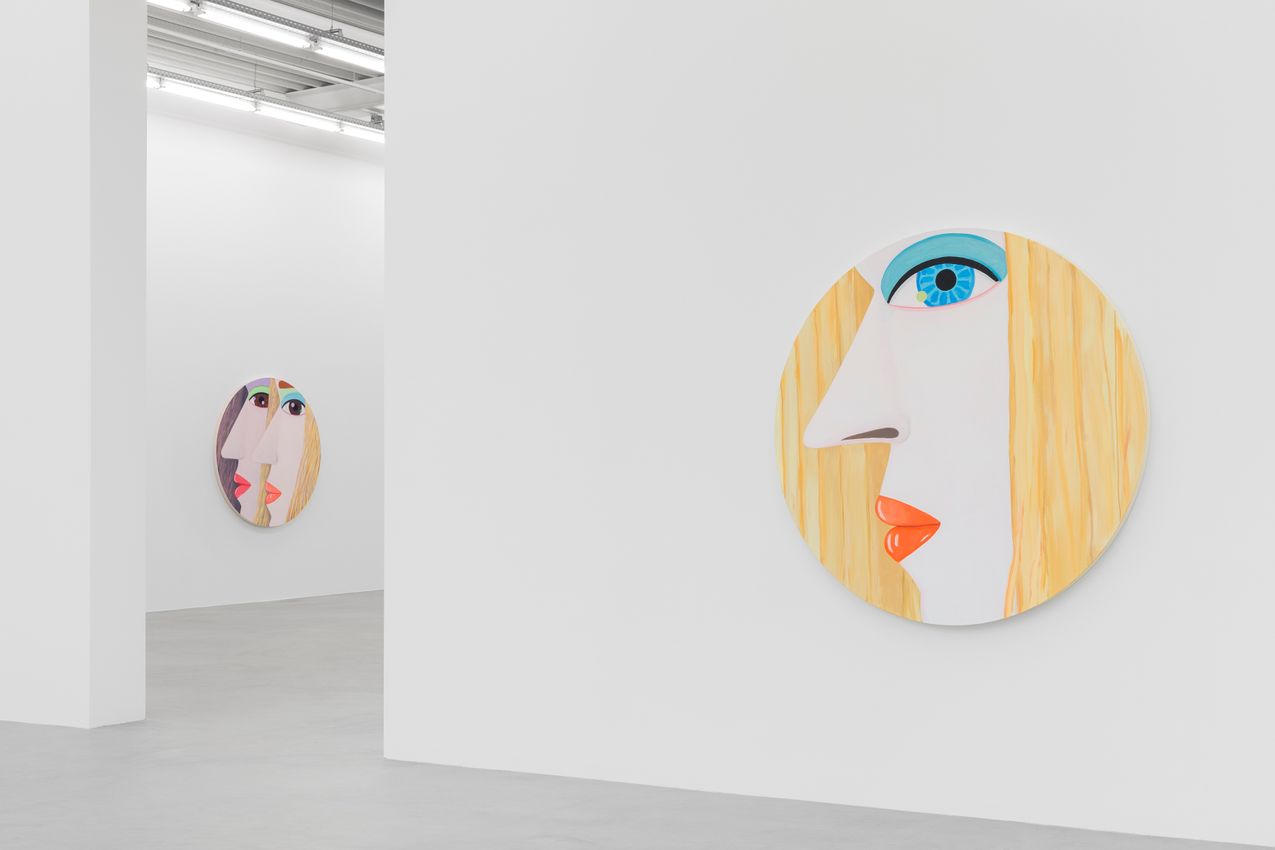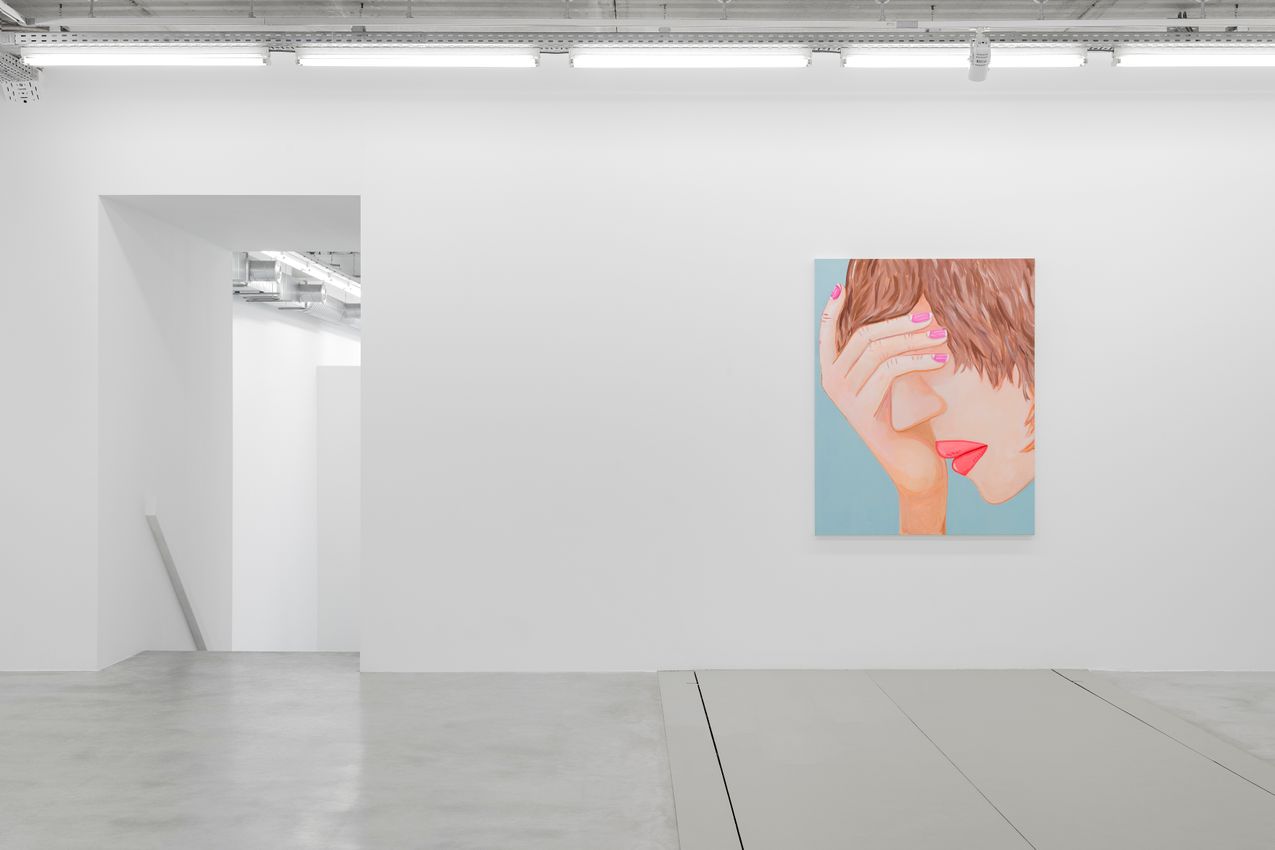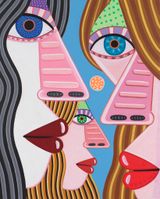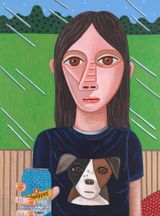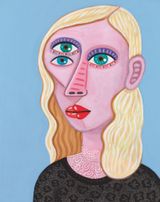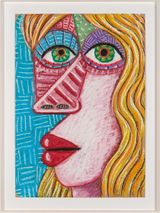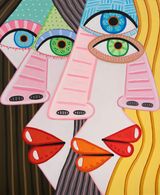
In his book Take a Closer Look (On n’y voit rien) the art historian Daniel Arasse invites interlocutors to scrutinise paintings by Titian, Tintoretto, Velázquez and Bruegel in order to discover certain details that initially went unnoticed. When taking a first glance at Brian Calvin’s work one might think the complete opposite: everything is visible.
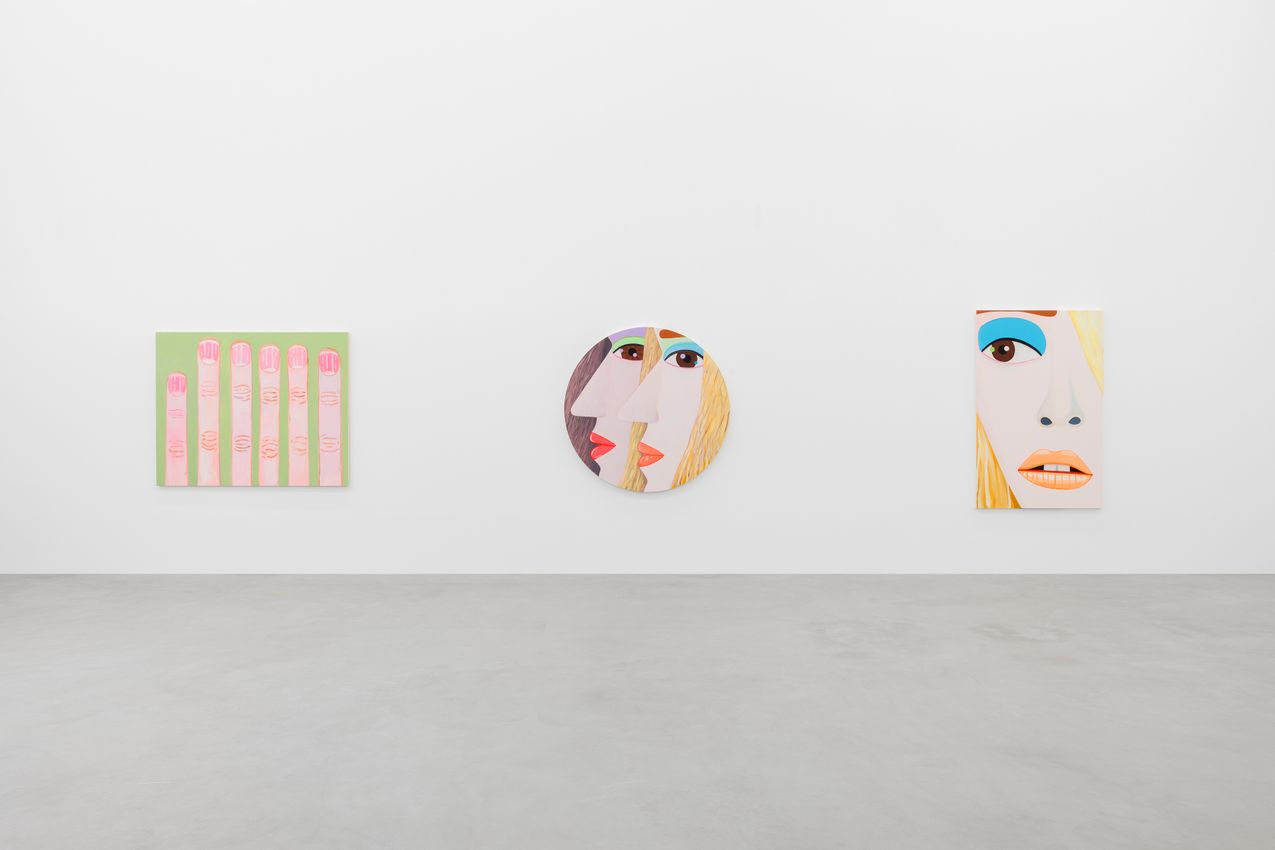
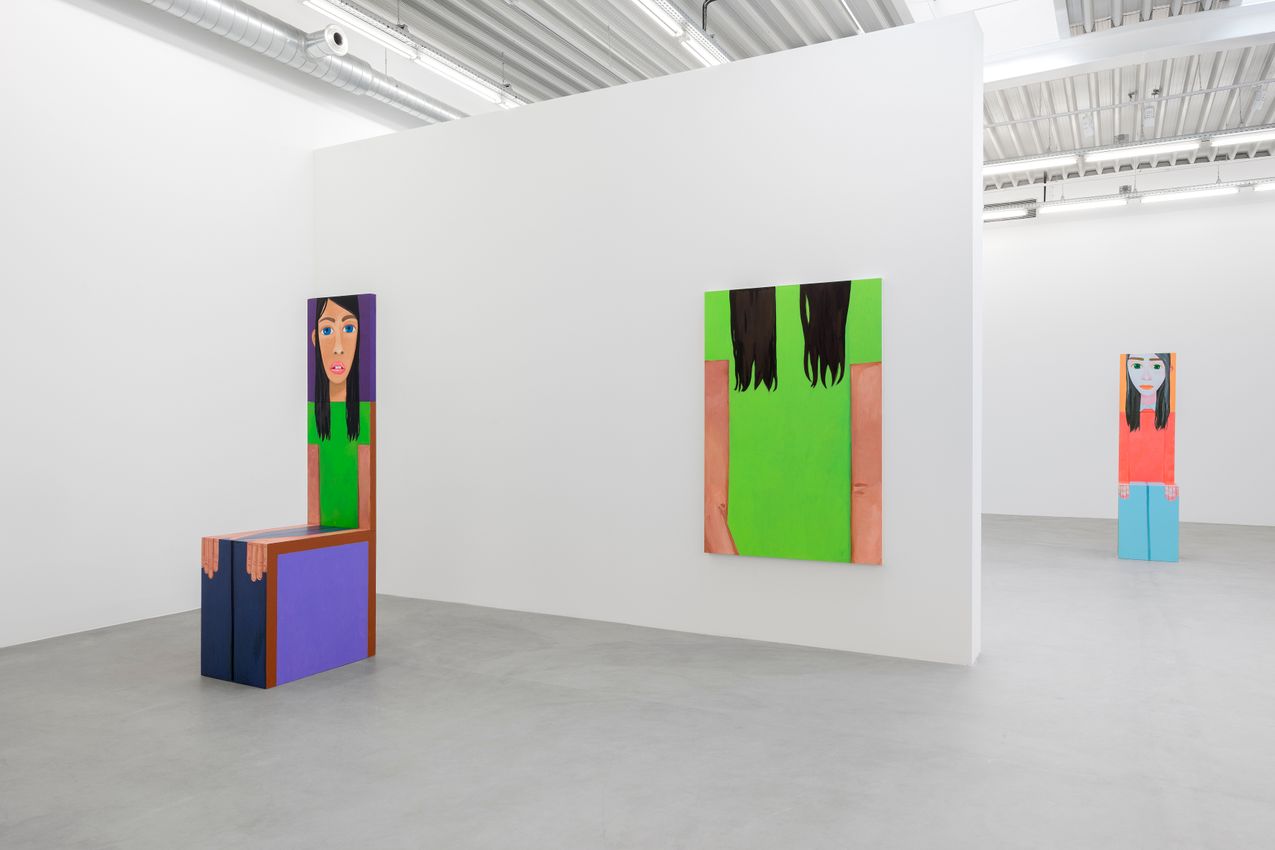
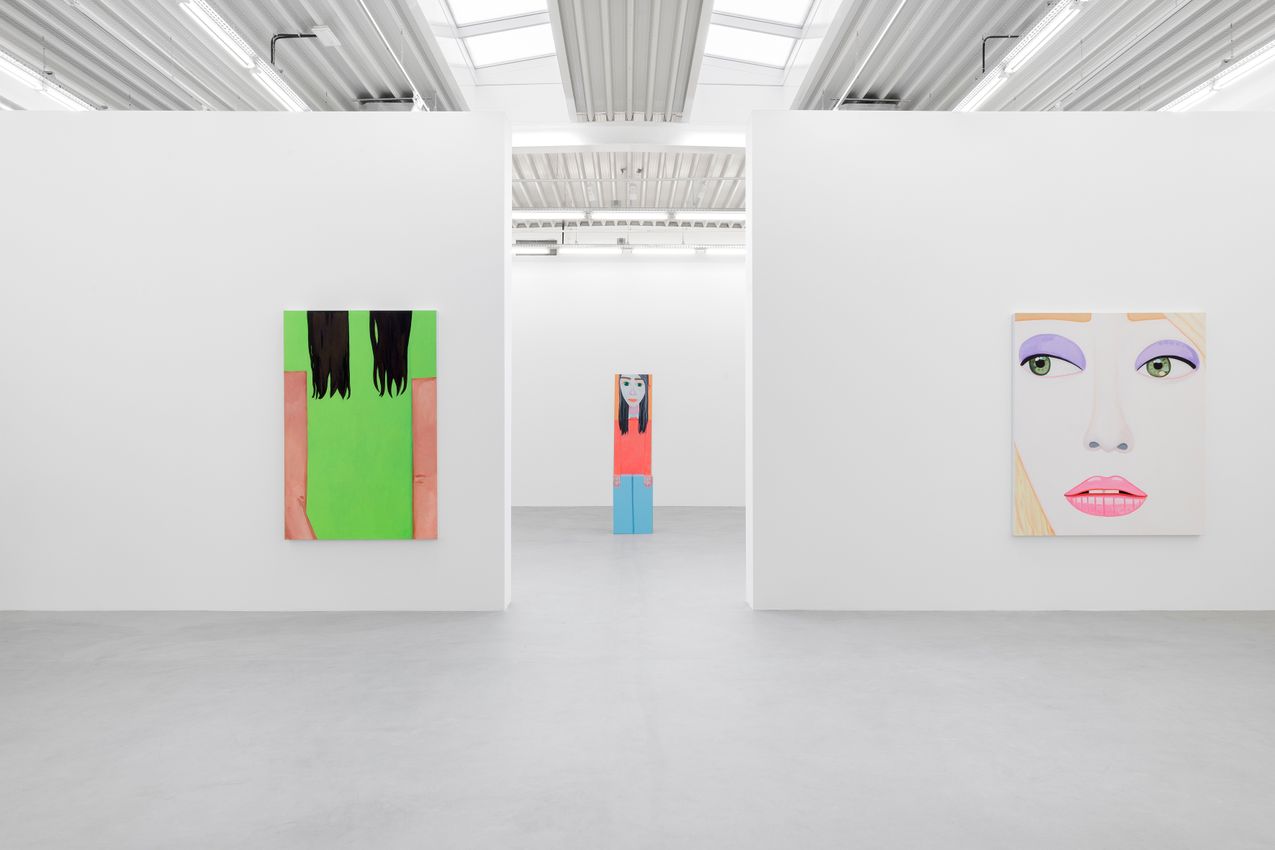
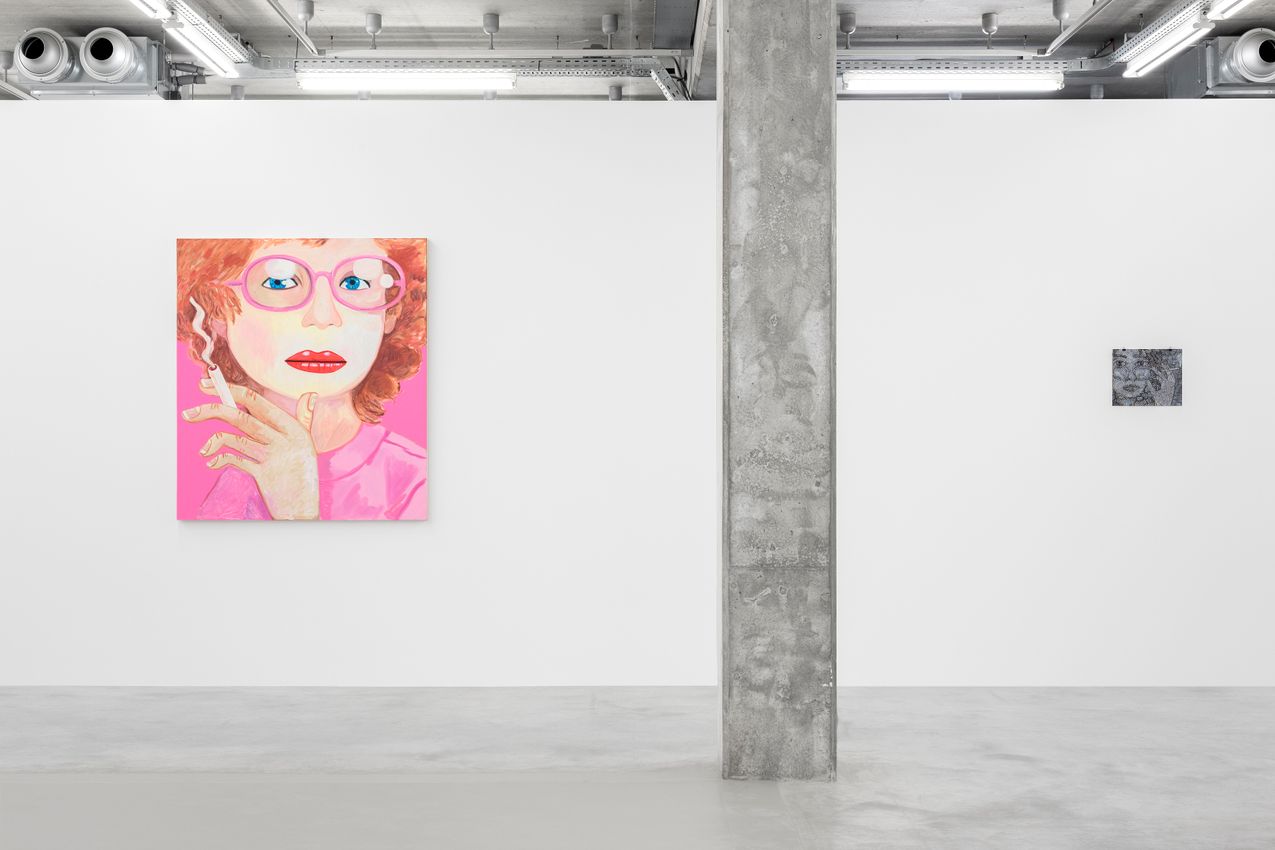
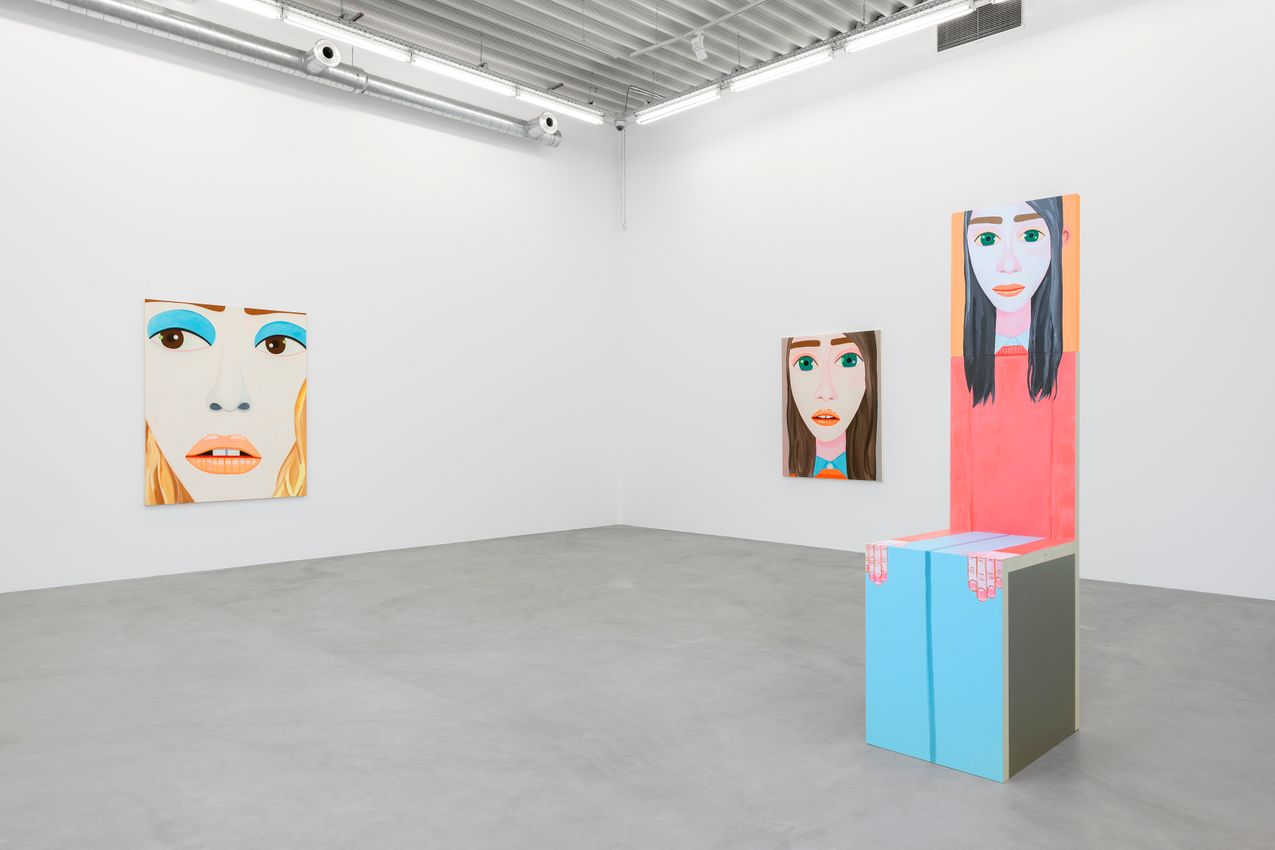
But what can we see? Several close-up portraits, faces, eyes, mouths and noses on solid colour backgrounds which set off placid expressions and emphatic hand gestures. Since the 1990s, the California-based artist has been perpetuating the age-old tradition of portrait painting in art history. Brian Calvin does not deny paying homage to certain artists and although less prevalent in his work today, admits that dialogue with the latter took part in developing his practice. Be they Renaissance artists like Giotto, Fra Angelico and Piero della Francesca or Romantics like William Blake. Amongst modern references we can cite Paul Cézanne, Édouard Manet, Henri Matisse, Pablo Picasso as well as Andy Warhol and Alex Katz, without forgetting less renowned painters such as Alice Neel, Joan Brown or Christina Ramberg. In the hierarchy of artistic genres, portraiture comes second to history paintings yet has always been regarded as a particularly fascinating theme, ever able to catch the viewer’s eye. For Brian Calvin calling this artistic task into question remains possible: ‘I consider painting images to be one of the utmost primitive human efforts, harking back to ancient cultures. I like the idea that I belong to this lineage which seems intrinsically linked to our very nature. When I am painting, I’m exploring my own idiosyncrasy with regards to other possible stories.’ By virtue of their pure tones chosen from a voluntarily limited spectrum and the features instilled with an archetypal character , the paintings subsequently invite us to understand what the artist’s work is actually about.
These non-narrative yet figurative paintings, drawings and sculptures are developed in the context of a diligent daily practice rooted in questions of shape and colour. Again, Brian Calvin is by all means not the first painter to have opted for a restricted range of subject matter in order to better focus on pictorial characteristics. When questioned on this detail the artist explains that Philip Guston and Giorgio Morandi immediately spring to mind. Once the subject has been decided upon self-effacement becomes possible for the painter as he looks at the blank canvas. Such is clearly the case here; rather than undertaking expressive gestures Calvin chooses controlled concentration. The artist clarifies his intentions as follows: ‘The subject is a starting point, but maybe it would be more accurate to define it as a problem seeing as I am making paintings about notions of doubt and difficulty.’ The long stretches of time spent at his studio allow the artist to resolve these questions. He works without models, using only his memory and imagination in a bid to scrutinise human nature and the way each of us tries to construct an identity. Daily life is therefore echoed in his work despite the fact that over the years he has veered away from narration, now favouring formal, pictorial compositions. ‘I’m trying to broaden my vocabulary while I explore the abstract potential of an image as it comes into being. That’s actually why there are so many repetitions in my work; I’m using extremely simplified visual motifs which then come to produce a strong impression in most cases.’
So that’s what we don’t see in Brian Calvin’s work at a first glance: the abstraction and effacement of his subject matter. One thing we can feel as we stand opposite his paintings is the rhythm and dynamics created by blocks of colour and outlined details. Brian Calvin seems to create a bridge over the space we might discern between sound and silence in music. His use of repetition causes time to stand still. And the faces stare out with an inquisitive gaze which will never be answered, but somehow that’s beside the question.
- Marie Maertens
Back in the 1990s, Brian Calvin began developing a figurative, non-narrative, pictorial style. Landscapes and portraits steeped in his Californian roots dominated this work. Close-up treatment of subjects, highly composed structures, as well as luminous colours laid flat endow these large-scale paintings with a strange temporality. In observing his technique of pictorial economy, one gradually comes to see a type of abstraction in his representation of certain details. They reveal, even greater still, the true finality of his work, reaffirming the primacy of a visual reflection on painting itself and its possibilities. ‘I prefer to experience abstraction through the creation and tending of images. Painting provides the medium.’


A respected voice in contemporary art discourse.
Focusing on ambitious storytelling and insightful art-world commentary. Ocula Magazine publishes in-depth interviews, critical essays and timely analysis on the artists, exhibitions and ideas driving the global art world.
Learn more about Ocula Magazine
Showcasing the best of the art world.
Ocula partners with galleries from around the world to highlight their artists, artworks and exhibitions. Gallery membership is by application and invitation, with each member vetted by an independent panel.
Learn more about Ocula Membership

Specialises in the sale of major artworks.
Led by a team with deep ties to the world’s leading auction houses, galleries and collectors. Ocula’s advisory team offers bespoke services to high-net-worth clients from around the world who are looking to acquire the best of contemporary and modern art.
Learn more about our team and services