





ANSELM KIEFER
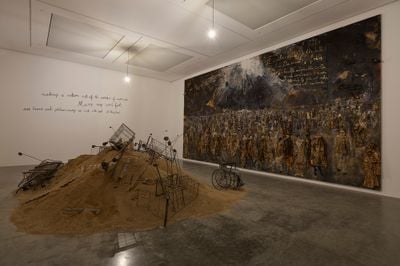
b. 1945, GermanyAnselm Kiefer evokes ideas of cultural memory and identity through his highly textural installations, paintings and sculptures. Referencing historical and literary sources, his giant-sized works are often considered Neo-Expressionist.
Early Years
Anselm Kiefer was born in Donaueschingen, on the edge of the Black Forest, in 1945—while baby Anselm and his mother were in hospital, his house was bombed. Playing in ruins and rubble, he built houses with discarded bricks. He recalls being traumatised by starting school and that his drawings went from being “big and vigorous” to “precise and unpleasant”. His relatives appreciated art (his aunt was a watercolourist) and he was able to look paintings in family books. Kiefer did not initially study art, opting instead for law and languages. However, during the early 1970s he attended the Kunstakademie in Dusseldorf, studying under the charismatic Joseph Beuys.
Anselm Kiefer: Artworks
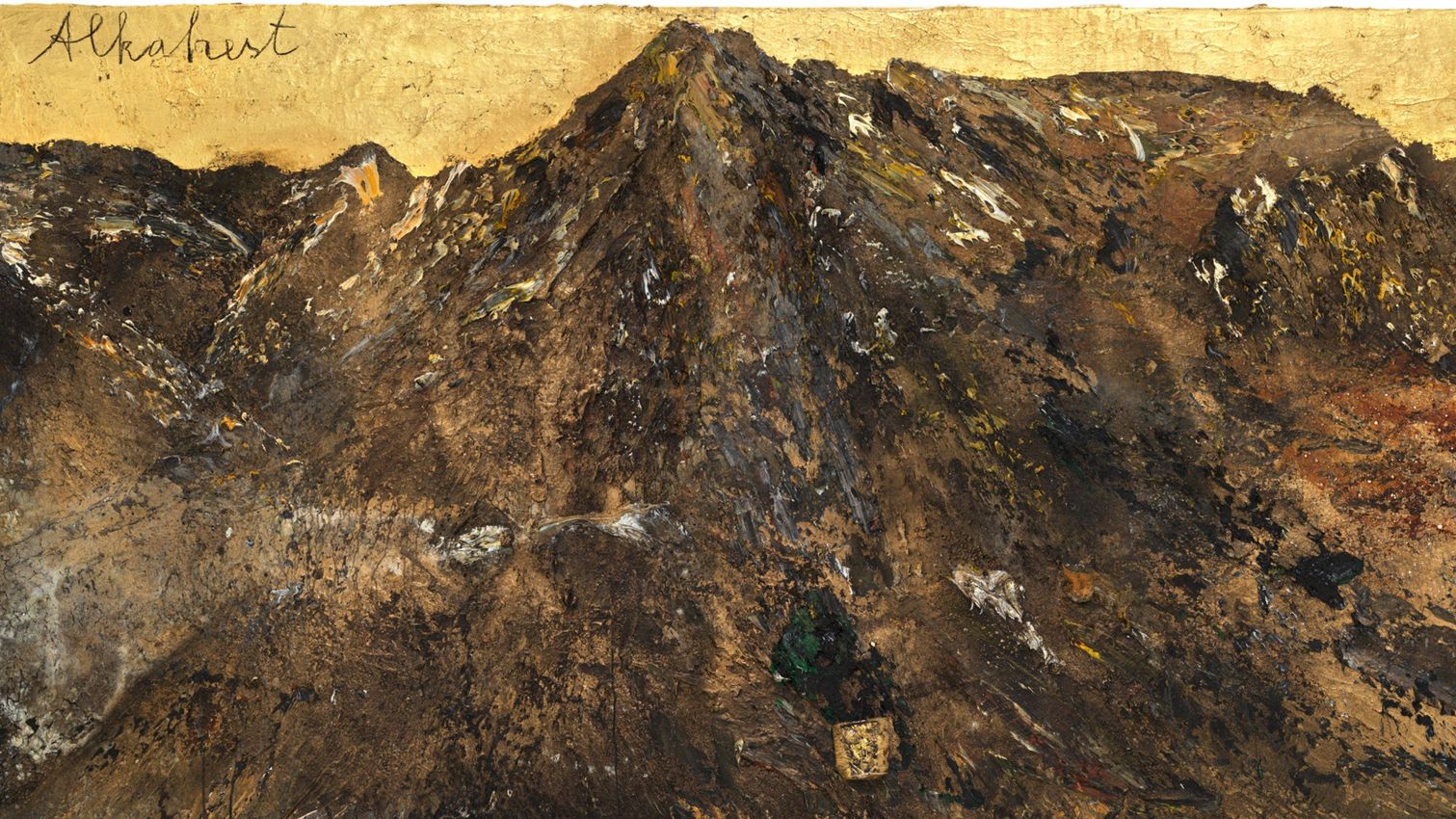
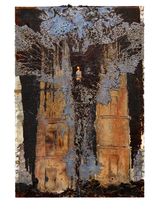
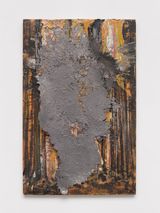
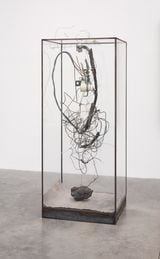
Kiefer’s practice intertwines myth and spirituality with history and literature, referencing Germanic and Greek mythology and poetry from Baudelaire to Celan. He is not constrained by medium: he has worked with oil, acrylic, concrete, glass, textiles, fire, tar, gold leaf, tree roots, sand, ashes and burned books (not an exhaustive list). It is the language of material, rather than the material itself, that is important. His colour palette is dark and thickly layered: browns, blacks and ochres often feature.
- Nero Paints (1974) adds clay and straw to an already complex dark oil painting; perhaps these additional materials reference Germany’s complicated past. Kiefer reached back even further into German history for 1976’s Varus, referencing the Germanic armies’ triumph over the Romans in the Teutoburg Forest in 9AD.
- Margarethe (1981) is one of Kiefer’s most discussed pieces, referencing Paul Celan’s poem Death Fugue. Celan talks about two figures in a concentration camp: Margarethe, with Aryan blonde hair, and Shulamite, a Jewish woman whose hair is not only black from her genetics but from burning.
- 20 Years of Solitude (1993) brings a weight of personal intensity to the artwork: a tower of handmade books is covered in soil—inside the volumes are his own thoughts and feelings.
- Books also feature in 2013’s Die Sprache der Vögel (The Language of the Birds). Atop the tower is a massive bronze eagle; the sculpture pays tribute to the pseudonymous French alchemist Fulcanelli.
- The Seven Heavenly Palaces (2004) was created for the opening of the HangarBicocca and references a Hebrew text discussing the ideal path for anyone looking to become closer to God. Kiefer’s seven towers, reminiscent of shipping containers, were between 13 and 19 metres tall.
Anselm Kiefer: Select Awards
- Praemium Imperiale, Japan (1999)
- Officer of the Ordre des Arts et des Lettres, France (2002)
- Austrian Decoration for Science and Art (2004)
- J Paul Getty Medal Award (2017)
- German National Prize (2023)
Anselm Kiefer: Select Exhibitions
Select Solo Exhibitions
- Kiefer: The Women Alchemists, Palazzo Reale, Milan (2026)
- Kiefer/Van Gogh, Royal Academy of Arts, London (2025)
- Sag mir wo die Blumen sind (Tell me where the flowers are),Van Gogh Museum and Stedelijk Museum Amsterdam (2025)
- Fallen Angels, Fondazione Palazzo Strozzi, Florence (2024)
- Anselm Kiefer, Château La Coste, Puy-Sainte-Réparad (2023)
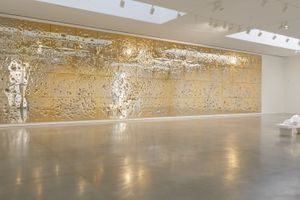
- Field of the Cloth of Gold, Gagosian Le Bourget (2021)
- Anselm Kiefer: Superstrings, Runes, The Norns, Gordian Knot, White Cube, London (2019)
- Anselm Kiefer, Pompidou Centre, Paris (2015)
- Anselm Kiefer: Salt of the Earth, Fondazione Vedova, Venice (2011)
- Anselm Kiefer, Guggenheim Museum, Bilbao (2007)
- Anselm Kiefer, A.E.I.O.U., Musikfestival Salzburg (2002)
- Anselm Kiefer: Woodcuts 1977–1997, Shoshana Wayne Gallery, Santa Monica (1998)
- Anselm Kiefer, The Art Institute of Chicago (1987) (and touring)
- Anselm Kiefer. Ritt an die Weichsel (Ride to the Vistula), Galerie Michael Werner, Cologne
- Anselm Kiefer: Bilder und Bücher (Pictures and Books), Galerie am Kaiserplatz, Karlsruhe (1970)
Select Group Exhibitions
- Art from War to War: Chasing Butterflies on the Verge of a Cliff, Beck and Eggeling, Dusseldorf (2026)
- White Cube at Claydon, White Cube (2026)
- Vexation of Spirit. The Duerckheim Collection x Serralves, Serralves Museum, Porto (2026)
- Woman in a Rowboat, Olivia Foundation, Mexico City, Mexico (2025)
- “Are we still up to it?”—Art and Democracy, Herrenchiemsee Palace, Chiemsee (2025)
- Van Gogh et les étoiles, Fondation Van Gogh, Arles (2024)
- Kiefer and Baselitz, Kunsten Museum of Modern Art, Aalborg (2024)
- Summer Exhibition, Royal Academy of Arts, London (2020)
- _Proof of Life, Weserburg Museum of Modern Art, Bremen, (2018)
- Dioramas, Palais de Tokyo, Paris (2017)
- Artists in Their Time, Istanbul Modern (2015)
- Blood on Paper: the Art of the Book, Victoria and Albert Museum, London (2008)
- Future, Present and Past, 47th Venice Biennale (1996)
- Refigured Painting: The German Image 1960–1988, Solomon R Guggenheim Museum, New York City (1988) (and touring)
- International Survey of Recent Painting and Sculpture, MoMA, New York City (1984)
- German Art in the 20th Century, Painting and Sculpture 1905–1985, Royal Academy of Arts, London (1985)
- Documenta 7, Kassel (1982)
- A New Spirit in Painting, Royal Academy of Arts, London (1981)
- Documenta 6, Kassel (1977)
Further Reading
- Anselm Kiefer foundation
- Artist profile page at Thaddeus Ropac
- 2025 interview in The Observer
- 2023 interview in the Guardian
Anselm Kiefer FAQs
Was Anselm Kiefer inspired by the poet Paul Celan?
Yes, the writings of Paul Celan (1920–1970), which gave voice to war’s emptiness and the grief it leaves in its wake, were a profound influence on Anselm Kiefer. Kiefer’s massive 2021 installation at the Grand Palais Éphémère, Pour Paul Celan, featured 19 large-scale canvases (more than 10 metres high) that created a dialogue with Celan’s poetry.
Why did Anselm Kiefer perform Nazi salutes?
Perhaps inspired by Joesph Beuys’ performance art “actions”, which brought sociopolitical subject matter into the art pieces, Kiefer as a young artist created his own spectacularly controversial series of “actions” in 1969. Occupations was a series of photographs in which he posed as a member of the National Socialist Party in front of a selection of European tourist sites and monuments, giving the Nazi salute. His work was roundly criticised by the German art establishment, although Kiefer has said that he investigated the attitudes of the period just before his birth “to know what it meant to be a German at that moment”.
Did Van Gogh inspire Anselm Kiefer?
The 2025 Royal Academy of Arts exhibition Kiefer/Van Gogh placed Kiefer’s works alongside those of the celebrated Dutch painter, and certainly they have both been inspired by sunflowers, cornfields and stars in the sky. However, Kiefer has said that he was attracted to Van Gogh’s sense of determination: “Determination is the first condition of the artist: determination and endurance and defiance and never giving up.”
Ocula
Explore Anselm Kiefer's Exhibitions On Now















Anselm Kiefer in Ocula Magazine







Explore and Follow Artists Shaping Contemporary Art
A respected voice in contemporary art discourse.
Focusing on ambitious storytelling and insightful art-world commentary. Ocula Magazine publishes in-depth interviews, critical essays and timely analysis on the artists, exhibitions and ideas driving the global art world.
Learn more about Ocula Magazine
Showcasing the best of the art world.
Ocula partners with galleries from around the world to highlight their artists, artworks and exhibitions. Gallery membership is by application and invitation, with each member vetted by an independent panel.
Learn more about Ocula Membership
Specialises in the sale of major artworks.
Led by a team with deep ties to the world’s leading auction houses, galleries and collectors. Ocula’s advisory team offers bespoke services to high-net-worth clients from around the world who are looking to acquire the best of contemporary and modern art.
Learn more about our team and services