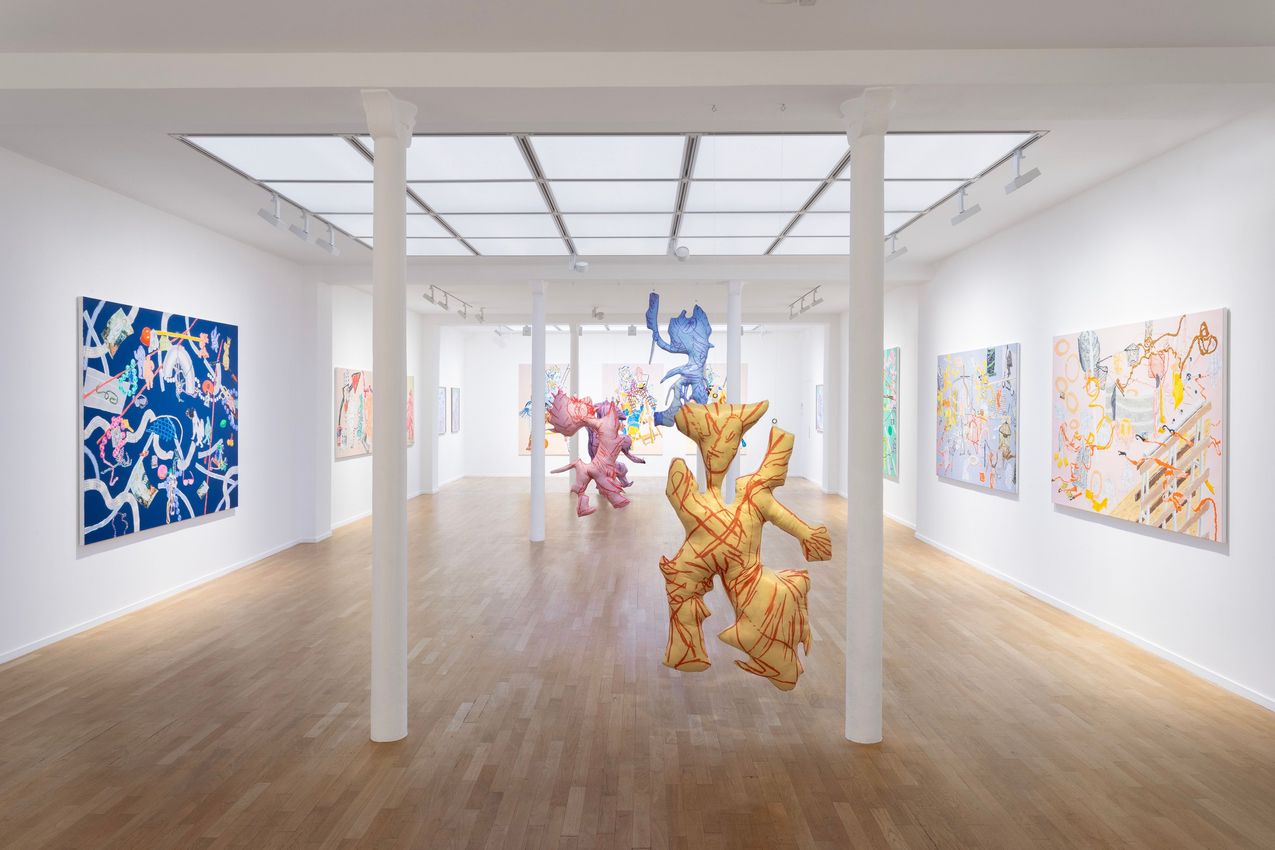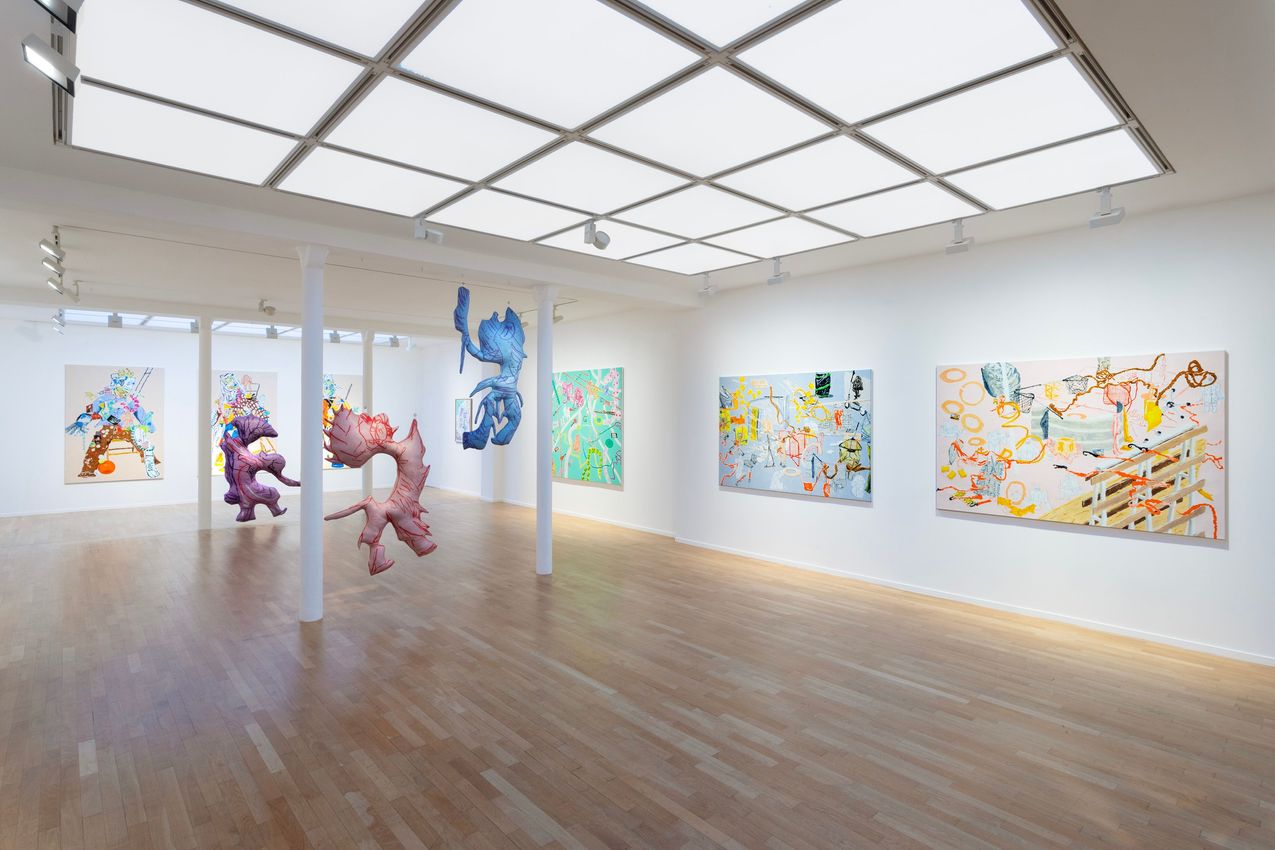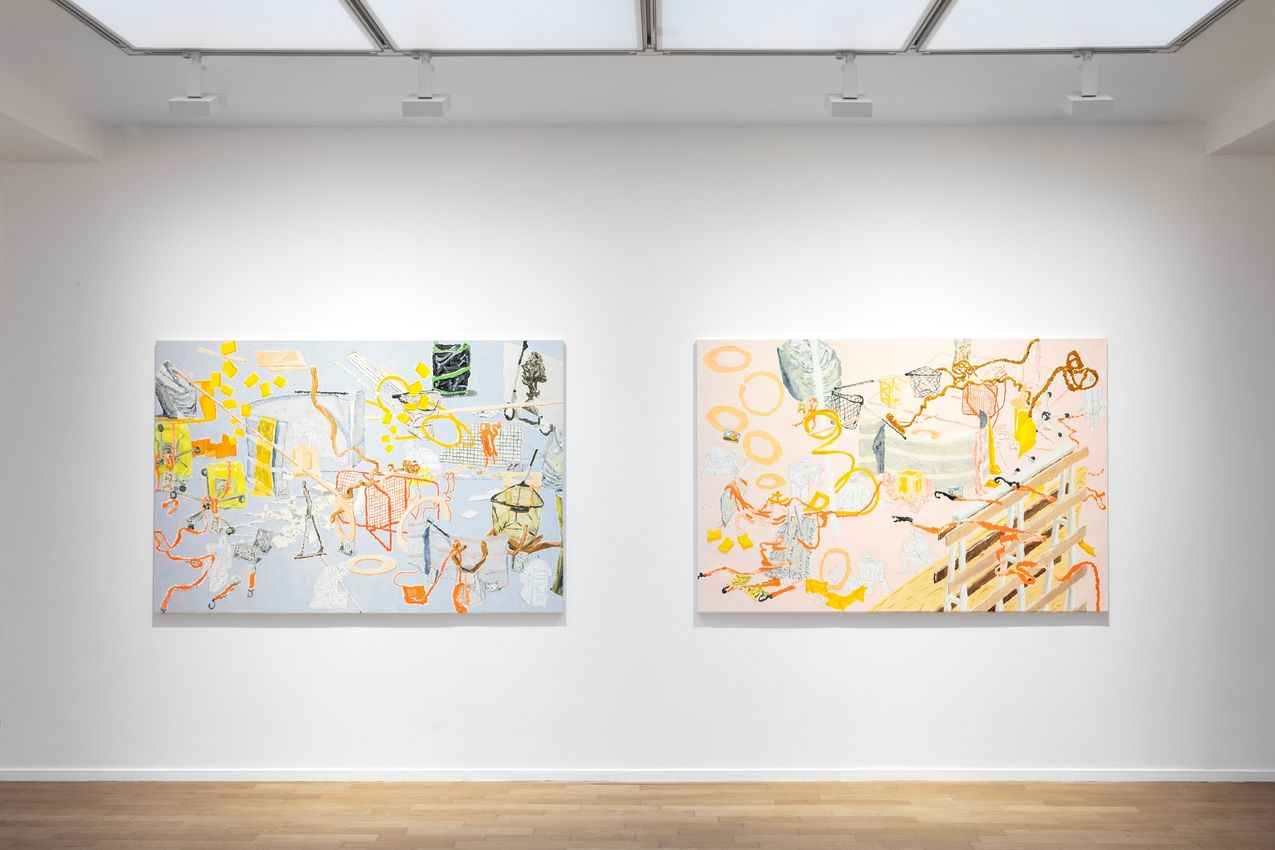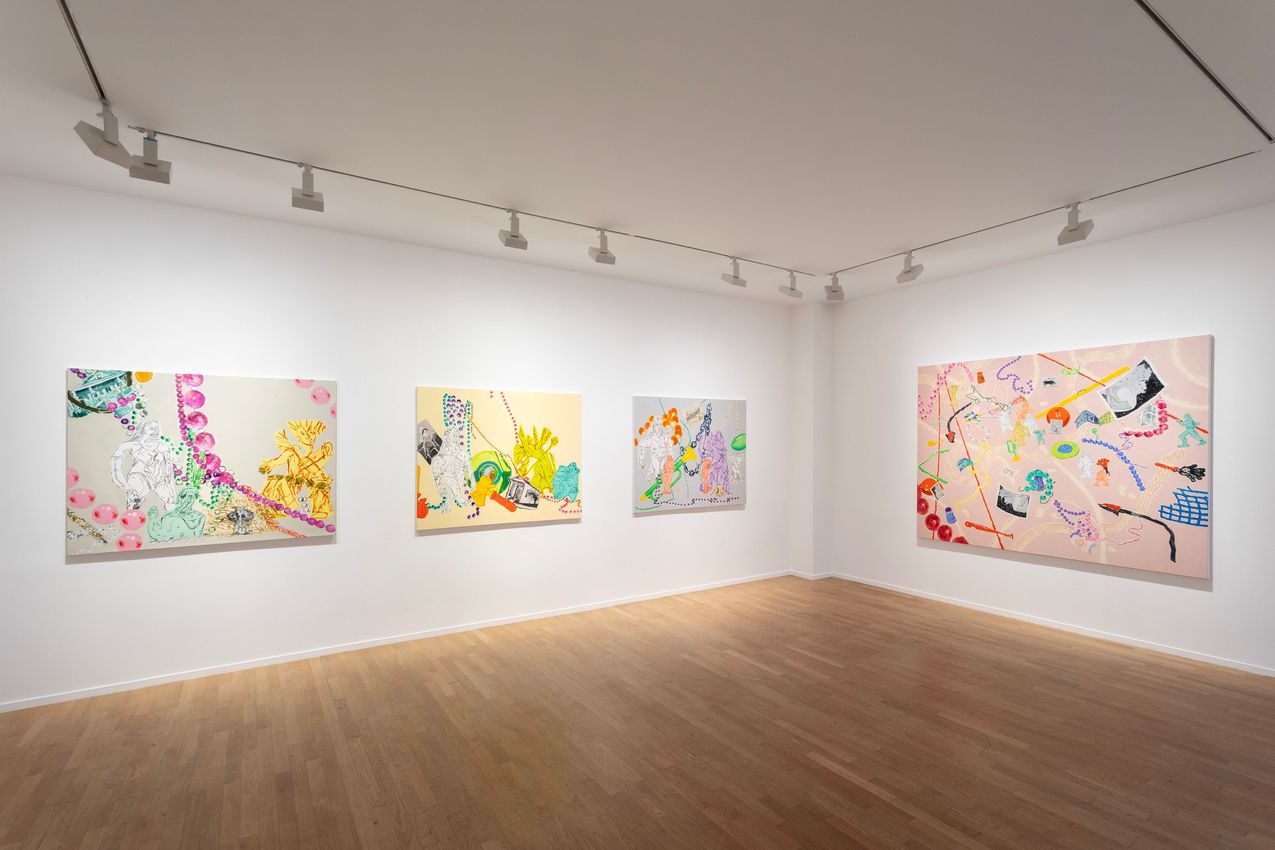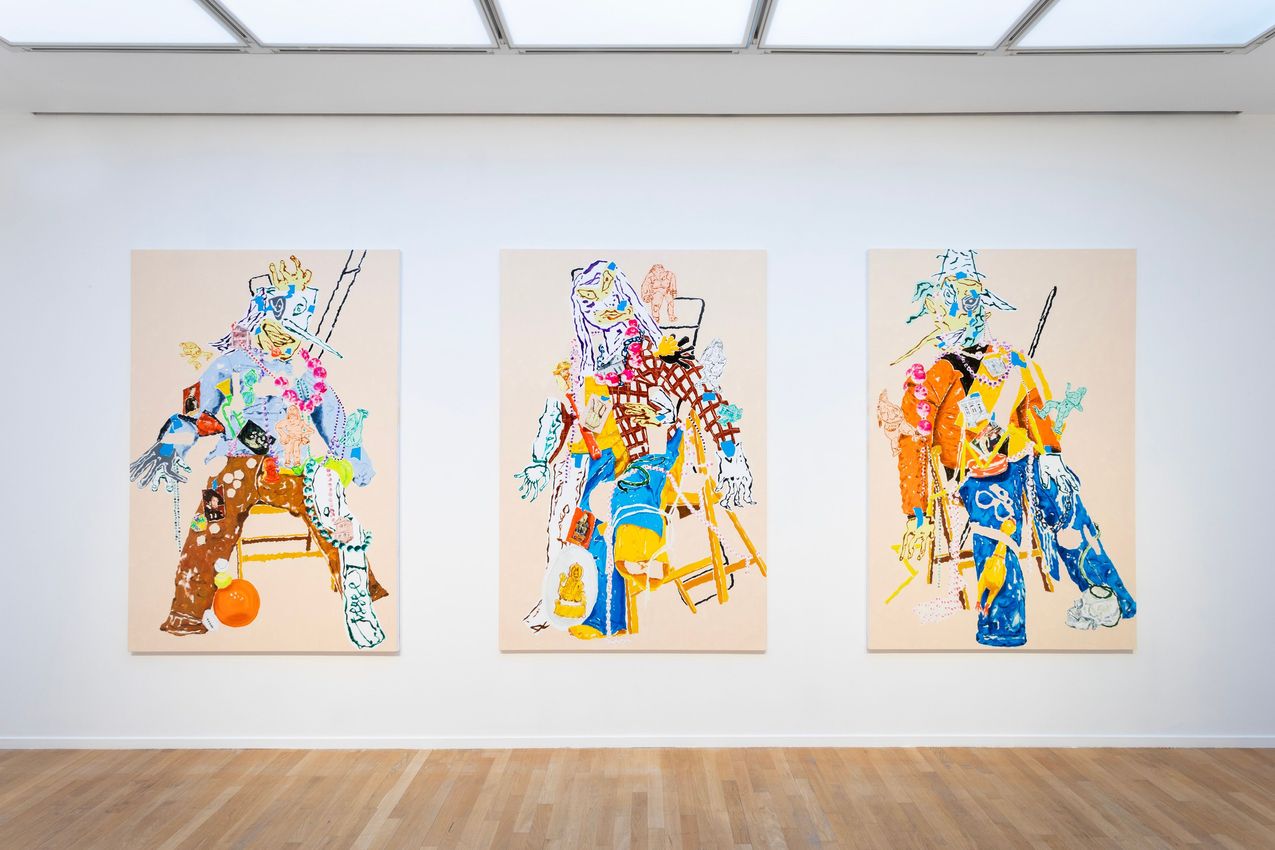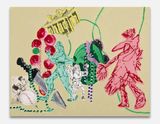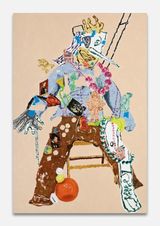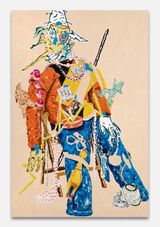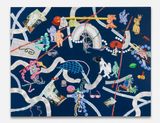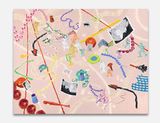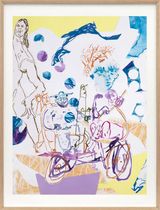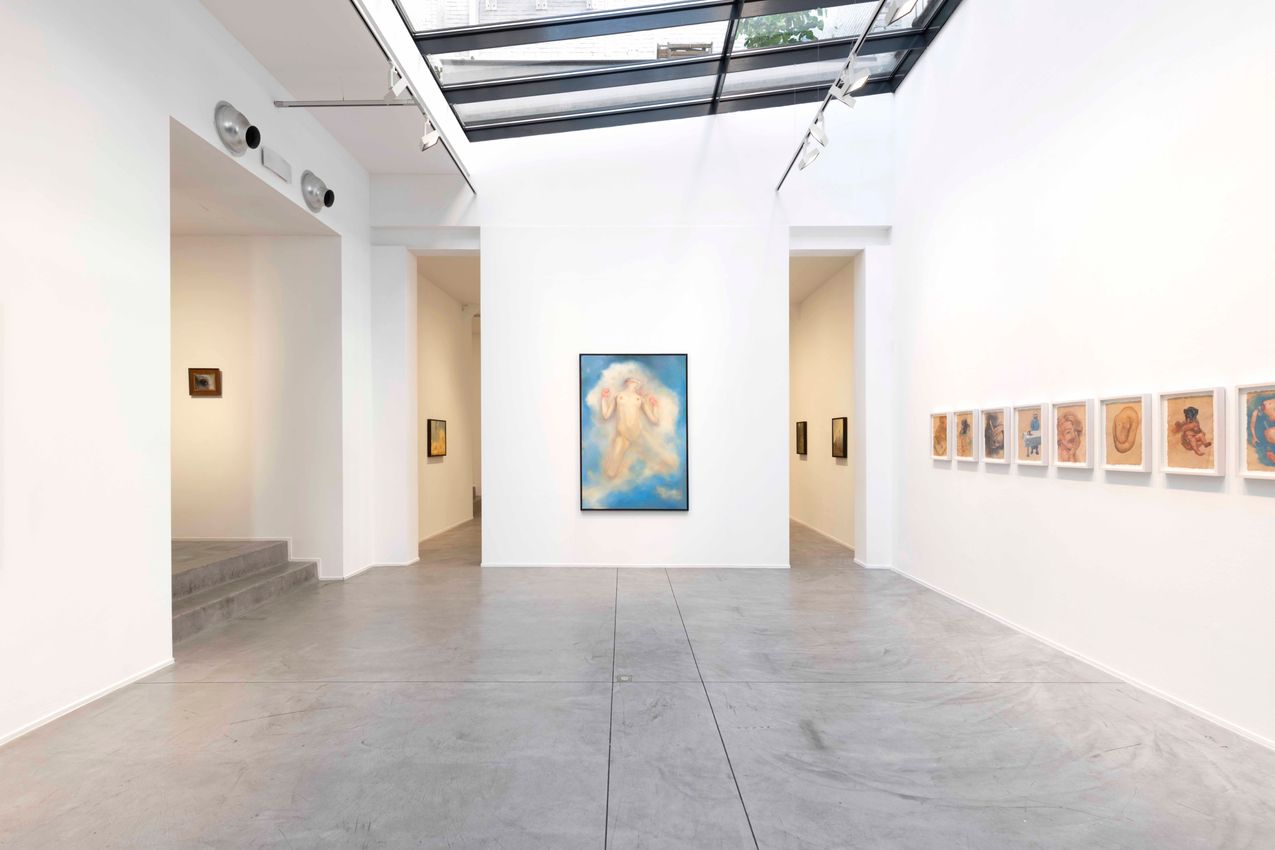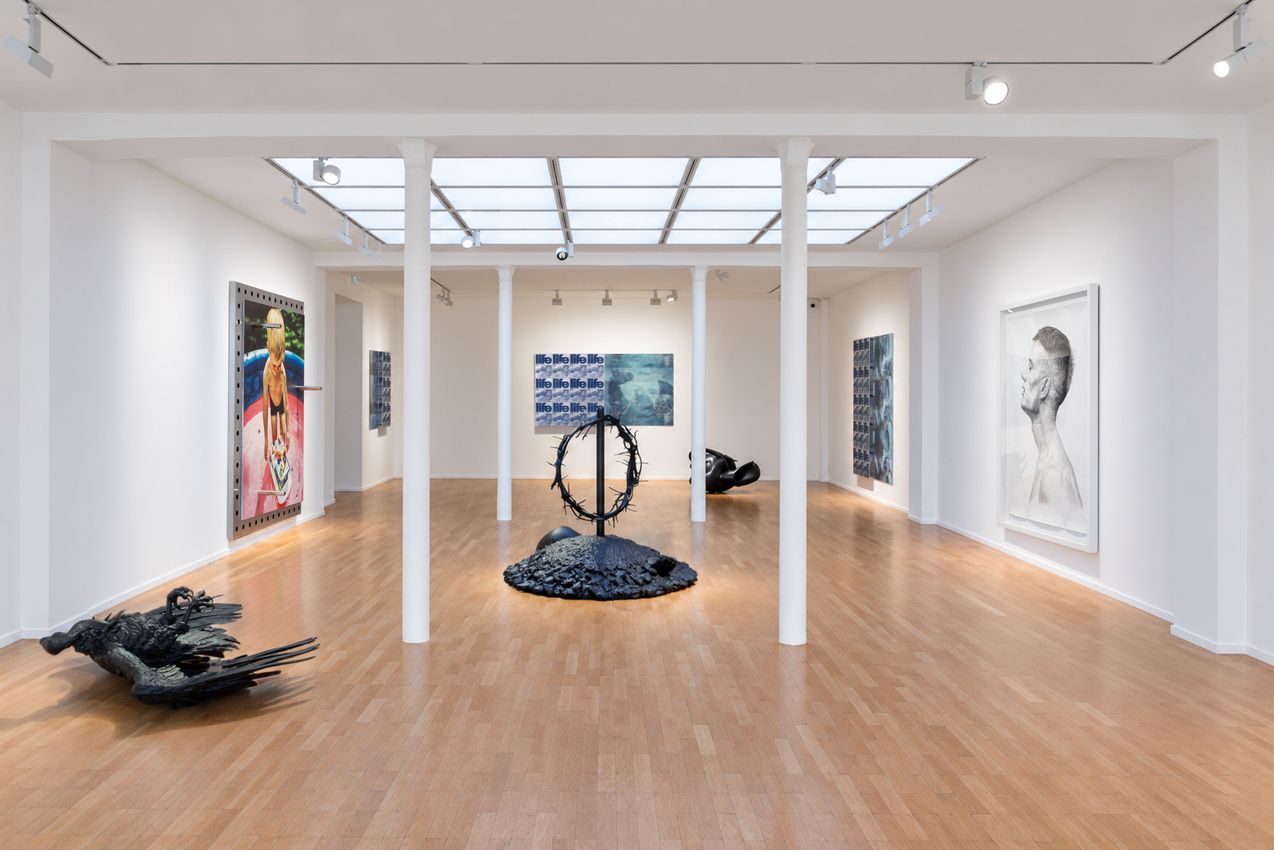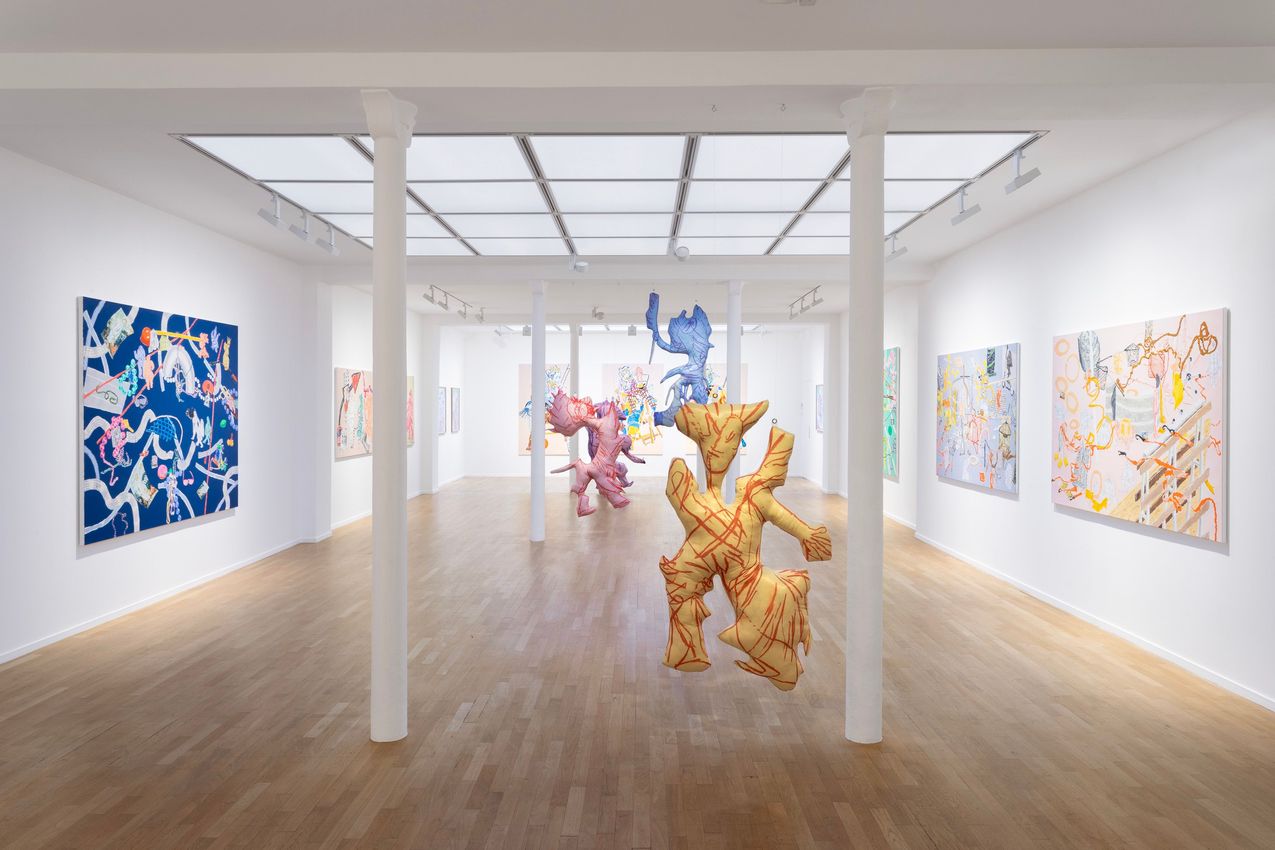
For his first exhibition at the Galerie Templon in Paris, young French artist Léonard Martin is presenting works created during his residency in New Orleans, as part of the Villa Albertine, the prestigious artist residency program of the French Institute.
The exhibition brings together some fifteen new paintings and a sculpture, recounting the artist’s American experience. “Chef Menteur” a title borrowed from a highway crossing New Orleans, evokes the uncertain boundary between appearance and truth.
Plunged into the heart of a Louisiana marked by social and racial tensions, climate change, and ecological disasters, the artist chose to explore carnival, that paradoxical space where burlesque rubs shoulders with tragedy, where madness responds to the rigors of an overwhelmed world. A place of crossroads and contrasts, the New Orleans carnival brings together Catholics and Protestants, Creoles and Caribbean people, blacks and whites, women and men, rich and poor. A true social microcosm, it exposes the human comedy in the open air: pride is displayed, inequalities are replayed.
In this festive turmoil, where floats pour out streams of plastic objects, Léonard Martin collected these ephemeral fragments to reinvest them in his pictorial practice. Plastic waste becomes the raw material for a reflection that is both political and ecological, a symbol of a saturated world where plastic invades the streets, the water, and ultimately even our blood.
Inspired by the fragmented structure of reality, Léonard Martin composes a series of fragmentary images, between memories and visions, traces and narratives. His works are based on montage techniques borrowed from cinema and literature: cut-up, which consists of fragmenting and recomposing reality, and stop motion, which introduces an idea of movement through sequences. Their combined effects produce discontinuous compositions, where each painting seems to be extracted from a mental film. Each canvas, each motif, functions as a political skit with multiple entries. Carnival, a sublime parody of the contemporary world, reveals the eternal tension between the visible and the real, between mask and face.


The gallery was founded in 1966 by Daniel Templon, who was then only 21. It first opened rue Bonaparte, in Saint-Germain-des-Prés in Paris, before moving in 1972 to its current location, rue Beaubourg, in the Marais, close to the Pompidou Centre, which opened in 1977. Daniel Templon first gained recognition by exhibiting conceptual and minimal artists such as Martin Barré, Christian Boltanski, Donald Judd, Joseph Kosuth, Richard Serra. In the seventies and eighties, Daniel Templon was one of the pioneers of the contemporary art and introduced many important American artists to the French public: Dan Flavin, Ellsworth Kelly, Willem de Kooning, Frank Stella, Andy Warhol. The gallery quickly became one of the references in contemporary art in France. In 1972, Daniel Templon and Catherine Millet co-founded the monthly art magazine ART PRESS.

A respected voice in contemporary art discourse.
Focusing on ambitious storytelling and insightful art-world commentary. Ocula Magazine publishes in-depth interviews, critical essays and timely analysis on the artists, exhibitions and ideas driving the global art world.
Learn more about Ocula Magazine
Showcasing the best of the art world.
Ocula partners with galleries from around the world to highlight their artists, artworks and exhibitions. Gallery membership is by application and invitation, with each member vetted by an independent panel.
Learn more about Ocula Membership

Specialises in the sale of major artworks.
Led by a team with deep ties to the world’s leading auction houses, galleries and collectors. Ocula’s advisory team offers bespoke services to high-net-worth clients from around the world who are looking to acquire the best of contemporary and modern art.
Learn more about our team and services