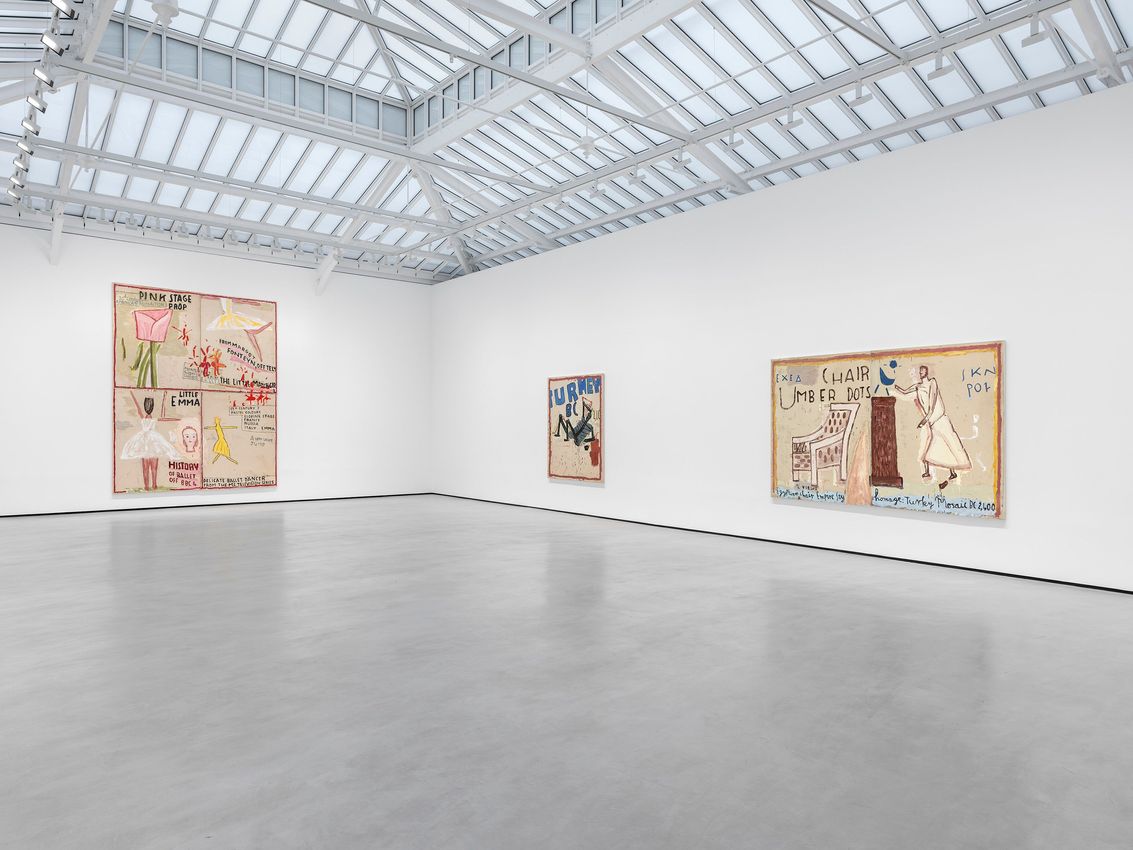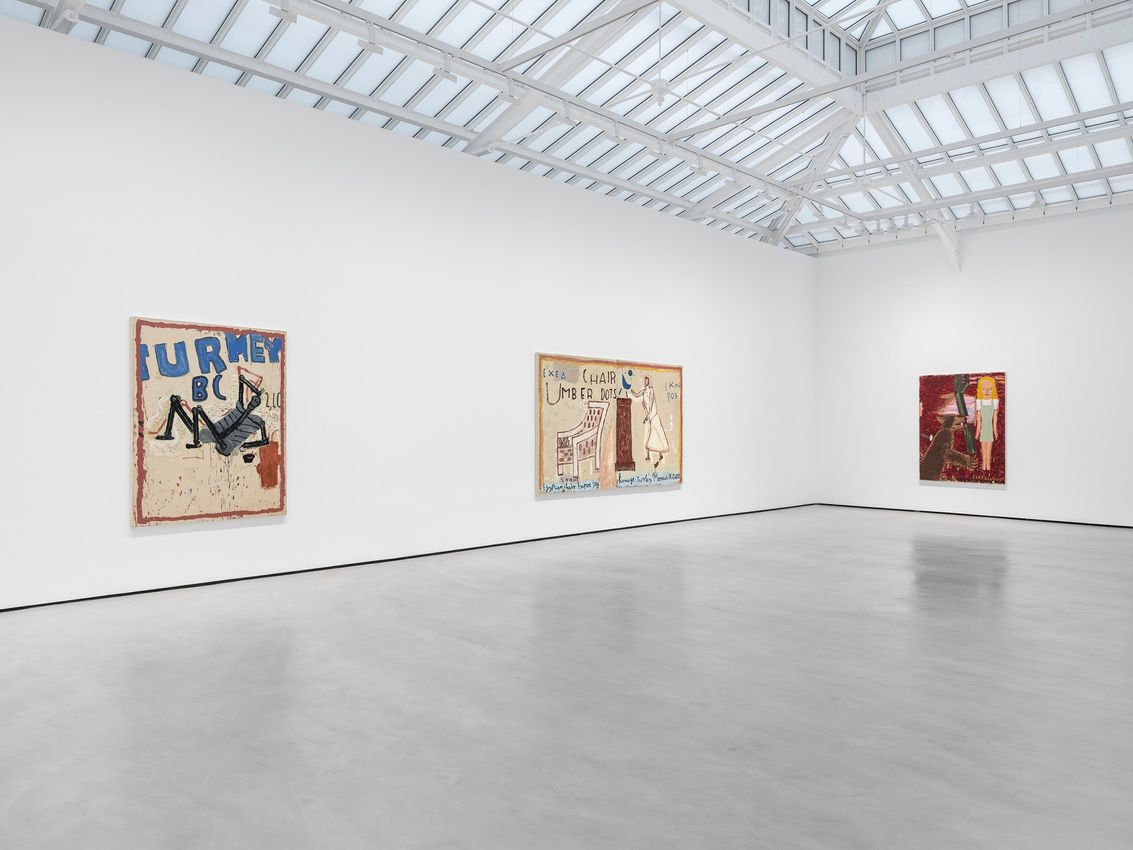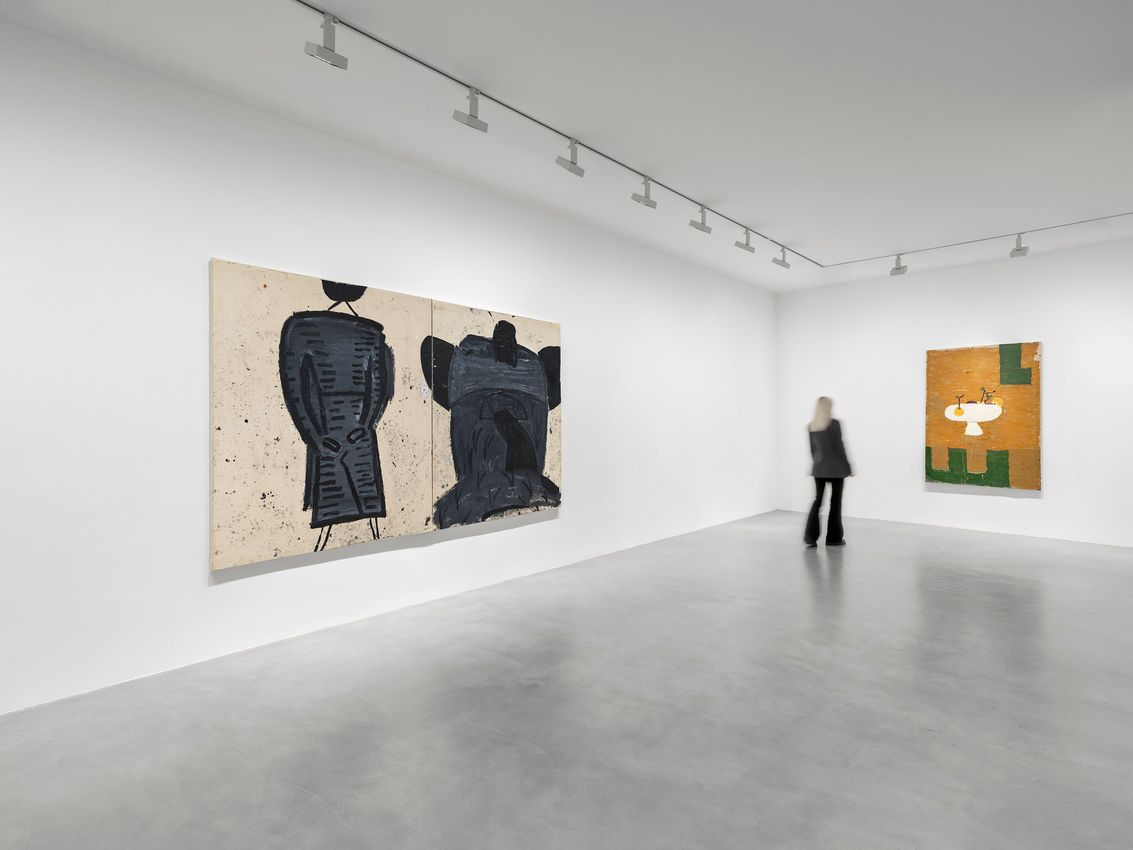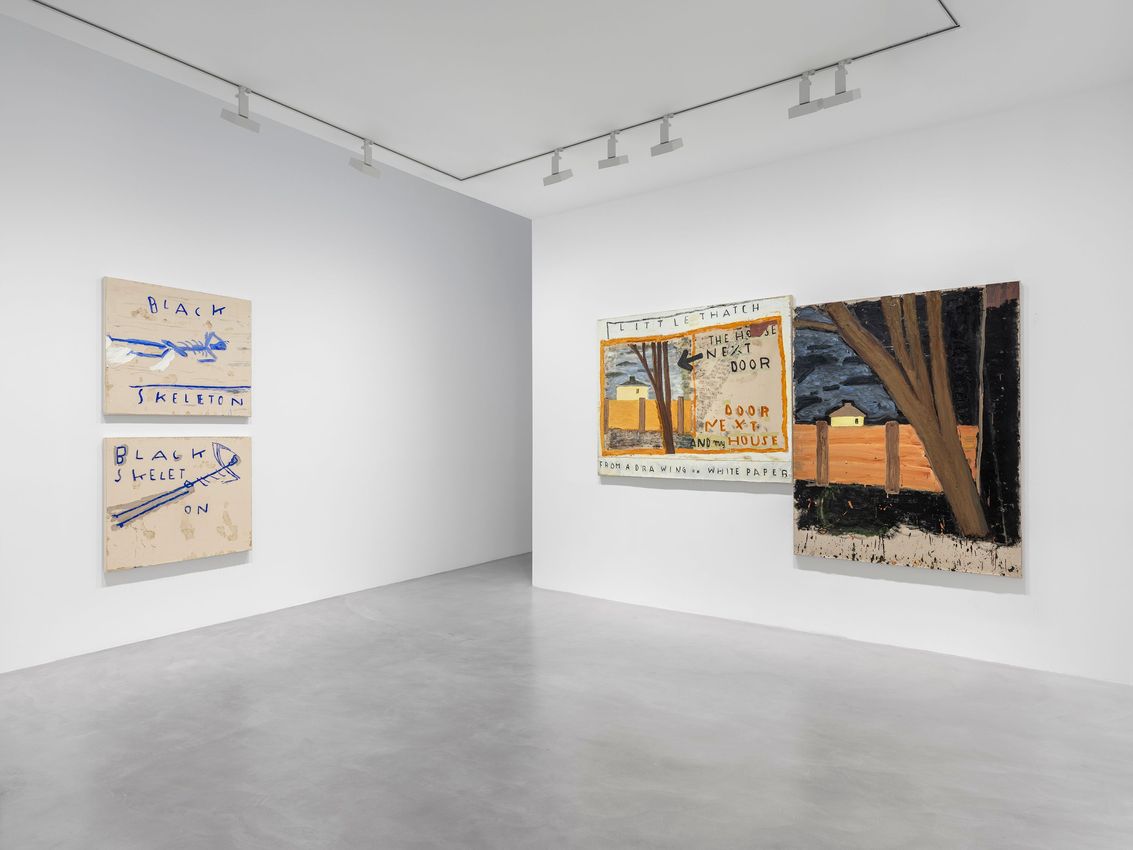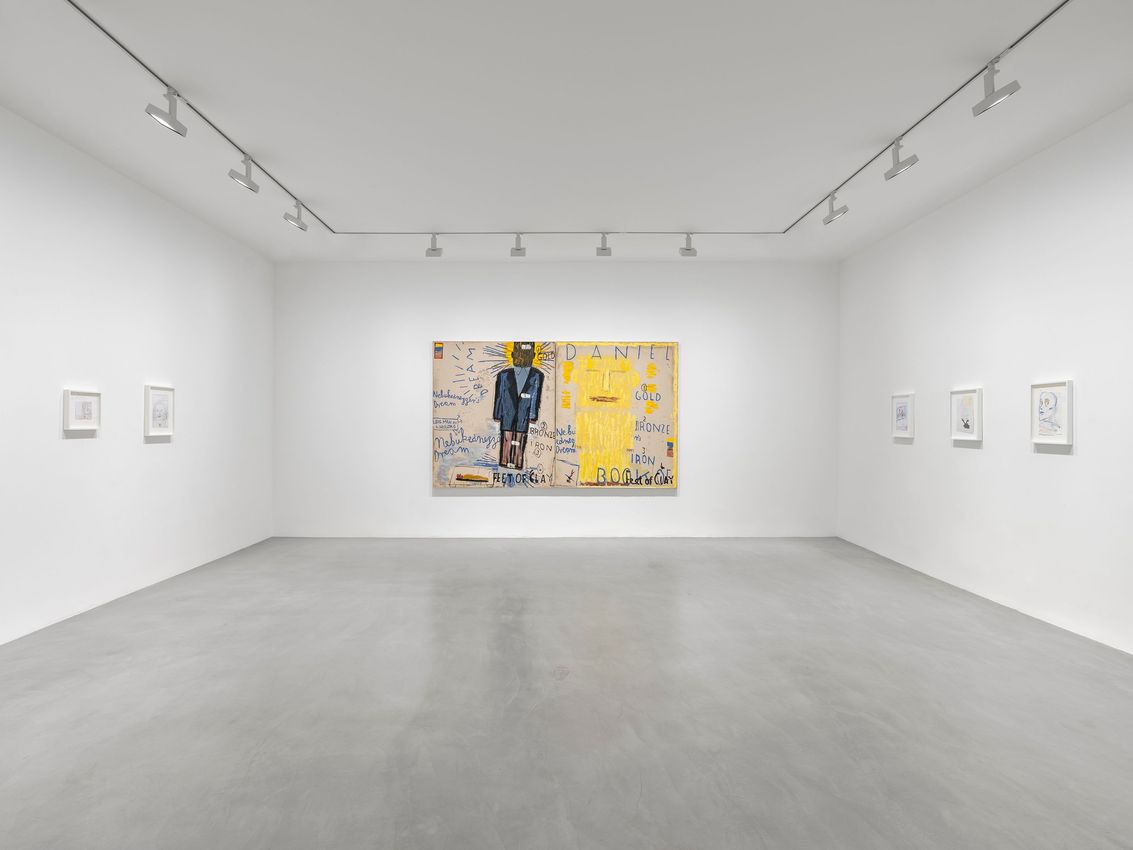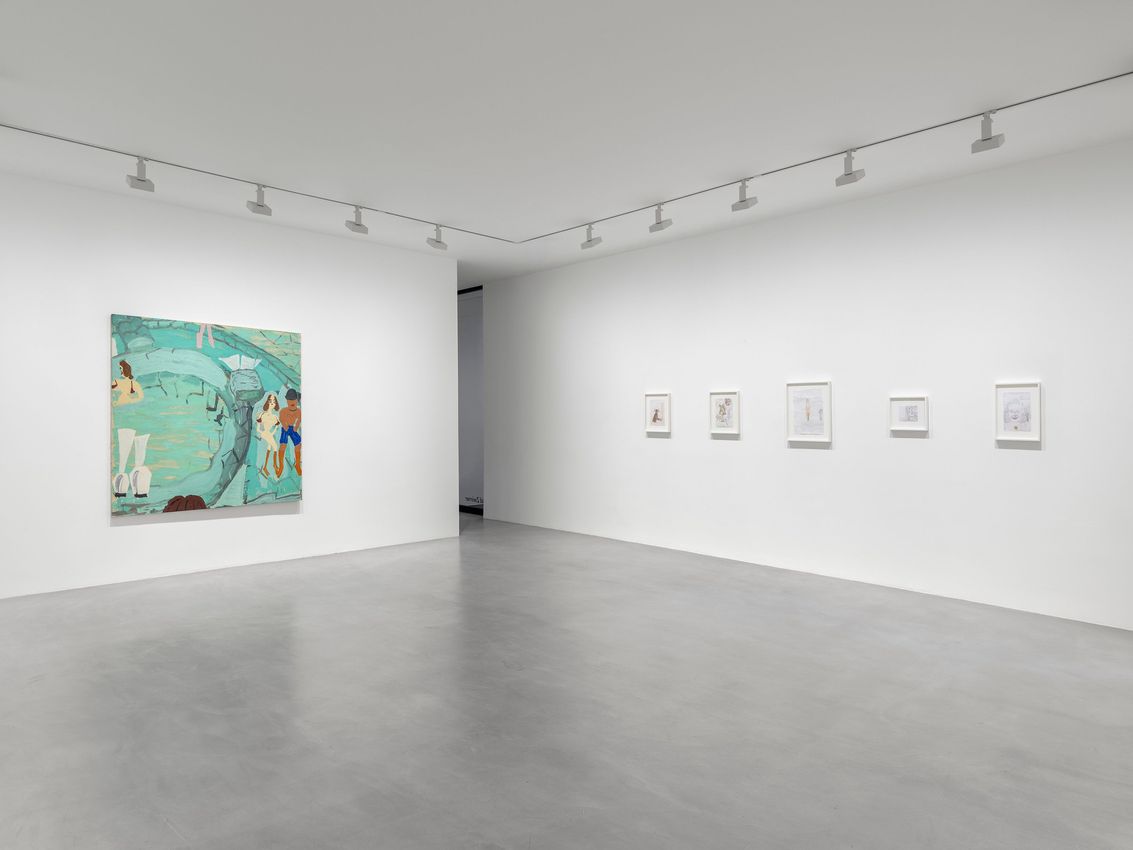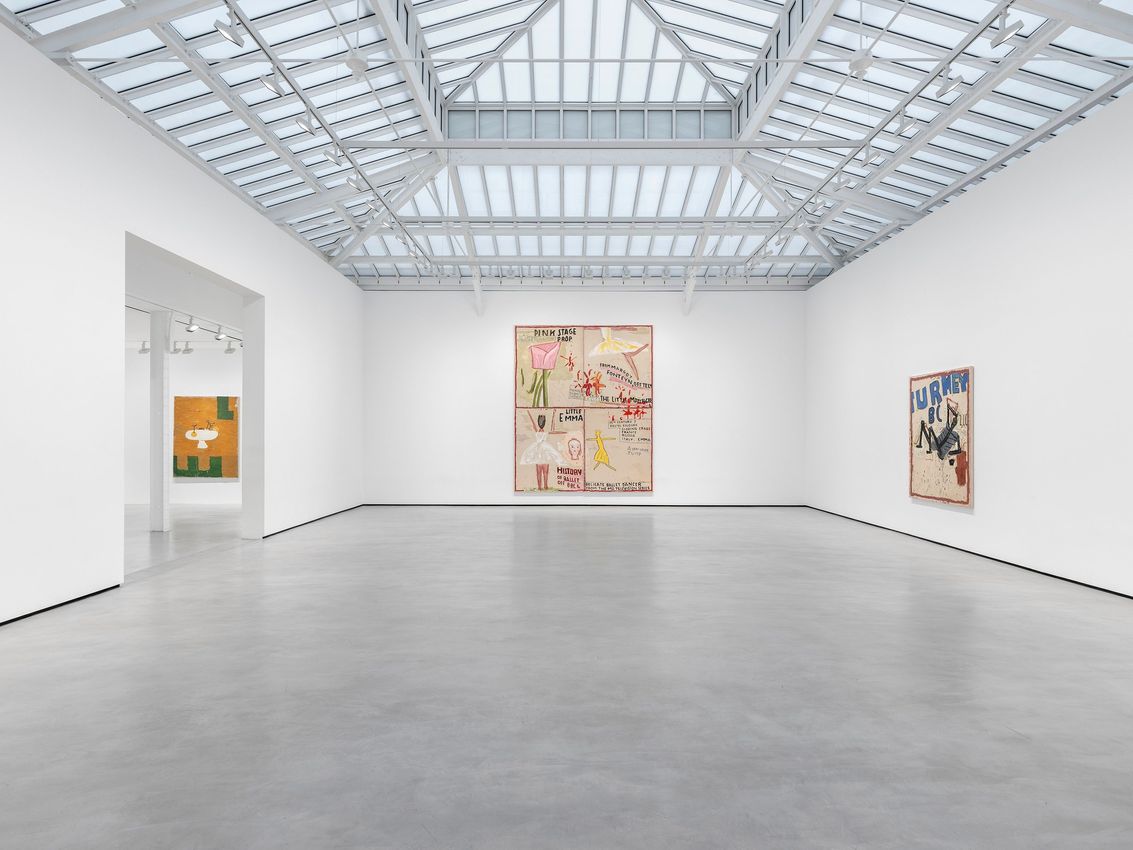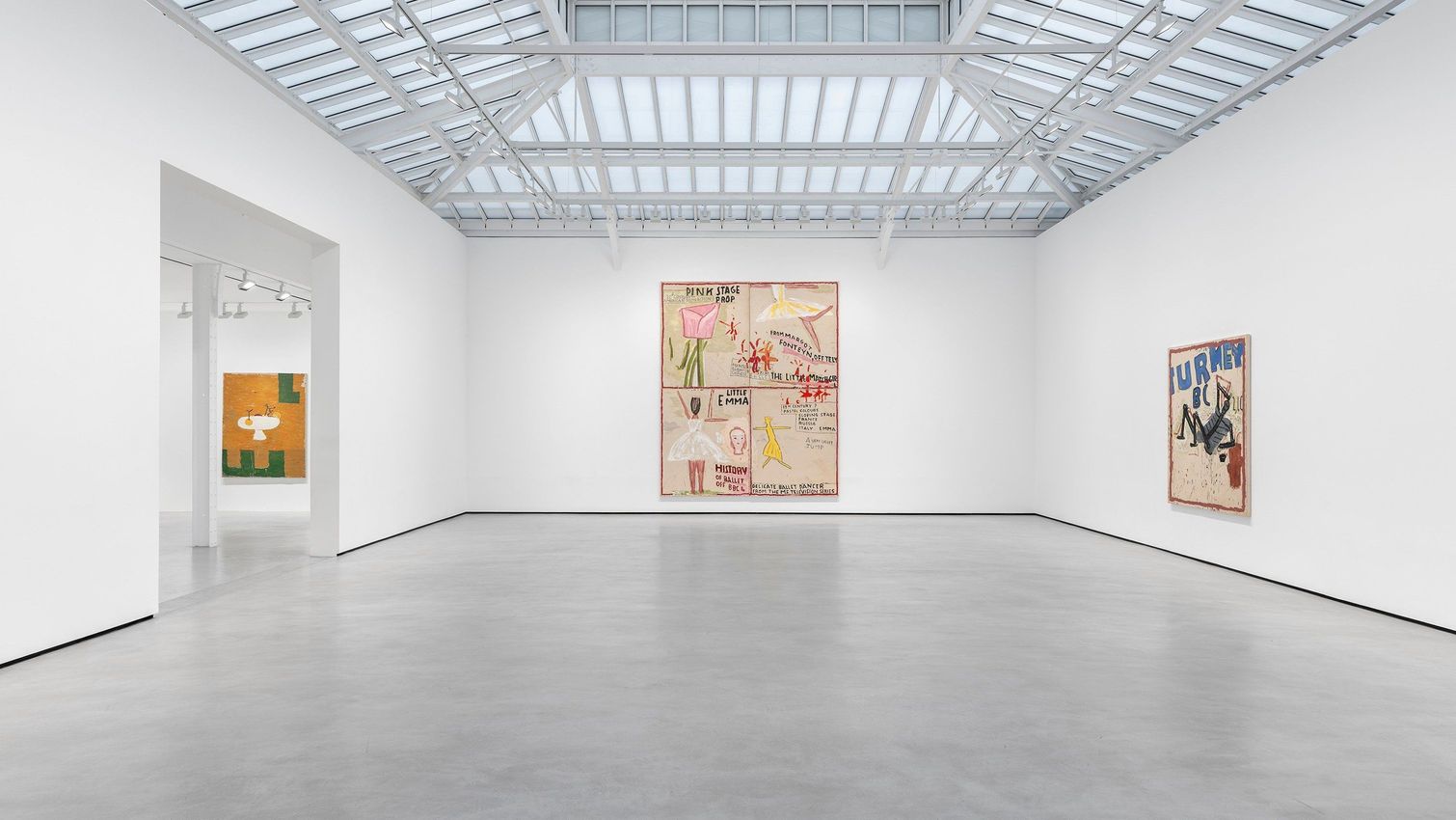
David Zwirner is pleased to announce Henri, Egypt...Bette, Bear, an exhibition of new and recent canvases, multipanel works, and works on paper by British artist Rose Wylie at the gallery’s location in Paris. Marking Wylie’s eighth solo show with the gallery and her first ever in Paris, Henri, Egypt...Bette, Bear coincides with her largest ever survey exhibition in the United Kingdom, currently on view at the Royal Academy of Arts, London, until 19 April 2026.
Henri, Egypt...Bette, Bear is the first ever solo presentation of Wylie’s work in Paris, a city she has frequently traveled to since she was a young woman. For this exhibition, she turns to her long-held appreciation for the visionary French post-impressionist artist Henri Rousseau (1844–1910), whose original, oneiric compositions traverse the personal, the public, and the fantastical—much like Wylie’s.
The punchy, rhythmic title is taken from Wylie’s painting Homage to Henri, Bette and Bear (2026), honoring Rousseau’s 1899–1901 work Unpleasant Surprise (Mauvaise surprise; Barnes Foundation, Philadelphia), which centers a nude woman with flowing locks, a mysterious sniper, and a growling bear with sharp claws. In Wylie’s Homage, she considers the homonyms “bare” and “bear,” recasting the original nude as the American actress Bette Davis, here clothed modestly in a pinafore, and amplifies the talons of the animal, based on an image she had seen on television of a bear in captivity.
Wylie has become known for her uniquely recognisable, colourful, and exuberant compositions that appear aesthetically candid, not seeming to align with any discernible style or movement, but on closer inspection are revealed to be wittily observed and subtly sophisticated meditations on the nature of visual representation itself.
In February of 2026, The Royal Academy of Arts presented Rose Wylie: The Picture Comes First, Wylie’s largest exhibition of the new and previously unseen paintings to date. Critic Alastair Sooke writes “On a simple level, she celebrates everyday pleasures: the satisfying appearance of berries on a bowl of porridge, or, as one title puts it, a ‘well-cooked omelette’ [...] Yet, a seemingly childlike method belies considerable sophistication and complexity. Wylie is erudite; her work contains art-historical references galore. She addresses difficult topics, principally misogyny, with subtle, cunning wit.”
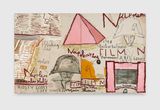
Charting Wylie’s continued mediation and assimilation of publicly circulated imagery, the new paintings also incorporate aspects of art history as well as fleeting impressions from her domestic life. Across several works, the artist renders compositions inspired by an ancient Turkish mosaic whose discovery was reported on in broadcast news in 2016.
Wylie features figures—skeletal, a man reaching for the moon—alongside motifs such as an empty Egyptian-style chair and a damaged triangular piece of the mosaic. The color palette of ochres, umbers, and rusty reds recalls that of Fra Angelico’s frescoes—“not overwhelming, not strident,” in Wylie’s words.
Wylie moves closer to home in the diptych The House Next Door, Or, Jumbo Meat Cleaver (2025). In the right panel, she depicts the house next door to hers, which she was able to see for the first time when her neighbor removed the bushes and shrubs between their gardens to repair a conjoining fence. Together, in movement, the two canvases create an object painting of the titular “meat cleaver,” the fence becoming the handle of the instrument.
Also on view is a selection of works on paper and older paintings that chart the development of Wylie’s recurring images and compositional style. Manor (2004) takes as its source an image from a national newspaper. In this painting, Wylie extends the bounds of the original picture’s format to create more space for the bathers—characters in a computer game—who are surrounded by a bright, pale blue-green reminiscent of the waters of a swimming pool.


British artist Rose Wylie (b. 1934) creates paintings and drawings that on first glance appear aesthetically simplistic, not seeming to align with any recognizable style or movement, but on closer inspection are revealed to be wittily observed and subtly sophisticated mediations on the nature of visual representation itself. The layers of newspaper that line her studio floor are a frequent source of material for the artist, as she encounters images by chance while working. Drawing from such wide-ranging cultural areas as film, fashion photography, literature, mythology, news images, sports, and individuals she meets in her day-to-day life, Wylie paints colorful and exuberant compositions that are uniquely recognizable. The artist has acknowledged her great admiration for Philip Guston, whose late paintings likewise make use of an idiosyncratic visual lexicon, the directness of cartoonish figures, and a flattened perspective, but simultaneously betray a deep awareness of art history and painterly conventions.


A respected voice in contemporary art discourse.
Focusing on ambitious storytelling and insightful art-world commentary. Ocula Magazine publishes in-depth interviews, critical essays and timely analysis on the artists, exhibitions and ideas driving the global art world.
Learn more about Ocula Magazine
Showcasing the best of the art world.
Ocula partners with galleries from around the world to highlight their artists, artworks and exhibitions. Gallery membership is by application and invitation, with each member vetted by an independent panel.
Learn more about Ocula Membership

Specialises in the sale of major artworks.
Led by a team with deep ties to the world’s leading auction houses, galleries and collectors. Ocula’s advisory team offers bespoke services to high-net-worth clients from around the world who are looking to acquire the best of contemporary and modern art.
Learn more about our team and services