




CALLUM INNES
b. 1962, United KingdomTurner Prize nominee Callum Innes is a Scottish painter best known for rigorously pared-back abstract painting, often described as a form of “un-painting.” Over more than four decades he has developed a distinctive language of monochrome canvases, dissolving colour fields and finely tuned geometric divisions that has secured his position among the leading painters of his generation.
Early Life and Education
Callum Innes was born in Edinburgh in 1962 and studied drawing and painting at Gray’s School of Art, Aberdeen (1980—84), before completing a postgraduate year at Edinburgh College of Art in 1985. He initially worked in a figurative mode, exploring mythological themes, but a 1987 Scottish Arts Council residency in Amsterdam was decisive, exposing him to the uncompromising abstraction of artists such as Barnett Newman and Lucio Fontana and prompting a move toward greater formal clarity and directness.
A key turning point came with the work From Memory (1989), in which he painted a leaf on corrugated cardboard so that the image appeared to sink into the material rather than sit on its surface. This collapsing of image and support into a single object fed directly into the process-based, materially attentive painting that would define his mature practice.
Artistic practice, Key series and Tondos
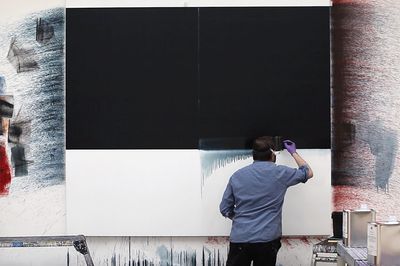
From early in his career Innes has made lushly painted yet austere canvases in rectilinear formats, building and eroding colour to produce works that are at once analytical and sensuous. His work is frequently described as abstract, yet he has emphasised that it remains rooted in lived experience and in a desire to register a kind of human presence through material processes. His signature method involves accumulating layers of oil paint or watercolour and then removing portions with turpentine, a strategy he understands less as erasure than as a kind of unveiling that reveals residues, ghosts of pigment and the history of the painting’s making.
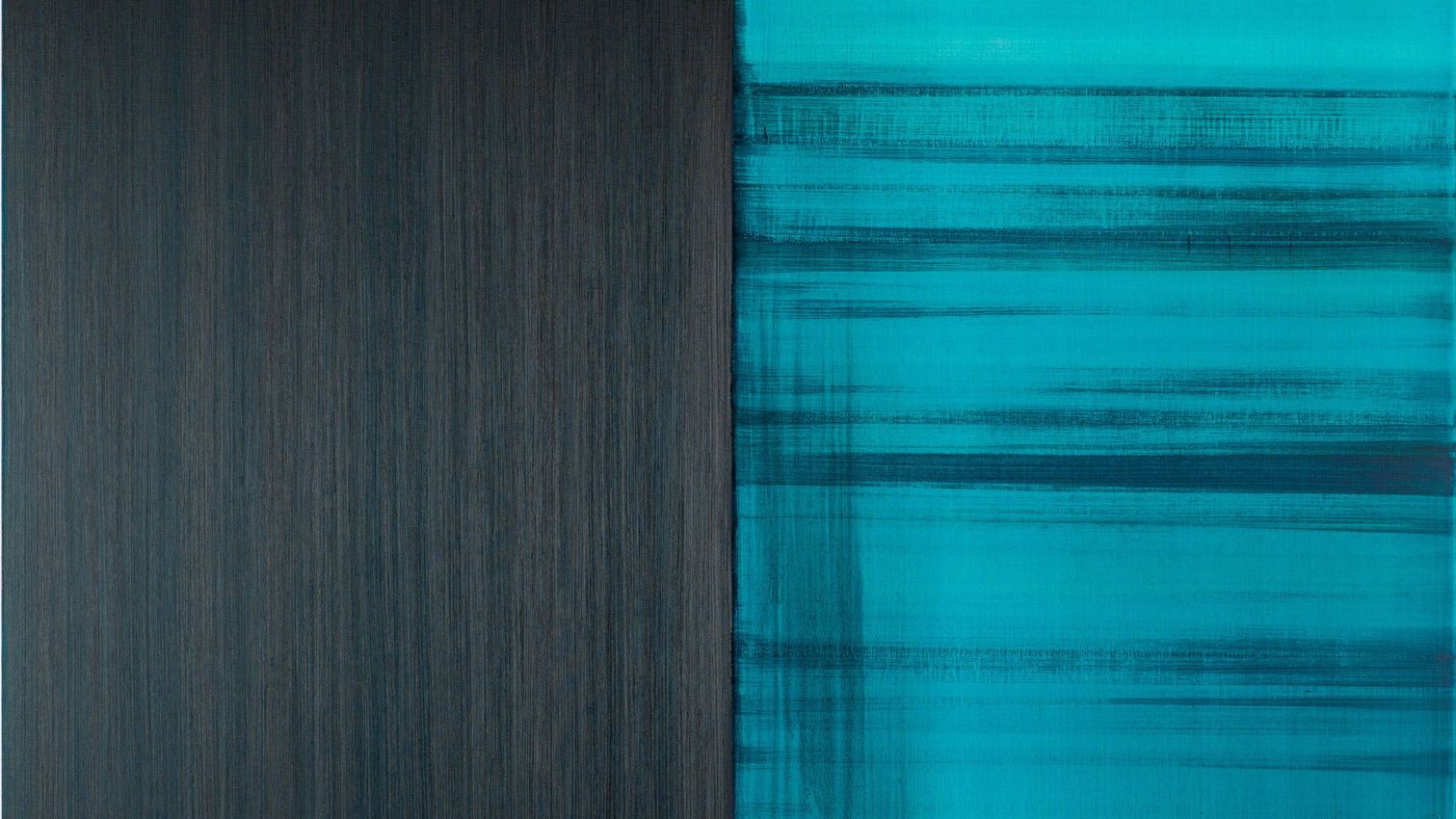
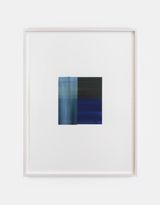
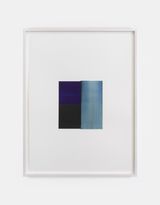
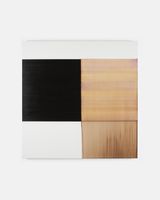
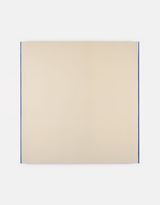
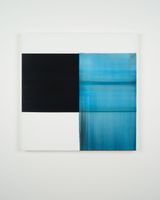
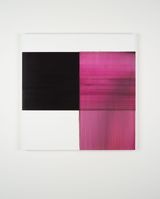
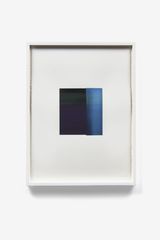
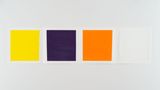
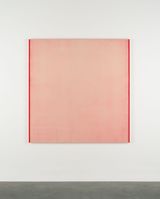
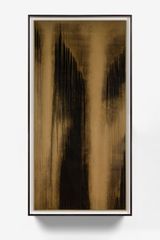
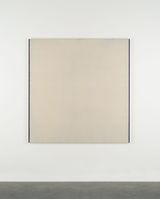
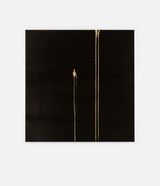
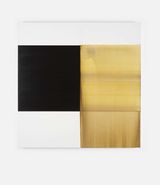
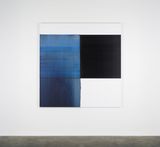
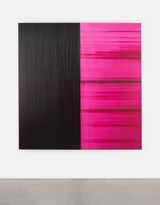
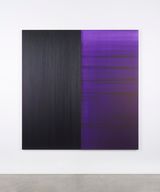
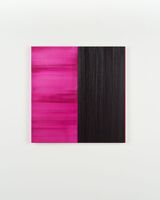
The early 1990s saw the emergence of several foundational series. Identified Forms (1990—ongoing), widely recognised as his first major body of work, introduced the systematic application and removal of paint as a way of suggesting existence through absence. This approach deepened in the Exposed Paintings (mid-1990s—ongoing), where dense monochrome fields occupy part of the canvas while adjacent areas are repeatedly washed back, leaving faint veils, drips and a fragile dividing line that registers the tension between construction and dissolution. Other key series—such as Monologue (early 1990s–ongoing), Isolated Forms and Formed Paintings (1990s–ongoing), and Agitated Verticals and Resonance (late 1990s–ongoing)—extend this grammar of “un-painting” into different spatial configurations, scales and chromatic relationships. Although the works appear non-referential, Innes has often noted that many begin from figurative prompts—plant structures, architecture or natural phenomena—which are then transformed through an exacting process into distilled, time-laden surfaces. He has also developed parallel bodies of sculpture and works on paper, notably watercolours (1990s–ongoing) that push the medium to its limits through pooling, staining and controlled erasure.
In 2022 Innes introduced a striking new format to his repertoire: the tondo. The catalyst was an invitation to paint the end of a whisky cask for a charity project, which prompted him to re-imagine his vocabulary within a circular support rich in art-historical resonance. While his methodology remains consistent—the repeated addition and removal of pigment in the Exposed Paintings and Split Paintings, and the interaction of different substances in the Shellac Paintings—the tondos have demanded important shifts in both psychology and form: the plywood panels offer a fast, firm surface, and the smaller rounded brush introduces a different physicality, bringing greater fluidity and directness than the slower, softer engagement of his canvases.
Exhibitions, Collections and Institutional Recognition
Innes began exhibiting in the mid- to late 1980s and gained early institutional prominence with solo shows at the ICA, London, and the Scottish National Gallery of Modern Art, Edinburgh, both in 1992. A major mid-career survey, From Memory, was presented at The Fruitmarket Gallery, Edinburgh, in 2006 and later toured to Modern Art Oxford and the Museum of Contemporary Art, Sydney, firmly consolidating his international reputation. In 2016 he was the subject of the retrospective I’ll Close My Eyes at De Pont Museum, Tilburg, accompanied by a substantial monograph, while in 2018 his first major solo exhibition in France, In Position, took place at Château La Coste in Provence, again with a dedicated publication. An exhibition at Kode — Lysverket Museum, Bergen, followed in 2024.
Other museum projects have included exhibitions at Kunsthalle Bern (1999), the Scottish National Gallery of Modern Art (2010), Neues Museum, Nuremberg (2013), De Pont Museum, Tilburg (2016) and Château La Coste, Le Puy-Sainte-Réparade (2018). His work has featured in major thematic shows such as Tate Britain‘s Watercolour (2011), GENERATION: 25 Years of Contemporary Art in Scotland at the Scottish National Gallery (2014), and Abstract Painting Now! at Kunsthalle Krems (2017), underscoring his importance within contemporary abstraction. In 2025 his solo exhibition Overleaf opened at Château La Coste, Aix-en-Provence, bringing together recent works from the ongoing Resonance series alongside two large-scale Exposed Paintings.
Innes’s paintings are held in major public collections including the Guggenheim Museum, New York; Tate, London; Centre Pompidou, Paris; the National Gallery of Australia, Canberra; San Francisco Museum of Modern Art; Contemporary Arts Museum Houston; the Irish Museum of Modern Art, Dublin; Kunsthaus Zürich; and the Scottish National Gallery of Modern Art. His strong institutional presence is mirrored by long-term representation with leading galleries such as Sean Kelly (New York and Los Angeles), Ingleby (Edinburgh), Frith Street Gallery (London), OSL contemporary (Oslo), i8 Gallery (Reykjavík) and Kerlin Gallery (Dublin), with recent solo shows including Turn at Sean Kelly, Los Angeles (2024), Present Perfect at OSL contemporary, Oslo (2024), and St Sebastian at Kerlin Gallery, Dublin (2023).
Awards, Critical Reception and Recent Developments
Innes was shortlisted for the Turner Prize in 1995 and subsequently received the NatWest Prize for Painting (1998) and the Jerwood Painting Prize (2002), honours that helped cement his prominence within British and international painting. Critics consistently point to the meditative quality of his work, its balance of severity and sensuality, and the way his canvases register accumulated time, labour and decision-making, themes that have been explored across essays and reviews in monographs and the art press.
Based between Edinburgh and Oslo, Innes continues to refine and complicate his procedures, exploring new chromatic relationships, formats and installation contexts while maintaining the disciplined, process-driven core of his practice. Recent exhibitions in Europe, North America and Asia show him extending the possibilities of monochrome and erasure in ways that remain faithful to his early insight that a painting can function simultaneously as an object in time and a quietly resonant register of human experience.
Callum Innes FAQs
Who is Callum Innes?
Callum Innes (b. 1962, Edinburgh) is a Scottish painter celebrated for his rigorously pared-back approach to abstract painting and his distinctive process of “un-painting,” in which layers of pigment are repeatedly applied and then dissolved. Over more than four decades he has become a central figure in contemporary abstraction, known for monochrome canvases, dissolving colour fields and subtly resonant geometric structures.
What is distinctive about Callum Innes’s painting process?
Callum Innes builds up layers of oil paint or watercolour and then removes sections with washes of turpentine, allowing drips, bleeds and traces of pigment to remain visible on the surface. This additive and subtractive method creates a productive tension between control and fragility, so that each work becomes a record of time, decision and material chance rather than a purely formal exercise.
What does “un-painting” mean in relation to Callum Innes’ work?
In relation to Callum Innes’ work, “Un-painting” describes the artist’s use of erasure as a generative act: instead of simply applying paint to create an image, he repeatedly dissolves and removes it, revealing the painting’s history in the process. The exposed underlayers, rivulets and stains give his abstract compositions a sense of vulnerability and presence that Éric de Chassey has described as “magnificent fragilities.”
What is the ‘Exposed Paintings’ series by Callum Innes refere to?
Exposed Paintings by Callum Innes are large abstract works in which the artist paints dense monochrome panels and then systematically washes away sections with turpentine, leaving soft veils, runs and a sharply defined edge between painted and exposed areas. The series exemplifies his interest in revealing the painting’s making, so that the surface holds both the solidity of colour and the fragility of its partial removal.
Why are tondo paintings important in Callum Innes’ practice?
In 2022, Callum Innes introduced circular tondo paintings, a format inspired by an invitation to paint the end of a whisky cask for a charity auction. Executed on plywood with a smaller rounded brush, these works translate his familiar processes of layering and erasure into a new geometry, intensifying the physical engagement of the brush and the viewer’s sense of rotation and movement around the painting.
Which museums hold works by Callum Innes?
Callum Innes’s paintings are represented in major public collections worldwide, including the Guggenheim Museum, New York; Tate, London; Centre Pompidou, Paris; National Gallery of Australia, Canberra; San Francisco Museum of Modern Art; Contemporary Arts Museum Houston; Irish Museum of Modern Art, Dublin; Kunsthaus Zürich; and the Scottish National Gallery of Modern Art. The breadth of these holdings reflects his international stature in contemporary painting.
What awards has Callum Innes received?
Callum Innes was shortlisted for the Turner Prize in 1995 and has received the NatWest Prize for Painting (1998) and the Jerwood Painting Prize (2002). These awards, along with extensive critical writing and curatorial attention, have played a significant role in establishing his reputation within British and international art discourse.
Ocula | 2026


View Callum Innes' Artworks
























Explore and Follow Artists Shaping Contemporary Art
A respected voice in contemporary art discourse.
Focusing on ambitious storytelling and insightful art-world commentary. Ocula Magazine publishes in-depth interviews, critical essays and timely analysis on the artists, exhibitions and ideas driving the global art world.
Learn more about Ocula Magazine
Showcasing the best of the art world.
Ocula partners with galleries from around the world to highlight their artists, artworks and exhibitions. Gallery membership is by application and invitation, with each member vetted by an independent panel.
Learn more about Ocula Membership
Specialises in the sale of major artworks.
Led by a team with deep ties to the world’s leading auction houses, galleries and collectors. Ocula’s advisory team offers bespoke services to high-net-worth clients from around the world who are looking to acquire the best of contemporary and modern art.
Learn more about our team and services