Gagosian is pleased to announce Peace Core, an exhibition by Christopher Kulendran Thomas, opening at the gallery’s Park & 75 location in New York on September 4, 2025. This is the artist’s first solo exhibition in the United States. A gallery dedicated to Kulendran Thomas’s work will be on view starting September 2 at The Museum of Modern Art, New York, with other major presentations of his work taking place this winter at the New Museum, New York; K21 museum, Düsseldorf, Germany; the Museum of Contemporary Art Australia, Sydney; and as part of the 14th Taipei Biennial.
For much of the past decade, Kulendran Thomas has been using artificial intelligence tools to question the myths of Western individualism. His paintings metabolize the colonial art history that came to dominate in Sri Lanka after his family, who are Tamil, left escalating ethnic violence there. The artist often exhibits these paintings with video installations that fuse propaganda and counterpropaganda into a speculative vortex of alternate histories.
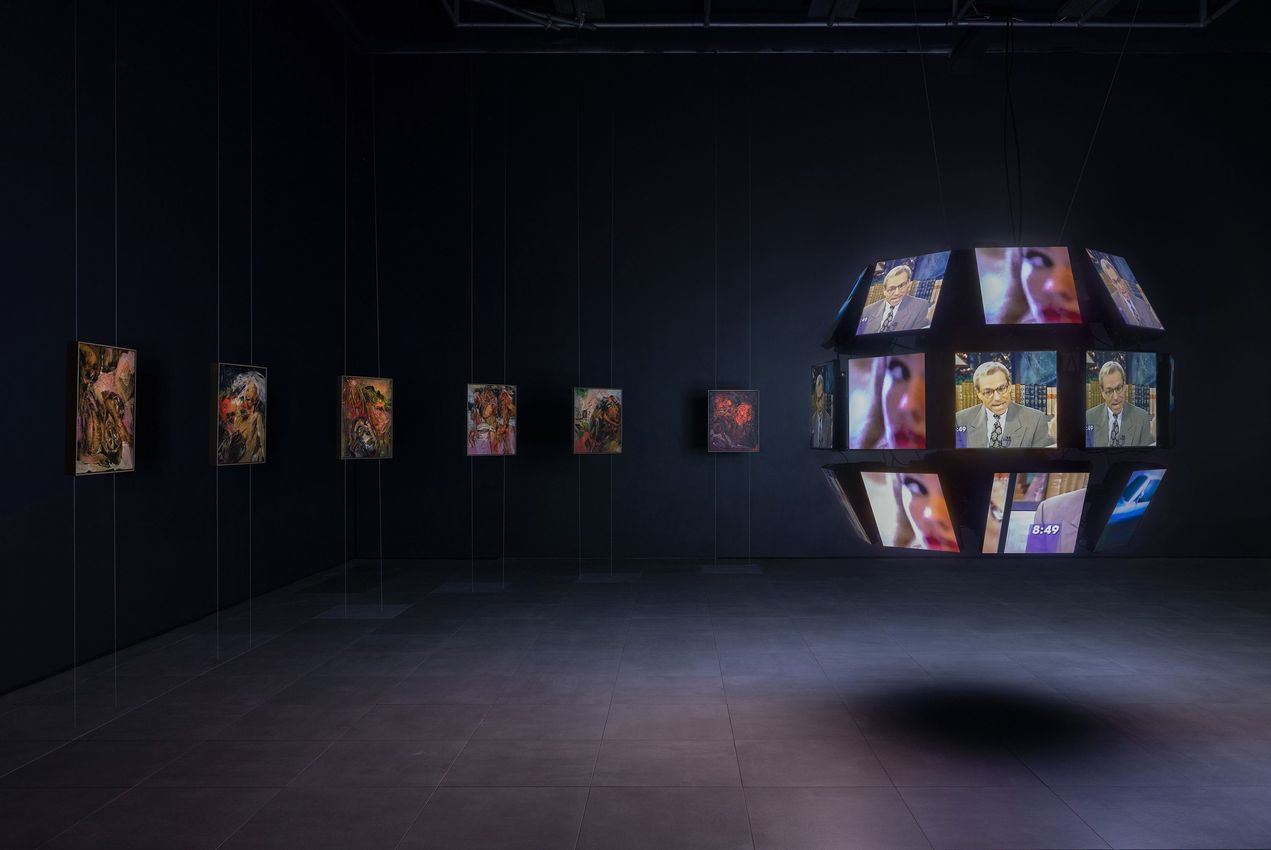
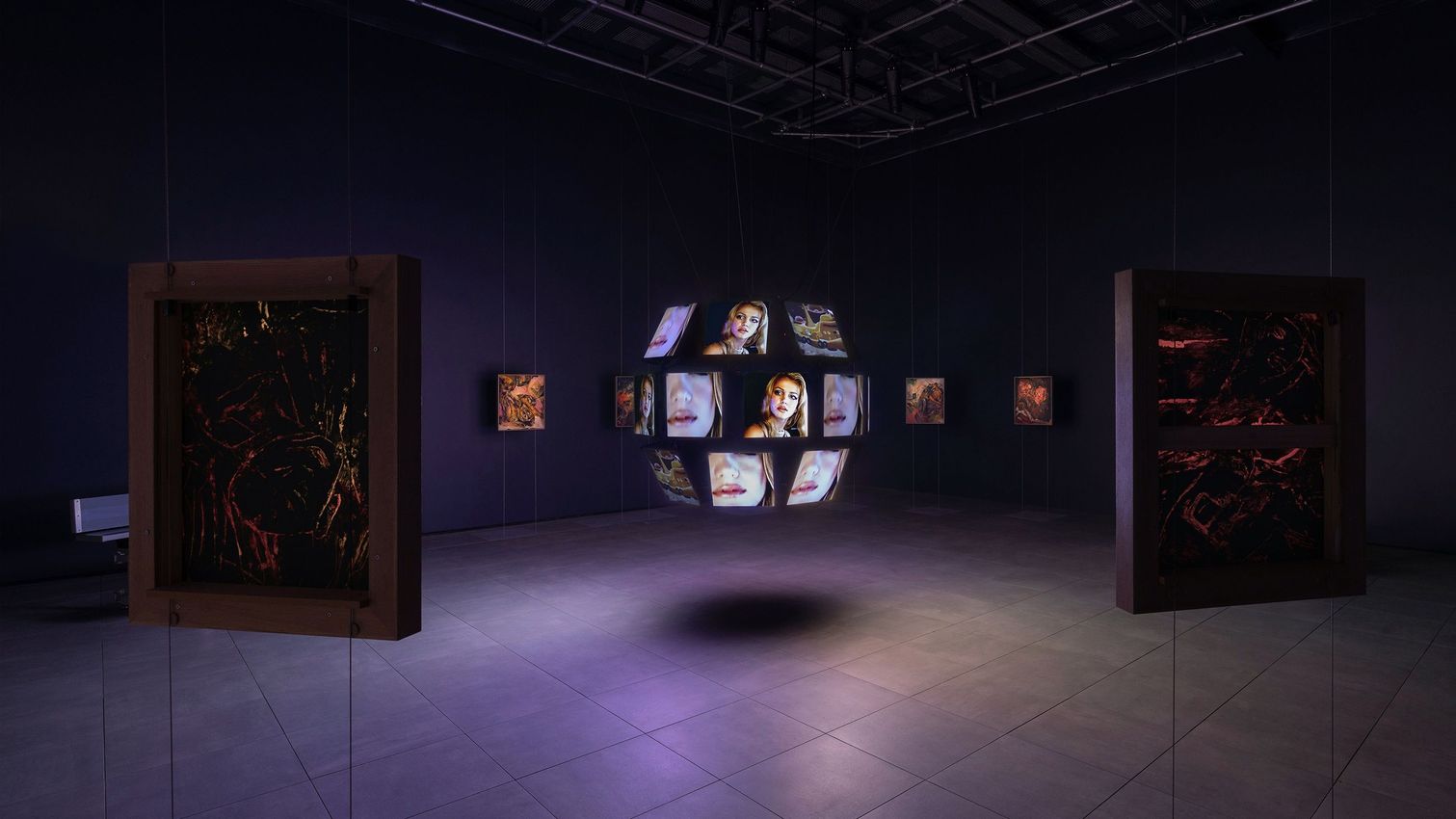
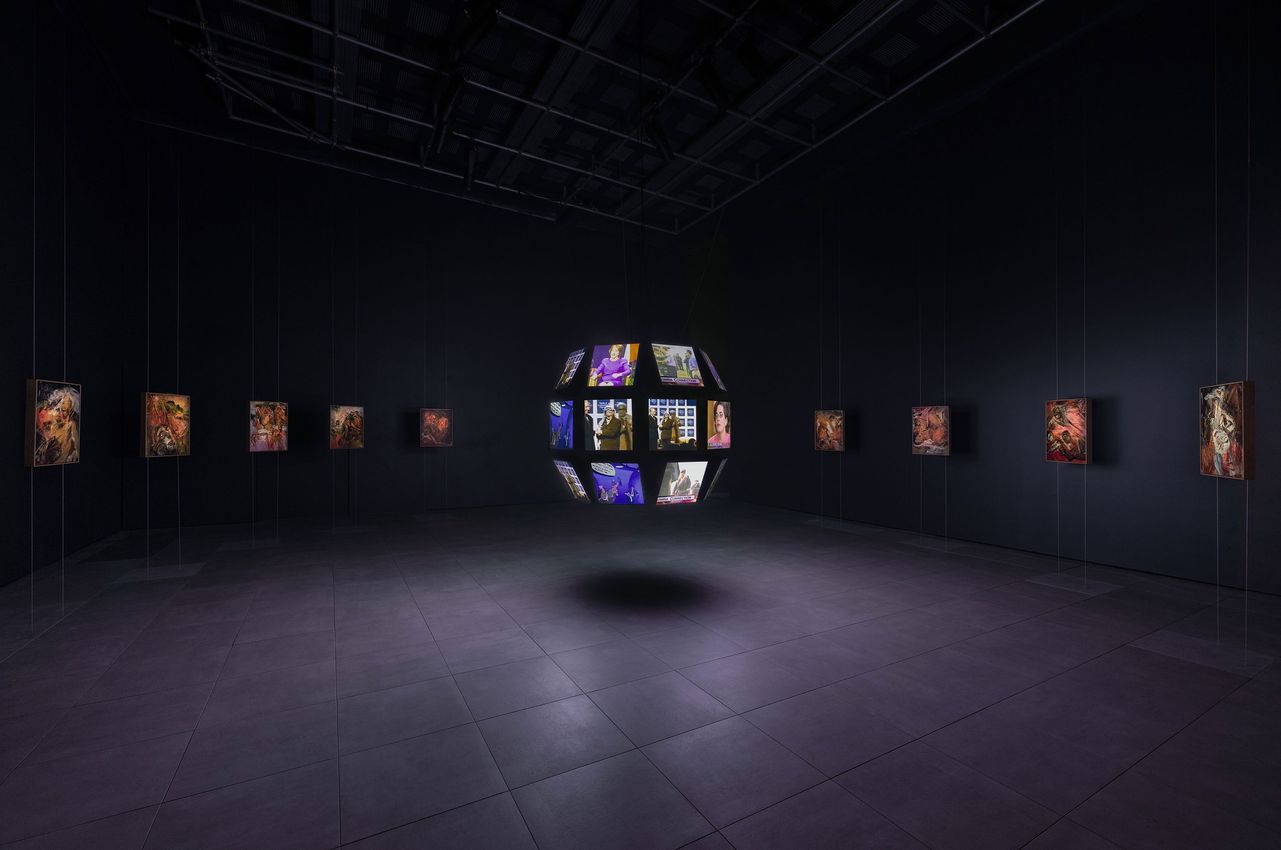
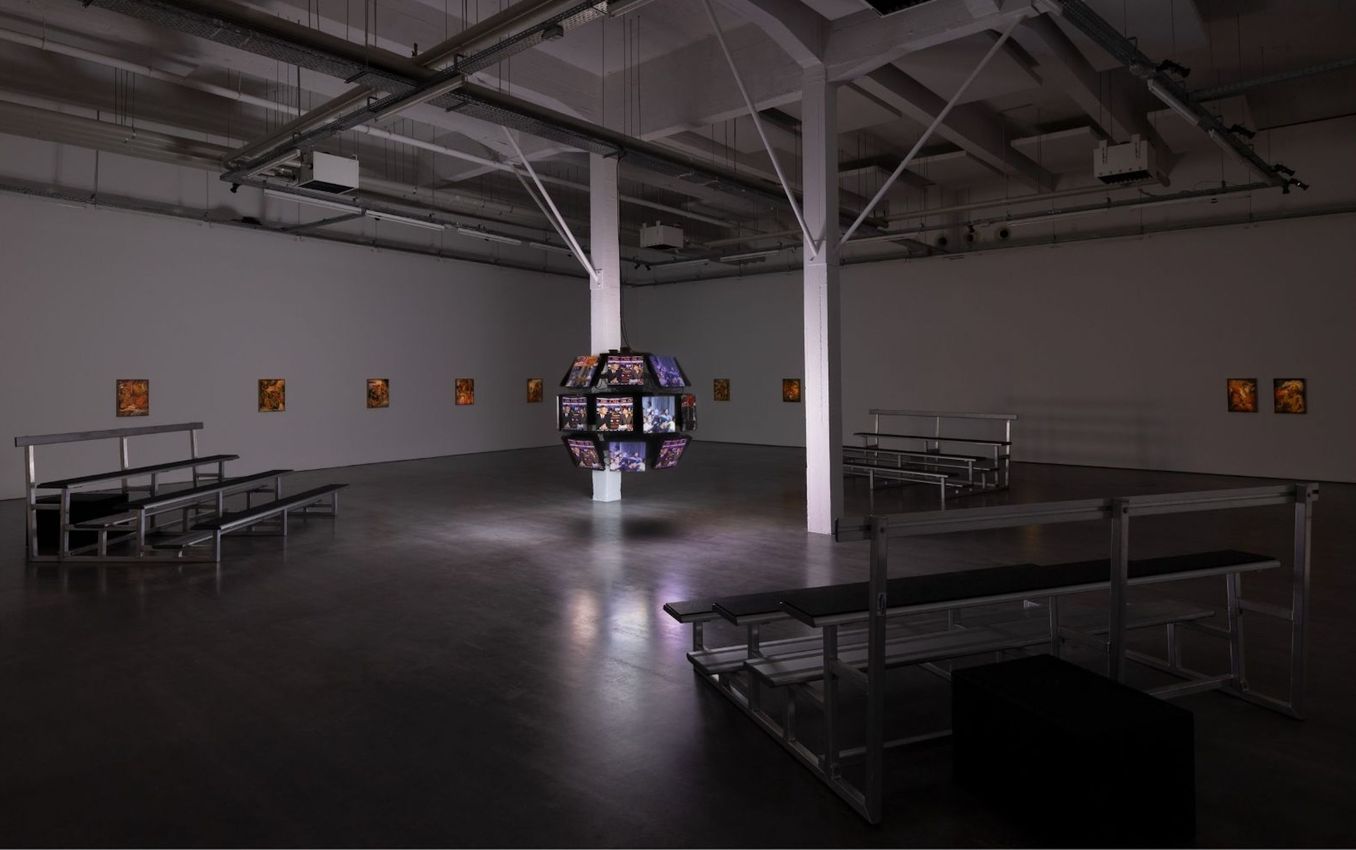
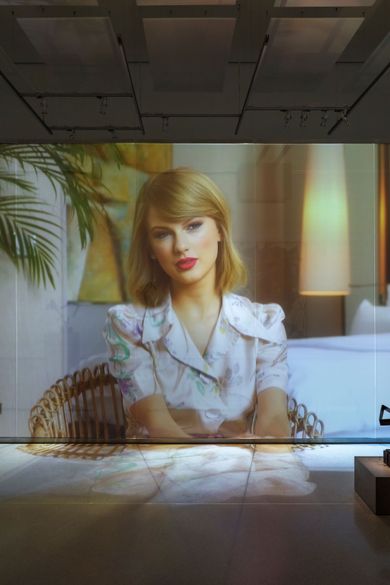
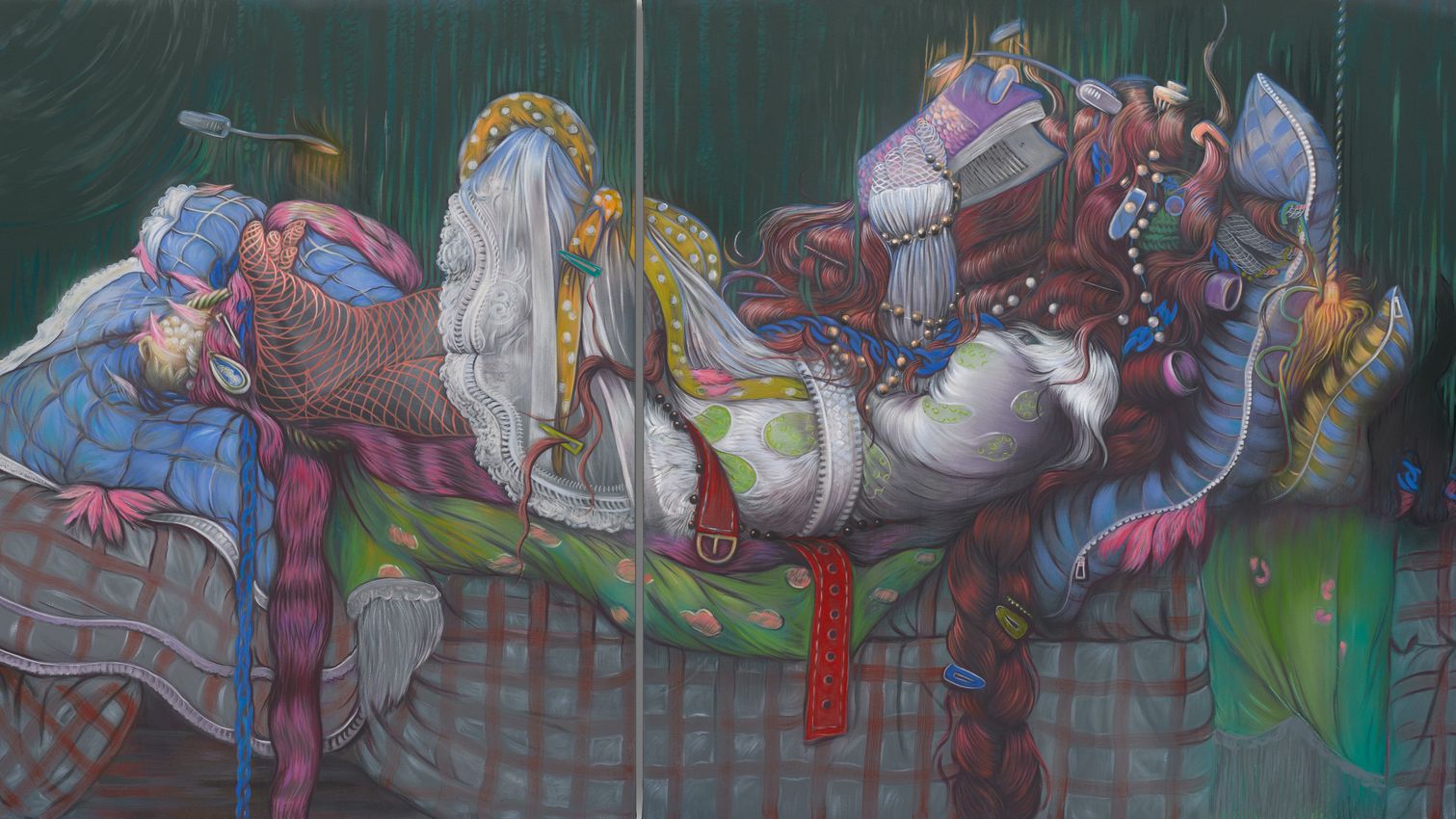
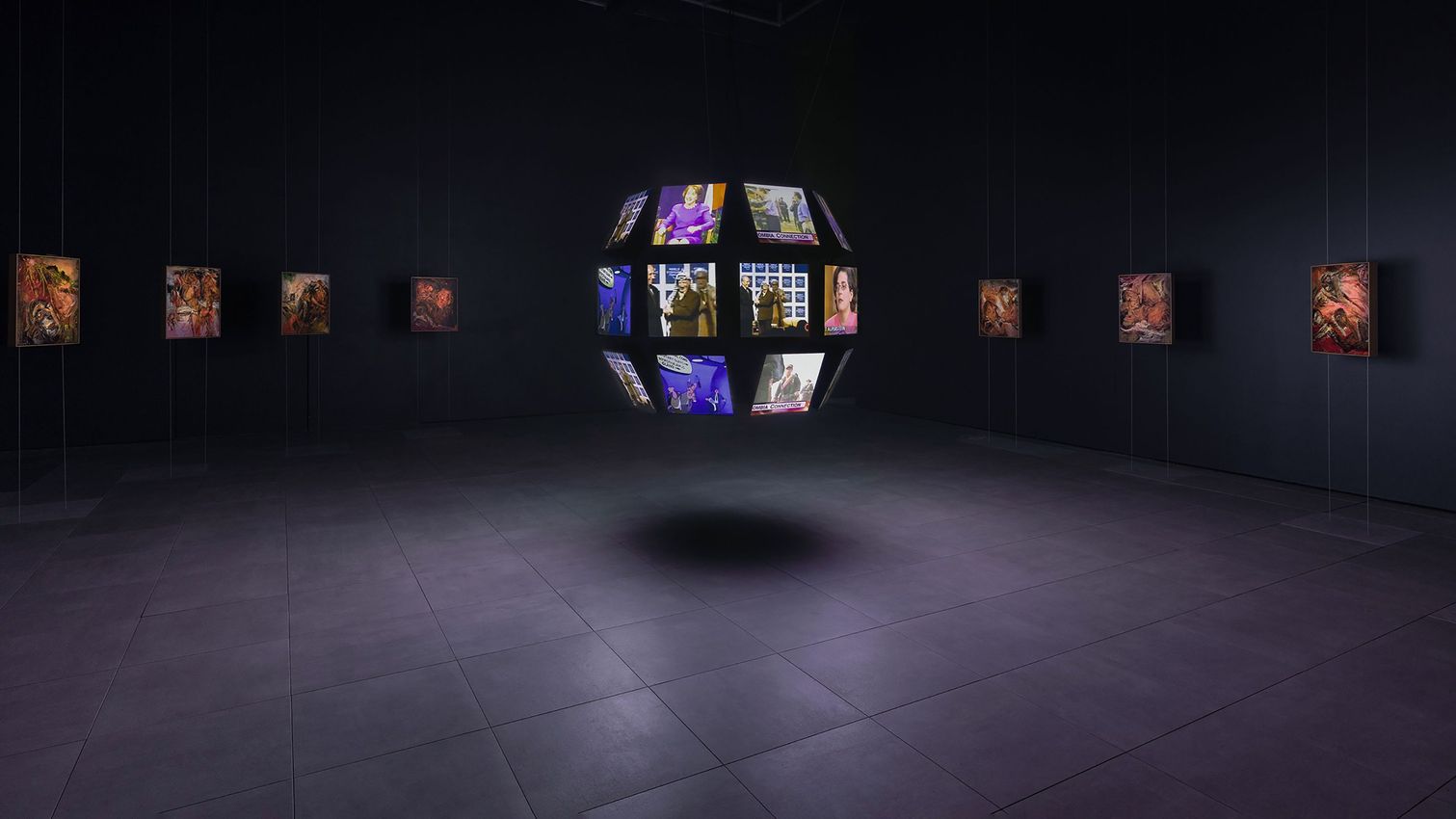
The exhibition takes its name from its centerpiece, Peace Core (sphere) (2024), a video work of infinite duration that continually auto-edits American television footage first broadcast in the moments before the world-changing events of September 11, 2001. Originally commissioned for Kulendran Thomas’s recent exhibition at Wiels Contemporary Art Centre in Brussels, and realized together with his longtime collaborator Annika Kuhlmann, this work is juxtaposed with eleven paintings that depict a largely undocumented massacre on the beaches of Mullivaikkal, Sri Lanka, that was perpetrated in 2009 in the geopolitical aftermath of the “War on Terror” and went largely unwitnessed by the outside world. Painted by hand, ambiguous figures merge with their surroundings through allusive, expressionistic brushwork. Lacking documentary evidence, Kulendran Thomas imagined these scenes by engaging with the visual language of the colonial history that precipitated the violence they depict—a visual language often seen as synonymous with artistic freedom, but which has also been deployed by the West as a form of soft power.
Produced collaboratively with the artist’s studio team, Kulendran Thomas’s paintings are composed using a neural network “trained” on the work of many of Sri Lanka’s most celebrated artists, who were influenced by the canonical modernisms that European settlers brought to the island. The paintings’ uncannily familiar yet alien compositions are enlivened by expressive gestures that slip across art historical timelines. While seeming to embody the fiction of the individual encoded into that canon, they paradoxically also channel a networked collective consciousness, gently subverting the essentialist ideas at the core of identity politics, the kind of politics that tore apart the artist’s family homeland.
The eleven canvases on view are illuminated by Peace Core‘s revolving sphere of twenty-four screens suspended in the center of the gallery. Evocative of a newsroom, a trading floor, or video art of the 1980s, the spherical constellation streams television footage that was first broadcast live twenty-four years ago. This footage and accompanying sound are endlessly remixed and reedited in real time by an AI algorithm trained on the compositional methods of “vaporwave” music from the 2010s and the editing style of early “corecore” videos on TikTok, circa 2022, in which seemingly arbitrary music and video are combined for emotional affect.
Bathed in the warm glow of a perpetually suspended illusion of innocence, Kulendran Thomas’s exhibition moves fluidly through multiple eras of art history and media technology, subtly confronting our linear conception of time and the attendant ideas of contemporaneity and originality that structure not only artistic value, but also Western consciousness itself. Juxtaposing two historical mediums of soft power, painting and television, it also brings together two “ground zeros”—one that was broadcast live to billions and another that occurred in its aftermath, unseen by the rest of the world. Merging automation and virtuosity, Kulendran Thomas’s practice does not seek one unified cultural voice but operates instead through hybridity and tension, reflecting perhaps a diasporic condition of fractured belonging, a kind of freedom in dislocation.
Gagosian will host a conversation between Kulendran Thomas and Joshua Citarella within the exhibition on Thursday, September 4, at 5:30pm, followed by an opening reception from 6 to 8pm.
Christopher Kulendran Thomas’s work is held in significant public collections, including The Museum of Modern Art, New York. Recent solo exhibitions include Another World, Institute of Contemporary Arts, London, and KW Institute for Contemporary Art, Berlin (2022–23); FOR REAL, Kunsthalle Zürich (2023); and Safe Zone, Wiels, Brussels (2024–25, traveled to FACT, Liverpool, England, 2025). Kulendran Thomas is a cofounder of EARTH.net, New York and Los Angeles.

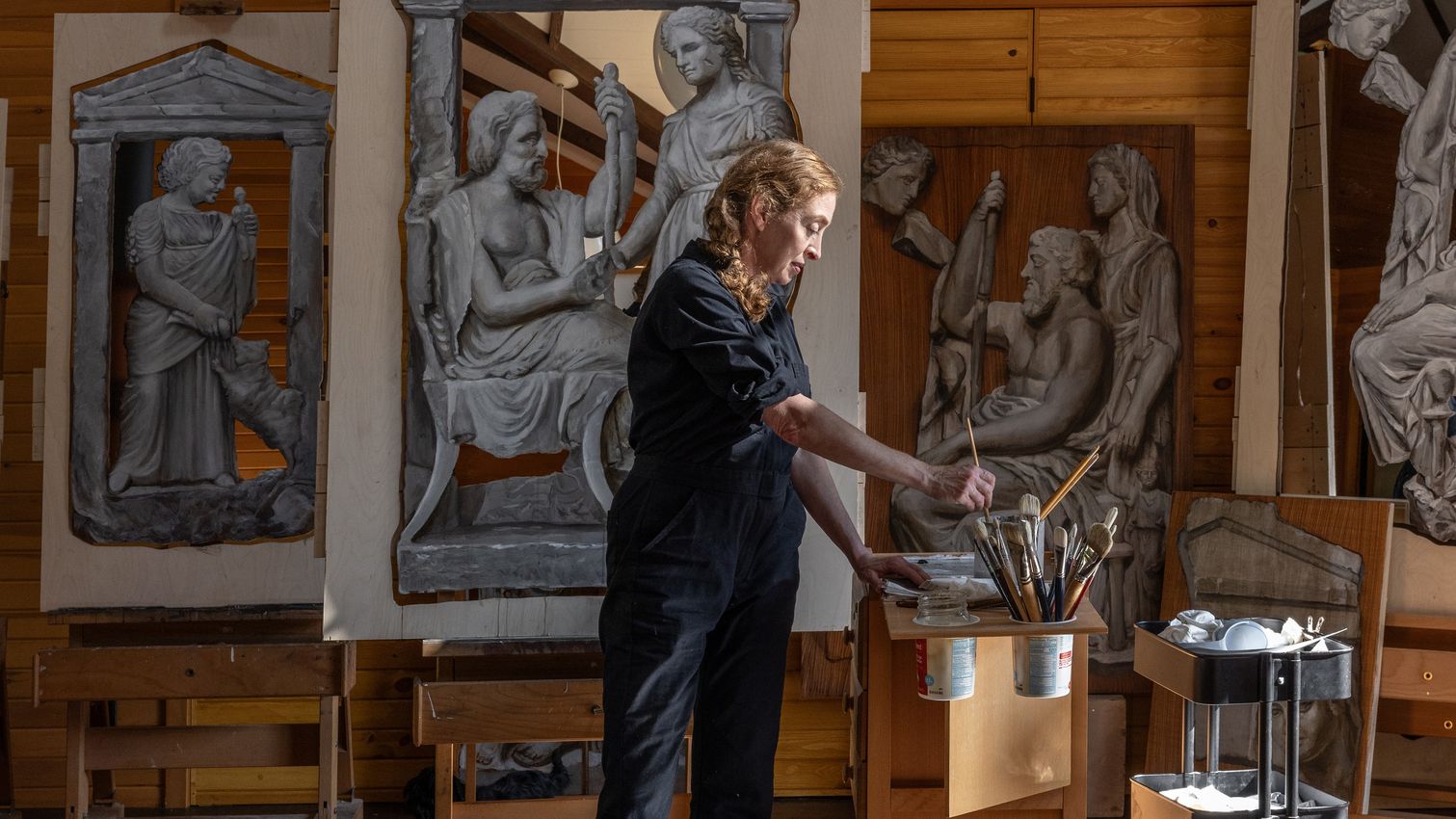
Christopher Kulendran Thomas’ (b. 1979; lives and works in Berlin) paintings algorithmically metabolise Sri Lanka’s colonial art history. Growing up in London after his family left escalating ethnic oppression in Sri Lanka—and influenced from afar by his Sri Lankan contemporaries— Kulendran Thomas is interested in how particular conceptions of human expression are transmitted from the centres of global art power and interpreted at the peripheries of where those narratives are defined. By generating new compositions in the form of PNGs through a neural network trained to reproduce patterns of influence of the Western canon on Sri Lanka’s contemporary art scene, the resulting images are painted by Kulendran Thomas’ studio by hand, bringing another layer of interpretation on an already simulated reality. As a result, these works question human creativity that is reproduced memetically, as it offers a lens into the ambiguous confines of the algorithmic and the human, the individual and the collective as well as authenticity and imitation, while simultaneously questioning how history is written and by whom.


A respected voice in contemporary art discourse.
Focusing on ambitious storytelling and insightful art-world commentary. Ocula Magazine publishes in-depth interviews, critical essays and timely analysis on the artists, exhibitions and ideas driving the global art world.
Learn more about Ocula Magazine
Showcasing the best of the art world.
Ocula partners with galleries from around the world to highlight their artists, artworks and exhibitions. Gallery membership is by application and invitation, with each member vetted by an independent panel.
Learn more about Ocula Membership

Specialises in the sale of major artworks.
Led by a team with deep ties to the world’s leading auction houses, galleries and collectors. Ocula’s advisory team offers bespoke services to high-net-worth clients from around the world who are looking to acquire the best of contemporary and modern art.
Learn more about our team and services