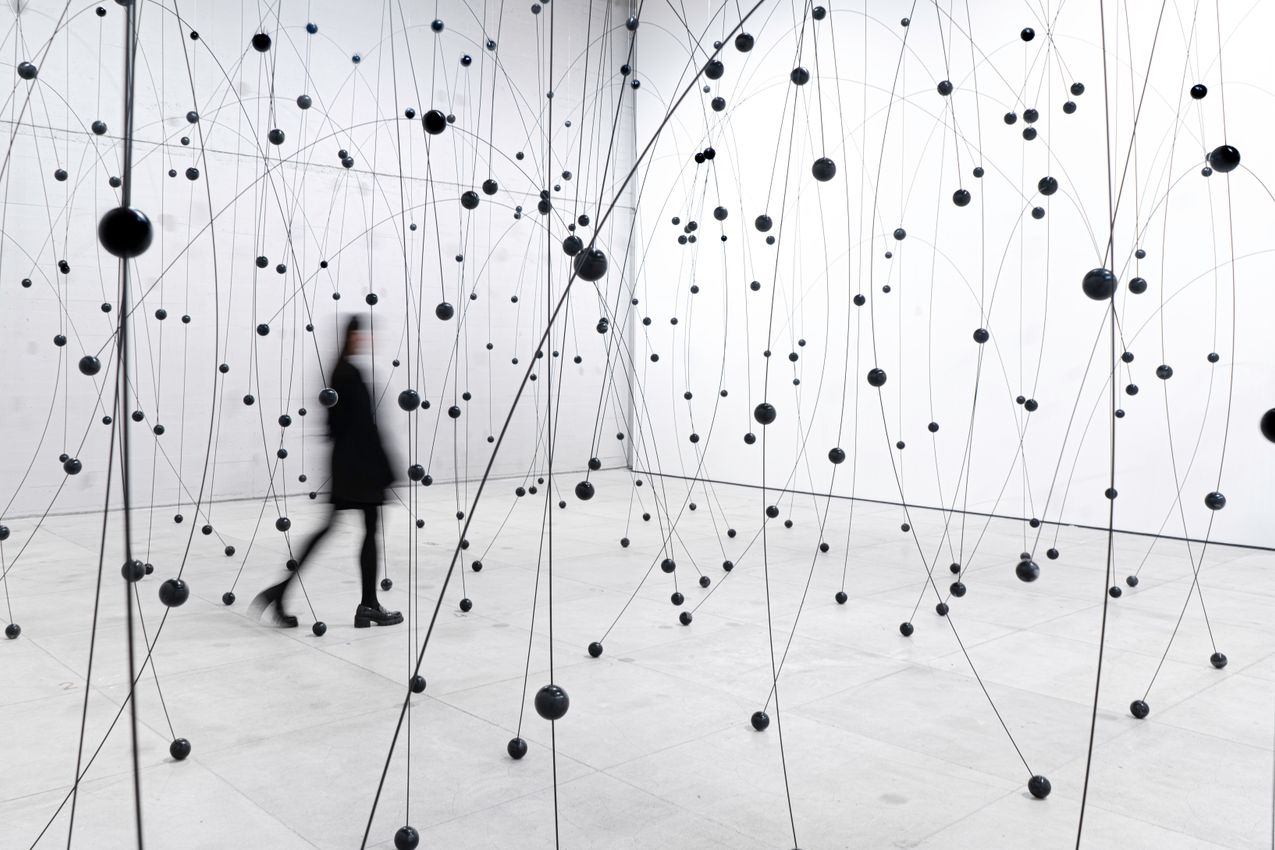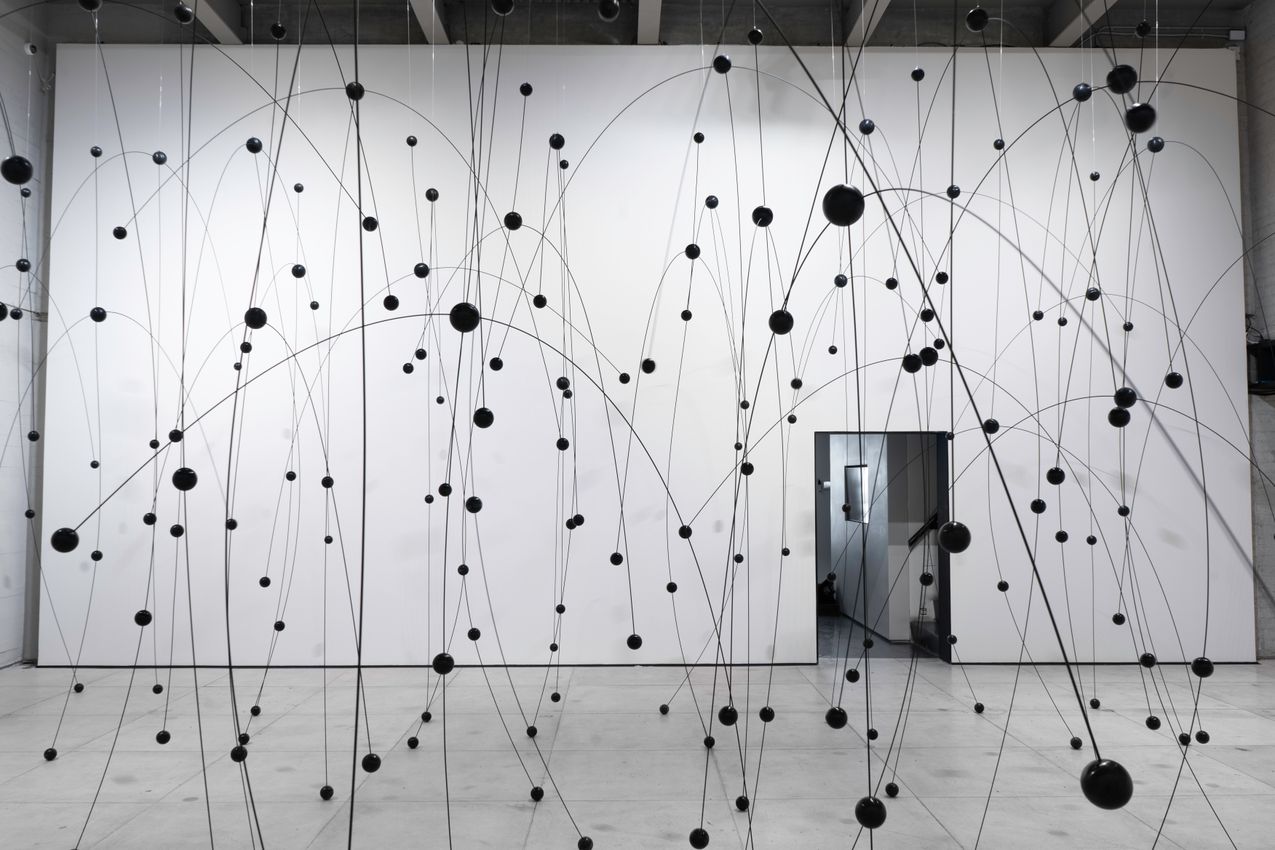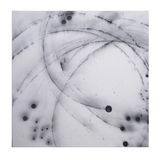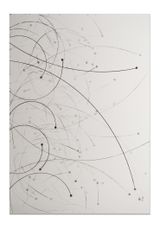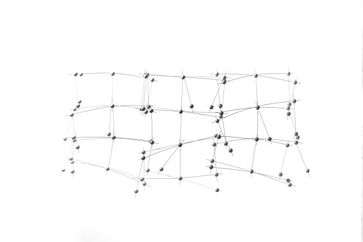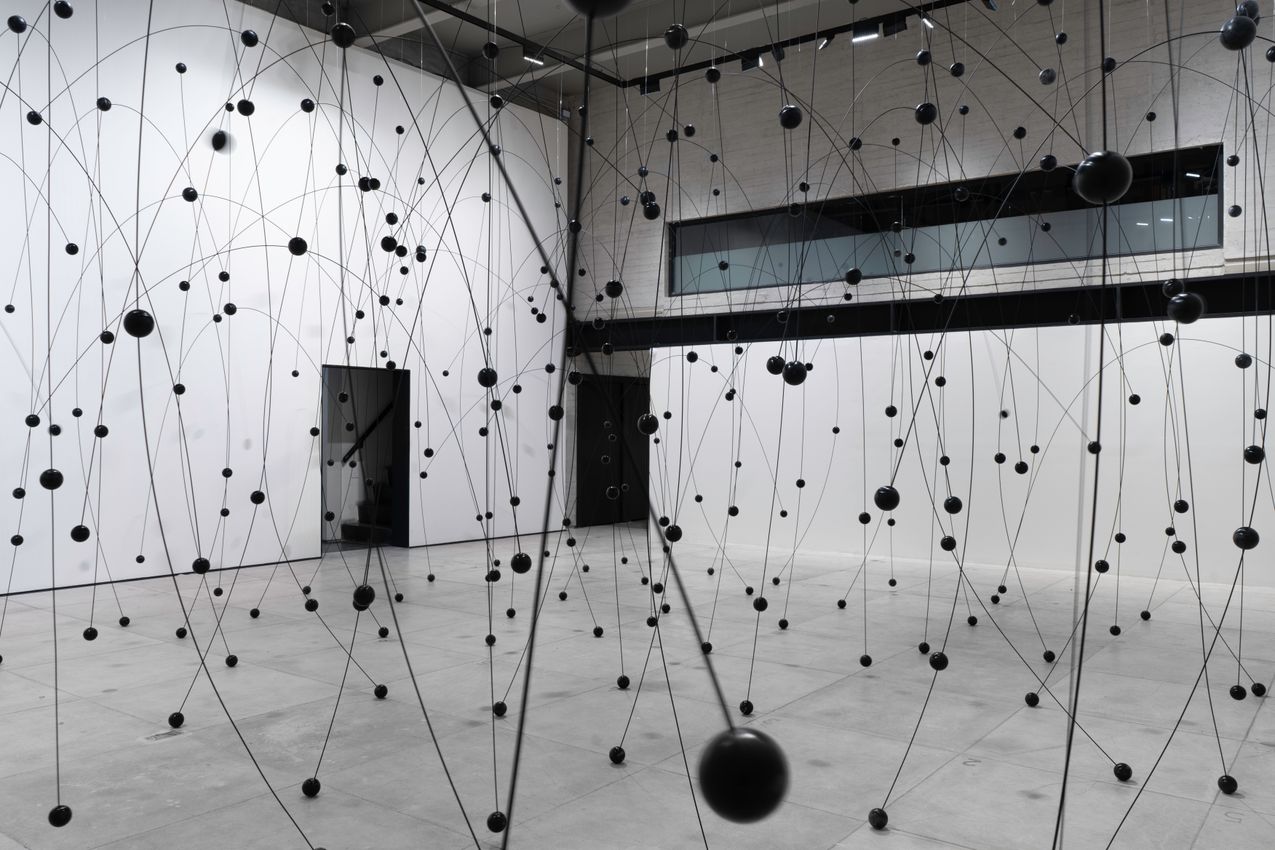
Monotypes, drawings, paintings and a rod installation occupy the space of the Galería RGR, evoking a model of work production like the one the semiologist Umberto Eco conceived in the early 1960s: the “opera aperta.” While the work of art mirrors the variables and contingencies of its context, the history, language, gender, sexuality, ideology, and culture, for Eco only the material of art can offer the appropriate information to the form it adopts. In this sense, every work of art, both past and present, is open.
The artist Magdalena Fernández—trained between Caracas and Milan during the debates on postmodernism and post humanism—embraced the practice of abstraction against the current, and has since undertaken a tireless renovation of the historical materials of geometric abstraction and constructivism, through a slow, precise, and delicate work. To this end, Fernández has confronted the vicissitudes that come with undoing the bodies of sculpture, painting and moving images, with the intention of building real or virtual spaces. In her practice, science and art are often interchangeable terms. Her approach to three-dimensionality explores negative space and the vector and interstices that unfold and open the work of art to polysemic dimension. According to Norma Morales, engraving teacher at TAGA—graphic experimentation workshop where Fernández has developed several monotype series,—“the flash, reverb and cloudscape are present phenomena” in the artist’s research, who has translated them plastically into drawing.
The exhibition prepared by Fernández for RGR’s 2024 program closure includes a group of splendid works which, on the one hand, research the trajectory of moving bodies to the point of disintegration, and on the other, invite the public to create a poetic field in an open work were all meaning is possible.
Magdalena Fernández’s versatility as an artist is a reflection of her path through the fields of physics, mathematics, graphic design, visual and sound arts. Since the 1990s, she began to experiment with participative works that echoed the profound modernist history of Venezuelan art, referring to interventions in public spaces and collective experiences such as those previously configured by artists like Jesús Rafael Soto.

RGR is a contemporary art gallery committed to fostering dialogue across generations, movements, and artistic practices. Founded in 2018 in Mexico City, the gallery presents a diverse program that brings together established artists, historical legacies, and emerging voices shaping the contemporary art landscape. With a strong focus on experimentation and critical discourse, Galería RGR represents both pioneering figures in modern and contemporary art and contemporary artists exploring new frontiers in painting, sculpture, installation, and digital media. Its exhibition program encompasses a wide range of artistic approaches, from geometric precision to conceptual and expansive narratives that reflect the cultural and social context of our time.

A respected voice in contemporary art discourse.
Focusing on ambitious storytelling and insightful art-world commentary. Ocula Magazine publishes in-depth interviews, critical essays and timely analysis on the artists, exhibitions and ideas driving the global art world.
Learn more about Ocula Magazine
Showcasing the best of the art world.
Ocula partners with galleries from around the world to highlight their artists, artworks and exhibitions. Gallery membership is by application and invitation, with each member vetted by an independent panel.
Learn more about Ocula Membership

Specialises in the sale of major artworks.
Led by a team with deep ties to the world’s leading auction houses, galleries and collectors. Ocula’s advisory team offers bespoke services to high-net-worth clients from around the world who are looking to acquire the best of contemporary and modern art.
Learn more about our team and services