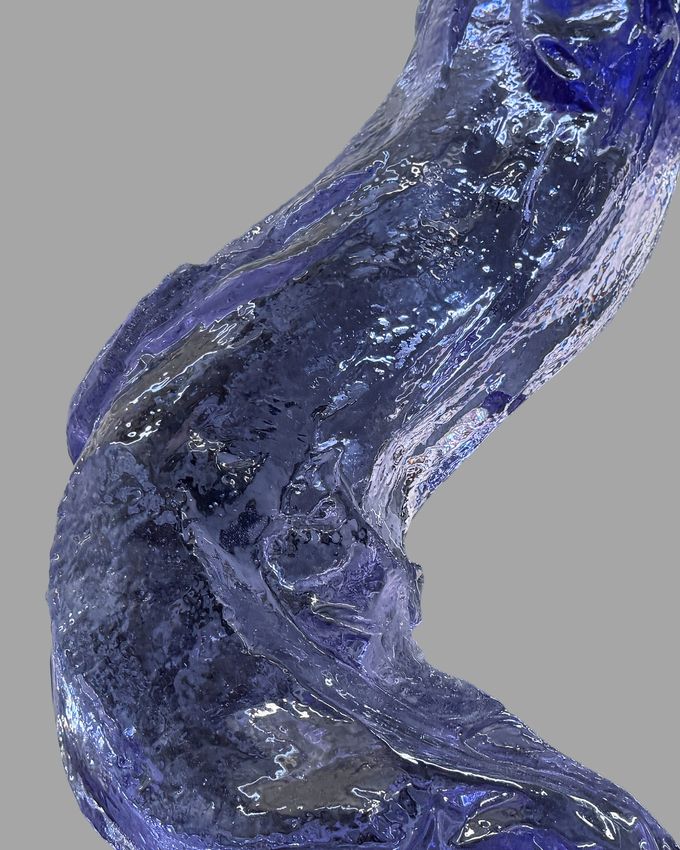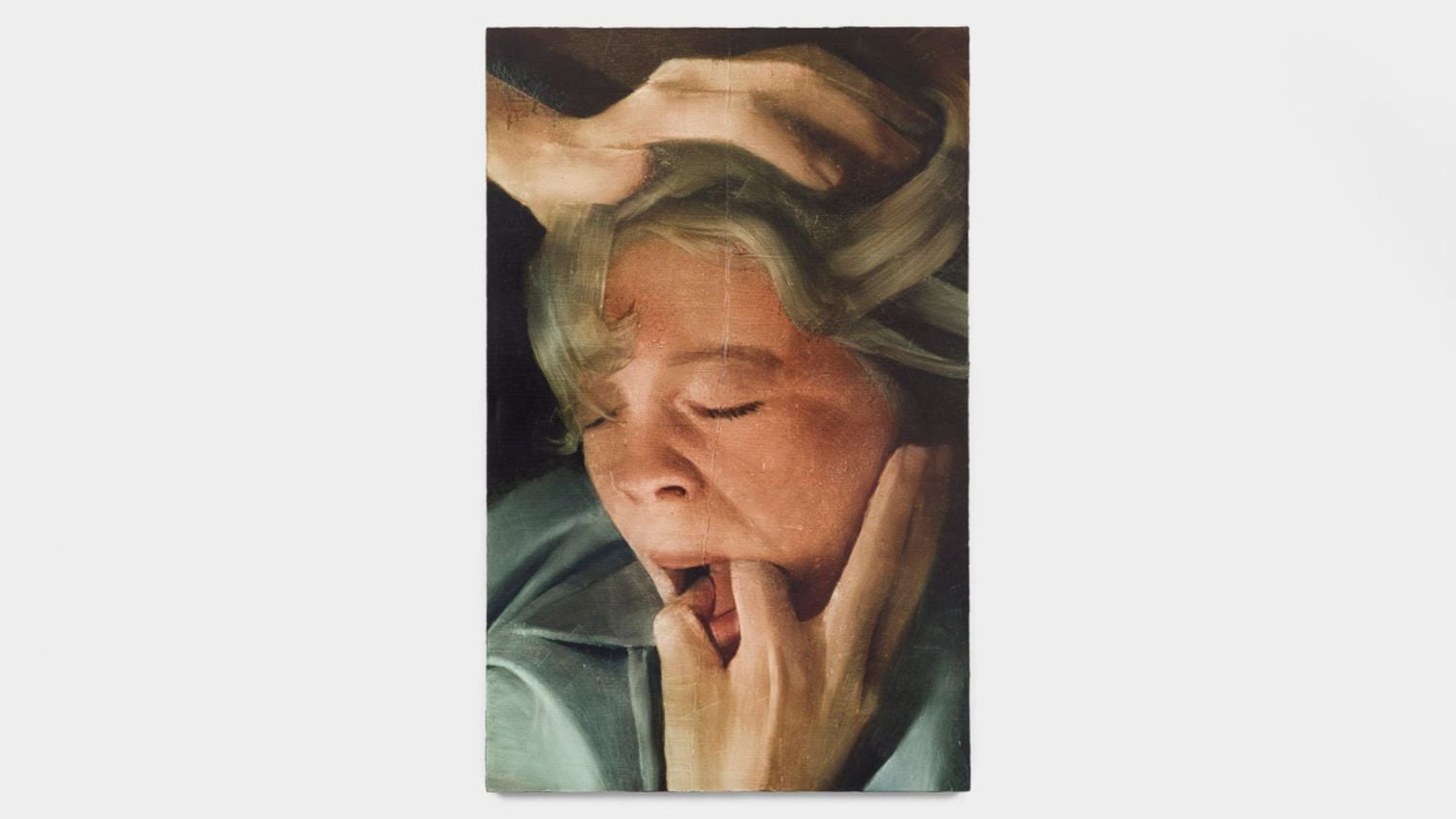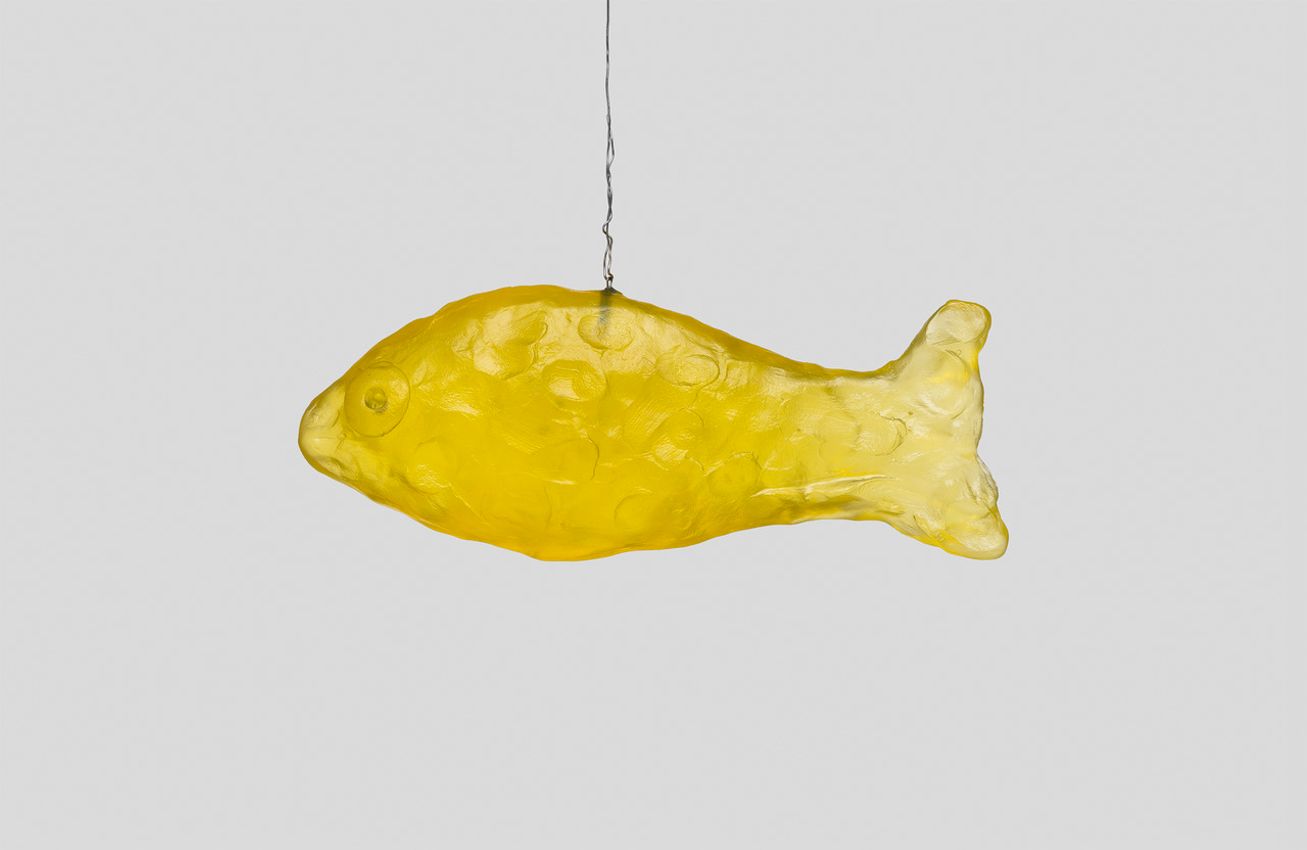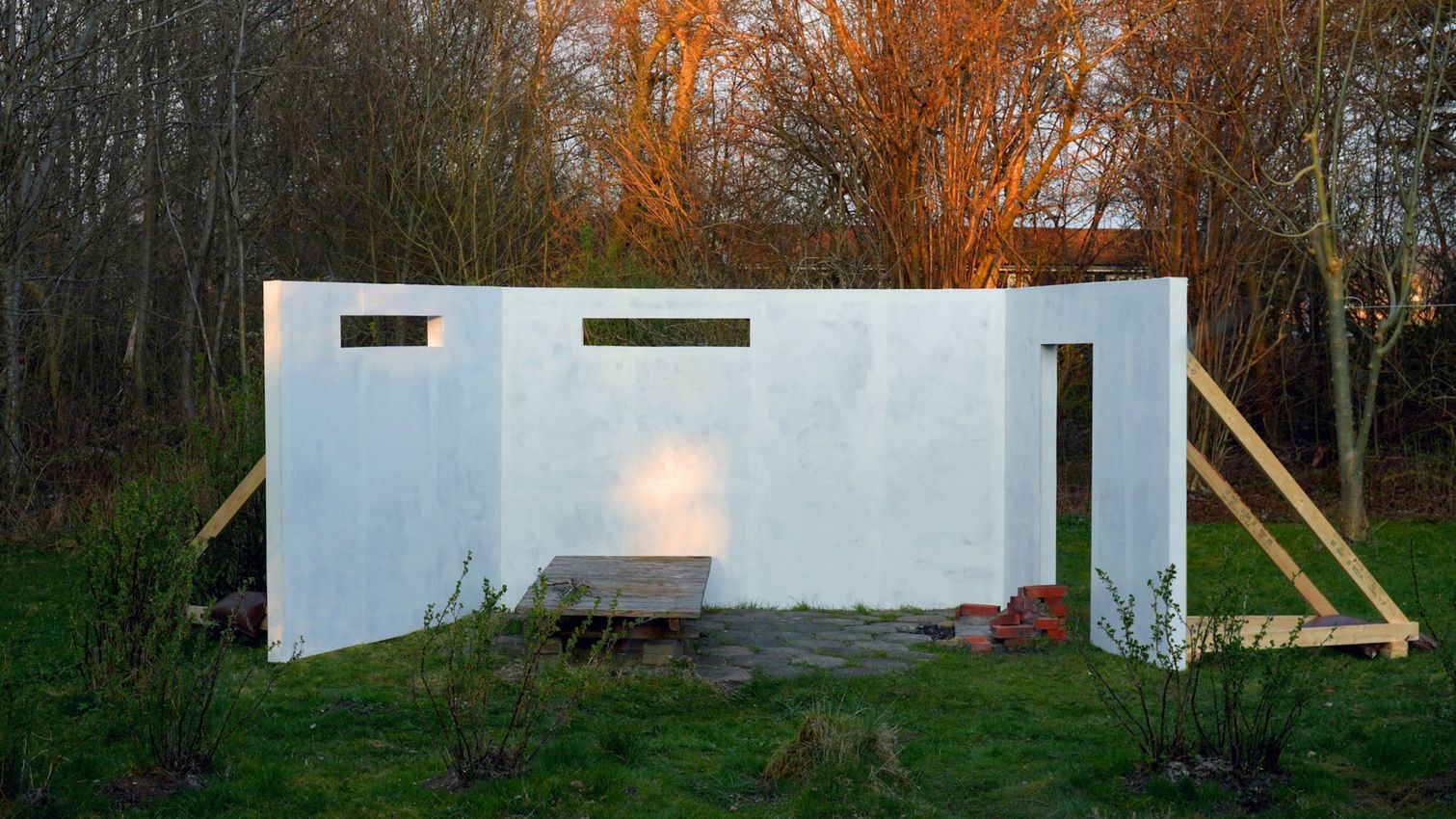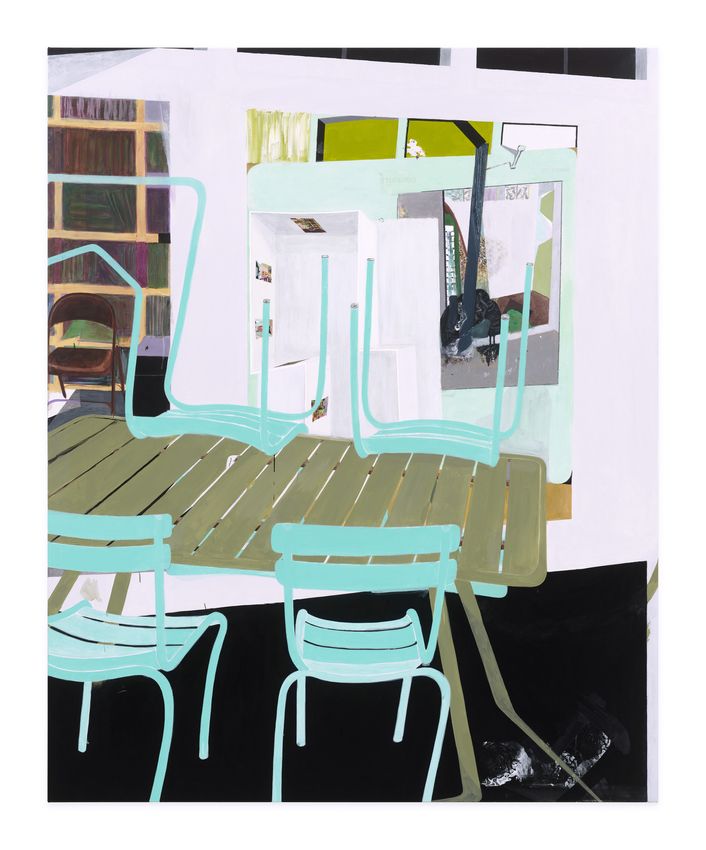
Gladstone presents Studiosis, an exhibition of new paintings and drawings by Michael Williams. The paintings in the exhibition diverge from Williams’ recent choices in materiality and figuration, by utilising exclusively analog modes of mark-making and generating subjects from visual observation. In earlier work Williams has incorporated digital drawing and inkjet printing to challenge conventional painting doctrines, Studiosis presents his embrace of tradition by returning to painting in the time-honored fashion, with brushes and pigments. In Studiosis, Williams addresses the interior of his studio as a historical subject in painting. Whereas much of Williams’ previous work has generated subject, meaning, and image from his mind’s eye, here he turns to observational painting as a way of deprioritising the individualistic position of the contemporary artist.
With these adjustments to his visual and material language, Williams explores painting as an act of embodiment by interrogating its formal structures – colour, composition, form, texture, and stroke. The physicality of the artist’s hand is captured in each layer, substantiating the significance of paint as a slow medium. Lush gestural passages of painting are contrasted by pointedly focused detail in miniature sequences embedded in his large canvases. These sections of imagery Williams refers to as “footnotes” – moments of rigor and precision found in corners, reflections, and paintings of paintings – challenge a personal painting tradition that has prioritised energy and nonchalance. Ironically, Williams’ attentive brushstrokes reveal the effort once hidden in the flattened prints of his Photoshop paintings.
By detaching from the world outside the studio, Williams’ paintings are an exercise in rendering an insular experience. Contemplating the larger modern reality while observing and representing the personal, Williams captures this familiar environment in an array of shifting perspectives. The objects Williams chooses to depict are not those traditionally seen in an artist’s studio but ones that happen to be stored there, golf clubs, a rowing machine, various chairs, and a table. Perspicuous views of these subjects within the studio architecture face a subtle dismantling, necessitating that the viewer spend time with the paintings in order to align with the image. This augmented dimensionality in the paintings obscures optical boundaries, transforming the mundane into a reflection of Williams’ own perception dissected and reassembled to discover new meanings.
Michael Williams was born in 1978 in Doylestown, Pennsylvania. He has been the subject of major exhibitions at The Power Station, Dallas (2022); LOK, the Kunstzone in the Lokremise, Kunstmuseum St.Gallen, Switzerland (2021); Le Consortium, Dijon, France (with Tobias Pils, 2017); Carnegie Museum of Art, Pittsburgh (2017); Musée des Beaux-Arts de Montréal, Canada (2015); and Gallery Met, New York (2015). Recent group shows include .paint, Museum of Contemporary Art Chicago (2020); Joe Bradley, Oscar Tuazon, Michael Williams, Brant Foundation Art Study Center, Greenwich, Connecticut (2018); The Trick Brain, Aïshti Foundation, Lebanon (2017); High Anxiety: New Acquisitions, Rubell Family Collection, Miami (2016);Artists and Poets, Secession, Vienna (2015); and The Forever Now: Contemporary Painting in an Atemporal World, Museum of Modern Art, New York (2014). His work is in the permanent collections of institutions including the Hammer Museum, California; Dallas Museum of Art, Texas; Museum of Modern Art, New York; Whitney Museum of American Art, New York; and Musée des Beaux-Arts de Montréal, Canada.
Michael Williams is an American painter whose humorous tableaus present convoluted visual problems to re-examine the canon of art history and pop culture. Blending inkjet prints, oil paint, and airbrush, he combines digital and analogue processes to create ‘puzzles’ for the viewer to interpret.


Gladstone is known for its commitment to artists whose prescient approaches and experimental practices have defined the contours of contemporary art. The gallery has long been an active partner in the cultivation of iconoclastic careers, fostering a roster of artists recognied for their ground-breaking contributions. Headquartered in New York and including outposts in both Brussels and Seoul, Gladstone’s impact extends globally, enabling both the presentation of new bodies of work, and an amplification of the international reach of its artists. Alongside its work with contemporary artists, the gallery is steward to the legacies of pivotal historical artists and serves as an advocate for the enduring power of art. Gladstone is led by a team of partners who spearhead its long-term vision and program, building on the values of its founder Barbara Gladstone.

A respected voice in contemporary art discourse.
Focusing on ambitious storytelling and insightful art-world commentary. Ocula Magazine publishes in-depth interviews, critical essays and timely analysis on the artists, exhibitions and ideas driving the global art world.
Learn more about Ocula Magazine
Showcasing the best of the art world.
Ocula partners with galleries from around the world to highlight their artists, artworks and exhibitions. Gallery membership is by application and invitation, with each member vetted by an independent panel.
Learn more about Ocula Membership

Specialises in the sale of major artworks.
Led by a team with deep ties to the world’s leading auction houses, galleries and collectors. Ocula’s advisory team offers bespoke services to high-net-worth clients from around the world who are looking to acquire the best of contemporary and modern art.
Learn more about our team and services