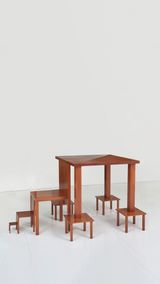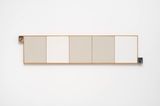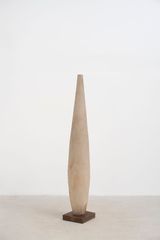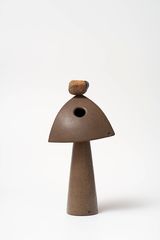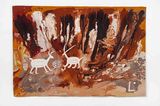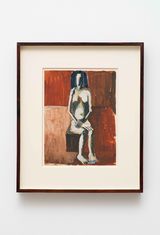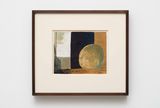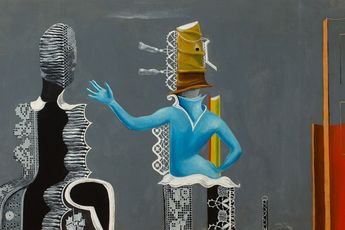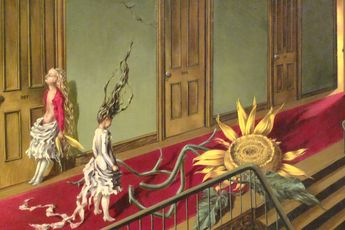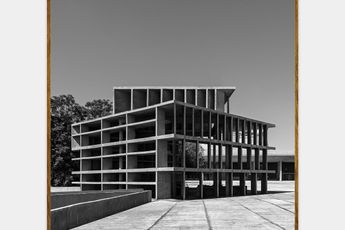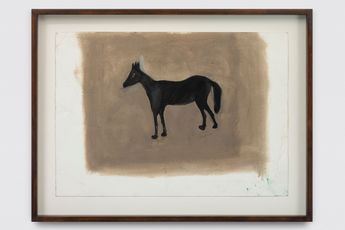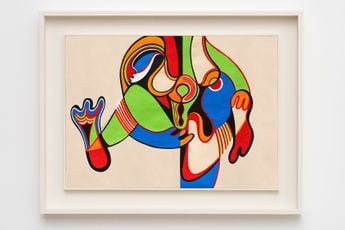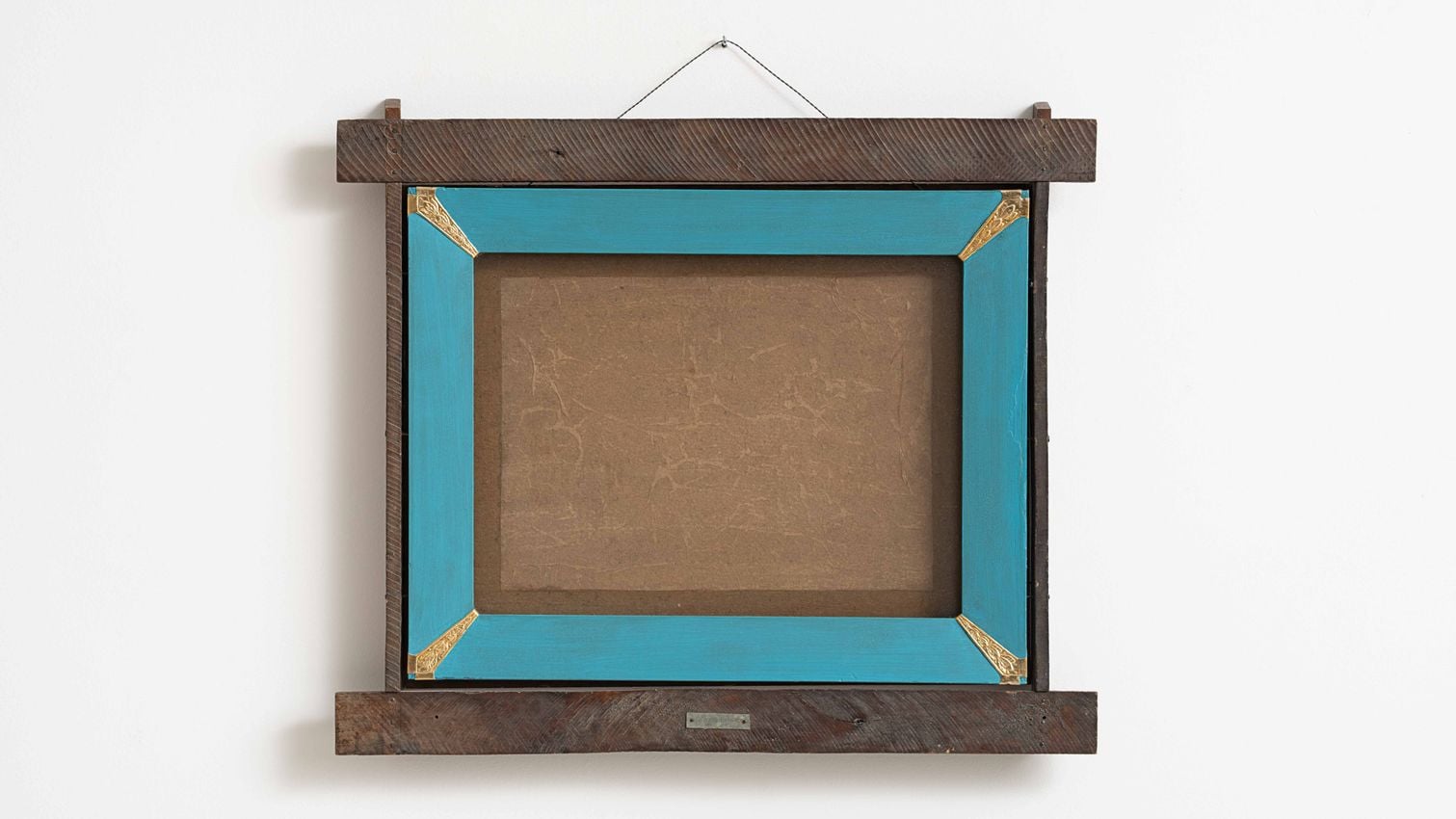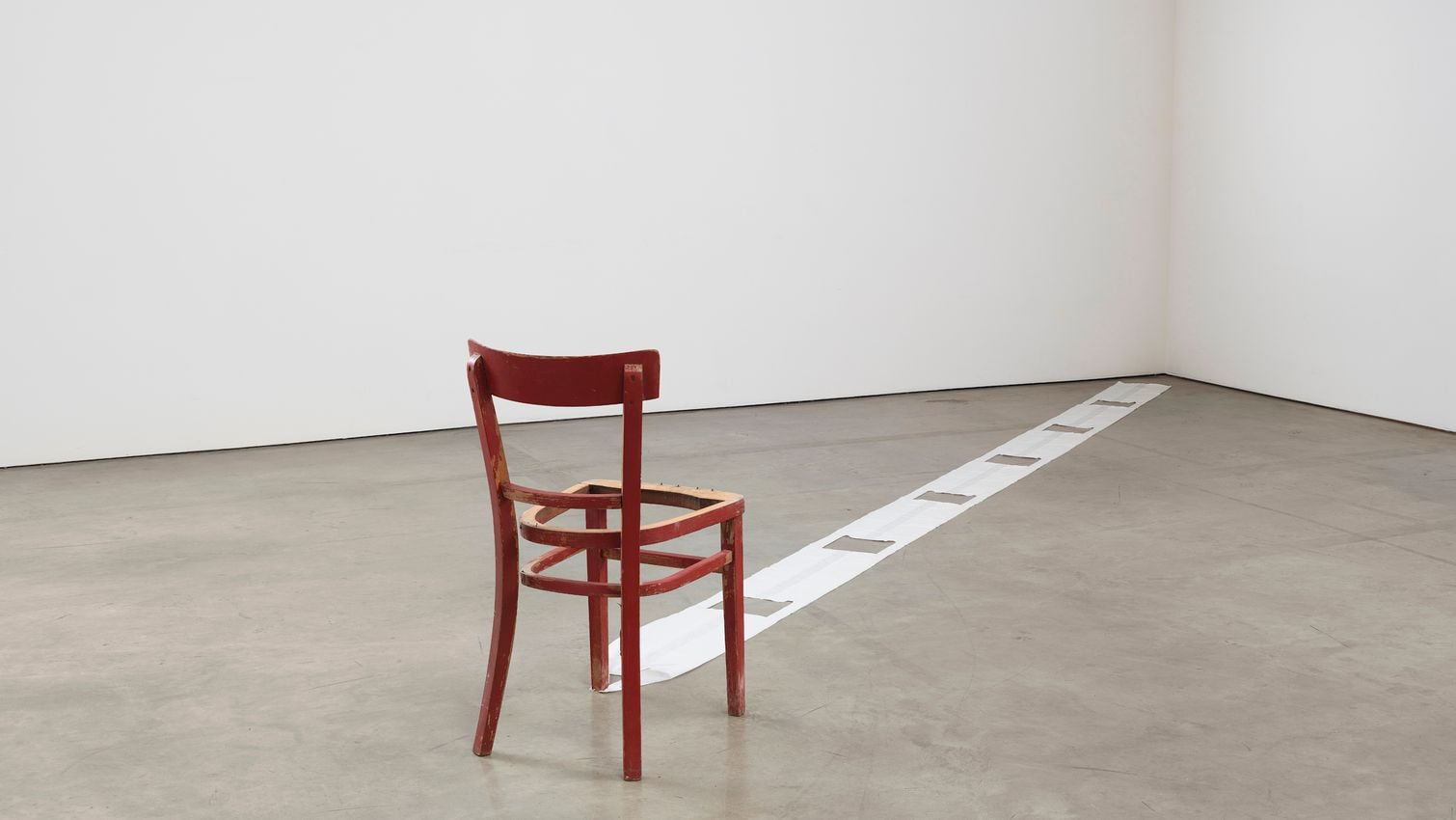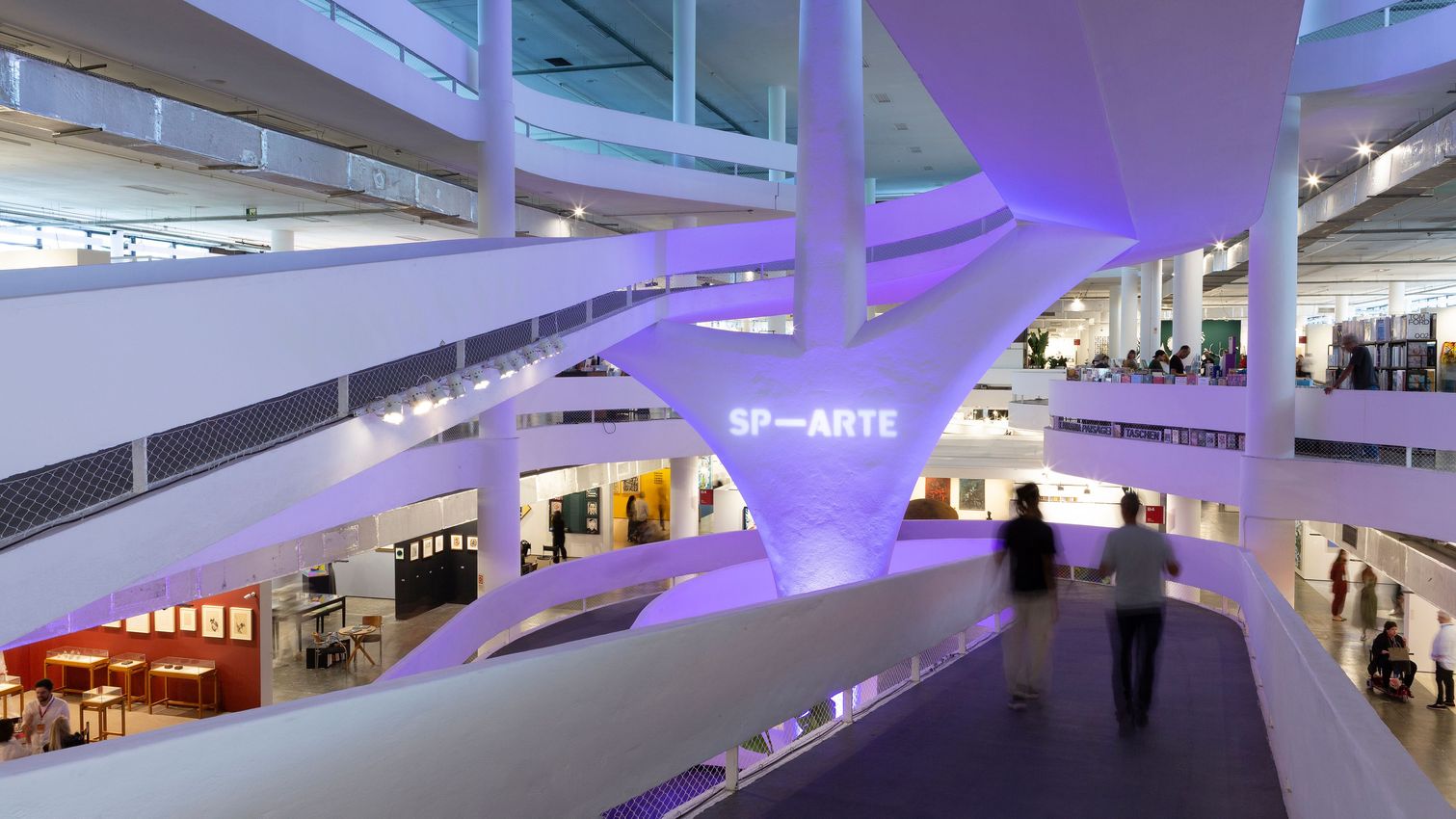
For SP–Arte 2026, Gomide&Co presents a selection that brings together works from different generations and contexts, articulated through a trajectory that explores the relationships between materiality, language, and symbolic construction. At the core of the presentation, a large-scale tapestry by Maria Lira establishes a physical and conceptual axis from which a range of practices unfolds, each engaging, in distinct ways, with the expressive potential of matter and its capacity to operate as a field of thought and imagination.
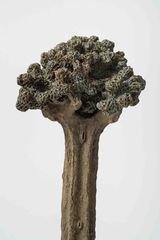
This relationship between matter and thought finds resonance in the work of Megumi Yuasa, whose investigation of ceramics shifts clay from its traditional status into an experimental field in which making incorporates tensions between technique and philosophy. In another key, likewise grounded in the physicality of materials, the universe of Francisco Brennand unfolds through ceramics as a dense imaginary in which organic forms and symbolic narratives establish a continuous territory between nature and fabulation.
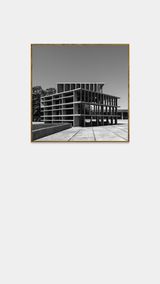
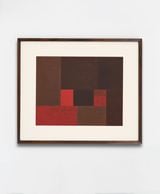
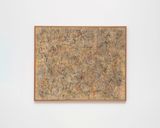
If, in these practices, matter asserts itself as a field of invention, in the work of Alfredo Volpi it is organised through a rigorous formal economy, in which the image is progressively synthesised into geometric structures and chromatic relations. In _Fachada [__Facade] _(1960s), the artist transforms architectural motifs into fields of color and rhythm, establishing a painting in which figuration and abstraction coexist in an unstable equilibrium. In a different direction, Hélio Oiticica, in his early production of the 1950s, investigates painting as a field of sensorial organization, articulating color, rhythm, and structure in compositions that already test the limits of the pictorial plane. In parallel, Lygia Pape, in Untitled (1987), reengages geometry through a material approach in which natural pigments and marble dust densify the surface, creating a tension between constructive order and organicity that brings painting closer to an almost topographical dimension.
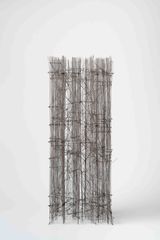
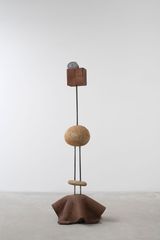
The critical dimension of language, in turn, is articulated in the investigations of Marcel Broodthaers, who, by displacing the codes of musical notation in Allegro moderato (1969), empties them of their communicative function and transforms writing into image, revealing its limits and opacities. This same problematization unfolds incisively in the work of León Ferrari, through his drawings and metal sculptures, which project into space a form of writing composed of lines that intersect and strain against one another. Between drawing and structure, his open forms suggest systems of containment and circulation, shifting critique toward a field in which perception and spatial construction become inseparable.
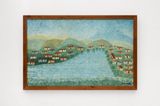
The idea of construction as an articulation between form and matter finds, in turn, a singular formulation in the work of Celso Renato, whose painting-assemblages incorporate discarded wood, bringing traces and marks of time to the center of the composition. By placing painting and support in tension, the artist develops an austere vocabulary in which gesture, structure, and matter are held in unstable balance. Finally, in the landscapes of Lorenzato, this same articulation between experience and construction manifests in a quiet and continuous manner: structured through colour, texture, and rhythm, his compositions transform the everyday into a sensorial field where observation and imagination converge.
By bringing together these practices, the selection configures a space in which matter, language, and perception are continuously reconfigured, proposing an experience that oscillates between physical presence, symbolic construction, and critical reflection. The presentation also includes works by Advânio Lessa, Chen Kong Fang, Habuba Farah, Julia Isidrez, Leonardo Finotti, Lucia Nogueira, Marcelo Cipis, Mira Schendel, Nicolai Dragos, Nilda Neves, Shoko Suzuki, Teresinha Soares, among others.
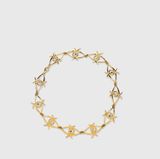
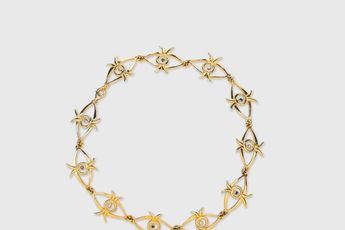
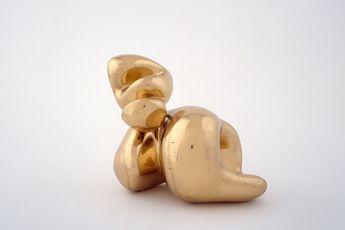
In parallel with the main presentation, Gomide&Co, in collaboration with Gabriella Paschoal and Livia Debbane, invites Ateliers Hugo to take part in this edition of SP–Arte. Founded by François Hugo in Paris in 1933, the atelier was a pioneer in the production of artist-designed jewelry, developing specific techniques to translate the formal language of artists such as Pablo Picasso into precious metals—a collaboration that redefined the direction of the atelier from the 1950s onward.
Over the following decades, the atelier became a meeting point between art and goldsmithing, producing editions with artists such as Max Ernst, Jean Cocteau, Jean Arp, Salvador Dalí, Arman, and Roberto Matta. Bringing together approximately 30 pieces, the selection highlights a key body of work in the consolidation of so-called “wearable sculpture” as a mode of artistic expression—a tradition that remains active today under the direction of Nicolas Hugo, the third generation of the family, in the same space where his grandfather once worked.
A respected voice in contemporary art discourse.
Focusing on ambitious storytelling and insightful art-world commentary. Ocula Magazine publishes in-depth interviews, critical essays and timely analysis on the artists, exhibitions and ideas driving the global art world.
Learn more about Ocula Magazine
Showcasing the best of the art world.
Ocula partners with galleries from around the world to highlight their artists, artworks and exhibitions. Gallery membership is by application and invitation, with each member vetted by an independent panel.
Learn more about Ocula Membership

Specialises in the sale of major artworks.
Led by a team with deep ties to the world’s leading auction houses, galleries and collectors. Ocula’s advisory team offers bespoke services to high-net-worth clients from around the world who are looking to acquire the best of contemporary and modern art.
Learn more about our team and services