





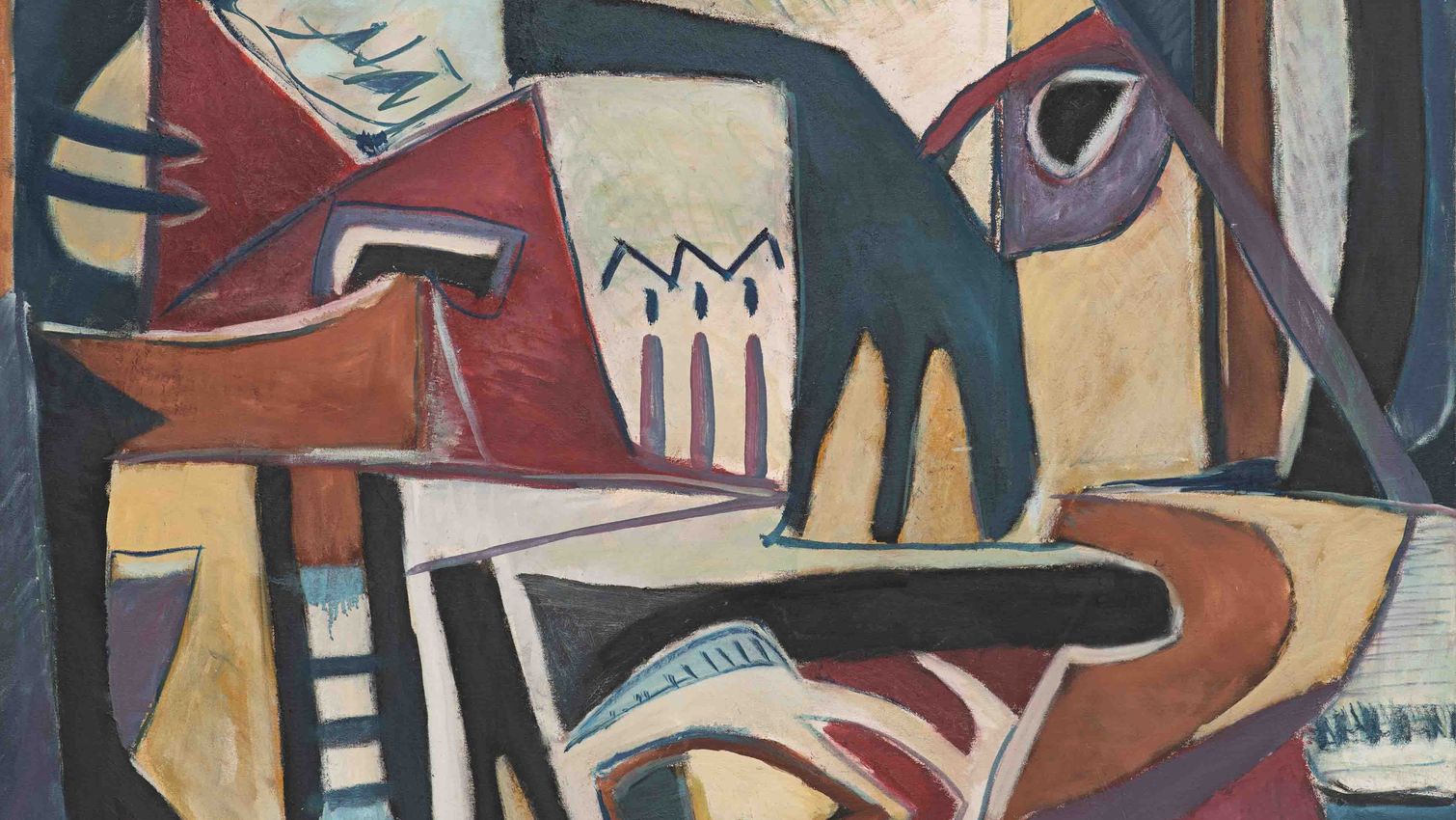
NICOLAI DRAGOS
1931-2020, Romania1931, Cetatea-Alba, Bessarabia, Romania
2020, São Paulo, São Paulo, Brazil
Born in 1931 in Cetatea-Alba, a Romanian town in Bessarabia that was part of the Soviet Unionat the time, Nicolai Dragos entered his country’s art scene at a young age in Bucharest. Coming froma well-established and wealthy family in his region, Dragos studied the piano as a child, which initiallyserved to channel his primary artistic interests into music.
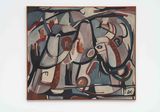
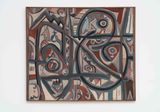
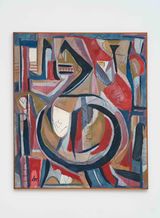
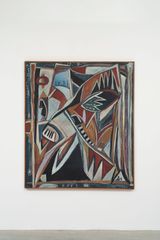
At the end of the 1940s, already interested in studying painting, he met Rudolf Schweitzer-Cumpana (1886-1975) and Corneliu Baba (1906-1997), two of his country’s most important painters.There he began experimenting with materials and creating his first pieces, echoing his ownchildhood and its ludic aspects. He also began to create portraits with strong plays of light andshadow, influenced by Baba.
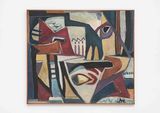
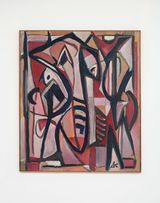
During this period, he also became interested in expressionism, and in 1952 he made a trip toBrussels that would become seminal in his artistic career. He spent two months studying in theBelgian capital and there he met the work of the protagonists of the CoBrA group, who had just heldtheir last exhibition in Liège, also in Belgium. The group—formed by artists from Copenhagen,Brussels, and Amsterdam—offered new aesthetic references for Dragos, with semi-figurative andgestural practices and, ultimately, a whole relationship with the method and making of the paintingthat Dragos identified with and preserved in later decades.
From 1954, when he held his first solo show in Bucharest, Dragos began to exhibit in varioussolo and group shows in institutions and galleries in cities such as Sofia, Paris, Brussels, Düsseldorf,Cologne, Le Havre, Istanbul and Warsaw, among others. In 1976, Dragos emigrated to Brazil with hiswife, and in the following years his work circulated in various exhibitions, but already at a time whenhis work as a pathologist was taking up more of his routine and establishing him as a big name in thisfield, leaving his artistic productions in the background—although they never ceased.
His work is in the collections of Brazilian museums and institutions such as the Museum ofBrazilian Art, at the Fundação Armando Álvares Penteado, in São Paulo; the Museu de Arte de Brasília– MAB; the Museu de Arte Contemporânea de Campinas José Pancetti – MACC; the Museu de Arte Contemporânea do Paraná – MAC, in Curitiba; the Museu de Arte Moderna de São Paulo – MAM-SP;the Museu de Arte de Santa Catarina – MASC, in Florianópolis; the Pinacoteca do Estado de SãoPaulo; the Centro Universitário Maria Antônia of the Universidade de São Paulo – USP, and theCentro Histórico of the Universidade Presbiteriana Mackenzie, in São Paulo.
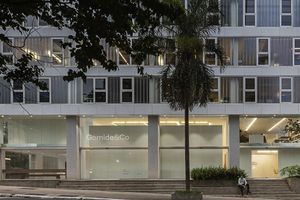
Text courtesy Gomide&Co.









Explore and Follow Artists Shaping Contemporary Art
A respected voice in contemporary art discourse.
Focusing on ambitious storytelling and insightful art-world commentary. Ocula Magazine publishes in-depth interviews, critical essays and timely analysis on the artists, exhibitions and ideas driving the global art world.
Learn more about Ocula Magazine
Showcasing the best of the art world.
Ocula partners with galleries from around the world to highlight their artists, artworks and exhibitions. Gallery membership is by application and invitation, with each member vetted by an independent panel.
Learn more about Ocula Membership
Specialises in the sale of major artworks.
Led by a team with deep ties to the world’s leading auction houses, galleries and collectors. Ocula’s advisory team offers bespoke services to high-net-worth clients from around the world who are looking to acquire the best of contemporary and modern art.
Learn more about our team and services