





JEAN ARP
1886-1966, FranceJean Arp was a leading figure of the 20th-century European avantgarde. Known for his participation in numerous significant art movements of the century, including Surrealism and Dada, Arp is perhaps most often recognised for his sculptures and relief works, but he was also an accomplished writer and collagist, amongst other pursuits.
Born in Strasbourg, Germany, Jean Arp—also known as Hans Arp—studied at the Ecole des Arts et Métiers, Strasbourg; the Kunstschule, Weimar; and the Académie Julian, Paris. During and after his studies the artist became acquainted with significant figures of the European art world, including Amadeo Modigliani, Pablo Picasso, and Vasily Kandinsky.
Jean Arp married Swiss artist Sophie Taeuber-Arp, née Taeuber, in 1922. Mutually influential upon each other’s practice trajectories, the pair worked closely together on geometric collages and embroidered works titled ‘Duo-Collages’ (1916–1918). The couple’s Paris home, designed by Taeuber-Arp and built in 1930, is now the headquarters of the Fondation Arp.
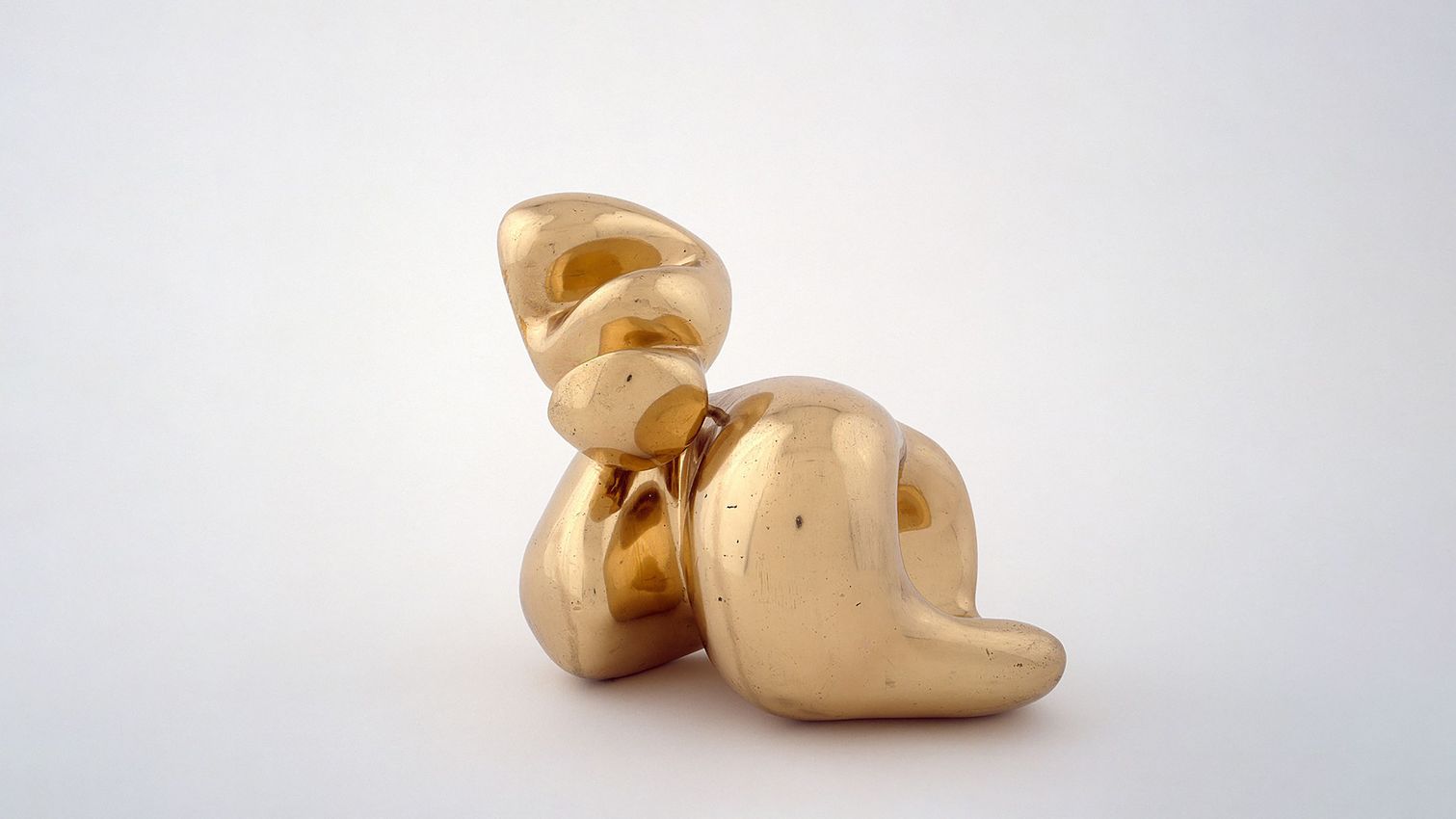
Jean Arp is perhaps best known for his sculptures and wooden reliefs. Often abstractions of natural forms, his reliefs, such as Overturned Blue Shoe with Two Heels Under a Black Vault (ca. 1925), are comprised of collaged wooden pieces. His sculptures, like Metamorphosis (Shell Swan) (1935), utilised similarly organic shapes and a pared-back palette.
Jean Arp is also known for his torn paper collages, for which he would let scraps of paper fall to the surface of the collage and glue them where they fell, such as According to the Laws of Chance (1933). Such applications of chance operations would go on to influence other significant artists of the period, including American painter Ellsworth Kelly.
Jean Arp was part of numerous European art movements of his period, including the Zurich Dada group, which operated out of Hugo Ball’s Cabaret Voltaire from 1916. In addition to his visual art practice and collaborations, Arp published poetry and essays from the first decade of the 1900s all the way until his death in 1966.
Jean Arp won the Grand Prize for Sculpture at the Venice Biennale in 1954. He also received significant commissions throughout his life, including UNESCO Constellation (1958): a four-part sculpture for Paris’ UNESCO building. His texts Arp on Arp: Poems, Essays, Memories by Jean Arp (1972) and Collected French Writings (1974) were both edited by Surrealist Marcel Jean.
Casey Carsel | Ocula | 2020

Explore Jean Arp's Exhibitions




Explore and Follow Artists Shaping Contemporary Art
A respected voice in contemporary art discourse.
Focusing on ambitious storytelling and insightful art-world commentary. Ocula Magazine publishes in-depth interviews, critical essays and timely analysis on the artists, exhibitions and ideas driving the global art world.
Learn more about Ocula Magazine
Showcasing the best of the art world.
Ocula partners with galleries from around the world to highlight their artists, artworks and exhibitions. Gallery membership is by application and invitation, with each member vetted by an independent panel.
Learn more about Ocula Membership
Specialises in the sale of major artworks.
Led by a team with deep ties to the world’s leading auction houses, galleries and collectors. Ocula’s advisory team offers bespoke services to high-net-worth clients from around the world who are looking to acquire the best of contemporary and modern art.
Learn more about our team and services