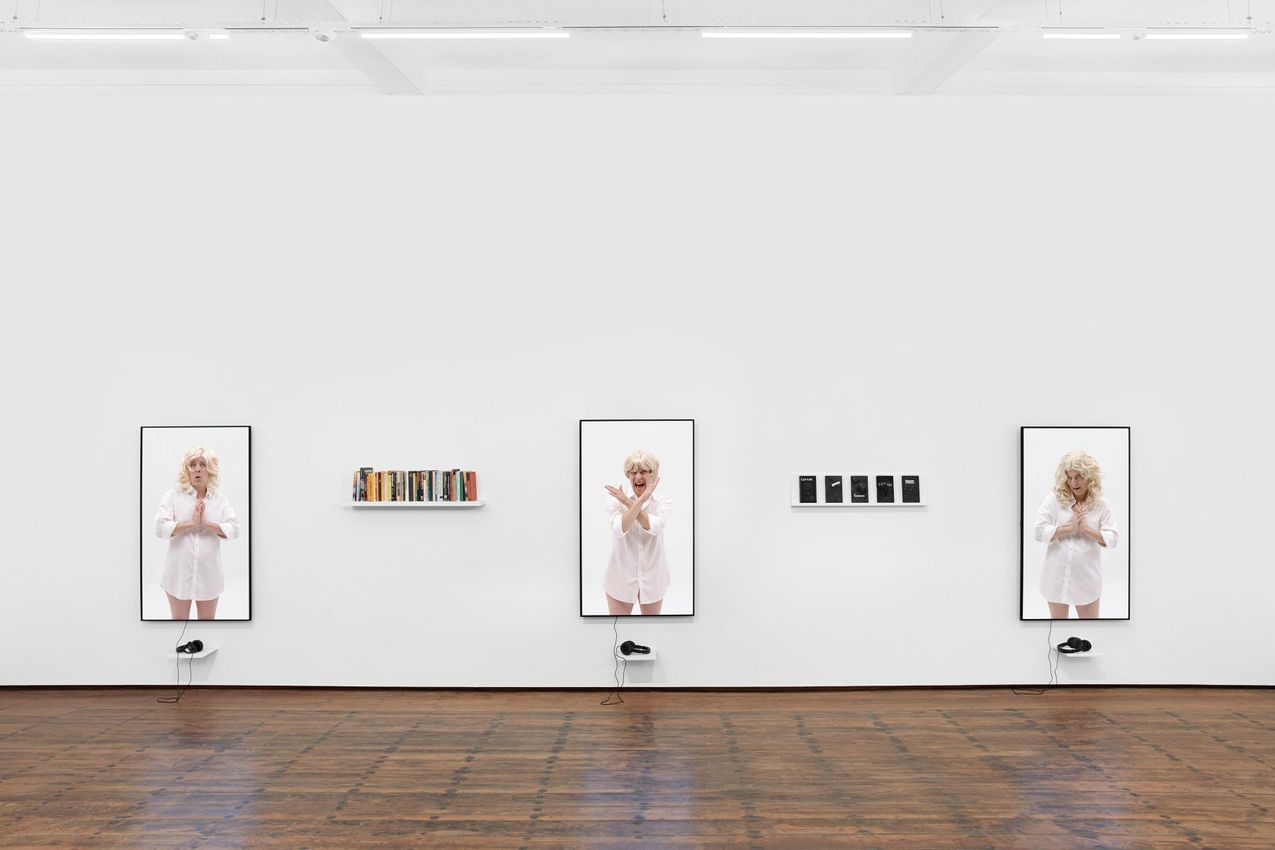
Over recent years, Breitz has collected and archived a wide range of found footage fragments that document ‘white people talking about race.’ Her archive includes the voices of prominent political figures, news anchors and talk show hosts, as well as those of lesser known and anonymous YouTube bloggers, covering white perspectives that run the gamut from neo-Nazi ideology and far right propaganda to everyday racism and the posturing of ‘good white people.’ Specifically, the archive observes the rising anxiety of white people as long-standing calls to dismantle white supremacy proliferate and intensify across the globe.
As such, it offers insight into the ongoing backlash against anti-racist movements, as white people struggle to come to terms with public discourse that highlights phenomena such as ‘white privilege,’ ‘white fragility,’ ‘white rage’ and ‘white guilt.’
In Whiteface, Breitz appropriates and ventriloquizes dozens of voices drawn from this archive, channelling them through her own white body. Wearing nothing but a white dress shirt and zombie contact lenses, the artist conjures up whiteness in a variety of its guises, rotating through a series of cheap blonde wigs as the work unfolds, among which her own platinum head of hair is featured. Breitz’s un-wigged appearance among the characters that populate the piece, serves to acknowledge the artist’s own embeddedness in whiteness.
Yet, while Breitz and many of the disembodied voices that she lip-syncs may be recognisable in Whiteface (Tucker Carlson, Rachel Dolezal, Bill Maher, Richard Spencer and Robin DiAngelo all make vocal cameos), specific white folks are not the primary target of this stinging satire. Rather, it is the condition of whiteness that Breitz seeks to prod into visibility. Dislocated from the white people who originally uttered them, the words that stream through Breitz accumulate to provide a scathing study of the vocabulary and grammar underlying this condition, a critical survey of the language via which whiteness frames, normalises and leverages its power.
The white dogma that flows through Breitz will be deeply familiar to those whose lives are impacted by racism. Whiteface is a portrait of whiteness in a state of panic. As the privileged status of white people comes under increasing pressure, narratives about white extinction have multiplied across the political spectrum. At a time when we are all threatened by possible extinction in light of the climate change crisis and other looming threats, Whiteface parodies the absurdity of white extinction anxiety—which, perhaps more than any other expression of whiteness, points to the delusional narcissism at the heart of the condition. Breitz’s deliberately theatrical performance in Whiteface draws attention to the constructed nature of whiteness and other racial categories. Her bleached presence and deadened eyes locate the fictions that naturalise and perpetuate white supremacy squarely within the genre of horror. Race is a dangerous fiction that continues to exert real and violent consequences.
Born and raised in Johannesburg during the era of apartheid, Breitz has consistently sought to grapple with whiteness in her work, from early photographic series such as Ghost Series (1994), to later installations such as Extra (2011) and TLDR (2017). Whiteface represents her most direct stab at autoethnography yet.
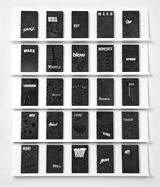
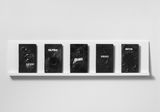
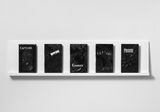
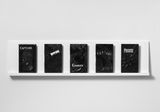
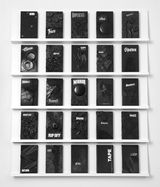
Parallel to Whiteface, Breitz will debut seven single-channel videos from a new body of work titled White Mantras, as well as a series of photographic portraits of the characters that make up the cast of Whiteface.
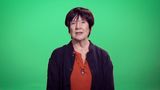
Candice Breitz (b. 1972, Johannesburg, South Africa) is an artist whose moving image installations have been shown internationally. Throughout her career, she has explored the dynamics by means of which an individual becomes him or herself in relation to a larger community, be that community the immediate community that one encounters in family, or the real and imagined communities that are shaped not only by questions of national belonging, race, gender and religion, but also by the increasingly undeniable influence of mainstream media such as television, cinema and popular culture. Most recently, Breitz’s work has focused on the conditions under which empathy is produced, reflecting on a media-saturated global culture in which strong identification with fictional characters and celebrity figures runs parallel to widespread indifference to the plight of those facing real world adversity.


Goodman Gallery is an international contemporary art gallery with locations in Johannesburg, Cape Town and London. The gallery represents artists whose work confronts entrenched power structures and inspires social change.

A respected voice in contemporary art discourse.
Focusing on ambitious storytelling and insightful art-world commentary. Ocula Magazine publishes in-depth interviews, critical essays and timely analysis on the artists, exhibitions and ideas driving the global art world.
Learn more about Ocula Magazine
Showcasing the best of the art world.
Ocula partners with galleries from around the world to highlight their artists, artworks and exhibitions. Gallery membership is by application and invitation, with each member vetted by an independent panel.
Learn more about Ocula Membership

Specialises in the sale of major artworks.
Led by a team with deep ties to the world’s leading auction houses, galleries and collectors. Ocula’s advisory team offers bespoke services to high-net-worth clients from around the world who are looking to acquire the best of contemporary and modern art.
Learn more about our team and services