




RONI HORN
b. 1955, United StatesRoni Horn is an American contemporary artist whose multifaceted practice—spanning sculpture, drawing, photography, and text—meditates on identity, perception, and place, often exploring the mutable relationship between subject and environment.
Early Years
Born in New York in 1955, Roni Horn grew up in Rockland County and later earned her BFA from the Rhode Island School of Design in 1975, followed by an MFA from Yale University in 1978. Her early education in fine art coincided with the rise of conceptualism and minimalism, both of which continue to shape the conceptual rigor and formal clarity of her work.
Horn’s long-standing relationship with Iceland began in the late 1970s and remains central to her practice. Its remote landscapes, shifting weather, and geological phenomena have deeply influenced her recurring themes of instability, repetition, and transformation. She currently lives and works between New York and Reykjavik.
Artworks
Roni Horn’s artwork uses material and language to explore the fluidity of identity and meaning, frequently incorporating natural elements, literary references, and double forms to reflect how things—like people—change across time and context.
Sculptural Dualities and the Language of Repetition
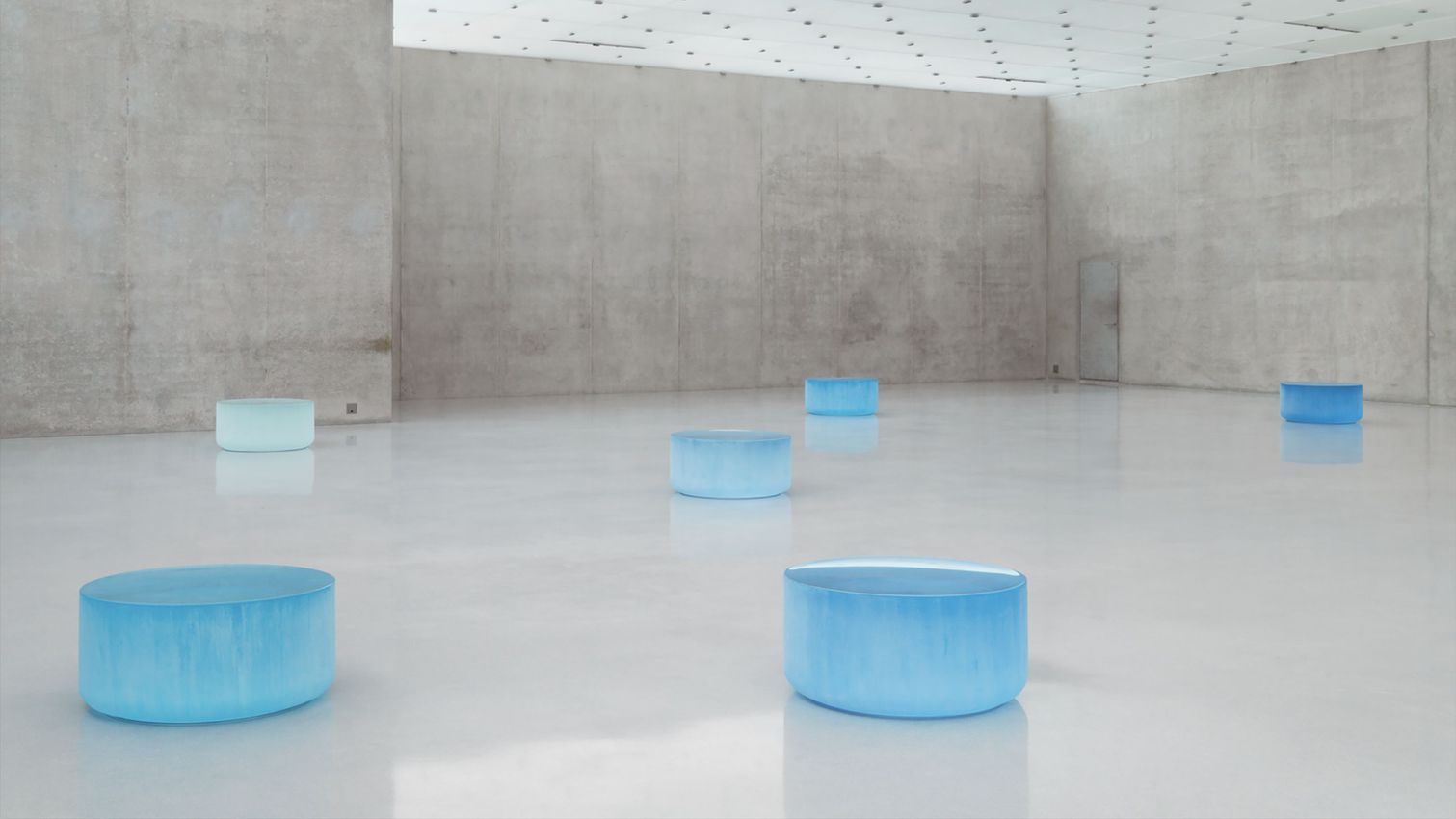
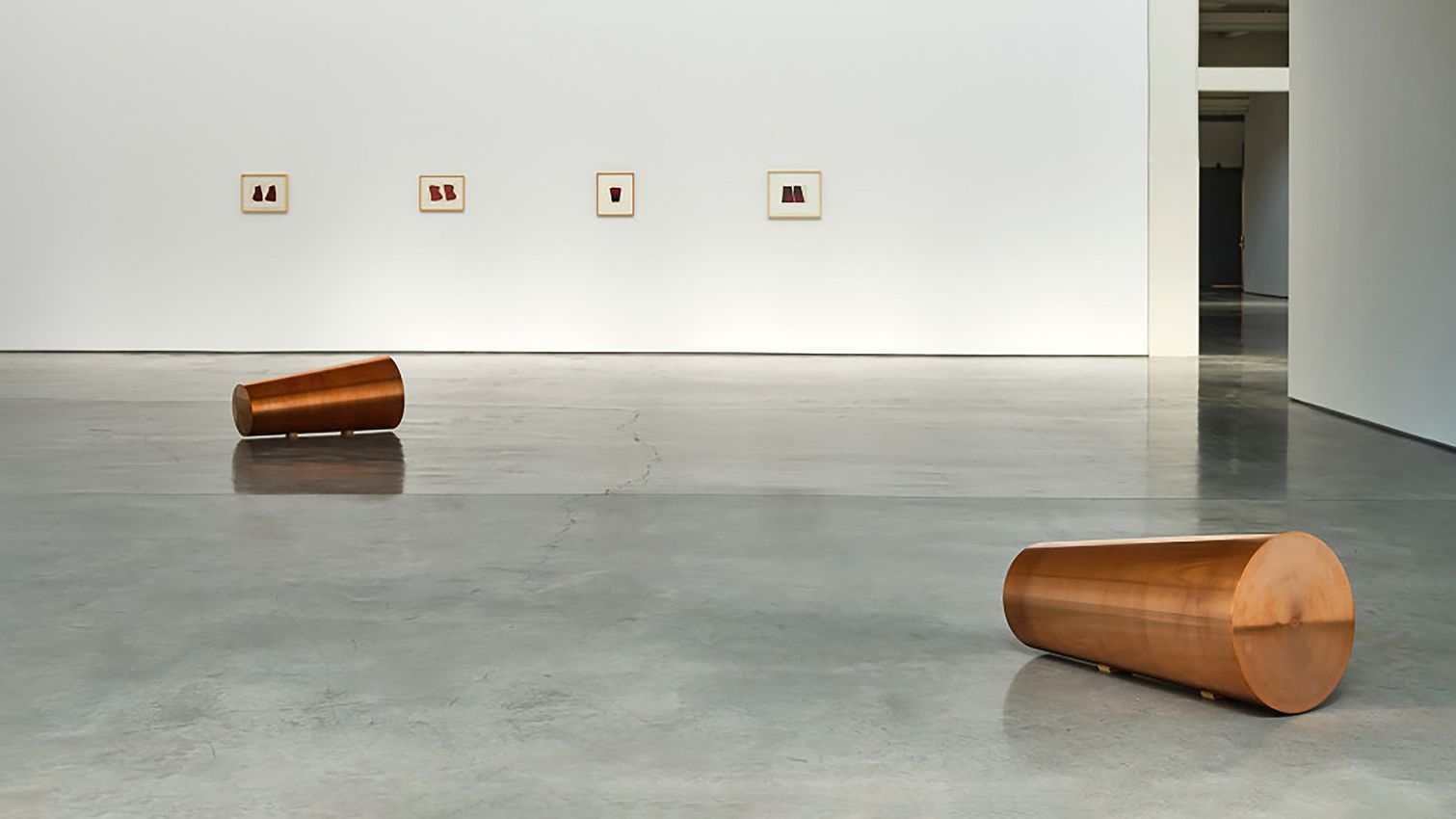
Horn’s early sculptural works from the 1980s and 1990s, such as Gold Mats, Paired – For Ross and Felix (1994–95) and Things That Happen Again: For Two Rooms (1986), are emblematic of her enduring interest in doubling, seriality, and mirroring. These works use formal symmetry and elemental materials to evoke metaphysical questions about presence and absence, sameness and difference. Rather than fixed objects, her sculptures suggest processes—slow shifts in perception, identity, and time—often achieved through minimalist repetition and spatial pairing.
Icelandic Landscapes as Psychological Portraits
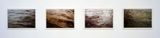
Iceland plays a central role in Horn’s visual and conceptual lexicon, particularly in photographic works like You Are the Weather (1994–96). This project comprises over 100 close-up images of a single woman submerged in geothermal pools, each portrait captured under subtly changing environmental conditions. Though minimal in composition, the series becomes a layered portrait—not only of the woman, but of Iceland’s volatile atmosphere and the act of sustained looking. Horn uses the Icelandic landscape as both subject and collaborator, allowing the viewer to experience time, emotion, and ambiguity through repetition and nuance.
Drawing with Language: Text, Colour, and the Poetics of Ambiguity
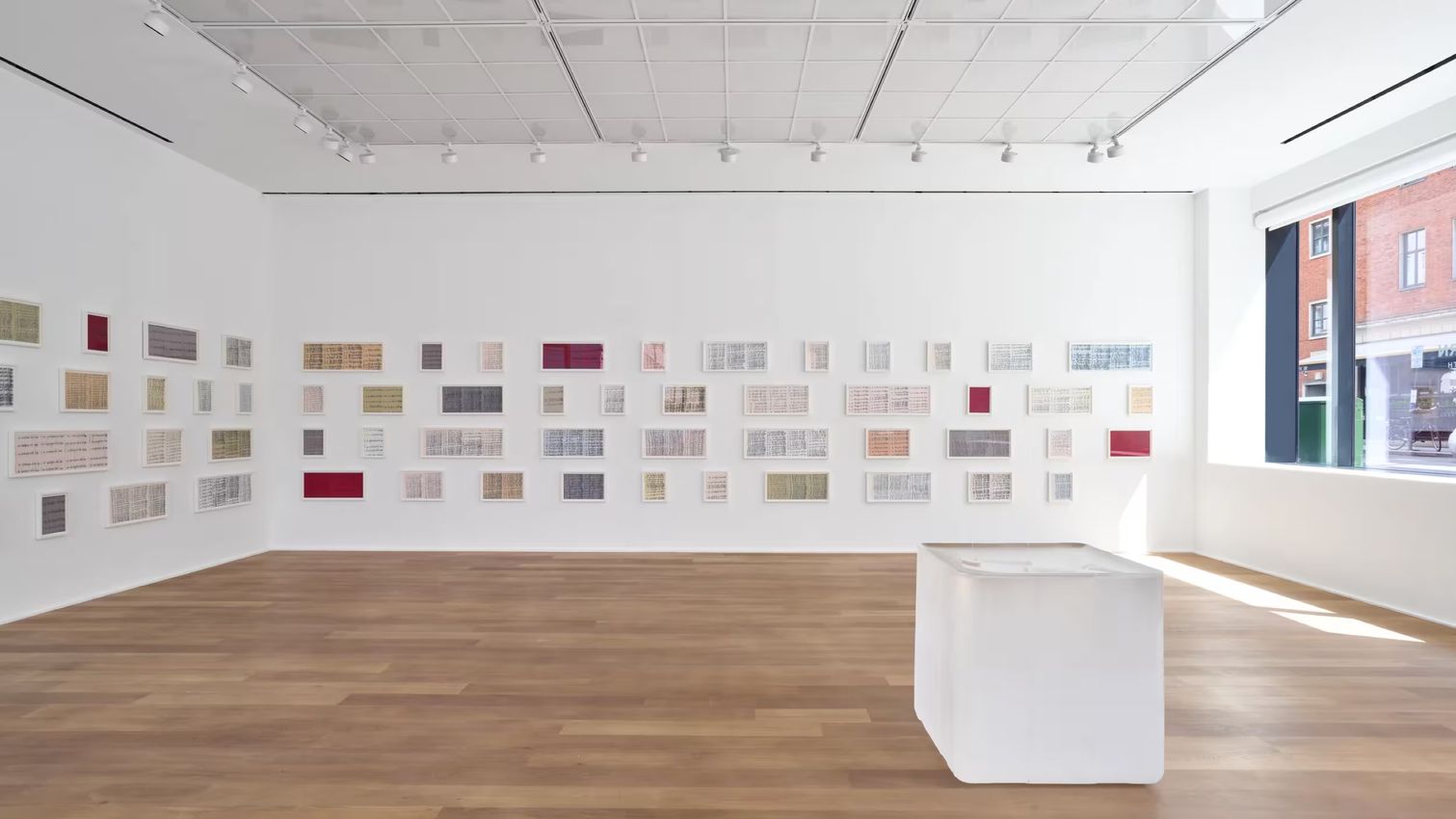
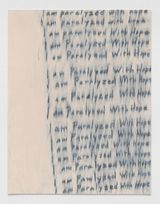
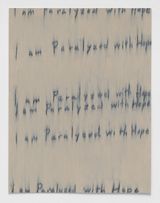
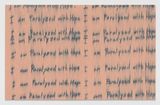
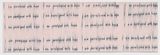
Horn’s drawing practice is as central to her oeuvre as her sculpture or photography, marked by an intuitive engagement with colour, text, and scale. Series such as When Dickinson Shut Her Eyes (1992–93) draw on the poetry of Emily Dickinson to build lyrical compositions that oscillate between writing and image. In the aka photographic and text series (2008–ongoing), Horn explores the fragmentary nature of identity by pairing portrait images with poetic language that shifts meaning through juxtaposition. Her works on paper—layered, fragile, and meditative—reveal a sustained inquiry into the instability of meaning and the architecture of thought itself.
Exhibitions
Roni Horn has been the subject of both solo and group exhibitions at important institutions. A selection of important exhibitions are provided below.
Solo Exhibitions
- Billboard Ad Break, supported by Y gallery and Reykjavík Art Museum, Reykjavík (2025)
- The Detour of Identity, Louisiana Museum of Modern Art, Humlebaek (2024)
- Roni Horn: A dream dreamt, in a dreaming world is not really a dream..., He Art Museum, Guangdong (2023)
- Félix González-Torres / Roni Horn, Bourse de Commerce, Pinault Collection, Paris (2022)
- Roni Horn: You are the Weather, Fondation Beyeler, Basel (2020)
- Roni Horn, Nasher Sculpture Center, Dallas (2017)
- Butterfly to Oblivion, Vincent Van Gogh Foundation, Arles (2015)
Group Exhibitions
- In the House of the Trembling Eye, Aspen Art Museum, Aspen (2024)
- Girls Girls Girls, Lismore Castle Arts, Co. Waterford, Ireland (2022)
- 58th Venice Biennale, May You Live in Interesting Times, Venice (2019)
- Space Shifters, Hayward Gallery, Southbank Centre, London (2018)
- Illumination, Louisiana Museum of Modern Art, Humlebaek (2016)
- America Is Hard to See, Whitney Museum of American Art, New York (2015)
- Dark Matters, Hirshhorn Museum and Sculpture Garden, Washington, DC (2012)
- Documenta 11, Kassel, Germany (2002)
- Whitney Biennial, New York (1991)
Critical Reception
Roni Horn’s practice has been featured in leading publications such as Wallpaper*, The Financial Times, and The New York Times.
Roni Horn FAQs
What themes does Roni Horn explore in her art?
Roni Horn’s art delves into themes of identity, transformation, language, place, and perception. Her work often engages ideas of gender fluidity, the passage of time, and the instability of meaning, inviting viewers to question fixed definitions of self and environment. Whether through mirrored forms, weathered landscapes, or fragmented texts, Horn creates artworks that reflect the constant flux of internal and external realities. Her practice encourages a contemplative encounter with the mutable nature of life and meaning.
What materials does Roni Horn use in her sculptures?
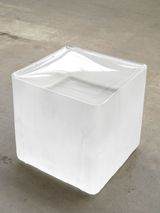
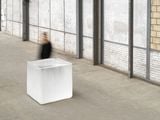
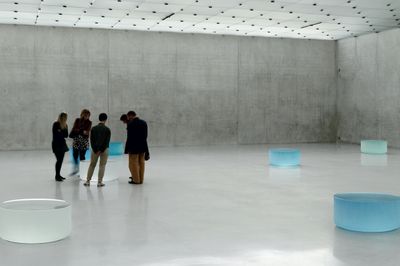
Horn’s sculptures are renowned for their refined use of materials such as solid cast glass, copper, aluminium, rubber, and occasionally pure gold. She often employs heavy, industrial substances with luminous or translucent properties to explore perception and temporality. Cast glass in particular allows Horn to play with opacity and depth, creating works that seem to shift depending on the viewer’s position and lighting. Her choice of materials is integral to her investigations into reflection, transformation, and embodied experience in contemporary art.
What are Roni Horn’s influences?
Roni Horn’s influences span literature, landscape, and language. The poetry of Emily Dickinson, the writings of Clarice Lispector, and the fiction of Jorge Luis Borges all inform her nuanced engagement with text and ambiguity. Iceland’s dramatic terrain and ever-changing weather conditions deeply influence her conceptual approach to place, presence, and repetition. She is also shaped by Minimalism and Conceptual Art, yet her work departs from both through its emphasis on emotional resonance, duality, and the fluid, often elusive nature of identity.
Ocula | 2025

Explore Roni Horn's Exhibitions On Now


View Roni Horn's Artworks



















Roni Horn in Ocula Magazine






Explore and Follow Artists Shaping Contemporary Art
A respected voice in contemporary art discourse.
Focusing on ambitious storytelling and insightful art-world commentary. Ocula Magazine publishes in-depth interviews, critical essays and timely analysis on the artists, exhibitions and ideas driving the global art world.
Learn more about Ocula Magazine
Showcasing the best of the art world.
Ocula partners with galleries from around the world to highlight their artists, artworks and exhibitions. Gallery membership is by application and invitation, with each member vetted by an independent panel.
Learn more about Ocula Membership
Specialises in the sale of major artworks.
Led by a team with deep ties to the world’s leading auction houses, galleries and collectors. Ocula’s advisory team offers bespoke services to high-net-worth clients from around the world who are looking to acquire the best of contemporary and modern art.
Learn more about our team and services