Press Release

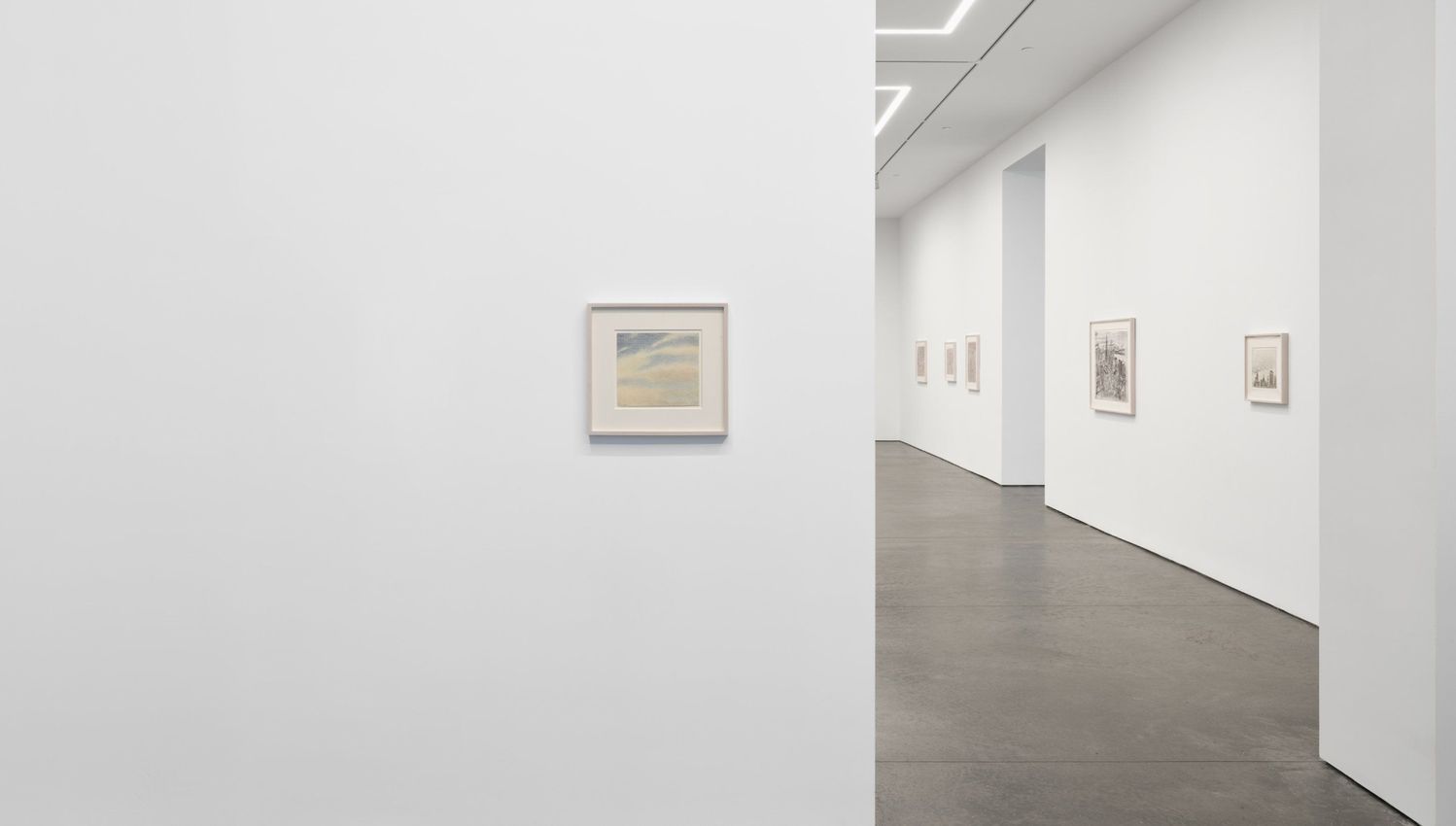
Karma presents One day this will be a long time ago, an exhibition of new paintings by Andrew Cranston, open from July 25 to September 14, 2024, at 7351 Santa Monica Boulevard, Los Angeles.

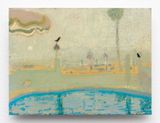
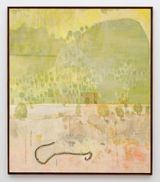
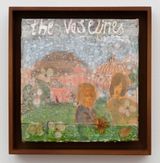
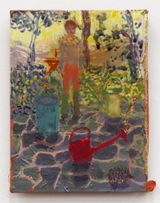
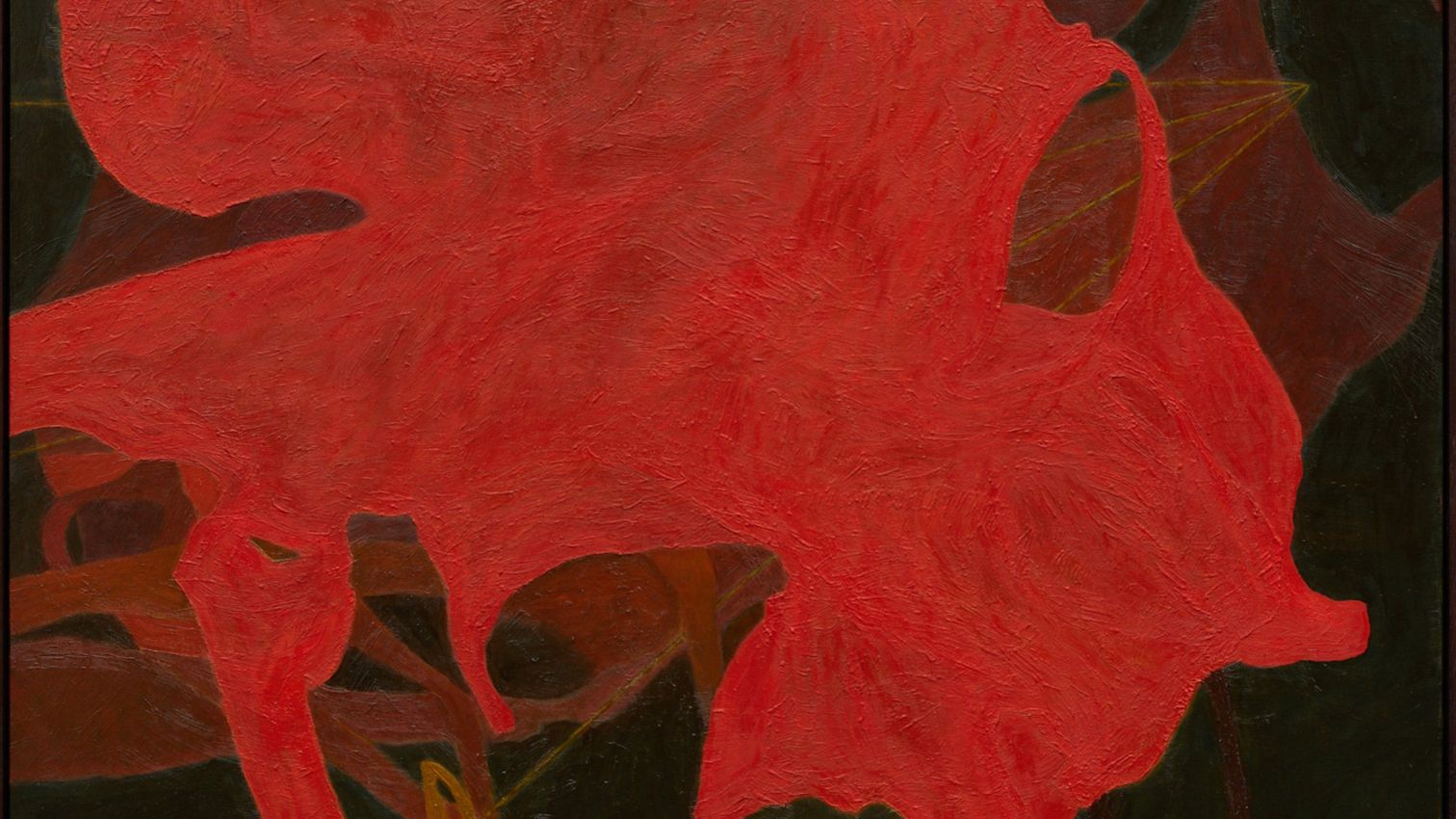
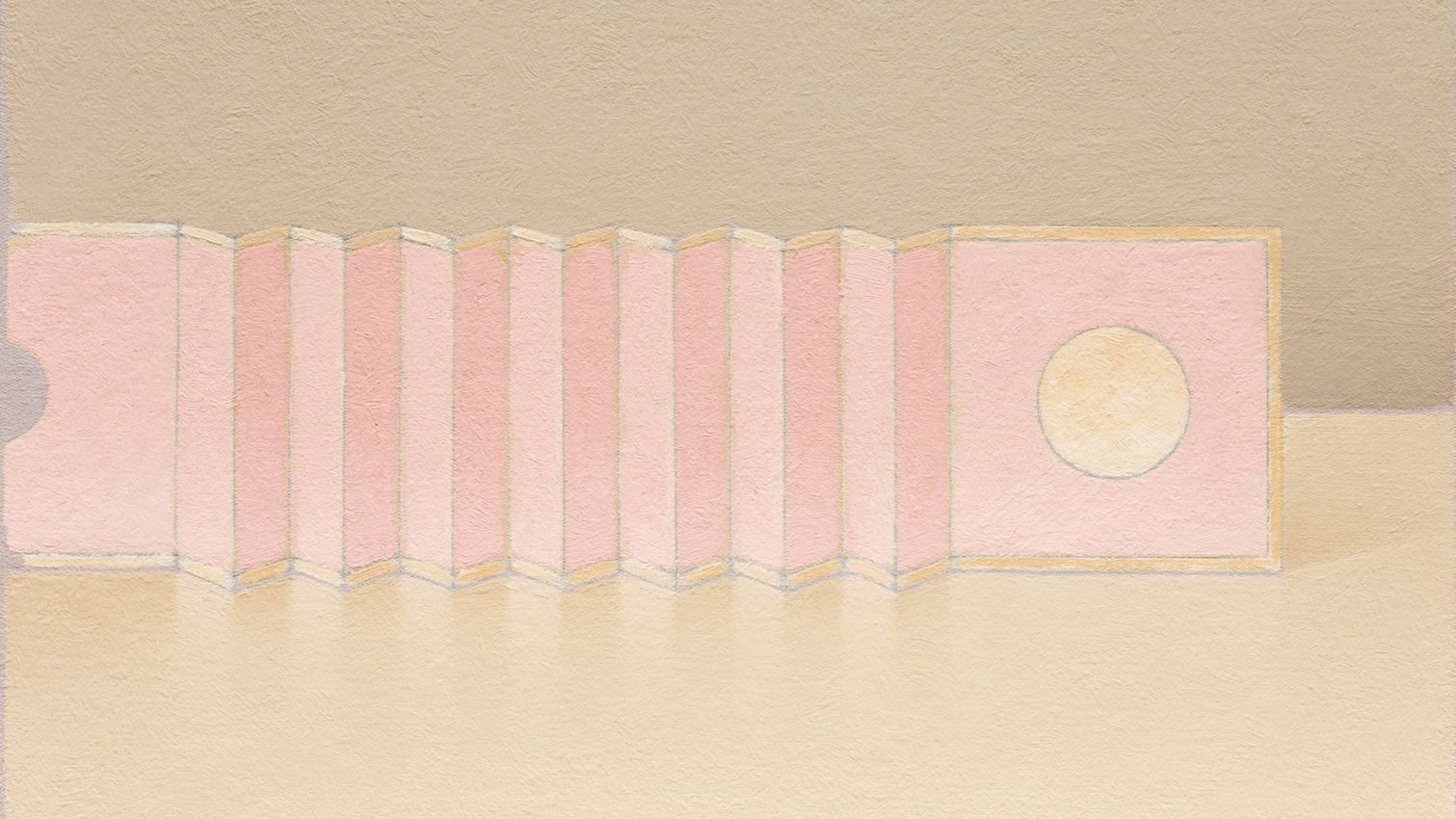
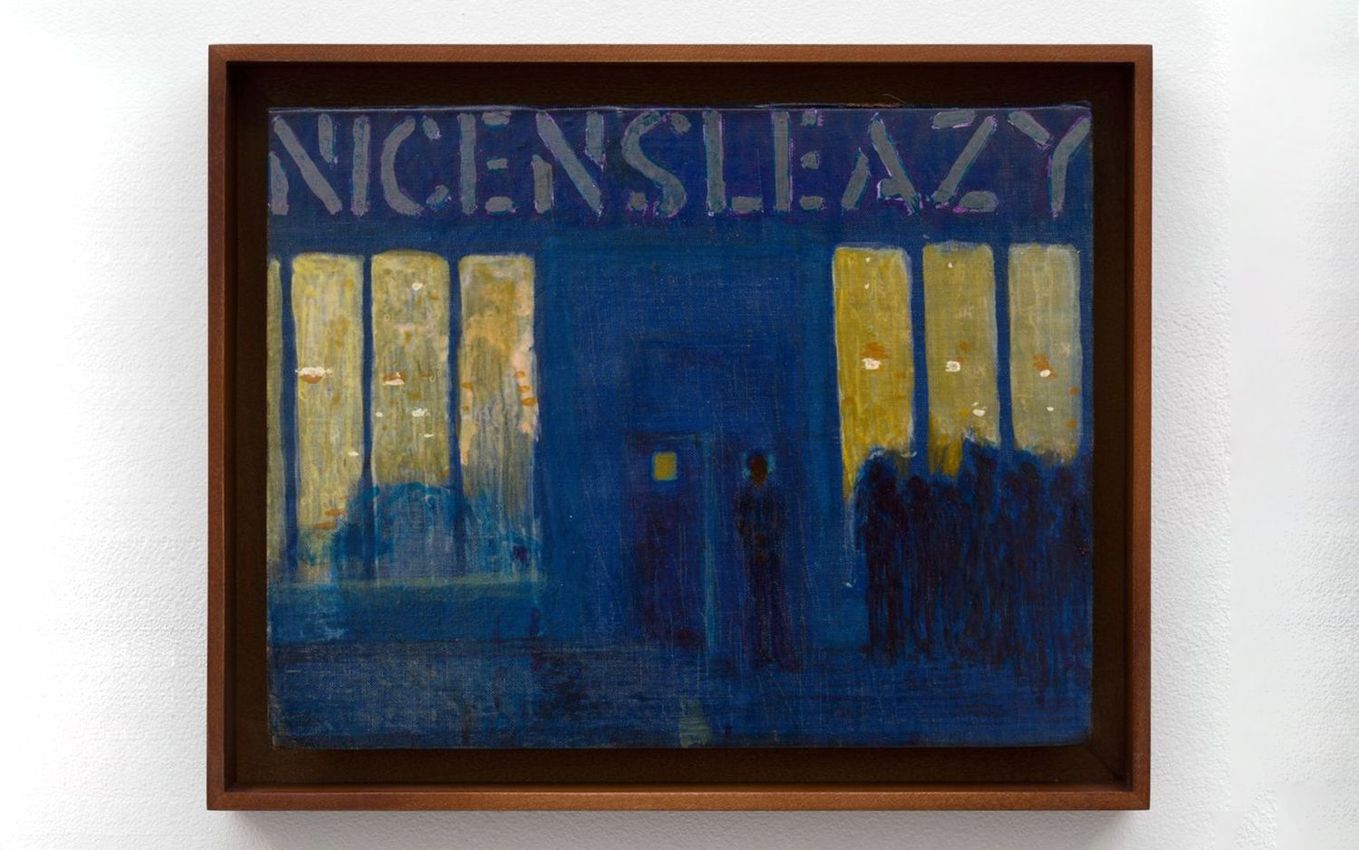
With One day this will be a long time ago, Andrew Cranston continues his exploration of how the world of painting, like the world of memory, leaks into the real. Marking the Scottish artist’s first exhibition on the West Coast of the United States, this new suite centers Glasgow, his home for the past twenty-seven years. Working here in oil, varnish, acrylic, and collage on a range of supports—canvas, board, hardback book covers—the artist responds to the demands, or what he calls “momentum,” of a given composition even as he forms it. Figures and objects emerge, dissolve, reemerge, and deliquesce. For Cranston, assemblage is less a formal approach than a conceptual one, allowing elements from sources across disciplines and time to seep in and inform one another. These works are at once thickly layered—with dense, dark passages of oil; with art historical, literary, and personal references—and near-translucent, like scrims. Thin, filmy washes rupture and illuminate chalky blacks and viscous impastos; luminosity bleeds, or is etched, in the case of Voltaire and Rousseau (all works 2024) out of what would otherwise be an overpowering darkness.

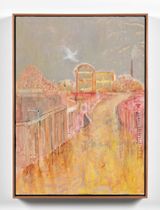
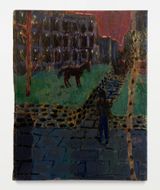
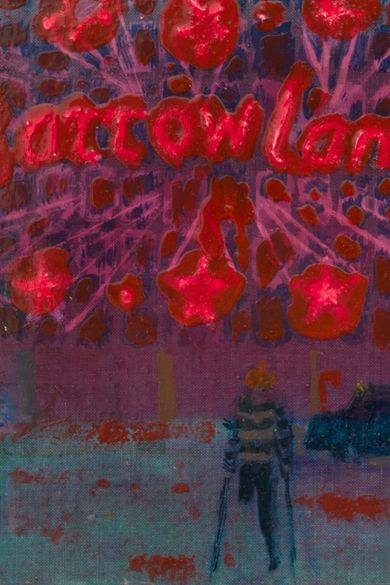
At first glance, Los Angeles and Glasgow seem almost violently incompatible—the former all sun and optimism, the latter slick and gray. On closer inspection, the American city has its own particular Lynchian darkness, while Cranston’s Glasgow is aglow with an otherworldly warmth. Much as the cities contain their inverses, the artist paints moments of darkness into light and allows light to stream into dark. The stairs (a dream) depicts a lone figure descending a flight of steps—loosely modeled on those that lead into the Scottish city’s famous Kelvingrove Park—in an uncanny haze of yellow light. Above, a dark cluster of birds swarms. With a title that simultaneously references Los Angeles and the Glaswegian band the Blue Nile, Tinseltown in the rain captures the exterior of another Glasgow landmark, the Barrowland Ballroom, its neon sign glowing in the plummy, nocturnal atmosphere. The pavement in Schipka pass, seemingly soaked by rain from the gray sky above, reflects in Impressionistic daubs the brightly-painted facade of one of the city’s most notable outdoor markets.

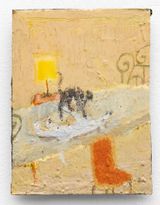
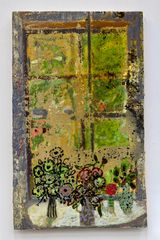
Interiors, one of Cranston’s stalwart subjects, appear alongside these cosmopolitan architectures. Within these private confines, he plays with the optical tension between outside and inside, background and foreground. The large-scale painting Flitting portrays a sparsely described room, its open floor occupying the majority of the canvas. Four large windows open onto a garden bursting with greenery; a chair seems to have disappeared, leaving only a white void. Cranston has described his approach to absence and presence as “controlling the speed of the image, what is given and what you find.” The two figures seated at the white piano in the horizontally-bisected When we were two little boys do not immediately assert themselves, instead subtly emerging from the streaked brown wall behind them. The gridded screen window in The Invisible man simultaneously obscures and reveals the goings-on outdoors, transforming an unimpeded view into a Pointillist composition.

Alongside more traditional supports, Cranston began painting on hardback book covers in 2006, reacting to the volumes’ existing states—incorporating the wear of time, weather, and handling, as well as the color of the original covers into his compositions. The irregular perimeter of What makes a Glasgow home so different, so appealing? evinces the support’s former life as container for narrative; its title references foundational British Pop artist Richard Hamilton’s iconic 1956 collaged rendering of a living room stuffed with mass culture. The streaky wallpaper in Cranston’s rendering of such a room suggests the faded glory of another era, while the almost-neon, geometric rug and sculptural mobile evoke the works of Glaswegian contemporary artists Jim Lambie and Martin Boyce, respectively. The opposed textures of the top and bottom registers of the work lend it a frisson characteristic of the artist’s assemblage approach to painting. As he has written, Cranston is invested in “how much the surface, the marks, start to fight the image. The tension you see between picture and painting. Between what it is and how it is.” This is the how that distinguishes faithful realism from the realm of feeling, itself suffused with the California-golden light of memory.

Read More
Andrew Cranston Brings Glasgow's Grit to Los Angeles Opinion Andrew Cranston Brings Glasgow's Grit to Los Angeles Light and dark coalesce in the Scottish artist’s paintings, where figures and objects emerge against the vistas of his hometown. Read the story
About the Artist

Andrew Cranston (b. 1969, Hawick, UK) is a Glasgow-based painter whose narrative vignettes are culled from his own personal history, as well as literary and anecdotal sources. Cranston’s compositions effect a layered referentiality by incorporating varnish and collage. He often uses the hardback covers of books as a support for his paintings, demonstrating his surreal, deadpan sense of humor. Cranston retextures their surfaces with dense layers of paint, a technique which recalls Post-Impressionists such as Pierre Bonnard and Eduard Vuillard. Cranston was included in the exhibition Outside, curated by Matthew Higgs, at Karma in 2016. A graduate of the Royal College of Art in London and a former lecturer at Gray’s School of Art in Aberdeen, Cranston’s recent exhibitions include Ingleby Gallery at Frieze New York (2019); Ingleby Gallery, Edinburgh (2018); Anthony Wilkinson Gallery, London (2017); and Look Again: Visual Arts and Design Festival, Aberdeen (2016).

View Artist Profile

Also Exhibiting at Karma

Address
7351 Santa Monica Blvd
Los Angeles
United States
Opening Hours
Tuesday – Saturday
10am – 6pm
(1)
Los Angeles 7351 Santa Monica Blvd
Karma
7351 Santa Monica Blvd, Los Angeles, United States
(310) 736-1367
https://karmakarma.org/

Opening hours
Tuesday – Saturday
10am – 6pm
The art world in focus