Press Release

Robert Motherwell is one of the central figures of American Abstract Expressionism. His work seamlessly blends painting, printmaking, and collage with a deep engagement in literature, philosophy, and music. As early as the 1940s, it became clear that the centre of modern art was shifting from Paris toNew York. Key American collections and institutions prepared the ground for this transformation. Bernard Jacobson describes this historical moment as the point when the essential foundations of Western art transitioned to the United States, giving rise to a new generation of American artists̶including Helen Frankenthaler, Barnett Newman, and Robert Motherwell.

The collaboration with partner gallery Jacobson directly connects to this art historical development. Bernard Jacobson has dedicated decades to studying Abstract Expressionism and has significantly contributed to the reception of Motherwellʼs work in Europe. An exhibition featuring Robert Motherwell thus aligns naturally with the galleryʼs focus on classical modernism and post-war American avant-garde art.

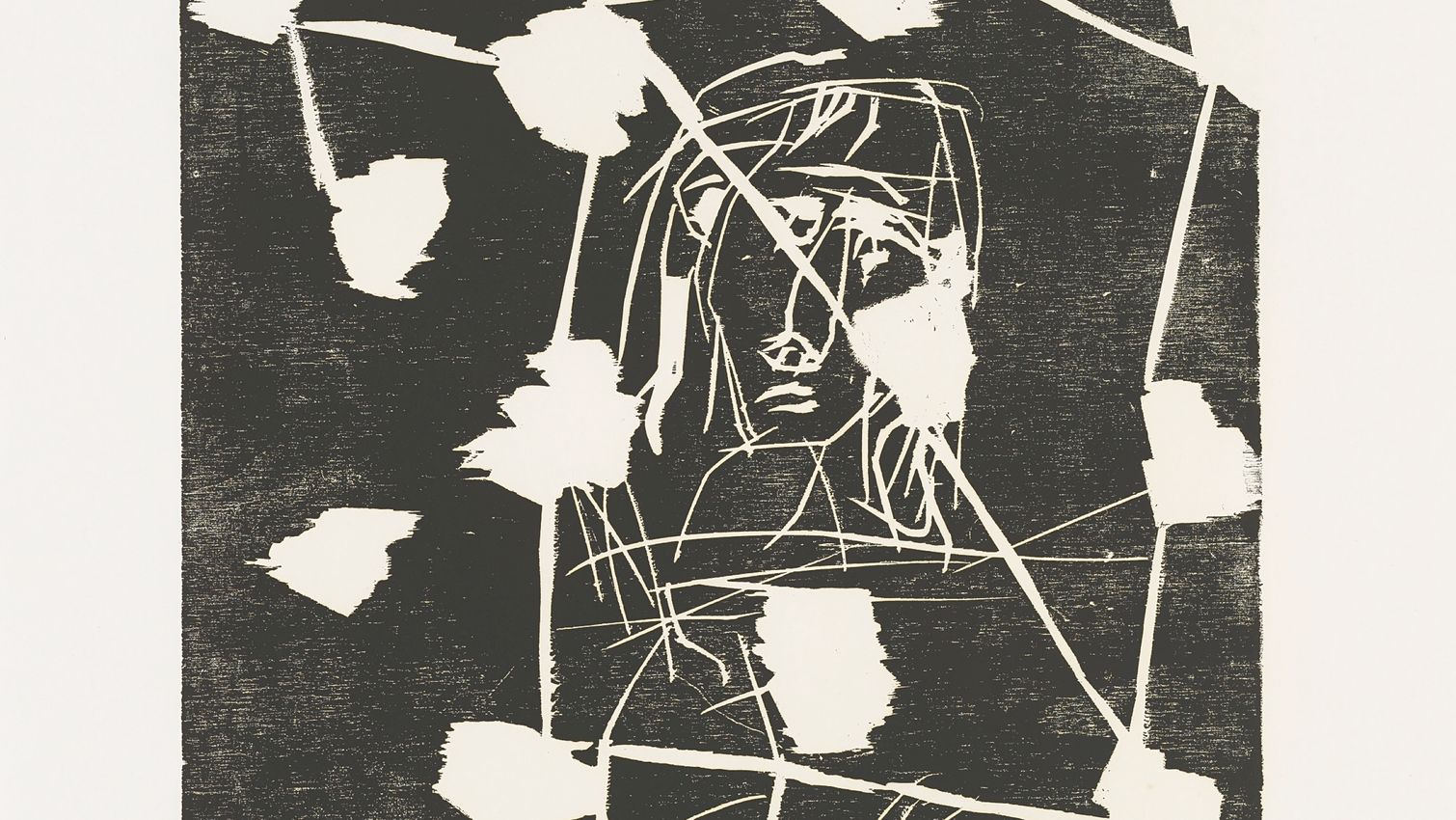
Motherwellʼs work holds particular significance in the fields of printmaking and collage. His pieces demonstrate how closely these media are intertwined with his painterly thinking. For him, printmaking was not merely a supplementary technique but an independent part of his artistic practice. Jacobson emphasises that, within the New York School, Motherwell was nearly alone in pursuing printmaking with the same seriousness and depth as his painting. He began experimenting with printmaking techniques as early as 1943 and, by the early 1970s, installed his own printing presses in his studio, further intensifying his work in this medium.

A defining aspect of Motherwellʼs approach is his work in series. One of his most renowned groups is the Elegy to the Spanish Republic, whose origins are linked to the cultural journal Possibilities, which Motherwell planned alongside John Cage. A drawing created for a never-realised second issue later evolved into the first “Elegy.” The monumental black forms of this series became a defining element of his oeuvre.

Motherwellʼs encounter with John Cage was also pivotal. Both artists shared an interest in open structures, fragmentation, and the collage method. Motherwell viewed Cageʼs working process as a way to connect diverse quotes, ideas, and found objects, creating complex relationships that defy linear narratives.

Motherwellʼs approach to collage deserves special attention. In his paintings, works on paper, and prints, he incorporated everyday studio materials̶such as papers, packaging, or address labels. These fragments became part of a creative process where memory and perception play a central role. In this context, Motherwell developed the concept of the “After Image.” This term refers to hidden layers of meaning drawn from literature, art history, personal experiences, or other images embedded in his works. His pieces thus engage in an open dialogue with artists like Picasso, Miró, Matisse, or Frankenthaler.

Motherwellʼs engagement with philosophy and art theory is reflected in his view of painting as an independent form of knowledge. For him, images were not linear narratives but places of condensed experience. The influence of Surrealist automatism is evident in his spontaneous and intuitive working style, though his work remained consistently shaped by reflection and formal clarity.Within the New York School, Motherwell occupies a unique position. Through exchanges with artists like Jackson Pollock and Willem de Kooning, he developed a reduced, highly symbolic visual language characterised by black forms and gestural structures. Today, his oeuvre is regarded as groundbreaking for printmaking and collage, offering new perspectives on the relationship between image, memory, and perception.

Read More

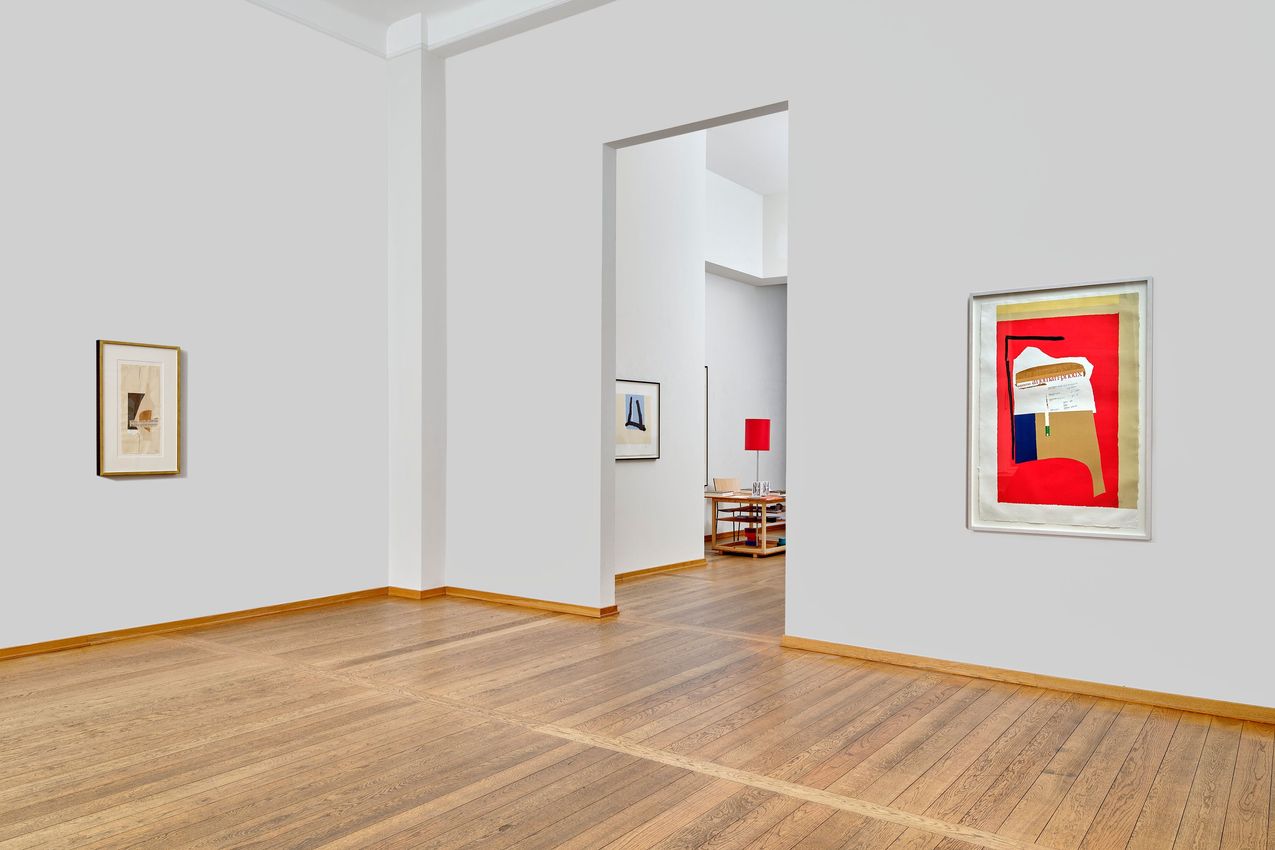
Installation Views

About the Artist

Producing an extensive body of abstract paintings, drawings, collages and prints between the 1930s and late-1980s, American artist Robert Motherwell was one of the leading figures of the Abstract Expressionist movement, alongside the likes of Jackson Pollock and Mark Rothko. He was also known for his critical writings on subjects including Surrealism and Piet Mondrian.

View Artist Profile Robert Motherwell contemporary artist
About the Gallery

Knust Kunz Gallery Editions was founded in 1982 under the name Galerie Sabine Knust. Continuous collaborations with artists like Georg Baselitz, Per Kirkeby, A.R. Penck, Markus Lüpertz, Jörg Immendorff, and Imi Knoebel formed an ongoing presentation of their print and graphic œuvre for over 30 years. In 1998 Matthias Kunz joined as partner.

View Gallery Profile
Address
Ludwigstrasse 7
Munich
Germany
Opening Hours
Tuesday–Friday: 11am–6pm
Saturday: 11am–3pm
(1)
Munich Ludwigstrasse 7
Knust Kunz Gallery Editions
Ludwigstrasse 7, Munich, Germany
+49 (0)89 29160703
http://sabineknust.com

Opening hours
Tuesday–Friday: 11am–6pm
Saturday: 11am–3pm
The art world in focus