Press Release

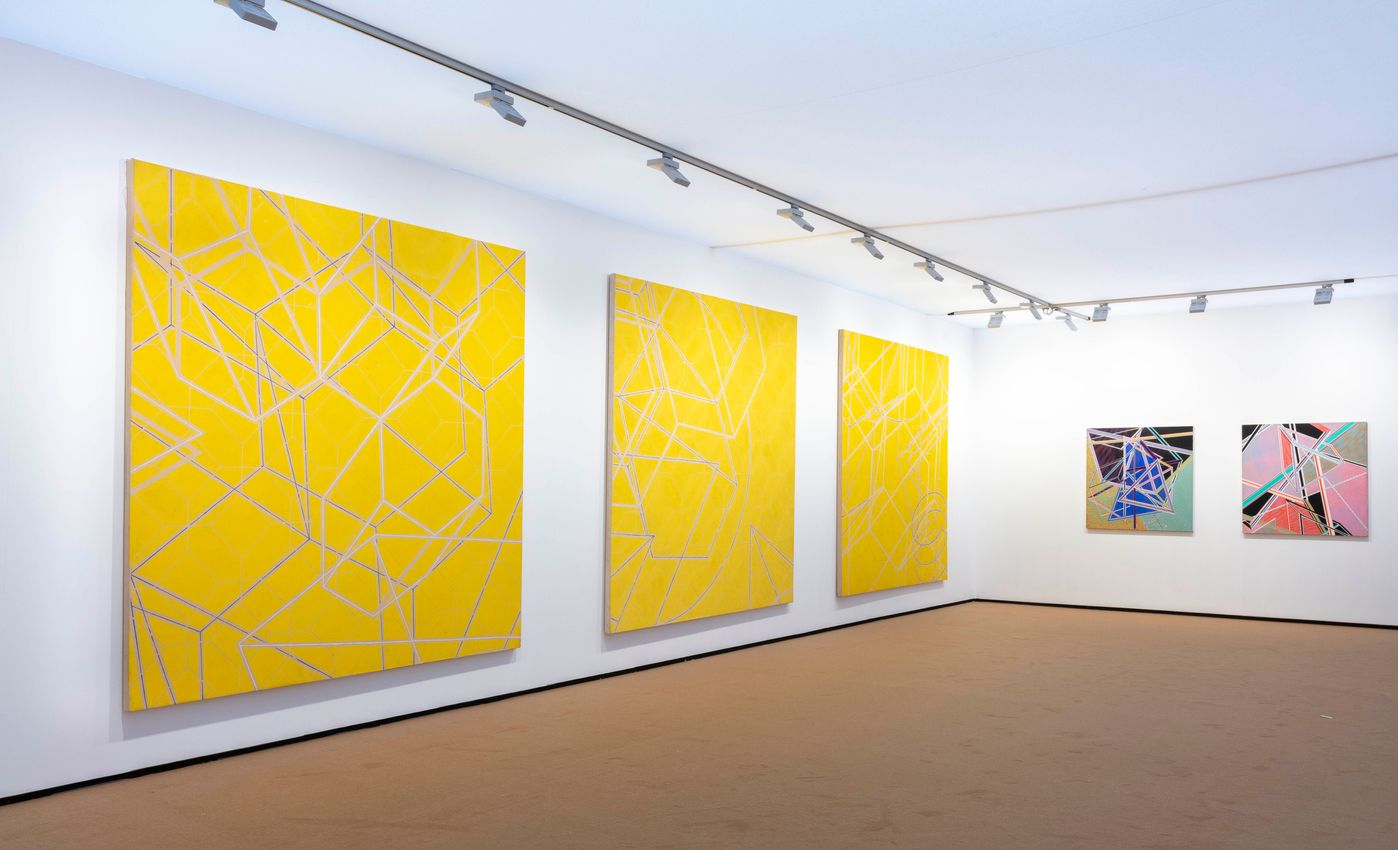
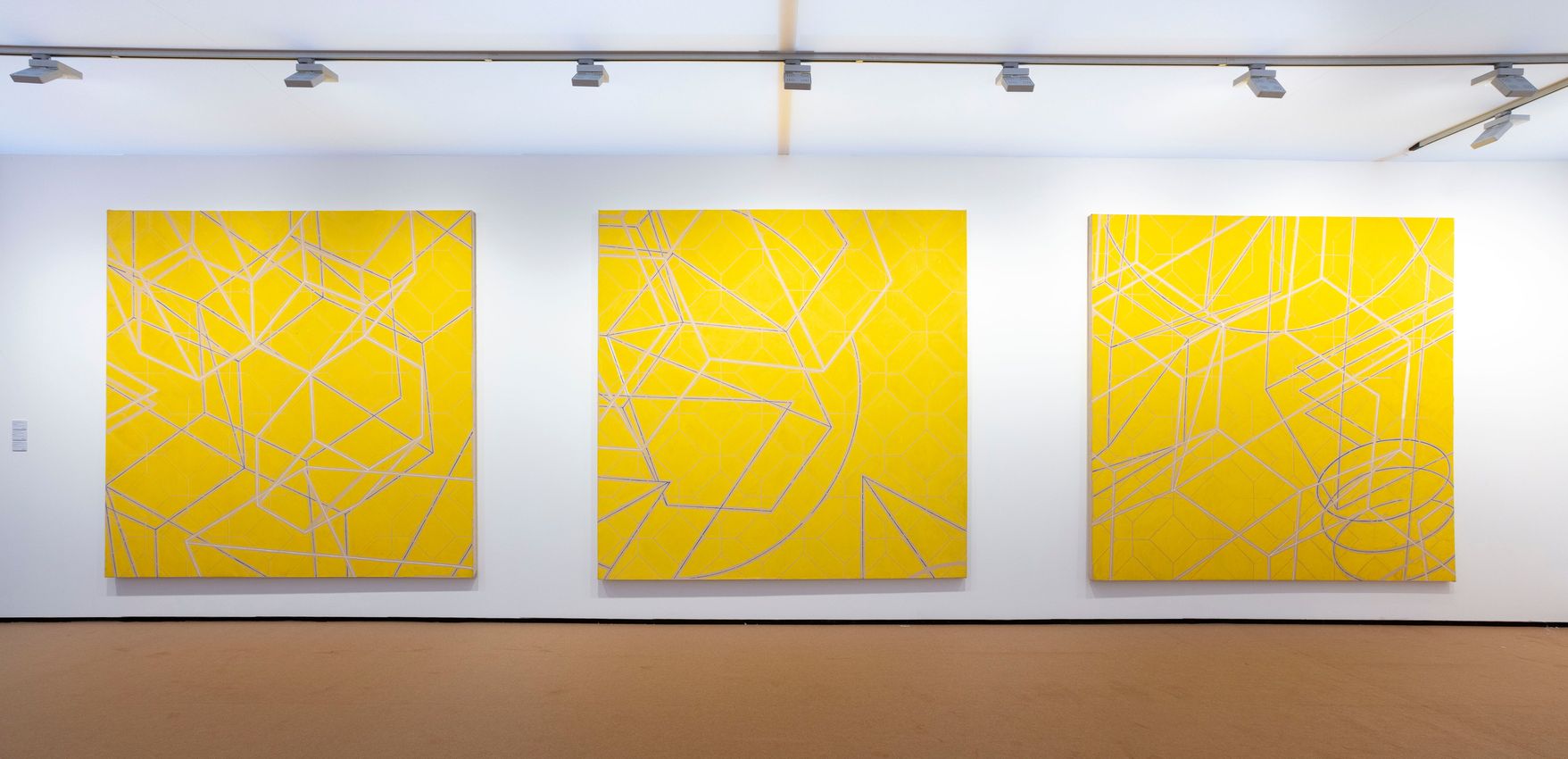
Lawrie Shabibi is pleased to announce its second participation in Frieze Masters, held in The Regent’s Park, London, 9-13 October 2024. This year we present three monumental panels by Nabil Nahas that were on long loan to the Yale Chemistry Department from 1973 whilst Nahas was a student at Yale completing his MFA. Only ever on view at Yale, this is the first time these seminal works will be seen by a broader public.

Nabil Nahas was unusual amongst young Lebanese painters of the late 1960s and early 1970s, travelling to the United States in 1968 for his training rather than Paris. The early experiences he had there, especially his time at Yale studying for his MFA at the start of the 1970s informed much of his subsequent work. There Nahas encountered many of the most prominent contemporary artists of the time, but it was Al Held who was teaching at Yale University at the time that became Nahas’s mentor.

Emblematic of Nahas’ period of geometric abstraction, which was to continue into the early 1980s, these works show the scale and ambition of Nahas at an early stage in his career and predate by four years those shown in his first gallery solo exhibition at Robert Miller in 1978. These are presented alongside two striking abstract paintings from 1978 — the same year and series as one currently on view at Tate Modern.

In America at that time, these paintings must have appeared quite radical: the critic Clement Greenburg’s theories of painting were still current orthodoxy - that progressive painting was about emphasis on two dimensionality of the surface. Nahas, already making drawings of geometric patterns in the late 1960s and 1970s, was encouraged by Al Held, who at that time was filling his canvases with rings, cubes and three-dimensional discs. However, there was always a difference: whilst in Held’s work complexity comes from the incompatible perspectives his simple forms imply, Nahas was looking towards Islamic art and its tessellated ceramics patterns, seeking to expand these into a three dimensional set-up like honeycomb. The overlapping geometric systems of Nahas’ paintings, with their emphasis on optical mixture and the dematerialization of the surface, diverge markedly from the contemporary works of both Held and Stella. Nahas’ use of geometry was less recognizable, as the abstractions of these paintings do not feel so much like geometry as decorative motifs from the pantheon of Islamic art imbued with an eerie luminosity.

With their linear structures and yellow ground, which Nahas used because he was searching not for physicality but intangible luminosity, his work caught the attention of the Harry Wasserman, Professor in the Chemistry Department and himself a keen amateur painter, and the panels were placed in the neo-Gothic lobby of Sterling Lab, the Chemistry Department at Yale University. Nahas says of the mechanical effect of these paintings “I didn’t want to feel the paint”. The artist’s hand was not to show.

These works are the forerunners of several of those in important international institutions, including those in the collections of the Metropolitan Museum of Art, Tate Modern, and the Barjeel Art Foundation. A study on paper for these works is in the collection of the British Museum.

ABOUT SPOTLIGHT****

Spotlight is a section at Frieze Masters for solo presentations of artists working in the 20th century with a special focus on under-appreciated work from the mid-century. Curated by Valerie Cassel Oliver (Lewis Family Curator of Modern and Contemporary Art, Virginia Museum of Fine Arts), Spotlight explores unexpected positions, new research into overlooked figures from across the world, and significant early work from established artists.

Read More

Installation Views

About the Artist

Nabil Nahas stands at the forefront of contemporary art, celebrated for his dynamic paintings that fuse geometry and nature—melding Western abstraction with Middle Eastern motifs and an unmistakable sense of materiality. Internationally recognised as Lebanon’s most prominent living painter, in 2025 Nahas was announced as the artist to represent Lebanon at the 2026 Venice Biennale. Pavilion commissioners Lebanese Visual Art Association in Paris and French curator Nada Ghandour praised the artist’s ability to explore ‘intricate relationships between nature, geometry, and the cosmos’ in a ‘visual language that seamlessly blends abstraction and figuration’.

View Artist Profile

Also Exhibiting at Lawrie Shabibi

The art world in focus