Press Release

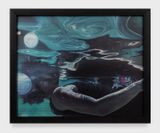
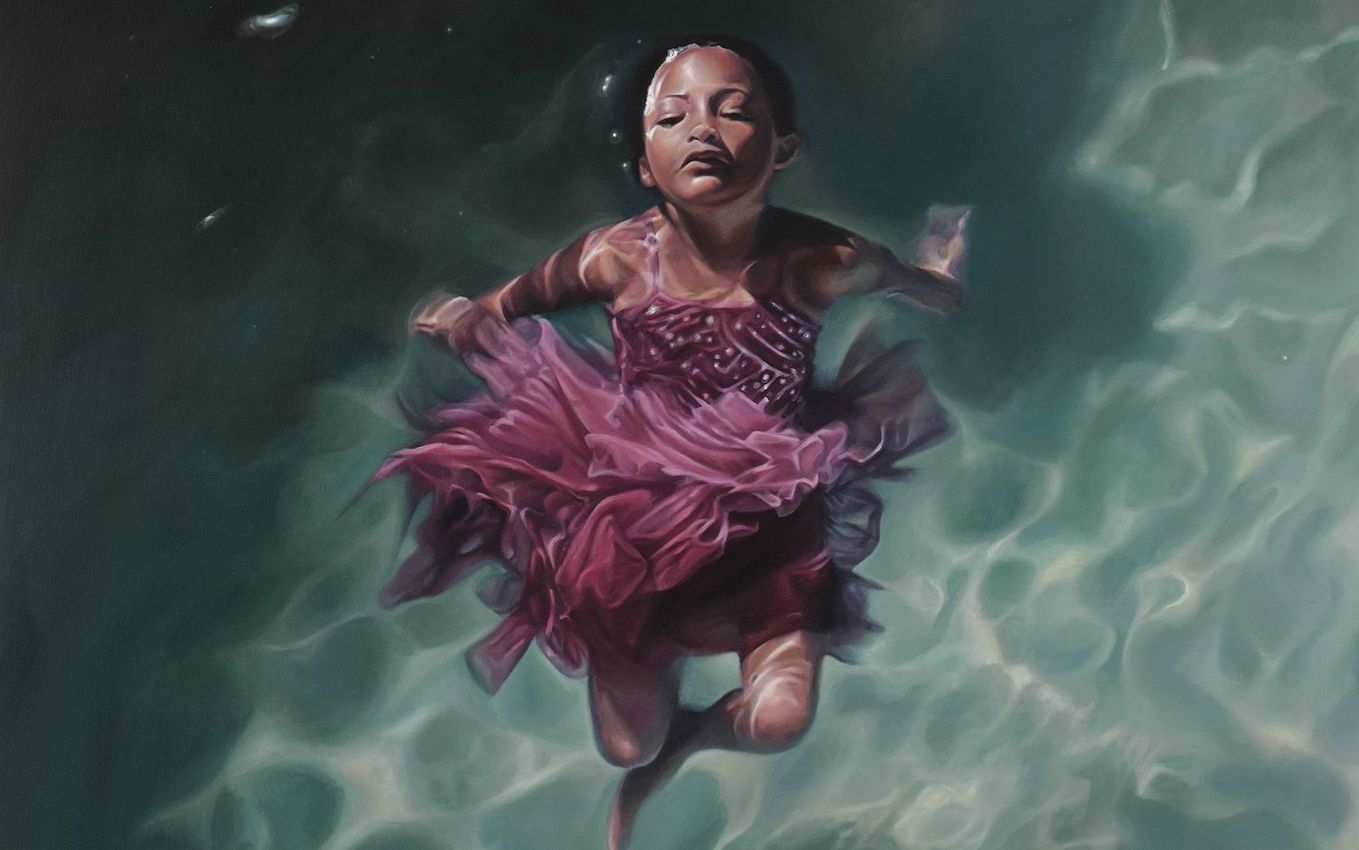
Lehmann Maupin presents A Certain Oblivion, an exhibition of new paintings by Los Angeles-based artist Calida Rawles. It is her second solo exhibition with the gallery. Featuring Rawles’ most monumentally scaled works to date, A Certain Oblivion celebrates hope as an expression of our shared humanity in the face of dark times. The power of Rawles’ proposition is embodied in her subjects: young women and girls who float and tread–alone and in community–in uncertain waters. They are the next generation, women whose graceful determination to transcend the riptides of contemporary American life belies the effort required to keep their heads above water. Rawles’ newest body of work reminds us that their triumph is our salvation.

Water is an element of paradox: placid and turbulent, navigable and unwieldy, transparent and unknowable, clarifying and obscuring. Throughout Rawles’ practice, water’s permeability offers a structure for contending with the past while looking toward the future. She has drawn inspiration from water memory theory, the idea that water absorbs physical and spiritual traces of that which passes through it. In her work, water retains its varied and charged associations across time and place. These are signaled in a variety of subtle shapes in the ripples and reflections that dapple each painting’s surface. Almost imperceptible, these forms allude to recent events in our nation’s assault on the rights of women. Troubling the exquisite beauty of crystalline swells, Rawles’ textured references remind us of the undertow that threatens to drag us down if we do not push back. Rising above it all, Rawles’ tenderly painted figures become everywomen—daughters of an upward movement powered by hope and enacted with grace.

In visually arresting scenes of meditative transcendence, Rawles skillfully reclaims water as a reparative space, creating paintings that simultaneously offer representation and refuge. The exhibition moves from high-toned pictures of piercing clarity to canvasses of sensuous darkness. Where at first the human figure presses close to the surface of the water in scenes of fully articulated movement, Rawles’ subjects eventually embrace the cover of darkness. In Like Other Gods with Ancient Rage (2023), the theme culminates in a swirl of bodies luxuriating in twilit foam. Blues turn black and darkness becomes a refuge. Even as water bears traces of the seemingly imperceptible obstacles that so often shape female experience, it is nevertheless transformed into a space for recuperation in Rawles’ work. Embodying lessons of the past, Rawles’ women save their future from those who desire to control it by finding solace in the shadows.

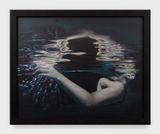
A Certain Oblivion mines the productive tension between visibility and obscurity. Often declining to immediately reveal her subjects to the viewer, Rawles’ paintings offer recuperative alternatives to the regimes of hypervisibility and surveillance to which women’s bodies have so often been subjected. Instead, ripples, waves, and reflected light abstract and multiply the human form, attesting to the fact that water both reveals and distorts. Nighttime scenes such as And So It Be (2023) presents a woman shrouded in darkness. Here, only the figure’s outstretched palms and a hint of her shoulder blade catch the light, while the rest of her body is suggested only by ripples. Figures such as these resist immediate legibility, dissolving into splashes of color and whorls of shadow that delight but confound the eye.

In Rawles’ most recent work, obscurity presents both an ethical position and a technical challenge. When painting her darkest canvases, elements of the composition remained partially obscured even to the artist due to the variable nature of acrylic paint, which dries darker than it appears when wet. Achieving the subtle gradations of greens and blacks meant effectively painting blind. A Certain Oblivion suggests that, much like the experience of floating in water, painting itself occasionally necessitates giving up control. As she contends with the task of representation, Rawles takes her cues from water, embracing its unknowable depths, its slippery evasiveness, its powerful fluidity—and ultimately, its irrepressible vitality.

Read More
About the Artist

The paintings of Calida Rawles (b. 1976, Wilmington, DE; lives and works in Los Angeles, CA) merge hyper-realism with poetic abstraction. Situating her subjects in dynamic spaces, her recent work employs water as a vital, organic, multifaceted material, and historically charged space. Ranging from buoyant and ebullient to submerged and mysterious, Black bodies float in exquisitely rendered submarine landscapes of bubbles, ripples, refracted light and expanses of blue. For Rawles, water signifies both physical and spiritual healing as well as historical trauma and racial exclusion. She uses this complicated duality as a means to envision a new space for Black healing, and to reimagine her subjects beyond racialised tropes. Enhancing the seductive nature of water, the work tempers heavier subjects with aquatic serenity and geographic and temporal ambiguities, inviting multiple readings. Embedded in her titles and topographical notations in the compositions, Rawles’ canvases represent an expansive vision of strength and tranquility during today’s turbulent times, while insisting on the triumph of humanity.

View Artist Profile

Also Exhibiting at Lehmann Maupin

About the Gallery

Rachel Lehmann and David Maupin founded Lehmann Maupin in 1996. The gallery represents a diverse range of American artists, as well as artists and estates from across Europe, Asia, Africa, South America, and the Middle East. It has been instrumental in introducing numerous artists from around the world in their first New York exhibitions.

View Gallery Profile
Address
501 West 24th Street
New York
United States
Opening Hours
Tuesday – Saturday
10am – 6pm
(1)
New York 501 West 24th Street
Lehmann Maupin
501 West 24th Street, New York, United States

Opening hours
Tuesday – Saturday
10am – 6pm
The art world in focus