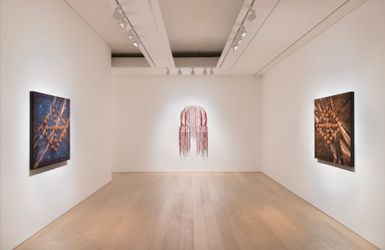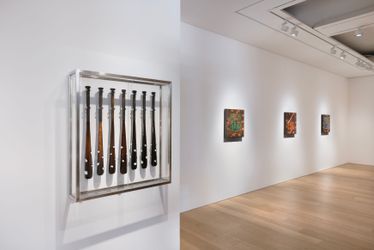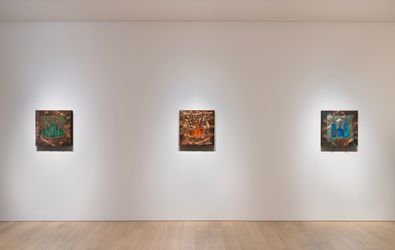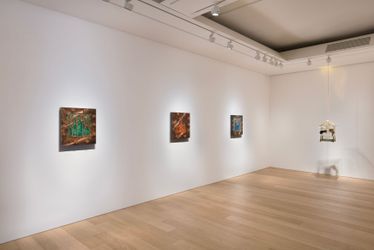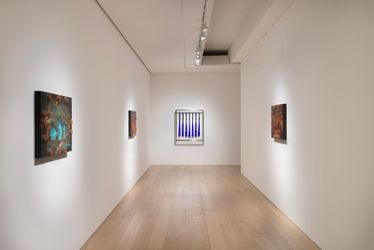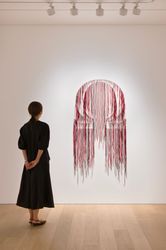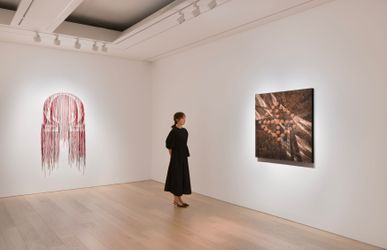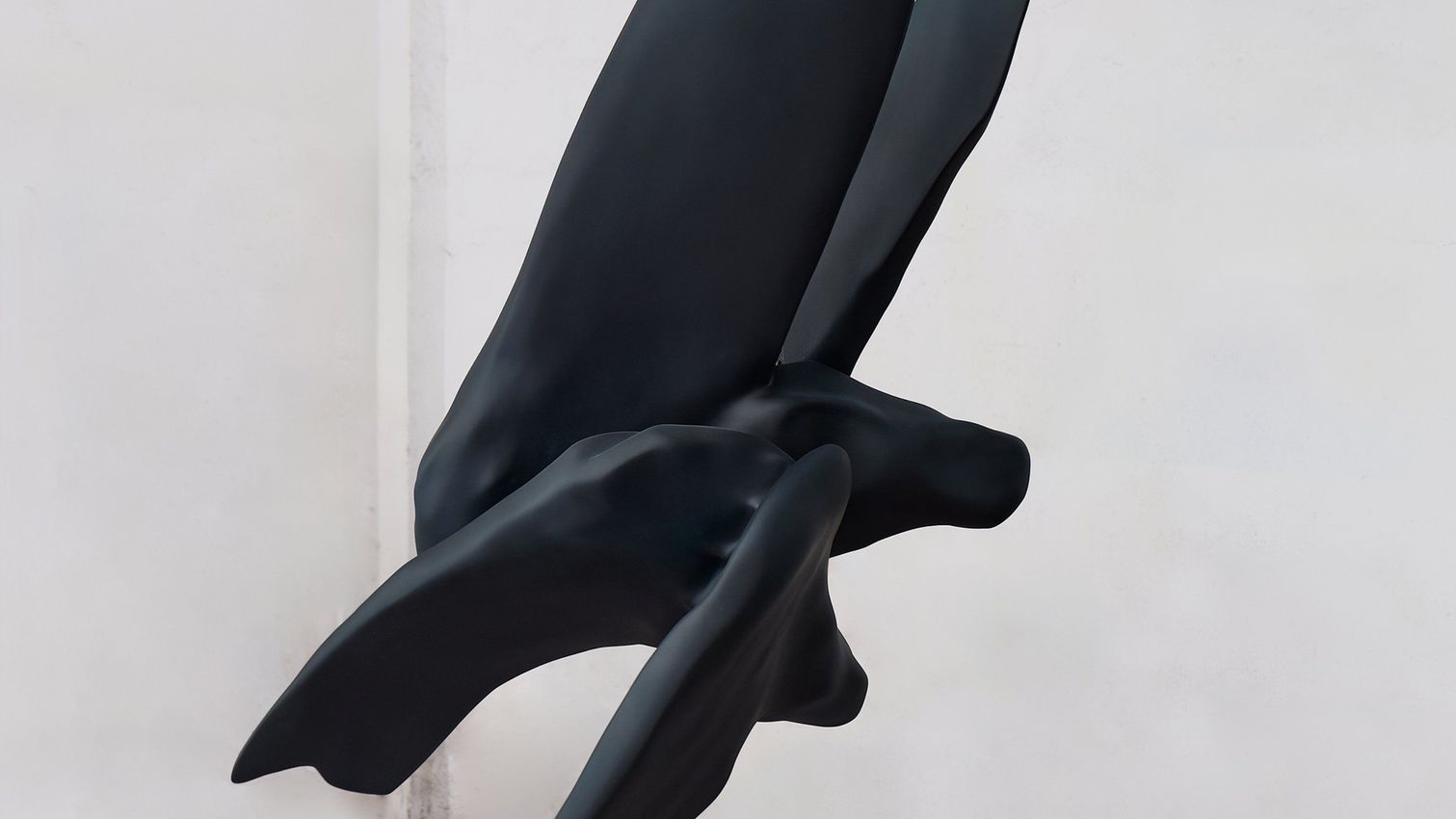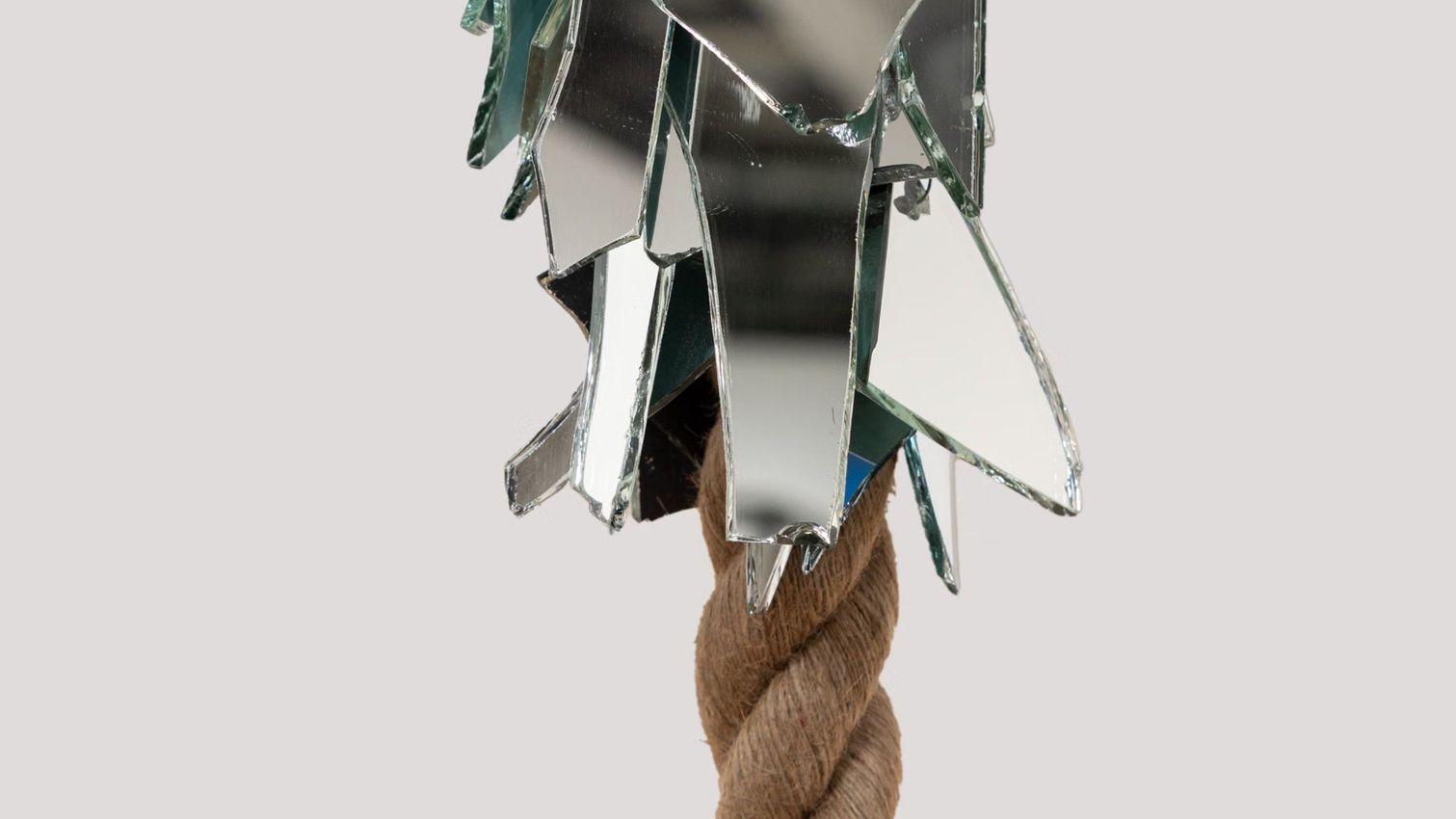




Lehmann Maupin is pleased to present ongoin’, a solo exhibition of new works by Nari Ward, on view from August 28 through October 19, 2024 in Seoul. Ward’s second exhibition in Seoul features copper panel works, sculpture, and wall-based installations that address aspects of healing and care that shape local communities— specifically in Harlem, the artist’s longtime neighbourhood in New York. Additionally, ongoin’ explores the artist’s dedication to artistic interpretations of spiritual ceremonies and rituals, probing the fractured images and unseen forces often associated with such practices.
The exhibition coincides with the opening of Frieze Seoul, and also comes on the heels of Ward’s retrospective exhibition Ground Break at Pirelli HangarBicocca in Milan.ongoin’ will be on view ahead of a forthcoming installation at The Armory Show in New York this September.
Ward is well known for his wall- and installation-based sculptural works created from materials frequently found and collected throughout Harlem. The artist combines these materials to re- contextualize their original meanings, creating assemblage works that confront complex social and political realities (often surrounding race, migration, democracy, and community) through literal and metaphorical juxtaposition. Materially specific but intentionally ambiguous in their signification, Ward’s works encourage the viewer to explore many possible interpretations.
Ward has long been drawn to copper as an artistic medium for both its energetic properties and its many cultural associations with medicinal healing. In ongoin’, the series Still Livin’ and Restin’ expand Ward’s interest in copper as an energetic material. Harnessing the process of oxidation as a tool for mark-making, Ward etches and marks the copper surfaces with everyday materials found around Harlem. Imprints of liquor bottles and prayer candles nod to makeshift sidewalk memorials constructed in public spaces, where these materials are repurposed to facilitate communal gathering, mourning, remembrance, and celebration.
Still Livin’ recalls the art historical tradition of still life painting, utilizing inanimate objects to formally and technically experiment with overall composition. Here, Ward’s assemblages are arranged in meaningful mise-en-scènes, often set against the patinated bases of prayer candles, which outwardly emanate lines of light. Reflections of light from the altered copper draw the viewer’s attention to the clustered subject matter, foregrounding Ward’s deep appreciation for rites of passage and ordinary materials.
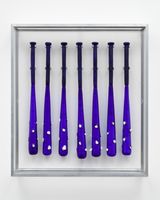
Representations of care come to the fore in the works Medicine Bats (2011) and Medicine Bats (Blue) (2024). Two sets of seven glass bats are installed in custom-made glass cabinets, respectively; each bat represents a day of the week, gesturing as a whole towards the consistency of routine. Shaped like a club, an item used to both inflict and combat violence and perhaps a reference to the colonial history of cotton, Ward’s glass objects serve as protective receptacles for the soft material traditionally used as packing in pill bottles. Medicine Bats recalls an era of pharmaceutical quality and care—an industry long associated with healing—and, in more recent decades, the industry’s dark underbelly of addiction and excess.
The duality of meaning in materials has long been a recurring aspect of Ward’s work. In OHM (2024), a new wall-based installation made from found shoelaces, Ward considers the importance of the “ohm” sign as linked to meditation and ritual. The sign—the Greek letter omega—is also used as a technical symbol for electrical resistance. Here, Ward lends shape and form to language in order to create a physical and phenomenological experience of text, while the shoelaces are also suggestive of the many bodies that could have handled and worn them. Similar to OHM‘s use of language, a new sculpture titled untitled warnings (2024) considers agency and utterance through containment. In this sculpture, several found objects—including shoe tongues joined together by security tags—are displayed, creature-like, within a hanging birdcage. The objects push outwards from their enclosure, anthropomorphically searching for external space through sheer willpower.
In ongoin’, Ward approaches complex topics prevalent in the socio-political fabric of the United States while also addressing issues that resonate on a global level. Yet, rather than fixating only on the errors of the past, Ward creates a space for possibility through a spiritual connection to materials. By doing so, he breaks down the complexities of our reality and explores the various approaches to community and care.


Nari Ward (b. 1963, St. Andrew, Jamaica; lives and works in New York) is known for his sculptural installations composed of discarded material found and collected in his neighbourhood. He has repurposed objects such as baby strollers, shopping carts, bottles, doors, television sets, cash registers and shoelaces, among other materials. Ward re-contextualises these found objects in thought-provoking juxtapositions that create complex, metaphorical meanings to confront social and political issues surrounding race, poverty, and consumer culture. He intentionally leaves the meaning of his work open, allowing the viewer to provide his or her own interpretation.


Rachel Lehmann and David Maupin founded Lehmann Maupin in 1996. The gallery represents a diverse range of American artists, as well as artists and estates from across Europe, Asia, Africa, South America, and the Middle East. It has been instrumental in introducing numerous artists from around the world in their first New York exhibitions.

A respected voice in contemporary art discourse.
Focusing on ambitious storytelling and insightful art-world commentary. Ocula Magazine publishes in-depth interviews, critical essays and timely analysis on the artists, exhibitions and ideas driving the global art world.
Learn more about Ocula Magazine
Showcasing the best of the art world.
Ocula partners with galleries from around the world to highlight their artists, artworks and exhibitions. Gallery membership is by application and invitation, with each member vetted by an independent panel.
Learn more about Ocula Membership

Specialises in the sale of major artworks.
Led by a team with deep ties to the world’s leading auction houses, galleries and collectors. Ocula’s advisory team offers bespoke services to high-net-worth clients from around the world who are looking to acquire the best of contemporary and modern art.
Learn more about our team and services