“An individual life can be seen as a coloured brick, but also as intuitive expression of, not only a two-dimensional plane, but also the digital plane – meaning the internet and pixels, which are parallel to the real world.”
Lisson Gallery is proud to present a compelling exhibition of new works by the renowned artist Ai Weiwei, showcasing a provocative exploration of contemporary issues through the lens of historical and artistic reference. Each piece in this show articulates a dialogue between past and present, revealing the artist’s relentless inquiry into the complexities of identity, politics, and cultural heritage.
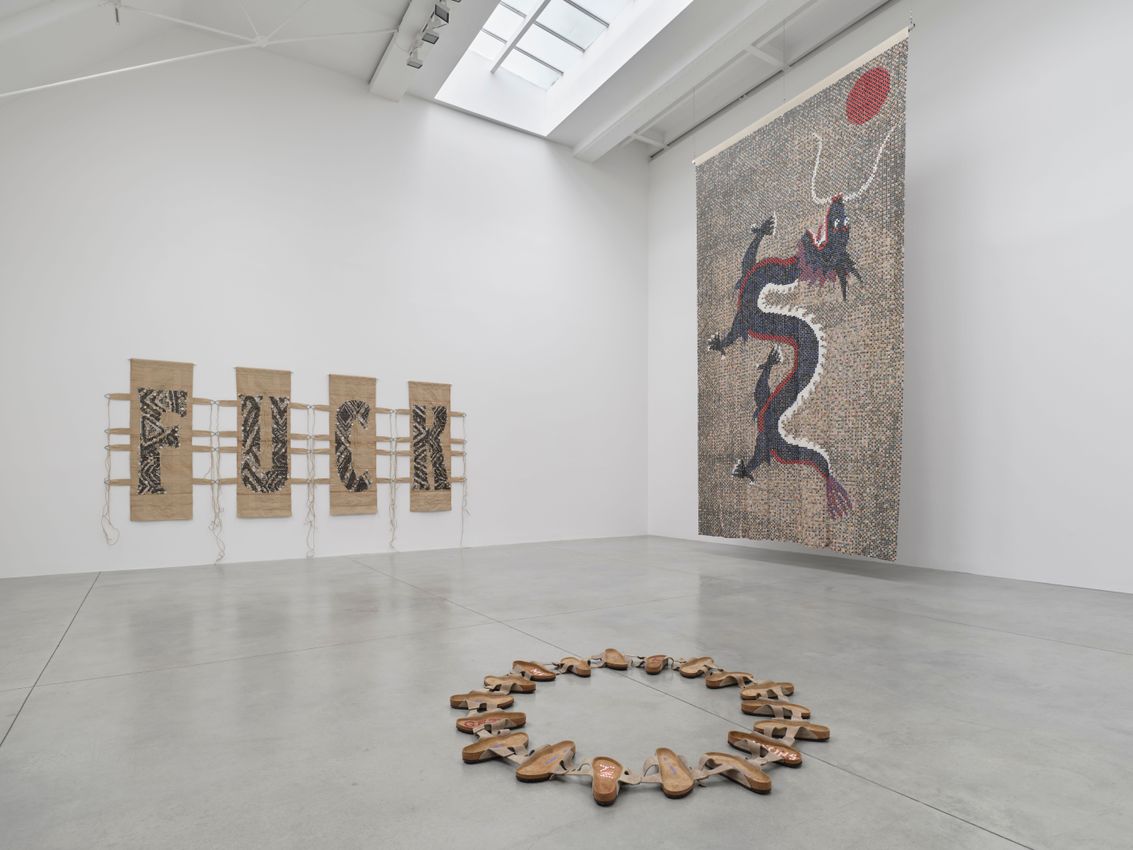
At the heart of the exhibition is F.U.C.K. (all works 2024), a striking installation that employs buttons affixed to four Second World War military stretchers to spell out the provocative word. The buttons, sourced from the now-closed Brown & Co Buttons factory, were collected over the years, resulting in an astounding array of more than 9,000 varieties. This piece not only signifies the culmination of Ai’s extensive research into industrialization and textile history, but also represents a tangible connection to the first industrial revolution. The careful arrangement of buttons underscores themes of existence and disappearance, reflecting on how historical narratives are woven together through the fabric of material culture.
Adjacent to F.U.C.K. is the audacious Go Fuck Yourself, in which the upper sections of military tents are sewn with buttons, creating a visceral commentary on political polarization and contemporary discourse. The phrase that gives this piece its name has become emblematic of disdain in modern dialogue, highlighting a cultural moment where conflict is often articulated in stark, blunt terms. This work resonates deeply with current societal tensions, encouraging viewers to confront the fundamental realities of communication in a fractured political landscape.
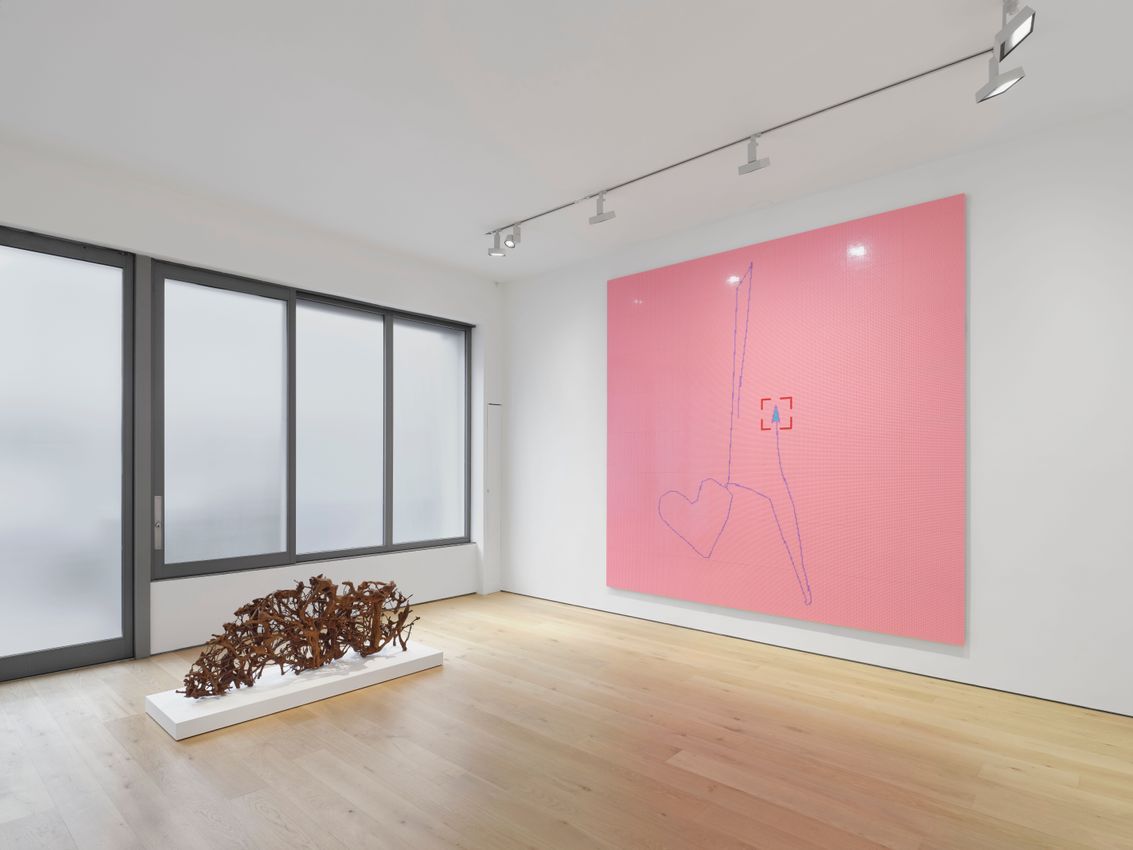
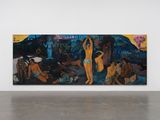
Furthering this dialogue, Ai Weiwei presents a playful yet profound reinterpretation of Paul Gauguin’s Where Do We Come From? What Are We? Where Are We Going? (1897-98). Through the medium of toy bricks, this large-scale piece reimagines Gauguin’s philosophical inquiries while integrating contemporary elements such as drones and references to the atomic bombing of Hiroshima. This work is particularly significant for Ai, who has expressed the lasting impact of Gauguin’s original piece on him since he first encountered it at the age of 20. By depicting himself as an aboriginal figure within this context, Ai engages in a critical examination of identity and representation, extending his exploration of digitalization and pixelation in modern art.
“I am still in the early stages of exploring this material as a new linguistic system. It is crafted through digital logic, positioning it at the intersection of the rational and the irrational. As soon as a concept takes shape, the pathway to its execution becomes clear. The palette of Lego includes only 42 colours, a limitation that, paradoxically, opens up a world of poetic possibilities for creation.”
The exhibition also features Wheat Field with Crows, another reinterpretation rendered in toy bricks, where the crows of Van Gogh’s original painting are replaced with drones, drawing parallels between the artist’s tumultuous mental state and the chaos of today’s world. This transformation highlights the ongoing relevance of historical artworks, revealing how they can serve as mirrors reflecting our current societal challenges.
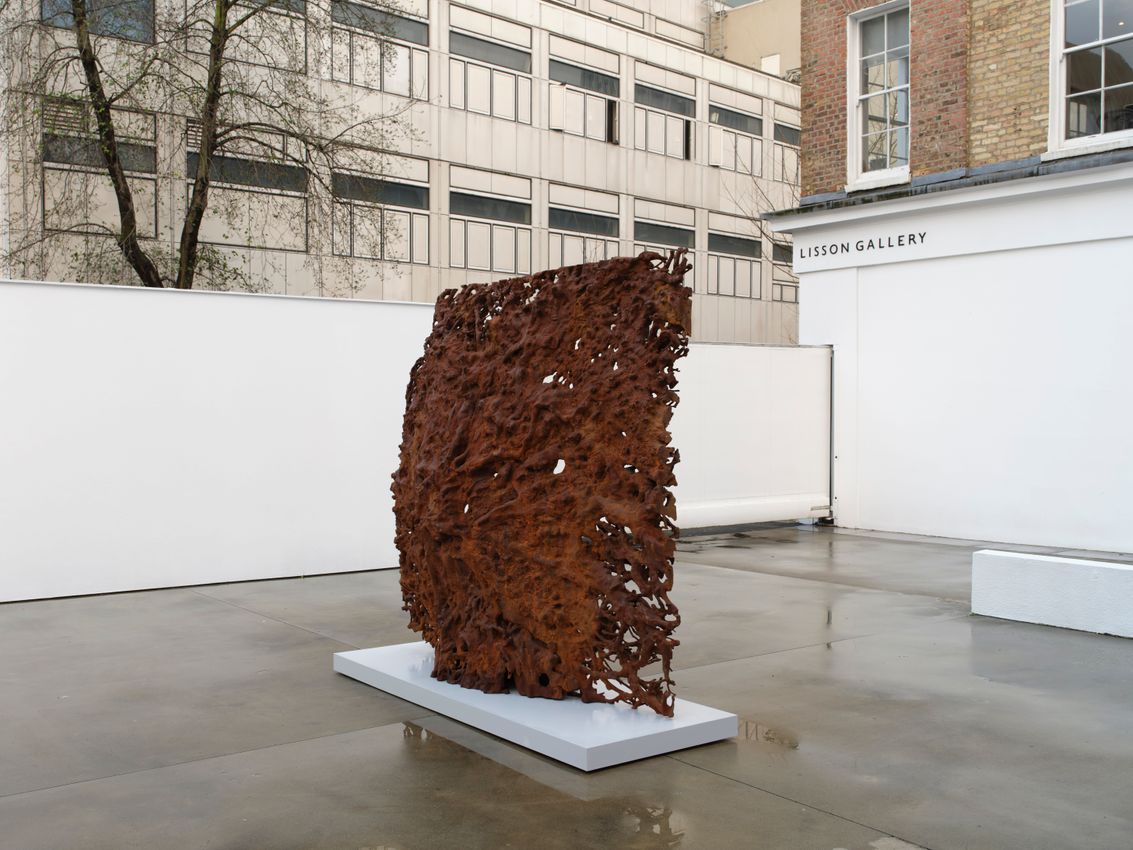
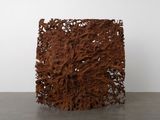
As visitors continue through the gallery, they encounter four smaller-scale artworks crafted from toy bricks, marking a transition from two-dimensional representations to sculptural expressions. Among these, Iron Helmet Secured by Toy Bricks stands out as a striking installation that presents a rusted iron German soldier’s helmet housed within an altar-like structure made of white toy bricks. This poignant juxtaposition of materials invites contemplation on themes of war, memory, and the passage of time, urging viewers to reflect on the cyclical nature of history and its pervasive impact on contemporary life.
Ai Weiwei’s exhibition at Lisson Gallery invites audiences to engage with a rich tapestry of ideas and emotions, unearthing connections between personal, political, and artistic narratives. This showcase serves as an exploration of the enduring questions that define the human experience and is testament to Ai Weiwei’s profound ability to provoke thought and inspire dialogue, ensuring that his work resonates powerfully within the contemporary art landscape.
* At the artist’s request, this press release was written entirely by ChatGPT4 and is unedited, apart from clarifications in brackets and quotes by the artist, taken from his own unpublished writing, titled ‘Bricks as mortars’ from 2023. The show’s title also came from an earlier version of this release, written by Google Gemini, albeit with a typo we have added for effect.
Conceptual artist Ai Weiwei positions himself in and out of his Beijing studio as a cultural arbiter. Compelled by a sense of social conscience, his artistic practice extends across many roles, from filmmaker and photographer, to writer, publisher, curator and architect. As an heir to Marcel Duchamp and Andy Warhol, yet digging deep into Chinese heritage, he moves freely between a variety of formal languages, reflecting on contemporary geopolitics. In recycling historical materials, loaded with meaning, such as Han Dynasty vases or wood from destroyed temples, Ai distils ancient and modern aesthetics in works of salvage or iconoclasm. Public commissions, like bringing 1,001 Chinese citizens to the small German town of Kassel for documenta 12, Fairytale, 2007, or the pouring of hundreds of millions of handmade porcelain seeds into the Tate’s Turbine Hall, Sunflower Seeds, 2010, are audacious gestures that command global attention, but always underlain with humor and compassion. He is one of the leading cultural figures of his generation and consistently displays great courage in placing himself at risk to affect social change through his art. He serves as an example for legitimate social criticism and free expression both in China and internationally.


Established in 1967 in London, Lisson Gallery is one of the most well-known galleries operating globally. Boasting an influential and continuing legacy, including playing a pivotal role in the careers of many pioneers of historically important art movements, the gallery works with some of the most significant contemporary artists today.

A respected voice in contemporary art discourse.
Focusing on ambitious storytelling and insightful art-world commentary. Ocula Magazine publishes in-depth interviews, critical essays and timely analysis on the artists, exhibitions and ideas driving the global art world.
Learn more about Ocula Magazine
Showcasing the best of the art world.
Ocula partners with galleries from around the world to highlight their artists, artworks and exhibitions. Gallery membership is by application and invitation, with each member vetted by an independent panel.
Learn more about Ocula Membership

Specialises in the sale of major artworks.
Led by a team with deep ties to the world’s leading auction houses, galleries and collectors. Ocula’s advisory team offers bespoke services to high-net-worth clients from around the world who are looking to acquire the best of contemporary and modern art.
Learn more about our team and services