Lisson Gallery is pleased to announce its first exhibition with Carolee Schneemann (1939–2019), one of the boldest and most influential artists of the twentieth and early twenty-first centuries, whose foundation has been represented by the gallery since October of last year. This inaugural show also marks the artist’s first solo exhibition in Los Angeles. Known for her groundbreaking and multidisciplinary practice, which spanned six decades, Schneemann challenged societal and artistic conventions by using her own body and diverse media to address issues of sexual expression, gender, politics, and war.
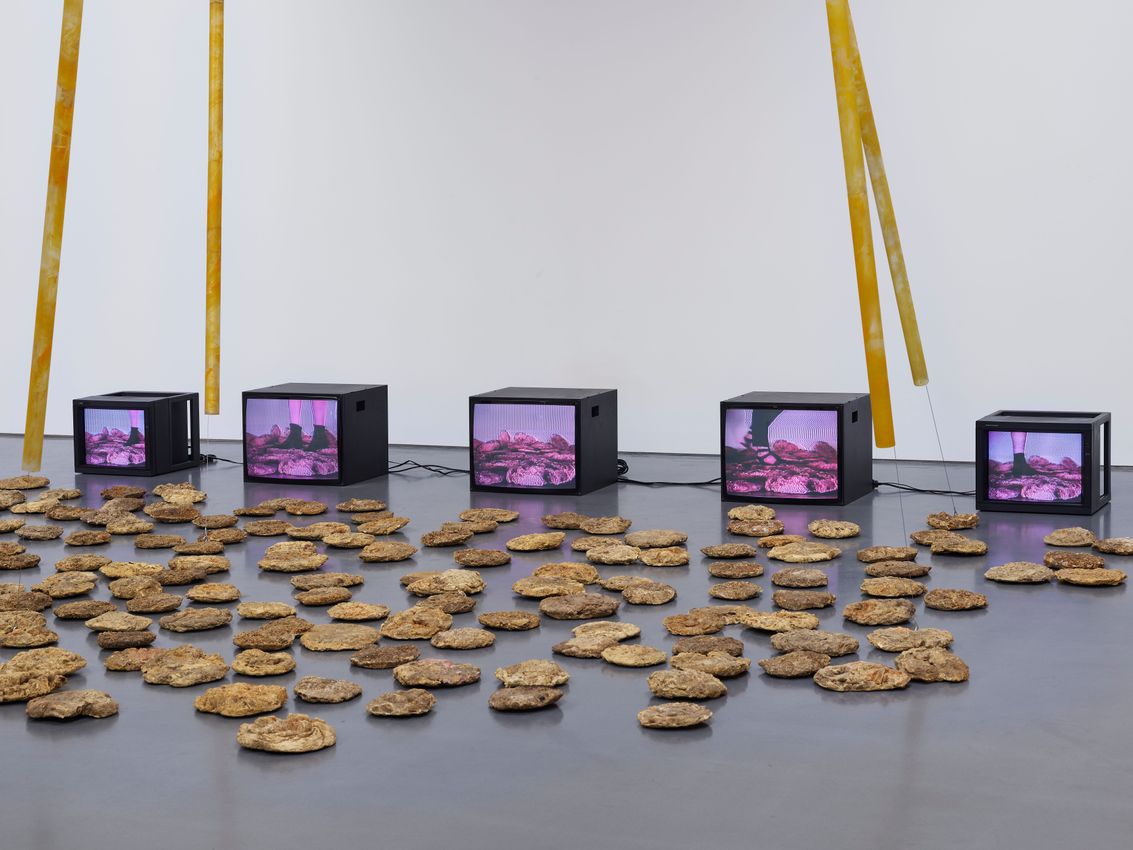
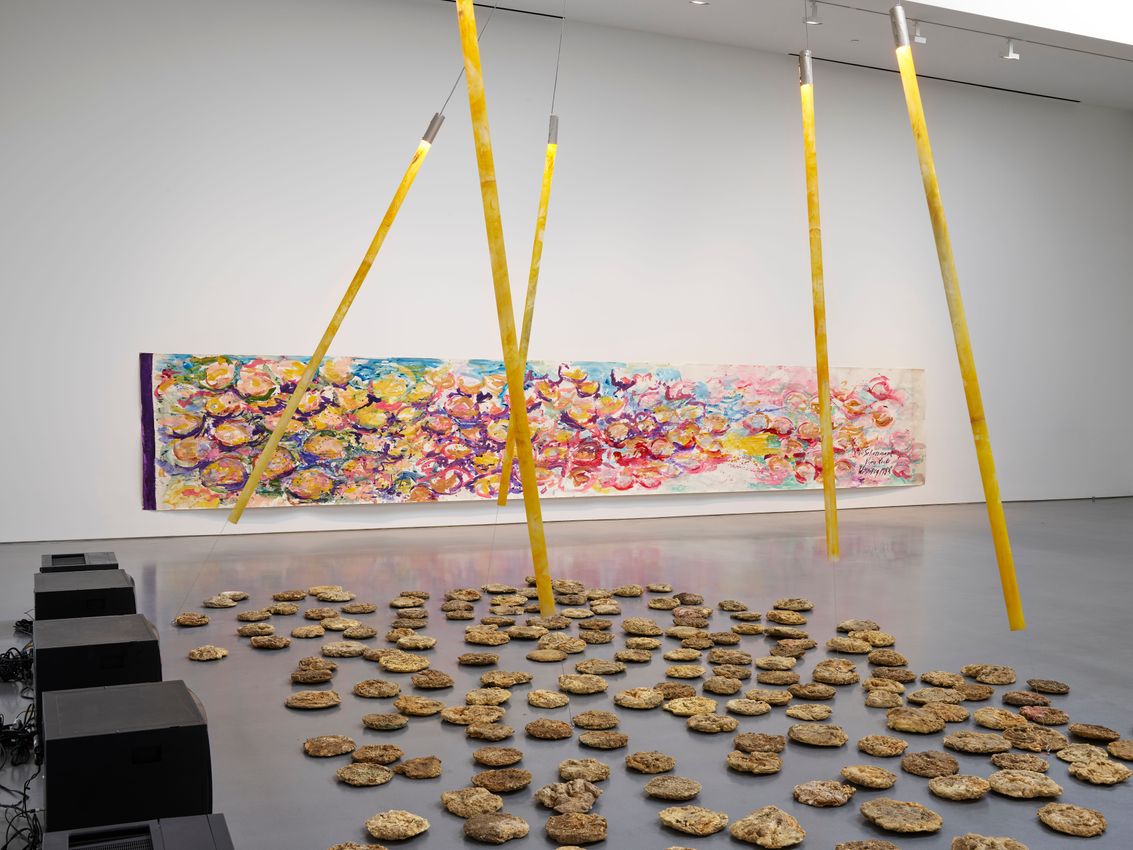
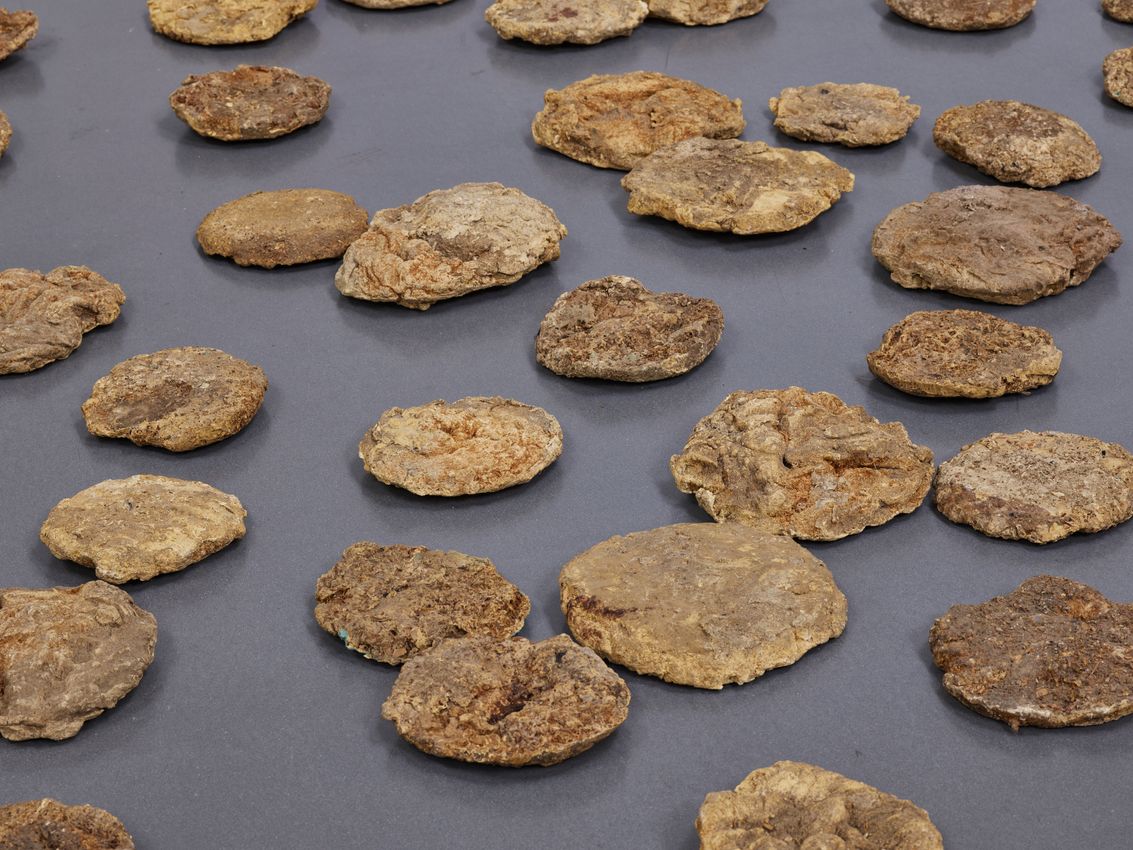
The exhibition focuses on Schneemann’s practice two decades into her career, centering on a unique multimedia installation engendered by a dream she had while visiting Los Angeles in the summer of 1985. In the dream, Schneemann envisioned round, rock-like shapes reminiscent of Monet’s Water Lillies, floating in the distance. The resulting work, Video Rocks (1987), shown at Lisson for the first time in its entirety, consists of 180 discs, each roughly the size and shape of a cow dung pat, spread across the floor in a shallow mound. At the head of this mound, five video monitors have been arranged in a row. Each screen plays staggered filmed scenes that allude to the preceding sculptural landscape — footage of people and animals crossing the rocks. Building on the self-reflexive explorations of embodiment and personal narrative she had established in her early 8mm and 16mm film works such as Fuses (1965), Plumb Line (1968–71) and Kitch’s Last Meal(1973–76), Video Rocks marks a pivotal moment in Schneemann’s practice. This immersive, multifaceted work was last exhibited in the United States nearly thirty years ago during her solo show Carolee Schneemann: Up to and Including Her Limits at the New Museum in New York.
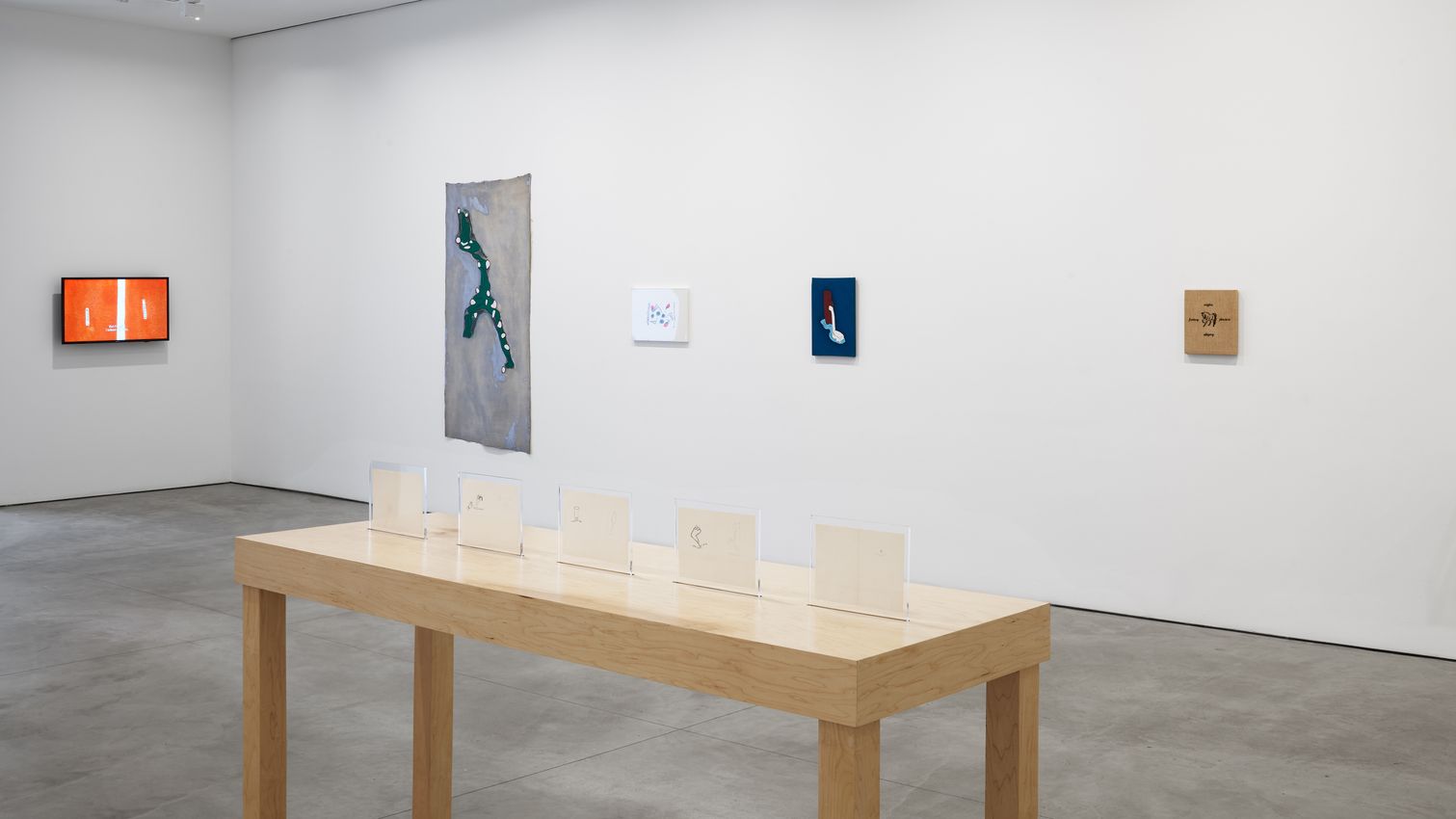
Alongside this installation, the exhibition includes a series of drawings that Schneemann simultaneously created to document the imagery and possible configurations of Video Rocks—expressive sketches in paint, crayon, and marker that capture the artist’s sources and methods. A selection of these works, including a 31 ½-foot-wide painting of pink and yellow floral forms that hangs horizontally on the adjacent wall—a reference to the water lilies in Schneemann’s dream—is also on display. Framing the entire assemblage in the gallery are five acrylic light rods suspended from the ceiling, illuminating the rocks below and adding another layer of lyricism to this ‘dream/vision’ space, as the artist described it.
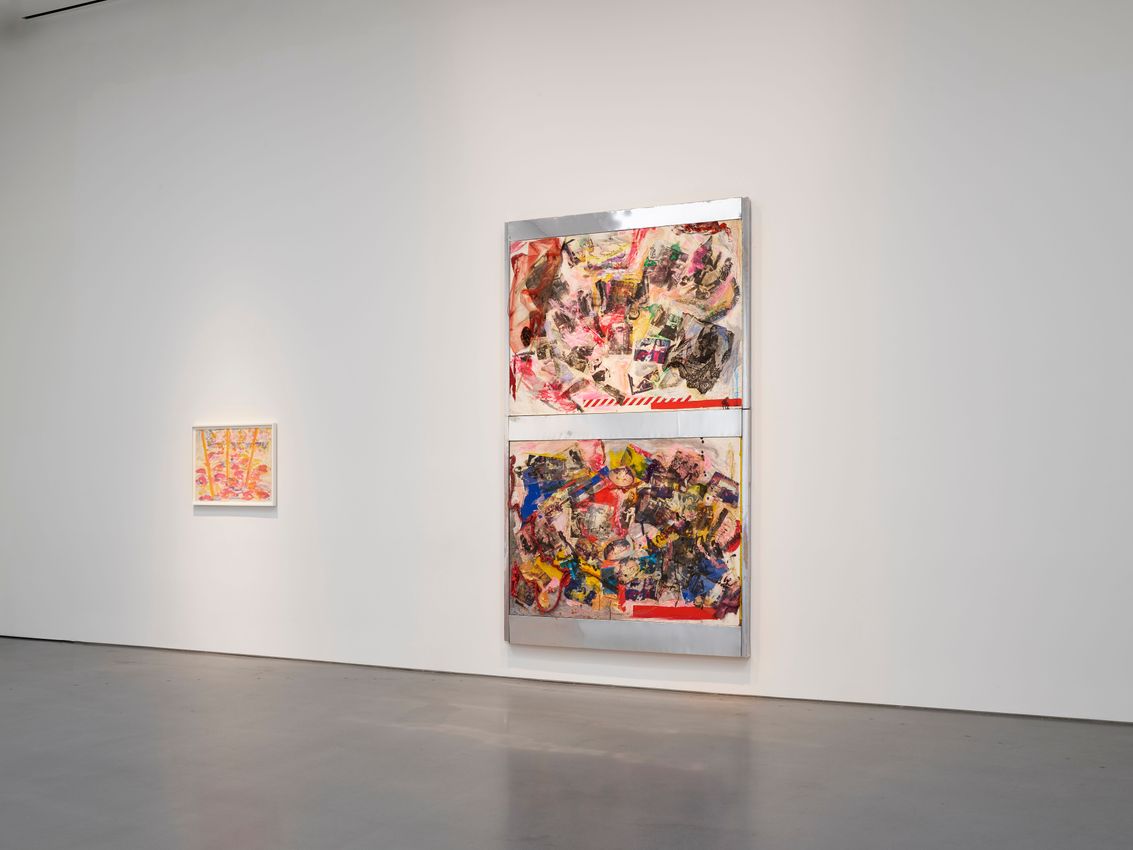
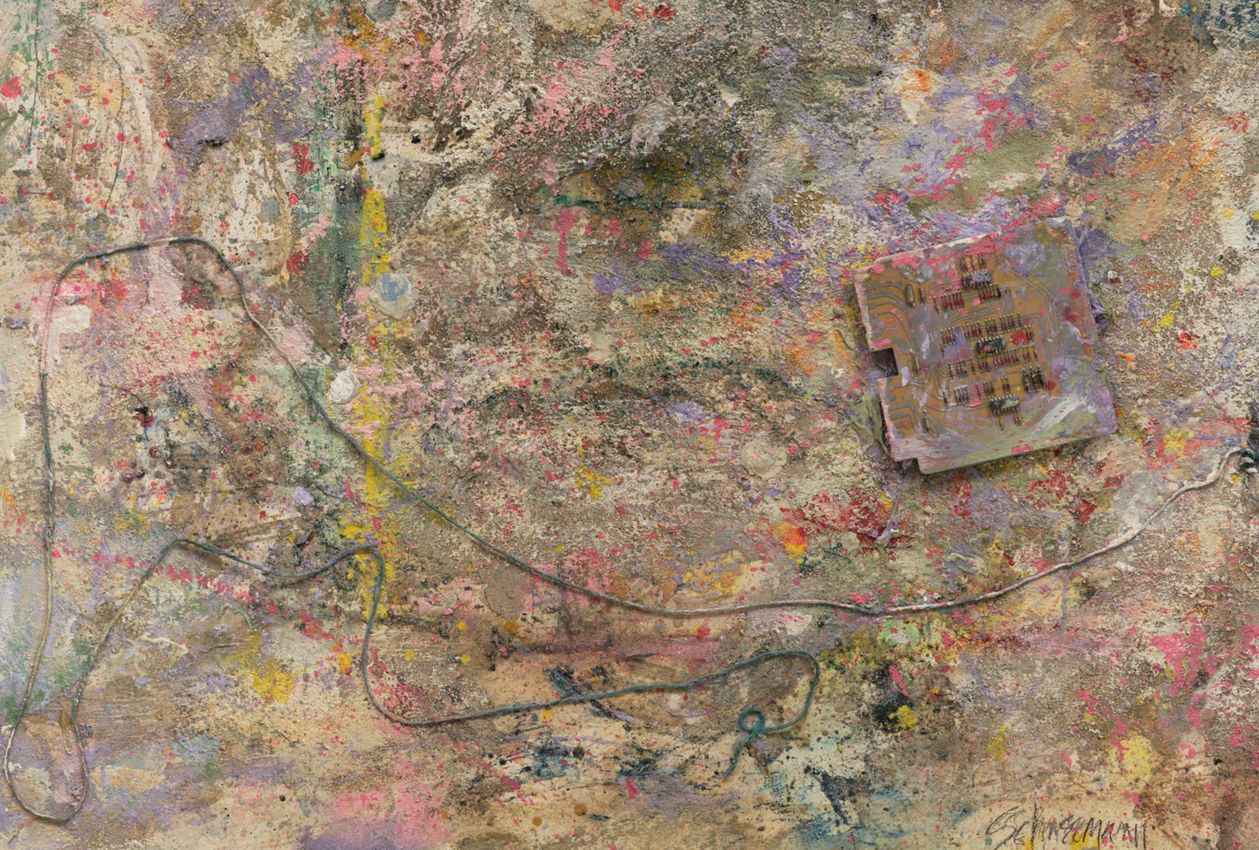
The exhibition also features works from Schneemann’s Lebanon Series (1981–1999), including Souvenir of...Tyre...Sidon...Damour (for Bruce McP.) (1982), a tactile collaged painting that blends and abstracts personal and political imagery to address the violence of the Lebanese Civil War and its aftermath. The Dust Paintings (1983–86), also part of the Lebanon Series, are abstract compositions that incorporate circuit boards, silkscreened images, nails, glass particles, ash, and other materials. These works reflect Schneemann’s long-standing engagement with political atrocities, such as her protest film Viet-Flakes (1965), connecting to her early experiments with painting and collage in the 1950s and 1960s. The Dust Paintings reinforce her deep material exploration, with rag paper surfaces layered with paint, string, vegetable dye, and glass.
If Video Rocks was Schneemann’s early attempt to merge her video works with sculpture, the _Dust Paintings_represent another instance of her desire to fuse and disrupt artistic mediums. Just as her early investigations aimed to break free from static, traditional forms, these later works reflect her continued efforts to create a dynamic and unfolding artistic practice.


A pioneering figure in 20th-century American art, Carolee Schneemann is known for her experimental visual and performance-based practice exploring the body, gender, sexuality, and narrative.


A respected voice in contemporary art discourse.
Focusing on ambitious storytelling and insightful art-world commentary. Ocula Magazine publishes in-depth interviews, critical essays and timely analysis on the artists, exhibitions and ideas driving the global art world.
Learn more about Ocula Magazine
Showcasing the best of the art world.
Ocula partners with galleries from around the world to highlight their artists, artworks and exhibitions. Gallery membership is by application and invitation, with each member vetted by an independent panel.
Learn more about Ocula Membership

Specialises in the sale of major artworks.
Led by a team with deep ties to the world’s leading auction houses, galleries and collectors. Ocula’s advisory team offers bespoke services to high-net-worth clients from around the world who are looking to acquire the best of contemporary and modern art.
Learn more about our team and services