



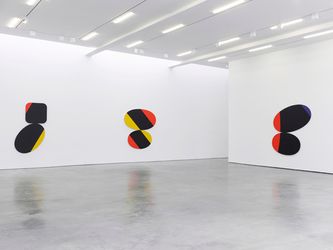
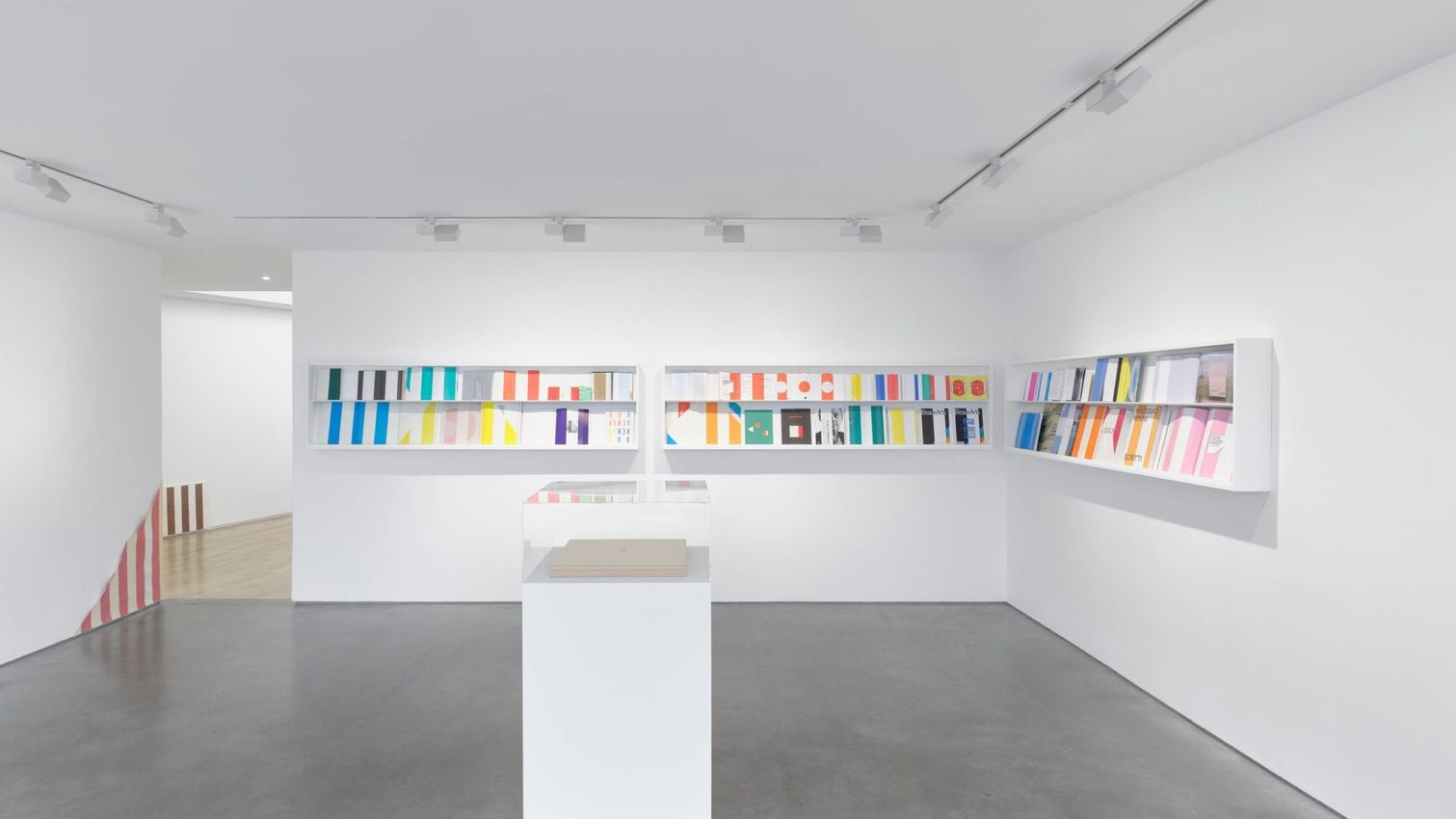
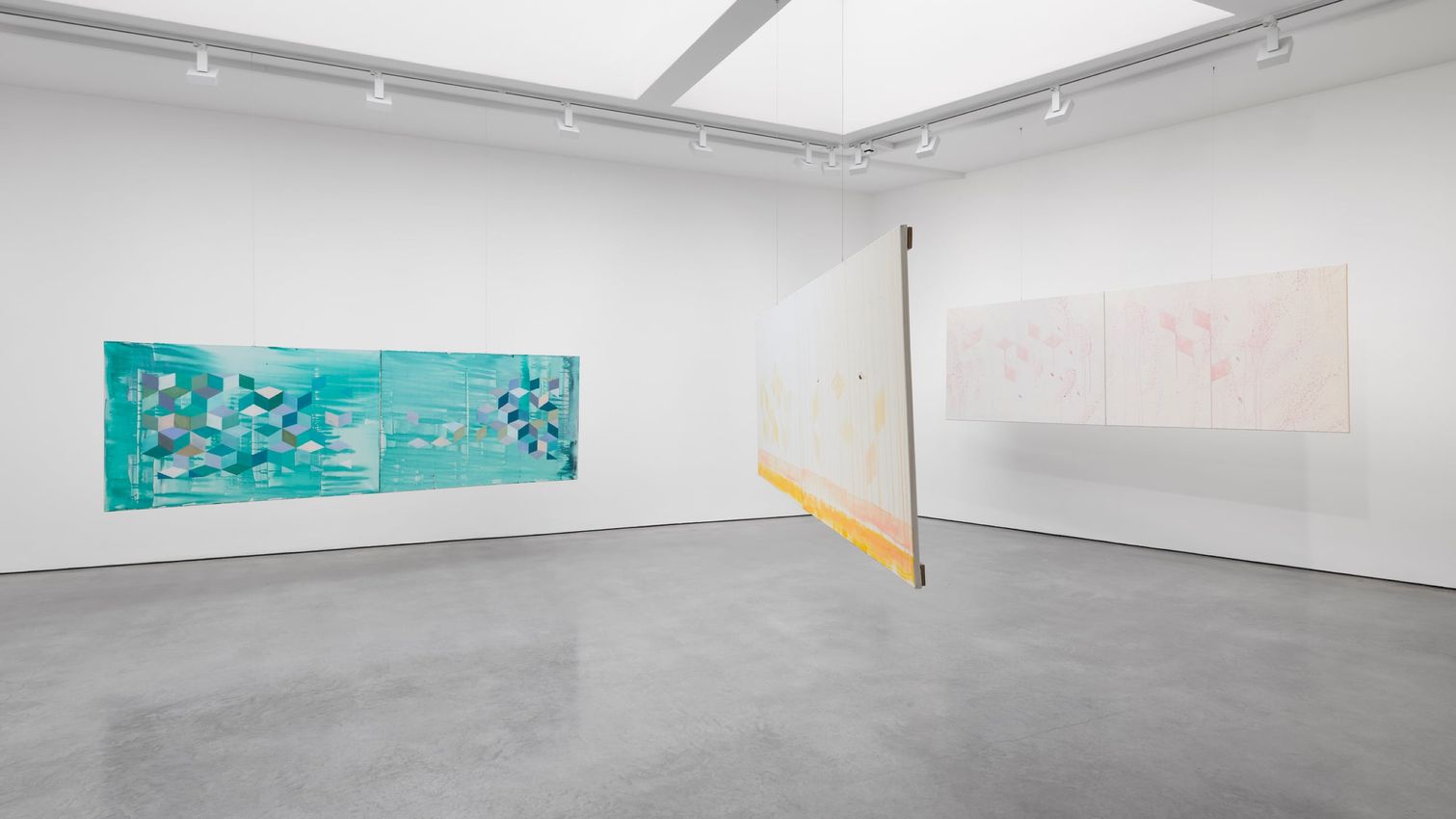
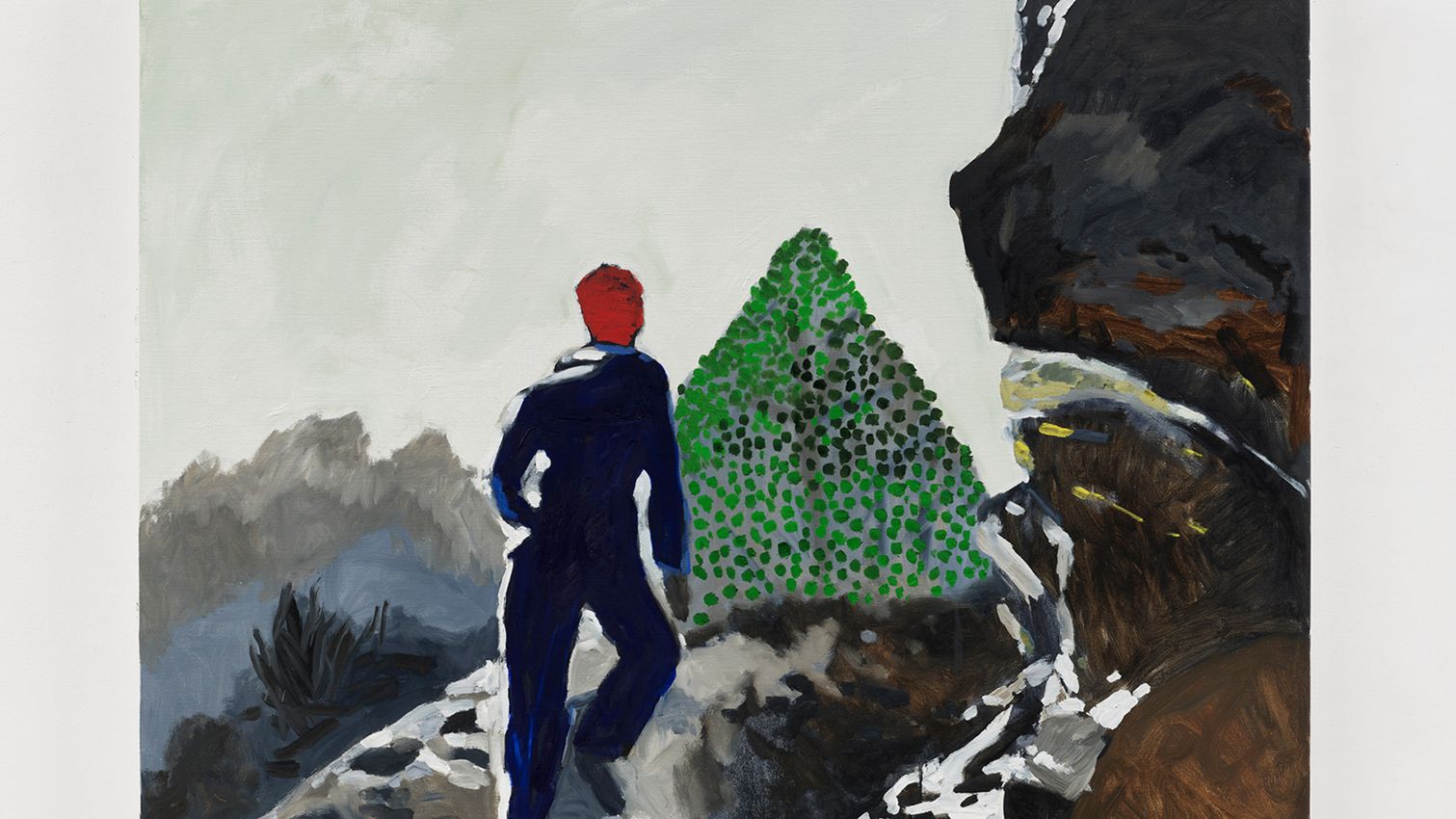

Considered one of the founders of the hard-edge style of abstract art, Leon Polk Smith rose to prominence in the 1960s with his distinctive shaped canvas series — the Correspondences and the Constellations. Lisson Gallery is pleased to present the first exhibition dedicated to the work of Leon Polk Smith since having announced the co-representation of the Leon Polk Smith Foundation earlier this year. The exhibition will feature a selection of paintings from the 1960s and early 1970s, many of which have never before been displayed. To accompany the exhibition, Lisson Gallery has published a catalogue featuring an essay by the poet and critic John Yau, as well as previously unpublished archival material.
Smith established his key motif while perusing an athletic catalogue in the late 1940s. Examining the pencil drawings of baseballs and tennis balls in it, Smith began to imagine that from these simple shapes he could create a new kind of space. As he described:
“It was flat and the same time it was curved. It was like a sphere. The planes seemed to move in every direction, as space does. And so I thought, maybe that is because that’s on the tondo. I’ve got to find out if that is true or not. I’ve got to do some on a rectangle to see if the form and the space still moved in every direction. And it did. So it was exciting to do a painting on a rectangle that seemed to have a curved surface. It was the first time, you see, that I had made an important step myself, or contribution in art.”
By introducing this single curving line, Smith created two pictorial spaces, allowing for the interchangeability of positive and negative space. He developed this signature hard-edge style over the following decade, beginning with creating a series of paintings in which he explores the circle by developing a curvilinear shape within it using two colours, and later experimenting with more colours in oval, rectangular and square shapes. By the early 1960s Smith has developed his distinctive “Correspondence” series, which typically consist of two vibrantly-coloured painted shapes defined by a precise but often irregular contour. By 1967, Smith’s circular explorations introduce additional panels and define his shaped, multi-part Constellation series of paintings and drawings, among his most exuberant and inventive compositions. Lisson Gallery’s exhibition will focus on paintings created during these pivotal years in the experimentation of the Constellation paintings.


Established in 1967 in London, Lisson Gallery is one of the most well-known galleries operating globally. Boasting an influential and continuing legacy, including playing a pivotal role in the careers of many pioneers of historically important art movements, the gallery works with some of the most significant contemporary artists today.

A respected voice in contemporary art discourse.
Focusing on ambitious storytelling and insightful art-world commentary. Ocula Magazine publishes in-depth interviews, critical essays and timely analysis on the artists, exhibitions and ideas driving the global art world.
Learn more about Ocula Magazine
Showcasing the best of the art world.
Ocula partners with galleries from around the world to highlight their artists, artworks and exhibitions. Gallery membership is by application and invitation, with each member vetted by an independent panel.
Learn more about Ocula Membership

Specialises in the sale of major artworks.
Led by a team with deep ties to the world’s leading auction houses, galleries and collectors. Ocula’s advisory team offers bespoke services to high-net-worth clients from around the world who are looking to acquire the best of contemporary and modern art.
Learn more about our team and services