




ETTORE SPALLETTI
1940-2019, ItalyEttore Spalletti (1940–2019) was an Italian contemporary artist celebrated for serene monochrome works that bridge painting and sculpture, often in luminous shades of blue rooted in the light and landscape of Abruzzo. He gained international recognition with appearances at documenta in Kassel in 1982 and 1992 and by representing Italy at the Venice Biennale in 1997, securing a prominent place in late 20th-century European art. Working across panels, objects, installations and architectural commissions, Spalletti explored how colour, light and time shape the viewer’s physical and emotional experience of space.
Early life and Background
Spalletti was born on 26 January 1940 in Cappelle sul Tavo, a small town in the province of Pescara on Italy’s Adriatic coast. He attended art school in nearby Pescara before studying set design at the Accademia di Belle Arti in Rome in the early 1960s, training that sharpened his sensitivity to staging, architecture and spatial atmosphere. After graduating he returned to Abruzzo, choosing to live and work in relative seclusion between Cappelle sul Tavo and Spoltore for the rest of his life. The coastal light, shifting skies and distant Apennines surrounding his home and studio became a daily reference for his chromatic range and informed the contemplative rhythm of his working routine. Spalletti died in Abruzzo on 11 October 2019.
Practice, Materials and Themes
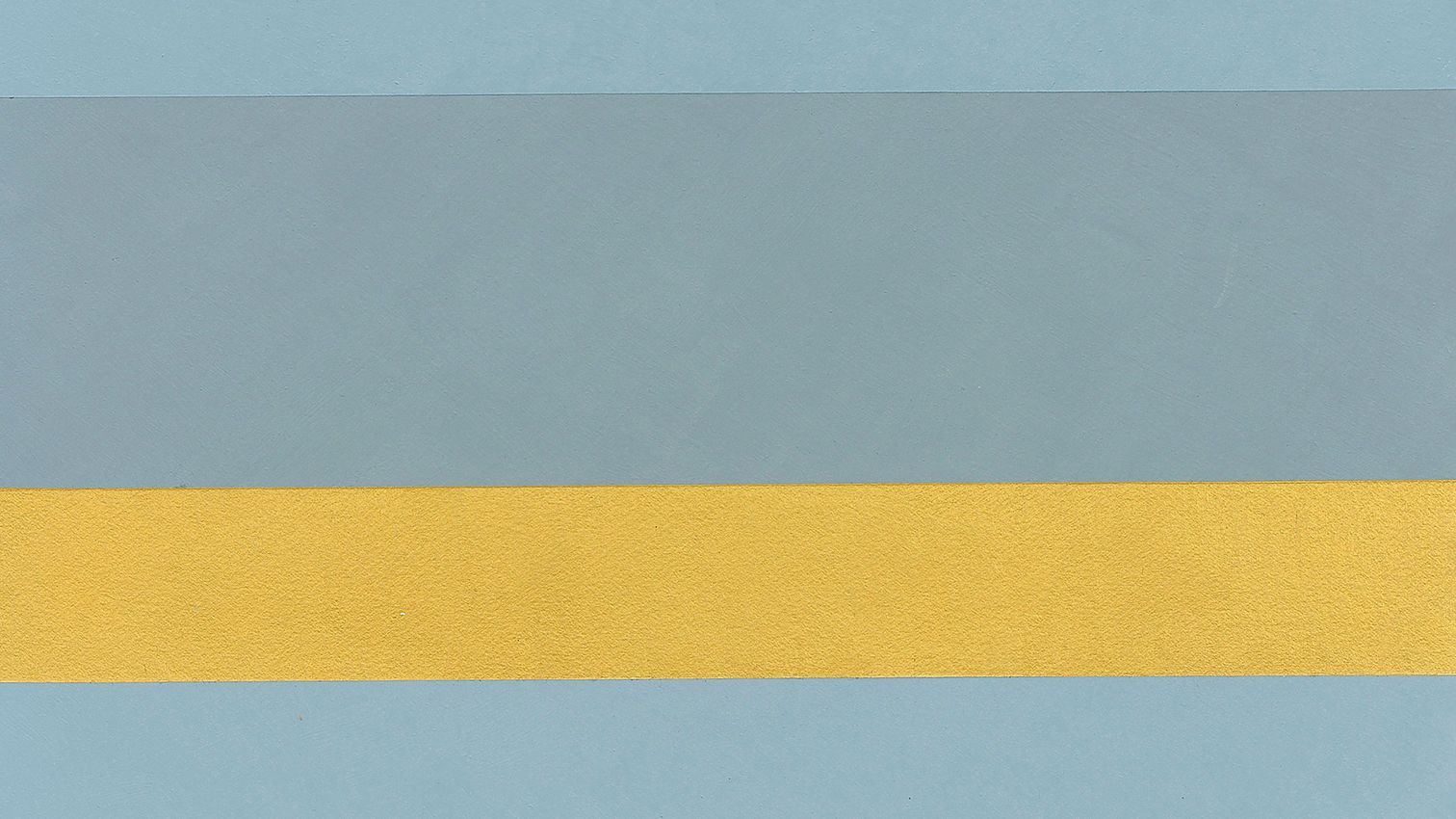
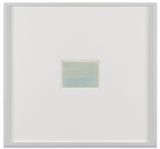
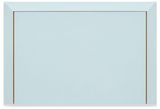
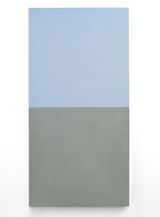
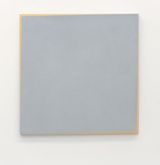
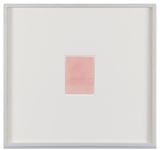
From the late 1960s Spalletti developed a distinctive synthesis of painting and sculpture, producing wall works, freestanding panels and objects whose softly abraded surfaces blur the boundary between image and volume. He worked with a restrained palette of blues, greys, pinks and golds—drawing in part on the fresco colours of artists such as Giotto and Piero della Francesca—and the balance of classical architecture and painting—applying and sanding multiple layers of pigment, oil and gesso to create velvety matt planes that seem to hold light within them.
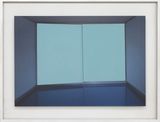
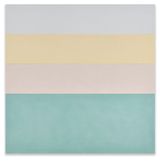
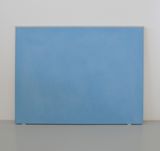
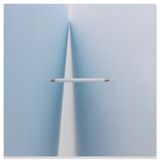
In multi-panel works such as Paesaggio (2015), shown in the exhibition Every dawn, is first / Ogni alba, è la prima at Marian Goodman Gallery, London, pastel tones spread across adjoining boards so that the composition reads as both abstract painting and horizon-like panorama inspired by the sea and landscape near his studio. Installations like Presenza stanza (1978/2016), presented at Marian Goodman Gallery in New York and now in the collection of Castello di Rivoli, use a single azure board projecting from the wall to conceal windows and corners, subtly reconfiguring the architecture and choreographing how viewers move through the room.
Spalletti’s works are typically installed in close dialogue with architecture and natural light, encouraging slow looking and a bodily awareness of colour as atmosphere rather than image. His practice has often been discussed in relation to Arte Povera and Italian Minimal tendencies, yet critics emphasise his independence from any single movement, noting how he combines the objecthood of minimal sculpture with the spiritual resonance of Renaissance fresco and a personal, almost devotional attention to time and silence.
Exhibitions and International Recognition
Spalletti began exhibiting in Italy in the late 1960s and 1970s, gradually building a reputation for rigorously refined monochrome work. His international breakthrough came with invitations to documenta 7 (1982) and documenta 9 (1992) in Kassel, where his quietly radical interventions appeared alongside leading figures of contemporary art. He participated in four editions of the Venice Biennale (1982, 1993, 1995 and 1997) and represented Italy there in 1997, consolidating his position within the post-war Italian canon.
Major institutional presentations include:
- Un giorno così bianco, così bianco, MAXXI, Rome (13 March–14 September 2014)
- Un giorno così bianco, così bianco, GAM, Turin (27 March–15 June 2014)
- Un giorno così bianco, così bianco, MADRE, Naples (13 April–18 August 2014).
- Ombre d’azur, transparence, Nouveau Musée National de Monaco, Villa Paloma (18 April–3 November 2019).
During his lifetime and posthumously his work has been shown in solo exhibitions at Marian Goodman Gallery, Lia Rumma, Vistamare—continuing his long-term collaboration with the gallery in Abruzzo—and Galleria d’Arte Maggiore g.a.m. in Bologna. In 2026, Marian Goodman Gallery announced the exhibition Ettore Spalletti & Dan Graham (17 April—20 June 2026), bringing together works by Spalletti and American artist Dan Graham to highlight shared concerns with architecture, perception and the viewer’s physical experience of space.
Major Commissions and Architectural Projects
Alongside gallery and museum exhibitions, Spalletti realised significant permanent commissions that extend his language into architecture. At the Villa Serena clinic in Città Sant’Angelo, in the province of Pescara, he worked with architect Patrizia Leonelli to transform the chapel into an immersive environment of soft colour, light and carefully proportioned forms, conceived as a “total work of art” that offers patients and visitors a meditative space. For Hôpital Raymond-Poincaré in Garches, near Paris, he created La salle des départs, a mortuary room redesigned as an almost monochrome azure environment with subtly modulated walls and furnishings, providing a calm, non-religious setting for mourning. These projects demonstrate how his chromatic and spatial research could be translated into contexts of care, reflection and transition beyond the museum.
Legacy and Influence
Spalletti is regarded by many critics as one of the most important Italian artists of his generation, noted for a body of work that is at once formally rigorous and deeply sensory. His investigations into monochrome colour, surface and light have influenced artists and architects interested in meditative, phenomenological approaches to space, as well as curators who use light and colour to choreograph exhibition environments. Rooted in the specific light of Abruzzo yet resonant far beyond it, his works and architectural commissions continue to shape how viewers encounter colour as an experiential, temporal and emotional field.
Ettore Spalletti FAQs
Who was Ettore Spalletti?
Ettore Spalletti (1940—2019) was an Italian contemporary artist known for serene monochrome works that sit between painting and sculpture, often realised in soft tones of blue, grey, pink and gold. His practice focused on how colour, light and architecture shape a viewer’s physical and emotional experience of space.
What is Ettore Spalletti best known for?
Ettore Spalletti is best known for monochrome panels and objects with finely sanded, velvety surfaces, as well as site-specific installations and chapels that use colour and light to create meditative environments. His light-blue works, inspired in part by Italian fresco painting and the skies of Abruzzo, have become especially emblematic.
How did Ettore Spalletti make his monochrome works?
Ettore Spalletti typically made his works by layering pigment, oil and gesso on wood or other supports over days or weeks, then carefully sanding the surface to produce a matt, powdery finish. This slow process allowed colour to appear deep yet diffuse, so that the works seem to hold or emit light rather than simply reflect it.
Which art movements is Ettore Spalletti associated with?
Ettore Spalletti is often discussed alongside Arte Povera and Italian Minimalism because of his restrained materials, emphasis on space and focus on perception. However, he maintained an independent position, drawing equally on Renaissance fresco, monochrome painting and a personal, contemplative engagement with time and atmosphere.
What are some important exhibitions of Ettore Spalletti?
Key exhibitions in Ettore Spalletti’s career include his participation in documenta 7 (1982) and documenta 9 (1992) in Kassel, and four editions of the Venice Biennale, where he represented Italy in 1997. Major institutional surveys such as Un giorno così bianco, così bianco (travelling to MAXXI, GAM and MADRE in 2014) and Ombre d’azur, transparence at the Nouveau Musée National de Monaco (2019) have mapped his work across large museum spaces.
What is the connection between Dan Graham and Ettore Spalletti?
Dan Graham and Ettore Spalletti are linked by a shared interest in how viewers experience space, light and architecture, even though their visual languages differ: Graham works with mirrored and transparent pavilions that reflect the viewer and surroundings, while Spalletti uses subtly modulated monochrome colour and carefully placed panels or architectural interventions to create contemplative environments. This dialogue is highlighted in the exhibition Ettore Spalletti & Dan Graham at Marian Goodman Gallery (17 April—20 June 2026), which brings their works together to foreground common concerns with perception, transparency and the viewer’s physical movement through space.
Did Ettore Spalletti work on architectural or public commissions?
Yes. Notable commissions include the chapel at the Villa Serena clinic in Città Sant’Angelo, where he transformed the interior into an immersive field of colour, and La salle des départs at Hôpital Raymond-Poincaré in Garches, a mortuary space redesigned as a contemplative azure environment. These projects extend his studio practice into places of care and reflection.
Where did Ettore Spalletti live and work?
Ettore Spalletti lived and worked in Abruzzo, primarily between Cappelle sul Tavo (his birthplace) and nearby Spoltore. The region’s coastal light, changing skies and distant mountains were a constant reference for his colour and a key reason he chose to remain there rather than move to a major art centre.
Why is the colour blue so important in Ettore Spalletti’s art?
Blue for Ettore Spalletti is closely tied to the sky, sea and spiritual resonance of Italian fresco painting. He used subtle variations of blue—not a single signature shade—to evoke distance, calm and the sensation of looking into depth, inviting viewers into a quiet, contemplative state.
Which galleries represent or have represented Ettore Spalletti?
Ettore Spalletti has had long-standing relationships with Marian Goodman Gallery, Lia Rumma, Vistamare and Galleria d’Arte Maggiore g.a.m., among others. These galleries presented solo exhibitions during his lifetime and continue to show his work posthumously.
How is Ettore Spalletti relevant to contemporary art today?
Ettore Spalletti’s work remains influential for artists, architects and curators interested in minimal means, slow perception and the experiential qualities of colour and light. His practice offers a model for how abstraction can be both conceptually rigorous and deeply sensorial, shaping how contemporary audiences encounter space, stillness and time.
Ocula | 2026


View Ettore Spalletti's Artworks


























Explore and Follow Artists Shaping Contemporary Art
A respected voice in contemporary art discourse.
Focusing on ambitious storytelling and insightful art-world commentary. Ocula Magazine publishes in-depth interviews, critical essays and timely analysis on the artists, exhibitions and ideas driving the global art world.
Learn more about Ocula Magazine
Showcasing the best of the art world.
Ocula partners with galleries from around the world to highlight their artists, artworks and exhibitions. Gallery membership is by application and invitation, with each member vetted by an independent panel.
Learn more about Ocula Membership
Specialises in the sale of major artworks.
Led by a team with deep ties to the world’s leading auction houses, galleries and collectors. Ocula’s advisory team offers bespoke services to high-net-worth clients from around the world who are looking to acquire the best of contemporary and modern art.
Learn more about our team and services