Marian Goodman Gallery Paris is pleased to present Untitled (Video, Audio, Objects), the first solo exhibition of Andrea Fraser in France. Widely regarded as one of the most influential and provocative artists of her generation, Fraser emerged in the 1980s as a major figure in the field of institutional critique. She has used performance, video, installation, text, and a range of other mediums to investigate the social, economic, political, and psychological structures of the art world. Informed by sociology, psychoanalysis, conceptualism, and feminist investigations of subjectivity and desire, Fraser’s works exist at the extremes of systemic analysis and affective embodiment. The result was described by Pierre Bourdieu as “a sort of machine infernale whose operation causes the hidden truth of social reality to reveal itself.”
In the ground floor, lower gallery, and vaulted room, Fraser revisits her most notorious projects, Untitled, 2003, and proposes a sequel in the form of a new sculptural installation which, twenty years on, extends her exploration of the intersections of financial and affective economies in the contemporary art world. In the Showroom, a selection of books, texts, and graphic works represent Fraser’s on-going analysis of the political and economic structures of the art field.
Presented in the ground floor gallery, the installation Untitled, 2003 documents an encounter between Fraser and an art collector, who pre-purchased the first of a limited-edition video, in which he appears to be having sex with the artist. For Fraser, Untitled “is about the relationship between artists and collectors, about what it means to be an artist and sell your work—sell what may be, what should be, a very intimate part of yourself, your desire, your fantasies—and to allow others to use you as a screen for their fantasies.” Untitled has been interpreted widely as enacting the centuries-old analogy of selling art as prostitution. However, important to Fraser is that the collector paid for the video, not for the sex. With this, the work highlights the role of art commodities in mediating relations of exchange. At the same time, Untitled performs the intimate entanglement of personal and market valuation that often drives participation in the art world’s steeply stratified economy. The installation presents the silent, unedited, sixty-minute fixed-camera video on a monitor in an otherwise empty room, incorporating the commercial context of the gallery while creating space for reflection on the participation enacted in the process of viewing.
In the downstairs vaulted room gallery, Fraser presents Untitled, 2003/2004, an audio installation created with the sound captured by the camera during the recording of Untitled. While the Untitled video is silent but unedited, Untitled, 2003/2004 is densely edited, compressing and abstracting the sixty-minute encounter into an emotionally saturated 10-minute ambient soundscape. Including only sounds made by the artist, with sounds made by the participating collector edited out, the audio work renders Untitled an encounter with an absent object, a void to be filled with projections, in fantasy, or by the listener, who is situated implicitly in the position of the collector as the object of the artist’s attention.
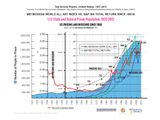
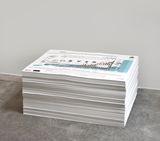
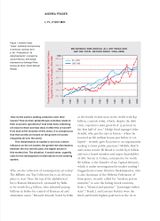
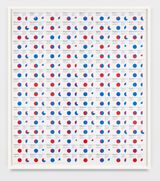
Following the reception of Untitled in the 2000s, Fraser stepped back from working actively with commercial art galleries and, for a period, limited sales of her work to institutions only. In the decade that followed, she developed text-based and graphic works focusing on the interrelation of artistic, economic, and political fields. On display in the showroom are Index and L’1% C’est Moi, both from 2011, which examine the link between the art market and wealth concentration, and Index II, 2014, which extends this analysis to parallels between museum and prison building booms in the United States. Her monumental study 2016 in Museums, Money, and Politics, 2018 examines the interconnection of cultural and political patronage.
Fraser’s new work, Untitled (Objects), 2024, presented in the lower gallery, returns to a reflection on the intersection between financial and emotional economies in the art world. In 2022, Fraser returned to working actively with commercial galleries and joined Marian Goodman Gallery. Reflecting on the parallel between this exhibition and when she created Untitled in 2003, Fraser considered the question of what motivated her to return to the art market now, after more than ten years of declining to sell her work to private collectors. Her response: to make things that are wanted, valued, and cared for in ways that only art objects are wanted, valued, and cared for. For Fraser, whose mother painted intensively throughout her infancy, there is no escaping the equation of artworks and children. They exist, psychologically, in a continuum of attention and care. The five life-size sculptures of toddlers, which Fraser modelled out of wax, may evoke familiar analogies, as literally as Untitled, for what it means for artists to sell their art—and what it means for collectors to acquire it. They may represent the products of the sexual encounter documented in Untitled, with one sculpture for each of the five editions of the video. Or they may be figures less of creative offspring than of the artist, stripped of conceptual and critical defenses against an archaic want to be valued and cared for in perpetuity.
Andrea Fraser was born in Billings, Montana (1965) and currently lives and works in Los Angeles, California. She is a Professor in the Department of Art at the University of California Los Angeles (UCLA) School of the Arts and Architecture. Fraser is widely regarded as one of the most influential and provocative artists of her generation. Since the mid-1980s, her groundbreaking work in the field of institutional critique has investigated the social, financial, and affective economies of cultural organisations, fields, and groups.


For over forty years, Marian Goodman Gallery has played an important role in helping to establish a vital dialogue among artists and institutions working internationally. Marian Goodman Gallery was founded in New York City in late 1977. In 1995 the Gallery expanded to include an exhibition space in Paris – with an additional exhibition space and bookshop added in 2016 - and in 2014 an exhibition space in London. The London space transitioned to Marian Goodman Projects in 2021, a new initiative to present exhibitions and artist projects in London and other select cities around the world.

A respected voice in contemporary art discourse.
Focusing on ambitious storytelling and insightful art-world commentary. Ocula Magazine publishes in-depth interviews, critical essays and timely analysis on the artists, exhibitions and ideas driving the global art world.
Learn more about Ocula Magazine
Showcasing the best of the art world.
Ocula partners with galleries from around the world to highlight their artists, artworks and exhibitions. Gallery membership is by application and invitation, with each member vetted by an independent panel.
Learn more about Ocula Membership

Specialises in the sale of major artworks.
Led by a team with deep ties to the world’s leading auction houses, galleries and collectors. Ocula’s advisory team offers bespoke services to high-net-worth clients from around the world who are looking to acquire the best of contemporary and modern art.
Learn more about our team and services