‘We are surrounded by the departed who remain engraved in our memory and whose presence haunts me’
—Christian Boltanski
Galerie Marian Goodman is pleased to present Après, Christian Boltanski‘s first solo exhibition in France since his retrospective at the Centre Pompidou a year ago.
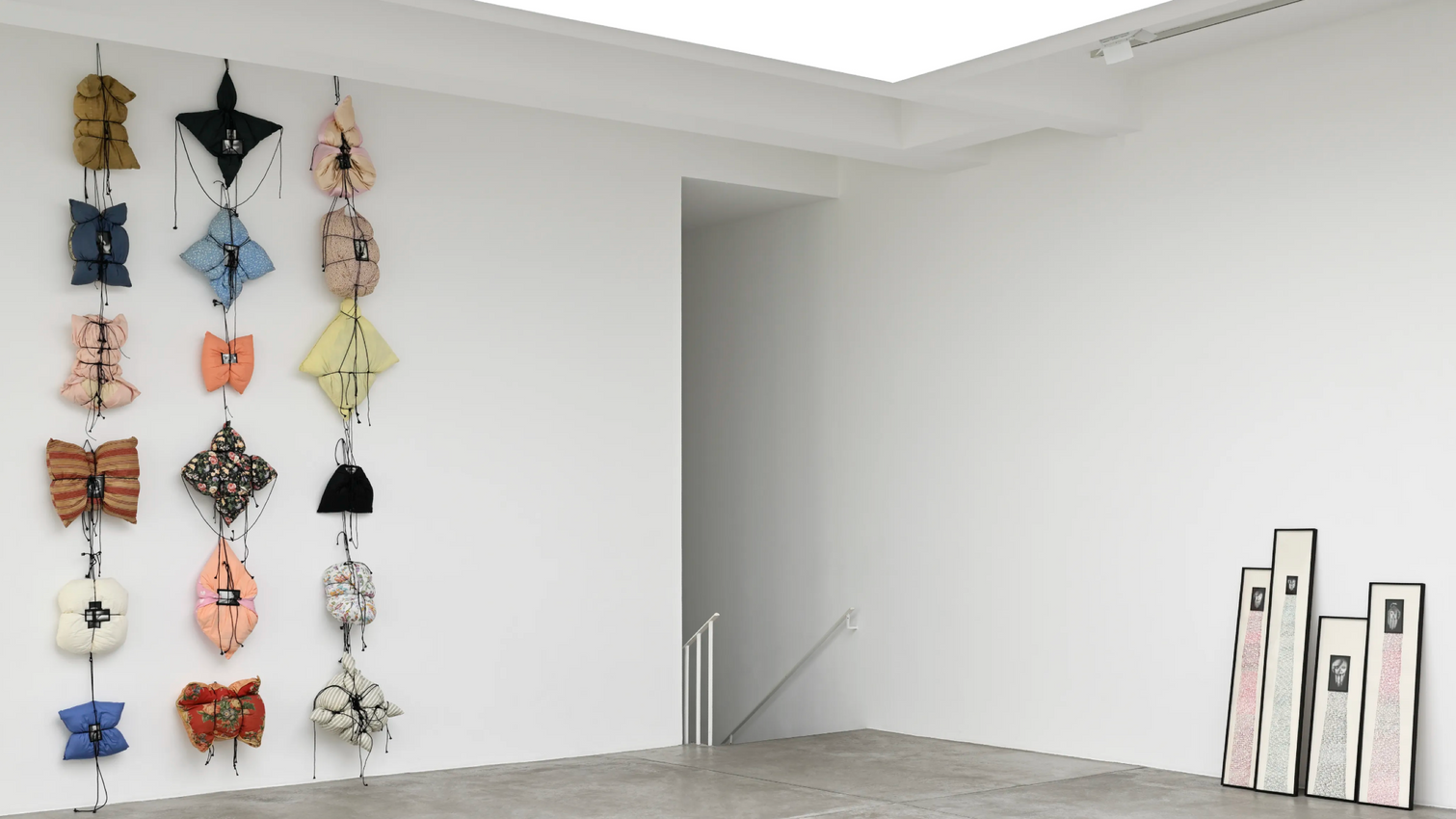
In this show laid out over the two floors of the gallery, Boltanski gives free rein to his interest in a form of total art in which the works develop their own scenography. Articulated in a coherent whole, they stimulate all the vectors of perception, whether direct or deeper in the private world of memory. ‘The experience I want visitors to have in each of my exhibitions is not necessarily to understand but to feel that something has happened,’1 explains the artist.
This exhibition comprises a new set of sculptures combined with video projections, a big new video installation in the basement, and, in conclusion, two other, older installations.
On the ground floor, masses of white cloths on trolleys randomly fill the centre of the room. In these new works titled Les Linges (2020), which the artist began working on during the lockdown last spring, Boltanski’s emblematic materials ‘take on a new meaning in connection with the events we are living through.’ We are invited to lose ourselves as we walk among these forms that slowly stir memories of an atmosphere or experience we have known.
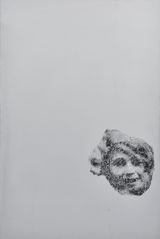
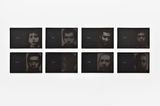
This installation is juxtaposed with projections on the walls titled Les Esprits (2020). In them we see the faces of children, their barely visible features gently fading, like fleeting memories. At first ghostly, the faces then appear more distinctly on the walls as the light dims, thereby creating a dynamic interaction with the characteristics of the gallery space.
A barely visible, mysterious video accompanies viewers and invites them to go downstairs.
On the lower level, the video installation Les Disparus (2020) spreads over four large curtains on which ”‘cliché’ videos of a fabricated vision of happiness hide subliminal images of the horrors that took place in the century I was born into and that unfolded in parallel to part of my life,’ explains the artist. ‘For most of us, they remain present in our subconscious.’
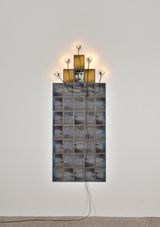
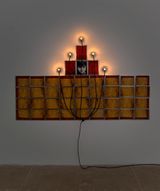
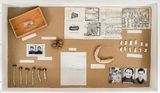
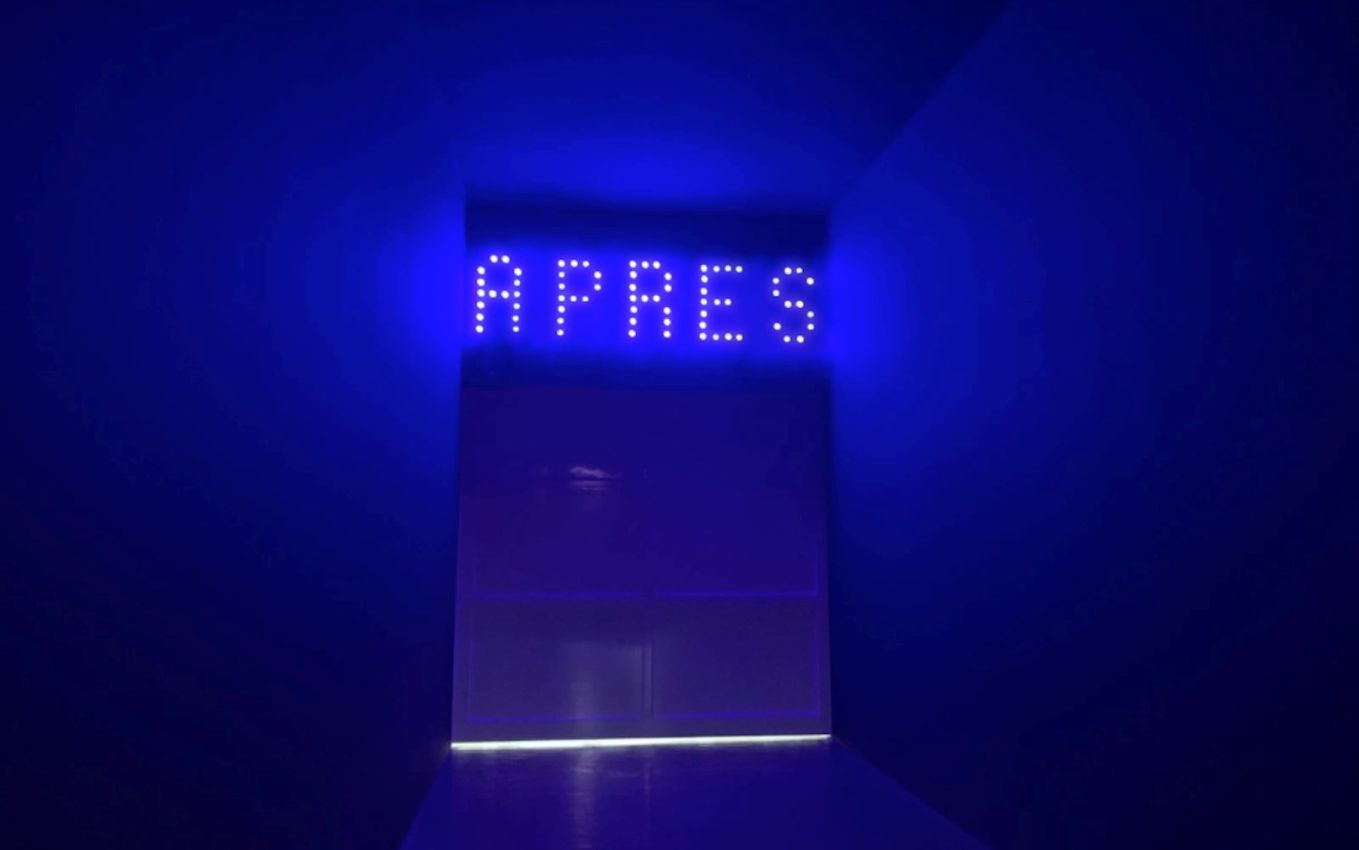
The word Après (After, 2016) invites us to enter the more peaceful space of Les Vitrines (The Vitrines, 1995).
Christian Boltanski was born in Paris in 1944. Since his very first exhibition at a Parisian cinema, Le Ranelagh, in 1968, Boltanski’s work has been shown in numerous spaces around the world. In 1984 the Musée National d’Art Moderne gave him his first retrospective. In 1988 several major American museums organised an important touring retrospective. Between 2012 and 2018 he worked on projects in Chile, Brazil, Argentina and Mexico. In 2018 his work was shown in China at the Power Station of Art in Shanghai, at the Israel Museum in Jerusalem and at the European Centre for Art and Industrial Culture in Völklingen, Germany. In 2019, in addition to his retrospective at the Centre Pompidou (Mnam) in Paris, he had a Japanese exhibition touring to the National Museum of Art in Osaka, the National Art Gallery in Tokyo and the Prefectural Art Museum in Nagasaki. Between 2001 and 2014, Boltanski won several prizes for his work.
[1] Christian Boltanski interviewed by Bernard Blistène in Christian Boltanski. Faire son temps (Paris: Éditions Centre Pompidou, 2019), p.63.
Christian Boltanski was born in 1944 in Paris, France. He currently lives and works in Malakoff, France.


For over forty years, Marian Goodman Gallery has played an important role in helping to establish a vital dialogue among artists and institutions working internationally. Marian Goodman Gallery was founded in New York City in late 1977. In 1995 the Gallery expanded to include an exhibition space in Paris – with an additional exhibition space and bookshop added in 2016 - and in 2014 an exhibition space in London. The London space transitioned to Marian Goodman Projects in 2021, a new initiative to present exhibitions and artist projects in London and other select cities around the world.

A respected voice in contemporary art discourse.
Focusing on ambitious storytelling and insightful art-world commentary. Ocula Magazine publishes in-depth interviews, critical essays and timely analysis on the artists, exhibitions and ideas driving the global art world.
Learn more about Ocula Magazine
Showcasing the best of the art world.
Ocula partners with galleries from around the world to highlight their artists, artworks and exhibitions. Gallery membership is by application and invitation, with each member vetted by an independent panel.
Learn more about Ocula Membership

Specialises in the sale of major artworks.
Led by a team with deep ties to the world’s leading auction houses, galleries and collectors. Ocula’s advisory team offers bespoke services to high-net-worth clients from around the world who are looking to acquire the best of contemporary and modern art.
Learn more about our team and services