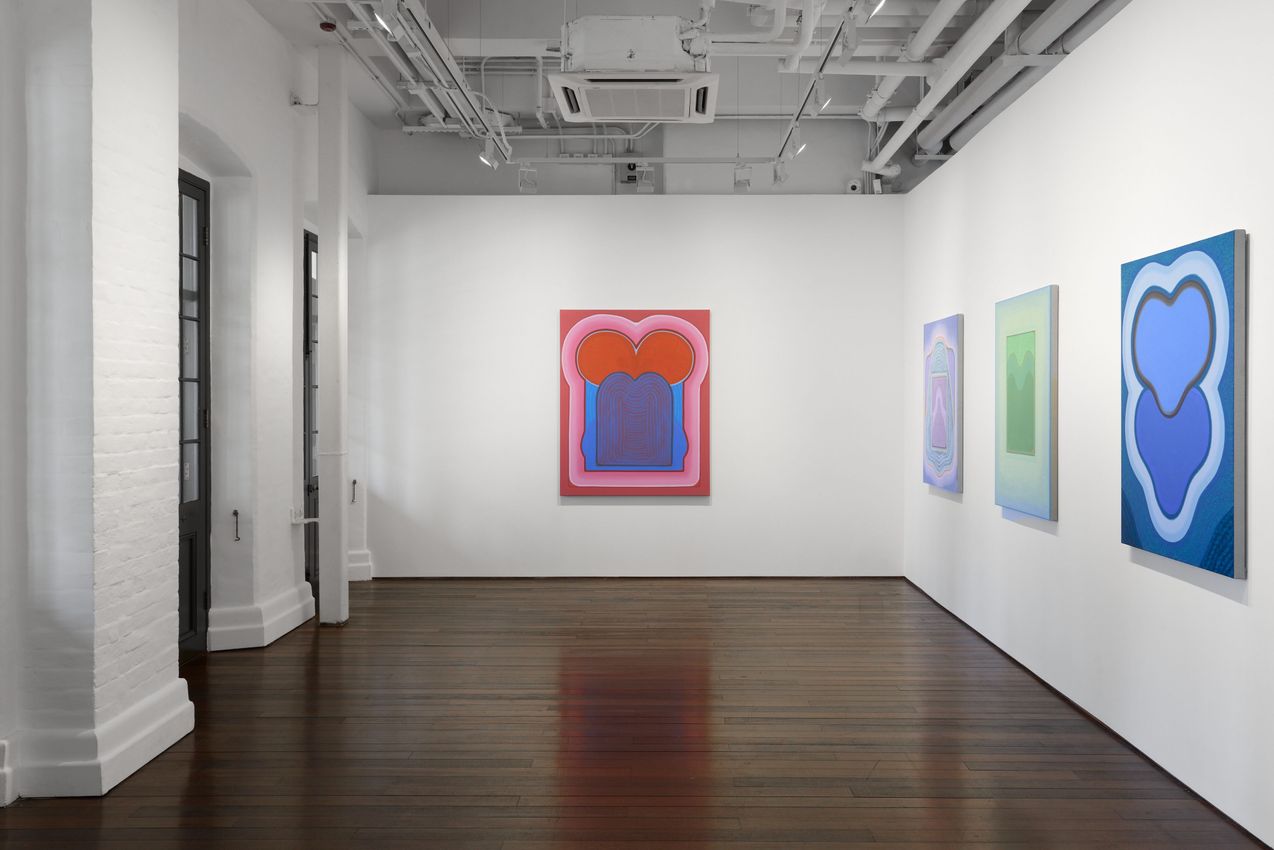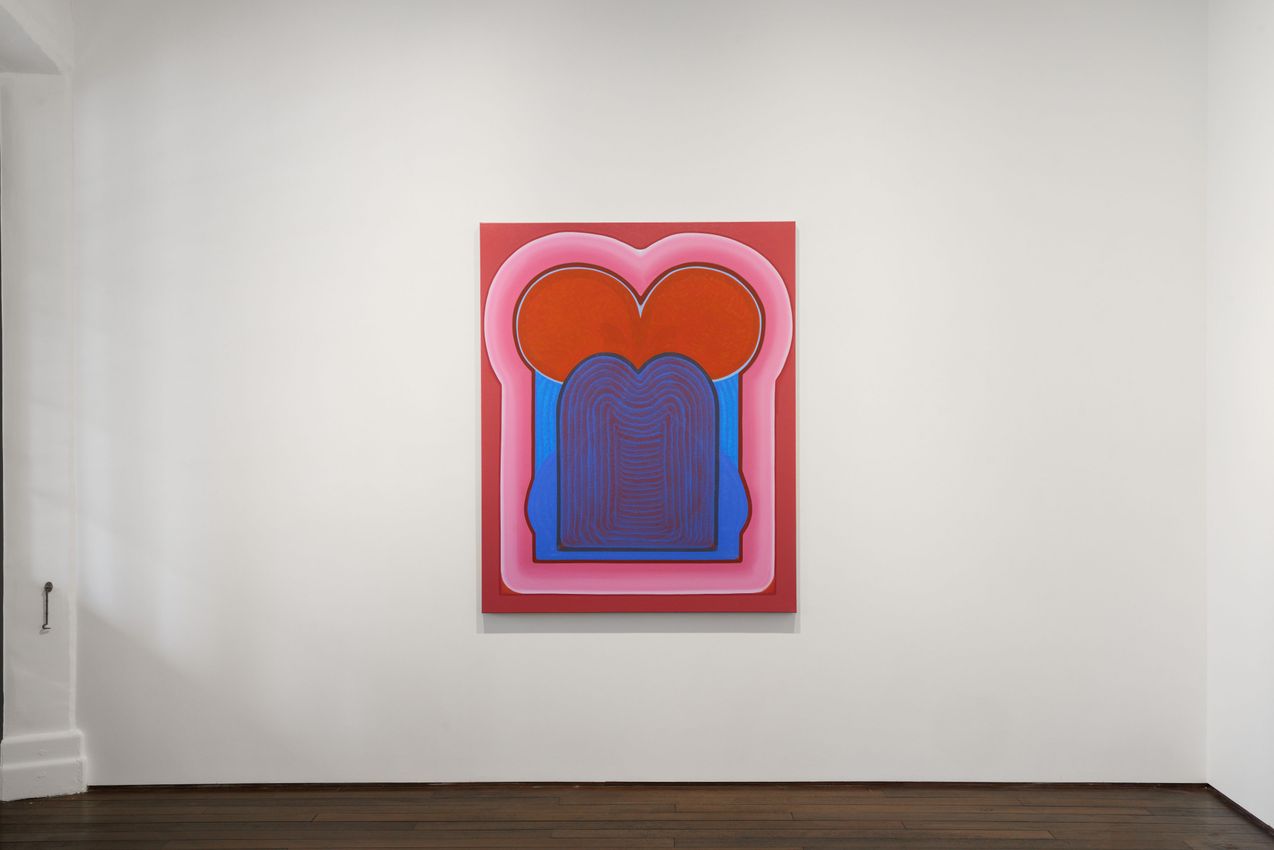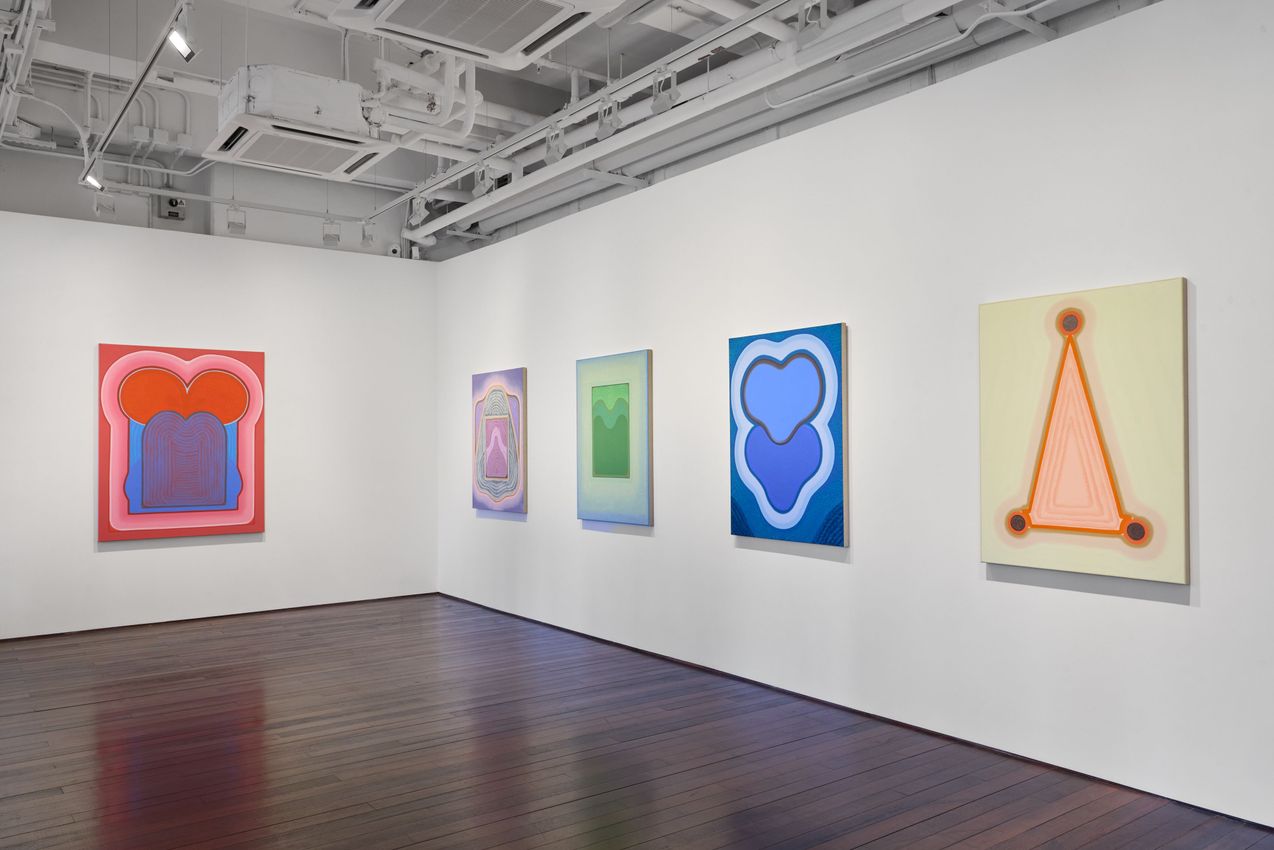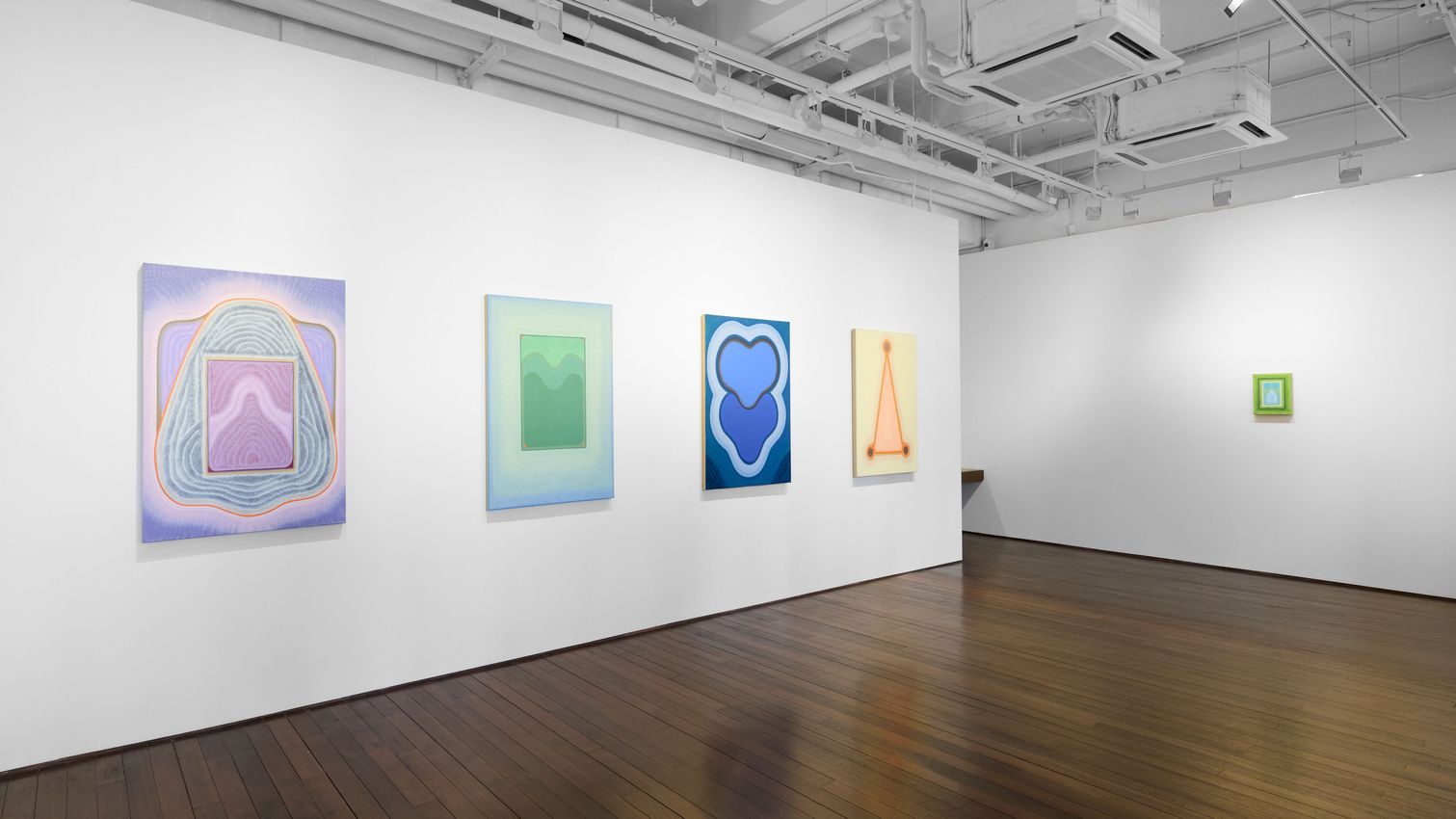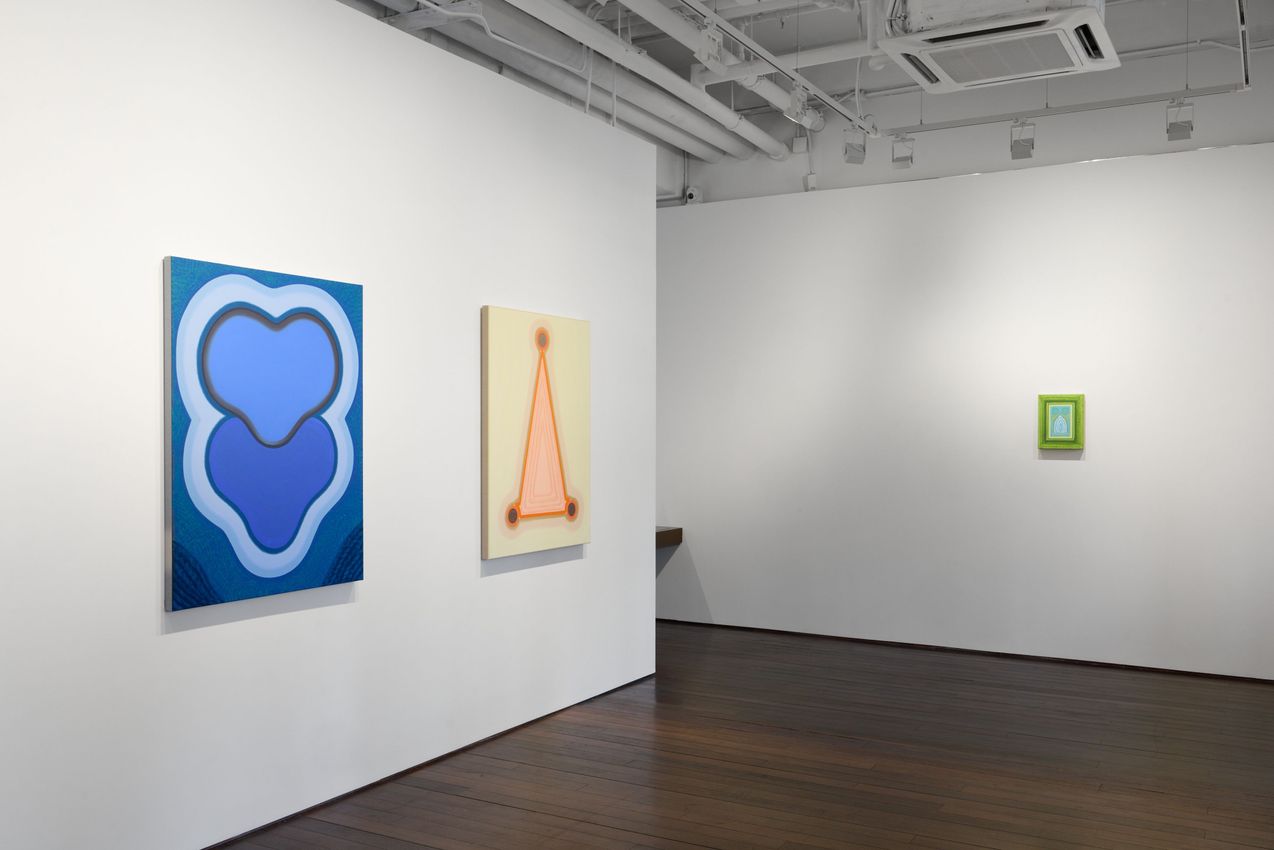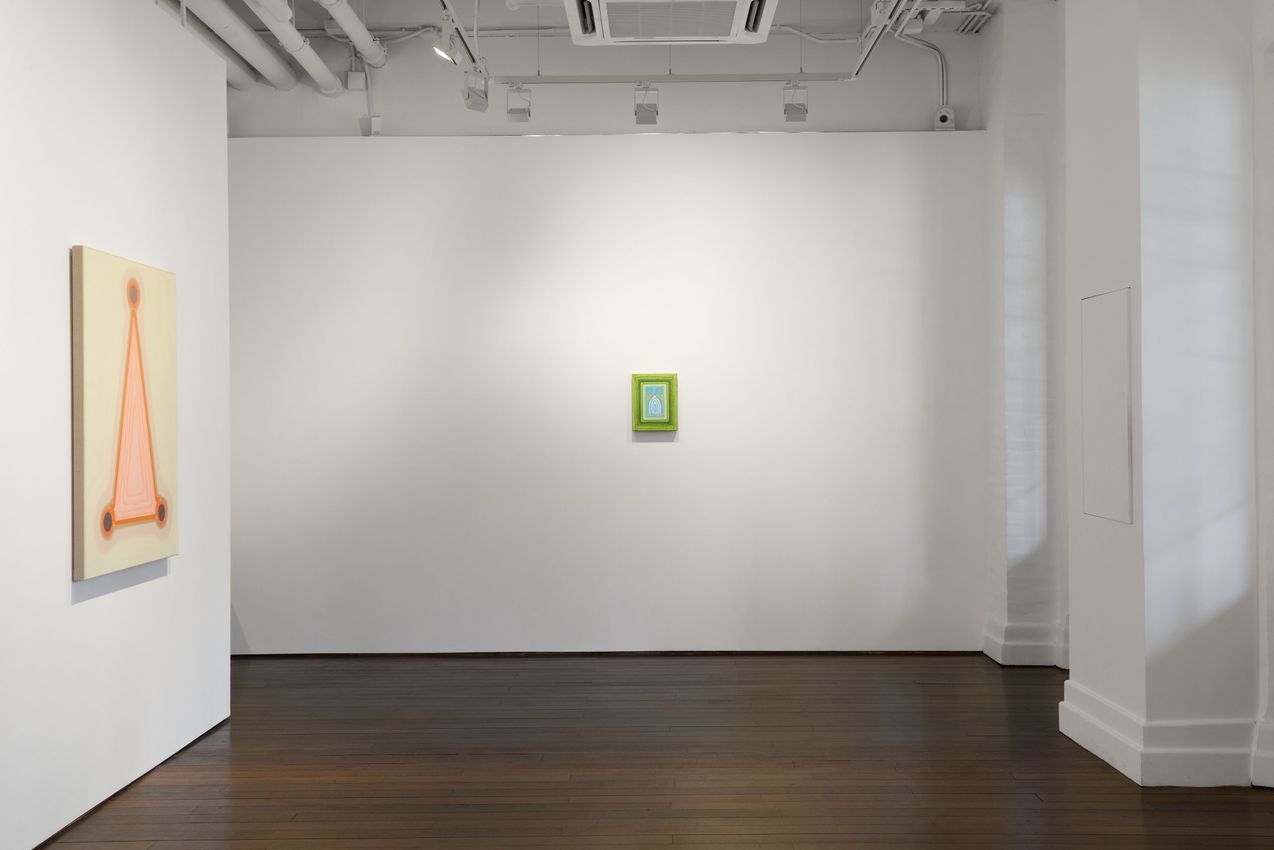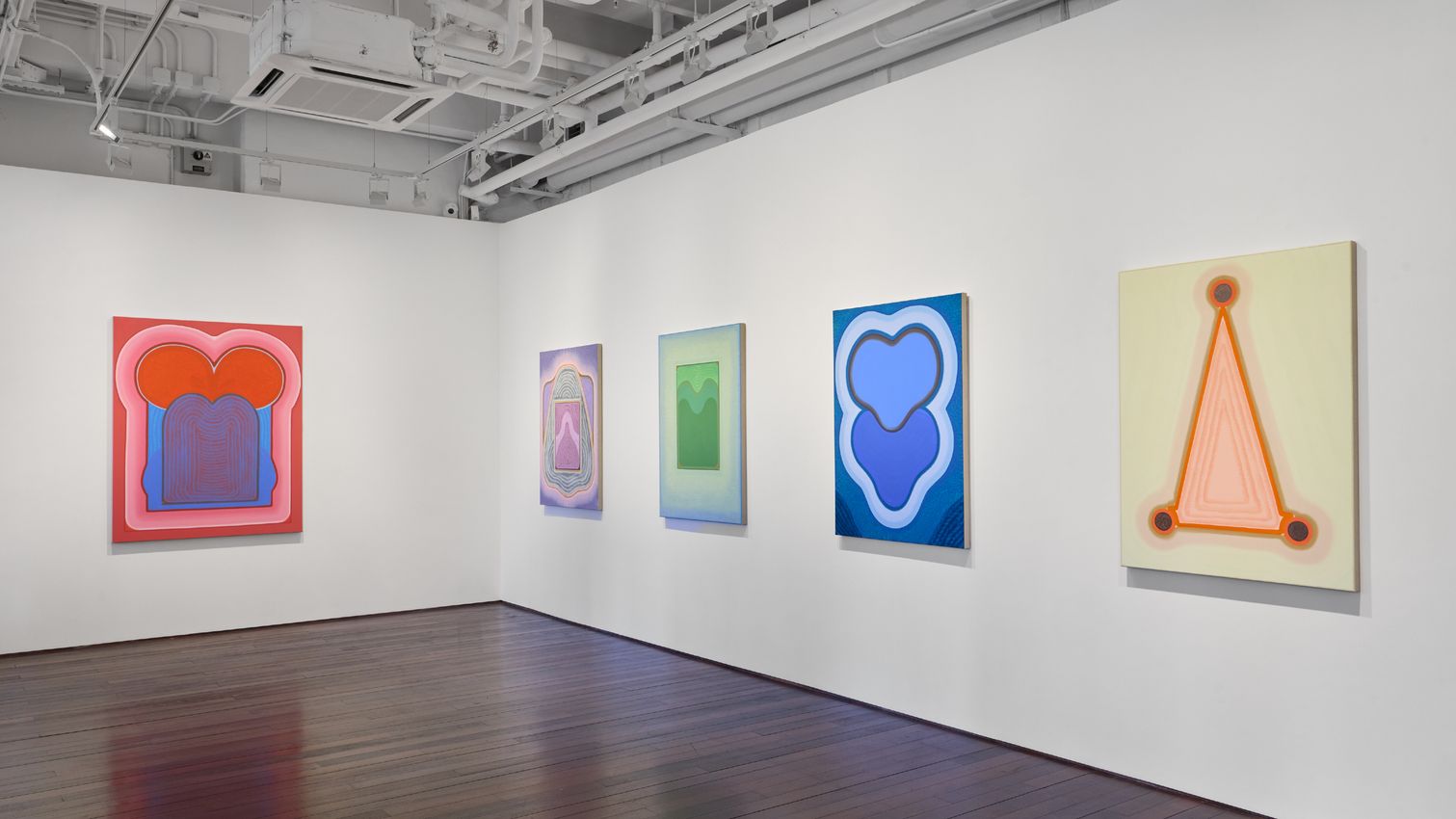
MASSIMODECARLO is pleased to present A Grass Roof, Lily Stockman’s first exhibition in Hong Kong. Stockman takes her title from the eighth-century poem, Song of the Grass Roof Hermitage, by the Buddhist zen master Shitou Xiqian, to explore the boundaries between interior refuge and infinite expanse in her new oil paintings.
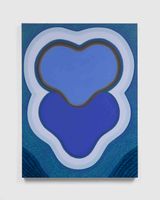
Stockman’s works collapse perspective and dissolve perceived space through portals of color and the permeable boundaries that circumscribe them. Her organic shapes bloom and recede, and scumbled outlines and slivered shadows create what Stockman describes as a “permeability” between self and spaciousness.
If her 2024 exhibition at Le Corbusier’s Maison La Roche in Paris engaged architecture as a “machine for living” –that modernist ideal of fixed frameworks and rational solutions– then A Grass Roof proposes painting as provisional architecture. A thatched hut.
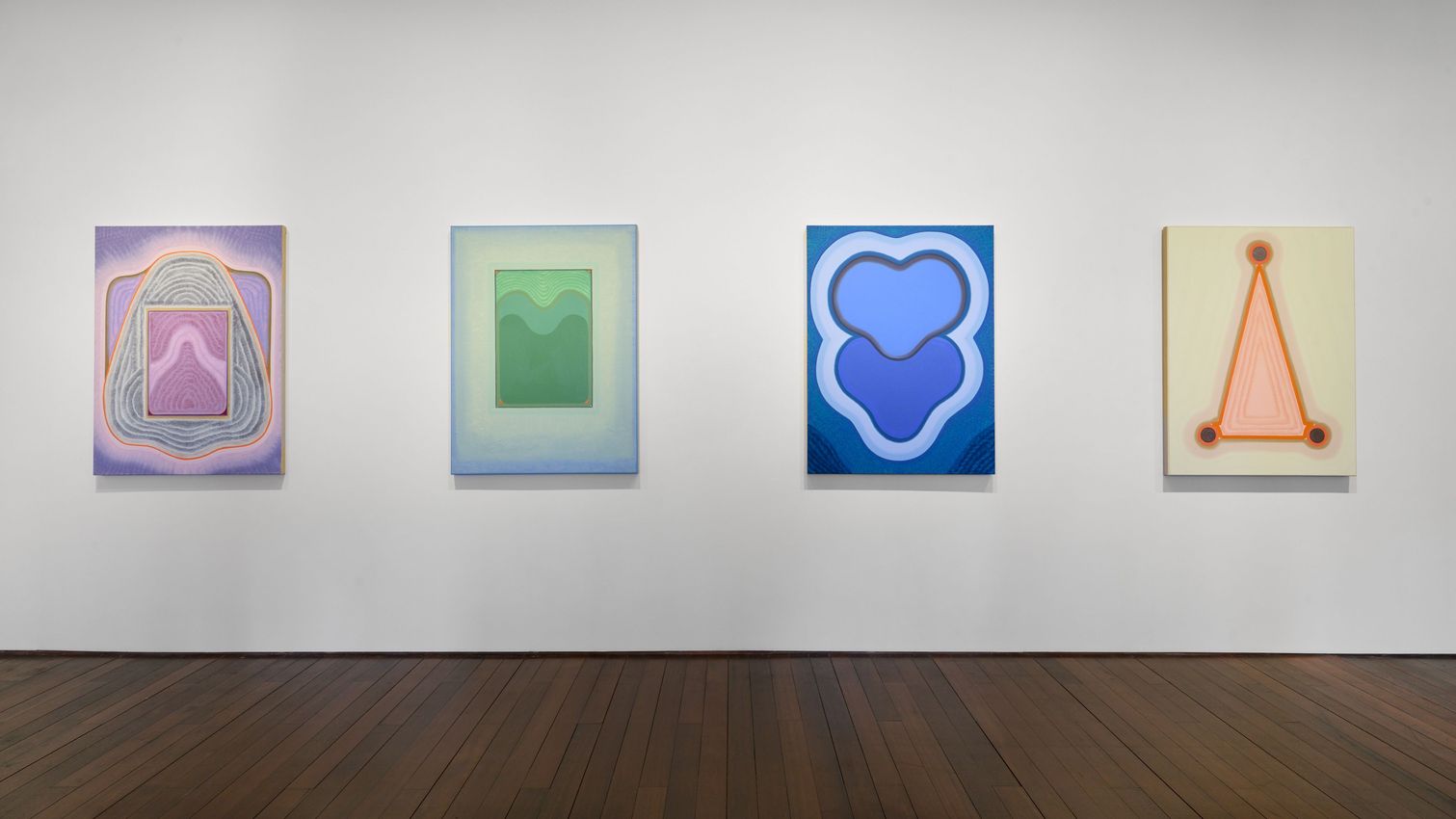
In Cold Mountain (all works 2026), an atmosphere of vaporous soft blues contain the hard edges of nesting green humps. Here Stockman borrows her title from Brice Marden’s famous series of zen calligraphy paintings, referencing the lineage of American painters studying Chinese painting, while her palette of blues and greens evokes the illusion of perspectival distance.
Some of her landscapes are conceptually more abstract: In Meadowlark, a pale celadon ground vibrates out from an orange isosceles triangle– referencing the “falling water” spectrum of frequencies of the Western Meadowlark’s melodic song. Her spectrogram implies the landscape of the American west, where Stockman has observed and recorded the bird’s gurgling warbles in spring.
Stockman’s paintings enact the logic of Shitou’s poem through the very way they are made: built up with fine badger and large horsehair brushes –the implements of Chinese calligraphy– her lines wobble and breathe, recording the pressure of fingers, the tremor of a wrist, blurring the line between interior refuge and open expanse.
Her research encompasses Ni Zan’s Yuan dynasty landscapes with their unpeopled mountains; the sixth-century Buddhist ceiling frescoes of the Mogao caves; and Isabelle Tillerot’s account of how eighteenth-century European encounters with Chinese garden design revolutionized Western painting. The result is a body of work that operates as portals between states of being. Each painting has what Stockman describes as “a window left open / so that / the room might fill with breeze.”
In Hong Kong’s urban density, that opening feels crucial– not as escape but as recalibration. The smallest hut, Shitou writes, “includes the entire world.” Stockman’s paintings make that same paradoxical claim.
Courtesy MASSIMODECARLO.


Lily Stockman (b. 1982, Providence, Rhode Island) is a painter based in Los Angeles and Yucca Valley, California. Her paintings reflect a wide range of references and inspirations, from natural phenomena—vernal pools, mineral licks, birdsong, black ice—to historical endeavours of the spirit—Shaker gift drawings, medieval hocketing, portable Renaissance altarpieces, poetry meter. Her essays have appeared in numerous publications, most recently in Joan Mitchell: 1979–1985 (David Zwirner, 2024). Stockman’s work is in the permanent collections of the Hirshhorn Museum, Washington, DC; the Museum of Contemporary Art, Los Angeles; the Institute of Contemporary Art, Miami; the Peabody Essex Museum, Salem, Massachusetts; and the Orange County Museum of Art, Costa Mesa, California, where she was included in the 2022 California Biennial, Pacific Gold. Recent exhibitions explored Virginia Woolf ‘s modern novel The Waves at Massimo De Carlo, London (2023); birds, plants, and weather in Emily Wilson’s English translation of Homer’s Odyssey at Gagosian, Athens (2023); and early modernist architecture at Fondation Le Corbusier, Paris (2024).


Operating in Hong Kong since March 2016, MASSIMODECARLO has had a long-lasting involvement in the Asian art market. As a member of the selection committee board of Art Basel Hong Kong, the gallery strives to become part of the city’s ever-growing, bustling cultural landscape. The gallery initially opened in the Pedder Building, relocating in 2022 to the Tai Kwun complex - Center for Heritage and Arts, a historic building home to a wide variety of cultural projects.
A respected voice in contemporary art discourse.
Focusing on ambitious storytelling and insightful art-world commentary. Ocula Magazine publishes in-depth interviews, critical essays and timely analysis on the artists, exhibitions and ideas driving the global art world.
Learn more about Ocula Magazine
Showcasing the best of the art world.
Ocula partners with galleries from around the world to highlight their artists, artworks and exhibitions. Gallery membership is by application and invitation, with each member vetted by an independent panel.
Learn more about Ocula Membership

Specialises in the sale of major artworks.
Led by a team with deep ties to the world’s leading auction houses, galleries and collectors. Ocula’s advisory team offers bespoke services to high-net-worth clients from around the world who are looking to acquire the best of contemporary and modern art.
Learn more about our team and services