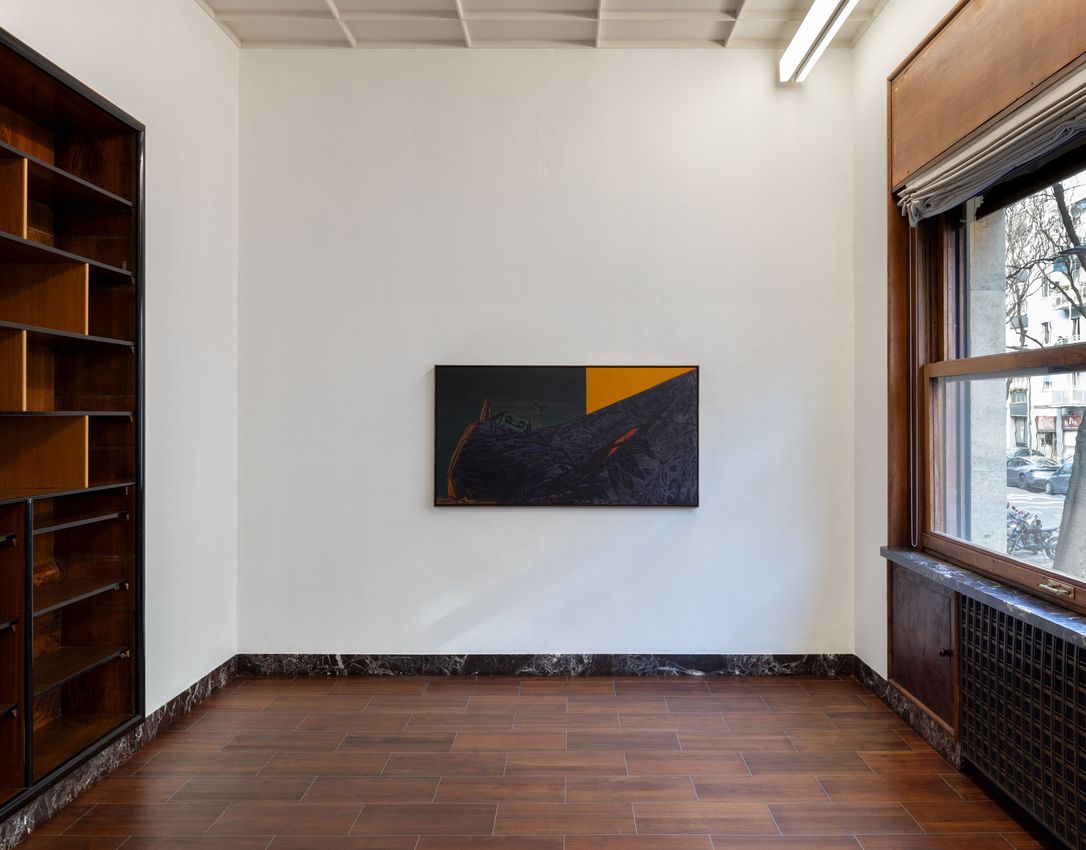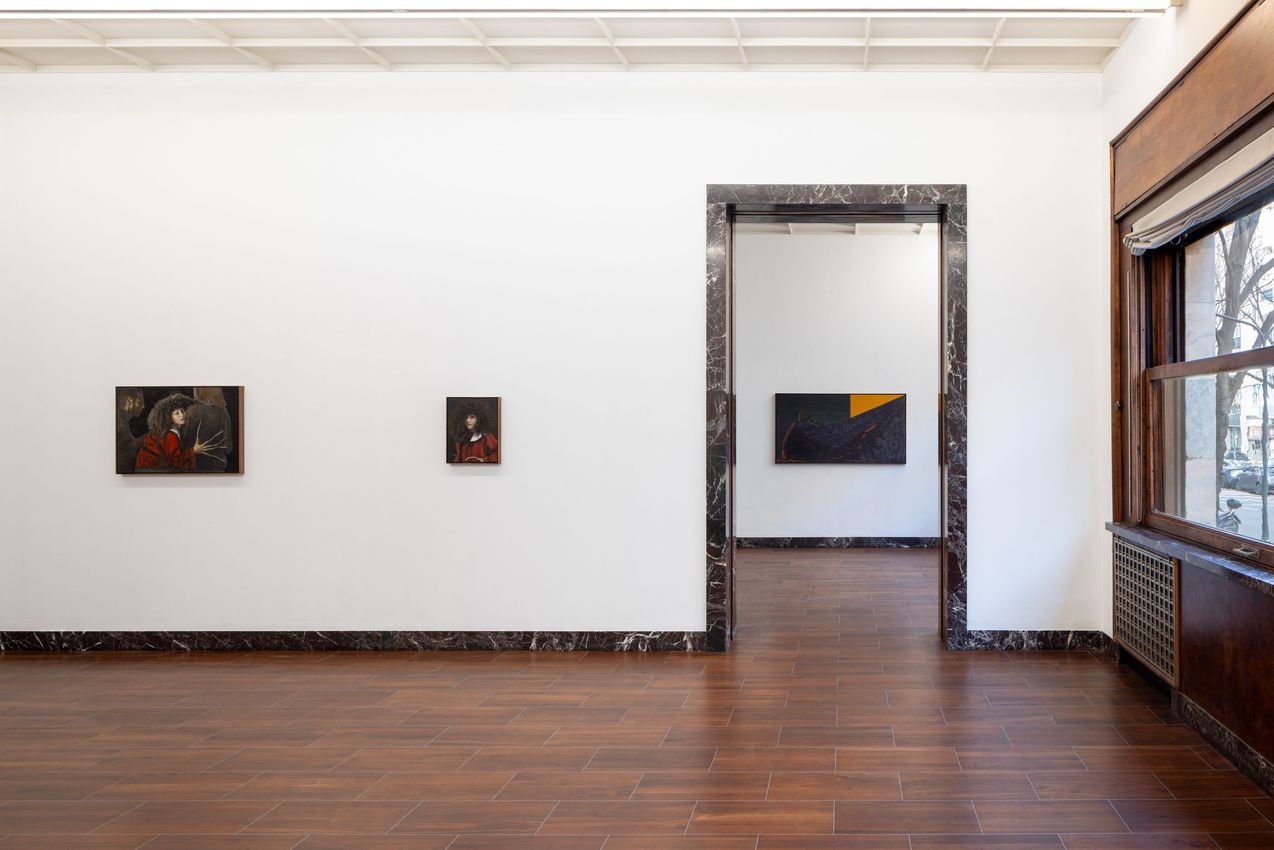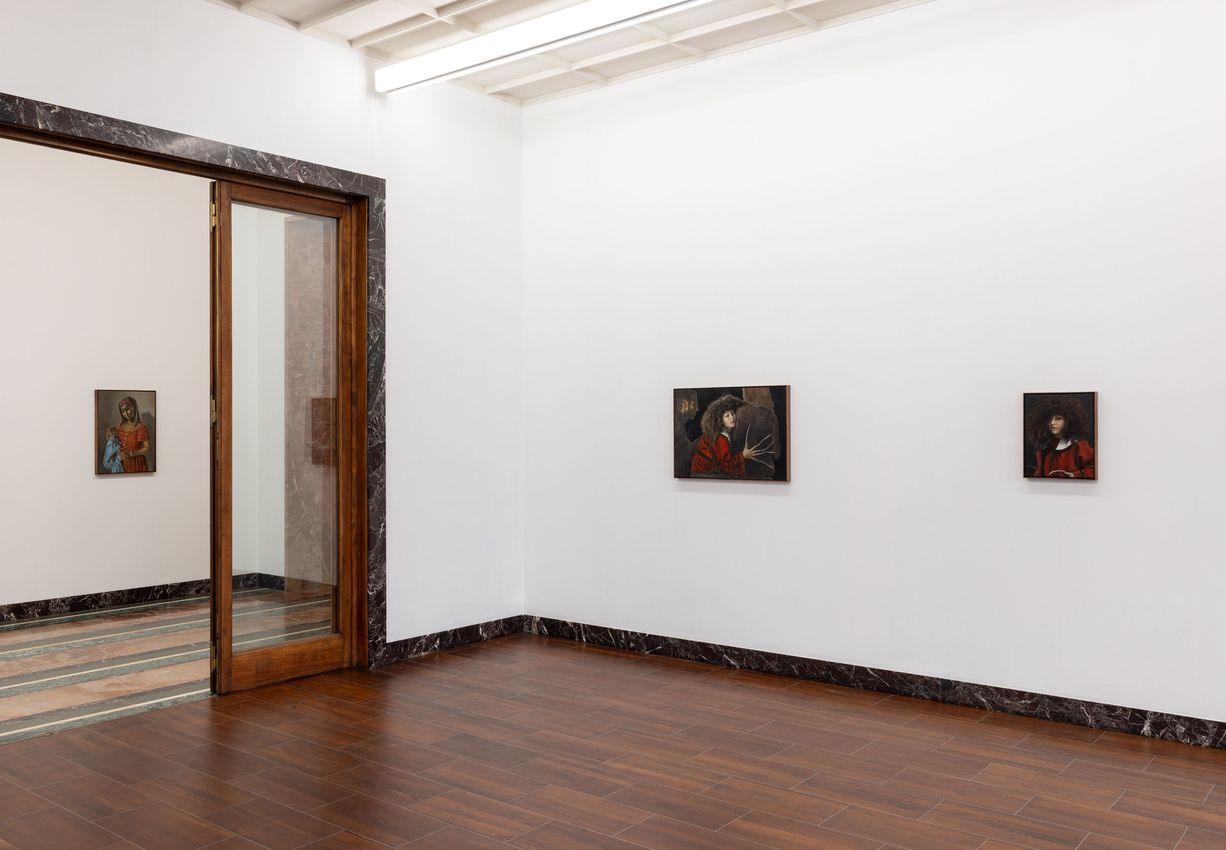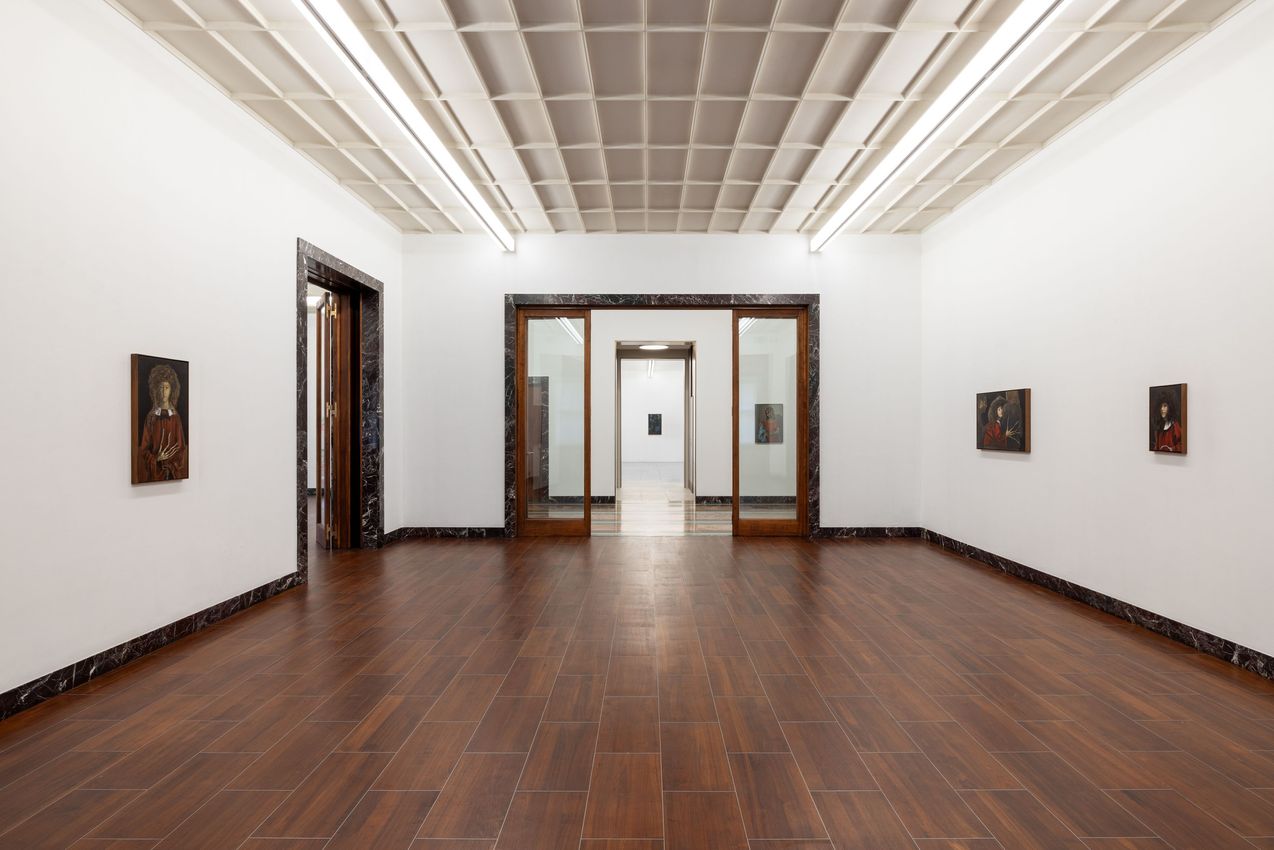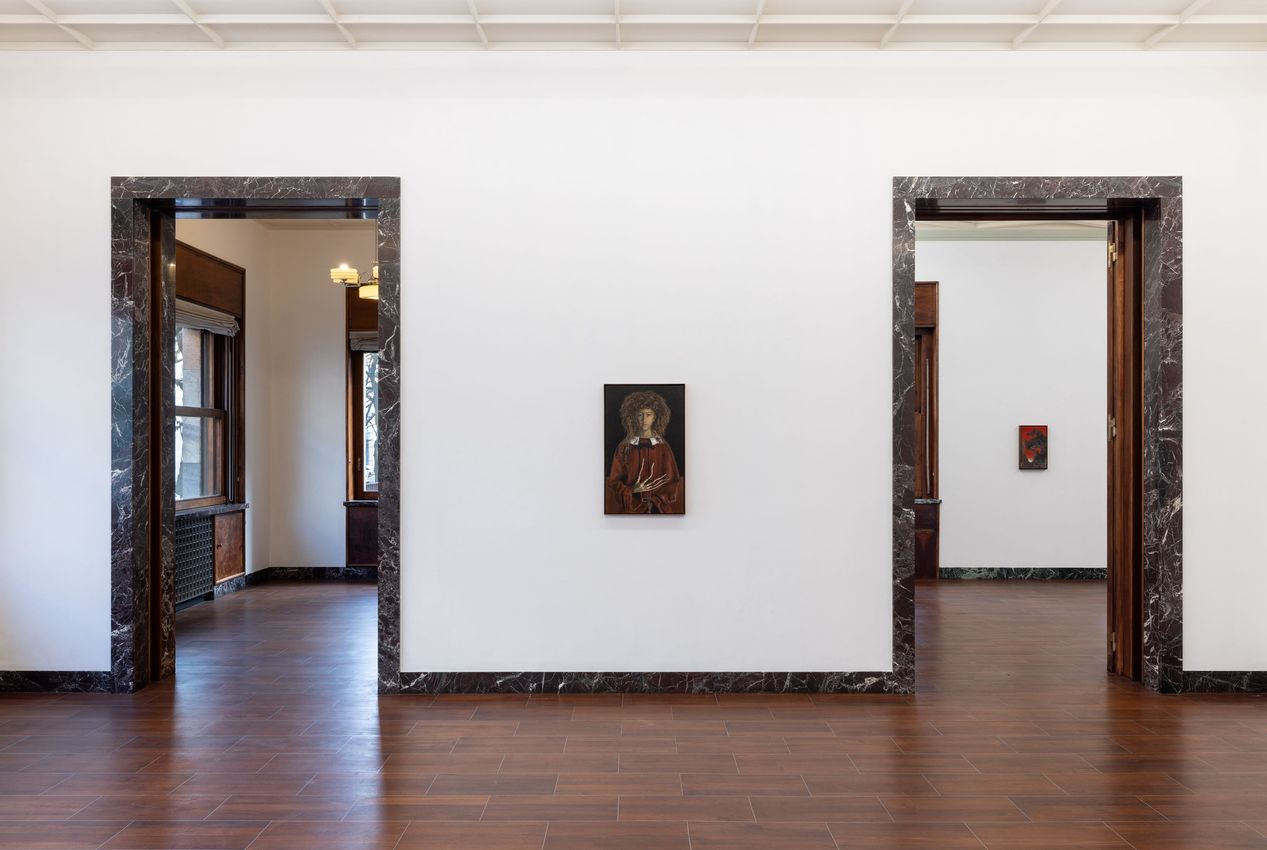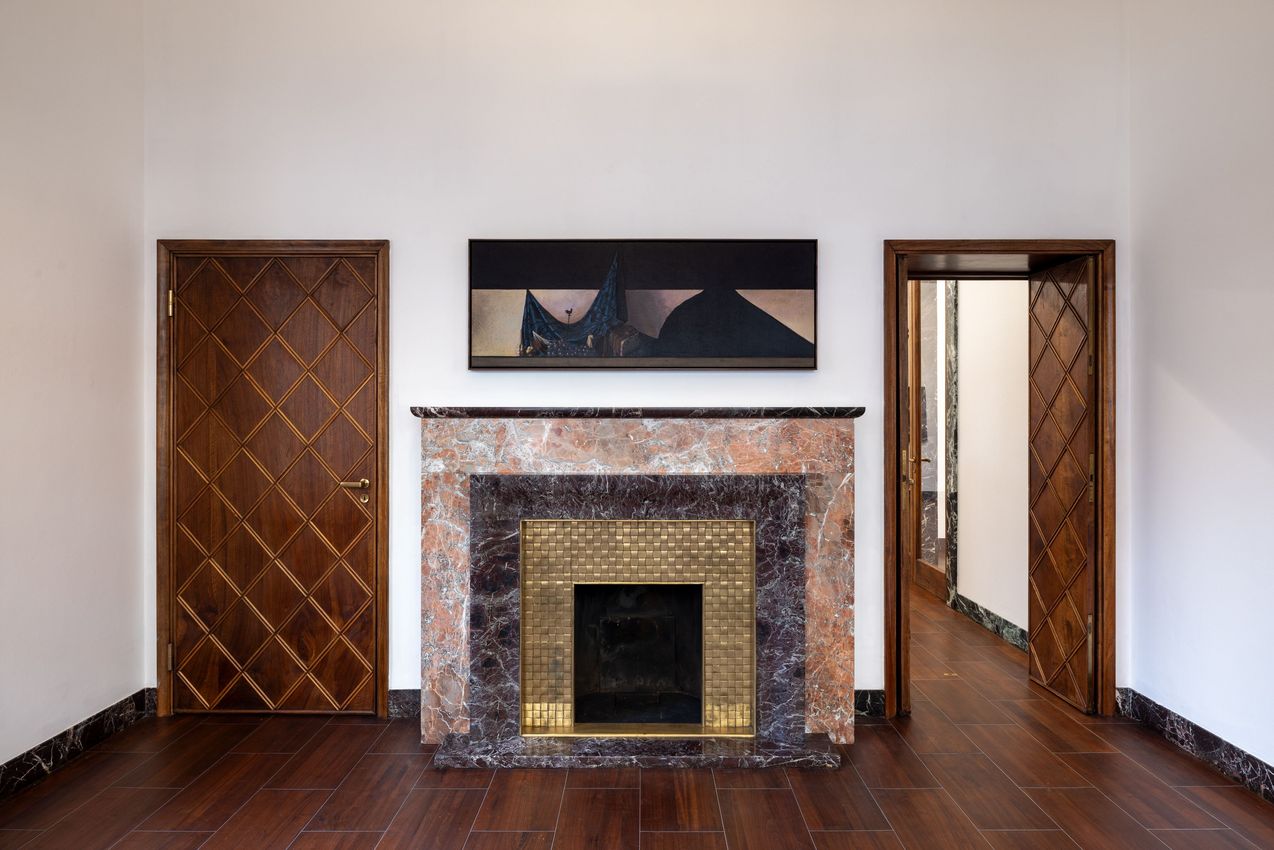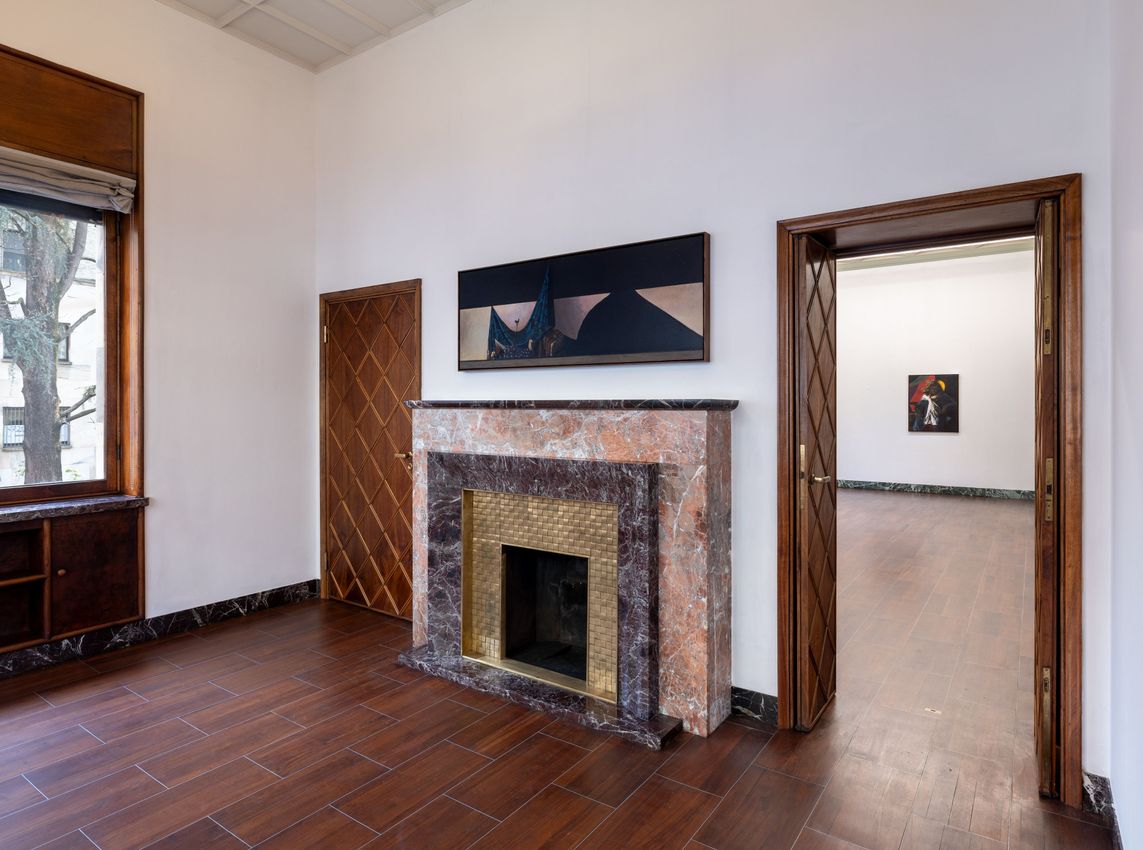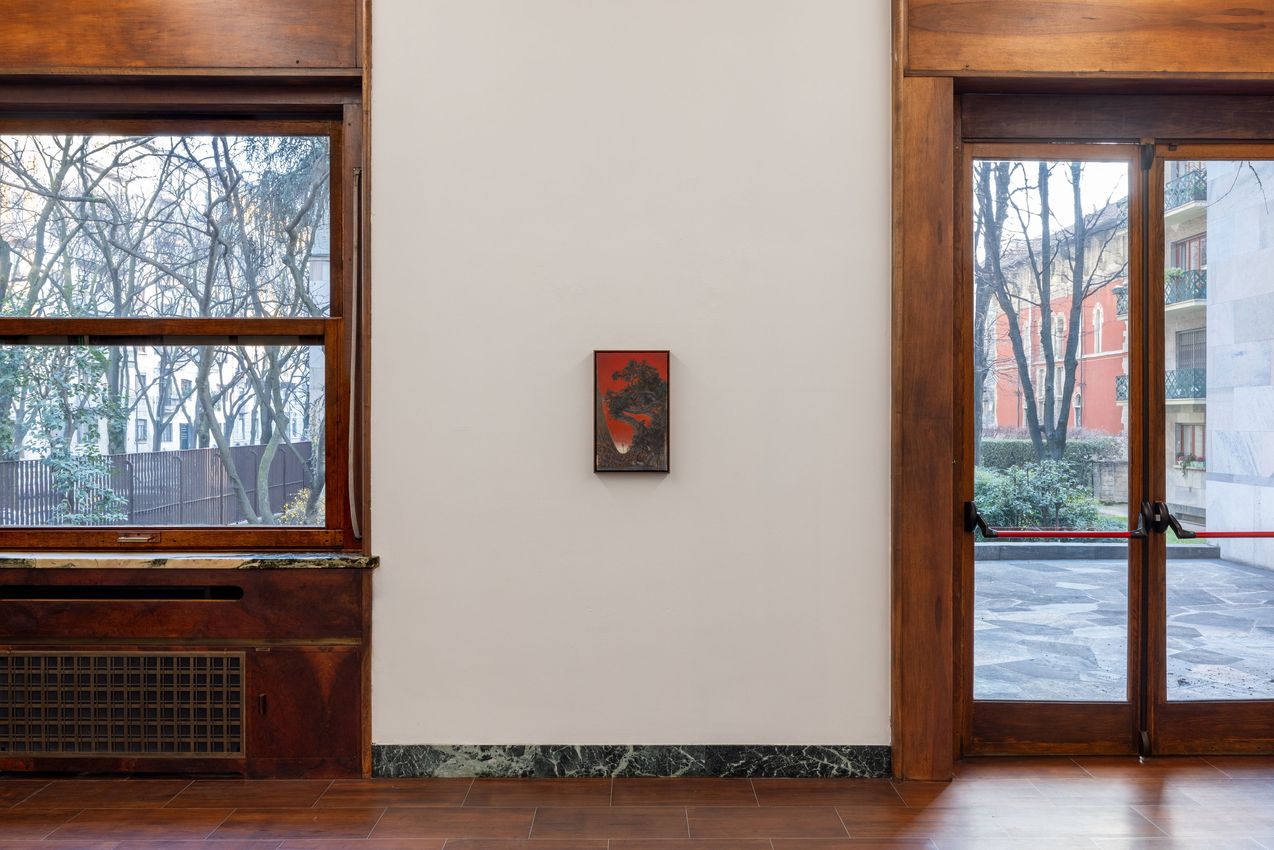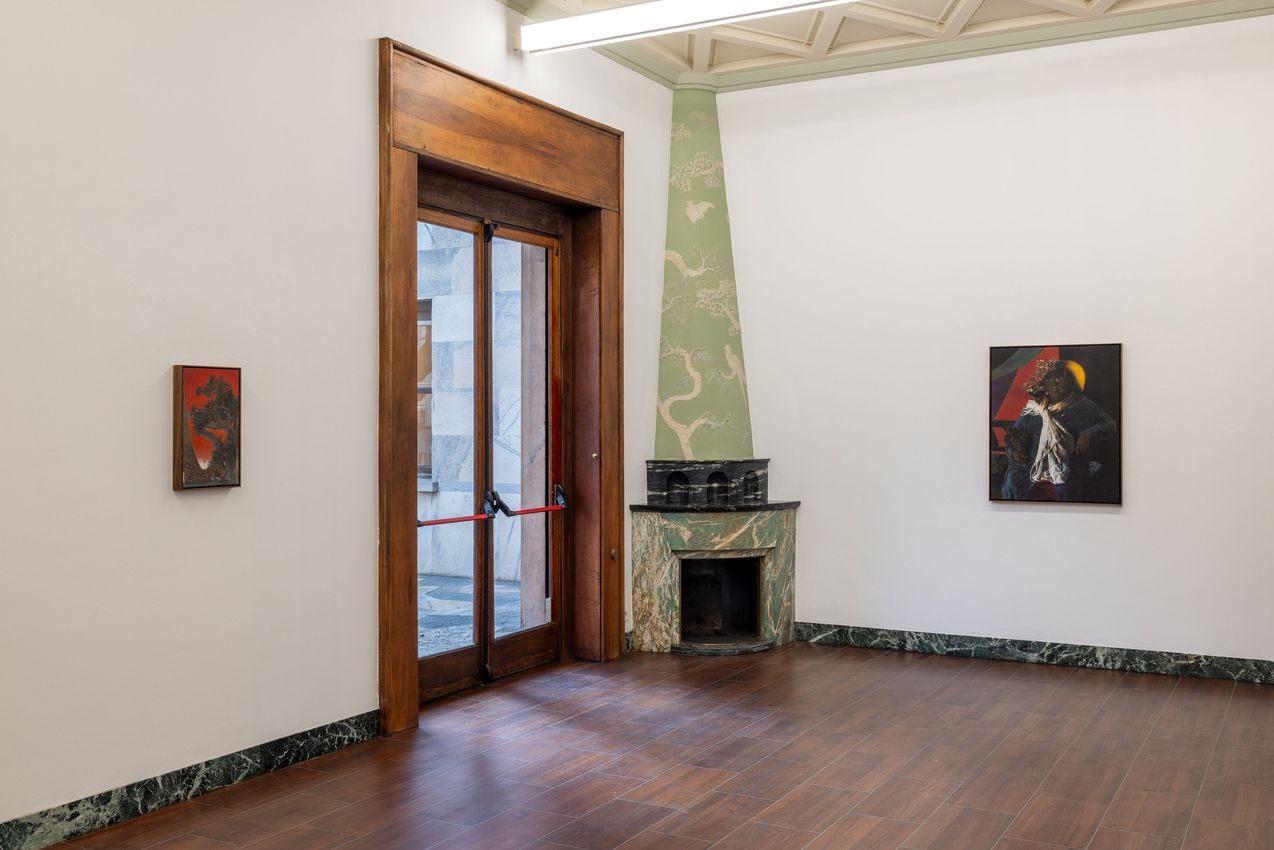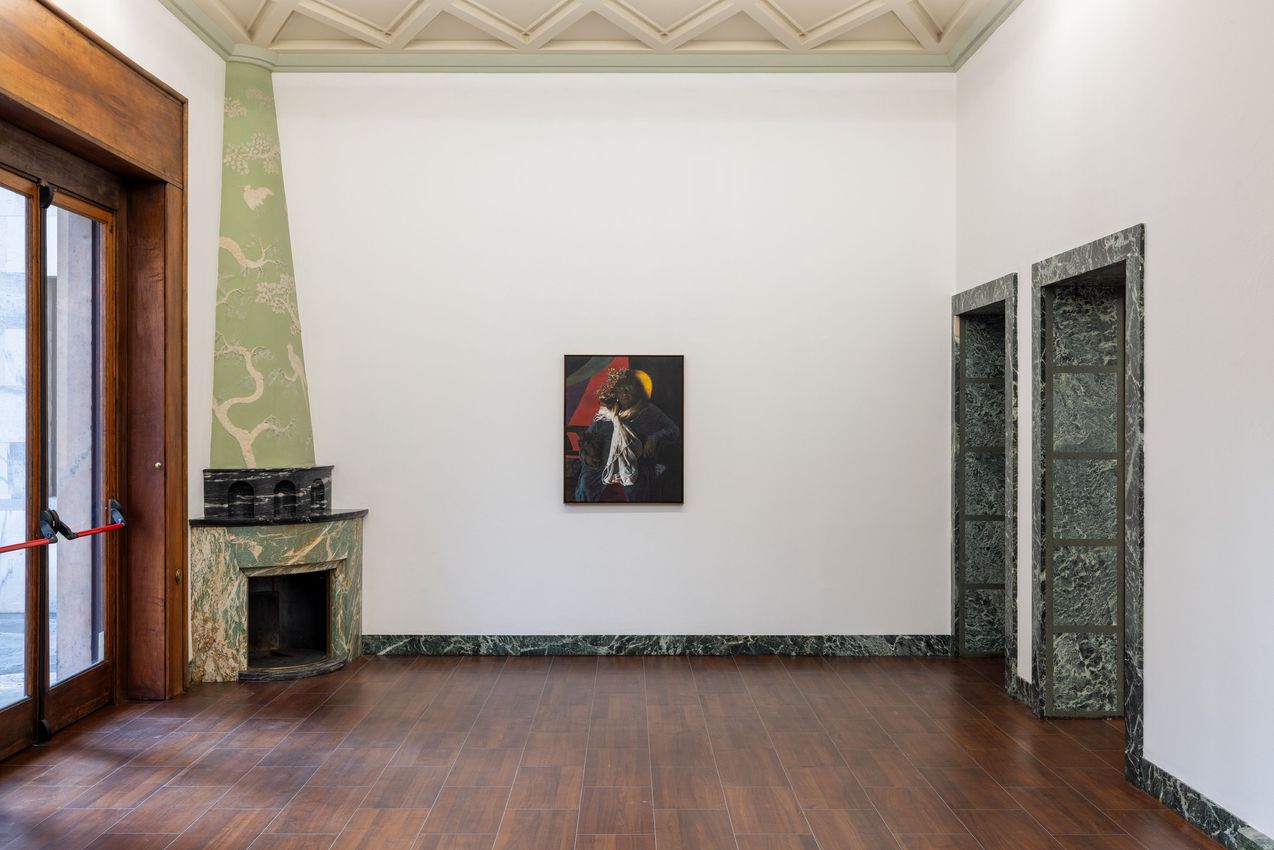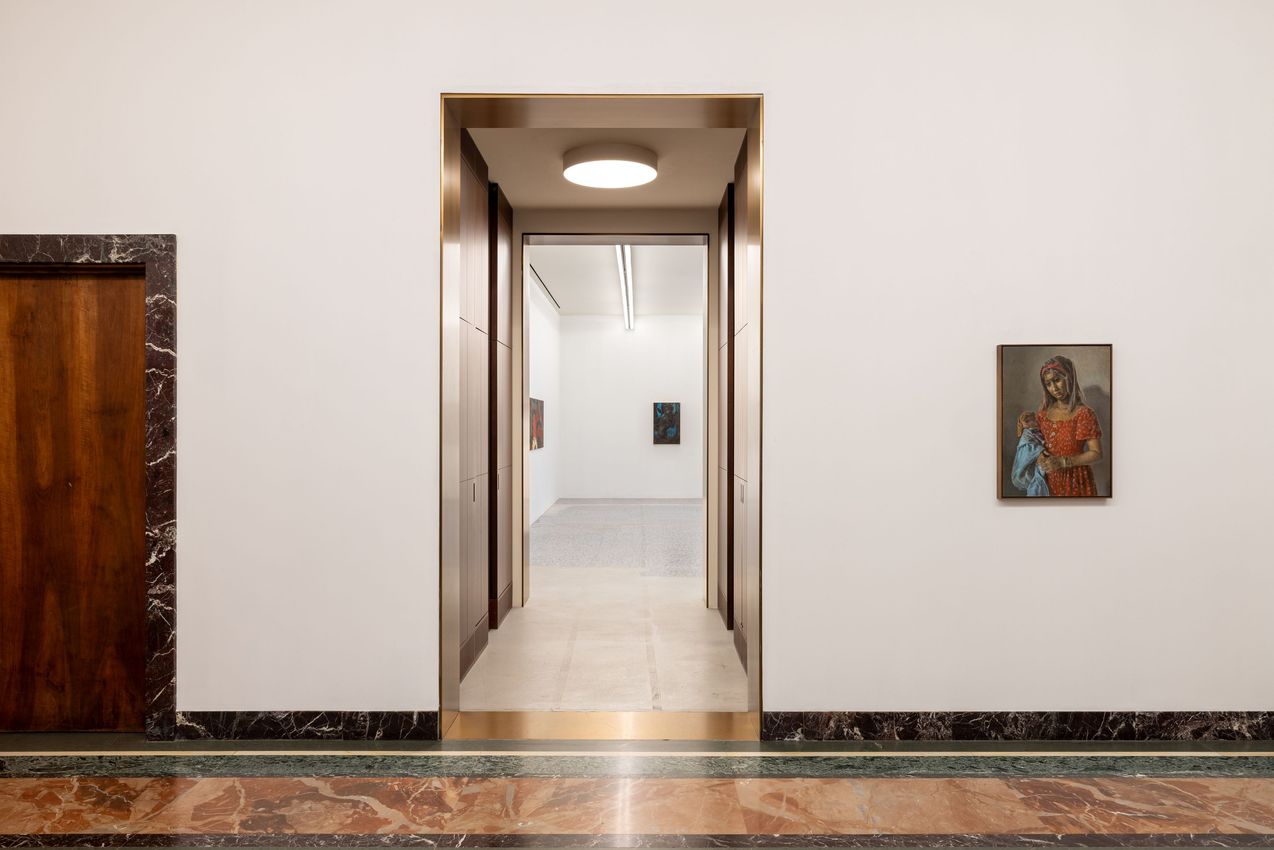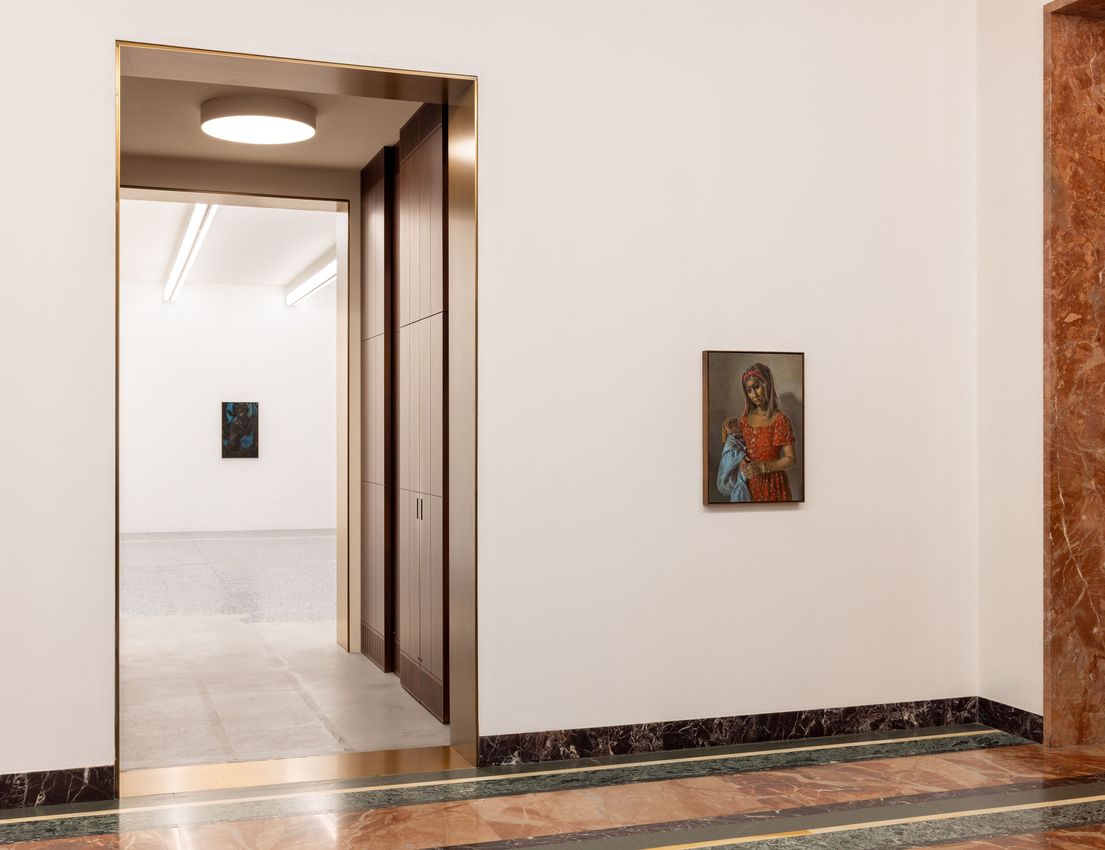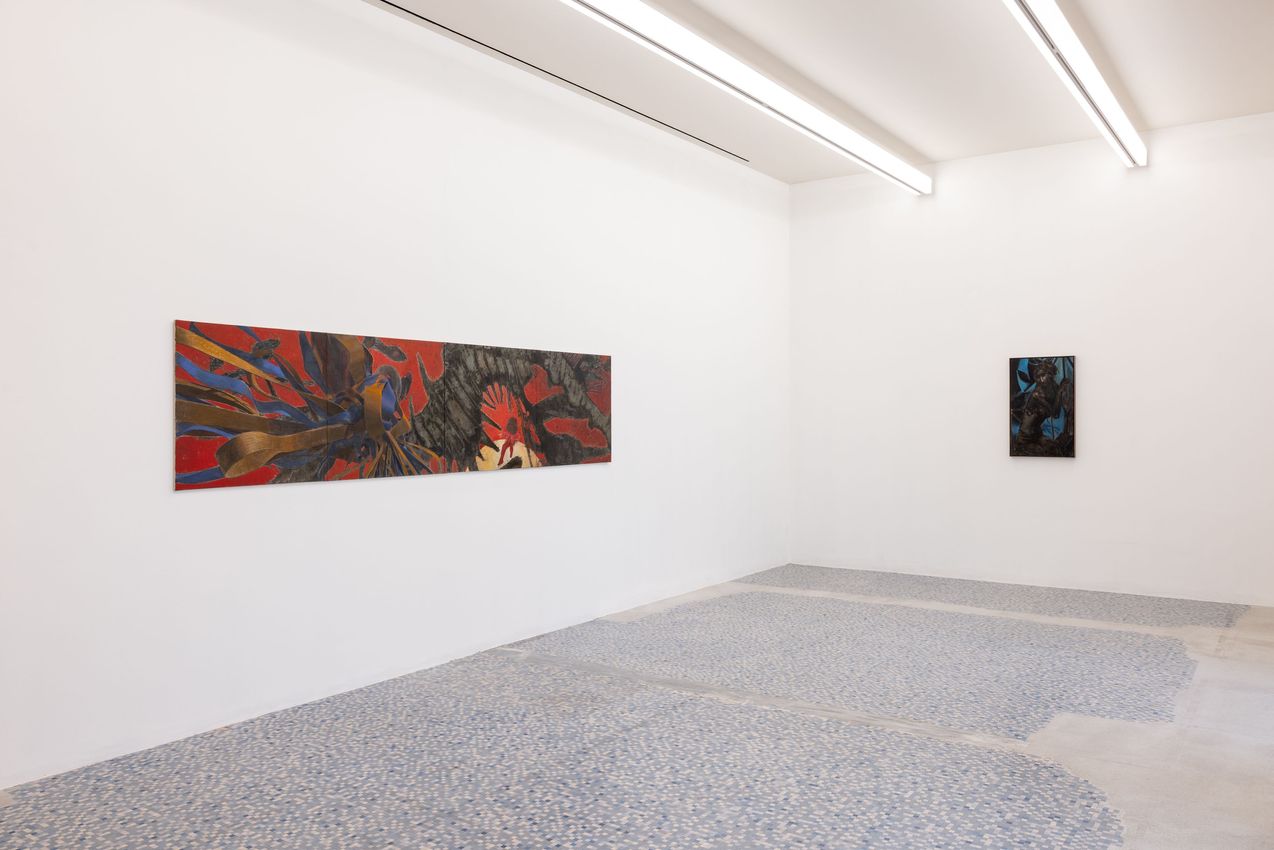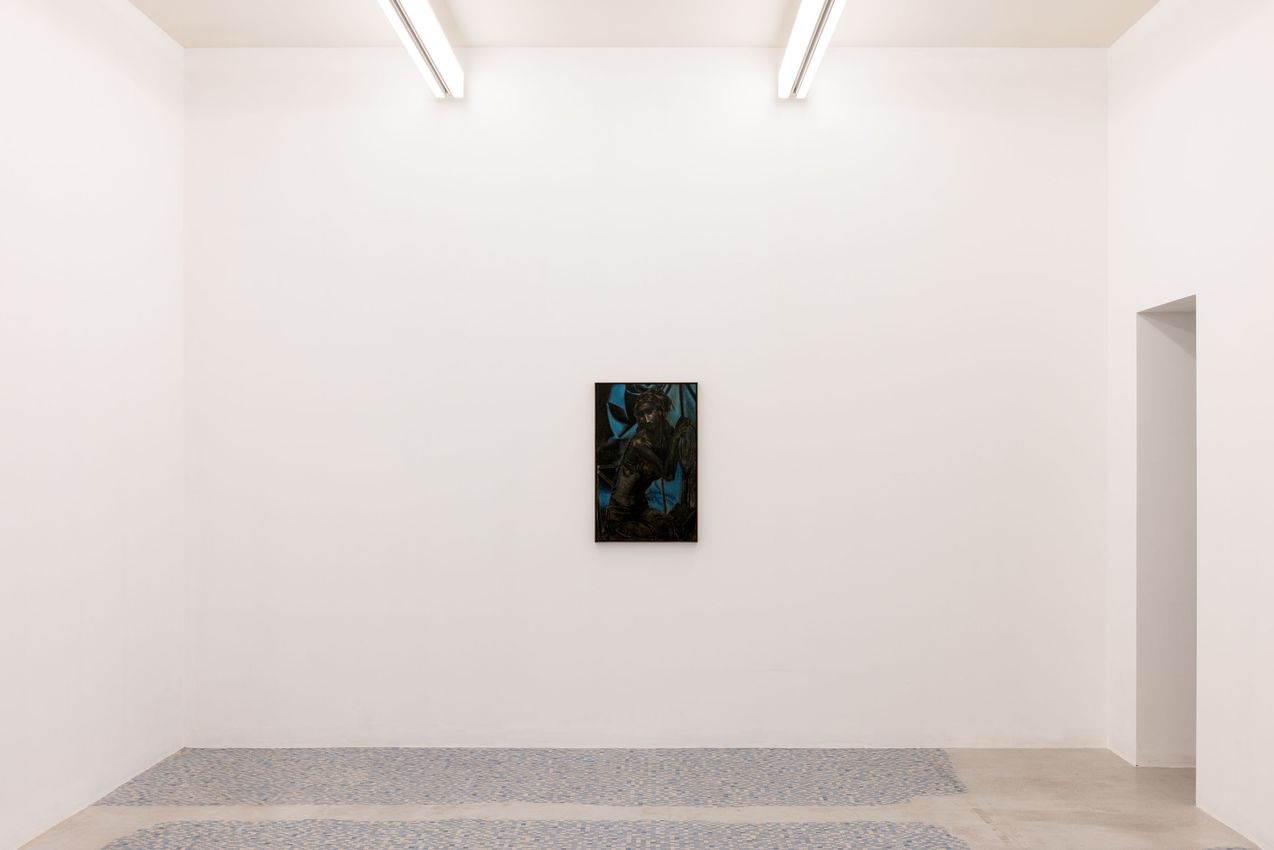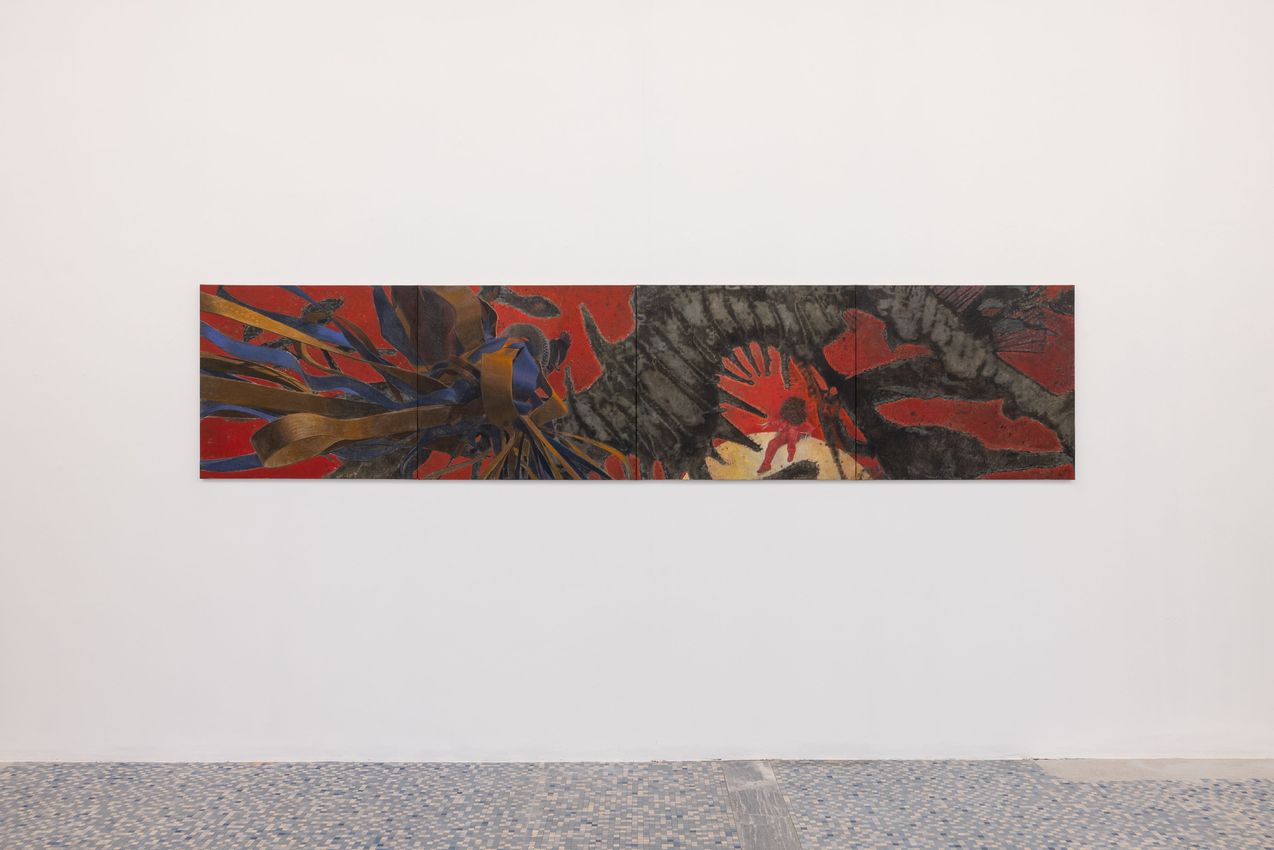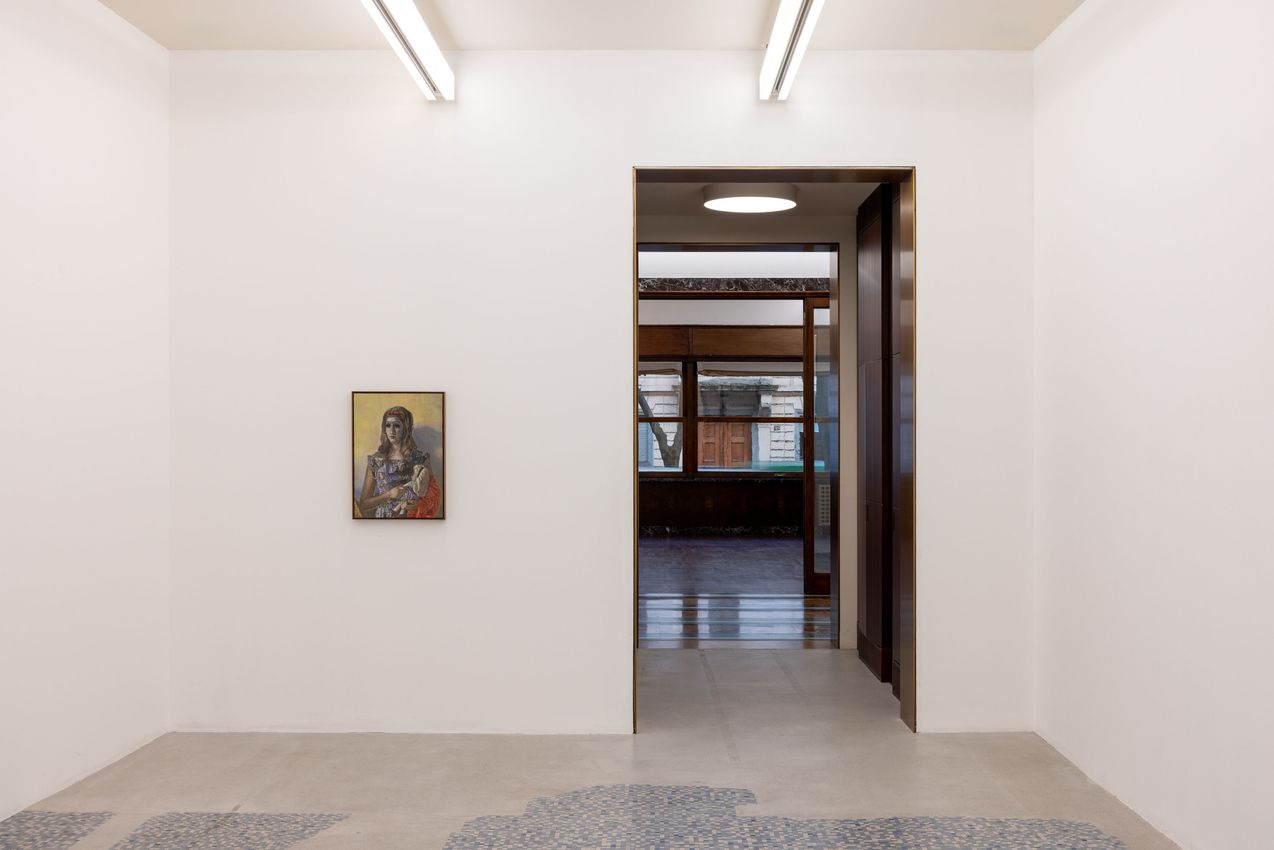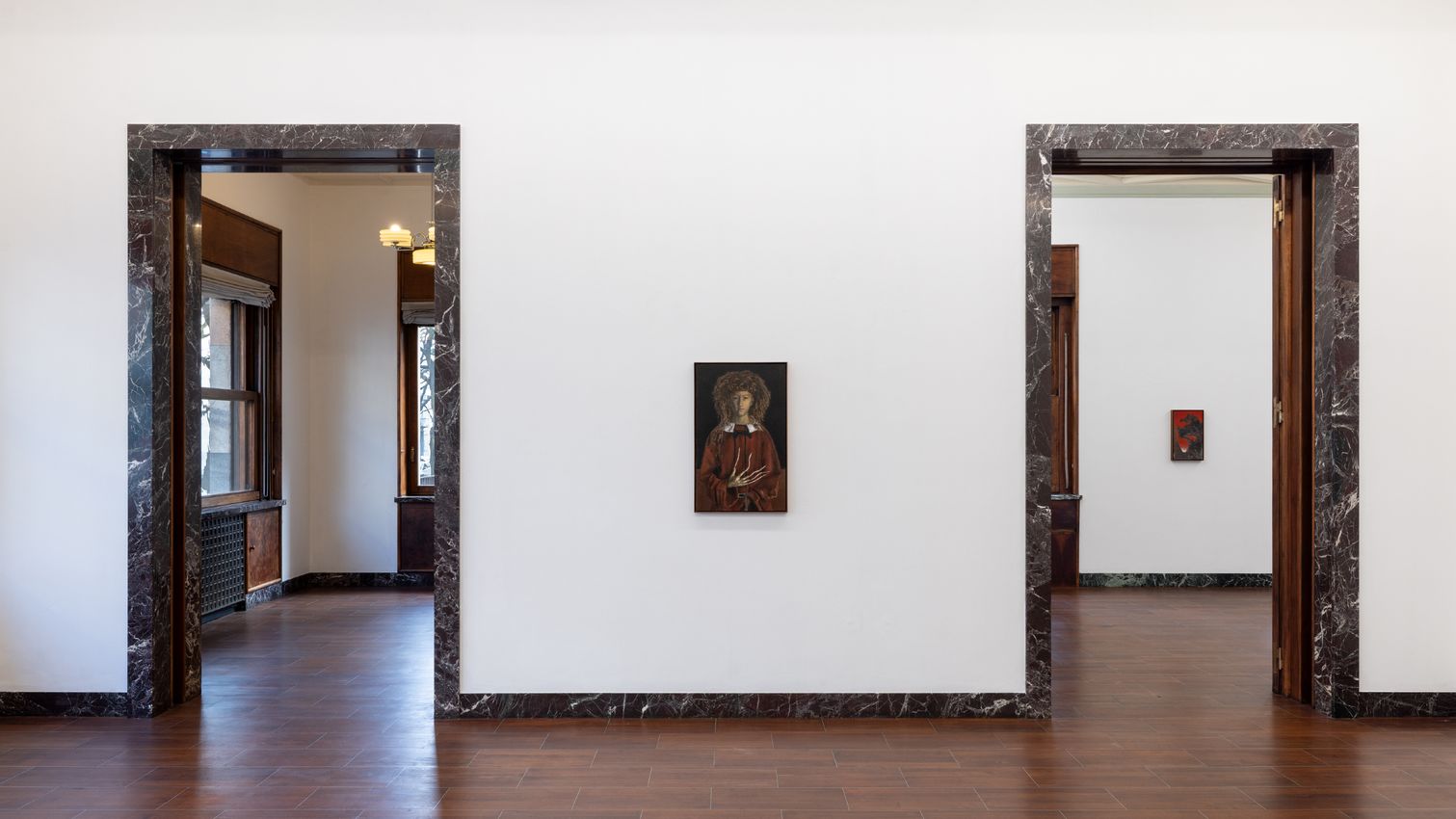
MASSIMODECARLO is pleased to present Io ti saluto, luce, ma con nervi offesi, the first solo exhibition by Italian artist Pietro Roccasalva at the Milan gallery.
The presentation brings together new and long-established subjects from the artist’s iconographic repertoire: imaginary landscapes and paradoxical still lifes, alongside a cast of recurring figures - a child with ungroomed hair and nails, a young girl with her doll, a bride holding a peculiar racket, a mother grasping a strange cornucopia. Together, the works trace Roccasalva’s ongoing experimentation with the possibilities of painting.
An uncommon space of encounter
Images, with their forms and meanings being passed along the centuries and beyond, have been given a longevity that we might well find rather crushing. ‘Crushing’ not only like the impact of a blunt truth, but above all, like one that shatters us to pieces. While we are denied permanence, images are granted infinite resurrections: certain iconographies, in fact, might be absent from the course of history for a long stretch, only to re-emerge at some point, mingling with other traditions and transformed by dint of their own persistence.
Rarely do our individual and organic existences encounter the otherwise expanded and enduring lives of images; however, it sometimes happens with painting, which is one of those uncommon spaces that allow a connection between these two dimensions, if not indeed their fusion: the biographical matter of a mortal being blending chromatically with the elusive matter of an image that has crossed centuries and geographies.
A similar process is often witnessed in the works of Pietro Roccasalva, where multiple sources of imagery gather like clouds, and where fragments from mythology, literature, philosophy, and popular traditions burst into visual compositions charged with the tension of an electrical storm. In order for them not to remain inert, frozen in the very history that has handed them down to us, the dilutant used to blend these sources is a vital and intimate one, an element extracted from the present and from everyday life, such as a family bond or a chance occurrence. In this exhibition, for example, two female figures appear: one draws on an image of the artist’s daughter, the other transfigures an image of his mother. Both are situated within an allegorical regime where different visual attributes of motherhood and abundance – such as a doll or a cornucopia – hail from the realm of the prosaic and from a codified and remote sphere, respectively.
Next to them are portraits of an imaginary and well-known boy, his hair and nails growing out of control. It is an image from children’s literature, appropriated from the imagination of Heinrich Hoffmann and his mid-nineteenth century creation Struwelpeter: He is a character that Roccasalva interprets as an ‘entropic child’, as if his lack of personal grooming materialised the passing of time in the form of unkempt growth. That of Strewelpeter is an image the artist featured in his repertoire of recurring iconographies some twenty years ago[1] and which returns here, as often do the characters of a visual universe that Roccasalva nurtures with all the diligence and cyclicality that we usually attribute to obsessive impulses.
The exhibition, as is always the case with this artist’s shows, has the thematic coherence of an allegorical tale and the structure of a mise-en-scène in which the eternal dwells in the ephemeral. Its register is a mixed, corrupted one, in which the farcical contaminates the tragic. At the heart of this visual tale lies that thing we claim to know as a notion, but which we never really manage to fully understand: the passing of time. A time that, in Roccasalva’s ruinous imagination, does not progress along in linear fashion but which precipitates, like the hot air balloon that plummets to the ground and which has also been a constant feature in many of his paintings for many years. Within this gravitational aesthetic, one which acts on bodies as much as on values and meanings, individual existence and autobiographical data serve as vessels: by embodying images and traditions, they ensure their passage through time.
What we see in these works is everyday life transfigured into the magical and the remote, imbued with something that seems to transcend it. When it comes to a mechanism such as this, which projects symbols and hallucinations onto reality, some might speak of ‘escape’ or ‘refuge’, others of ‘neurosis’. But this is normative terminology, which favours the idea of a healthy and productive relationship with reality – even in art – based on its observation and analysis rather than its imaginative reworking.
This may give us some leverage with which to prise open the obscure title of this exhibition: Light, I salute thee, but with wounded nerves,[2] as the setting for a sensitivity honed by its exposure to a force by which it is illuminated and, at the same time, infected.
-Alessandro Rabottini
Courtesy MASSIMODECARLO.


Pietro Roccasalva was born in 1970 in Modica, Italy. He currently lives and works in Milan.


MASSIMODECARLO gallery was founded in 1987. It switfly stood out on the international artistic scene for its bold, counter-current choices: the gallery focused on lesser-known artists in Italy such as John Armleder, Olivier Mosset, Steven Parrino and Carsten Höller. In the following years, the gallery program expanded to include prominent young artists of the time such as Alighiero Boetti, Cady Noland, Rudolf Stingel, and Felix Gonzalez-Torres.

A respected voice in contemporary art discourse.
Focusing on ambitious storytelling and insightful art-world commentary. Ocula Magazine publishes in-depth interviews, critical essays and timely analysis on the artists, exhibitions and ideas driving the global art world.
Learn more about Ocula Magazine
Showcasing the best of the art world.
Ocula partners with galleries from around the world to highlight their artists, artworks and exhibitions. Gallery membership is by application and invitation, with each member vetted by an independent panel.
Learn more about Ocula Membership

Specialises in the sale of major artworks.
Led by a team with deep ties to the world’s leading auction houses, galleries and collectors. Ocula’s advisory team offers bespoke services to high-net-worth clients from around the world who are looking to acquire the best of contemporary and modern art.
Learn more about our team and services