



Mendes Wood DM is pleased to present the first solo exhibition in Paris by artist Antonio Obá.
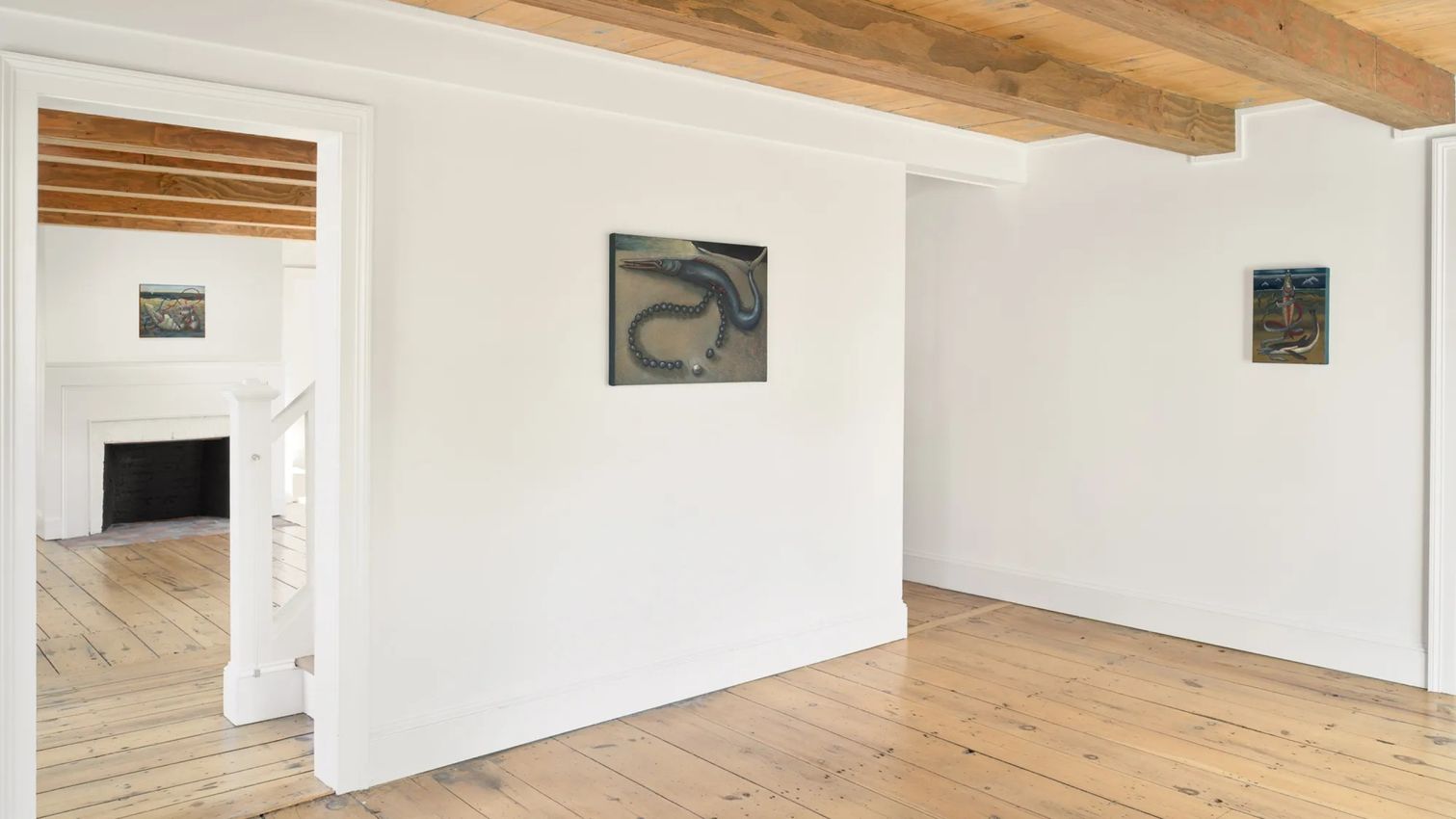
Festim da alma [Feast of the soul] presents a reading of the cyclical nature of life, punctuated by celebrations and rites. The paintings and drawings on view demarcate the apexes of a journey that will find a place in the bodies and figures of children, women, and men, in both real and imagined existences.
Central to this pursuit, children are depicted as contemplative, joyous, fearful, and curious. What emerges, for the artist, is deeply ingrained in the symbolism and archetypes that the image of a child presents to viewers. The possibility of something that is about to happen, synonymous with the emergence of new feelings. It is these novel sensations, often loaded with both apprehension and hope, that Obá wishes to explore. Navigating self-awareness without fear – while embracing the idea of perennial existences – demands a unique sense of creativity.
Criança de coral Choir child, the central work in this exhibition, is presented as an installation made up of 14 small paintings arranged in a semi-circle on wooden plinths. Each small work features a portrait of a child, mouth wide open, as a partaker in this musical ensemble. Upon close inspection, one perceives that the image of the singing child is at the same time melancholic and almost macabre. The tight gaze and the static apprehension of these frail singers are a strong indication of a painful melody. Through precise brush strokes meshing photographic references, Obá distorts an allegedly merry scene to create an emotional manifestation. This painstaking analysis involves an antithetical situation from the image of the child as an original symbol, that which is nascent, and the contradictory element of crying, something that is at an end or ends tragically. Far from a morbid lament, they sing to the very essence of life.
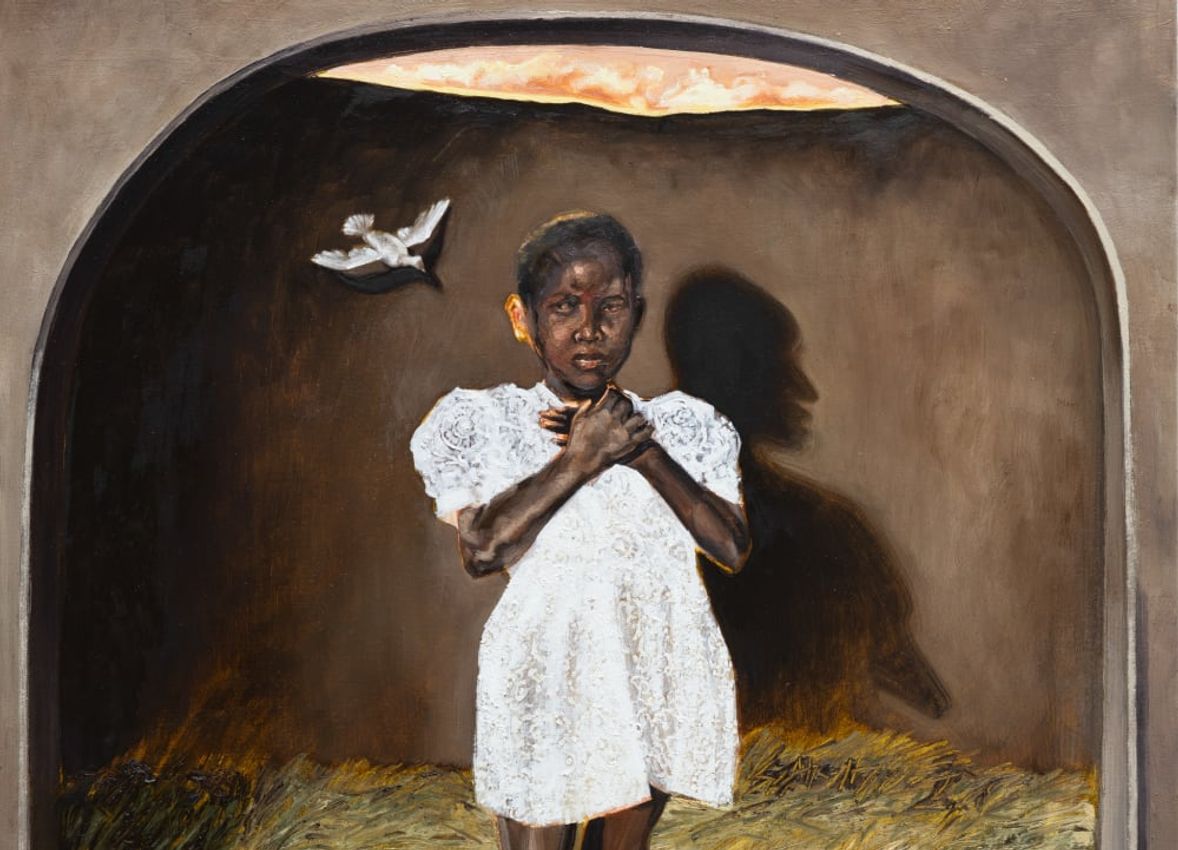
Musicality returns as a leitmotif for another poignant piece in the exhibition, Alegoria para uma nascida Allegory for a newborn, in which a young girl is portrayed confronting danger with somberness. The image bears an undeniable reference to divine iconography in style and representation. The child is standing still with placid complexity, stepping effortlessly onto a serpent, so often a symbol of evil across Western traditions. Elsewhere, one recognizes an almost rural setting, with elements from the natural world, such as eggs and hay, suggesting a narrative of innocence. Such familiar fables are a fertile ground for the artist’s poetic language. Similarly, other paintings in the exhibition are composed in the company of animals or plants, borrowing their symbology as philosophical time markers. Obá decisively describes the characters in two different scenes as adâmico [Adamic] in direct reference to the creational mythology from Abrahamic scriptures. Even for the first man on earth, life was undeniably a mystery.
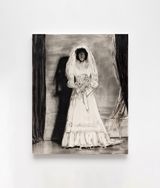
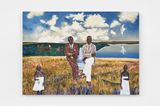
The passage of time is also marked in this exhibition through Obá’s characteristic reappropriation of history, particularly of episodes inscribed with racial discrimination. Memento Mori: Baile de debutantes Memento Mori: Debutante Ball references a historic event in Belo Horizonte, Brazil, where a traditional society club organized the first prom dance for Black people. Until then, Black girls and boys coming of age in the city did not have the opportunity to take part in this rite of passage, and it was not until 1963 that this event would take place for the first time. The painting parallels the whole spectrum of research that Obá continually conducts into the memory of racism and its various sociocultural ramifications. Owing to the exhibition’s central theme, the debutante’s symbol echoes the start of a new phase with all its hopes and uncertainties. Dancing inconspicuously with the prom-goers are dozens of night-flying moths silently witnessing the event.
The figures in Contenda – 2: A Dança Contention – 2: The Dance also dance away to an unrevealed ballad. Seemingly in unison, highlighted by a setting created in perfect harmony. Everything in this scene was meticulously crafted to emanate elements of control, such as the tailored garden under their polished shoes or the polished bright-red fence. However, as the title of the piece suggests, this intimate duet could also enclose a hidden dispute veiled by appearance. It is, perhaps, through complicity that one learns to dominate danger.
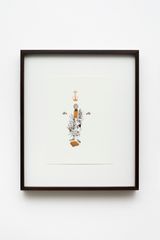
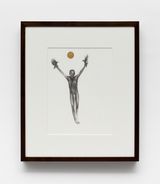
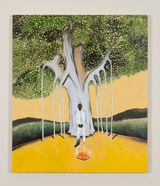
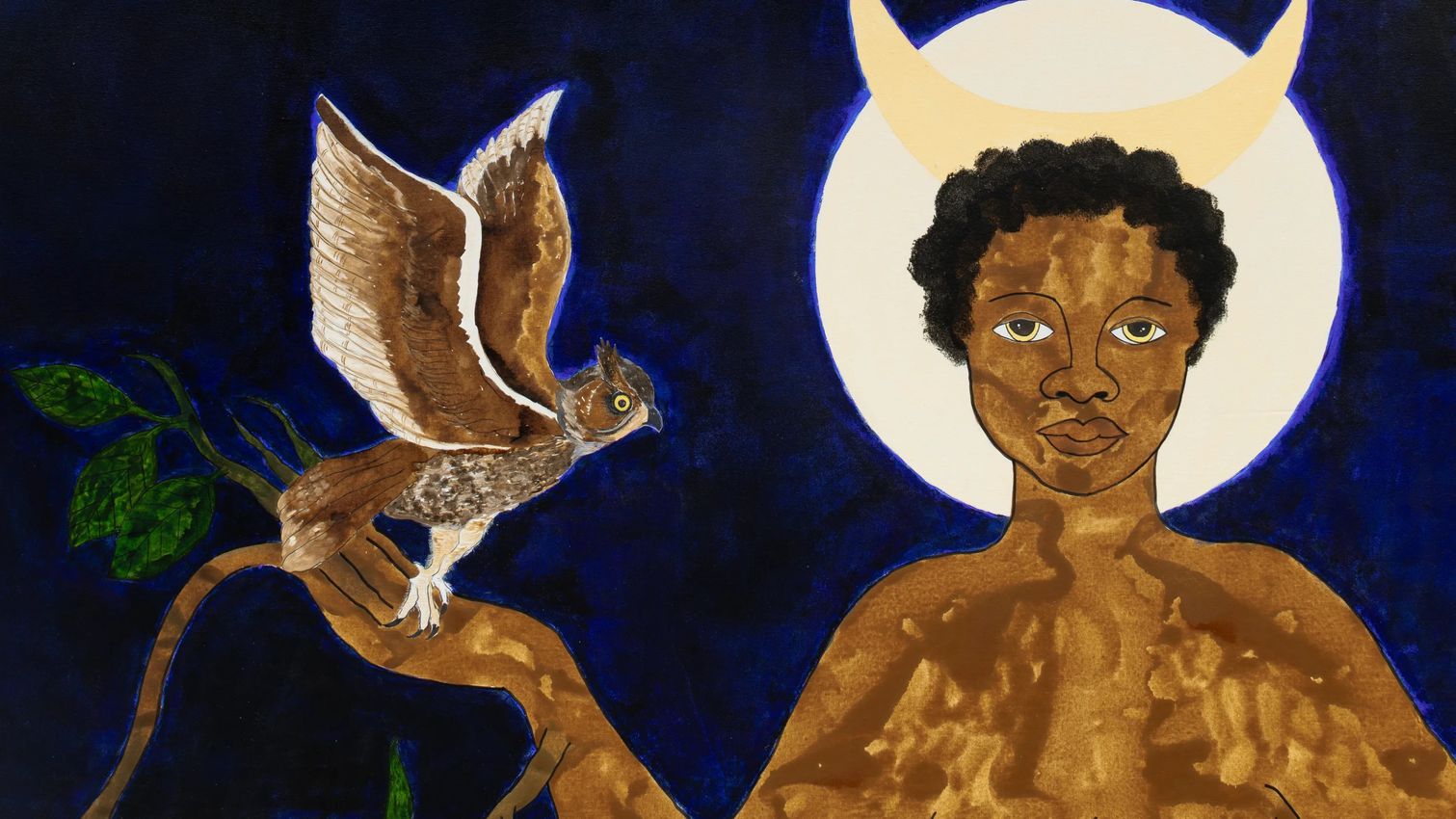
Finally, a self-portrait by the artist Autorretrato enquanto máscara Self-portrait as a Mask brings forward a concluding archetype or a sphinx. Hidden behind a mask, this character assumes one of several possibilities – an effigy of a timeless conductor barely guiding the score of an eternal composition.
Antonio Obá investigates the relations of influence and contradictions within the cultural construction of Brazil, giving rise to an act of resistance and reflection on the idea of national identity. The artist intends to utilize icons present in Brazilian culture a racial and political identity memory, these iconic historical and sometimes religious ensembles are explored within the sculpture, painting, installations, and performance.


A respected voice in contemporary art discourse.
Focusing on ambitious storytelling and insightful art-world commentary. Ocula Magazine publishes in-depth interviews, critical essays and timely analysis on the artists, exhibitions and ideas driving the global art world.
Learn more about Ocula Magazine
Showcasing the best of the art world.
Ocula partners with galleries from around the world to highlight their artists, artworks and exhibitions. Gallery membership is by application and invitation, with each member vetted by an independent panel.
Learn more about Ocula Membership

Specialises in the sale of major artworks.
Led by a team with deep ties to the world’s leading auction houses, galleries and collectors. Ocula’s advisory team offers bespoke services to high-net-worth clients from around the world who are looking to acquire the best of contemporary and modern art.
Learn more about our team and services