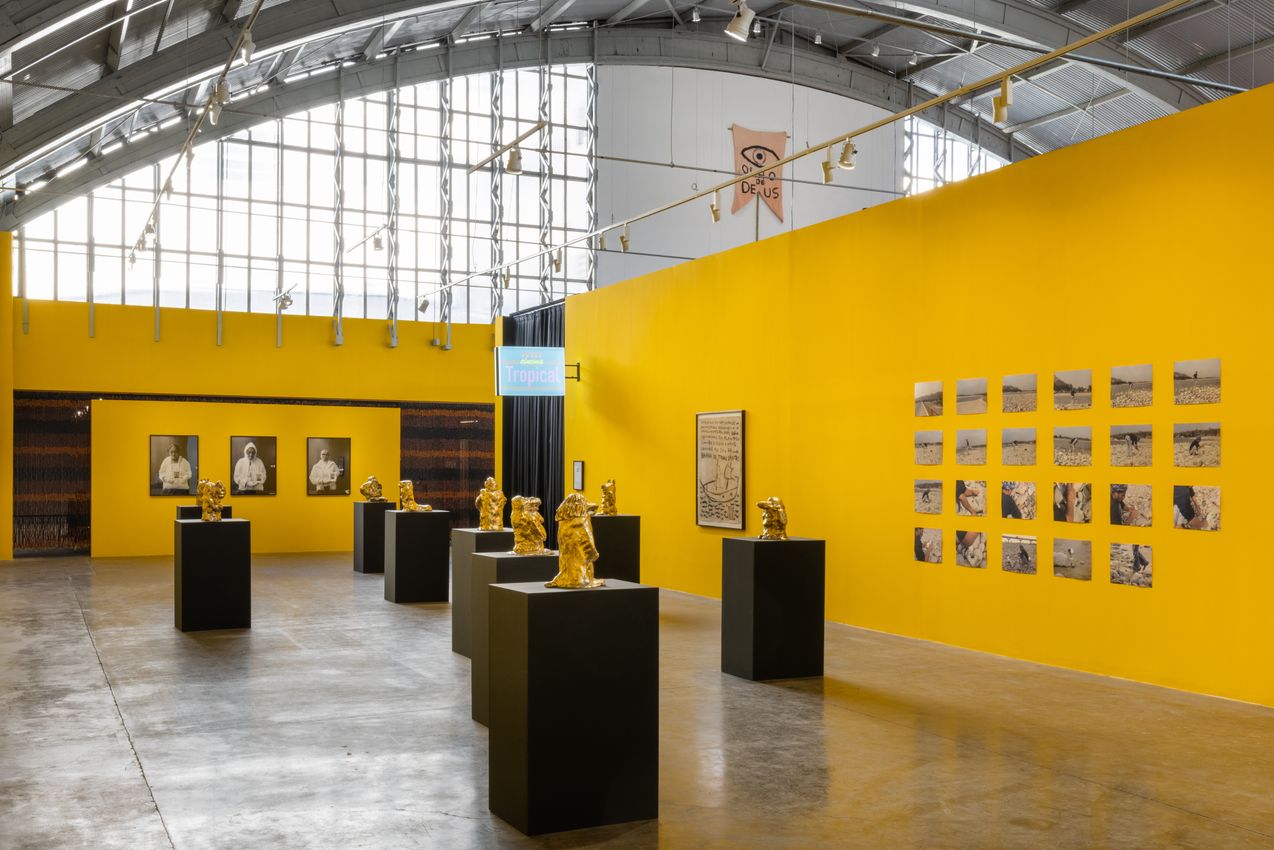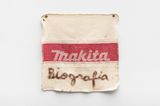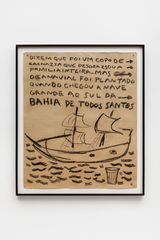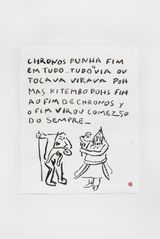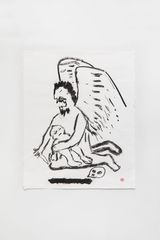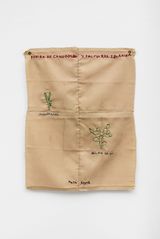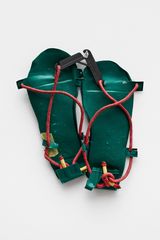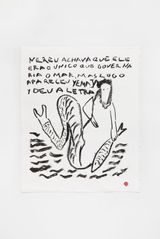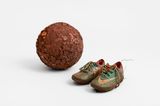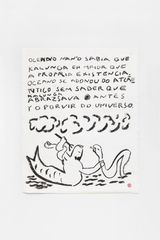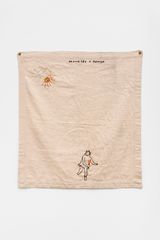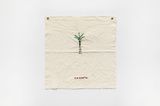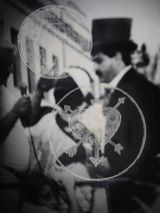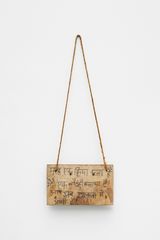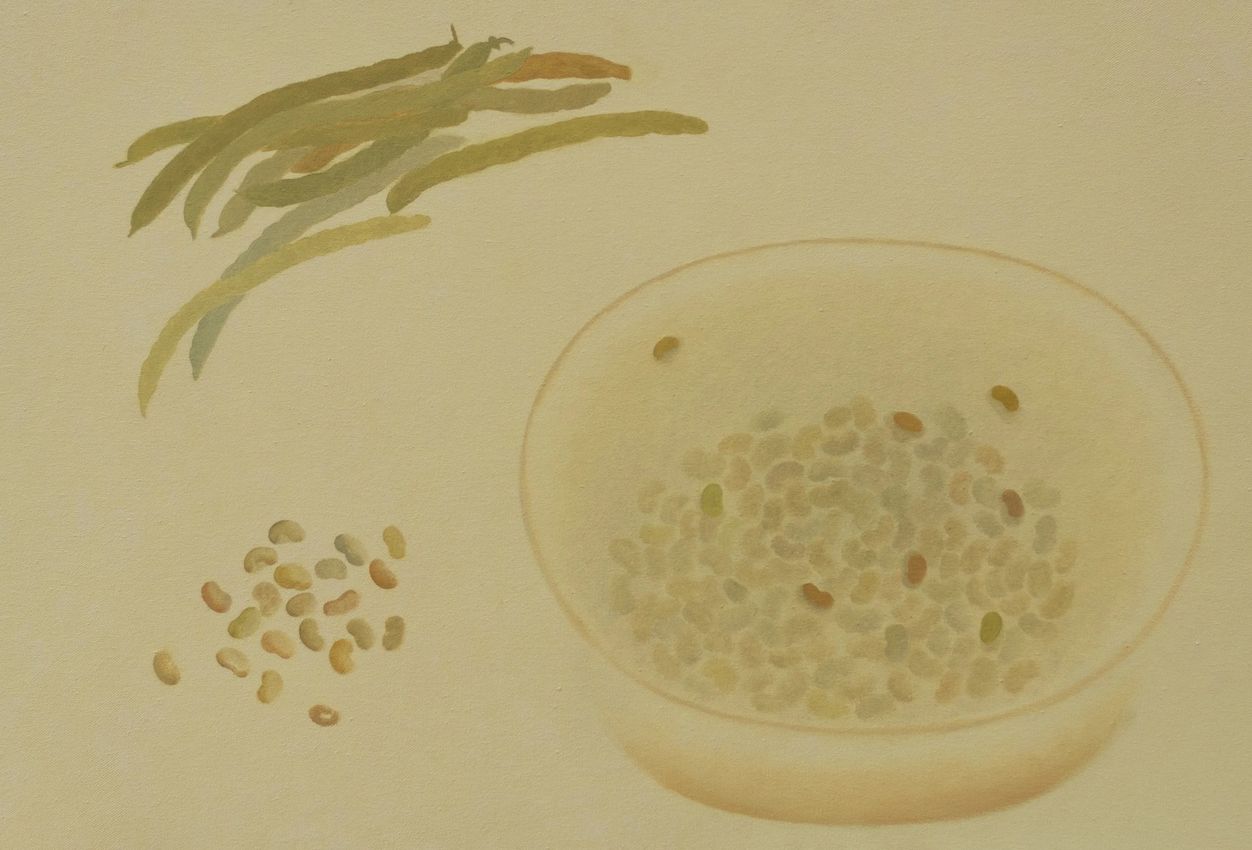
NAZARETHANA tells many stories. The exhibition begins with the experiences of Paulo Nazareth’s mother, Ana Gonçalves da Silva, and grandmother, Nazareth Cassiano de Jesus, while also speaking about mothers and grandmothers around the world. It invokes divinities of diverse origins – Greco-Roman, African, of the Americas, Brazilian, and pre-Cabral. Organized in Cantos, the exhibition unfolds like an epic about faith, religiosity, politics, and science. Combining narratives that belong to both the artist and humanity, multiple rooms are divided by colors chosen by the artist as manifestations of art, “sacred manifestations,” echoing his mother’s saying that art is sacred. In this way, the exhibition weaves together oral tradition and official history.
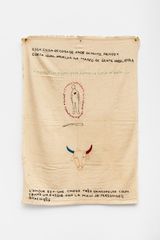
The story of the artist’s mother and grandmother anchors NAZARETHANA. Nazareth Cassiano de Jesus, his grandmother, labored on farms built over Borun Indigenous lands before her employer sent her to the Colônia de Barbacena – a psychiatric institution later exposed as the site of the so-called “Brazilian Holocaust.”[1] She lived there for two decades until her disappearance in 1964. With only fragments of memory of her mother, Ana Gonçalves da Silva, Paulo led a journey to trace their family’s origins. Honoring his grandmother, he carries her name as an artistic principle, allowing it to guide his walks across the world.
NAZARETHANA’ s prologue opens against walls painted black, evoking Calunga, the Afro-Brazilian entity known as the “preto-velho” (old Black spirit). Calunga embodies both the sea – the Atlantic – and the cemetery, two sacred realms bound by the forced crossings of thousands of enslaved people thrown into the ocean between Africa and the Americas. Across one wall, the sign Assembleia de Deuses [Assembly of Gods] proclaims the presence of many divinities and affirms the richness of human diversity in all its forms. Within the gallery, this glowing phrase transforms the room into a temple, a space of prayer and encounter with the intangible, asserting art’s power to transcend the material world.
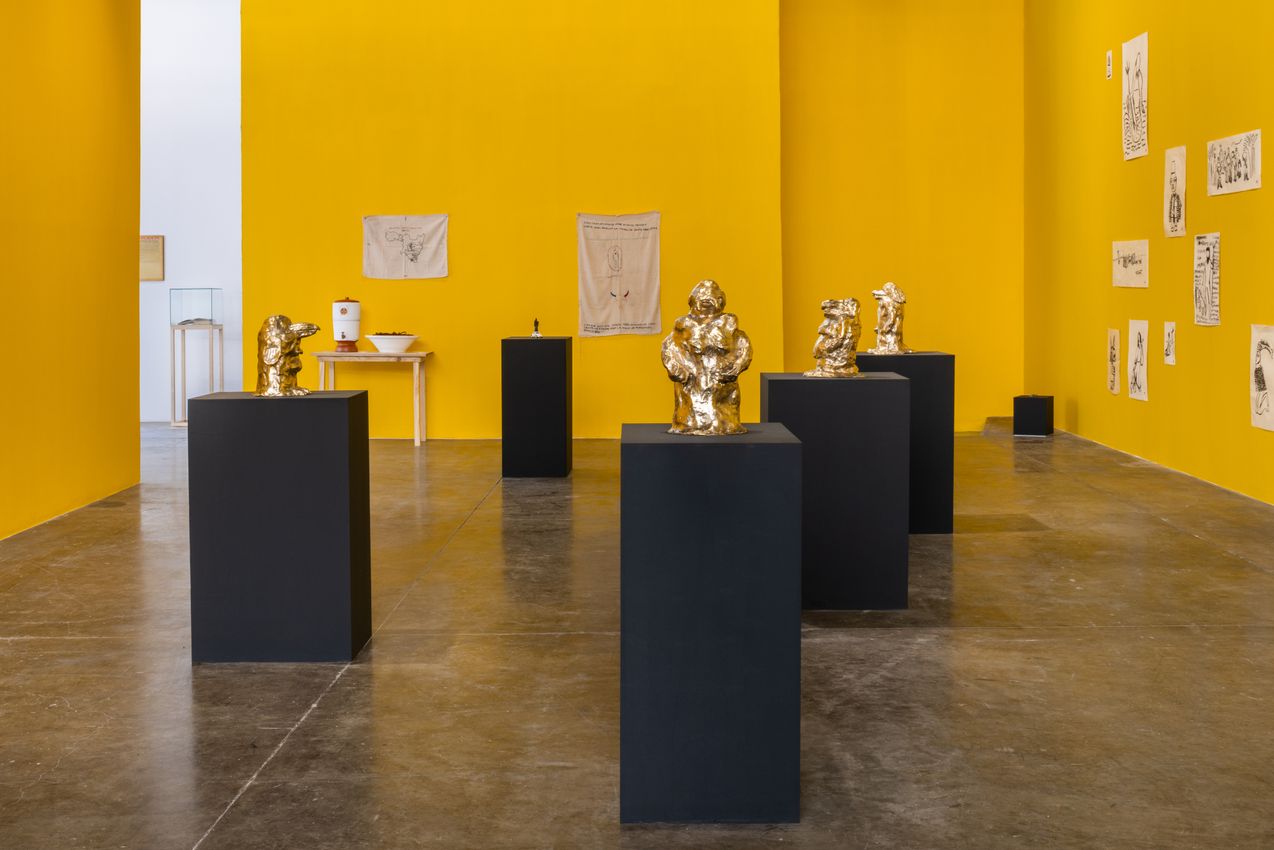
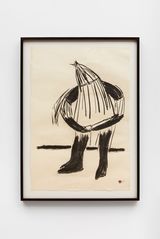
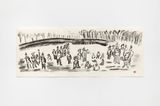
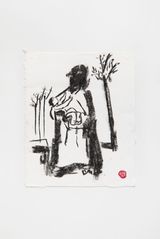
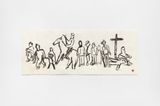
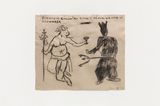
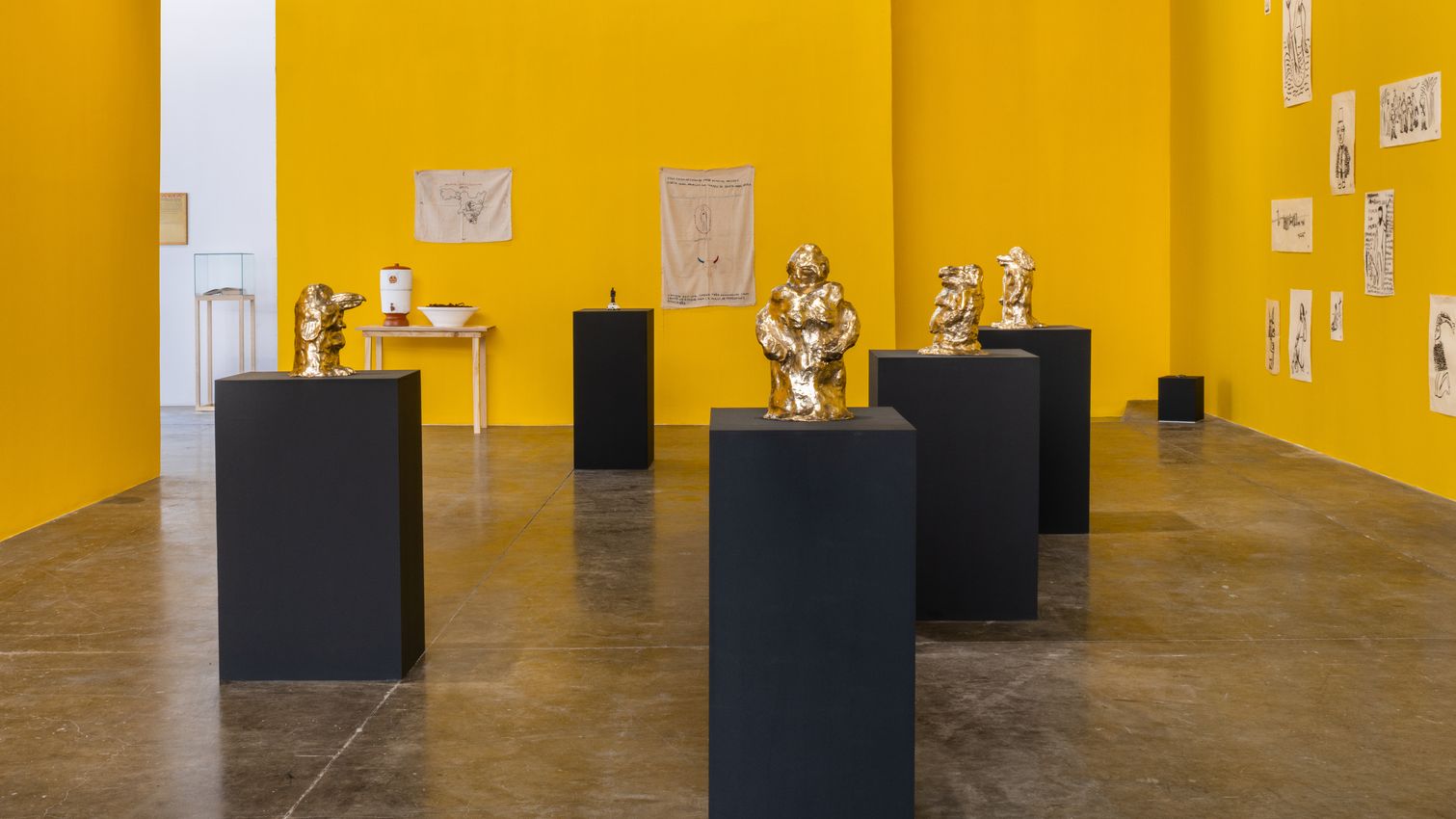
A yellow room honors Oxum, lady of fresh waters, rivers, and waterfalls. She is a symbol of fertility and love and, in the diasporic traditions of Umbanda and Candomblé, protects pregnant women and newborns. In this Canto, drawings and bronze sculptures pay homage to ancestral divinities that are often forgotten. Most are water deities from Nordic regions, Europe, Africa, and Brazil, whose stories endure even when time has tried to silence them.
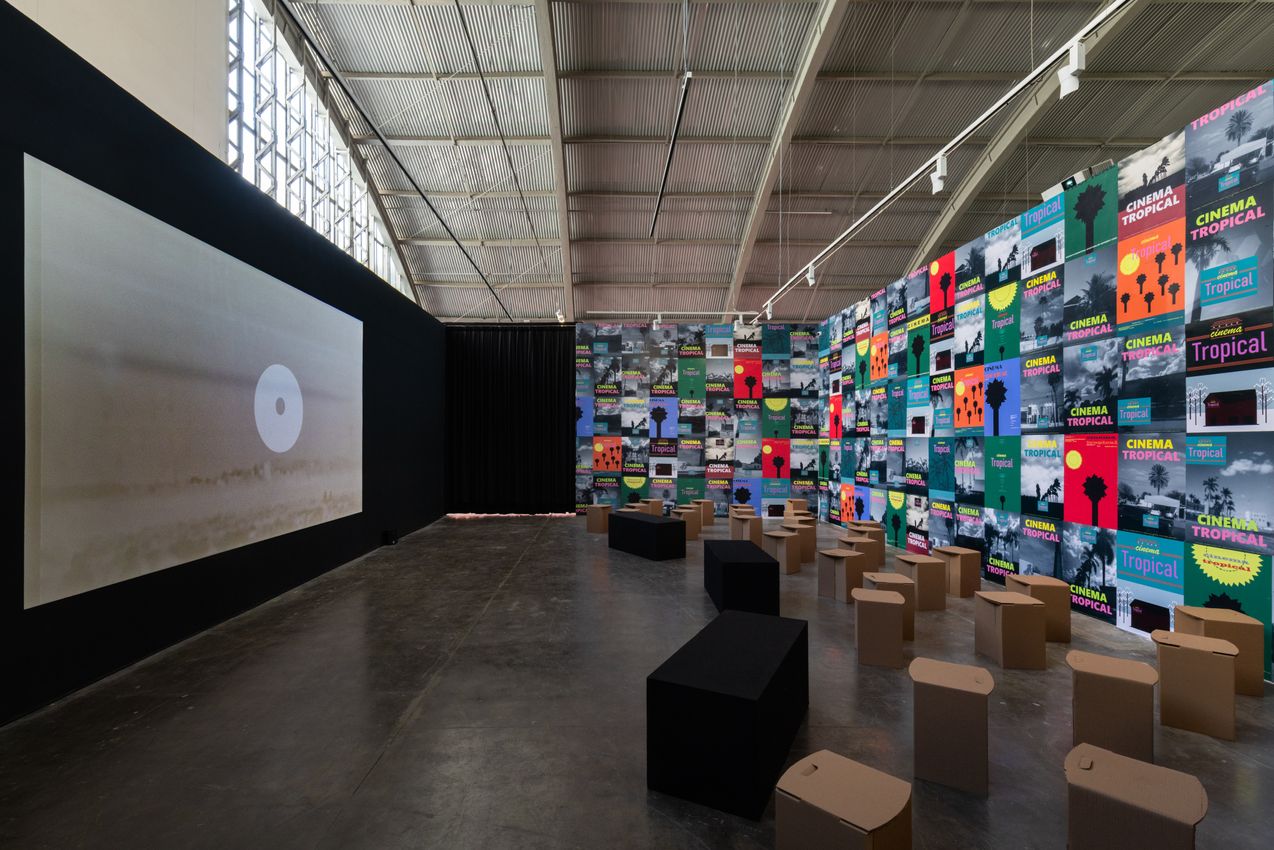
The installation Cinema Tropical carries a promise that dreams, happiness, and desires can take form. Inside this “cinema,” a projection screens the film of the same name, while wheat-pasted posters cover the walls to create an imagined tropicalist landscape. Conceived for presentation in winter, the work offers images that warm the heart. The cinema also becomes a temple and a gathering place, where hope circulates and new futures take shape.
At the back of the gallery, MAMA [Museum of the Mother / Monument to the Mother] appears as a work in progress, proposing an intimate yet collective space to honor both the artist’s own mother and mothers across the world, together with the everyday gestures of teaching, caring, narrating, and sharing. The installation first took shape at the Faculty of Education at the Federal University of Minas Gerais (Brazil) and later traveled to institutions including the Tamayo Museum (Mexico), John Jay College (USA), and several detention centers in New York. In each setting, it invites visitors to create portraits of their mothers through drawing and writing, gradually assembling a collaborative archive that gives visibility to maternity and ancestry.
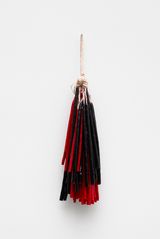
From this installation, visitors step into a white room – ceiling, floor, and walls – dedicated to Eleguá, or Exu, lord of paths and guardian of crossroads and marketplaces. Red and black beads scattered across the floor pay tribute to the orixá. Positioned at the heart of the exhibition, this Canto embodies the force of crossings between the spiritual and material worlds. It also resonates with the nearby MAMA Canto, evoking the ancestral bond between Exu and his mother, Iemanjá.
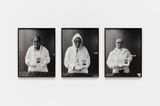
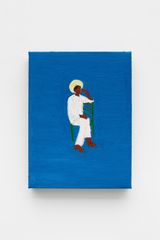
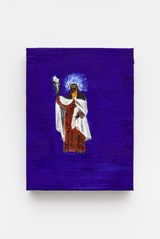
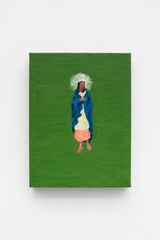
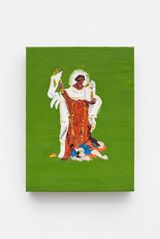
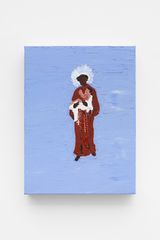
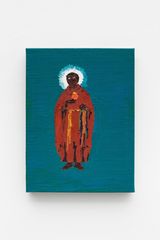
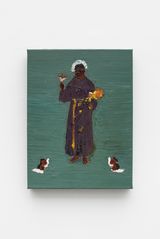
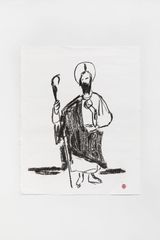
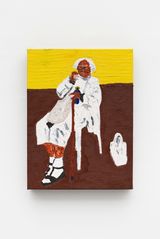
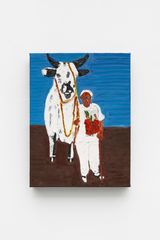
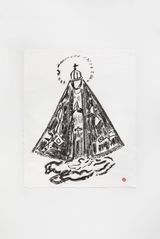
An earth-toned corridor painted in the color of earth welcomes Yansan, the orixá of transformation and movement, who rules over the spirits of the dead and guides the destiny of the living while fueling the struggle for life. In this interlude, paintings of Black and Indigenous Catholic saints stand in dialogue with portraits of the artist’s mother, who appears wearing t-shirts printed with sacred images.
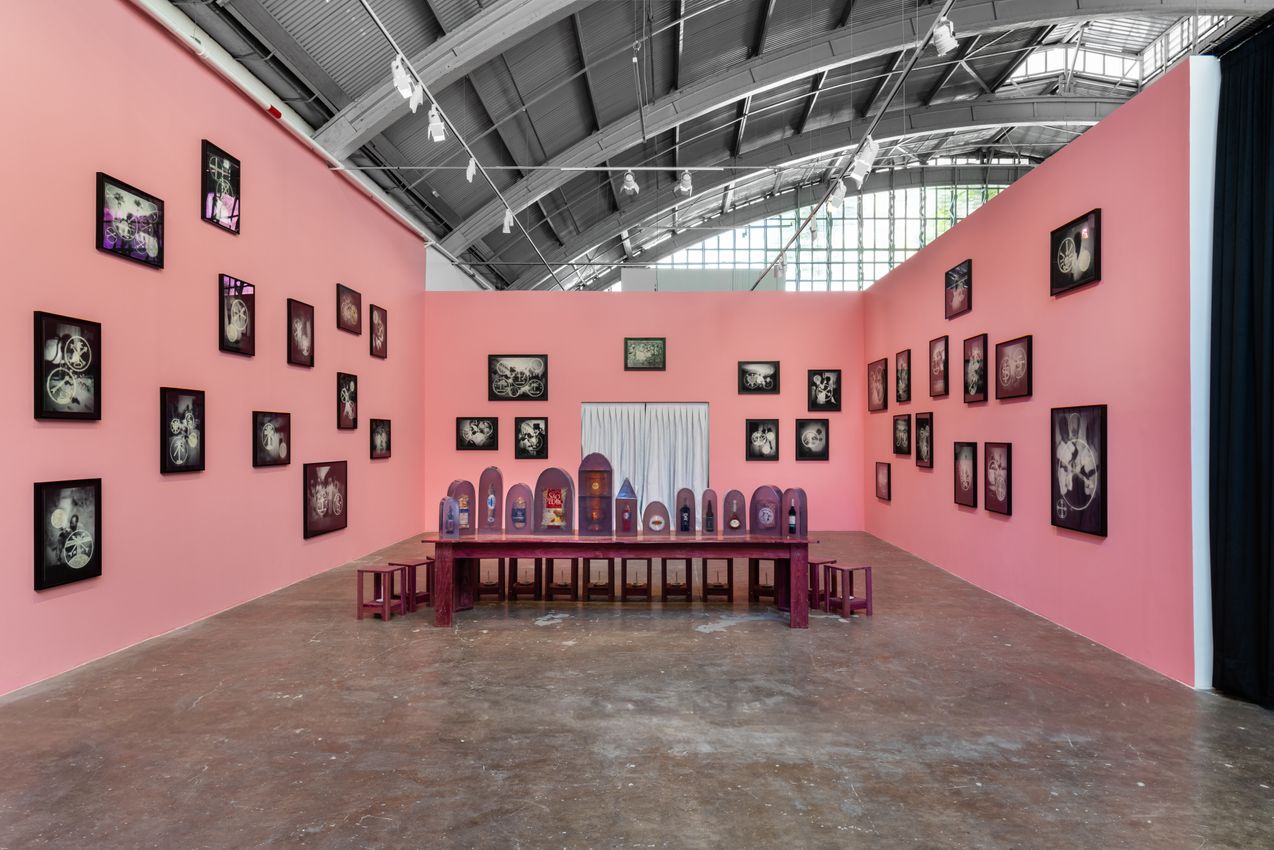
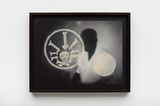
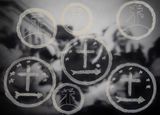
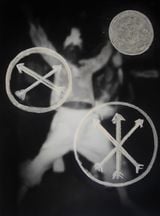
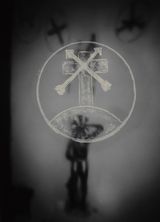
Elsewhere, a rose-colored room honors Ewá, the divinity of vision and intuition, linked to creativity and infinite possibility and associated with Saint Lucy in Christian tradition. Photographs line the walls alongside pontos riscados drawn with pemba chalk, drawn from the spiritual archive of the Centro Espírita Caboclo Pena Branca of the Namastê Quilombola Community (Ubá, Minas Gerais). At the center, a reimagined Last Supper stretches across a table set with resin replicas of everyday products that bear the names of saints – Guaraná Jesus, São Tiago biscuits, and the São João water filter – from which visitors may pour themselves drinking water.
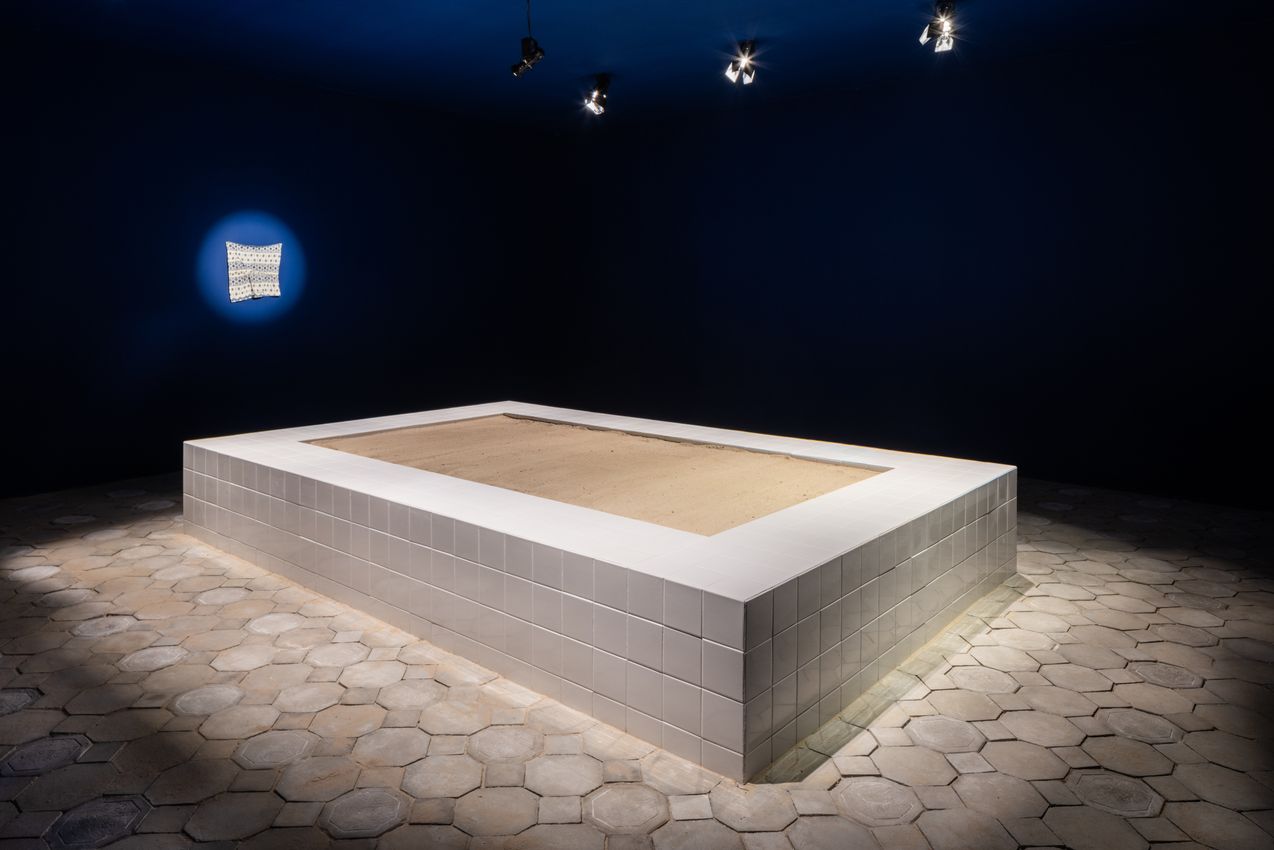
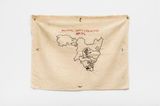
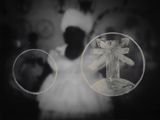
NAZARETHANA‘s epilogue yields to neither a beginning nor an end – it unfolds as a crossing. At its center, a sand-filled pool responds to the embroidered phrase on the wall: “Nós podemos nadar / We can swim.” The work evokes Paulo Nazareth’s own inability to swim, shaped by both his mother’s fear of water spirits and the threats imposed by land-grabbers. The floor reproduces Dakar’s cobblestones, inscribed with royal emblems and the enduring image of the baobab, keeper of ancestral memory. The surrounding blue summons a dialogue between sea and sky, while the sand – suspended between walking and submersion – reminds us that humans, like other walkers and winged beings, emerged from water and can learn again to swim.
NAZARETHANA presents a cartography of Nazareth’s narratives and familial, divine, and territorial lineages traversed by memory. By bringing together what the artist calls an “art of precept,” that which is spoken, prayed, and enacted as a sacred act and as a multiple, multiversal, pluriversal existence, the exhibition proposes a time-space of communion, reflection, and learning, a plural time summoned by the son of Ana.
Courtesy Mendes Wood DM


Paulo Nazareth’s performance and installation-based work often draws upon his joint African and indigenous heritage. His ongoing work Cadernos de Africa [Africa Notebooks] is presented as part of Journal: a five-year walk he began in 2013 from his home in a favela near Belo Horizonte, throughout Brazil and eventually northwards across the entirety of the African continent from Cape Town. His walk-performance represents a slow, real-time inquiry into his own experience and that of the individuals he encounters on the way, tracing a subtle matrix of connections that bridge not only people but communities and shared histories. His installations consist of an arrangement of collected ephemera and video works that document his journey. He engages with a number of subjects that are often related to race, ideology and the unequal distribution of development through his practice that is both interdisciplinary and participatory. Nazareth seeks to embody the idea of the artist as a connector, a decoder, and a philosopher.
Intellectually rigorous, politically active, and highly conceptual, the programme of contemporary art gallery Mendes Wood DM places an emphasis on critical conversation, working to embrace the individuality of each artist while also supporting the discovery of intersections between practices that might initially seem disparate.

A respected voice in contemporary art discourse.
Focusing on ambitious storytelling and insightful art-world commentary. Ocula Magazine publishes in-depth interviews, critical essays and timely analysis on the artists, exhibitions and ideas driving the global art world.
Learn more about Ocula Magazine
Showcasing the best of the art world.
Ocula partners with galleries from around the world to highlight their artists, artworks and exhibitions. Gallery membership is by application and invitation, with each member vetted by an independent panel.
Learn more about Ocula Membership

Specialises in the sale of major artworks.
Led by a team with deep ties to the world’s leading auction houses, galleries and collectors. Ocula’s advisory team offers bespoke services to high-net-worth clients from around the world who are looking to acquire the best of contemporary and modern art.
Learn more about our team and services