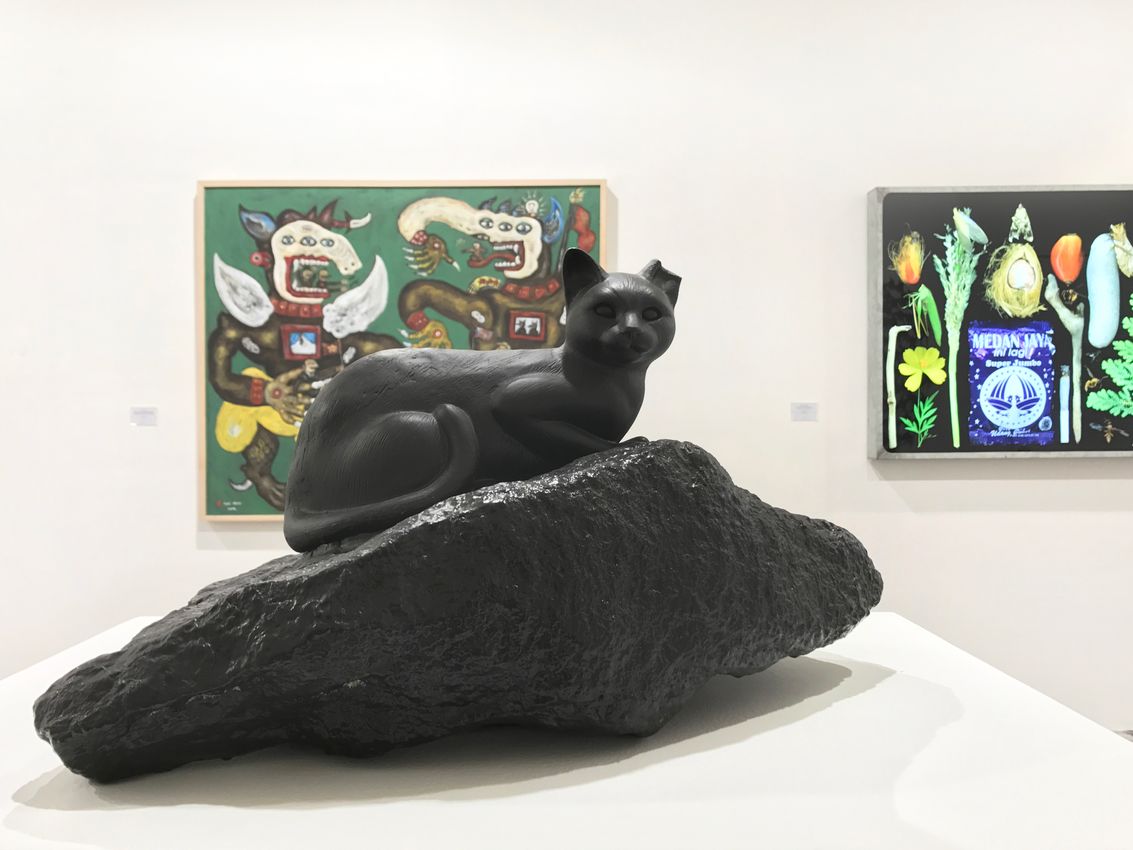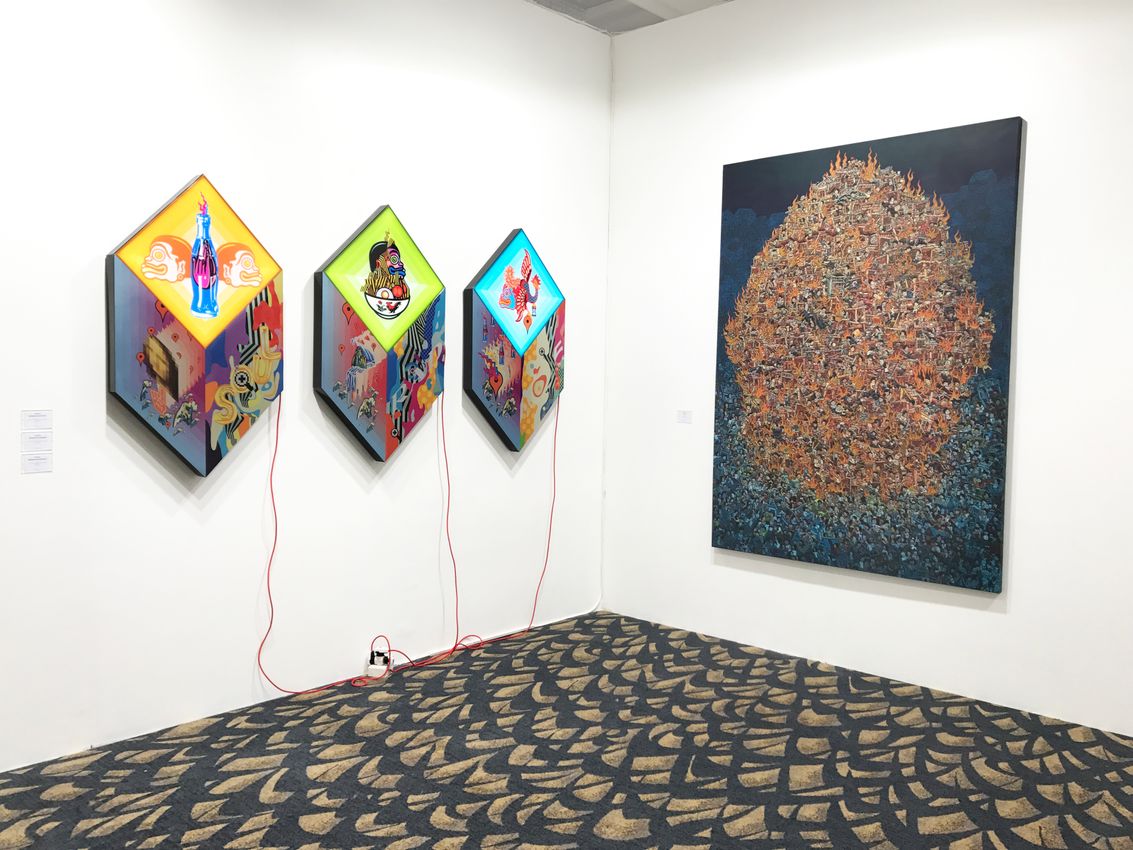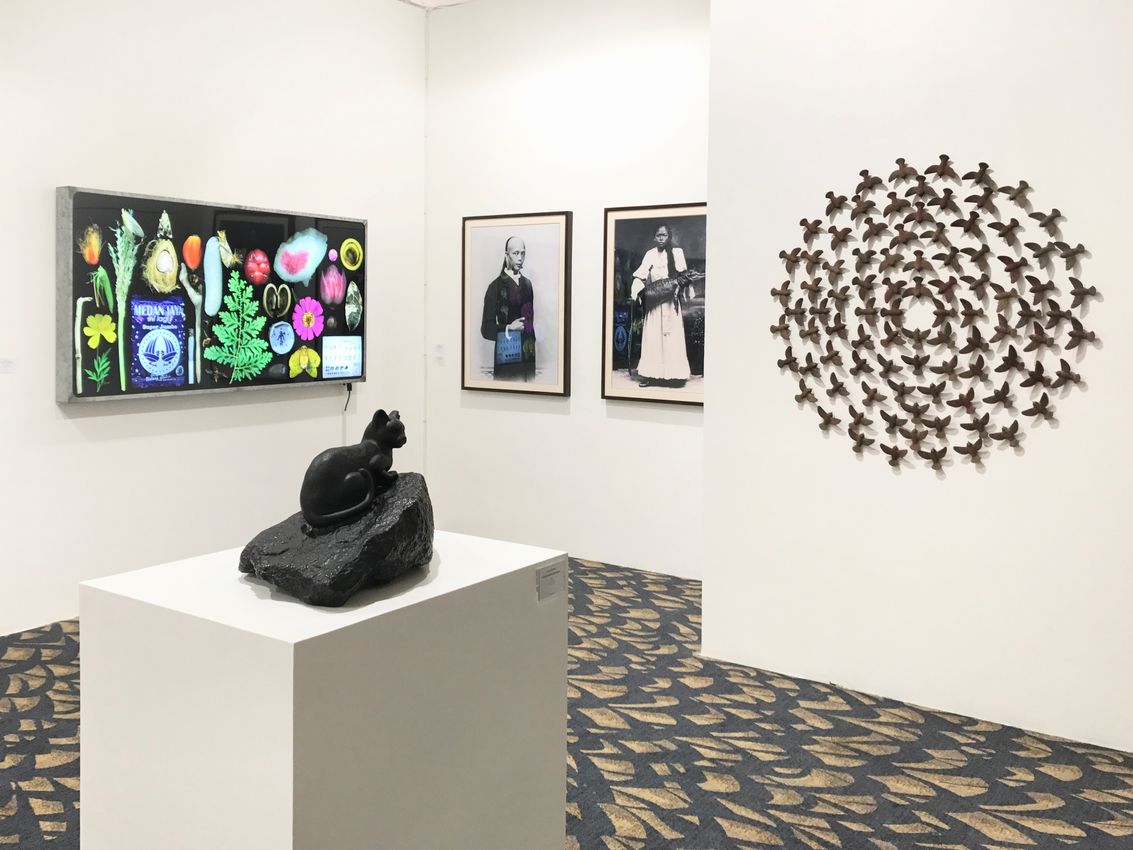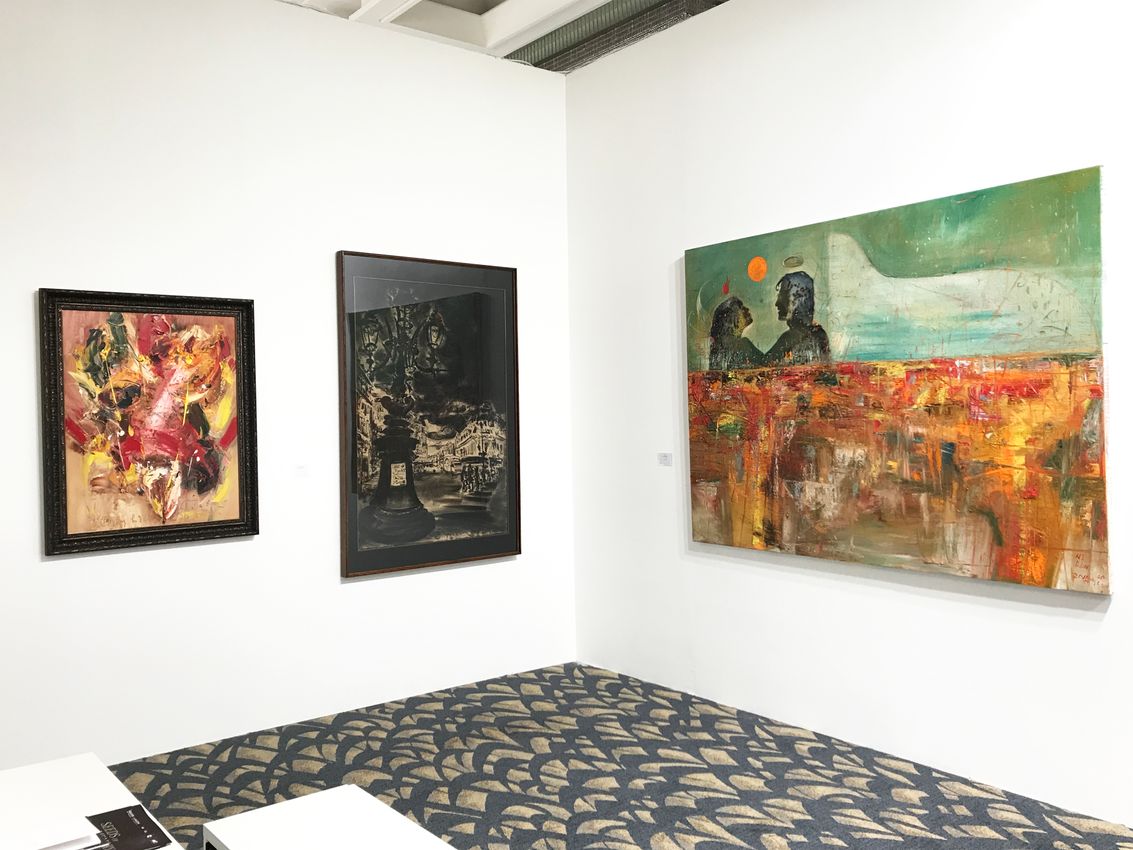




Mizuma Gallery is taking part in the upcoming Art Stage Jakarta 2017, from 11 to 13 August 2017.
Presenting artworks by:
Agan Harahap (b. 1980, Indonesia) graduated from STDI Design and Art College in Bandung, Indonesia, where he majored in Graphic Design. After which, he moved to Jakarta and photographed for Indonesian-based music magazine, Trax Magazine. He held his first solo exhibition in 2009 and has since been participating in various photography exhibitions around Southeast Asia and beyond. Agan’s photographs depict his subjects in surreal situations that mislead the realism of his work and question our dependence on photography to inform us of reality. The past year of 2016 alone has seen him in both the Shanghai and Singapore Biennale, as well as Bangladesh’s Chobi Mela, one of Asia’s most respected photography event. Agan lives and works in Yogyakarta, Indonesia.
Agung ‘Agugn’ Prabowo (b. 1985, Indonesia) graduated from The Faculty of Fine Arts and Design at The Bandung Institute of Technology (ITB), where he majored in Printmaking and has since built an extensive body of work in his discipline. Agugn has come to be widely known for his distinctive style of highly complex linocut works that transcends personal narratives. His works of expressive symbolism skilfully printed in contrasting colours has led him to first place at the 4th Indonesia Graphic Arts Triennale. Agugn lives and works in Bandung, Indonesia.
Albert Yonathan Setyawan (b. 1983, Indonesia) graduated from Bandung Institute of Technology with a Masters in Ceramic and is now pursing his PhD in Ceramics at Kyoto Seika University. Albert’s work combine simplified forms of human, animals, plants, and geometric shapes, and usually arrange them repetitively into a conceptualized assemblage. He expresses his own universal perspective of the spirituality that embraces humanity, rooted in his beliefs of the spiritual connection between human and nature. His process seeks to explore the possibilities of creating a ritualistic and meditative visual experience. Repetitive gesture of ceramic casting works like a mantra in his artistic practice, suggesting that every individual piece of the whole aggregation goes through the identical way of making. The idea of nature is also closely connected to ceramic’s main and basic ingredient: clay. It attracts Albert on how such natural material turns into a drastically distinct form which is solid and fragile at the same time.Albert has participated in several important group exhibitions in Indonesia, Singapore, Thailand, Italy and Japan, including the recent major exposition of Southeast Asian art Sunshower at the Mori Art Musuem, Tokyo. He was also one of the representing artists in the Indonesian Pavilion at the 55th Venice Biennale in 2013. Albert has undertaken research residencies at Canberra’s Strathnairn Arts Association in Australia, and also has his works in the collection of Singapore Art Museum, Museum of Modern Ceramic Art in Japan, and OHD Museum in Indonesia. Albert lives and works in Kyoto, Japan.
Angki Purbandono (b. 1971, Indonesia) challenges and questions photography as a genre of art. One of his chief question is, does a photographer always need a camera? Hence, he developed his unusual ‘camera’ with scanography, in which his subjects are printed at scanned enlargements. This results in striking compositions of everyday objects, drawing out the objects from their mundane contexts and imbuing them with new meanings drawn from his daily life experiences. His work foregrounds the role of photography itself in recording human memory and emotion, and thereby as a device to bridge societal divides and evoke empathic connections, especially with his commentary address on contemporary issues relevant to Indonesia and the world at large. Angki lives and works in Yogyakarta, Indonesia.
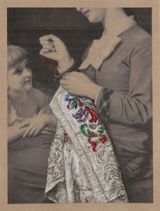
Aoyama Satoru (b. 1973, Japan) graduated from Goldsmiths College in London in 1998, and completed a master’s program at the School of the Art Institute of Chicago in 2001. He has been using an old industrial sewing machine right from when he first started making art. For those who deal with industrial machinery - of all sorts, not just sewing machines - acquiring the proper techniques truly does mean becoming at one with the machine, the better to overcome the difficulties and dilemmas of the work. Andy Warhol once famously declared his wish to be a machine. The process of transforming machine into live, warm body encompasses a number of issues, the constantly transmuting - thanks to modernization - nature of what it means to be human, and the value of labor among them. These are issues he ponders to this very day, always with the history of fine art, and of industrial art, in mind. Some of Satoru’s major exhibits include Map of the World (Dedicated to Unknown Embroiderers), Mizuma Art Gallery, Tokyo, 2015, STORY TELLER, Units of Recognition, Aomori Contemporary Art Centre, Aomori, 2012, Meguro Address, Meguro Museum of Art, Tokyo, 2012, Roppongi Crossing 2010: Is Art Possible?, Mori Art Museum, Tokyo, 2010, and the upcoming Yokohama Triennale 2017. Satoru lives and works in Tokyo, Japan.
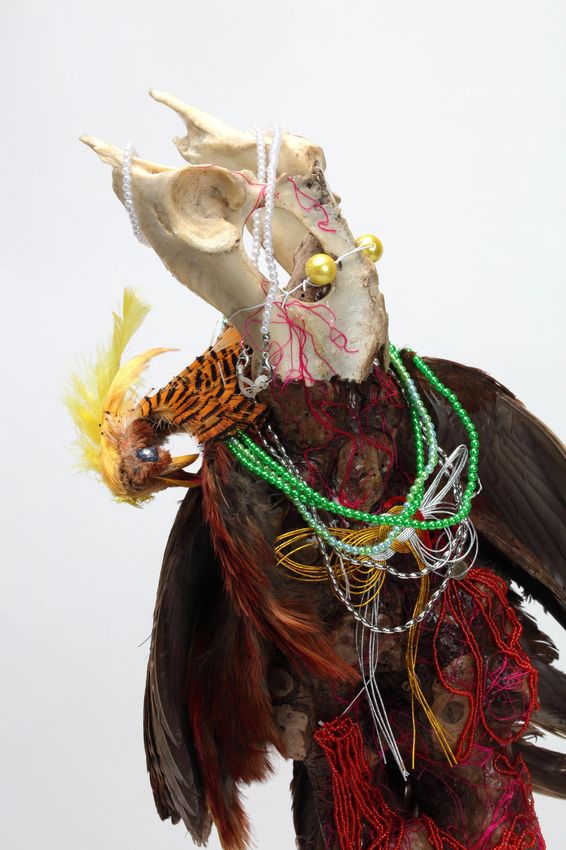
Gilang Fradika (b. 1988, Indonesia) graduated from UNY (Yogyakarta State University), Department of Fine Arts, with a major in Graphic Arts in 2012. Upon graduation, he worked as a cook and taught at a grade school in Yogyakarta. After leaving these jobs, he decided to focus on his art practice, and take part in a printmaking collective with a focus on the printmaking technique of etching. Now, Gilang works mostly with two-dimensional surfaces, particularly in painting and etching. His works are a combination and deformation of objects (flora, fauna, and humans) to create surrealistic figures and start conversations about modern issues. He has previously exhibited in several projects, including A long way and secret garden at DGTMB versus project in Yogyakarta, Pameran POSKAD SG50 in Gillman Barracks, Singapore, and most recently in ART|JOG|10, Yogyakarta. Gilang lives and works in Yogyakarta, Indonesia.
Heri Dono (b. 1960, Indonesia) is known for incorporating elements of traditional Indonesian art forms into his work, including aesthetic conventions of wayang kulit shadow puppetry. Having studied under a professional wayang master, Dono fusees the idioms of indigenous storytelling with contemporary methods of expression. The vibrant aesthetics and popular appeal of Dono’s practice is synchronous with its engagement with political concerns as the artist’s personal experience of the former Suharto regime profoundly influenced his works’ underlying societalcritique. As one ofIndonesia’s foremost contemporaryartists, Heri Dono’s prestigious career over the past three decades has won widespread international acclaim, such as when he represented the Indonesian Pavilion during the 56th Venice Biennale in 2015, as well as the recent major exposition of Southeast Asian art Sunshower at the Mori Art Musuem and National Art Center, Tokyo. His accolades include the Prince Claus Fund Award (1998), the Unesco Prize (2000) and Anugerah Adhikarya Rupa (Arts Award) from the Indonesian Government (2014). His works are in the collections of Tropen museum, National Gallery of Australia, Fukuoka Art Museum, and Deutsche Guggenheim Frankfurt, amongst many others. Heri lives and works in Yogyakarta, Indonesia.
indieguerillas (b. 1975- Miko, 1977- Santi, Indonesia) is an artist duet from Yogyakarta, Indonesia, made of husband and wife Dyatmiko Lancur Bawono and Santi Ariestyowanti. Founded in 1999 as a graphic design firm, indieguerillas’s philosophy of ‘constantly in guerrilla to find new possibilities’ has led them to become full-time artists in 2007. Nevertheless, design still plays a very important role as it allows for them to explore the use of unconventional media and techniques as part of their artistic statement. In addition to their proficiency at visual effects and inter-media experimentation, their works are also recognized for its folklore influences. The unique intertwine between traditional values and contemporary culture has brought indieguerillas to numerous important exhibitions, including their collaboration with fashion designer Lulu Lutfi Labibi and sound artist Ari Wulu, which will be presented by NTU CCA Singapore in January 2017. indieguerillas lives and works in Yogyakarta, Indonesia.
Nasirun (b. 1965, Cilacap, Indonesia) graduated from the Indonesian Art Institute in Yogyakarta in 1994. Nasirun’s art is informed by his belief in a wider, real spirituality and a search for higher wisdom in life. Using personal and Javanese historical symbols and metaphors, his art is akin to a form of storytelling that highlights morality, virtue and a sense of humanity in the face of an encroaching modernity. His simplistic and traditional life colours the lens through which he views the world, and his artistic training and batik mastery also shows in the strong expressiveness, fine details and decorative styles of his art. He has held solo exhibitions with Sangkring Art Space, Yogyakarta (2009), Nadi Gallery, Jakarta (2002) and the Galeri Nasional Indonesia (2000) which coincided with the publication of Nasirun: Ojo Ngono. His participation in various group exhibitions include the Singapore Biennale 2013, Sin Sin Fine Art, Hong Kong, Garis ArtSpace, Magelang, MOCA, Beijing, and the Biennale Jogja X. He has received the McDonald’s Award in 1996 and was among the ten best in the Philip Morris Indonesia Art Awards in 1997. Nasirun lives and works in Yogyakarta, Indonesia.
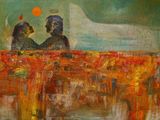
Pupuk Daru Purnomo (b. 1964, Indonesia) creates paintings that provide delightful, intimate insights into the colourful lives of the people of his hometown of Yogyakarta, Indonesia, as well as the mystique of Borobudur. His focus on family ties and the joys derived from it, frequently casting the spotlight on people that make up a community, displays a sensitivity that appreciates kindness and the simple pleasures of life. In his signature medium of oil and watercolour, Pupuk uses impasto strokes, whimsically sensuous lines and a dark, rich palette influenced by his Javanese heritage to bring out the vivacity, innocence and simplicity of his subjects. Pupuk lives and works in Yogyakarta, Indonesia.
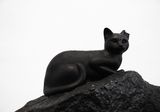
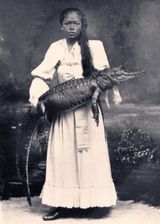
Robert Zhao Renhui (b. 1983, Singapore) is an artist at the forefront of Singapore’s contemporary art scene. His works are mainly photography, but he often adopts a multi-disciplinary approach by presenting images together with documents and objects. All of his works belong to the larger narrative of the ‘Institute of Critical Zoologists’. He is constantly fascinated with man’s controlled coexistence with nature, and his practice seeks to develop a Critical Zoological gaze that pursues creative, interdisciplinary research, embracing perspectives and to advance unconventional, even radical, means of understanding human and animal relations. His photographs are created by constructing and layering the subject with narratives that cross the boundary between the real and the fictional, creating doubt in the viewer about the image’s authenticity. Robert lives and works in Singapore.
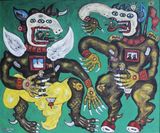
Yoga Mahendra (b. 1982, Indonesia) is a self-taught artist who creates overcrowded visual landscapes without any point of perspective. Evoking traditional Balinese paintings, these works are inspired by poor living conditions of slum life in kampongs that he sees in the Indonesian city of Malang he lives in. Monster-like characters rendered in intricate detail populate Yoga’s paintings as physical and mental representations of the kampong people, who are so closely related as a community that one person’s problem soon becomes everyone’s problem. Besides highlighting relevant social issues like urban planning, overpopulation and the large economic gap, his paintings also illustrate how even the strong have weaknesses and how the weak can find victory in unity. Yoga lives and works in Malang, Indonesia.
A respected voice in contemporary art discourse.
Focusing on ambitious storytelling and insightful art-world commentary. Ocula Magazine publishes in-depth interviews, critical essays and timely analysis on the artists, exhibitions and ideas driving the global art world.
Learn more about Ocula Magazine
Showcasing the best of the art world.
Ocula partners with galleries from around the world to highlight their artists, artworks and exhibitions. Gallery membership is by application and invitation, with each member vetted by an independent panel.
Learn more about Ocula Membership

Specialises in the sale of major artworks.
Led by a team with deep ties to the world’s leading auction houses, galleries and collectors. Ocula’s advisory team offers bespoke services to high-net-worth clients from around the world who are looking to acquire the best of contemporary and modern art.
Learn more about our team and services