Press Release

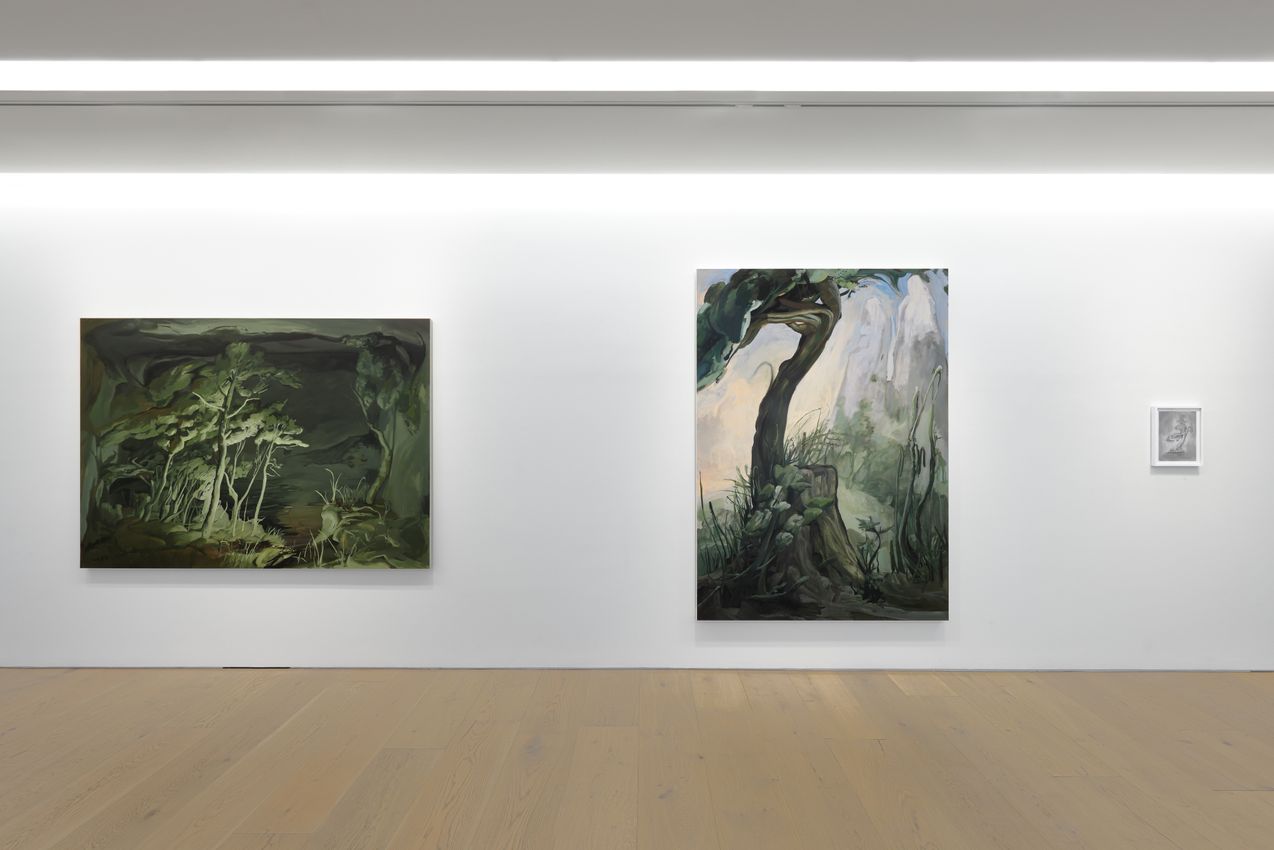
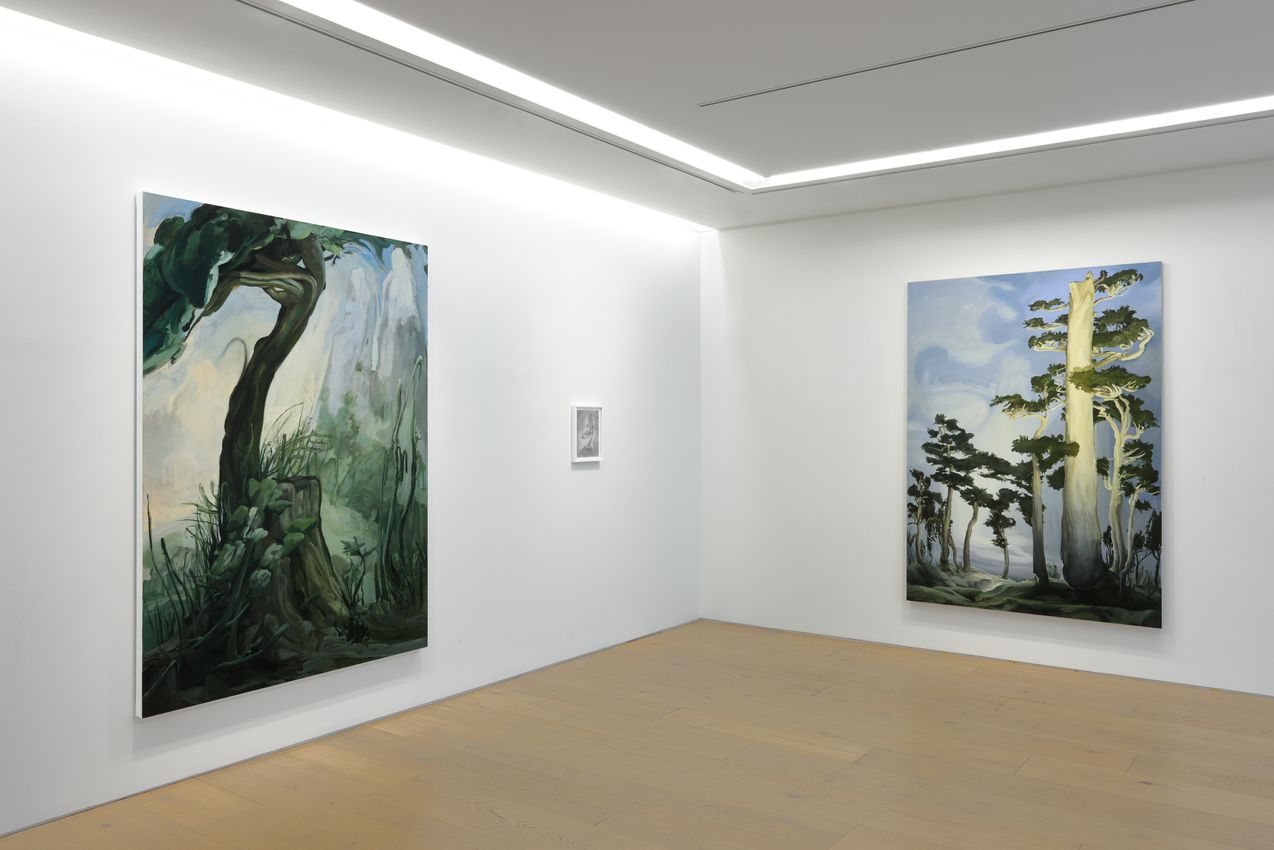
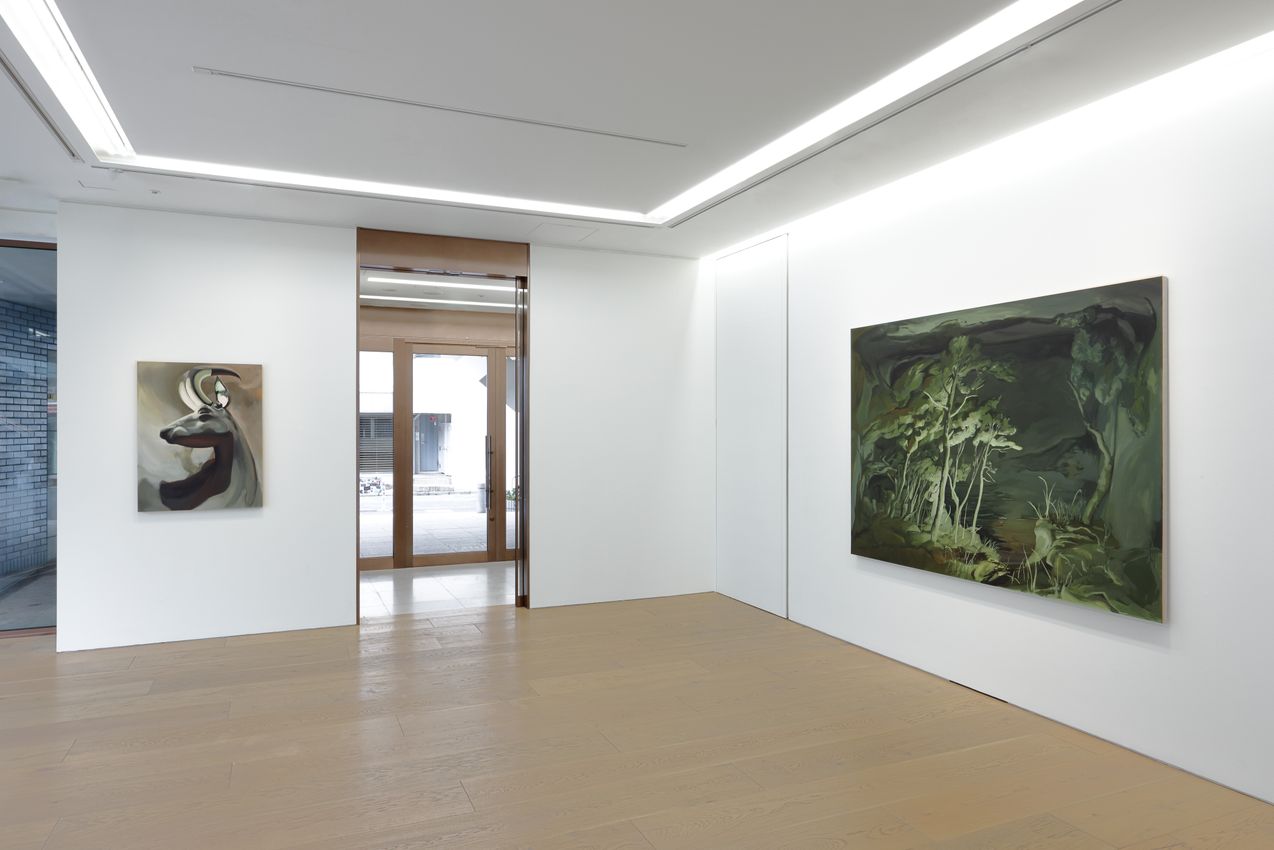
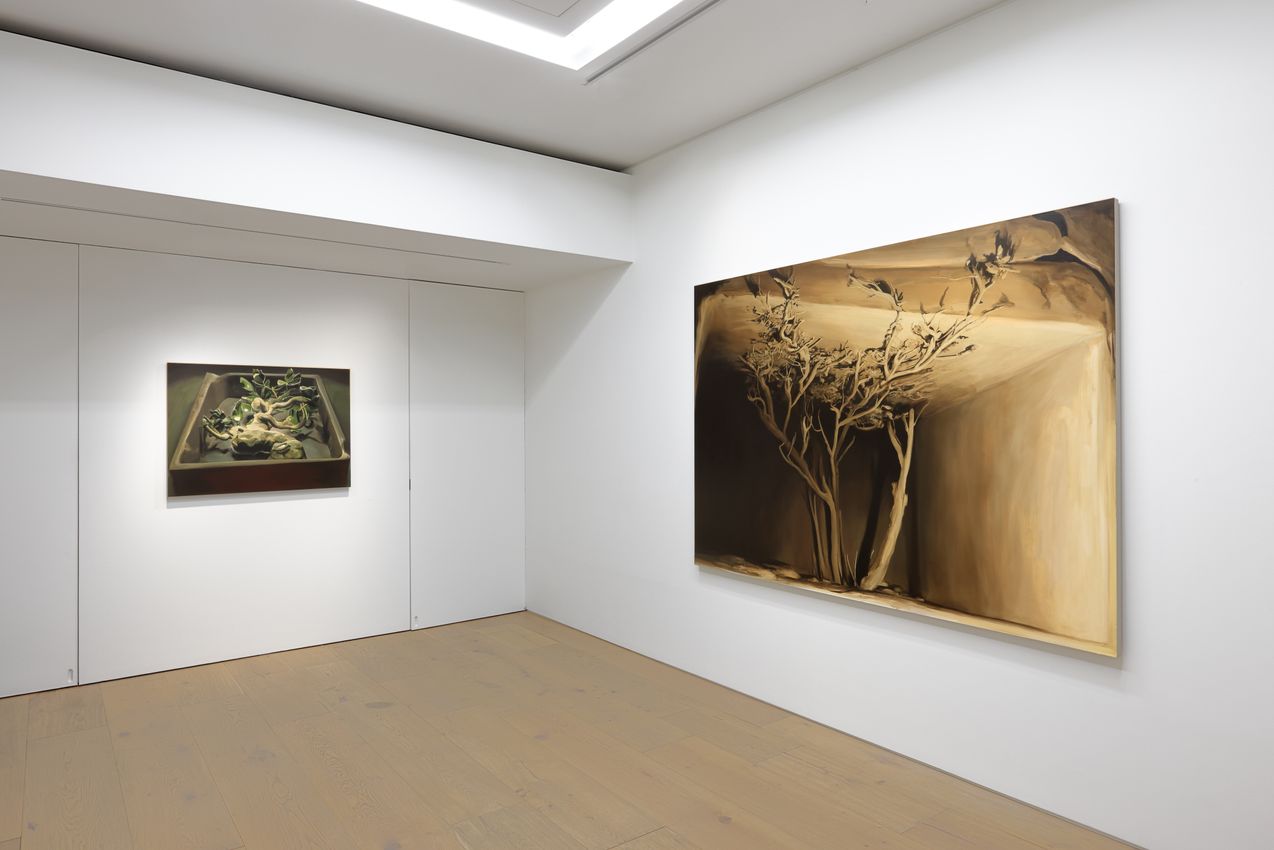
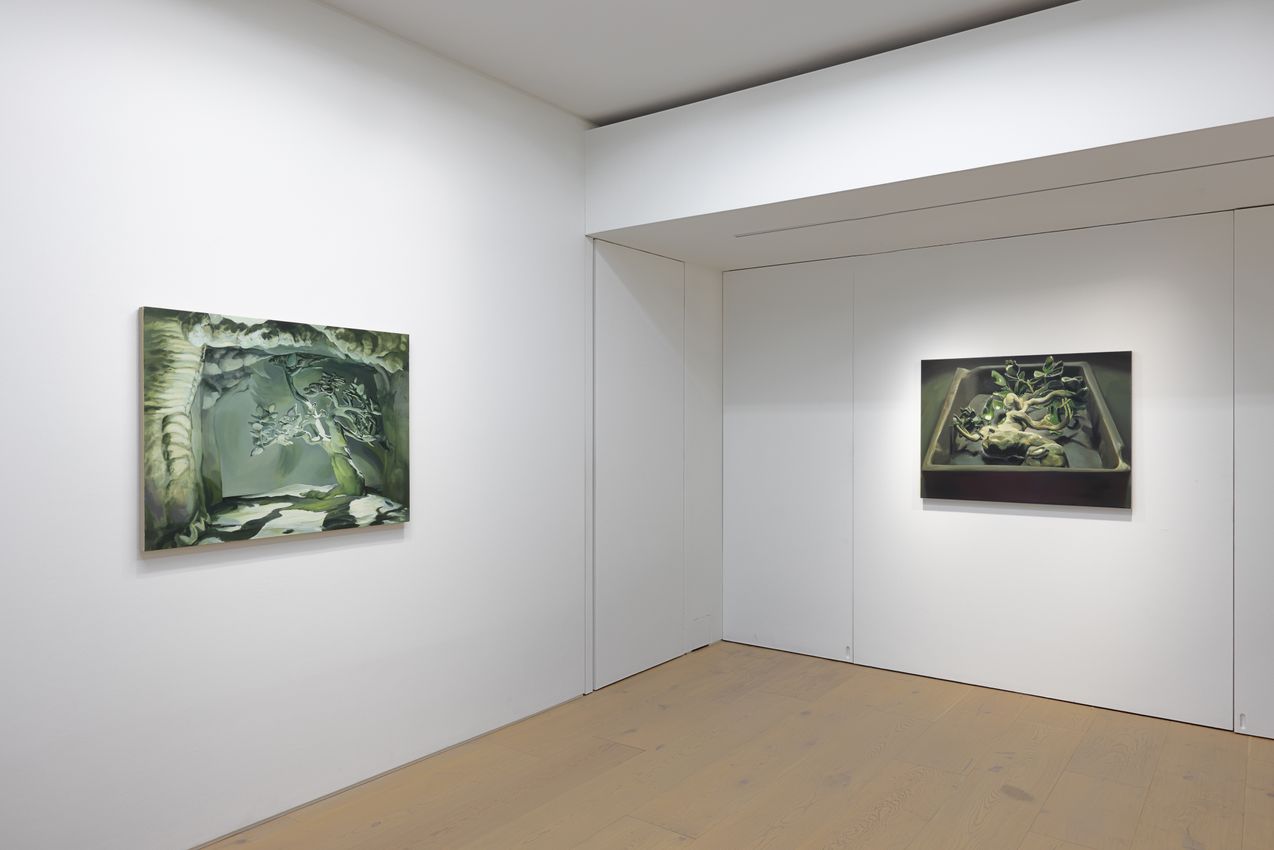
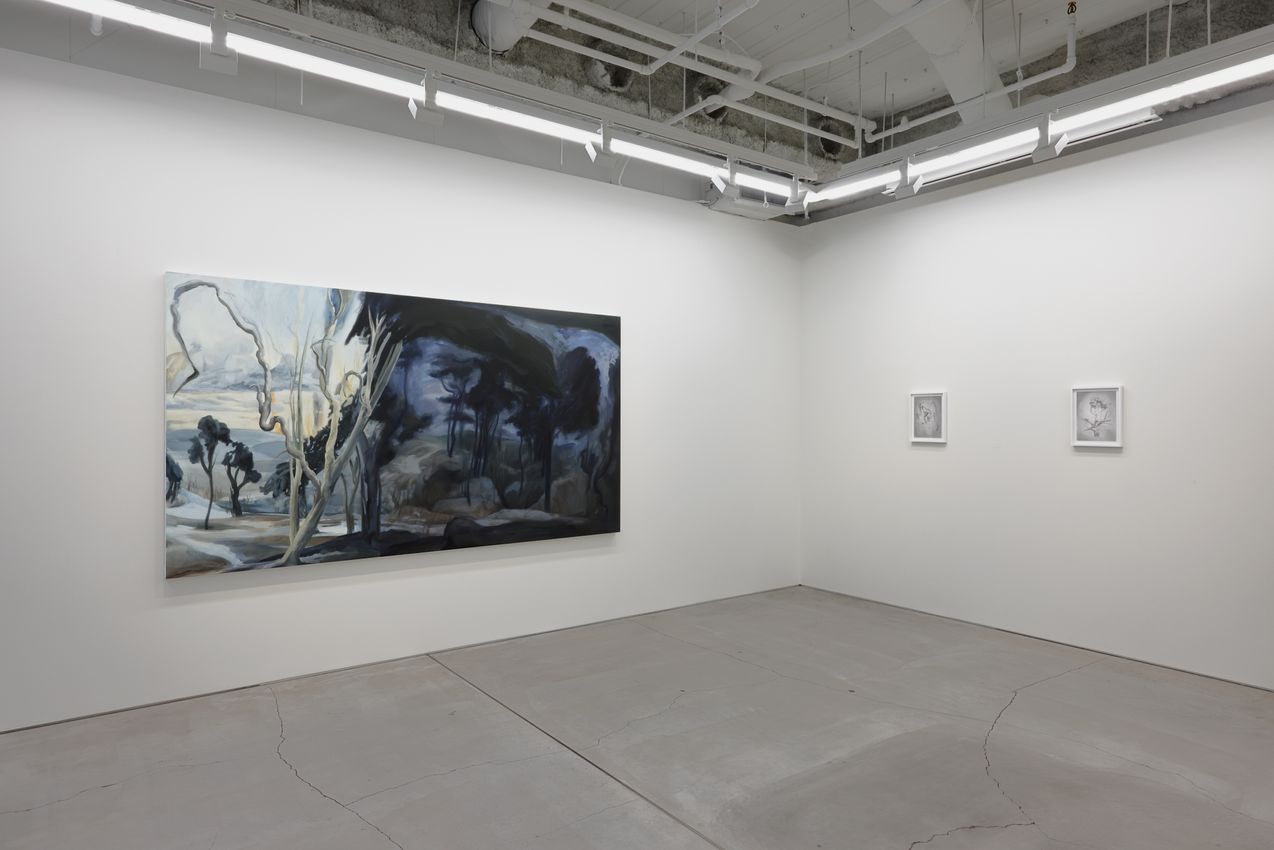
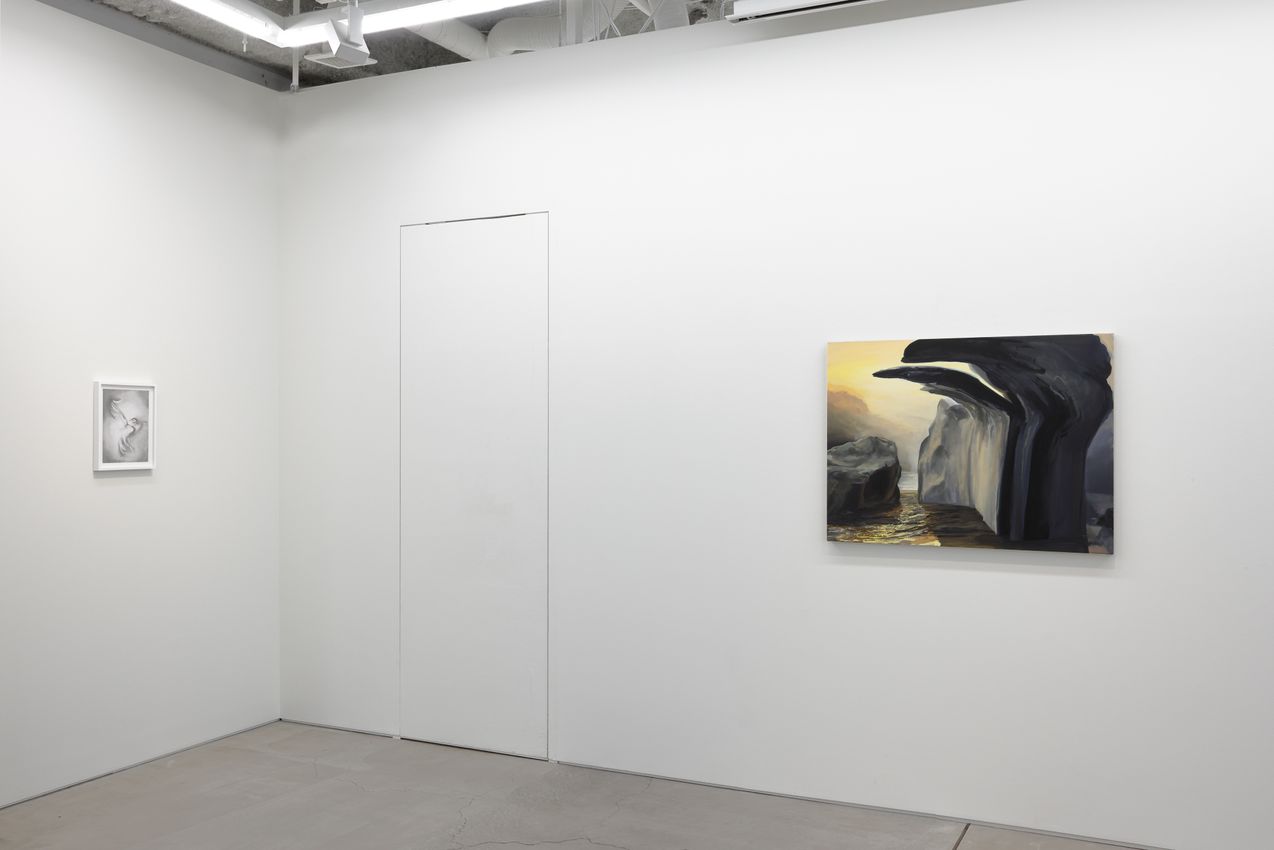
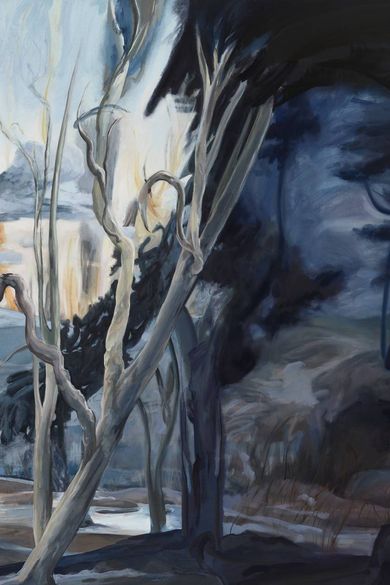
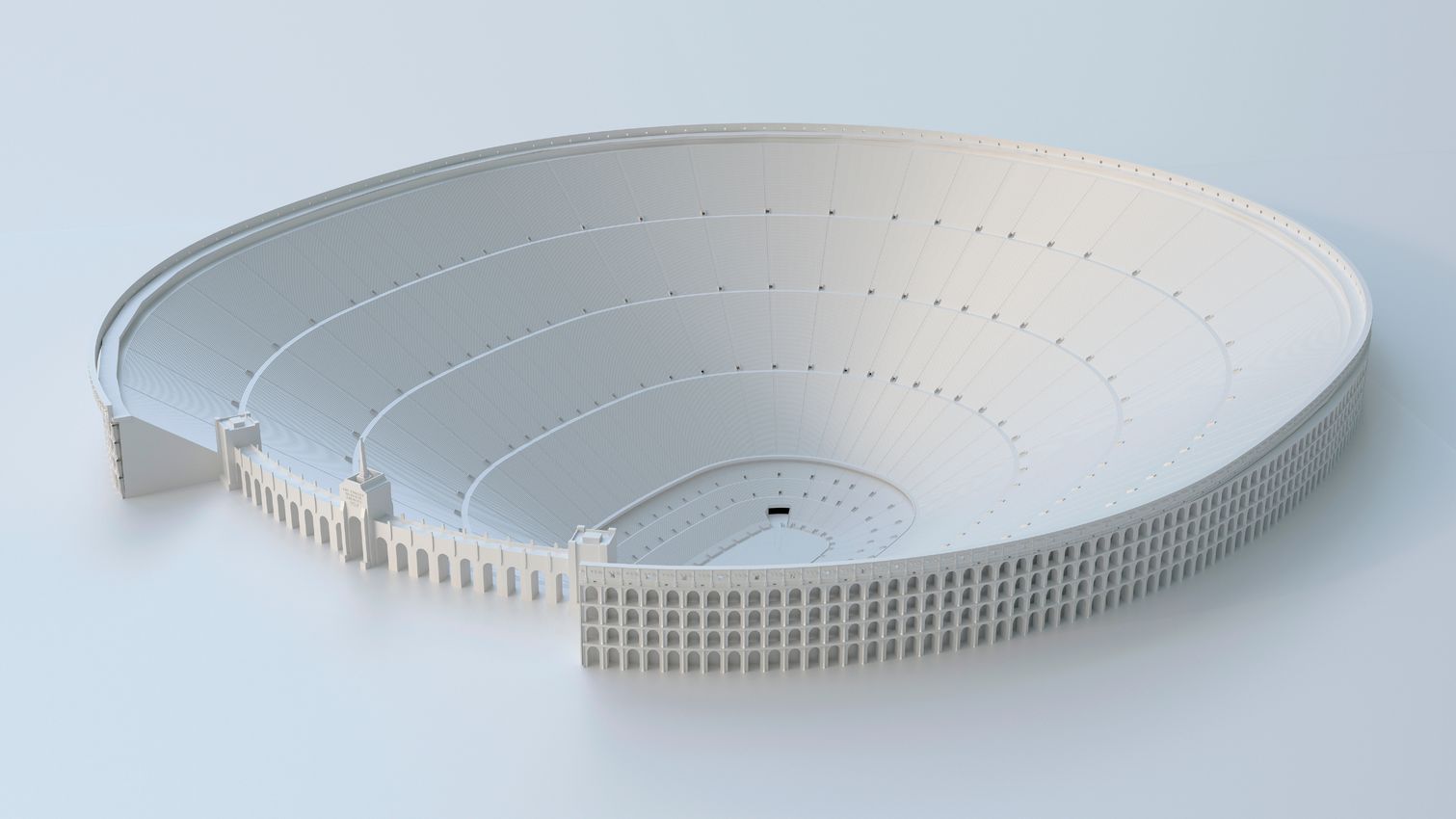
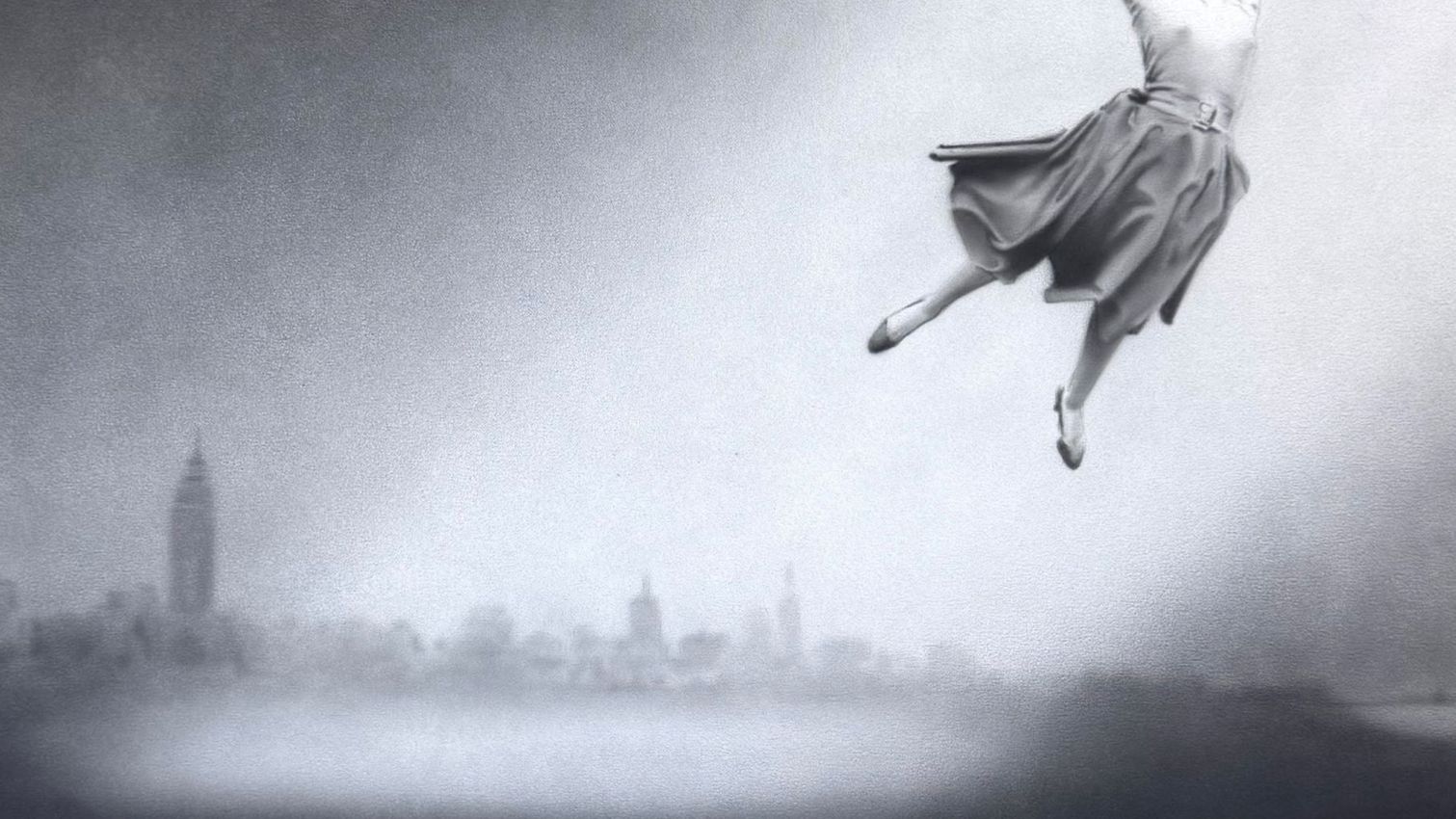
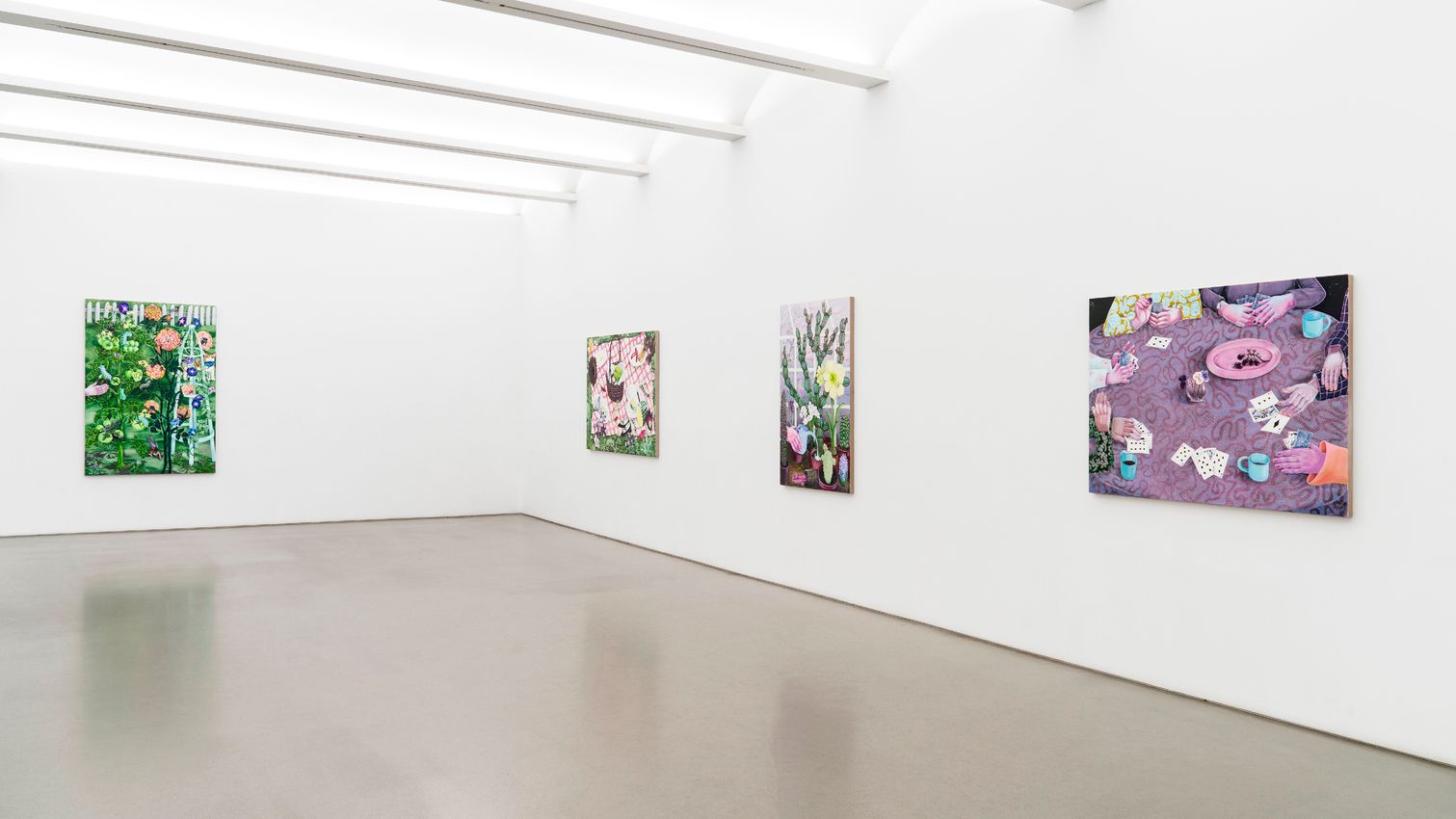
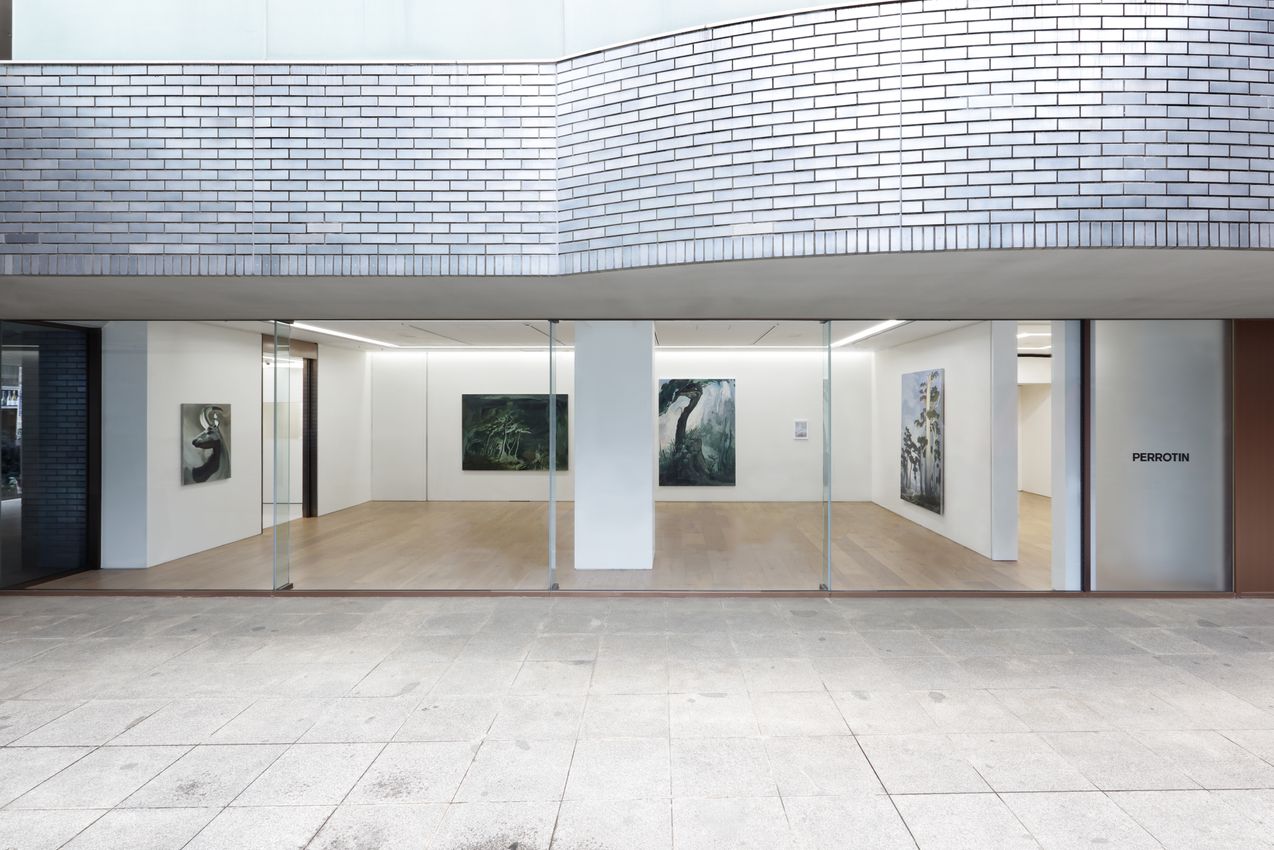
Perrotin Tokyo is pleased to present The Dolmens, EmmaWebster’s first exhibition in Japan.Inspired by trompe l’oeil paintings and the architecture of thegallery that manifest a recursive composition of a screen withinscreen, the new suite of drawings and paintings introduceframing as part of an integral aesthetic device.

In this second exhibition with the gallery, Webster visuallyexplores the theme of confined and underground spaces, likethe dolmens.

LANDSCAPES WANDERING BETWEEN WORLDS

Up until the 20th century, painting relied on the laws of linearperspective to fix the physical word on the two-dimensional canvas.The subsequent blossoming of photography and film prompted artiststo question the role of painting and reconsider the act of viewing theimages that emerged in a brave new technological age. Thus begananother chapter in the great historical transformation reshaping spatialcomposition and perception. The painted subject took on its ownindependent reality, images flowed dynamically between multiplevantage points, and artists harnessed a rich array of color and textureto plumb new possibilities in planar expression. Experimenting withillusion and motion, artists have grappled with how to anchor an imagein two dimensions, amid phase shifts and an expansion of space andtime. In the present day, digital images (and their reception) offer anext experimental frontier for contemporary artists and viewers. Virtual reality has provided a new tool in the age-old quest of painters torender three-dimensionality. Presumably, such technology seeks toarrive at an endophysical state, where no objective description of anobserver’s environment is possible without the observer’s presenceaffecting the result.

This makes it all the more fascinating how Emma Webster reorientsdigital technology back to the two-dimensional realm. Incorporatingcomputer graphics and other technical processes, her images ofskies, trees, and terrain represent space and contours as anamalgamation of points fixed to a two-coordinate grid that become aninfinite landscape through a careful calibration of three constituentcolour elements. Digital images are not so different from paintings, inthe sense that they are a composite of information that fills a singlescreen according to a certain order. However, digital images do notphysically exist in a constant form, but instead must be continuallyreconstituted/refreshed anew from digital data each time we want toview them. Unlike paintings, digital images are not backed by atangible support (i.e., canvas). Instead, they are an immaterialphenomenon lacking physical continuity. Moreover, Webster’s use ofVR goes further in terms of dimension, perception, and immersion inthe image. Her practice is built on the close observation of landscapes,over hours and days, which she then translates into two dimensions.VR devices transcend dimensional barriers to free us from theconstraints of physical reality, akin to directly creating another worldof its own. By anchoring this world in two dimensions, Webstercreates further looping illusions. Her landscapes have a richness ofdepth that crosses the dimensional threshold. Rather than looking infrom the outside as an objective observer of a painting, the viewer ofWebster’s works is placed in a position to describe the world fromwithin the landscapes themselves, visually traveling across dimensions.

Visual devices can act as a clarifying lens for the desires and intentionsformulated (or in Webster’s case, painted) by humankind. The OculusVR device she used in the creation of this work brings greater focusto her intentions: How does she want to see the world, how does she attempt to transform the world, what does she seek to convey as aresult, and what emotions/sensations does she seek to stimulate inthe viewer? Technology has fundamentally changed how we see andfeel nature, and Webster’s practice responds to these changes byreshaping our perception of reality. Her work confronts the collateraleffects of landscape’s evolution. As the environment becomes moreartificial and complex, the boundary between the imagined, objectifiednature and nonnatural becomes more fluid. Over time, nature hassomehow become less ‘real.’

Technology has manipulated and even diluted our sense of reality inthe real world. What felt almost unreal one moment appears perfectlyreal the next. What is reality? Is reality certain? Webster dramaticallyexpresses this disconnect in her work, as if juggling the disparitiesand interconnections in impossibly alien spaces. Standing before herwork, the viewer experiences disbelief on a visual and somatic level–it seems impossible that we, too, exist in a single, unified space madeup by an aggregation of elements held together by a certain order.

These transitive/transmutative spaces are not tethered to reality.Webster’s paintings have a certain fluid quality, as if they wereconstantly being rendered anew. To paraphrase Roland Barthes,mythology is a force that makes us believe our subjective reality isobjective and immutable. Whereas we once believed nature existedoutside the human body, the advent of VR has made us question thenature of reality. Perhaps Webster’s work suggests that ‘reality’ as weknow it is instead a human construct, generated from within.

Nature is profoundly vast, its complexities bathed in a myriad range oflight. Landscape painters have long debated the ideal colour, form, andcomposition to express this natural richness in a convincing way.Yet curiously, even if we might walk in open nature, taking note of whatwe see, we are rarely conscious of perceiving a ‘landscape.’ For thereto be a landscape, we have to generate a panoramic wholeness in ourminds, greater than an awareness of all the things spread out side byside in our field of vision. In The Philosophy of Landscape,1 GeorgSimmel writes that ‘a boundary, a way of being encompassed by amomentary or permanent field of vision, is quite essential’ in order toperceive a landscape as such. Whereas the ‘material foundation orindividual pieces may simply be regarded as nature,’ nature, in turn, is ‘transfigured into an individuated ‘landscape’ by the human gaze thatdivides things up and forms the separated parts into specific unities.’

As there is no single, fixed vantage point in Webster’s works, theviewer is free to wander through the landscape as their eyes roam.The expansive spaces unfolding within Webster’s paintings are asublime vestige and vicarious window into her process.

1 Georg Simmel, ‘The Philosophy of Landscape’, trans. Josef Bleicher,Theory, Culture & Society 24 (7-8) (2007), 20–29. Originallypublished as ‘Die Philosophie der Landschaft,’ Die Gueldenkammer,vol. 3, issue 2 (1913).

Press release courtesy Perrotin. Text: Hiromi Kurosawa.

Read More

Installation Views

Emma Webster’s Cyborg Landscapes at Perrotin Opinion Emma Webster’s Cyborg Landscapes at Perrotin At Perrotin, Tokyo, Emma Webster’s paintings draw inspiration from confined spaces and probe the way we consider the role of painting in the contemporary. Read the story
About the Artist

Emma Webster’s landscape paintings teleport viewers into the otherworldly. The places she depicts, convincing and hallucinatory, merge spatial expectations with mystifying fantasy. The paintings come from a hybrid sketching-sculpting process within screen-space. Webster first constructs scenes in virtual reality, which she then embellishes with theatrical illumination, to create natural vistas that relish in artifice, drama, and distortion. Of her VR models, Webster says: “Working from within the still-life is more akin to how we go about the world. There can be no ‘outside.’“Emma Webster (b. 1989) is a graduate of Stanford University (BA, 2011) and Yale University, where she received an MFA in Painting in 2018. In 2021, Webster published Lonescape: Green, Painting, & Mourning Reality, a collection of musings on landscape and image-making in an increasingly digital world.

View Artist Profile

Also Exhibiting at Perrotin

About the Gallery
Emmanuel Perrotin founded his first gallery in 1989 at the age of 21. He has opened since then over 17 different spaces, with the aim of continuing to offer increasingly vibrant and creative environments to experience artists work. He has worked closely with his roster of artists, some since more than 25 years, to help fulfill their ambitious dreams and projects. The gallery is now based in New York, Paris, Hong Kong, Seoul, Tokyo, and participates in all the significant worldwide art fairs each year (Art Basel (Hong Kong, Miami, Basel), Frieze (London, New York), FIAC (Paris), Dallas Art Fair, Art Cologne, Art Stage Jakarta, Expo Chicago, Art021 & West Bund Art & Design, Shanghai, Zona Maco Mexico, amongst others).
View Gallery Profile
Address
Piramide Building 1F
6-6-9 Roppongi
Minato-Ku
Tokyo
Japan
Opening Hours
Tuesday – Saturday
11am – 7pm
(1)
Tokyo Piramide Building 1F, 6-6-9 Roppongi
Perrotin
Piramide Building 1F, 6-6-9 Roppongi, Minato-Ku, Tokyo, Japan
+81 367 210 687
http://www.perrotin.com

Opening hours
Tuesday – Saturday
11am – 7pm
The art world in focus