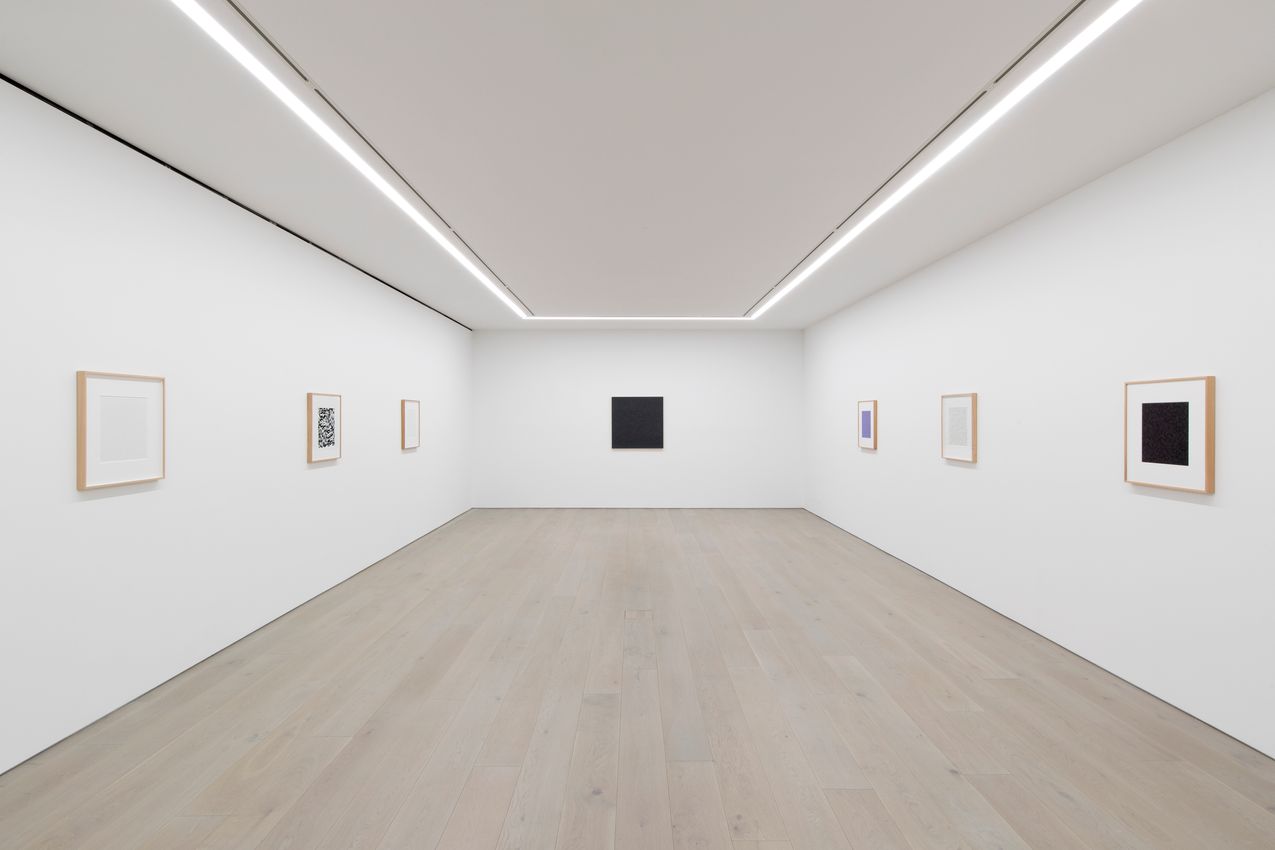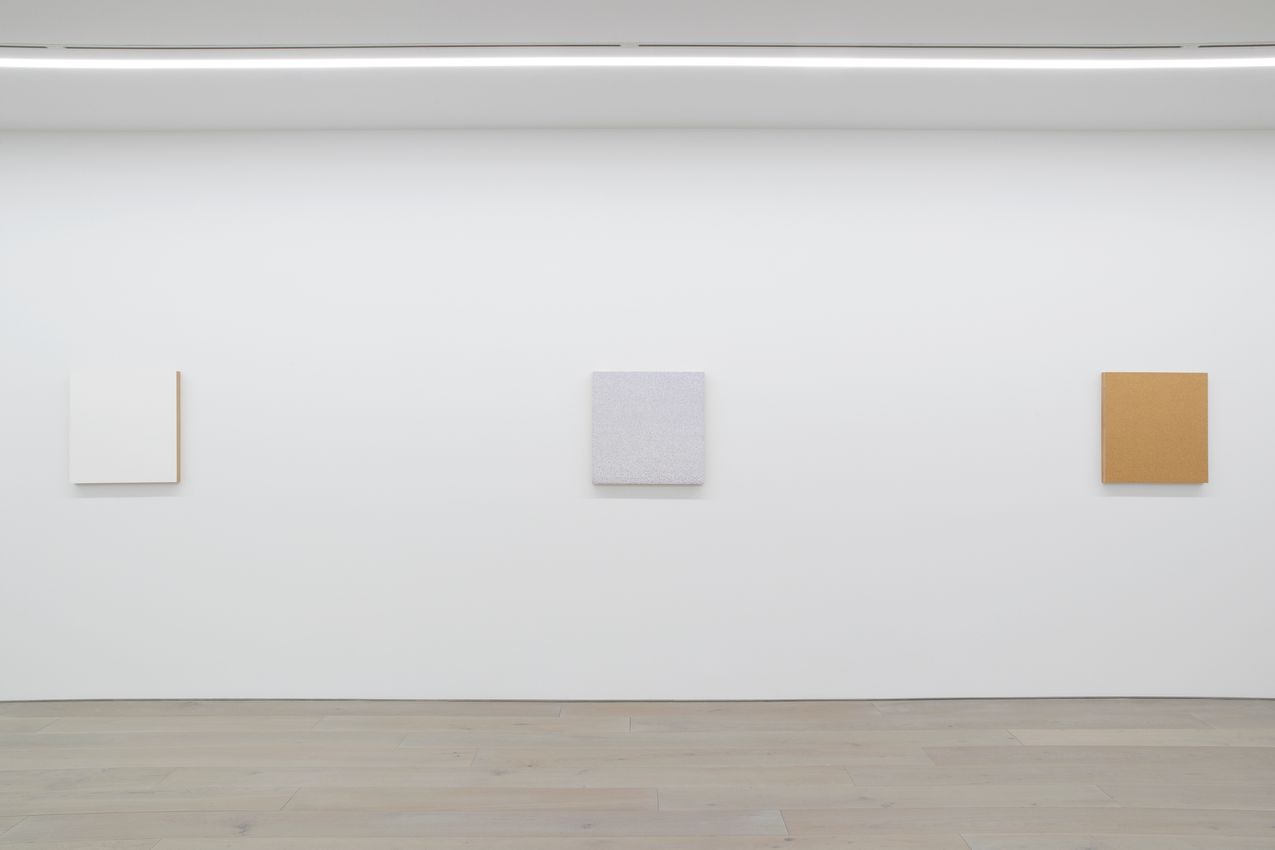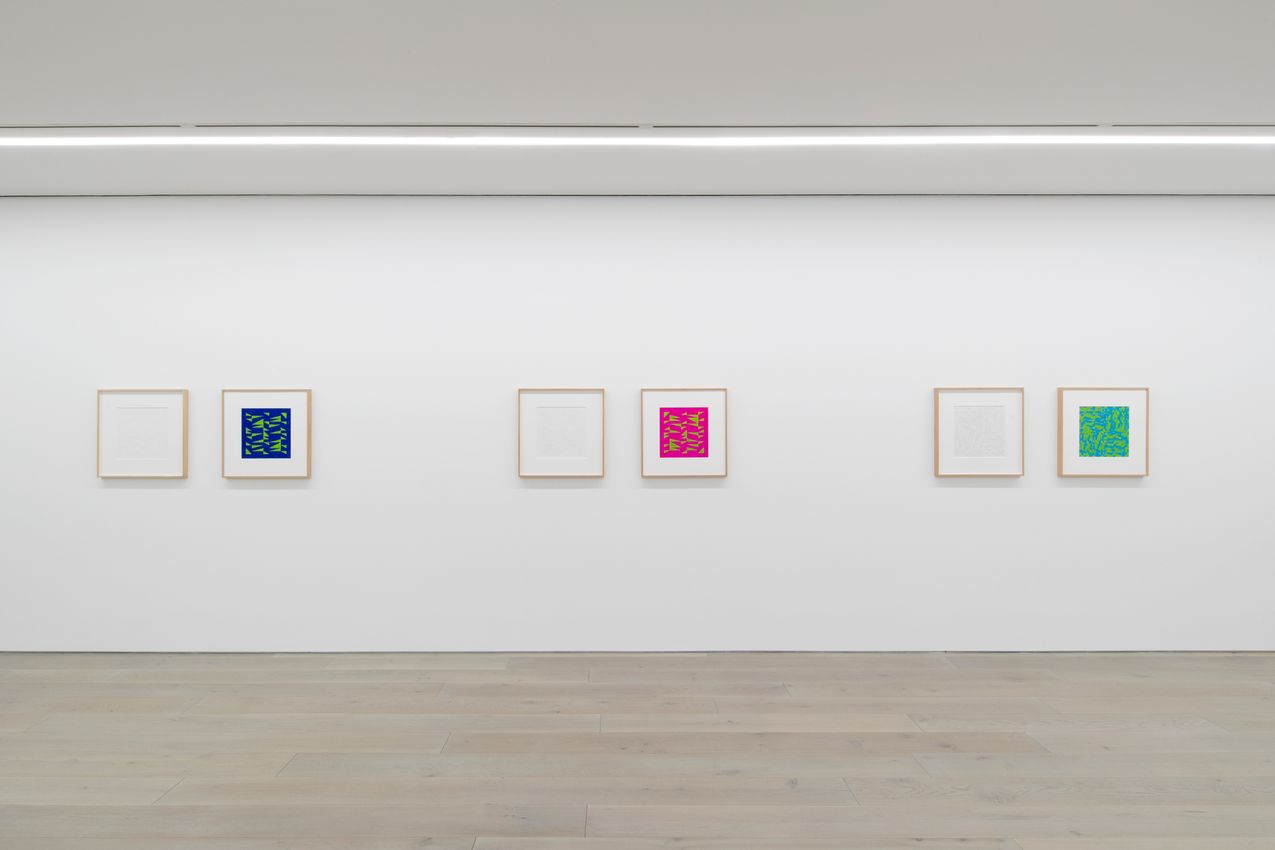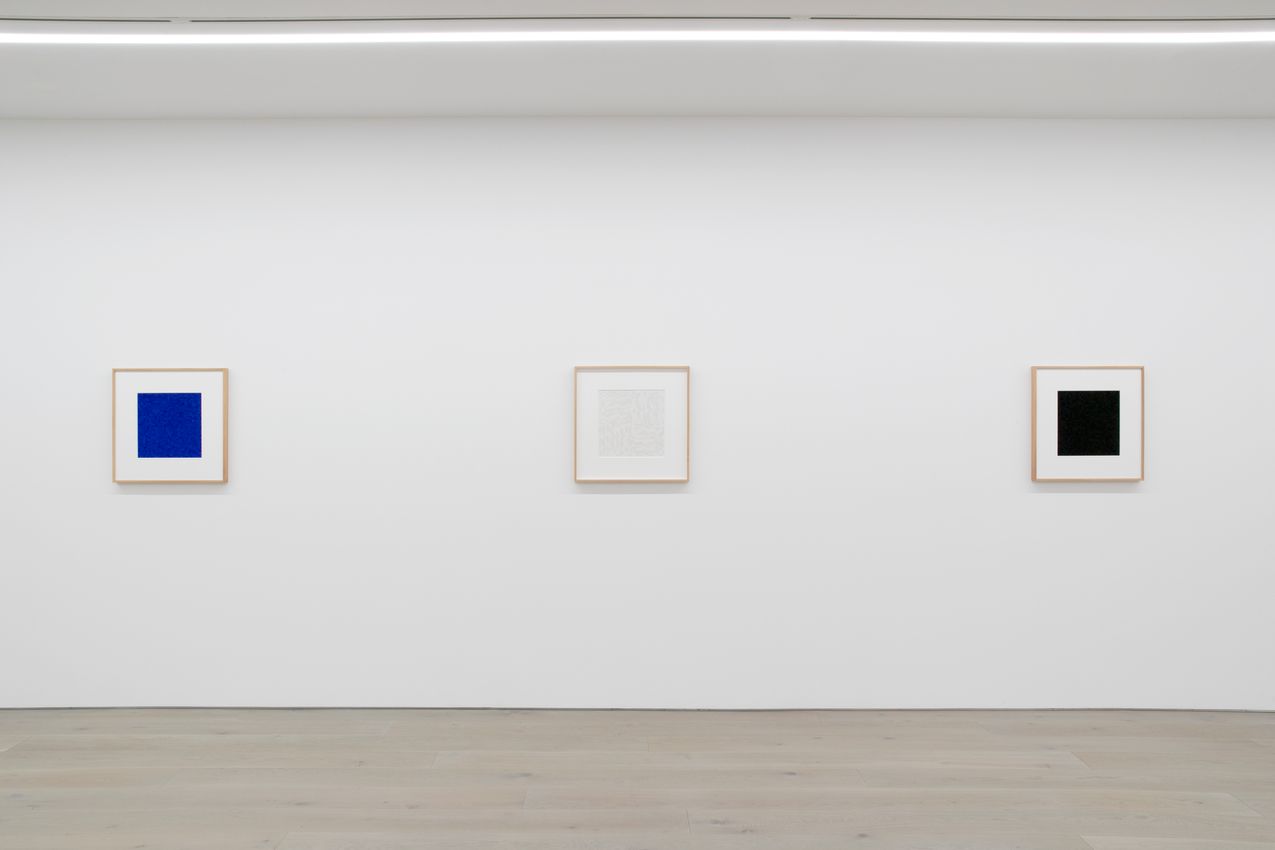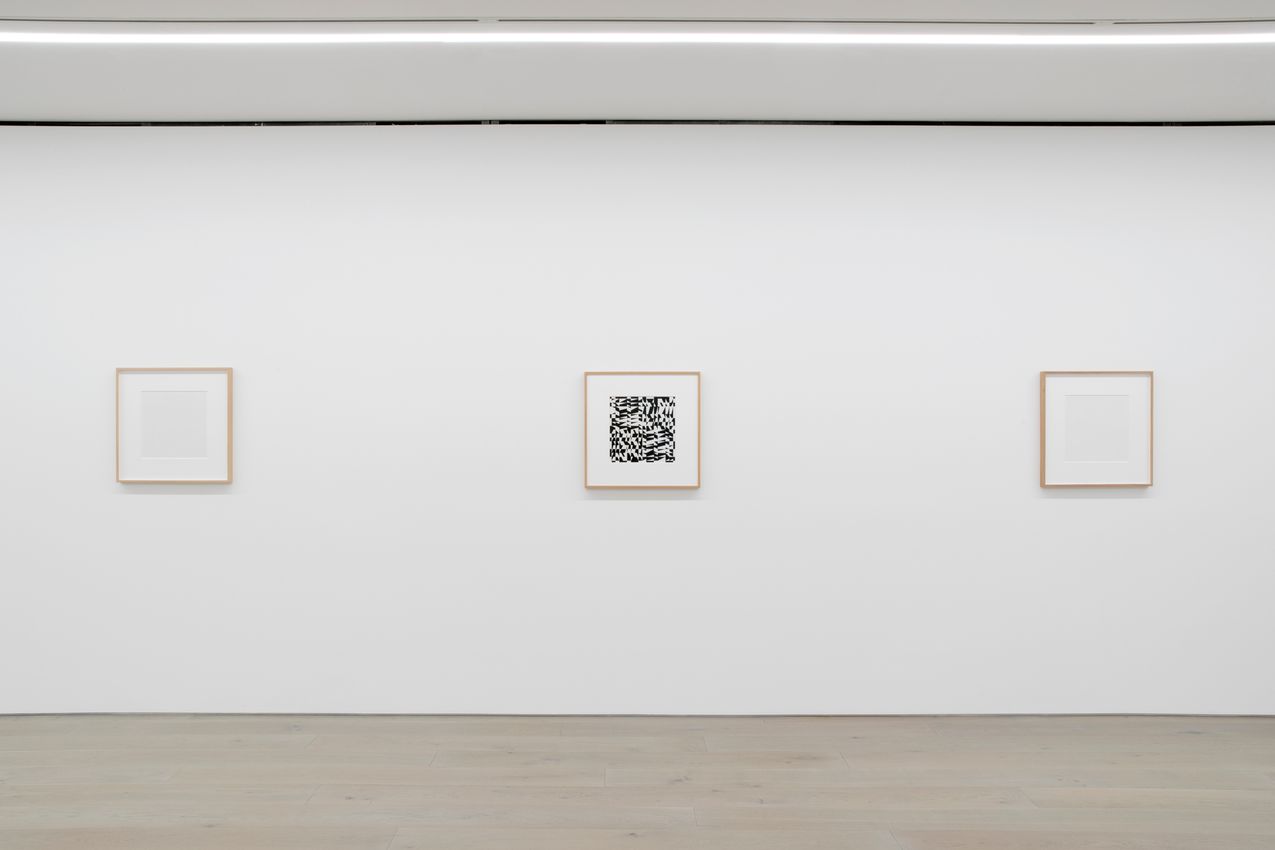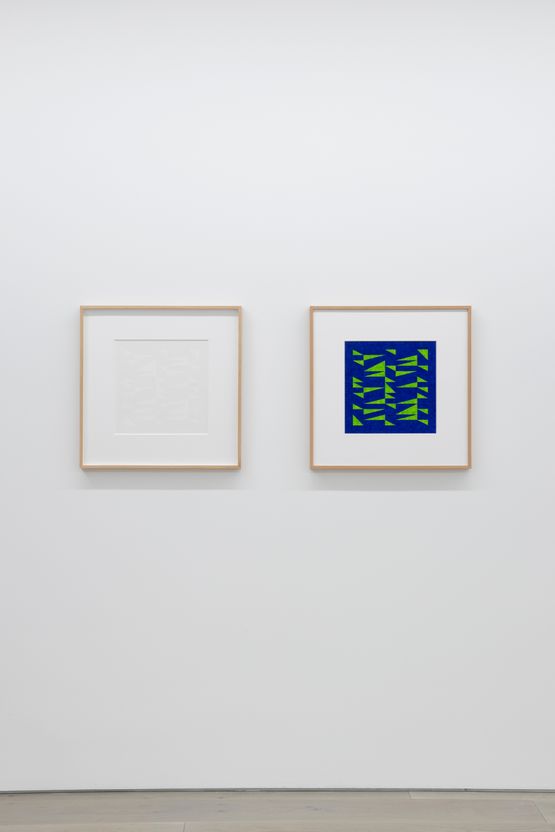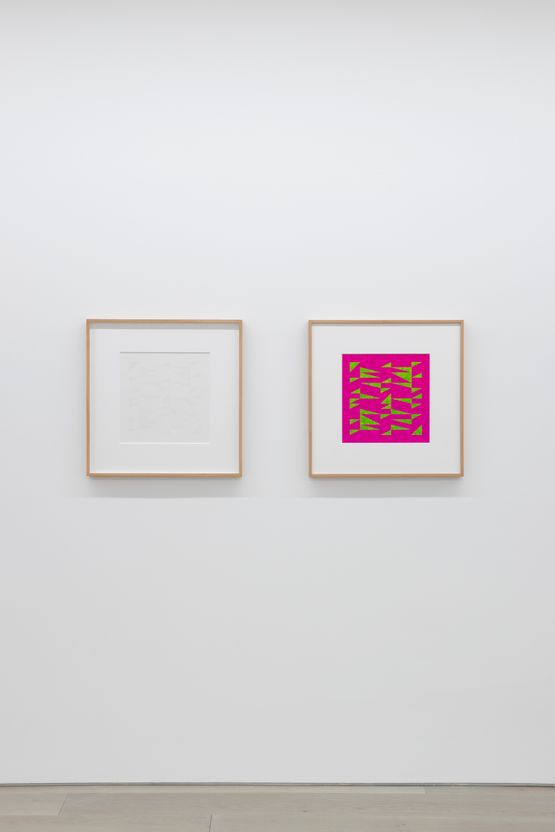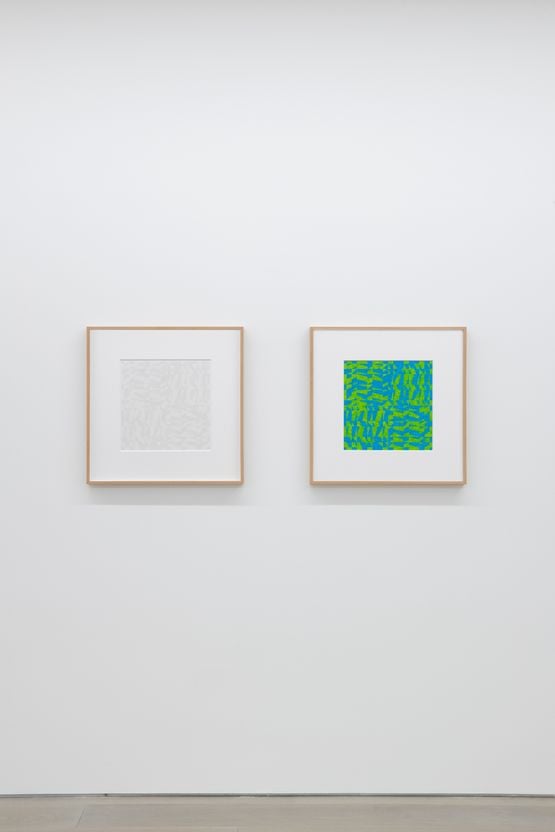




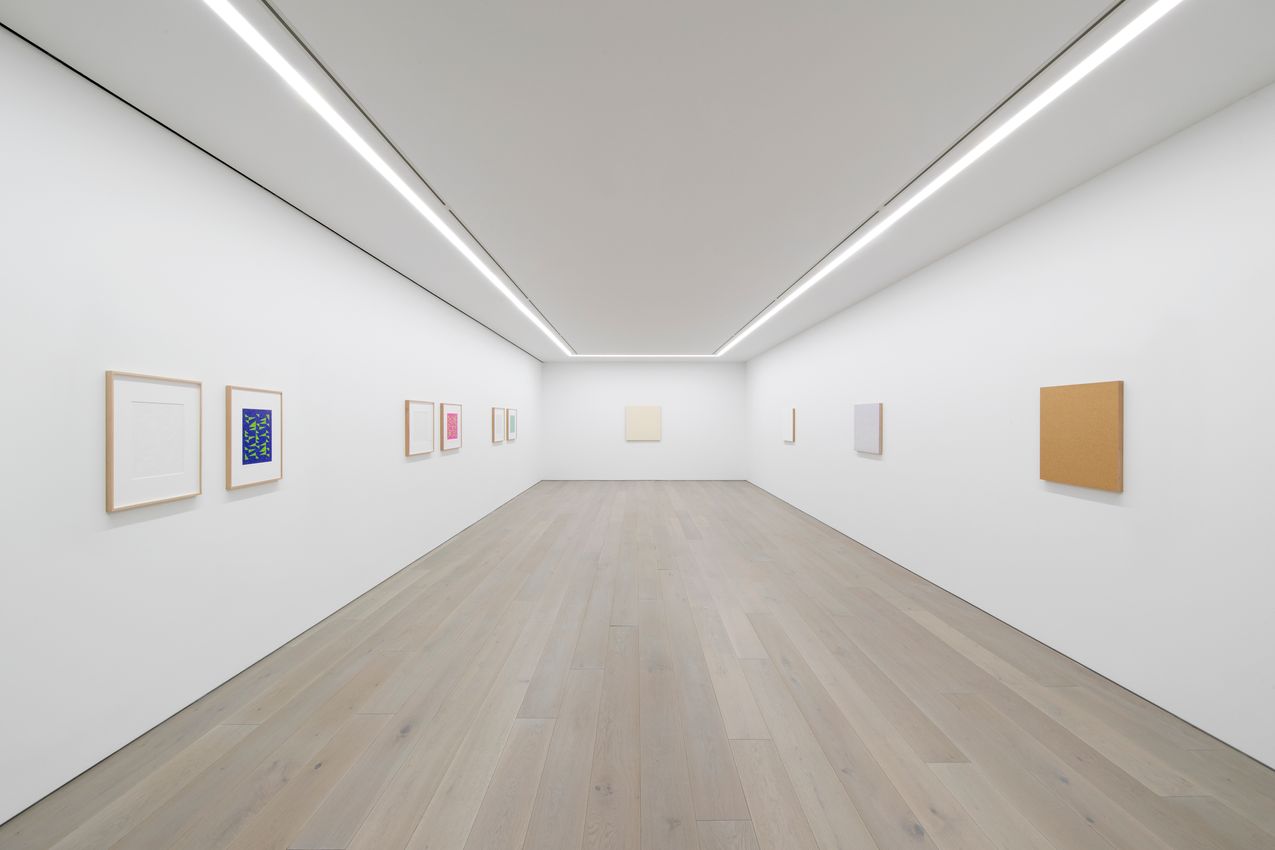
Perrotin New York is proud to host Gabriel de la Mora’s first exhibition with the gallery. The unique methods and materials de la Mora uses–feathers, egg shells, and human hair, in this case stem from the artist’s decision to ‘quit painting’ in 2004. The result has been an exploration of alternative modes of image making, wherein seemingly minimal and often monochrome looking surfaces belie great technical complexity, conceptual rigour, and embedded information.
The title of any work by de la Mora offers the first indication of a meticulousness that borders on obsession. With numbers for titles, the works reveal their constituent parts . 578 (2018) enumerates the 578 coloured feathers that comprise the image, a high-octane pink and blue herringbone pattern a-la-Bridget Riley. Not unlike Riley and the Op-Artists, de la Mora is interested in a kind of optical illusion: that of crafting what appears to be a unitary image surface, one that is made up of much more than meets the eye: a complex assemblage of patiently collected and painstakingly arranged elements.
Most exemplary of this process of accretion is de la Mora’s ongoing series of eggshell ‘paintings,’ a body of work that he began in 2013. These panels, monochromatic fields inflected only by the texture of its materials, are in fact a collection of minuscule shards, sifted and sorted by minute variances in hue. The eggshell works address the very notion of time: time spent accumulating the elements of what will become the crackled surface, time spent willing that surface into being. The egg, then, is an apposite metaphor for the kind of maturation process these works require. To rush them would be to betray the contemplative essence they exude.
De la Mora’s work is marked by a respect for the Conceptualist figures that preceded him. One need look no further than On Kawara to find a comparable compulsion for cataloguing or a comparable elevation of the mundane to the transcendent, an effect achieved, in both cases, through sheer relentlessness in accounting. In de la Mora’s allegiance to ‘the grid,’ figures like Agnes Martin and Hanne Darboven loom large. De la Mora’s hair drawings evoke the delicate, barely-there pencil lattices of the former, and the data-logging fervour of the latter, when one considers hair a source of forensic information. Though these works seem graph-like and impersonal, they are exacting, sometimes tender portraits–a single strand that stands for the subject. (An earlier work in the series documents a nephew’s haircut.) This simultaneous handling of more than one register is what runs through all the work. Aesthetic restraint should not be confused for a lack of warmth in the approach. They are both different faces of the same coin: care.
Gabriel de la Mora, born in 1968 in Mexico City where he currently lives and works, is best known for constructing visual works from found, discarded, and obsolete objects. In an obsessive process of collecting and fragmenting materials—eggshells, shoe soles, speaker screens, feathers—the Mexican artist creates seemingly minimal and often monochrome-looking surfaces that belie great technical complexity, conceptual rigour, and embedded information.


A respected voice in contemporary art discourse.
Focusing on ambitious storytelling and insightful art-world commentary. Ocula Magazine publishes in-depth interviews, critical essays and timely analysis on the artists, exhibitions and ideas driving the global art world.
Learn more about Ocula Magazine
Showcasing the best of the art world.
Ocula partners with galleries from around the world to highlight their artists, artworks and exhibitions. Gallery membership is by application and invitation, with each member vetted by an independent panel.
Learn more about Ocula Membership

Specialises in the sale of major artworks.
Led by a team with deep ties to the world’s leading auction houses, galleries and collectors. Ocula’s advisory team offers bespoke services to high-net-worth clients from around the world who are looking to acquire the best of contemporary and modern art.
Learn more about our team and services