



Press Release

This new exhibition by Iván Argote at Perrotin Paris is conceived like an essay composed of sculptures, texts, photographs, illustrations and films in which the artist proposes a poetic, sociological and political discussion on our relationship with history and our relationship with ‘the other.’

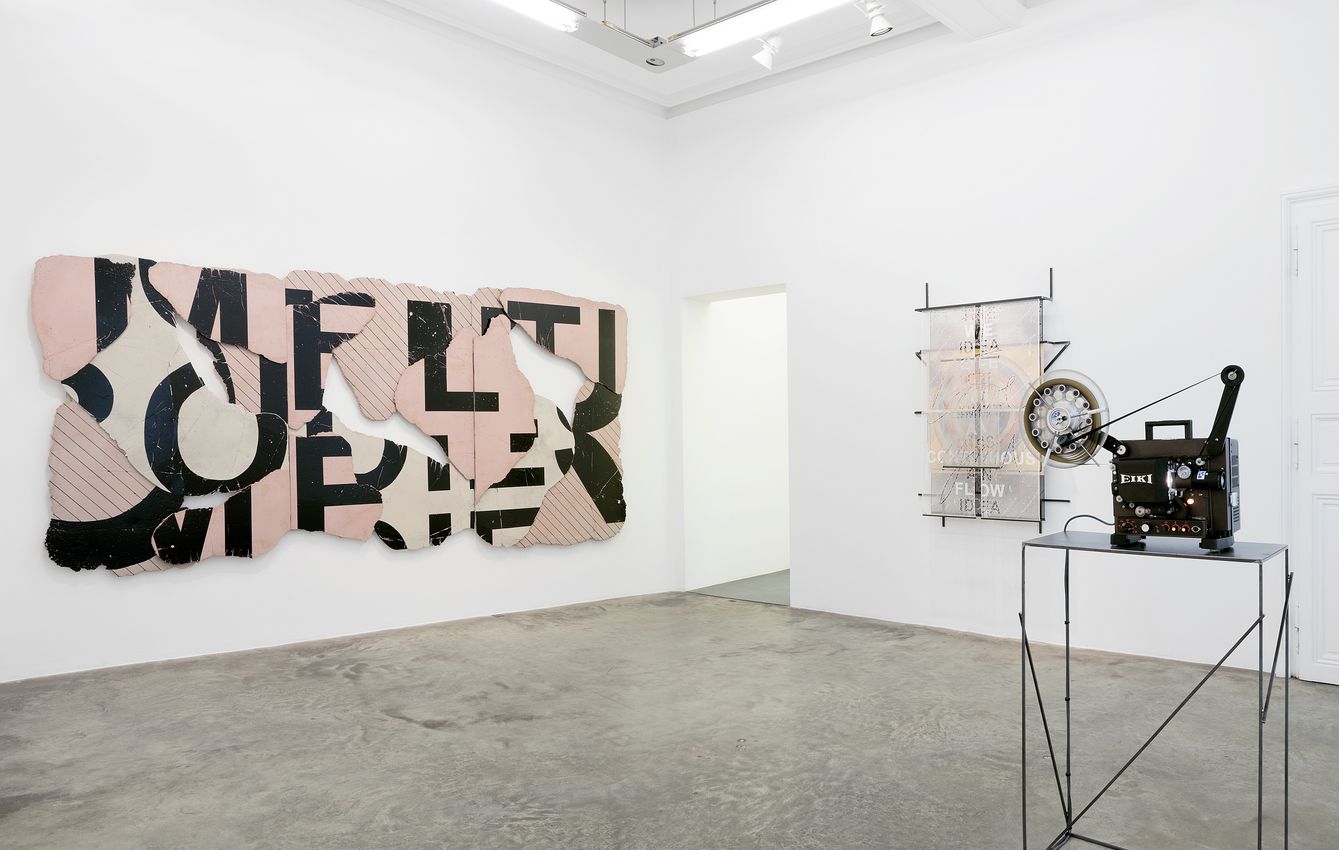
To stimulate our reflection, Argote transports us to two cities that are diametrically opposite to one another: Neiva in Colombia and Palembang in Indonesia. Exact antipodes are a rare geographical relationship that only six pairs of cities share in the world. The artist produced a film on the subject (As far as we could get) that weaves links between the two places and the people who live there, creating a voice that gently but firmly criticizes hegemonic historical narratives. The film revolves around the main axis of decentralizing voice and gaze.

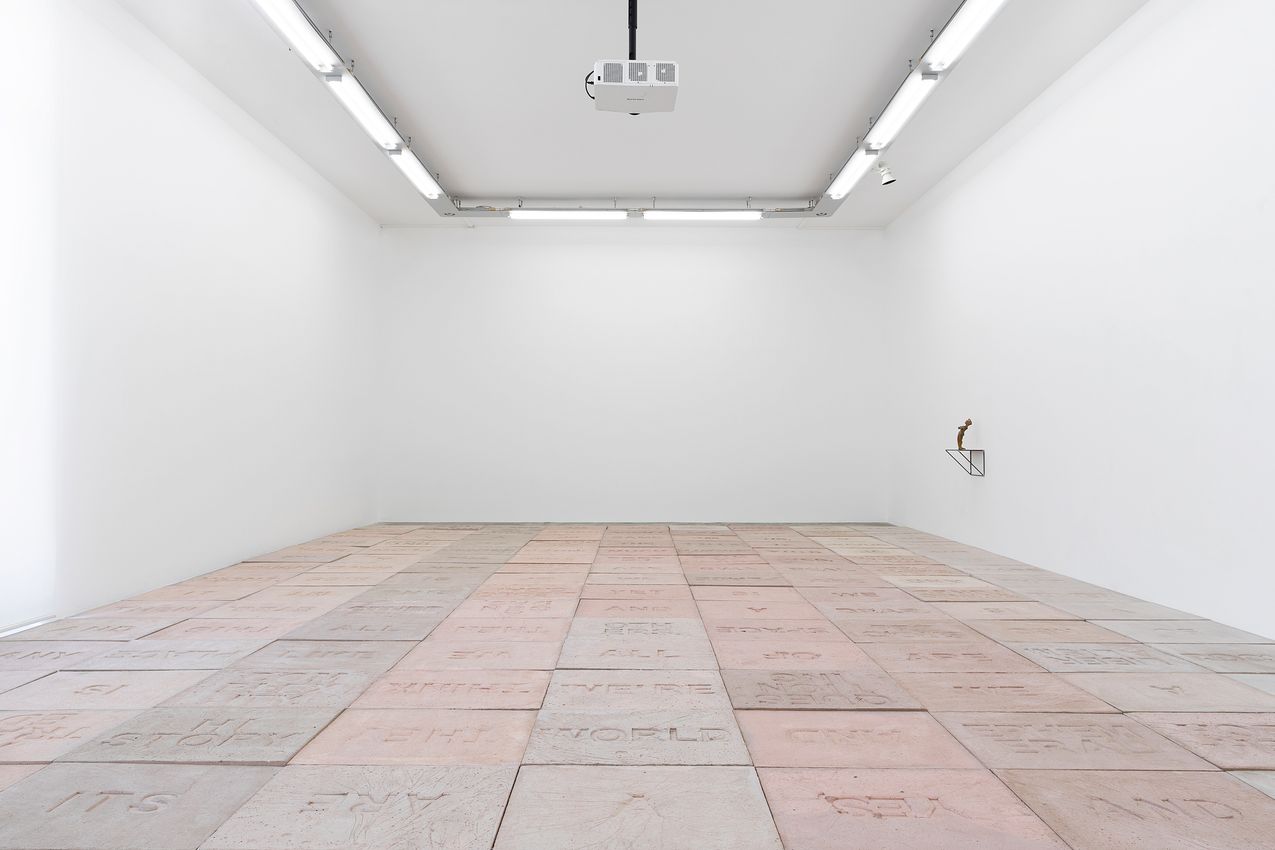
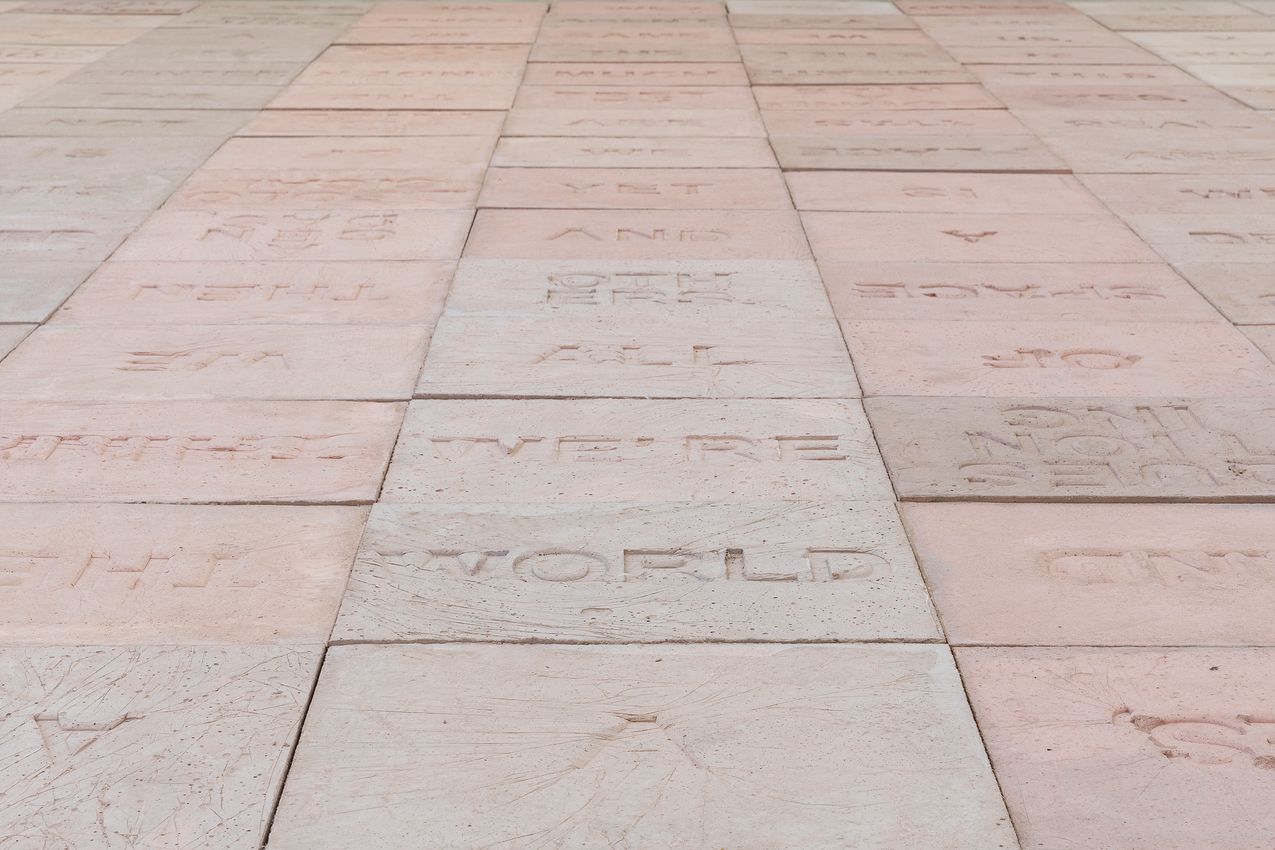
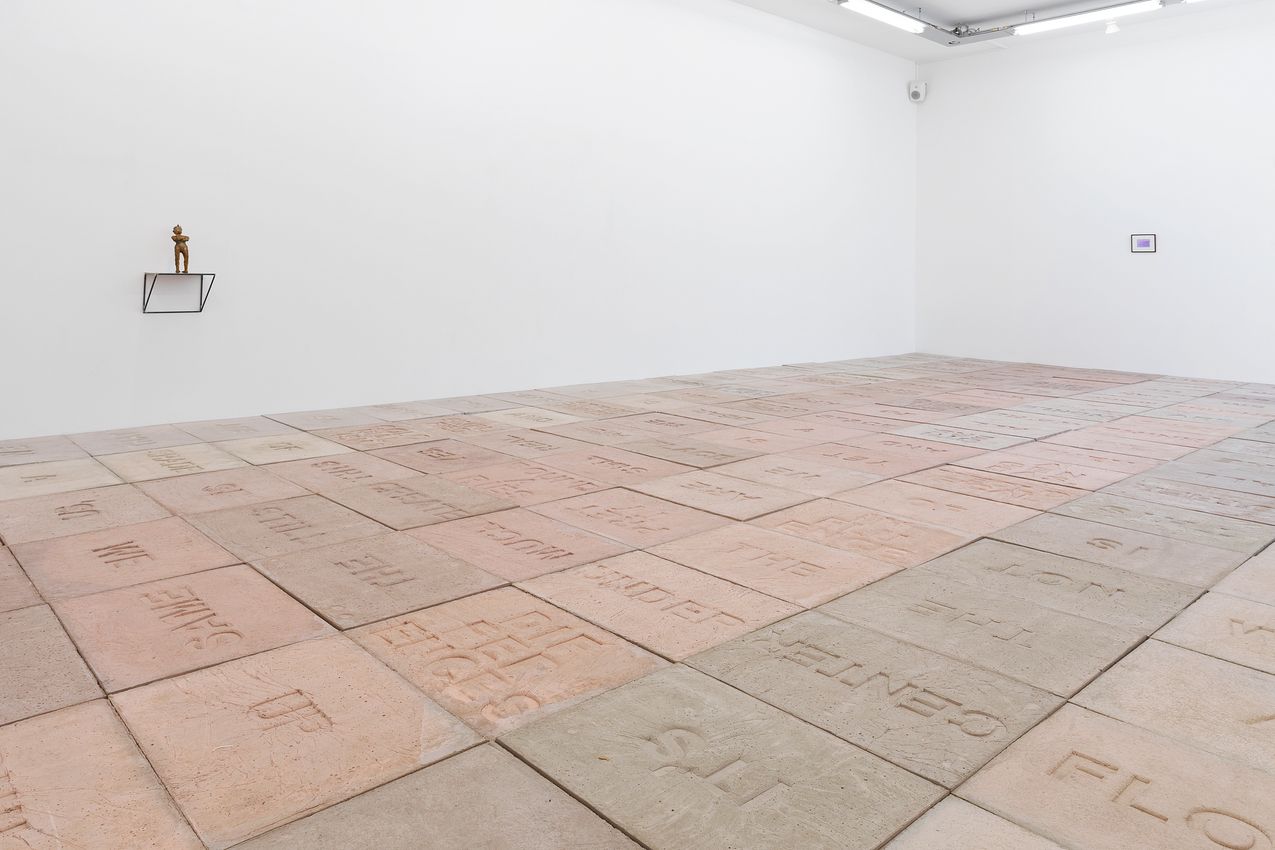
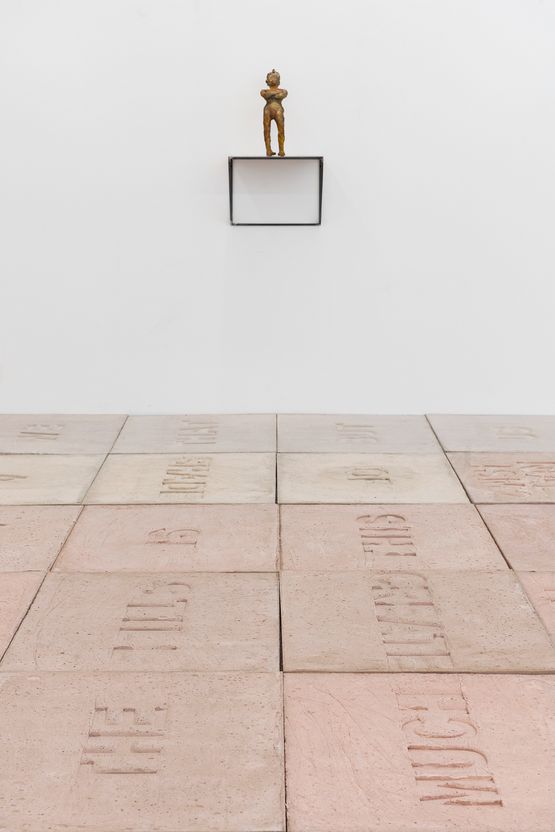
The film appears and disappears throughout the exhibition space as the chapters unfold, thus playing with the lighting and a massive installation that covers a large section of the gallery floor (About a place). Dozens of pink concrete slabs, produced one by one in the artist’s studio, are engraved with poems and thoughts. They question the status of the space in which they are arranged, in a way that is at once intimate, ethical and political. They are faced with the sometimes- contradictory complexity of a context like that of an exhibition space or more generally a geographical position in the world. Our relationship to the context has a meaning that we can shape, criticize and debate.

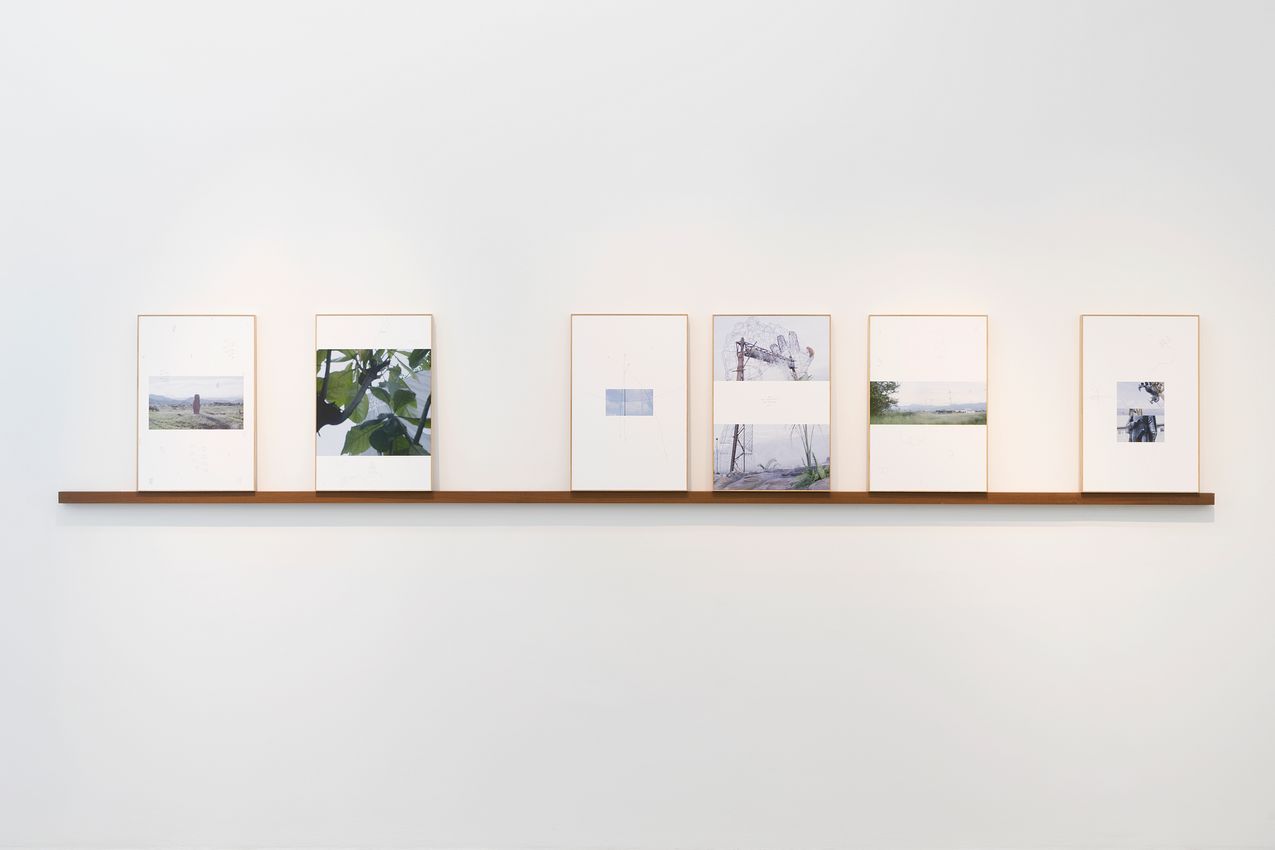
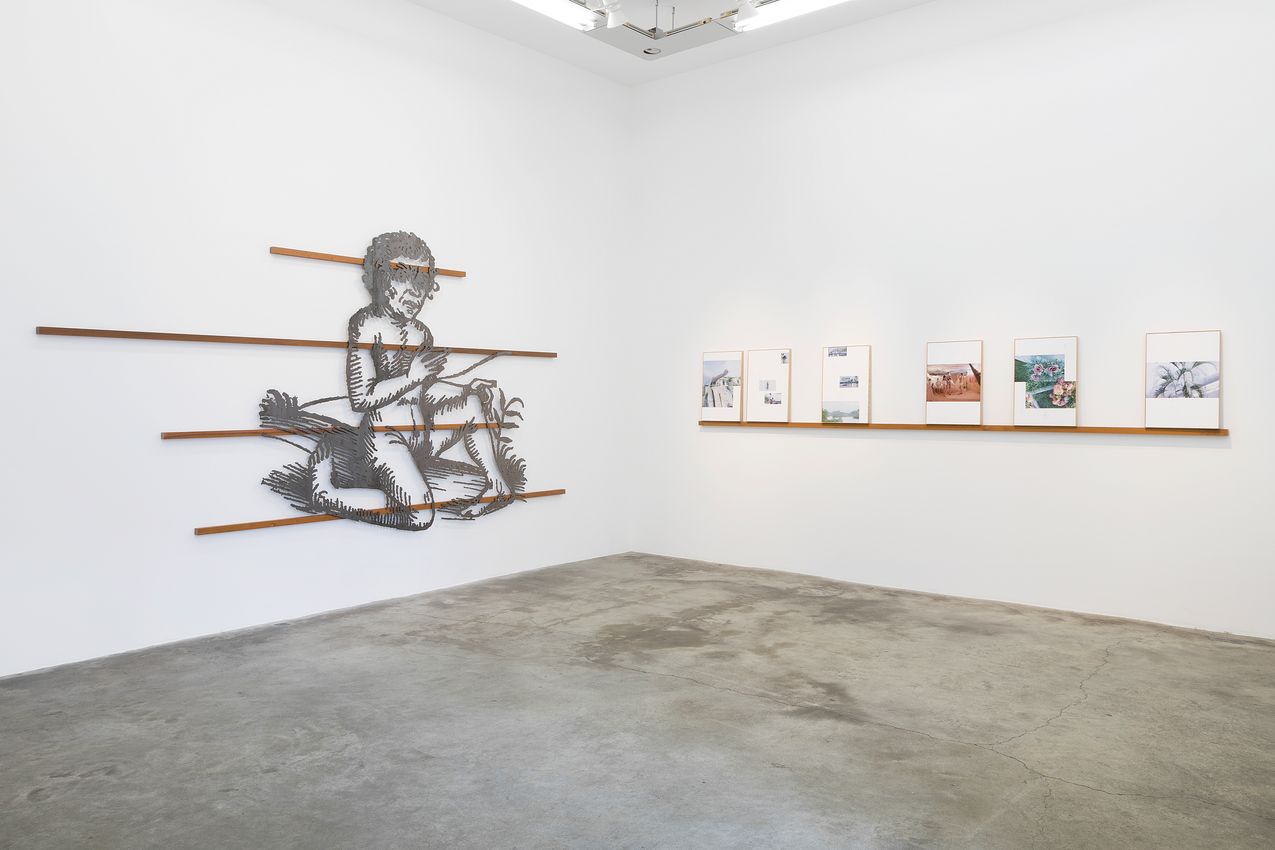
Argote also uses the axis of antipodes to foster reflection on the way we look at the other. He delves into History (Setting up a system) to find the origin of the concept of antipode, i.e. a scientific notion created by the first Greek geographers around 300 BC. Its etymology is from the Greek ‘with opposite feet.’ The idea was transformed over the centuries, exposing different notions of the concept itself. Argote shows us icons (L’idée de l’autre) from The Nuremberg Chronicle, a major encyclopedia published in 1493, in which the inhabitants of antipodes are depicted with deformities, sometimes literally with inverted feet. These icons are compared and contrasted with photographs taken in the two aforementioned cities and marked with drawings and annotations portraying objects and situations that range from the banal to the exceptional and the bizarre.

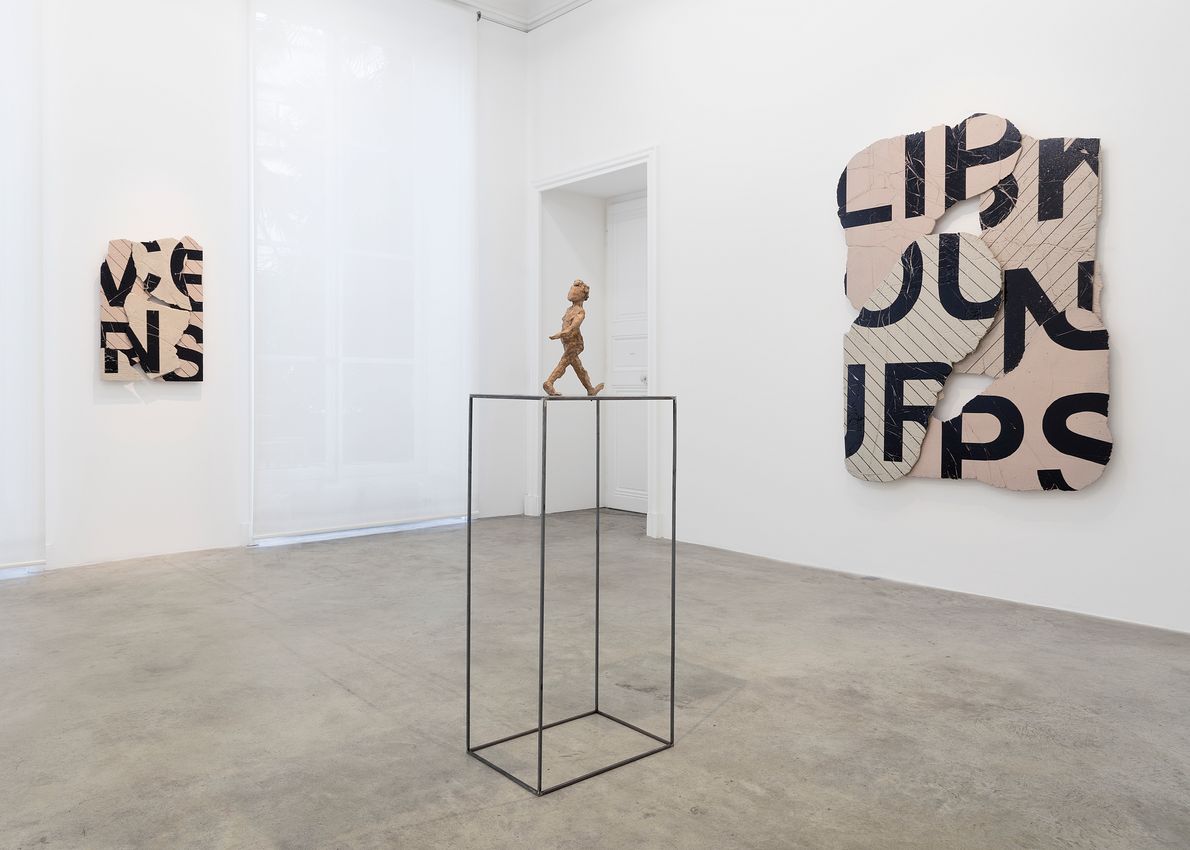
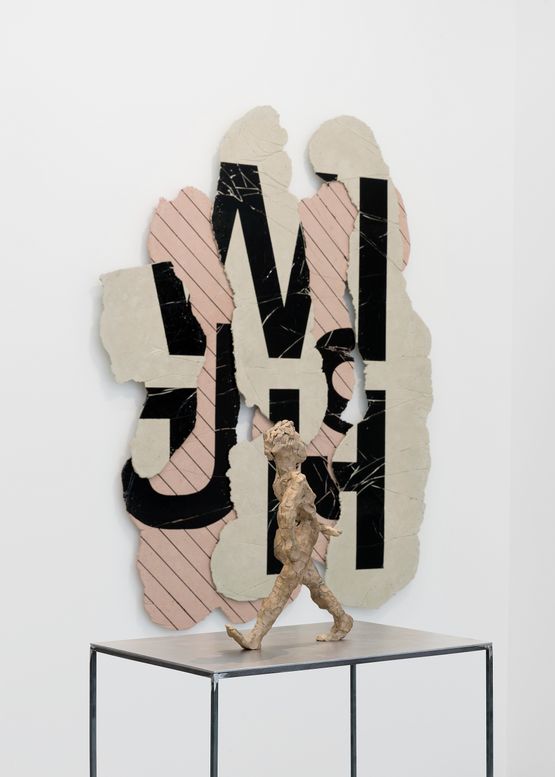
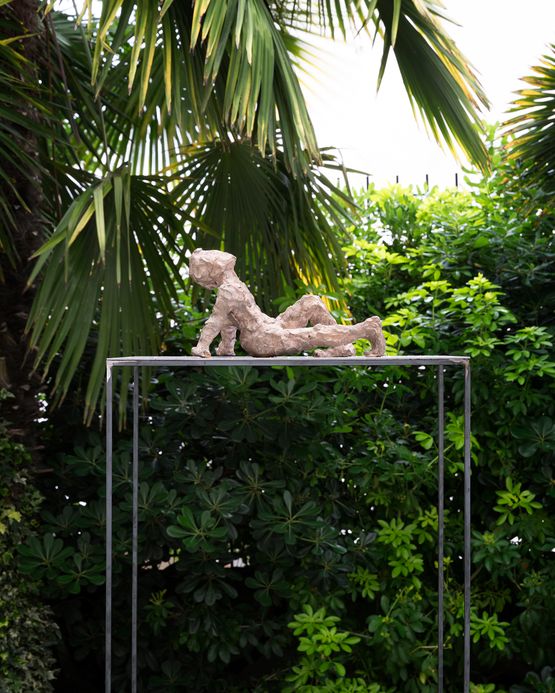
In Fièrement différents, Argote stages small bronze gures with inverted feet that look at us with defiance and humour and accompany us throughout the exhibition. The deformed image of the other as it was shown in the Middle Ages shifts here to an amusing and proud representation. The relationship with the other has been a main focus of Argote’s work, from his early creations of interventions and interactions with pedestrians or commuters on public transport, to his recent public installations such as ‘The other, me and the others,’ a giant seesaw that tips depending on the position and number of visitors.

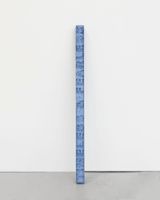
In the series Skin, slogans interspersed among different strata of cement create contact between bodily notions and political thinking, in an almost erotic way. In such a way, Argote evokes tenderness, the body and contact as a tool for reflection, a theme also explored in public installations in Cameroon (Oui ma vie), or the yposting campaigns in Colombia, Brazil and Mexico (Somos Tiernos), and more recently in Paris (Tendresse Radicale).

Three small photographs from 1973 (turned a purplish hue), taken from a personal family album, are spread around the gallery. We see children demonstrating, accompanied by the artist’s father who was a primary school teacher at the time, but also taught them how to rebel. While these photographs inspired a number of workshops that Argote has performed in schools and art institutions since 2011, they also served as the point of departure for his research on the history of the Kodak Company.

His research resulted in the 16 mm film Reddishblue Memories produced in Colombia. There, Argote chose an intimate setting in which to film his parents, who are still strong political activists. Like a character, one of the photographs offers an expression in the first person, telling stories about the activism of the artist’s parents and, in parallel, the ideological burden that drove Kodak to change its film-development system during the Cold War.

This film, partially produced for an exhibition in Ukraine, intertwines two voices: one in Spanish, the other in Ukrainian. The voices speak about colours, political commitment and ideological confrontations, while maintaining an affectionate tone. We delve into the intimacy of family and sentimental memories, to move on to historical and political matters with depth and sometimes humor. This recurring cycle in Argote’s work includes us as sensitive, emotional and political entities in the explorations of our relationship with the other, time and location.

Read More

Installation Views

About the Artist

Born in Bogotá, Colombia, in 1983, Iván Argote settled in Paris in 2006. Argote creates videos, photographs, sculpture, public interventions and performances, as a way to explore our inextricable links to history, tradition, art, politics and power. Argote investigates the city as a place of transformation and potentiality, traveling the world in search of vestigial signs of fallen power, studying the indirect manifestations of control, and observing the conventions that gain acceptance in order for one vision of history to become the official version. Public monuments and sculpture are also recurring themes in the artist’s work. Through his personal narratives, and their connections to history, ideology, and consumerism, Iván Argote questions a Western perspective of history. Emmanuel Perrotin met Iván Argote in 2008 while the artist was a student at Paris Fine Arts School. Perrotin has represented Argote since 2009.

View Artist Profile

Also Exhibiting at Perrotin

About the Gallery

Emmanuel Perrotin founded his first gallery in 1989 at the age of 21. He has opened since then over 17 different spaces, with the aim of continuing to offer increasingly vibrant and creative environments to experience artists work. He has worked closely with his roster of artists, some since more than 25 years, to help fulfil their ambitious dreams and projects.

View Gallery Profile
Address
76 rue de Turenne
Paris
France
Opening Hours
Tuesday – Saturday
10am – 6pm
(1)
Paris 76 rue de Turenne
Perrotin
76 rue de Turenne, Paris, France
+33 1 42 16 79 79
http://www.perrotin.com

Opening hours
Tuesday – Saturday
10am – 6pm
The art world in focus