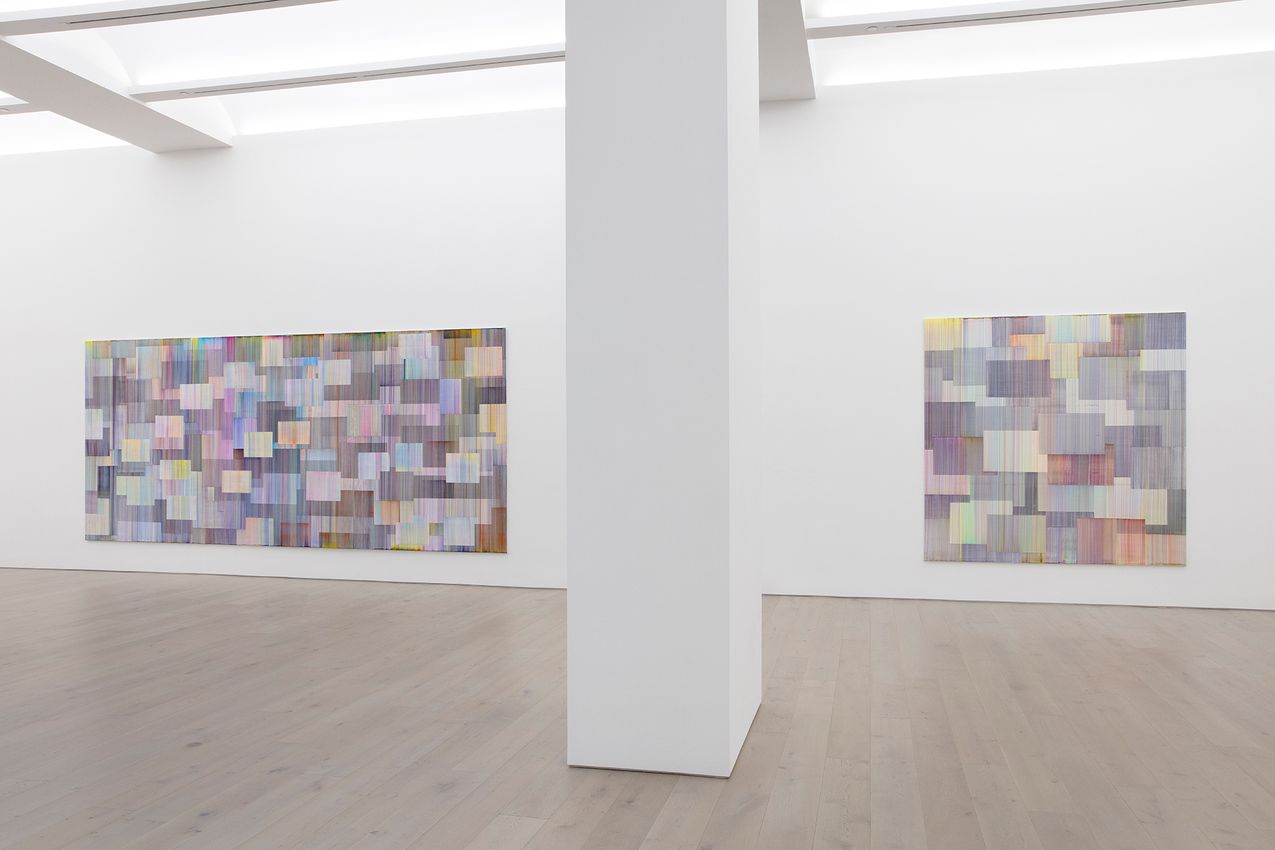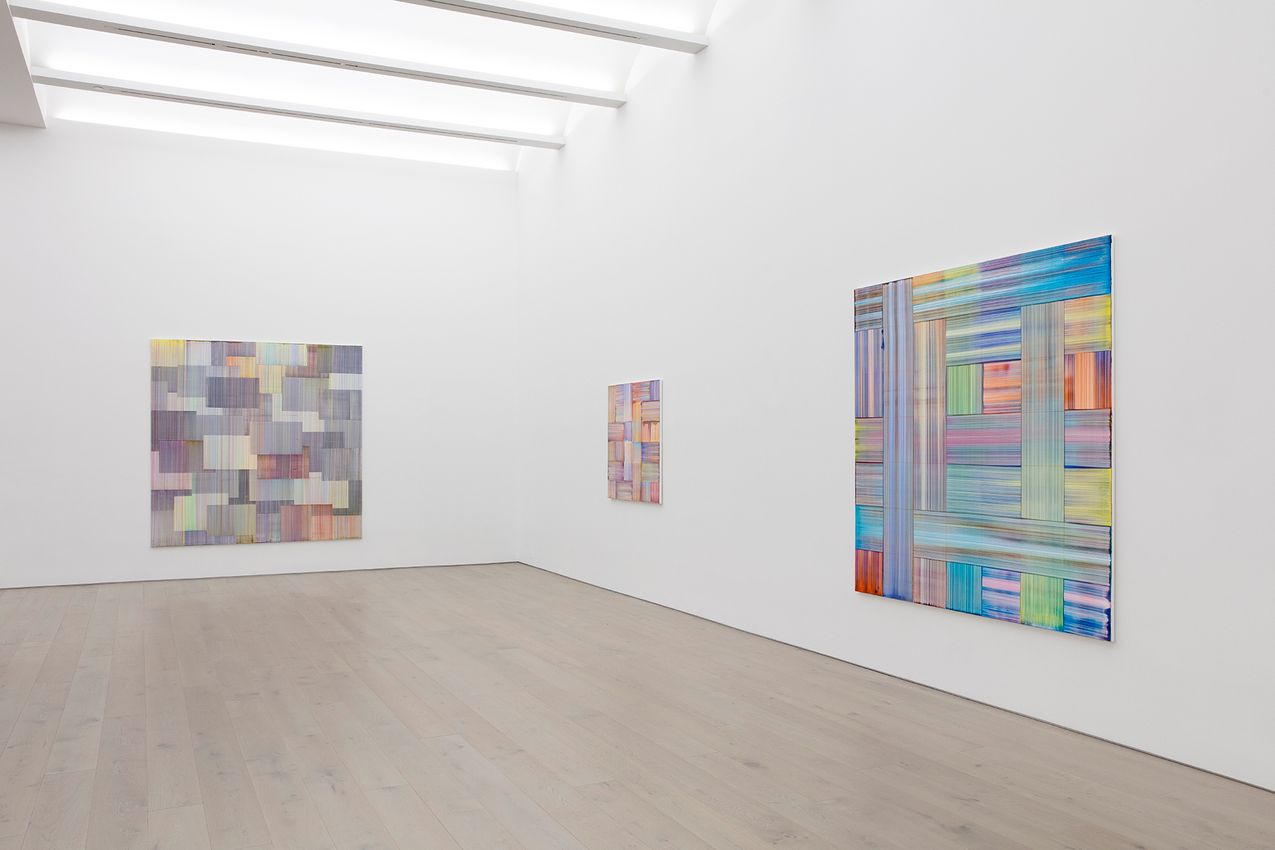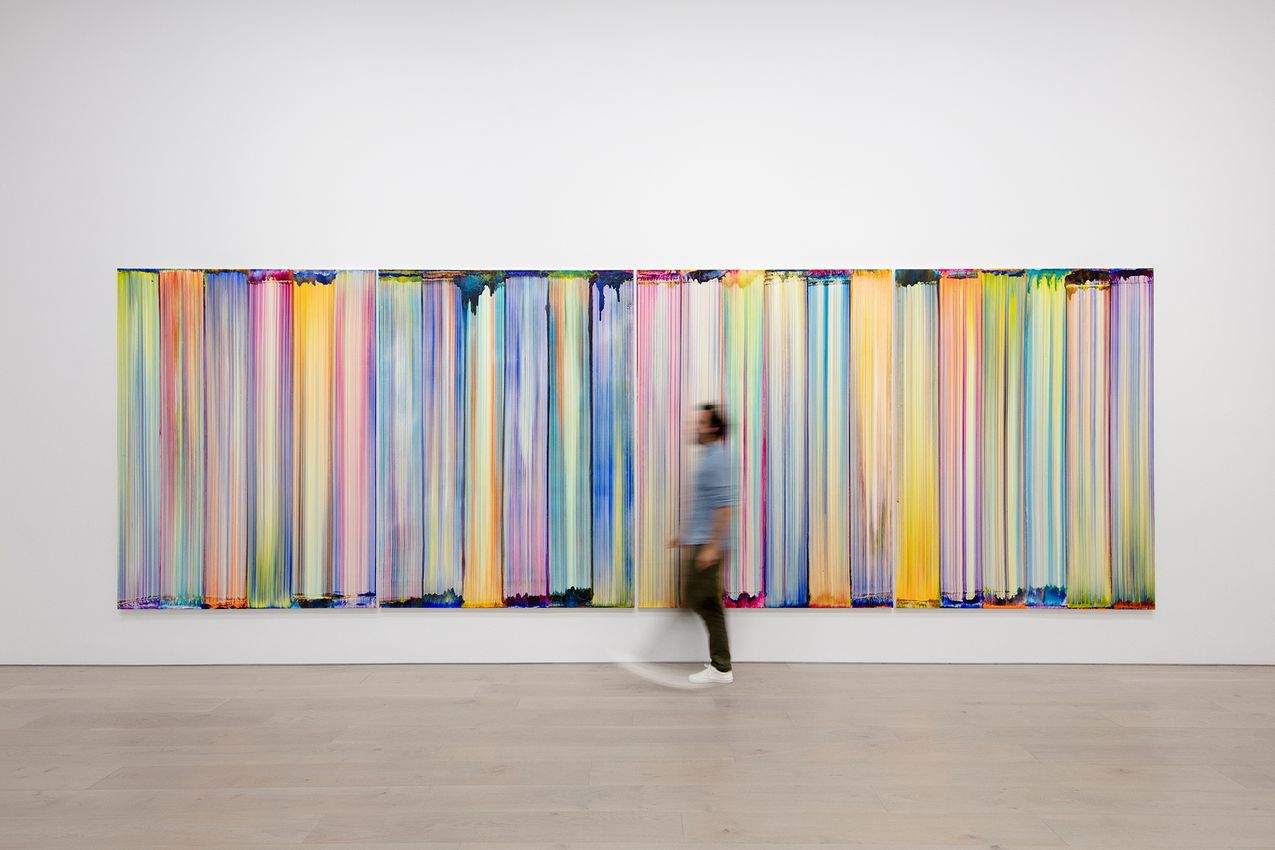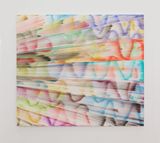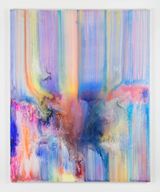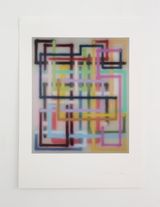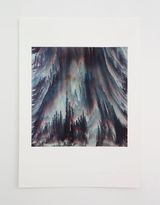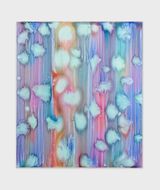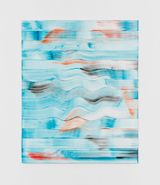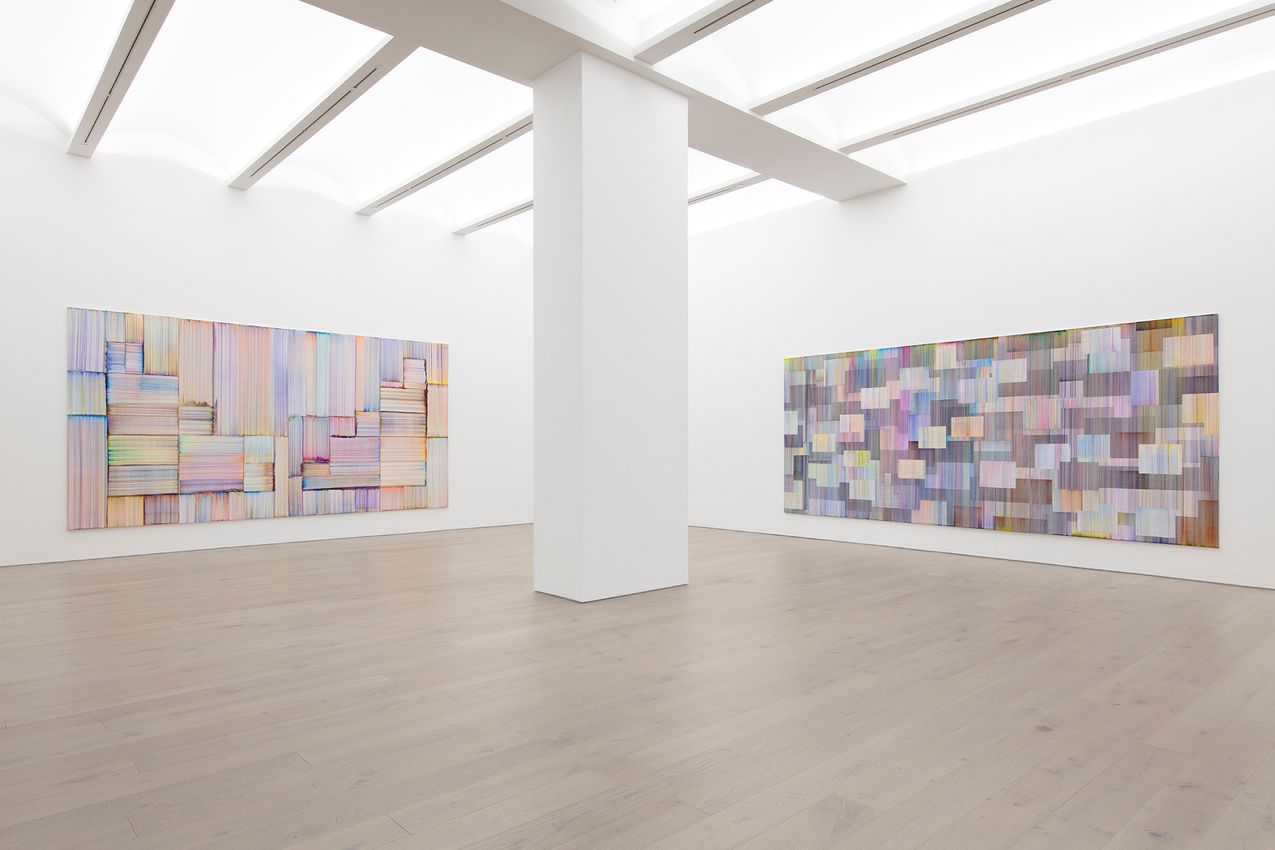
Perrotin New York is pleased to present a solo exhibition of new paintings by seminal French painter Bernard Frize, coinciding with the 25th year anniversary of our first collaboration with the artist. Opening on September 11, the exhibition follows solo exhibitions at Perrotin Tokyo and Perrotin Paris, as well as a major presentation of the artist’s work at the Centre Pompidou in Paris.
The layers of content that a Frize painting generates arise as one becomes aware of how the painting is made, what it is made out of, how it acts on our biological perceptual apparatus, how our reception of the work is responsive to the light and scale of the circumstance we find the painting in, and the various points of reference outside of it that a viewer is able to coalesce in mind. And then this edifice built in mind rattles together with the ongoing sensual experience of standing in front of the painting.
This awkwardness, inherent to the relationship between paintings and language, is only part of the story. In addition, the paintings all on their own, before language is brought to bear, embody layers of contradiction proposing that many things are true at once. They are invested, so to speak, in gray. They are not partisan. In this way, my experience of Frize’s language is consistent with my experience of the paintings themselves.
Each painting presents a coherent, often object-like, very factual index of eventfulness. Some of the paintings are like knots, some like a scientific graph turned into a simultaneously thick and thin object floating on top of the prepared canvas. The clear factual gestures that accumulate on each painting embody layers of conflicting information and tensions between binaries: control/happenstance, predictability/unpredictability, emotion/asceticism; jewel/diagram, evidence of the author/absence of the author. As these contradictions seem to hover, just a few millimetres out from the ground of the painting, embodied in painted brushstrokes, coincident with one another, another subject seems to emerge: hierarchy is denied. Though that proposal too is contradicted in that the painting itself is bracketed by its elevated status as fine art, and that status can’t but accumulate to the painting.
He, like a scientist, engages in experiments—experiments that yield unpredictable findings. We viewers receive an experience of the indexical product. We the audience and Frize the author shares the painting as a point in our relative trajectories—the author’s end point and our beginning point.
In the end Frize presents us with simple physical / visual koans. These works rarely depart from a symmetrical engagement with the canvas, usually have limited engagement in compositional play, and present as complex simple unities. In these ways, their form resonates with the long history of religious painting. The subject matter emerges as layers of human impulses in contradiction, separate but together, like toddlers engaging in parallel play, inside of what is generally a symmetrical whole held a little aloft from the surface of the canvas, like a halo hovering around the head of an angel. When all is said and done the paintings are ‘believable’, perhaps optimistic, and certainly fraught.
The above excerpt is from Jessica Stockholder’s essay Facts of the matter: Reflecting on the work of Bernard Frize, featured in BERNARD FRIZE. WITHOUT REMORSE, a catalogue published this year on the occasion of Frize’s retrospective at the National Museum of Modern Art, Centre Pompidou.
Bernard Frize’s abstract painting is decisively process-oriented. Working in series, he explores all the possible visual outcomes of precise protocols, which he conceives beforehand. These pre-established conditions and constraints usually pertain to the use of very conventional tools and materials, the almost mechanical execution of seemingly simple gestures, and sometimes the simultaneous assistance of other painters. While they each record the peculiar dynamics of a predetermined technique, his vibrant abstractions are also arenas for chance to operate. By outsourcing some of his creative power to contingency (starting with his highly distinctive yet random colour palette), he allows for painterly events or disruptions to unfold on his canvases. At once calculated and random, conceptual and organic, his aesthetics portends an automatic ideal of painting. With much humour, Bernard Frize actually describes his most successful works as the ones that required minimal intervention from him and thus realised themselves to some extent autonomously.
Emmanuel Perrotin founded his first gallery in 1989 at the age of 21. He has opened since then over 17 different spaces, with the aim of continuing to offer increasingly vibrant and creative environments to experience artists work. He has worked closely with his roster of artists, some since more than 25 years, to help fulfil their ambitious dreams and projects.

A respected voice in contemporary art discourse.
Focusing on ambitious storytelling and insightful art-world commentary. Ocula Magazine publishes in-depth interviews, critical essays and timely analysis on the artists, exhibitions and ideas driving the global art world.
Learn more about Ocula Magazine
Showcasing the best of the art world.
Ocula partners with galleries from around the world to highlight their artists, artworks and exhibitions. Gallery membership is by application and invitation, with each member vetted by an independent panel.
Learn more about Ocula Membership

Specialises in the sale of major artworks.
Led by a team with deep ties to the world’s leading auction houses, galleries and collectors. Ocula’s advisory team offers bespoke services to high-net-worth clients from around the world who are looking to acquire the best of contemporary and modern art.
Learn more about our team and services