Press Release

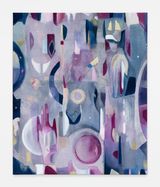
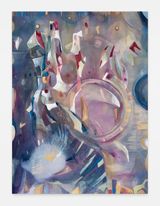
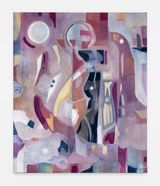
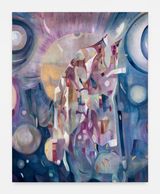
‘I want to leave the canvas,’ remarks French artist Mathilde Denize, standing in the center of her airy Rome-based studio, where she has spent the last year completing a residency at Villa Medici. Now, she prepares to send off a new body of work for her first solo exhibition in New York, titled Reverse for a Better Move. Opening on September 8th, Denize brings together an unprecedented assortment of figures that blur the boundaries between sculpture and painting, costume and installation.

They don’t have a name. We can call them Characters or Puppets. Maybe Entities or Monsters. They emancipate themselves from box and genre. They come to life in an ever-moving space. As if they couldn’t remain frozen to the wall; too sacred, too definitive. They leave their status as an untouchable object. They become available.

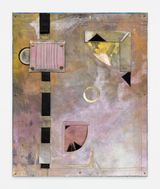
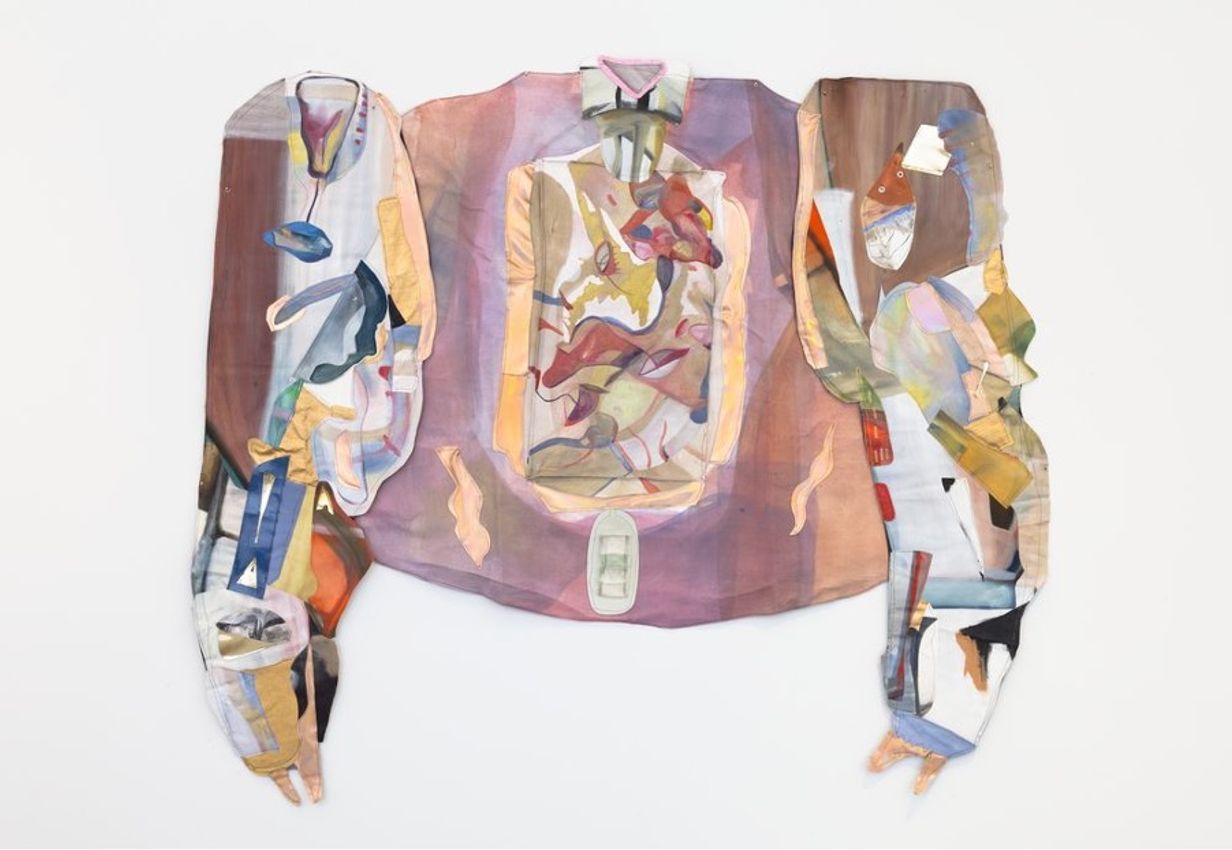
For Mathilde Denize, nothing is lost and everything is transformed. Her figures are made from a great disorder. The old canvases are cut out, tied to new ones, sewn, woven, painted upside down. They find the second breath of a new form. The gesture is never completed; the momentum continues unabated. Thus, they take their freedom. We think of this remark by Nietzsche: ‘you have to have enough chaos in yourself to give birth to a dancing star.’

Because they dance, these figures, they never stop moving. They talk to each other, whisper in the wind, exchange secrets, make fun of us, pitch, breathe, sweat, push us aside. In Rome, Mathilde Denize made a film in which her creations, embodied, escape from the studio. Finally, the pieces can live. In New York, they don’t need to be worn. Reunited, these figures are mobile.

They are all singular entities. However, we recognize a few commonalities, a few recurring motifs emerge: hands, eyes,p ockets. Perhaps this is a nod to Bresson’s Pickpocket where the cavities have never been so full of life. The figures pose, in their glowing bathing suits, and attract our gaze like a dazzling, yet invisible Venus. A somewhat grotesque air gives their posture a mocking aftertaste. The figures mimic the heroic statues ubiquitous throughout the streets of Rome. Unlike these statues of carved marble, Denize’s figures contain humour and tenderness.

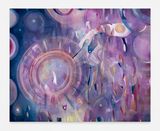
Where do these visions come from? To answer this question, Denize uses watercolour. She traces worlds from dreams. Here, geography is no longer valid. Reason loses all bearings. Even Piranesi wouldn’t find his way back. Everything is dripping; the walls and the colours. The whole painting sweats. Denize studied cinema, and her family worked in film sets when she was a child. You feel a need for staging in her work. She creates worlds, and then sweeps them away.

Cross these worlds; look at them directly in the eye. Faced with a strangeness, here’s one piece of advice: grasp it. Do not hesitate to take them all. To deform them, to embody them, to ruin them. There is no more frame or canvas; you can force the locks. Reverse the usual connections. Go in front of the works. Get to know them very closely. Turn them around. Feel them. See them live. And live through them. Mathilde Denize’s creations are more than paintings. Second skins waiting to replace our old exteriors.

-Boris Bergmann

More information about the artist

Mathilde Denize (born in 1986, in France) lives and works in Paris. As a visual artist, her practice is oriented towards painting, installation work, sculptural composition, performance, and video. Denize’s work is born from a desire tomake meaning emerge from a fragmented present. A collector of discarded objects, she often cuts up her older paintings and then weaves them into new forms with found materials. Thus, new artworks are born from remnants of the past, a metaphor for the complicated existence of human beings. Inspired by great experimental artists, like Carolee Scheemann, she utilizes the body as much as the painting. Her garments, which often resemble a sexualized female form, act as both armour and camouflage. Her paintings are an open diary, punctuating and dialoguing with her sculptures. With subtle gestures, Denize constitutes a set of forgotten and anonymous forms, witnesses of ac ontemporary archeology.

Read More

Also Exhibiting

About the Gallery
Emmanuel Perrotin founded his first gallery in 1989 at the age of 21. He has opened since then over 17 different spaces, with the aim of continuing to offer increasingly vibrant and creative environments to experience artists work. He has worked closely with his roster of artists, some since more than 25 years, to help fulfill their ambitious dreams and projects. The gallery is now based in New York, Paris, Hong Kong, Seoul, Tokyo, and participates in all the significant worldwide art fairs each year (Art Basel (Hong Kong, Miami, Basel), Frieze (London, New York), FIAC (Paris), Dallas Art Fair, Art Cologne, Art Stage Jakarta, Expo Chicago, Art021 & West Bund Art & Design, Shanghai, Zona Maco Mexico, amongst others).
View Gallery Profile
Address
130 Orchard Street
New York
United States
Opening Hours
Tuesday – Saturday
10am – 6pm
(1)
New York 130 Orchard Street
Perrotin
130 Orchard Street, New York, United States
+1 212 812 2902
http://www.perrotin.com

Opening hours
Tuesday – Saturday
10am – 6pm
The art world in focus